Feeds:
Posts
Comments

Archive for the ‘Fishing’ Category

SOUNDTRACK: MOBY GRAPE-Moby Grape (1967).

Moby Grape is one of those bands that I’ve always heard of but had never heard.  I know, their debut is 43 years old and yet I’d never heard it.  Well, thanks to the internet (lala.com, RIP as of today), I was able to listen to what I assumed was their Greatest Hits.  If only I had done a modicum of research.  The disc I chose was Legendary Grape, which it turns out is not a greatest hits at all, but is actually some weird pesudo-Moby Grape record released in 1989 under a different band name due to legal protractions, but then reissued as Moby Grape.  It was rather uninspired and nothing at all what I thought it would sound like.  Nothing dreadful, just nothing worth thinking that this band “legendary.”

So, with a little research, I learned that their first album is what I should have been checking out.  Moby Grape is the eponymous release and it sounds much more like what I assumed this psychedelic era-band would sound like.  This disc is pretty much in keeping with what a band that produced an album cover like this would sound like.

It’s sort of a folksy Grateful Deadish sound.  But they move beyond a simple genre with a host of writers and instrumentalists contributing their own thing, man.  So there’s a few rocking numbers, a few ballads, and a bunch of other fun things. To me the most notable thing is that in a time when trippy psychedelic songs were long events, Moby Grape played mostly short songs (the longest one is the final track at 4 minutes, but most are around 2 minutes long).

I think I may be too far removed from this scene to really appreciate the disc.  I like what I hear, and a second listen made it even more enjoyable, but I can’t imagine investing a lot of  time with the band.

[READ: Week of May 31, 2010] Moby-Dick [Chapters 19-41]

Plug #1:
In case you didn’t see it on Infinite Zombies, Daryl has created what he calls Moby-Diction, which allows you to search the text for any word and see where and how often it occurs.  Geek heaven!

Plug # 2:
A visual treat is found at Matt Kish’s monumental: One Drawing for Every Page of Moby-Dick, which is pretty well explained by its title.  It is an amazing site (sight) to behold.

Now, back to our story.

Week 2 of the Moby-Dick read is amusing because it continues a minor thread that has been going on for some 100 pages (of my edition): When are we going to meet Captain Ahab?  We hear a lot about him, including a portent of doom from Elijah, but he doesn’t appear until Chapter 28.

Elijah, meanwhile, appears on the Nantucket streets.  He reveals himself to Ishmael and Queequeg as a sort of homeless man who asks them if they’re sailing with Ahab.  When they say yes, of course, he warns them about some bad things that happened to Ahab and his leg and future portents of doom.  Ishmael is a bit freaked by the guy, especially when Elijah seems to be following them, but he tries to out the madman out of his mind. (more…)

Read Full Post »

SOUNDTRACK: THE FLAMING LIPS & STARDEATH AND WHITE DWARFS featuring HENRY ROLLINS and PEACHES doing The Dark Side of the Moon (2010).

You’ve got to have balls to cover the most popular album of all time.  Everyone knows Dark Side of the Moon, according to Billboard charts everyone probably owns a copy of Dark Side of the Moon.  So, you’re taking on a pretty big task here.  But the Flaming Lips aren’t called The Fearless Freaks for nothing.

What delights me about this album is that it is utterly unfaithful to the original.  There’s nothing worse than a cover song that just apes the original version.  With that in mind, the Lips have put their bizarro stamp on the classic album, oftentimes rendering the songs almost unrecognizable–but more on that in a moment.

The two guest stars on the disc are Henry Rollins and Peaches.  Rollins recites all the spoken word bits from the original.  He actually makes a lot of those weird ramblings clear for me for the firs time.  The originals were spoken by a (presumably) high Englishman.  Rollins’ delivery is much more abrasive (but then so is the music).  It works pretty well, especially since Rollins’ laugh is maniacal, although if he sounded a bit more drunken I think it would work even better.  Peaches sings a few of the female vocal bits.  I’ve never been much of a fan of hers but, man, she does an awesome job in covering “The Great Gig in the Sky,” the track from the disc that features a wondrous diva singing and screaming her heart out.  Peaches really lets loose and showcases the power of her voice.

The Lips play on 7 songs and StarDeath play on 6.  They work together on 2 tracks.

StarDeath is fronted by Wayne Coyne’s nephew, Dennis.  I’d only heard one track from them before, and I liked it.  Dennis’ voice is a higher register, like Wayne, but he’s also a bit more subtle. Musically they are less noisy as well, and it’s a good counterpoint to the static of the Lips’ tracks.

So the opener, “Breathe” (Lips) is distinct right away, because the main focus of this version is a loud throbbing bassline. “On the Run” (Stardeath) is completely indistinguishable from the original.  You would never suspect it was a cover.  It’s a bass-propelled, very cool song, but there’s almost no similarity.

“Money” (Lips) stays fairly faithful to the original, except that the vocals are totally auto-tuned.  It makes the song sound really alien, as if coming, yes, from the other side of the moon.

“Time” (Stardeath) on the other hand, is a very delicate, acoustic track, (sounding somewhat like Mercury Rev, actually).  It is something of a counter to the rocking version on the original.

“Us and Them” (Lips) is probably the closest sounding to the original.  It has simple washes of sound and Wayne’s delicate voice.  But, once again, the louder sections of this song are left out.  “Any Colour You Like” (Stardeath) is a much closer instrumental to the original than “On the Run” was.  And “Brain Damage” (Stardeath) is really quite spot on (and may be even creepier than the original).

The ender, “Eclipse” is like a distorted indie rock version of the original.  It works pretty well.

There’s surprisingly little in the way of sound effects (which are all over the original).  I’d have thought they’d populate the disc with all kinds of fun things, but no, they actually play it pretty straight.

My one real complaint about the disc (and actually about Embryonic as well).  The Lips have always pushed the envelope of music.  But lately, they seem to be redlining  a lot of their sounds, making them distort and crackle.  Now, I love distortion when it’s used well, but this “too loud” distortion actually hurts my ears, even if the volume is low.  I find the sound to be unpleasant, and not in a good way.  And I think it’s a shame because the Lips write such great music, that I hate to have it obscured by clouds of noise.

So, yeah, this will never replace the original for anyone.  But it’s a fun experiment and actually sounds a bit like a rough demo for the final release.  In fact, in many ways it sounds like it’s coming from outer space and may be conceptually more accurate for the title.

I saw The Lips and Star Death on Jimmy Fallon.  They played “Breathe” and all eight (or more) guys were on stage.  It was a big wonderful mess.  And they sounded really good together.

[READ: May 11, 2010] ; or The Whale

In 2007, a book was published called Moby Dick in Half the Time.  And, as the title implies, it took Herman Melville’s Moby Dick; or The Whale and truncated it.  The editors basically kept in all of the “plot” and excised most of the “wandering” parts of the story.

So, in 2009, Damion Searls decided to print all of the excised material as a book itself.  This exercise was published in The Review of Contemporary Fiction, Summer 2009 | Vol. XXIX.  So, this “book” is Moby Dick without the “plot” or as the introduction puts it, “all Moby, no Dick.”

This book includes “every chapter, sentence, word, and punctuation mark that Anonymous removed to produce [Moby Dick in Half the Time]” (10).

And so what we get is a very surreal story indeed.  It comes across as a fascinating look into the mind of the (in this version) not named until Chapter 11 or so narrator (since we’ve obviously lost “Call me Ishmael”).  It also comes across in many sections as bizarre poetry.

; or the Whale’s opening line is:

“methodically.” (31). (more…)

Read Full Post »

SOUNDTRACK: FUGAZI-13 Songs (1990).

I was so blown away by that first Fugazi disc that I immediately ran out and got this collection of their first two EPs.

The strange thing to me is that even though I enjoy the disc, nothing on it really stands out as all that memorable.  I feel like Repeater was such a strong release that these earlier tracks pale somewhat.

I’ve listened to this disc a number of times over the last few days and nothing really stands up and grabs me like Repeater still does.

I wound up buying two more Fugazi discs after this, but I’m pretty sure the reason I stopped buying their music was from this same feeling: the songs were all good, rocking, indie music, but there was nothing terribly memorable about them.

[READ: April 15, 2010] Stephen Fry in America

I first heard about this book when Stephen Fry appeared on The Late Late Show.  This book was very casually plugged as Fry’s attempt to visit every State in the U.S.  It turns out that this book is the companion piece to a six part BBC TV series of the same title (which I have not seen).  Although the TV series makes the existence of this document much more understandable.  Because although everyone wants to travel to every state in the union, the only way it would ever be accomplished in the fashion is for a TV show (even a book wouldn’t get quite this treatment if there were no TV show).

Stephen Fry was almost born in America (in New Jersey, in fact, where he believes he would have been Steve, rather than Stephen).  And he has always felt a connection to the States.  So, Stephen Fry, (in my head the quintessential Brit) brings a film crew and his classic British Big Black Taxi to see all of the States.  He begins in Maine and travels in an interesting manner, zig-zagging across the country.   He tends to visit the places/events/sites that each state is known for.  And, like any good TV show, he participates in the activities (he lobsters, he rides horses, his deals blackjack) and makes a tit of himself. (more…)

Read Full Post »

SOUNDTRACK: BLUE ÖYSTER CULT-compilations and live releases (1978-2010).

For a band that had basically two hits (“Don’t Fear the Reaper” and “Burnin’ for You”) and maybe a half a dozen other songs that people might have heard of, BOC has an astonishing number of “greatest hits” collections.

Starting in 1987 we got Career of Evil: The Metal Years (1987), Don’t Fear the Reaper (1989), On Flame with Rock n’ Roll (1990), Cult Classic (which is actually the band re-recording their old tracks (!)) (1994), and the two cd collection Workshop of the Telescopes (1995).  There’s even Singles Collection, (2005) which is a collection of their European singles & Bsides.

This doesn’t include any of the “budget price” collections: E.T.I. Revisited, Tattoo Vampire, Super Hits, Then and Now, The Essential, Are You Ready To Rock?, Shooting Shark, Best of, and the 2010 release: Playlist: The Very Best of).

The lesson is that you evidently won’t lose money making a BOC collection.

I don’t know that any of these collections are any better than the others.

The 2 CD one is for completists, but for the most part you’re going to get the same basic tracks on all of them.

And, although none of them have “Monsters” for the average person looking for some BOC, any disc is a good one.

Regardless of the number of hits they had, BOC was tremendous live.  And, as a result, there have also been a ton of live records released.  Initially the band (like Rush) released a live album after every three studio albums. On Your Feet or On Your Knees (1975) Some Enchanted Evening (1978) and Extraterrestrial Live (1982) were the “real releases.”

Then, in 1994 we got Live 1976 as both CD and DVD (which spares us nothing, including Eric Bloom’s lengthy harangue about the unfairness of…the speed limit).  It’s the most raw and unpolished on live sets.  2002 saw the release of A Long Day’s Night, a recording of a 2002 concert (also on DVD) which had Eric Bloom, Buck Dharma an Allan Lanier reunited.

They also have a number of might-be real live releases (fans debate the legitimacy of many of these).  Picking a concert disc is tough if only because it depends on the era you like.  ETLive is regarded as the best “real” live disc, although the reissued double disc set of Some Enchanted Evening is hard to pass up.  Likewise, the 2002 recording is a good overview of their career, and includes some of their more recent work.

If you consider live albums best of’s (which many people do) I think it’s far to say that BOC has more best of’s than original discs.  Fascinating.  Many BOC fans believe that if they buy all the best of discs, it will convince Columbia to finally reissue the rest of the original discs (and there are a number of worthy contenders!) in deluxe packages.  I don’t know if it will work, but I applaud the effort.

[READ: October 2009-February 2010] State By State

This is a big book. And, since it’s a collection essays, it’s not really the kind of big book that you read straight through.  It’s a perfect dip in book.  And that’s why it took me so long to get through.

I would love to spend a huge amount of time devoting a post to each essay in the book.  But, well, there’s 51 (including D.C.) and quite a few of them I read so long ago I couldn’t say anything meaningful about.  But I will summarize or at least give a sentence about each essay, because they’re all so different.

I’ll also say that I read the Introduction and Preface last (which may have been a mistake, but whatever).  The Preface reveals that what I took to be a flaw in the book was actually intentional.  But let me back up and set up the book better.

The catalyst for the book is the WPA American Guide Series and sort of Steinbeck’s Travels with Charley.  The WPA Guides were written in the 1930s as part of the Works Progress Administration.  48 guide books were written, one for each state.  Some famous writers wrote the books, but they were ultimately edited (and many say watered down) by a committee.  I haven’t read any of them, but am quite interested in them (and am looking to get the New Jersey one).  Each guide was multiple hundreds of pages (the New Jersey one is over 800).

State By State is written in the spirit of that series, except the whole book is 500 pages (which is about 10 pages per state, give or take).  And, once again, famous writers were asked to contribute (no committee edited this book, though).  I’ve included the entire list of authors at the end of the post, for quick access.

So I started the book with New Jersey, of course.  I didn’t realize who Anthony Bourdain was until I looked him up in the contributor’s list (I’m sure he is thrilled to hear that).  And his contribution was simultaneously exciting and disappointing,.  Exciting because he and I had quite similar upbringings: he grew up in North Jersey (although in the wealitheir county next to mine) and had similar (although, again, more wealthy) experiences. The disappointing thing for me was that Bourdain fled the state  for New York City (and, as I now know, untold wealth and fame (except by me))  I felt that his fleeing the state, while something many people aspire to, is not really representative of the residents of the state as a whole.

And that dissatisfaction is what I thought of as the flaw of the book (until I read the Preface).  In the Preface, Matt Weiland explains that they asked all different authors to write about states.  They asked some natives, they asked some moved-ins, they asked some temporary residents and they asked a couple of people to go to a state for the first time.  In reality, this decision makes for a very diverse and highly entertaining reading.  In my idealized world, I feel like it’s disingenuous to have people who just stop in to give their impression of an area.  But hey, that’s not the kind of book they wanted to compile, and I did enjoy what they gave us, so idealism be damned.

For most of the book, whenever I read an essay by someone who wasn’t a native or a resident of a state, I assumed that there weren’t any famous writers from that state.  I’ve no idea if that played into anything or not.  From what I gather, they had a list of authors, and a list of states (I was delighted to read that three people wanted to write about New Jersey-if the other two writers ever decided to put 1,000 words  to paper, I’d love to read them (hey editors, how about State by State Bonus Features online, including any extra essays that people may have wanted to write).

From New Jersey, I proceeded alphabetically.  And, I have to say that I’m a little glad I did.  I say this because the first few states in the book come across as rather negative and kind of unpleasant.  Alabama (written by George Packer) comes across as downtrodden, like a place you’d really have to love to live there.  Even Alaska, which ended up being a very cool story, felt like a veil of oppression resided over the state (or at  least the part of the state that Paul Greenberg wrote bout.)  But what I liked about this essay and the book in general was that the authors often focused on unexpected or little known aspects of each state.  So the Alaska essay focused on Native fisherman and the salmon industry.  Obviously it doesn’t do justice to the rest of that enormous state,  but that’s not what the book is about.

The book is meant to be a personal account of the author’s experiences in the state. (more…)

Read Full Post »

SOUNDTRACK: LES CLAYPOOL-Of Whales and Woe (2006).

Although I was a little disappointed with Of Fungi and Foe, I enjoyed it enough to want to track down Of Whales and Woe, since it seemed to be generally better received.  What’s interesting about this disc is that it sounds a lot like Primus, except that rather than guitar, other various instruments have been substituted to accompany Les’ bass.  And since one of the instruments is the saxophone, (and there’s no guitar) this album sounds (at times) like beloved Morphine (with a much funkier bass and completely un-sexy vocals).


On the first few listens, when I wasn’t listening very carefully, I really enjoyed the disc.  It reminded me a lot of Primus, although it had a lot of Les’ solo quirks.

However, once I started scrutinizing it a bit more, I found I didn’t enjoy it as much.  The first track, “Back Off Turkey” reminds me of some of the tracks on Fungi: wild and crazy sounding music but the vocals are so muddy it’s impossible to tell what’s up with the song.

On the opposite end from the Fungi-like bass heavy tracks, we have “Iowan Gal” a light -sounding and light-hearted romp about, well, an Iowan Gal. (There’s a lot of fun little quirks in there–Bow ditty bow bow).

And yet there’s some really great tracks on here: “One Better” is an amazing track, highlighting just how great Claypool is as a songwriter and arranger.  This song lasts pretty long but because there’s a lot of different things going on, it never overstays its welcome.

Most of the songs are stories about various bizarro characters.  And although I love Les’ characters, this turns into one of the downfalls of the disc.  In the great tradition of storytelling songs, the songs tend to be verses only with nary a chorus.  And that’s fine because most storytellers use the music as a background to accompany the story.  Les’ music is far too aggressive/innovative/interesting to be  background.  So when you get a great wild bassline, you’re attracted to it.  But when it lasts for 5 minutes with no changes, it’s exhausting.  And trying to listen to lyrics along with it is, well, I think your brain just shuts down (especially when they are recorded low in the mix and are hard to hear).  And so, the album feels a lot longer than it is.

Maybe I miss Ler’s amazing guitars.  I’m still unclear about why Primus has split, especially if Les is writing songs that are not unlike Primus.  Of course, having said all that, there is no denying the awesomeness of Les Claypool.  The funny thing is that even a reigned-in Claypool is still pretty out there.  I think maybe sometime he just goes too far out there.

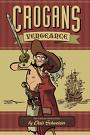
[READ: February 7, 2010] Crogan’s Vengeance

When Sarah and I went to BEA, we spoke to the Oni Press guy who was praising this book, The Crogan Adventures, as a fantastic series aimed at teens, but really readable for the whole family. The premise is that the Crogan family (and there’s an extensive family tree on the back cover), all led exciting lives.  The stories about these men are being told to the youngest Crogan boy Eric, in present day.

This first book is about Catfoot Crogan, an honest sailor who was more or less forced into a life of piracy in the 1700s.  And the story is fantastic.  There is sailor talk, there is swashbuckling, a terrible storm, even a shark! (more…)

Read Full Post »

socSOUNDTRACK: TINDERSTICKS-The Hungry Saw [CST055] (2008).

hungryIt was the releases of this Tindersticks disc (their first in 5 years) on the venerable Constellation Records (in North America) that inspired my trip through their back catalog. I was completely surprised to see them released on Constellation, as the band doesn’t exactly fit with the label’s stereotypical style (although, realistically with the last dozen or so releases, Constellation has really expanded the kind of music they release).

And this is a fantastic Tindersticks release!  There’s not a bad song on the disc. And, even though nothing is as immediately gripping as say “Can We Start Again,” the disc contains some of the band’s strongest songs.  “The Hungry Saw” is simply amazing, both lyrically and in its catchy (yet creepy) chorus.  But the highlight is probably “Boobar, Come Back to Me,” a song that begins slowly and builds gloriously, including a call and response segment that makes this song really swagger.

“Mother Dear” features a strangely comical musical episode.  In an otherwise very mellow piano based track, right in the middle of the song, come slashing, somewhat atonal guitar chords.  It’s as if a more rocking song is trying to overtake the mellow track.  (The coup is rebuffed, though).

The biggest thing to note about the disc is that longtime co-songwriter Dickon has left the band.  And so, some of the co-writing duties have been taken up by David Boulter.  While it is obviously sad that Dickon has left, Staples seems revitalized on this disc, and Boulter’s additions (especially his quirky instrumentals) bring a new point of view to the proceedings.  Also of note is something of a return to the orchestral style (albeit a much more understated version).  However, different songs emphasize different aspects: horns on one, strings on another, but always underscored by the ubiquitous Hammond organ.

It’s not a radical departure or anything like that.  It’s more of a continuation after a well earned vacation.  And it’s certainly their strongest release since their first four.

[READ & WATCHED: October 2009] Souvenir of Canada, Souvenir of Canada 2 & Souvenir of Canada (the movie)

I got the first Souvenir of Canada when it came out.  (I was on a big Coupland kick and may have even bought it in Montreal).  I didn’t get #2 when it came out, probably because I didn’t really invest a lot of effort into the first one.  But after recently reading City of Glass, I wanted to get a little more involved in Coupland’s visual art.  So, I picked up #2 and, while investigating this second book, I discovered that he had made a film of the books, too.

Coupland explains in the introduction that this book is his personal vision of what Canada is like. It is designed for Canadians as something of a nostalgia trip, but it is also something of an introduction to unseen Canada for non-Canadians.  And so, what you don’t get is pictures of mounties and Tim Hortons and other things that fit the stereotypical Canadian bill. Rather, you get things that are significant to Coupland (and maybe the average Canadian born on the West Coast in the 60s). (more…)

Read Full Post »

prospectSOUNDTRACK: TINDERSTICKS-can our love… (2001).

loveAfter Simple Pleasure, Tindersticks continued in this looser, less chamber-pop vein.  This disc features more organ fueled songs.  And– in something of a departure–they made many of the songs quite long (two are over seven minutes, one is almost nine!).  You could almost say these are jams, but that would give the wrong impression.

The band still sounds like Tindersticks (there’s no mistaking that voice), but they feel looser, less intense.  Yet they’re still passionate.  In fact, “People Keep Coming Round” and “Can Our Love” are two of their best tracks.  “People” has this really long keyboard section that my wife said sounded like the Doors, and she’s quite right about that.  But it’s more than just a Doors-keyboard solo.  It’s a catchy yet haunting single.

It’s easy to be feel disappointed about the latter Tindertsicks discs because they don’t rival the crazed intensity of their earlier ones.  And yet, Tindersticks is now a different band, playing a different kind of music.  It’s still beautiful, still affecting, it’s just different.

“No Man of the World,” the second to last song is a slow, meandering, deceptively simple song.  It features spoken lyrics and gently sung backing vocals.  And on first listen it’s nothing special, but the more you listen, the more elements you notice: strings, horns, sadness.  It’s really quite moving.

The disc ends with “Chiletime” another deceptively simple song that begins with an organ drone and simple strings.  Staples whispers his way through the first few bars.  But then the track builds to a full band with gorgeous vocals.  Then it slows down as if coming to and end, but it builds once more, this time to a beautiful finish.  It’s a perfect ending to this disc.

[READ: November 3, 2009] “The Girt Pike”

De Bernières wrote Captain Corelli’s Mandolin (which I’ve neither read nor seen the film).  In fact, this is the first story by him that I’ve read, and I’m fascinated by his style.  I don’t know if his other works are like this but I’m rather intrigued by this one.

This is a fairly simply story of a boy going fishing.  (I don’t fish myself, and I don’t really care all that much about fishing, but I’ve gotten a great deal of pleasure out of fishing stories (Paul Quarrington’s Fishing with My Old Guy was a surprise treat)).

The story opens with an endearing style that I would consider almost fairy-tale-like.  (The second sentence does indeed open with “Once upon a time”).  But the words are not of fairy-tales, rather, they reflect a somewhat nostalgic past: when boys fished in ponds with sticks and then threw the sticks to their dogs who splashed in the ponds.  Such an idyllic set up is altered somewhat once the “action” starts with the sentence: “On the morning that concerns us, however….” (more…)

Read Full Post »

pumphouseSOUNDTRACK: RA RA RIOT-The Rhumb Line (2008).

raraI have a hard time describing this album.  It has a lot of ingredients that don’t make sense individually, yet which work very well. I would almost resort to calling them pretentious rock, but that seems so derogatory.  Vampire Weekend falls into this category of highly literate pop too, and we know how much  I love that album!

Ra Ra Riot play catchy indie pop, but their main instruments are cello and violin. And yet they’re not anything like Rasputina’s string-laden goth music.  Rather, they write catchy poppy songs that are punctuated with strings.  I even wanted to say they don’t have a  guitarist, (they do) but I guess that just shows how well his licks meld with the rest of the music. And, indeed, on some tracks, the guitar is up front and wonderful.

They also get labelled pretentious because one of their songs (and one of their catchiest) has lyrics from e.e.cummings, or rather, they use his poem “dying is fine)but Death” as the lyrics for the song “Dying is Fine.”  They also cover Kate Bush.  Now the Futureheads covered Kate Bush a few years ago, so perhaps Kate is the next go-to artist for covers.

Ra Ra Riot wins extra points for covering a fairly unknown, and utterly bizarre song, “Suspeneded in Gaffa.”  This happens to be one of my favorite Kate songs, so I’m a bit critical.  However, they do a very good job of making it a pop song (There’s enough weird stuff in Kate’s version to never give it mainstream acceptance).  And the strings work very well for it.

Ra Ra Riot was also featured on that paragon of good taste: the show Chuck [And since I have mentioned the  music of Chuck on many occasions, I would be remiss if I didn’t send a shout-out to this site which lists all of the songs in Season One–gotta update Season Two fellas].  Chuck played “Can’t You Tell” in a romantic scene, and it worked quite well.

So, after all that, what can I say about the band.  They may be too commercial for some, but I think their combination of strings, intelligent lyrics and good vocals is pretty great.  Incidentally, in case you were wondering, a rhumb line  (or loxodrome) is a line crossing all meridians at the same angle, i.e. a path of constant bearing. Following a rhumb line requires turning the vehicle more and more sharply while approaching the poles (thanks Wikipedia).

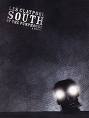
[READ: May 26, 2009] South of the Pumphouse

So this book is by Les Claypool, lead singer and bassist of Primus.

Claypool’s lyrics are typically stories, full of weird characters in weird situations.  Oh, and fishing.  Lots of fishing.  And that sums up this book pretty well.

The book is set in El Sobrante, California, a redneck haven that has not progressed along with the rest of the state.  Earl is a fisherman and meth addict.  In that order.  Fishing is Earl’s life.  His father fished every weekend, and Earl and his brother Ed went with him.  Rain or shine. (more…)

Read Full Post »

practicalSOUNDTRACK: FISHBONE-The Reality of My Surroundings (1991).

realityThis was my first real exposure to Fishbone (except for John Cusack wearing the fish skeleton shirt in Say Anything, of course–which, no images available on the web?  How is that possible?).  At 60 minutes it’s one of  the first really long alternative discs to come out.  It does run a little long, but there’s so much packed into it that it’s easy to forgive their self indulgences.

Reality starts with the heavy, thrashy “Fight the Youth” an amazing guitar workout.  It’s almost not the same band as on Truth and Soul, except that all the Fishbone elements are still in there.  I listened to this album a lot in college.  I distinctly recall singing the line “Dooooo the Howwwwssssswork!” from “Housework” a fun return to the Fishbone of old.

But two other big highlights come near the end: “Everyday Sunshine” is just a beautiful song.  But even that doesn’t compare to “Sunless Saturday” a fantastic catchy and wonderful song.  It starts like a ballad but turns into a speedy rocker by the end, never too heavy, just perfect for what should have been a massive single.

The album has 18 songs, and interspersed throughout are silly songs that are about a minute each.  “Asswhippin” is 37 second of well, asswhippin.  But it’s the 4 “If I Were A…I’d” pieces that shows the band taking things they dislike and throwing them into a thrash song explaining what they’d do.  They were always fun back in the day, and even though, as songs, they are pretty silly, I enjoyed hearing them again.

This is a pretty massive record, and will always remain a favorite for me.

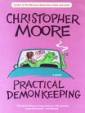
[READ: December 26, 2008] Practical Demonkeeping

After reviewing You Suck, I was inspired to read some more Christopher Moore (even though I have SO MANY OTHER books to read).  Anyhow, I put this book (his first) on hold, and it came much sooner than I expected. So, I decided to read this one instead of what’s next on my list.

But anyhow.

This book is set in Pine Cove, California.  A tourist trap that prides itself on being touristy.   As the book opens, one of Pine Cove’s residents is driving The Breeze around town looking for action. The Breeze is a small time drug dealer and trailer resident awaiting his big score tomorrow.  And so, he is obviously bummed not to make it through the night when he is swallowed by a giant demon. (more…)

Read Full Post »

« Newer Posts