Feeds:
Posts
Comments

Archive for the ‘Smarty Pants’ Category

SOUNDTRACK: THE FLAMING LIPS-“Smoke on the Water” (2012).

There’s a new Deep Purple tribute album coming out shortly (is this the year of tributes?  what’s going on?).  Anyway, the lineup isn’t all that inspired, but I was curious to see what the Flaming Lips would do with that song

As with their recent reinterpretation of Dark Side of the Moon, this cover is respectful and utterly disrespectful.  Musically the song is pretty accurate. Well, the notes are the same.  But the style is very different, kind of wahwahed delicate chords–no heavy bass or anything.  But it’s the vocals that are the contentious point–he recites the entire song (which kind of works because it is a story) in a stilted, faux British accent.

The second verse has a very computerized voice singing an autotuned melody along with the recitation–sort of a harmony but not.  This voice continues through to the chorus (which the main vocals also simply recite).

I appreciate the Flaming Lips’ approaches to popular songs, but this version renders a big loud song kind of anemic.  Which is so weird because the last few Lips albums were so loud and bass-heavy.  I listened twice, I probably don’t need to listen again.

So, this is yet another tribute I won’t be buying.

[READ: August 22, 2012] Don’t Get Too Comfortable

I’m already making good on my promise to read more David Rakoff.  Indeed, as soon as I heard that he died, I put this book on hold at the library.  The strange thing about this book is that I feel like I read parts of it already.  I don’t feel like I read the whole book because some things were unfamiliar to me, and yet there was a strange feeling of déjà vu throughout the book.  But I looked in the front of the book to see where these essays had appeared and I don’t read any of the magazines where they initially showed up.  And while I like This American Life, I don’t really listen to it very often.  So either I read this book seven years ago or these pieces are inspirations for other pieces I have read (which is possible–two or three articles in here reminded me of things that A.J .Jacobs has since done).

So this collection of essays takes place during the early 2000s, George W. Bush’s first term (not the happiest time to be a gay Canadian living in New York).  But in addition to the first essay which is all about his quest for citizenship, it seems that Rakoff was now gainfully employed as a freelance writer.  Most of these essays seem to have been requested for magazines–like they sought him out to write them.  So his fame was clearly growing.  And, again, like A.J. Jacobs, he seems to have been picked as a guinea pig for certain pieces.   I don’t really know if this is a “genre” per se, I mean lots of un-knowledgeable people have gone into new experiences to write about them (insert inevitable David Foster Wallace reference here–but of course he wasn’t the first either).  But Rakoff’s subjects in the last couple essays seem to be closer to what Wikipedia calls Jacob’s “stunt” journalism. (more…)

Read Full Post »

SOUNDTRACK: RED HOT CHILI PEPPERS-“Magic Johnson” (1989).

Just before the Red Hot Chili Peppers totally took off and became stadium stars, they released Mother’s Milk.  It was a commercialized realization of their three earlier more raw sounding funk rock records.  It was one of my favorite records of the late 80s.

Since Flea is interviewed in this issue of Grantland, and since he’s still a fan of the Lakers, it seemed like a good time to mention this song.

It opens with some martial drums (from then new drummer Chad Smith) and band chanting about M A G I C.  The lyrics are sung very quickly (I’m not even sure what they say half the time).  About 80 seconds in some wild guitar work burst forth, but it’s largely a chanted song of bass and drums.  There’ s a brief jam at the end where Flea shows off some great basswork and John Frusciante gets to do his thing again.

I don’t think I’ve ever heard it played anywhere (maybe at Lakers games?), so here’s a chance to hear it:

[READ: May 8, 2012] Grantland 3

One thing is for sure, Grantland loves it some basketball.  Basketball is the most widely covered sport in the published Grantlands so far. (The first issue even looked like one).  Since basketball is such a pop culture-referencing sport it actually works pretty well as a subject–with lots of different angles–especially given the state of the NBA lately.  Some other things on the Grantland staff’s minds include–the dangers of football and inadequacy of helmets to protect kids and Tim frickin Tebow (still!).  I don’t think an issue has past without talking about him yet.  I realize that’s a function of the time of these publications but… ew!

Nevertheless, the writing remains exciting and interesting, even for a non-sports guy like me.

(more…)

Read Full Post »

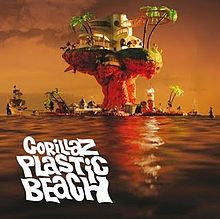
SOUNDTRACK: GORILLAZ-Plastic Beach (2010).

I have been a huge supporter of Gorillaz since the drew their way onto the music scene all those years ago.  It’s true that part of my love for the band was the art of Jamie Hewlitt, who I assume doesn’t really have any input anymore.  I also love Del the Funky Homosapien (who is also missing).  But I’m almost slavishly devoted to Damon Albarn, so I was pretty psyched when I heard they had a new album coming out and that it was getting rave reviews.

I was severely disappointed when I heard the record. 

“Welcome to the World of the Plastic Beach” features Snoop Dog who is phoning it in from a vacationland far far away.  He was more exciting on his cameo for The Lonely Island.  Even musically, it’s not very interesting.  “White Flag” is more promising, with the cool flute and string intro, but the rap by Bashy (which I wanted to like because of his accent) is just bland.  And Gorillaz must agree as the rap is less than a third of the song. 

“Stylo” has a cool bass line but the track overall is surprisingly discoey.  The Mos Def bit is interesting but I guess I’m not a fan of Bobby Womack, as I don’t care for his part of the song at all.  “Sweepstakes” has some interesting parts but the intermittent yelling of “Sweepstakes” kind of ruins it for me.  “Plastic Beach” features Mick Jones and Paul Simonon but you’d never know it.  And I actually don’t enjoy the manipulated voice much here, it sounds uncomfortably like early 80s technology.  “Cloud of Unknowing” is barely there at all (sorry Bobby Womack, I’m, not convinced)

It’s probably unsurprising that my favorite song with guests is “Superfast Jellyfish.”  I love De La Soul (although their “dopey” sounding rap is a bit much).  But I like that they play up the cartoon feel of the song (and the band).  I also didn’t even realize that the main singer was Gruff Rhys until a few listens in.  And since I love him, it all plays out nicely.  I also like “Glitter Freeze” because fun with keyboards can be interesting. I didn’t realize it was Mark E. Smith until recently.  I’m not really sure if that makes any difference since he just says a few words, but things are always more interesting when he’s around.  Of course, this song could have been 2 minutes instead of 4.  “Some Kind of Nature” features Lou Reed.  Reed has been hit or miss lately and this is more miss than hit.  “Empire Ants” features Little Dragon (unknown to me).  It is very slow to get to the interesting part, but when it does, the song is pretty cool.  The other song with Little Dragon, “To Binge” is wonderful.  It reminds me of a track from A Clockwork Orange and it also features some great lyrics. 

The few songs that I like on the album are ones that are credited to just Gorillaz.  “Rhinestone Eyes” is a bit lazy for my tastes, although the second part of the song really showcases the first decent melody on the disc, and the introduction of Damon’s voice is like a salve.  “On Melancholy Hill” has the best wispy keyboard intro this side of early 80s Madonna–a wonderful counterpoint to the title and lyrics.  “Broken” is actually a little too mellow for me, but again, the melody is a nice one.  “Pirate Jet” is a simple, dopey song that ends the album in a kind of limbo state.

I’m confused by all the rave reviews, especially the one that says the album is chock full of singles.  I mean, “Dare” now that’s a single.  I guess I just miss Del (and Russel) way too much.  And frankly, even the artwork is pretty lame on this one.

[READ: January 10, 2012] “Center of the Universe”

Simon Rich never fails to make me laugh. Sometimes his ideas are completely original.  Other times he takes a fairly common observation and runs with it into a land of lunacy.  And sometime he takes an idea that seems like it’s been done before but he puts a fun twist on it and makes it entirely his own.  Such is the case with this.

The very simple premise is that while God is busy creating the earth, his girlfriend is not only complaining that he never spends time with her, but she also feels slighted that he doesn’t seem to care how hard her job is.

A wonderful part of this scenario is that God has not yet finished making the earth–He’s only on the sixth day–but His girlfriend, Kate, is hanging out in Chelsea reading a magazine impatiently waiting for Him to show up.  (more…)

Read Full Post »

SOUNDTRACK: OKX: A Tribute to Ok Computer (2010).

OK Computer is one of the best records of the 90s.  Every time I listen to it I hear something new and interesting.  So, why on earth would anyone want to cover the whole thing?  And how could you possibly do justice to this multi-layered masterpiece?

I can’t answer the first question, but the second question is more or less answered by this tribute which was orchestrated by Stereogum.

The answer is by stripping down the music to its bare essentials.  When I first listened to the songs I was really puzzled by how you could take a such a complex album and make Doveman’s version of “Airbag,” which is sort of drums and pianos.  Or gosh, where would you even begin to tackle “Paranoid Android?”  Well Slaraffenland create a bizarre symphonic version that excises many things–in fact half of the lyrics are missing–and yet keeps elements that touch on the original.  But it’s an interesting version of the song and shows  a bizarre sense of creativity.  And that is more or less what this tribute does–it makes new versions of these songs.

Mobius Band make a kind of Police-sounding version of “Subterranean Homesick Alien.”  Again, it radically changes the song, making it a fast and driving song (although I don’t care for the repeated “Uptights” and “Outsides” during the verses).

Vampire Weekend, one of the few bands that I actually knew in this collection (and whom I really like) do a very interesting, stripped down version of “Exit Music, for a Film.  The “film” they make is a haunted one, with eerie keyboards.  Again, it is clearly that song, but it sounds very different (and quite different from what Vampire Weekend usually sound like).

“Let Down” (by David Bazan’s Black Cloud) and “Karma Police” (by John Vanderslice) work on a similar principle: more vocals and less music.  The music is very stripped down, but the vocals harmonize interestingly.  Perhaps the only track that is more interesting than the original is “Fitter Happier” by Samson Delonga.  The original is a processed computer voice, but this version is a real person, intoning the directives in a fun, impassioned way.  There’s also good sound effects.

Cold War Kids take the riotous “Electioneering” and simplify it, with drums and vocals only to start.  It’s hard to listen to this song without the utter noise of the original.  “Climbing Up the Walls” is one of the more manic songs on this collection, with some interesting vocals from The Twilight Sad.

There are two versions of “No Surprises” in this collection.  Interestingly, they are both by women-fronted bands, and both treat the song as a very delicate ballad.  Both versions are rather successful.  Marissa Nadler’s version (the one included in sequence) is a little slower and more yearning, while Northern State’s version (which is listed as a B-Side) is a little fuller and I think better for it.  My Brightest Diamond cover “Lucky.”  They do an interesting orchestral version–very spooky.

Flash Hawk Parlor Ensemble (a side project of Chris Funk from The Decemberists) do a very weird electronic version of the song (with almost no lyrics).  It’s very processed and rather creepy (and the accompanying notes make it even more intriguing when you know what’s he doing).

The final B-side is “Polyethylene (Part 1 & 2),”  It’s a track from the Airbag single and it’s done by Chris Walla.  I don’t know this song very well (since it’s not on OK Computer), but it’s a weird one, that’s for sure.  This version is probably the most traditional sounding song of this collection: full guitars, normal sounding drums and only a slightly clipped singing voice (I don’t know what Walla normally sounds like).

So, In many ways this is a successful tribute album.  Nobody tries to duplicate the original and really no one tries to out-do it either.  These are all new versions taking aspects of the songs and running with them.  Obviously, I like the original better, but these are interesting covers.

[READ: November 5, 2011]  McSweeney’s #8

I had been reading all of the McSweeney’s issue starting from the beginning, but I had to take a breather.  I just resumed (and I have about ten left to go before I’ve read all of them).  This issue feels, retroactively like the final issue before McSweeney’s changed–one is tempted to say it has something to do with September 11th, but again, this is all retroactive speculation.  Of course, the introduction states that most of the work on this Issue was done between April and June of 2001, so  even though the publication date is 2002, it does stand as a pre 9/11 document.

But this issue is a wild creation–full of hoaxes and fakery and discussions of hoaxes and fakery but also with some seriousness thrown in–which makes for a fairly confusing issue and one that is rife with a kind of insider humor.

But there’s also a lot of non-fiction and interviews.  (The Believer’s first issue came out in March 2003, so it seems like maybe this was the last time they wanted to really inundate their books with anything other than fiction (Issue #9 has some non-fiction, but it’s by fiction writers).

This issue was also guest edited by Paul Maliszewski.  He offers a brief(ish) note to open the book, talking about his editing process and selection and about his black polydactyl cat.  Then he mentions finding a coupon in the phonebook for a painting class  which advertised “Learn to Paint Like the Old Masters” and he wonders which Old Masters people ask to be able to paint like–and there’s a fun little internal monologue about that.

The introduction then goes on to list the 100 stores that are the best places to find McSweeney’s.  There are many stores that I have heard of (I wonder what percentage still exist).  Sadly none were in New Jersey.

This issue also features lots of little cartoons from Marcel Dzama, of Canada. (more…)

Read Full Post »

SOUNDTRACK: THE KOPECKY FAMILY BAND-Tiny Desk Concert #131 (June 6, 2011).

I’d never heard of The Kopecky Family Band, but the write-up about them was pretty interesting, so I decided to give the Tiny Desk concert a listen.  The band (all 7 of them) play a great collective of music: two guitars (acoustic & electic) bass, cello, violin, drums and keyboard.  They play a sort of traditional folk with a very full sound.

Indeed, they remind me an awful lot of The Head and the Heart (the singer’s voice in particular), although they are from different edges of the continent and have been playing music about as long as each other (indeed, The Kopecky Family Band released an EP in 2008 whereas Head and the Heart formed in 2009).

And the Kopecky website offers lots of free music (which is very cool).

“Howlin’ at the Moon” is a full acoustic sounding track.  “Birds” has a simply gorgeous whistle/xylophone melody that is as beautiful as it is catchy.  “Disaster” is a tender ballad with wonderful harmonies.  And “Red Devil” is a somewhat more rocking song, which really helps to demonstrate the bands’ diversity.

And the band is charming.  Keyboardist/singer Kelsey admits to having left a trinket of some kind of the office bookshelves (which are littered with things).  It’s a wonderful set, and because of it, I downloaded the band’s first EP from their site.

[READ: June 5, 2011] Great Philosophers Who Failed at Love

Shaffer was signing books at BEA this year.  My coworker told me that he was very funny and that he signed her book in an amusing way.  He happened to be signing at the table next to the line I was on. Sadly, he finished before I was able to get to him.  But I was pretty close to the beginning of the line, so I asked if I could grab a copy of his book, which I did (although no autograph for me).

This is a silly book of nonfiction.  It looks at thirty-seven philosopher or thinkers and their utter failure at love.  Each man (and occasional woman) has had some distinguishing characteristic that made them pretty lousy in the emotional range.

The title of the book is funny and is meant to be kind of surprising: these smart folks were terrible at love.  Of course, spending a minute or two thinking about who these people were and what they did, it’s not surprising that they were lousy at love.  These were intellectuals, people who spend most of their time in their own mind.  Of course they couldn’t have a serious relationship.

Nevertheless, these stories are all more or less amusing (Louis Althusser accidentally strangled his wife to death(!) which isn’t amusing per se, but the story of it is, kind of).  Shaffer does a great job at keeping each entry brief but really retaining the salient points of the thinker’s philosophy and a cogent example of his or her lousiness at love.  He also throws in some amusingly snarky comments of his own as he goes along.

I was delighted that the book order was done alphabetically rather than chronologically.  A chronological list would have been a little too samey in terms of each person’s context.  The alphabetical list allows for jumping around from say Plato to Ayn Rand which keeps the stories interesting and fresh.

At the end of each person’s piece, there’s an “In His Own Words” which offers a quote that details his or her written philosophy regarding love.

Dare I say that this is an ideal bathroom book?   It certainly is. And it makes you feel a little better about yourself (if you haven’t for instance, adopted your mistress as your daughter (Sartre)).

Read Full Post »

SOUNDTRACK: THURSTON MOORE-in studio at KEXP, March 11, 2008 (2008).

This interview was headlined ‘Thurston Moore: Not a “Real Guitar Player”?’ which is pretty funny.  The Sonic Youth guys have been defying conventional guitar playing for years.  And then in 2008 Thurston put out a solo album called Trees Outside the Academy, a beautiful delicate album of acoustic guitar songs.

The interview covers this very subject and concludes that maybe back when they started he wasn’t a guitar player, but now, 25 years later, he certainly is.  Moore is charming and funny and relates a very amusing story about being on the cover of Guitar Player and then embarrassing himself in front of one of his idols.

But this download is all about the songs.  Thurston (and violinist Samara Lubelski–who plays great accompaniment, but doesn’t really get any on air time to speak) play four songs from Trees: “Sliver>Blue,” “The Shape is in a Trance,” “Frozen Gtr” and “Fri/End.”  He sounds great in this setting, especially under close scrutiny.  I’d always assumed that there was a lot of improv in the SY guitar world, so to hear him play these (admittedly not difficult) songs flawlessly is pretty cool.  I actually wondered if he’d be hesitant (he admits the acoustic guitar is a fairly new thing for him), but not at all (although he says he screwed up on a chorus, but I never heard it.

It’s a great set and its fun to hear Thurston so casual.

[READ: April 14, 2011] “Farther Away”

The subtitle of this essay is “‘Robinson Crusoe,’ David Foster Wallace, and the island of solitude.”  As with Franzen’s other recent essays, this one is also about birding.

Franzen explains that he is hot off the work of a book tour (for Freedom) and is looking for some solitude.  He decides to travel by himself to the island of Alejandro Selkirk, a volcanic mass off the coast of Chile.  The island is named after Alexander Selkirk, the Scottish explorer who is considered the basis for Robinson Crusoe.  As such, Franzen decides to travel to the remote island, decompress and read Robinson Crusoe while he’s at it.  The locals call the island Masafuera.

I haven’t read Robinson Crusoe as an adult, so I don’t know the ins and outs of the story.  Franzen has a personal resonance with the story because it was the only novel that meant anything to his father (which must say something about Franzen’s father, no?).  The upshot of what it meant to Franzen’s father was that his father took him and his brother camping a lot as a way to get away from everything.

However, for Franzen, on his first experience of being away from home for a few days (at 16 with a camping group), he had terrible homesickness.  He was only able to deal with the homesickness by writing letters.

When he arrives on Masafuera, Franzen’s writing really takes off.  He has some wonderful prose about this treacherous space.  Although he comes off as something of a yutz for relying on a Google map to learn about the terrain and for bringing an old GPS which has more or less run out of battery. (more…)

Read Full Post »

SOUNDTRACK: MOGWAI-Come on Die Young (1999).

Mogwai’s second full length record goes in a slightly different direction than Young Team. Although it is still full of somewhat lengthy instrumentals, for the most part, the loud and quiet dynamic that they’ve been mastering over their EPs and Young Team is dismissed for a more atmospheric quality.  There’s also a few vocal aspects that comprise some tracks.  One in particular is very puzzling.

The disc opens with “Punk Rock.”  The music is actually not punk at all; rather, it’s a pretty melody that plays behind a rant about punk rock spoken by Iggy Pop. It’s followed by “Cody,” a kind of  sweet slow song.  This one surprises even more because it has gentle vocals which are actually audible.  The track is surprisingly soporific for Mogwai.

And then comes the real puzzler, “Helps Both Ways” is another slow track. But this time in the background is a broadcast of an American football game.  The announcers begin by telling us about an 89 yard run that was called back due to a penalty, but the game stays on throughout the track.  And I have to admit I get more absorbed in the game than the music. After these few quiet tracks,”Year 2000 Non-Compliant Cardia” is a little louder (with odd effects).  It’s also much more angular than songs past.

“Kappa” is the song in which I realized that much of the songs here are more guitar note based rather than the washes of sounds and noise.  “Waltz for Aidan” is indeed a waltz, another slow track.  It’s followed by “May Nothing” an 8 minute track which, despite its length, never gets heavy or loud or noisy.

“Oh! How the Dogs Stack Up” changes things.  It features a distorted piano which creates a very eerie 2 1/2 minutes.  And it leads into the 9 minute “Ex Cowboy.”  Although the general feeling of “Ex Cowboy” is mellow, there are some squealing guitars and noises as well.  By about 6-minutes the song turns really chaotic, its “Chocky” is another 9-minute song (the disc is very backheavy), there’s noise faintly in the background as a simple piano melody is plucked out.  It’s probably the prettiest melody on the disc, and the noisy background keep its unexpected.  The disc more or less ends with “Christmas steps.”  This is a rerecording of the awesome track from the No Education = No Future (Fuck the Curfew) EP.  It is shorter but slower and it sounds a little more polished than the EP. I actually prefer the EP version, but  this one is very good as well (it’s honestly not that different).

“Punk Rock/Puff Daddy/Antichrist” ends the disc with a fun track sounds like a drunken Chinese western  It’s two minutes of backwards sounds and is actually less interesting than its title.

This is definitely their album I listen to least.

[READ: March 15, 2011] Icelander

It’s hard to even know where to begin when talking about this story.  So I’ll begin by saying that even though it was confusing for so many reasons, I really enjoyed it (and the confusions were cleared up over time).  This story has so many levels of intrigue and obfuscation, that it’s clear that Long thought quite hard about it (and had some wonderful inspirations).

The book opens with a Prefatory note from John Treeburg, Editor (who lives in New Uruk City).  The note informs us that the author of Icelander assumes that you, the reader, will be at least a little familiar with Magnus Valison’s series The Memoirs of Emily Bean.  As such, he has included notes for clarification.  He has also included a Dramatis Personae.  The characters in the Dramatis Personae are the characters from Valison’s series (not necessarily Icelander), and are included here for context.  He also notes that his afterward will comment on the disputed authorship of this very novel.

The Dramatis Personae lists the fourteen people who Valison wrote about inThe Memoirs of Emily Bean.  Except, we learn pretty early on that the The Memoirs were based directly on the actual diaries of the actual woman Emily Bean Ymirson.  Emily Bean died in 1985, but before she died she was an extraordinary anthropologist and criminologist.  She kept meticulous journals of all of her exploits, and Valison fictionalized it (to some people’s chagrin, but to general acclaim).

Emily Bean was also the mother of Our Heroine.  Our Heroine is, indeed, the heroine of Icelander, although her real name is never given.  We learn pretty early on is that Our Heroine’s friend Shirley MacGuffin has been killed.  MacGuffin was an aspiring author (whose only published work appears on a bathroom wall).  Her final text was meant to be a recreation of Hamlet.  Not Shakespeare’s Hamlet, but Hamlet as written by Thomas Kyd.  And, indeed, Kyd’s Hamlet predated Shakespeare’s.

There’s also a lot of excitement with The Vanatru.  The Vanatru lived underground, and had a serious quarrel with surface dwellers who worked hard at keeping them down. The Queen of the Vanatru is Gerd.  She controls the Refurserkir, an inhuman race of fox-shirted spirit warriors who appear literally out of nowhere.

Okay, so how confused are you now? (more…)

Read Full Post »

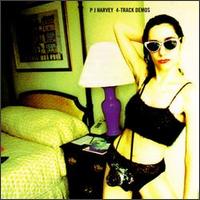
SOUNDTRACK: PJ HARVEY-4-Track Demos (1993).

After the intensity of the Steve Albini produced Rid of Me, Harvey releases this collection of demos.  The amazing thing is that these versions actually seem more intense than the Albini version. Or if not more intense, then certainly more raw.

The songs definitely have an unfinished feel about them, and yet they only vary from the final version in polish (and Albini’s stamp).

“Rid of Me” is just as quiet/loud, and has those high-pitched (and scary) backing vocals.  Speaking of scary vocals, her lead screams in “Legs” are far scarier here than on Rid of Me–like really creepy.  (Which sort of undermines that idea that this was released because Rid of Me was too intense for fans).   “Snake” actually features even creepier vocals–Harvey must have had a field day making these sounds!

I admit that I like the finished version of “50 Ft Queenie” better,”but there’s something about this version of “Yuri-G” that I like better.

The disc also has some tracks unreleased elsewhere.  “Reeling” is an organ-propelled song of female strength with the nice lyric: “Robert DeNiro sit on my face.”  “Hardly Wait” is a slow grinder that is fairly quiet for this time period.  “M-Bike” is a cool angry rocker about a guy and his motorcycle which is one of my favorite tracks on the disc.

It’s a great companion to Rid of Me.

[READ: end of February to early March]  original articles that comprise A Supposedly Fun Thing I’ll Never Do Again

As I mentioned last week, I decided to compare the articles in A Supposedly Fun Thing I’ll Never Do Again with the original publications to see what the differences were.  It quickly became obvious that there were a lot of additions to most of the articles, and it seems rather pointless (well, actually it seems exhausting and really outrageously time-consuming) to mention them all.  But what I did want to note was the things that are in the articles that have been removed from the book.   There’s not a lot but there are a few juicy tidbits (especially in the early articles) that are fun to note for anyone who read only the book and not the original articles.

My process for this was rather unthorough: I read the article and then right afterward I read the book.  If I noticed any changes, I made a note on the article version.  Many of them were surprisingly easy to note as DFW’s writing style (especially his idiosyncratic phrases) really stand out.  This is especially true in the Harper’s articles.  The academic ones were less notable, I believe, and I’m sure I missed a bunch.

I’m not sure in any way how these pieces were dealt with initially by the magazine or DFW.  I assume that DFW handed in the larger article (like we see in the book) and the magazine made suggested edits and DFW edited accordingly.  Then the book copies are probably the originals, bt which have also been updated in some way.

In most cases, it’s not really worth reading the original article, but I’m including links (thanks Howling Fantods), for the curious.

As for length, it’s hard to know exactly what the conversion from magazine article to book is.  The “Tornado Alley” tennis article is 8 pages (more like 4 pages when you take out the ads) and the book is 17.  Perhaps more accurately it seems like one Harper’s column = just under one book page.  I’ll try to figure out what the conversion is if I can.

One last note, whenever I say “article” I mean the original magazine version.  And obviously “book” means ASFTINDA. (more…)

Read Full Post »

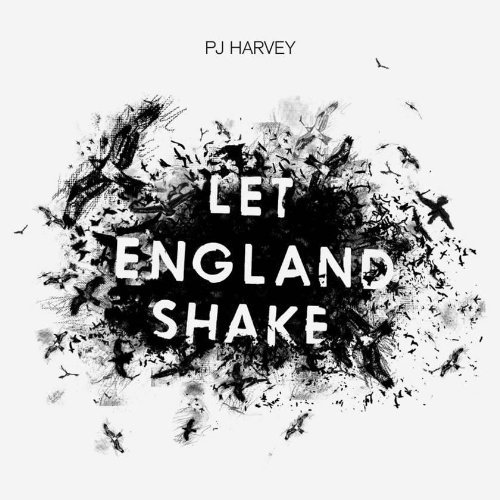
SOUNDTRACK: PJ HARVEY-Let England Shake (2011).

I’ve listened to this disc several times online; I have no details about the recording.  There’s samples, but I don’t know what they are and I can’t really tell what all the lyrics are (it’s obvious she’s pretty angry, but the details are lost to me).

The first question for me on hearing this disc is what happened to PJ Harvey’s voice?  It comes as such a shock when you compare it to Dry.  But once I accepted that this is not the PJ Harvey of Rid of Me, I listened to it as a new artist and I really like it.  But it’s a weird record to be sure.

The title track is played on an autoharp (!).  In fact the autoharp is a dominant instrument here.  It’s got a cool melody and, once you accept that she sounds like the singer from Rasputina, you can really appreciate what’s going on.

The second track, “The Last Living Rose,” returns somewhat to the PJ of old (the opening “God damn” sounds like she’s about to bust out some good-ol’ invective).  And there are guitars, but the music is upbeat (as are the vocal melodies) and there’s even a horn!  “The Glorious Land” has samples from the cavalry (I can see the horses riding across the plains) and a cool, slinky guitar (or is that the autoharp?).  There’s male vocals in the middle of the song, and it makes for disconcerting harmonizing (especially when PJ,’s voice ratchets up the weirdness and sounds more like Kate Bush).  But musically this song is great, it’s got a wonderful 80’s alt-rock feel.

“The Words That Maketh Murder” also has horns and some interesting male vocals chanting the lyrics.  This has one of the least subtle lyrics I’ve heard in a long time, although the re-imagining of the “Summertime Blues” refrain is pretty genius.

“All and Everyone” opens with more autoharp, and I think I’m realizing that the autoharp is what I think of as the interesting guitar sound (this song opens like a Smiths’ ballad.)  There’s more horns on this track which adds a weird dimension of sadness to it.  “On Battleship Hill” is a fast but delicate track in which PJ pulls out an astonishing falsetto–completely unexpected.  After the first verses, the rest of the song has, again, a kind of slinky 60s vibe.  “England” brings out the Kate Bush voice in PJ again.  This is a very delicate song, the music is mixed so low in the background that it feels like acapella–I guess Harvey has grown much more confident in her voiuce.  The music builds and builds though and there’s an unexpected middle eastern sounding vocal in the background.

“In the Dark Places” brings out Harvey’s guitar (in this case the Harvey is Mick Harvey, I believe) and her lower register vocals. While “Bitter Branches” is probably the loudest song on the disc, with a bunch of screamed vocals.  It’s rather startling considering the rest of the disc, but it’s nice to know just how much fire PJ still has.

“Hanging in the Wire” is another delicate song, with quiet pianos and Harvey’s sedate voice.  “Written on the Forehead” returns to that middle eastern vibe (“people throwing dinars at the belly dancers”) and that Kate Bush vocal–the backing vocals remind me of Peter Gabriel.  The album ends with “The Colour of the Earth.”  It’s the most disconcerting song of the bunch becuase it opens with a male singer (John Parrish?) singing what sounds like an old trad song (the melody is very traditional).  Then PJ joins in and makes the song her own.

It’s obvious that the lyrics are the main aspect of this disc, and I know that I’m missing something by not having them. I’m also missing a lot by not knowing all that much about England’s history.  It sounds like she has a lot of gripes with Eng-a-lund, and I’m curious to know what she’s on about.  But more than that, I’m totally hooked by the music.  It’s a great reinvention of a great artist.

[READ: February 9, 2011] The Ask

I was planning to read nothing except books from the pile by my bed for the foreseeable future.  And then, as if calling to me, I saw this book, which I was planning to read eventually, on a display right in front of me called Booklist Editor’s Choice (a new display for our library).  I stared at it for three hours and just had to check it out.

And I’m glad I did.  For the most part I really enjoyed this book, it was quite funny and the main character, kind of a schlub, was completely relatable.  I say for the most part because I felt like it dragged a bit about 2/3 of the way through (more on that later).  But its possible that it dragged because the first half of the book was just fantastic–fast paced and clever with lots of wonderfully funny lines (more on that later too).  And a setting that I found very entertaining.

The story is about Milo Burke. He is married to Maura and they have a going-on-four-year-old boy Bernie who is nothing if not precocious.  The titular ask concerns Bernie’s job.  He works for a small arts college in New York (which he called Mediocre University).  His job is to basically ask (hence the title) rich people for money for the college. We see him in his office as the book opens and we meet the rest of the staff: the surprisingly unslacker slacker Hubert (with whom Milo shares space and ribald jokes…this section is the funniest; many paragraphs end with sentences that hilariously undermine what he just described.

We often called it, with what we considered a certain amount of panache, the Mediocre University at NewYork City.  By we, I mean Horace and I.  By often, I mean once (4).

His supervisor is Vargina.  (This name, which is obviously over the top and childish and which I absolutely laughed at and then felt was maybe too easy of a laugh, has a great origin story and is really never not funny no matter how often you see it).  Milo has obscene fantasies about Vargina, but he is a (somewhat) happily married man and would not cheat on his wife.

He’s not very good at his job, but the other askers do alright so his job is safe.  Until, that is, he insults the daughter of one of the university’s biggest donors and he is summarily let go, without severance.  And then we get to see a lot about his home life. (more…)

Read Full Post »

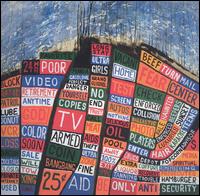
SOUNDTRACK: RADIOHEAD-Hail to the Thief (2003).

After the claustrophobia of Amnesiac, Hail to the Thief was a nice compromise between their earlier guitar rock and the ambience and the technology of Kid A.  “2 + 2 =5” is one of their most satisfying songs, opening with a nice guitar lick and Thom Yorke’s keening vocals, it abruptly jumps into a full-fledged rocker.  “Sit Down Stand Up” has similar properties–it opens quietly with a distant guitar riff.  The song builds and builds into a manic intensity.  By the end, when the pace is much faster and the lyrics are repeating “the raindrops” over and over, it’s a glorious mess.

“Sail to the Moon” is a keening piano-based ballad.  Not one of their best, but with very nice melodies.  “Backdrifts” flashes back to the experimental side of Kid A, with lots of percussive noises tapping into the electronic groove.

The band surprises everyone with a very acoustic sounding song, “Go to Sleep.”  It’s a really wonderful track, especially placed amidst the electronica of the other tracks.  The bridge brings Yorke’s vocals into the stratosphere (and the guitars get noisier and noisier).  “Where I End and You Begin” is a noisy staccato piece of fun with effects and more effects trying to hide Yorke’s voice.

“We Suck Young Blood” is a spare, almost completely stripped song composed of pianos and handclaps.  It is eerie and not a little disturbing.  While “The Gloaming” is practically all electronics.  It’s one of those transitional songs, not terribly exciting in itself, but not throwaway either.  And it leads into the gorgeous quintessential Radiohead of “There There” which could be an OK Computer outtake.

“I Will” is mournful dirge with just guitar and multitracked voice that lasts only 2 minutes and leads into the experimental “A Punchup at a Wedding.”  “Punchup” opens with that rarest of Radiohead sounds: a solo bass.   But it is quickly swallowed by more electronica.

“Myxamytosis”  is a nother great rollicking track with a great slinky keyboard riff that propels the song through the murky depths.  “Scatterbrain” features a cool guitar motif that shows that they can still play pretty music and which leads to the album closer, “A Wolf at the Door.”  “Wolf” ends the disc wonderfully with a cool guitar song and awesome almost-spoken lyrics.  It is kind of sinister and kind of sad at the same time.

This is a disc that rewards repeated listens (and headphones). If OK Computer was difficult, Thief is much more so, but for very different reasons.  But it pays wonderful dividends.

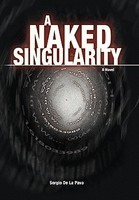
[READ: January 6, 2011] A Naked Singularity

I received a copy of this book about a year ago in March.  It is self-published and seems to have been sent to many folks who blogged during Infinite Summer (because it’s a big book, you see).  I was interested in reading it, but I had a lot of other things that I was reading first, so I put it aside until last month.  And I am really bummed that I waited this long.

A Naked Singularity is a wondrous, beautiful mess of a book that I was so absorbed in, I couldn’t put it down.  The writing style is great: funny, clever, funny, philosophical, funny, legal, funny and at times rather violent.

I’m torn when writing this how much of the “story” to give away.  I didn’t know anything about the book (the blurb on the back is just a quote from the book–there’s no summary or anything).  So I’m going to rob you a little of the “what the hell is going on in this story” aspect that I had, but I’m not going to give anything major away.

The story opens in a the middle of a conversation between a prisoner and a lawyer.  It’s a bit confusing until the story pulls back and we get the whole deal.  The story is about Casi.  He is a wunderkind lawyer who has never lost a trial (in 14 attempts).  He plays the system, but he’s also dedicated to getting his clients off (even though he–and everyone else on staff–knows they are guilty) mostly because he is undefeated.

The entire first Part of the book (320 pages) introduces us to Casi, to his workload, to his clients, to his coworkers and to his family.  His clients are mostly drug dealers. His coworkers are mostly jaded and are no longer excited by their jobs.  His family is wonderful, a group of Colombian immigrants who love each other and fight with each other loudly.  (The early scene at his family’s house is hilarious scene in which unattributed dialogue overlaps–it’s wonderful).

And yet for all of that, the first part never quite gives us a plot.  This might be a problem for some books, but the whole set up is so compelling that you just go with it, from one amusing (or hilarious) segment to the next.

In addition to introducing us to his cast of drug addicts and low level criminals, Casi also indicts the New York Justice system (in hilarious detail).  There are quite a few chapter spent talking about “bodies” (criminals) and how many of them sit in jail for 72 hours until they see a lawyer.

Of course, when he gets home, all is not normal there either.  His apartment is free (because his downstairs neighbor’s father owns the building and Casi squats there).  The neighbors are a curious bunch of college students.  One of them is a total TV junkie.  And, there’s a bizarre, wonderful subplot about him trying to bring Ralph Kramden from The Honeymooners to life in his room by watching the shows nonstop for weeks.  Yes.

Textually, the story also plays with lots of styles.  In addition to the dramatic scene with his family, we also see many court transcripts.  The second one with Mr McSlappahan is quite funny not least of which because the judge cannot get the poor man’s name right and the official transcript changes his name throughout the case.  There are also letters to and from one of the clients.   There’s a chapter-long epic poem (which was probably the hardest thing in the book for me to digest).  There’s even a recipe for empanadas (which sounds delicious).

In addition to some wonderful wordplay and punning there is also childish gross-out humor.  A scene with frozen burritos (pp. 150-158) had me laughing out loud for several pages.  But there’s also a lot of commentaries on society.  For instance Television is always capitalized and treated as a proper noun.  The mayor of New York is named Toad.  There are street vigilantes with cameras everywhere and, most amusingly, there’s an in-the-making TV show: Clerical Confessions.

By the time Part Two comes around a plot starts forming.  I was concerned that all of part two would follow this nascent plot, but it doesn’t. The book continues in a similar vein with the plot-instigator [coworker and lawyer, Dane, one of the most consistently amusing characters I’ve read in a long time] continually popping up on Casi’s periphery to try to get him to help him with…the perfect crime.

And that’s when boxing comes into play.  Casi is a fan of boxing, specifically a fan of Wilfred Benítez (who I didn’t know was a real boxer, but whenI looked him up I found this part of the story even more compelling).  And so, interspersed throughout the rest of the book is Benítez’ biography and fight history. It’s a rather lengthy character study of the man himself and boxing in general.  Now, I’m not a fan of boxing, I’ve never watched a fight, but I was totally engrossed by the storytelling.

Because he is setting up a whole story about muiddleweight champiosn, the novel follows many boxers who I had heard of and knew from pop culture (I checked and even Sarah knew who most of these boxers were, so they really must get into the pop culture world): Sugar Ray Leonard, Marvelous Marvin Hagler, Thomas Hearns (I didn’t know him, but De La Pava’s description of the 3 round Hearns-Hagler fight is so exciting that I’m going to watch them on You Tube) and Roberto Durán (she didn’t know him).  And so the story of these middleweight fighters trying to knock each other over for the title becomes something of a metaphor for the Casi’s life pre- and post- crime.  In fact, when they go to execute the perfect crime, the first half of that chapter is taken up with a story about Benítez…that’s quite unexpected.

While the crime is beign set up, Toom, one of Casi’s coworkers asks him to help with a case in Alabama.  A severely mentally retarded man is to be executed and Toom has taken on the case to rescue the man.  This plot adds a surprising amount of pathos to the story, especially when Casi flies to Alabama and meets the man.  But even that sequence is lightened by a wonderfully absurd hotel scene.  I totally want to stay at this hotel.

Part Three of the story is where the whole thing devolves into a crazy quilt of insanity.  The crime has happened, and it is messing with everything. There is a city-wide blackout, Casi has no heat, no cars are allowed on the streets so he can’t even escape to his mother’s house.  There’s also a strange guy in is building who looks and sounds suspiciously like Ralph Kramden.  And, Casi is accused of contempt (and is about to be ousted by his law office’s morals group, the childish but amusingly named Committee to Oust Casi Kwickly). Both trials are as absurd as a Marx brothers movie (Karl of Groucho?).

The lead up to the end is very satisfying will all kinds of loose ends tied together (things that I thought he’s never address were in fact cleared up!).  But with a story this all over the place, it’s hard to imagine how you would finally end it.  The ending goes in a direction that is supported by the title (and is a little overwhelming).  It’s a little unsatisfying, but aside from a tidy happy ending (which you knew you weren’t getting) I don’t know how else you could have ended the book.

Ending aside, this is a fantastic novel.  There is just so much going on in it (I didn’t even mention the discussion of Hume vs Descartes “I guessed there was nothing wrong with Hume provided it was acknowledged that Descartes was The Man” (510)) or the whole subplot about the two kids who kidnap a baby), and it is very well constructed and tied together.

Somebody please publish this book officially!  Yes it’s long, yes it’s multifaceted, yes it demands a lot of the reader,but the payoffs are wonderful and, frankly, this is the kind of unexpected story that could be embraced by, well, not the general public, but a niche market who enjoys clever books (and yes, probably fans of David Foster Wallace (and his progenitors)).

Give De La Pava a contract, huh!  You can read an excerpt here.

Read Full Post »

« Newer Posts - Older Posts »