Feeds:
Posts
Comments

Archive for the ‘Short Story’ Category

SOUNDTRACK: CHILLY GONZALES & KAISER QUARTETT-Live at Massey Hall (February 5, 2016).
Years earlier, Chilly Gonzales had signed a record deal in Toronto but it didn’t go well “because I wasn’t prepared for what the job of being a true musician was.  I didn’t really have a narrative.  I couldn’t draw people in and guide them.  I thought the music would be enough.”

He went to Europe–Berlin–taking the name Chilly Gonzales and creating this persona.  He wanted reassuring satisfying elements and surprising, uncomfortable elements.  He wanted to  take a page out of the rappers playbook–embodying superficiality and depth ant the same time ridiculousness and seriousness at the same time.

Toronto was like the place where lighting hit the lab and turned him into a supervillain.  The failure of the label is his origin story.

They play primarily instrumental compositions, but ones that are very different and unlike anything else I’ve heard.

“Green’s Leaves” is a staccato piece with great melodies from the Quartett and lovey piano sprinkled throughout.  It’s a short piece with a lot of beauty.

He tells the audience he thinks of the Kaiser Quartett (Adam Zolynski-violin; Jansen Folkers-violin; Ingmar Süberkrüb-viola; Martin Bentz cello) as the world’s most expensive sampler.  He tries to use them in ways that string quartets might not be used.

“Sample This” is a simple request to rappers or producers to feel free to sample this piece of music (and of course call my lawyer beforehand).   He says you don’t have to have a rapper to make rap music–it is an attitude.  He says, “see if you can rap along in your mind.  Imagine what a rapper might say over this.”

This song moves along prettily at a rapid pace.  As it reaches the middle it slows down to a gentle piano with pulsing low notes from the strings and just as it feels like it has hit the end, Joe Elory (I wish it was filmed better) gets up and thuds the drums for one loud beat as the song resumes and picks up the pace.

The fact that he ends the song with quiet piano melody and a rapper pose and says “bitch” is really quite funny.

He says that a sampler can contain the history of all recorded music.  The Quartet plays  a bar of “Eleanor Rigby” which he introduces as “Elizabeth Ridley by the Rolling Stones.” Then they play Joseph Haydn–the song we all know– but says he wants the gansta version–put it into a minor key.  Then they play the opening of Schoenberg’s “The Rites of Spring.”  When Schoenberg played it, it caused a riot.  The dissonance is something.  He jokes that that was the verse now here comes the catchy part (it’s the same).  Is this offensive to you?  Or is this offensive that I’m wasting so much time playing this terrible music “hashtag fuckscheonberg.”

He mashed all the above together to make “Advantage Points.”  The loud and quiet parts balance nicely and its really quite catchy.

“Supervillain” has lots of high notes on the piano before the strings kick in.  And then its a rap (!).  The lyrics are good but the flow is only okay.  It’s funny but not comic.  When it’s over he affirms: “So you like rap music when it is over a waltz beat.”

“Knight moves” is a fast piano piece that builds to some really fun rollicking piano and even adds (minimal) drums by the end.  As it moves along he starts playing very very fast and heavy, including more or less pounding on the low notes for a low rumble.

“Smothered Mate” has a kind of action movie vibe.  There’s also percussion for the whole piece.  Unfortunately, he speaks over it for the end:

In the pre-Drake era there were not a lot of reasons to think that Toronto was on the musical map.  But Charlie Parker and Neil Young  showed this hall had glamour you dint get in a lot Canadian venues.

[READ: June 19, 2018] “Edison Labs, 1891”

This story goes in a direction I never expected and the anachronism of the humor is terrific.

Thomas Edison is working in his lab when his assistant, Jed, confesses that he screwed up again–he used centiliters instead of milliliters.  Which leads to a beaker exploding.

Edison believes that this boy is an idiot–useful only as a subject for medical experimentation.

Except for one other possibility.

He asked Jed to stand there in one spot.

Then he pulled over his new contraption, an apparatus made of metal and glass. (more…)

Read Full Post »

SOUNDTRACKAMELIA CURRAN-Live at Massey Hall (April 29, 2016).

I knew of Amelia Curran but I didn’t know her work before this show.

She says that growing up in Newfoundland it’s all about original music and the oral tradition and story discovering.  She loves to play at the pub back home.

But she continues that when you move into a more professional scene–recording your first album–you also become a Canadian musician, which is an extra thing that happens later.  You look to Neil Young and Joni and Massey Hall.  You come from a musical place like Newfoundland and then coming to Canada and “arriving.”

She plays great folkie songs.  Lyrically her songs are rich, but I find the drums to be quiet compelling on most of the songs.  There;s nothing flashy, but I really like the way the drums are somewhat unconventional or rhythmically interesting, like on “Song on the Radio.”

She is also quite sweet as she says, “Well thanks, oh golly.”

After “Blackbird on Fire” she says “the teenage me on the inside is really freaking out.”

Before “The Reverie,” she says “I’d like to play you a love song and to introduce you to this handsome fellow on the electric guitar Dean Drouillard.”

Before the nest song, “The Modern Man: she says, “Ladies and gentlemen, I don’t know if you know, but this handsome lad on the bass guitar has the best hair in the business.  This is Devon Henderson”

And before “The Mistress” (which is probably her biggest hit), she says “I know it’s hard to believe but there’s even more handsome up here.  This man behind me on the drums is Joshua Van Tassel.”  This song is more jagged and sharp than the others.  It’s a darker, more pointed song and it’s really great.

“Devils” is a slower, moodier song, with snaky electric guitar leads.  Next up is “Time” which is  a beautiful song that’s just her on the acoustic guitar.  It’s quite different from the other songs, much more stark.

For the final song, “Somebody Somewhere,” she says, “Here’s a happy-sounding song I wrote about being depressed.”  This song has more great drums and some cool guitar sounds that change on each verse, including a great buzzy sound during the second verse.

[READ: June 18, 2018] “Omakase”

Even though I love sushi, I had never heard of the titular “omakase” which is a meal consisting of dishes selected by the chef, typically with suggested wine pairings.  And frankly it’s something I’d likely never do (if I was paying for it).

This is the story of a couple who’d met online two years ago.  Three months ago they had moved in together.  They both liked sushi and omakase–they liked the element of surprise.   It also worked for their personalities–she second guessed herself too much and he liked to go with the flow.

They went to a tiny room with a sushi bar and cash register.  The woman (their names are never given) imagined it could fit no more than six people.  How had he even heard of it?  There was a young waitress and old sushi chef who ignored them longer than she imagined they would.

The story leaves the meal from time to time. The first time is for aside about New York City trains.  How she has not gotten used to the subway and the delays.  Tonight’s delay was because of someone jumping in front of the tracks.  In Boston people rarely did that, “probably because the trains came so infrequently, there were quicker ways to die.” (more…)

Read Full Post »

SOUNDTRACKTANYA TAGAQ-Live at Massey Hall (December 1, 2015).

This show begins the third season of Live at Massey Hall.  There are ten episodes in all.  And the first one is with the otherworldly whirlwind of Tanya Tagaq.

Tanya Tagaq is an Inuit singer.  She works with throat singing, but in a new (and somewhat controversial) manner.  She pairs the deep growls and grunts with high-pitched wails.  Her songs become primitive and raw and she seems to become possessed by the music.

This performance is simply amazing–there’s probably been nothing like it.  And what is most remarkable about the performance is that it is all improvised.

But none of this would work if the music were subpar or uninteresting and here’s where she is to be commended for selecting this group of musicians.  Including the 50 voice Element Choir.

Jesse Zubot plays violin like no one else, often as a percussive instrument and with all kinds of effects. Bernard Falaise plays guitars in washes of sound.  he’s also manipulating everything to create otherworldly effects.  And Jean Martin plays drums like no one I have seen.  It’s so much fun to watch.  And the way he punctuates things on and off the beat is really inspired.

The performance is intercut with an interview from before the show.  Its kind of a shame to interrupt the flow of the performance, but she’s also got a lot of interesting things to say.

The show opens with Zubot’s amazing violin, which includes him sliding the bow up and down the neck sideways to make a kind of scraping (but pleasant) sound.

She tells us (paraphrasing)

The combination of the venue and the audience impacts the music which is improvised.  They fall into the groove of the place–a cement box of mosh pits will come out differently from a seated hall.

I’m pretty grounded and I’m lucky because I spend half my time in the air.

Indigenous people are having a voice.  When I was growing up there was more shunning of our own culture.

Around 3:40 she starts singing/fluttering her voice. The choir is filling in behind her.

Around 5 minute she starts doing some real deep vocals and the drums kick in.

Martin is an amazing drummer.  He keeps the beat constant but is playing all over the cymbals and snare on polyrhythms with lots of clacks and rim shots.

Things get really intense around 8 minutes with the choir singing and the lights swirling and Tanya hitting cool high notes.

A kind of natural quieting moment occurs around 10 minutes and she talks about throat singing.

13 minutes she gets into a kind of rhythmic breathing with some cool sound effects from….someone.

After 19 minutes things start to build in intensity. It is so much fun watching the musicians play everything especially Martin–the way he is practically out of his seat hitting things.  Tagaq is singing in a  high voice, on her hands and knees.

Around 24 minutes things build to a peak that lends to a quieter moment and it cuts to her cracking up over

having people give me shit for not being traditional…. over the internet

Then the show comes back until the end.  She makes animal noises sounding like she’s having a conversation, with finger-animal-horns on her head.  Ecstatic moans and animalistic groans evoke a kind of call and response with the choir.

The final uninterrupted ten minutes are just an amazingly tense exercise.  Between the lights, the tension of the guitar the thumping of the drums and Tagaq herself being possessed where you can hear her “human voice” coming through the growls.

At 31 minutes she starts howling, and it sounds like a wolf–not a person doing a wolf.  The chorus is answering her as she poses and distorts her body.   And then she starts her circular breathing.  The sound of her breathing in and out is so intense–is she being chased, is she in the throes of passion.  Combined with the motions she makes and again the amazing percussion the last ten minutes are just mesmerizing.

Then it’s all denouement as she comes back into herself with thunder rumbling and crackling as she breathes.

I sure hope Owen Pallett didn’t have to follow that!

[READ: May 15, 2018] “Slingshot”

This is a story about love and how people perceive it.

The narrator explains that she was 70 when she met Richard who was thirty-two at the time.

Richard moved in next door and had lots of parties.  He was a fun-loving kind of guy and he had lots of lovers.

But he also stated that there is no such thing as love.  The narrator’s granddaughter Rose claimed to be in love all of the time and would then wind up crying by the phone.  The narrator herself had been in love–she had been married once some thirty years ago. (more…)

Read Full Post »

SOUNDTRACK: CRASH TEST DUMMIES-Oooh La La! (2010).

Crash Test Dummies were once huge, then mocked and then silent.  They are still a band, although the band is really only singer Brad Roberts anymore.

In fat they were more or less broken up but then in 2010 Roberts began experimenting with toy instruments, the Optigan and Omnichord.

Those instruments were the inspiration for this music and yet the songs don’t sound like novelty or “toy” creations.  Both of the instruments were proto-samplers and they allowed Roberts to generates sounds on styles he didn’t normally play.  And so we get this interesting and fun release which features many contributions from fellow Dummy Ellen Ried, who still sounds amazing.

Roberts’ voice is still deep, but he really has his songwriting chops down well.  “Songbird” is a pretty folk song with a lovely chorus.

“You Said You’d Meet Me (In California)” was recorded as a Dummies song, although this version is more fun, with the way he sings it and the way he uses the instruments’ effects.

“And Its Beautiful” really is beautiful–it’s a very catchy song with pretty instrumentation and great backing vocals from Ellen Reid.  “Paralyzed” is a slow piano ballad while “In between Places” has some cool effects sprinkled on the song.

“Not Today Baby” is a goofy song.  Dummies have always been seen as a novelty band, and it’s songs like this that are why. But honestly, what’s wrong with having a sense of humor in your music.  This song isn’t ha ha funny but it should raise a smile.

“Heart of Stone” is the kind of sad song that Brad does so well.  Ellen Reid’s doo doo doo doo” are a lovely touch.

“Lake Bras d’Or” is a pretty ballad with minimal instrumentation, while “What I’m Famous For” is over the top.  This one has a kind of Western feel–a banjo-picking, fast-talking monstrosity.  And yet it’s a fun country ditty with some pretty funny lyrics.

Roberts talked about the big band sound of “Now You See Her” as something of an inspiration for the album–that this toy could make this kind of music and he wanted to see if he could wrote a song in that style   is a kind of big band.  It’s again, kind of a novelty, but I think he pulls it off really well.

The final song “Put a Face” is played with accordion and violin and is sung entirely by Ellen Reid.  It’s a beautiful song and a lovely ending to this unexpected disc.

[READ: January 20, 2017] “Two Men Arrive in a Village”

I usually love Zadie Smith stories–even when she writes things that are quite different from her usual style  But this one is simply odd.

The title is sort of a parable and the story reads like one as well.  It even starts as if the title is the first half of the sentence:

Sometimes on horseback, sometimes by foot, in a car or astride motorbikes, occasionally in a tank—having strayed far from the main phalanx—and every now and then from above, in helicopters. But if we look at the largest possible picture, the longest view, we must admit that it is by foot that they have mostly come…. Two men arrive in a village by foot, and always a village, never a town. If two men arrive in a town they will obviously arrive with more men, and far more in the way of supplies—that’s simple common sense.

After a fairly long setup of the things two men might carry, we find that these two men arrived in the narrator’s village at sunset. (more…)

Read Full Post »

SOUNDTRACK: DANIEL CAESAR-Tiny Desk Concert #750 (June 4, 2018).

Boy I did not like this Tiny Desk Concert at all.  I don;t like Caesar’s voice, I don’t like his lyrics and I don’t care for the backing singers.

This would be why his three most-streamed songs have a combined 249,000,000 plays on Spotify alone.  I just do not like this kind of music.

And of course it went on for nearly 17 minutes. So I’ll let the blurb say nice things

Daniel Caesar [real name Ashton Simmonds] and his band had a clear vision for their Tiny Desk performance. While already confined to a small space, they opted to congregate at the piano, where producer and music director Matthew Burnett sat to create what feels like a fly-on-the-wall moment. We’re presented a purity that’s nearly impossible to capture on an album.

The years of training in church, fused with natural talent, is on full display. Supporting vocalists Camille Harrison, Danah Martin and Nevon Sinclair are in tow for the whole ride, providing some of the richest harmonies we’ve heard at the Tiny Desk. I found myself fixated on the playful manner in which the band members interacted with each other.

I will agree with the intimate nature of the show.  He’s leaning on the piano, largely unaware of the surroundings.  And the piano sounds good. I also won’t leave out Adrian Bent on drums.

They play three songs.

“Japanese Denim”  I hate the opening lyrics: “I don’t stand in line / I don’t pay for clothes; fuck that yeas.  But I would for you.”  Good grief.

“Get You” I like the acoustic bass by Saya Gray on this track.

“Best Part (feat. H.E.R.)” H.E.R. (Gabriella Wilson) has a nice voice and they sing well together: “You’re my water when I’m, stuck in the desert / You’re the Tylenol I take when my head hurts.”

[READ: January 12, 2017] “Seven People Dancing”

Langston Hughes died in 1967.  This story was written in 1961.  It’s fascinating how a word can change in 50 years.

The story begins by telling us that “It was Marcel’s apartment and he was a fairy.”  Given my daughter’s age and the prevalence of magic-related stories out there, and the fact that no one uses that word anymore, I certainly never thought he meant that Marcel was gay.

Also telling about the fairy: “Nobody esle was unusual in that regard.”  Also, that he had inserted a “de la” in his named Marcel de la Smith as an indication of French Creole origin.  Although he had never be to new Orleans.

So it was Marcel’s apartment and seven people were dancing–three couples and Marcel.  Six of these people were colored and one was white.  “Marcel was colored, a muddy brown and not good-looking…. His dancing was too fanciful to be masculine and too grotesque to be feminine.  But everything he did was like that, so it was very easy to tell that he was a fairy.”

Marcel gave parties to mixed couples which many places would not do.  And why?  He was an old fairy who had lost interest in uniforms.  In fact, his interest now was money. That was why he gave parties primarily for people who did not touch his heart.

A few paragraphs in and a narrator enters the story who comments “the reason I say ‘perhaps’ about the white girls is that I do not know the ultimate why of anything.”  Her name was Joan and Claude had brought her.  He had introduced her to Harlem in the first place.

Hughes has a fascinating way with words.

The other couples laughed and the laughter bounced, like very hard rubber balls, around the room, not like tennis balls but like solid hard rubber balls, and Marcel laughed, too. Marcel’s laughter was like a painter’s ground cloth that protects the furniture and anything else under a ceiling being painted.

One of the men was a very dark, very handsome hard-rubber-ball man of indefinite age, maybe young, maybe fifty, but too dark to tell. (I know that he was thirty-eight). The woman with whom he was dancing was the color of green tea in an off-white cup.

But he also repeats information a lot:

Seven people were dancing, three couples and Marcel. Midnight.

It was Marcel’s apartment, and seven people were dancing. Six were colored and one was white. Marcel himself was colored, a muddy brown and not good-looking. It was he who danced alone.

Marcel’s laughter somehow cleared the air of evil and left only the music and the seven people dancing, including himself.

Otherwise, why did the laughter ring out again, louder than the music, and bounce, like a dozen hard rubber balls, around the room after 2 a.m.,

And why did Marcel’s laughter stop being a ground cloth and start bouncing like a rubber ball, too, and a very hard one at that?

The “Oh, but” identified her as having been around at least a little in Harlem, and therefore the laughter bounced like rubber balls.

This story nears its end with the dark man saying how much he wanted to dance with the white woman.  And then there’s this paragraph which I don’t understand at all.

It was a Dizzy Gillespie record, and what it said without words summed up the situation pretty well. It was not that room but the world in that room that was in the record. The music was uranium, and those seven people, had they been super-duper spies, could not have known more about atomic energy—that is, its reason for being a mighty way of dying, “Oh, but I do” being a component.

Being fifty years old and startlingly out of date, this story was hard for me to parse.  Surely the mixture of dark and white people and a gay man must speak to something–I love how progressive it is.  But why the repeated rubber balls and why keep telling us it was seven people?  This was a short piece and there was so much was repeated.

The ending was comical but serious and again, it seemed really spare.

I’m not really familiar with Hughes, so I can’t even say anything by comparison to his other work.

Read Full Post »

SOUNDTRACK: GUSTER-Live Acoustic (2013).

There was one more Live Guster release around the time of those three full album recordings.

This one is called Live Acoustic and it comes from a tour in 2012.  There’s no dates or locations assigned to the songs and indeed they are all done acoustically.

The most notable aspect of this disc is that none of the rockers are included.  This is good because it means they aren’t trying to strip those songs down.  But at the same time, it means that the disc never really takes off like a Guster show would.  It’s not all ballads, mind you–most of the songs from Easy Wonderful that are included are uptempo, and of course “Satellite” is a super fun single, but there’s nothing like “Fa Fa” or “Barrel of a Gun” or “Amsterdam.”  It speaks volumes to Guster’s songwriting skills that I didn’t even miss these favorites until I really looked at the track listing.

They include songs from all of their albums (except Parachute which was all acoustic) and a “deep B side” from the Satellite EP.

For the most part these songs sound great in an acoustic setting.  My only quibble is that some of the songs have really great orchestration which I miss (but that’s personal preference I suspect).  A bunch of the songs have strings which are a nice addition, especially on a song like “Either Way” and the amazing wild violin solo in “Satellite.”  This reminds me of when we saw them with Kishi Bashi and he played the violin on “Satellite”

The one really nice factor is that with everything stripped away, the guys’ voices sound really powerful.  And as I say, because the tone is somewhat mellow the song selection works to this and you don’t miss the bigger songs.  Plus any show that ends with “This Could All Be Yours” is a great one.

  • Backyard [KEEPIT]
  • Do You Love Me [EASYWON]
  • Long Way Down [KEEPIT]
  • That’s No Way to Get to Heaven [EASYWON]
  • What You Call Love [EASYWON]
  • Beginning of the End [GANGING]
  • Diane [KEEPIT]
  • Rocketship [GOLDFLY]
  • Empire State [GANGING]
  • Rise and Shine [SATELLITE EP]
  • Two Points for Honesty [LOSTANDGONE]
  • Either Way [LOSTANDGONE]
  • Satellite [GANGING]
  • Rainy Day [LOSTANDGONE]
  • Hang On [GANGING]
  • This Could All Be Yours [EASYWON]

[READ: January 19, 2017] “Maybe It Was the Distance”

I enjoyed this story so much, I could have read twice as much (and it was pretty long).

This is the story of a Jewish family: Irv and his 43-year-old son (Jacob) and 11-year-old grandson (Max).  It begins very amusingly with them heading to the Washington National Airport (they refuse to call it Reagan National).  Irv also hates NPR (which they were listening to) because of the flamboyantly precious out-of-no-closet sissiness and the fact that they had a balanced segment on new settlement construction in the West Bank.

The first half of the car ride devolves into an argument between the three of them about opinions and Jewishness.  Jacob is frustrated by his father and Max is both precocious and still a child–it’s all very funny.  Especially when they argue while the light is green.

They were heading to the airport to pick up their Israeli cousins.  They were picking up Tamir, who was Jacob’s age, and his son Barak.  Jacob and Tamir’s grandfathers were brothers in a Galician shtetl that was overlooked by the Nazis.

Issac (Irv and Jacob’s family) moved to America while Benny (Tamir’s family) moved to Israel.  They would visit every few years.  Isaac would show off his American lifestyle and then spend two weeks complaining about Benny after they’d left.  And then Isaac died (he had outlived cancer and Gentiles). Tamir surprised everyone by coming in for the funeral.

Jacob discussed Isaac with Tamir and said that basically he did exactly same thing every day (and the details are very funny, if not sad). (more…)

Read Full Post »

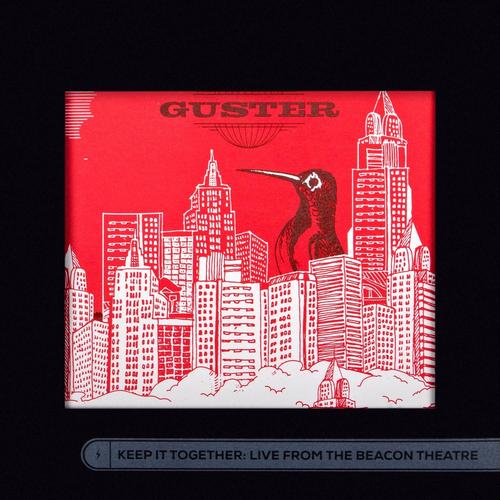
SOUNDTRACK: GUSTER-Keep It Together Live from The Beacon Theatre (2014).

In 2014, Guster released three CDs of them playing their early CDs live in their entirety (excluding for some reason their second disc Goldfly).  This is their fourth CD ‘Keep It Together’ recorded live in concert at The Beacon Theatre on November 30, 2013, ten years after its release.

As the disc opens, Ryan shouts, “Keep It Together starts now.”  This makes me think that they played other songs before it?  It would be great to hear an album in its entirety but not if that’s all they played.

After the first song, “Diane,” Ryan jokes,  “I guess there no real surprises in the setlist from here on out.”

Midway through the show, he comments that as an active band making new music, you want to be careful not to trade in nostalgia.  But he also knows that if one of his favorite bands played one of his favorite albums…it would be magical.

The band sounds great.  And, fortunately, it’s one of those shows where the live recording sounds at times even better than the original.

The only real divergence from the album is that after “Homecoming “King” they play “Chariots of Fire” on piano and strings.  I’m not sure why, but it’s fun.

One of the great moments of any Guster concert is when they play “Come Downstairs and Say Hello” and the Thundergod plays the bongos and smashes the cymbals with his hands.  It’s more fun to see it, but it’s great in this case to hear it.

“Red Oyster Cult” sounds great with the horns as an addition and Ben Kweller comes out and sings lead on the first verse of “I Hope Tomorrow is Like Today” (I had no idea he co-wrote it!).  They even leave a slight pause for the “hidden track” of “Two at a Time.”

This is a great version of this album, and well worth the listen.

[READ: June 2, 2018] “Fungus”

This is a story about carrying on after the unthinkable. But not just carrying on, carrying on with the mundane things that you can’t live without but remind you of exactly what happened.

The story opens with an insurance check and talk of geckos.  But the tone is not lighthearted like Geico commercials.  Andrew has access to Ingrid and Ron’s car, but really, he can only borrow it for so long.  It is time to buy a new one.

So Andrew and his daughter Willa go to the Subaru dealer.

These two scenes are simple enough, but they are fraught with meaning–with the undertone of what happened and how Andrew is allowed and allowing himself to deal with it.   There’s darkly funny thoughts (he’d like a homemade sign around his next that says “I don’t know”).  But the reality is that he has to go on for Willa’s sake, if not his own.

And then there’s this idea which is perfect for the story but works wonders in everyday life: (more…)

Read Full Post »

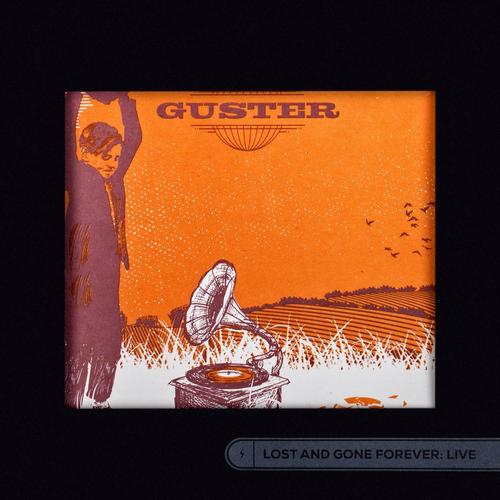
SOUNDTRACK: GUSTER-Lost and Gone Forever Live (2014).

In 2014, Guster released three CDs of them playing their early CDs live in their entirety (excluding for some reason their second disc Goldfly).  This is their third CD ‘Lost and Gone Forever’ recorded live in concert, ten years after its release.

I’m not sure why they don’t say what show it is from, unless they picked the best recordings from a tour?  He does mention Boston at one point, but not sure if the whole show was recorded there.

As with the other two releases, the sound is great.  On “Barrel of a Gun” you can really hear the bongos.

There are a few more guests, which again, makes me think it’s different shows.  Ryan says “We’re inviting a bunch of people to help with instrumentation. Donnie and Amy are going to play strings” [on “Either Way”].  And later, “Fa Fa” has an amazing horn section.

For “All the Way Up to Heaven,” Ryan introduces, “Alright snow kitty bring up the children. It’s 10 o’clock.  It’s late.  Did you teach them the big rock move at the end?  That’s the most important part of the song.”

Like the other discs, they thank everyone for coming out and supporting this album.  He talks about how when they first started playing in 1991 they were all skinnier and had more hair.  They had no idea that so many years later they would still be together and be selling out shows.  “It’s a humbling experience.”

Incidentally when they announced this tenth anniversary tour, they made a video announcement.

[READ: May 31, 2018] “Silver Tiger”

This story involves realism and magical realism.

The narrator Ah Yang, is an adult looking back on his childhood when he lived with Deaf Granny.  He was sent to her early and only rarely saw his parents.

He first saw the titular Silver Tiger near a well pond by Deaf Granny’s house.   Well ponds are an ancient water storage system in China.  They are shaped like pools but are the depth of wells.  It was always off-limits to him  Deaf Granny feared that if he fell in there’d be no saving him (not unreasonable).  But that’s all he wanted to do after he first saw it.

It became even more enticing when a local boy found a turtle in a neighbor’s well pond.  Oh how the narrator wanted his own turtle. (more…)

Read Full Post »

SOUNDTRACK: GUSTER-Parachute Live from Brooklyn Bowl (2013).

In 2014, Guster released three CDs of them playing their early CDs live in their entirety (excluding for some reason their second disc Goldfly).  So this is a recording of their first album ‘Parachute’ performed and recorded live in concert at Brooklyn Bowl on December 1, 2013.

This album sounds quite different from the other Guster albums.  I don’t really understand what the difference is.  It sounds like Guster, but not exactly.  Is it that they both sing in harmony through most of the songs?  Is it that Ryan sings “better?”  Are the songs just more folkie?

Whatever the case, even after several albums that don’t sound like this album and nearly twenty years, the band jumps right back into it (the harmonies on “Window” are perfect, for example).

They aren’t the same three-piece they were back in 1994 (they have drums now for instance), but it all works very well.  They also aren’t terribly funny between songs.  Usually Ryan is pretty silly in a show, but they seemed to take it more or less seriously.

After “Dissolve” Ryan says, “we’re playing in a bowling alley I just realized.  Cool.”  You can hear someone in the crowd shout “steeerike.”

I know the guys have made jokes about their song “Happy Frappy” a few times when I’ve seen them, so it’s no surprise that before the song, Ryan shouts, “Alright its ‘Happy Frappy’ time, stoners.”  Although I have no idea what the song is actually about.

When the disc is over Ryan shouts, “Parachute the album–19 and a half years old!”

I think it sounds even better than the original.

[READ: June 2, 2018] “Orange World”

I love when a title gives you an idea but it is totally not the idea of what  the story means–and the new idea is even better than what you had imagined.

“Orange World” conjured up many things to me, but not the devil, not a woman nursing the devil and not a woman nursing the devil every night because the evil saved her baby’s life.

When Rae was pregnant she was worried about a lot of things: ABNORMAL RESULT, HIGH RISK, CLINICAL OUTCOME UNKNOWN.  When the third test came back, she started begging for anything to save her baby from the unknown.

Between 4 and 5 A.M. one night something answered and it promised the baby would be okay.

So what does this have to do worth orange world?  Well, “Orange World is where most of us live.”  It is a nest of tangled electric cords and open drawers filled with steak knives.  It’s a used crib  It’s compromises that could hurt the safety of your baby.  You take a shower with your baby and suddenly….

“Green World” is a fantasy realm of soft corners and infinite attention. The Educator say that Green World is ideal but Orange World is the reality.  Next week’s class is “Red World” and Rae doesn’t want to think about it.

Rae takes the baby doll.  Its head falls off and she steps on the blanket.  Sneaker bacteria: Orange World; decapitation: Red World.  The educator encourages her to go to new moms group. (more…)

Read Full Post »

SOUNDTRACK: TOM MISCH-Tiny Desk Concert #749 (June 1, 2018).

Tom Misch sings music that I would classify as boring.  It’s kind of lite-jazz.

Misch has said before that he isn’t a jazz purist intrinsically, but the way he opens up a guitar solo or jams with saxophonist Braxton Cook, jazz music certainly runs through him.

His voice is interesting but “that soothing timbre of his voice” is more soporific than anything else.

The blurb certainly raves about him:

I first caught wind of this UK wunderkind in 2014. Crafting his own instrumental projects and remixing tracks by artists ranging from Busta Rhymes to Lianne La Havas, Misch steadily garnered a dedicated following on SoundCloud. From there, he collaborated with other London artists and released EPs of original music on the platform. Misch’s style doesn’t revel in what’s going on in pop music today; like a handful of other artists from the UK, his interpretation of hip-hop and R&B is a continuation of what the greats who came before him started.  In 2016, Misch — still just 21 years old at the time — decided to dabble more in songwriting.

He plays three songs (totaling 17 minutes) and I genuinely thought the second song was the same as the first.

“It Runs Through Me” has an enjoyable guitar solo and a long sax solo (Braxton Cook).  Although “I Wish” sounds like the first song at first, there is an interesting moment  midway through the song where they thrown in a riff and change the tempo a bit.  There’s also a long wah wah solo which is neat.

The final song “Movie” is a total smoky nightclub jazz song.  There’s a piano solo (the pianist (Joseph Price) even has a jazz hat on).  It’s got all the elements.  But I would never go into a smokey jazzy nightclub.

The rest of the band includes: Tobias Tripp (guitar/violin/vocals), James Creswick (bass), and Jamie Houghton (drums).

[READ: February 7, 2018] “Borscht”

Sergey has been living in the US for about a year.  His plan was to go to the States to work for a year and send money home to his wife.  But it had been a year and she felt that maybe he should stay longer and make more money.  They had enough for a house, but they’d need more for furnishings and the like.

He was sick of installing carpets.  He hated the feel and the smell and the stupid names of colors for ugly carpets : Morning Fog, Bay Fog, Autumn Leaves, he decided they should be called Moldy Bread or a A Pile Of Cow Dung On A Warm Day

He woke one morning with an erection and a headache.  He looked at the picture of his wife–he had only the one.  She didn’t look happy, and he no longer remembered what she looked like aside from the picture.

His roommate Pavel had a woman over.  She wasn’t Sergey’s type, but she was wearing next to nothing and she smelled good.

He found the paper under the couch and in the back were personal ads.  There was one that caught his eye : “A warm, sexy woman will tend to your needs. Affordable.” (more…)

Read Full Post »

« Newer Posts - Older Posts »