Feeds:
Posts
Comments

Archive for the ‘Short Story’ Category

 SOUNDTRACK: DANIEL BACHMAN-“Song for the Setting Sun II” (Field Recordings, May 21, 2015).
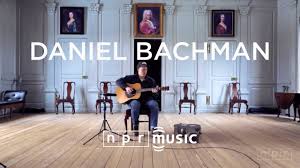
Daniel Bachman plays a gorgeous six string acoustic guitar.  He plays wonderful instrumentals full of melody and feeling which tell a story in their own way.

Bachman grew up around the Rappahannock River in Fredericksburg. It’s a quiet town in Northern Virginia that still has a pharmacy with cheap sandwiches and milkshakes.

The 25-year-old has been at the solo-guitar game since he was a teenager.  That’s why it felt right to bring Bachman back to the area that inspired River, a record surrounded by history, but guided by hands and a heart that know its bends and bumps.

In early March, we met Bachman in Fredericksburg to drive an hour east to Stratford Hall, home to four generations of the Lee family, which includes two signers of the Declaration of Independence; it’s also the birthplace of Robert E. Lee. Bachman knows it well, not only because his dad works there, but also because he can’t help but bury himself in history books about the region.   Bachman plays a version of “Song For The Setting Sun II” in what was the performance space at Stratford Hall. The song leaps boldly around the sunlit, symmetrical room, bouncing off walls decorated with paintings of buxom women and men in powdered wigs.

It’s a gorgeous piece with ringing strings that sounds massive in this Great Hall.  In the second half, he strikes a low E and it sounds like a cannon.  And when you hear that melody amid all of the ringing notes, it’s just sublime.

[READ: January 29, 2015] “F.A.Q.s”

Phoebe is in her mid 20s.  She returns from college withdrawn and single. Her parents are delighted that she is single, but not happy that she is so withdrawn.

Phoebe is also pretty unhappy with the changes that have occurred since she was at school.

A new coffeemaker was where the compost bucket had been.  The chicken coop lay empty (they had reverted so quickly to supermarket eggs).  An exercise machine was in her old room–however after several minutes of exercise Melanie usually ended up lying on Phoebe’s bed.  Her mom tells her that she bought rice milk and oat cakes   Later on she even tries to make her parents granola (her father was supposed to watch his cholesterol but didn’t and her mother nibbled Icelandic chocolate),

One of the few things that remained was Grandma Jeanne’s violin on the top shelf of her closet.  It was unmentioned. (more…)

Read Full Post »

july 28SOUNDTRACKJazz Lives At Duke Ellington’s Resting Place (Field Recordings July 2, 2015).

Playing jazz at a cemetery during the day seems like an odd decision.  But it’s all part of the one-day Make Music New York festival (MMNY) which celebrates music and community.  It happens every June 21 with more than 1200 outdoor concerts across the five boroughs running from morning till night.

For the 2015 edition, the festival’s organizers invited musicians to six different burial grounds across the city to riff on the idea of “exquisite corpse,” a surrealist parlor game popularized by artists and poets in the 1920s. In the game, someone writes a phrase (or draws part of a figure or scene), folds that part of the page over, and then passes it to the next player, who then does the same. The game ends when everyone has had a turn. That game is a natural bridge to the art of improvisation, and to jazz.

Woodlawn Cemetery is a mecca for the jazz world — it’s the final resting ground of royalty like Duke Ellington, Miles Davis and many others, including Ornette Coleman now as well. So as a tribute to their musical forerunners, the group — singers Michael Mwenso and Vuyo Sotashe, trumpeters Alphonso Horne and Bruce Harris, saxophonist Tivon Pennicott, pianist Chris Pattishall, bassist Russell Hall, drummer Evan Sherman and tap dancer Michela Marino Lerman — took as their point of departure W.C. Handy’s 1914 tune “St. Louis Blues,” a tune essential to jazz’s DNA. But they made it their own via surprising and turns that saunter through many textures, colors and rhythms.

The song begins with vocals from “St. Louise Blues” from Vuyo Sotashe and accordion from Chris Pattishall.  After a verse, Michael Mwenso (whose voice sounds very different) takes over.  The accordion drops out and it’s just voice and bass.

They pass the baton along to the horns, two trumpets, one with a mute in, the other using the mute  and a saxophone play a lively instrumental break.  This is followed by the percussion.  Evan Sherman and Michaela Marino have a percussive call and response.  I could have watched that part for a lot longer.

When that’s over the whole group joins together to end the song.

[READ: September 10, 2018] “Audition”

The first line of this story reads, “The first time I smoked crack cocaine was the spring I worked construction for my father on his new subdivision in Moonlight Heights.”

A first implies a second (especially with crack).

The story is about a 19-year-old college dropout. He went to school to study theater but “unmatriculated” and has been working for his father’s construction firm.  His father came from nothing and build up this firm which is presently creating a development.  His father is not too happy about him wanting to be an actor and as such is paying him the same as everyone else (which isn’t much).

He still acts–in community theater, but usually to 15 people at a time.

No one knew that he was the owners son and he liked it that way–he was using this time to study the laborers to learns their mannerisms–he was acting in his job, too,   New workers came through all the time (the pay was lousy after all).

The crack came from a coworker Duncan Dioguardi who was not acting.  He was a laborer living in his mother’s basement and longing to party.

The narrator knew “party” meant get high. When Duncan’s car died and the narrator drove Duncan home (an hour out of his way), Duncan invited him to party. The narrator was intimidated, then intrigued so he did.  And that was the first time he smoked crack.

He marveled how the lump of crack looked like some drywall that could easily be swept away.  Duncan showed him how to smoke it.  It tasted like nothing.  It smelled like nothing.  It was ant climatic except for his new-found fondness for Duncan whom he now considers a good friend.

That following spring he received a call from his old acting teacher to audition for a role  It was a stage show. The character would be on stage for all three acts but would not speak a word.  The narrator didn’t know if this was a step forward or backward.  The audition went well and he was sure he would get the gig.

Duncan’s car broke down again and the narrator told him all about the potential role.  But the narrator was more excited about the option of partying some more.

The story ends soon after this, which is a little disappointing as it is told from many years later and we never learn how he turned out.  But i did like the details of the past like “wiring th ehouse for internet, whatever that was.”

For ease of searching, I include: Said Sayrafiezadeh

Read Full Post »

SOUNDTRACK: JUPITER & OKWESS-Tiny Desk Concert #784 (September 7, 2018).

Jupiter Bokondji comes from the troubled capital of Democratic Republic of the Congo.

He and his band Okwess dress in wonderfully colorful garb.  Jupiter’s jacket is practically a zoot suit with blue and white stripes on one side, a red field on the other and giant white stars  He has a big hat as well.  But he can’t hold a candle on the shirtless drummer who is wearing a red white and blue wrestling mask the whole show.

The guitarist has a beautiful patterned gold shirt with blue lapels and the percussionist in addition to wearing another cool hat has on a terrific sweater.

The band plays “the vibe of Kinshasa street musicians, that feels both African and American” and indeed, “their fierce energy here is an astonishing performance.”

Then of course there’s Congolese rumba, the popular dance music from as early as the 1940s, not too dissimilar from some Cuban music of the day. And the message of the music has been steeped in the complicated politics of the region, stumbling between chaos, anarchy and oppression.

This is urgent music … that stems from the gut but has thought and theatrics to flesh out the feelings. It’s music to be experienced. This is your entry point.

They play 3 songs each with a similar feel but with a very different sound.

“Ofakombolo” is so wonderfully catchy with the percussionist and drummer chanting the chorus on the first time around.  On the second the rest of the band sings too, for a nice harmony.  The bassist gets what sounds like a rap guest verse before playing a kind of funky bass solo.  The percussionist is great for shouts and trills animals noises, too.  The music is nonstop, propulsive and fun, with a distinctive guitar solo sound.

“Pondjo Pondjo” starts with a quiet guitar intro.  But it is joined by the drummer whistling and the percussionist pulling a string through a plastic container, making a crazy squeaky sound that works wonders as a percussive sound.  The bassist seems to be singing lead on this song (a very different voice).

 Jupiter introduces “Ekombe” by saying “Let’s go to dancing!” It opens with a funky bass line and the drummer playing a fast hi-hat beat and chanting.  It’s a very dancey with a slinky guitar line running throughout the song.  There’s a nifty breakdown in the middle which features some fun on the bass and a wild solo to end the song.

This is a wonderful introduction to Congolese music.  Stay for the end, as they end the show with a post-credits kung fu pose.

[READ: January 5, 2017] “In the Act of Falling”

Boy this was a dark, dark story.  After the last line I actually said aloud, “Jesus, Danielle, what the hell.”

This is the story of a family: a woman, her husband and their nine-year-old son, Finn.  Finn was recently suspended from school for punching a fellow student in the mouth.

They live in a an old house that they imagined fixing up but two years later even the dining room is unfinished.

Finn is in the yard setting up a volleyball net–but he is doing it sideways like a hammock.  It turns out he is setting it up to catch ducks as they fall from the sky.  Birds were the next heralders of the apocalypse.  And, she had seen that all of the ducks in St Stephen’s green were dead–all of them.  She probably shouldn’t have told Finn this, but she did. (more…)

Read Full Post »

SOUNDTRACK: GEORGE LI-Tiny Desk Concert #782 (August 31, 2018).

Is it a showstopper if it is your first song of the Concert?  That’s the question I asked while I marveled at George Li playing every single note on the piano at the same time (it seemed) during the opening piece by Horowitz.  The show did not stop, and he played two more beautiful pieces.

George Li is a 23-year-old American pianist.  He began lessons at age 4, and at 10 gave his first public concert. Five years later, he snagged the silver medal at the prestigious Tchaikovsky Competition in Moscow. Last fall, he released his debut album on a major label and these days he’s playing with many of the world’s major orchestras while touring the globe. He just graduated from Harvard where he studied English literature and piano, in a hybrid program with the New England Conservatory.

That first piece was by Li’s idol Vladimir Horowitz: Horowitz: Variations on a Theme from Bizet’s Opera Carmen.  

To honor Horowitz, Li begins his Tiny Desk recital with the master pianist’s electrifying reboot of a theme from Bizet’s opera Carmen. Li describes it as an “insane knuckle-buster.” Just watch his hands blur during the fiendish interlocking octaves at the explosive climax.

The camera zooms in on his hands and it’s still impossible to see what chords or notes he is playing.  But it is very impressive to see how high he lifts his hands between notes.  Wow, what a piece.

He then moves onto Liszt.  Liszt is also a composer who makes pianists tremble.  Although the first piece by Liszt is quiet and beautiful, the second one shows off more of Li’s amazing chops.

Then it’s two pieces by the ultimate monster pianist, Franz Liszt. The Consolation No. 3, with its gently flowing, long-lined melody and diaphanous ornaments, reveals the poetic side of the composer….

Liszt: Consolation No. 3 is just lovely the way it floats and soars through the melody.  Although even a fairly “simple” opening does involve using his right hand to play the bass notes.  I love that his left hand is playing this soothing melody while his right hand is constantly seeking out new variations on that melody.

But that’s nothing compared to Liszt: La Campanella in which from the angle of the camera it’s impossible to see what his right hand is doing the way it moves so quickly.  He borrowed themes from the Caprices of Paganini, “they’re all extremely difficult, of course.”  La Campanella means the bells and you can hear the high notes that keep repeating.

the rip-roaring La campanella begins with a single tinkling bell that multiplies into a wild cacophony of trills and scales, ending in what Li calls “a big bang.”

He talks about the bells building and building, adding new notes and octaves over the course of the four minutes.  And you can hear those high notes (I imagine it sounds amazing on a grand piano).  And just as you get 12:38 he starts doing this trills up at the higher register of the piano.  He gets both hands involved and it’s nearly 30 seconds of massive finger workout.

It’s exhausting just watching him.

Li is no doubt used to playing grand pianos, and the blurb wonders…

when Li revealed his Tiny Desk setlist, one thought came to mind: How will these powerhouse showstoppers sound on an upright piano? The music he intended to play, by Franz Liszt and Vladimir Horowitz, was designed for a real, 7-foot concert grand piano – the kind they used to call “a symphony orchestra in a box.”

Turns out, there was nothing to worry about. Li’s technique is so comprehensive, so agile, so solid, that instead of making our trusty Yamaha U1 quake in fear, he made the instrument sound several sizes larger, producing glorious, full-bodied colors and textures.

While I love seeing musicians shine while playing impossible pieces, technical virtuosity is nothing without feeling.  And Li’s music is full of feeling as well.

[READ: January 3, 2016] “A Gentleman’s Game”

I always think that I like Jonathan Lethem’s stories, but I’m not really sure that I do (I’ll have to read back and see what I thought of previous stories).  But he always writes about things that I don’t expect.

Like this story.  It is set in Singapore and is about an American who has settled there and becomes a very good backgammon player.

The exotic setting is enticing, I suppose, but the story is really about two men who knew each other who engage in a contest to see who can win.

Bruno grew up in Berkeley, CA.   But when he was old enough he left and has never been back to the States.  He has been in Singapore for a long time and he is shocked one day to see Keith Stolarsky, a former schoolmate, walking up to The Smoker’s Club, a typically underground and unknown-to-tourists-club. (more…)

Read Full Post »

SOUNDTRACK: TECH N9NE featuring KRIZZ KALIKO-Tiny Desk Concert  #780 (August 29, 2018).

I am constantly amazed at how many rappers this show has on that I have never heard of even though they’ve been around for decades.  I’m not really a rap follower, but you’d think I’d at least have heard of them.  Tech N9ne has 20 albums out and he’s got a number 9 in his name.  I’d think I’d have heard of him at least.

During a career nearly three decades in the making, Tech N9ne has dodged the fickle rap industry while surfing his own wave, stylistically and professionally. The Kansas City native has been a beast for years now, a musical misfit who laid a track record of underground success and struggle before building his own independent empire with Strange Music.

Especially since he is awesome.  He and Krizz Kaliko performed the best rap Tiny Desk Concert I’ve seen. [“Together, they’ve carved out an unorthodox niche: chopper-style speed rap that often plumbs dark, emotional depths”].  The band is awesome.  The two of them are awesome and they have a great rapport with each other and the audience.

Their playful banter between songs personifies that creative connection, as Krizz delivers backing vocals and guest verses from the soul. Backed by a guitar, drums and bass for their Tiny Desk, the trio brought out the rock-tinged hues of such definitive Tech N9ne songs as “Dysfunctional,” “Aw Yeah? (interVENTion)” – dedicated to his mother who died from lupus in 2014 – and “Fragile,” originally assisted by Kendrick Lamar, Mayday and Kendall Morgan.

I also love both of their deliveries which is often fast (yet comprehensible) with excellent inflection to really let the words flow (is that “chopper-style speed rap”?).  It’s a great fun set (with some great metal-inspired guitars).  These start off with the first song, “Dysfunctional.”  There’s inspired lyrics, there’s funny lyrics.  I particularly enjoy this couplet

[They both rap] Listen they call me genius, I run the show
[Then Tech N9ne demurs shyly so Krizz can sing, with emotion] Women on my penis…. it’s wonderful

Krizz sings the chorus with a great heavy metal riff.  He also takes lead on the second verse with Tech N9ne supporting him.

After the song Tech N9ne says, Oh yea, the boy can sing.  He can rap too.
Krizz: I learned it from him.  he taught me something like this: “Dommmmmm inae.” which is a lead into

“Aw Yeah? (interVENTion)” this song has some great lyrics, powerful and political with a very cool Middle-Eastern-ish guitar riff running through it

They gotta suffer the penalty cause of our education
Nobody wanna say nothing but I gotta call it abomination
Pissed off thinkin’ what this cost
What these babies blood drippin’ for?
So I say in Latin, listen Lord!
Audire DOMINE! (Audire DOMINE)
Only way people are gonna be able to kill off a demon is
Pick up a gun and be ready to put it between him
My nigga be screamin’
Audire DOMINE! (Audire domine)

Who the hell a brother gonna trust when it’s always dishonor
Hate me like Obama
And I ain’t even gotta run and askin’ you the question: God what about my
Mama!

Tech N9ne asks for a moment, says he’s shaky.  Krizz explains: he lost his mom on my son’s birthday.  She’s been sick all of his life.  That’s a super emotional song

Tech N9ne segues: “That’s why I’m so “Fragile.”  This song is also excellent with some rapid fire delivery.  I also love hoe exposed he is:

Amateur writer dissin’
He’s a beginner and hopes for your demise, folks some may despise
Never do try to listen
It’s real, I’m mad
Clueless when you scribble on your pad
How you gonna criticize with a chisel on your nads sizzling your ad
You don’t really get why I’m so pissed? Understand this (Understand this)
I’m an artist, and I’m sensitive about my shit, yes I’m Fragile

To close the set, Tech and Krizz performed “Speedom (Worldwide Choppers 2),” a song inspired by folk rocker Richie Havens’ original classic “Freedom.” They laugh over Krizz’ excellent Richie Havens’ delivery.  It’s an excellent conclusion to a fantastic Tiny Desk.

Now off to investigate these guys some more.

[READ: August 31, 2017] “The Metal Bowl”

Miranda July writes strangely personal (but who knows if they are actually personal) and introspective pieces that are often overtly sad graphically sexual.  But she’s also not all that vulgar, even in a story about amateur porn.

It even made me laugh as the story begins.

He cupped the two halves of my tush and spoke directly to them.  “Run away with me, girls,” he whispered. She doesn’t understand our love.”

(more…)

Read Full Post »

SOUNDTRACK: THE McCRARY SISTERS AND THE FAIRFIELD FOUR-“Rock My Soul” (Field Recordings, September 20, 2015).

Hearing these eight voices intertwine so beautifully is wonderful (I especially love the bass voice).  Knowing how the voices are connected is pretty cool, too.

The original Fairfield Four was founded nearly 95 years ago in Nashville, and has remained relevant into the present day; many current listeners know the group from its appearance in the Coen Brothers’ 2000 film O, Brother, Where Art Thou? The McCrary Sisters are the daughters of the now-deceased longtime Fairfield Four lead voice, Samuel McCrary; together, they’ve made a major impact as that rare thing in a mostly masculine preserve, a female gospel quartet. To hear these voices perform “Rock My Soul” together is to feel the power of living history and the timelessness of family connection.

“Rock My Soul,” powered by their persistent clapping is just wonderful.  Their voices sound amazing, their harmonies are wonderful. It’s a joyful three minutes.

[READ: August 29, 2018] “The Wind Cave”

This is a somber story from Murakami.

It concerns a boy and the death of his younger sister when she was 12.  She was born with a malfunctioning heart valve and although she was never robust, it was still a surprise that she died so young.

His parents told him to watch over her, to look after her because she was so delicate.  The fact hat he couldn’t save her from death (no one could) has hung over him.

He hated seeing her in the coffin and he grew claustrophobic even thinking about her in that tiny box.  The symptoms didn’t start right away but occurred after he had been locked in a box truck.  He was working a part time job and was accidentally locked into the back of the truck when people wanted to leave early.  (Frankly I would think that might trigger claustrophobia more than anything having to do with his sister).

But now he can no longer ride in elevators or watch movies about submarines. (more…)

Read Full Post »

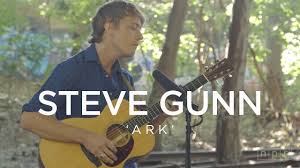
SOUNDTRACK: STEVE GUNN-Plays Between the Ties of an Abandoned Railroad (Field Recordings, October 12, 2016).

I don’t know Steve Gunn and I am surprised to see that he has released fourteen albums and has worked with Kurt Vile.

For this Field Recording, Gunn headed out to the woods to play three beautiful songs.

 In Forest Park, Queens, N.Y., an old relic suits Gunn’s sound. The Long Island Railroad’s Rockaway Beach Branch used to run through the park. It’s been abandoned for over a half-century, and trees have grown between the ties, skewing the rails and jarring the lines. Late this past summer, Gunn stood on the tracks of this worn American symbol and sang three songs off his latest album — songs about meandering, home and the crooked paths that take us wherever we’re meant to be.

Once again I am really impressed by the quality of the sound.  His guitar is absolutely clear and his voice is perfectly mic’d, but you can also hear ambient sounds–birds and such–making this recording unique.

Gunn has a pretty picking style (using thumb and fingers independently to get strums and picked notes simultaneously).  This enables him to keep the song moving forward while he plays the pretty guitar melodies.

“Full Moon Tide” has a great melody and a delightful chorus.

He walks further into the woods to play “Night Wander.”  It has a kind of circular feel in which the chorus feels like a part of the verse.  I’d say that Gunn’s voice is nothing special, but I like the deeper resonances he gets on this song.

For the final song, “Ark” he walks further down the tracks to a bridge.  Whether it is having the surface above him or just the style of his playing, this song feels warmer, and quite different from the others.

It’s a great introduction to this excellent guitarist.

[READ: January 9, 2017] “The Apartment”

This story is a fascinating look at a woman convincing herself that something must be true.

The apartment across from hers has been vacant for sometime–since the woman living there died.  But recently there was movement inside.  The person’s last name was Jahani.

Louise knew a man named Jahani when she was studying at Stockholm University.  Arman Jahani was the second man she’d slept with (her husband Martin was the first).  Martin, did not know about Arman.

While she is having lunch (sushi) with her adult son Jonas, she intersperses his conversation with memories of Arman.  The two most resonating thoughts are that he died in the early nineties and was survived by a son and a daughter.  Or so she believed.

She tells Jonas that the vacant apartment has been filled.  Jonas hasn’t lived at home for quite some time.  He wasn’t there when the woman died.  “You can;t imagine the smell” she tells him.  It was actually her husband who discovered her and was shocked that no one has mentioned the smell. (more…)

Read Full Post »

SOUNDTRACK: DERMOT KENNEDY-Tiny Desk Concert #779 (August 24, 2018).

NPR likes Dermot Kennedy (they made him one of their Slingshot artists for 2018).  The thing that they seem to like about him is what I didn’t.

He has a powerful raspy voice–he could sing for miles.  A voice that works wonderfully with a style of music (folk or rock, primarily).  But the songs I’d heard from him were tinged with hip-hop.  And, frankly, it’s hard to work a powerful singing voice and hip-hop into the same verse.  So to me, it didn’t work, it was like the worst of both worlds.

But at the Tiny Desk, he removes all of that with a live band and, as the blurb says, a gospel choir.

Kennedy took this assignment seriously. The Dublin singer-songwriter wasn’t content with merely re-creating his songs as they sound in the studio, or stripping lavish productions down to simple acoustic arrangements. So he got himself a gospel choir.

More specifically, Kennedy and his band flew in from Ireland a day ahead of time to meet and rehearse with members of Washington, D.C.’s Howard Gospel Choir (Keila Mumphord, Taylor Nevels, Chamille Boyd, Jazmine Thomas). Every arrangement was painstakingly plotted ahead of time, so that every note would be perfect.

Two of the songs Kennedy performs here (“Moments Passed” and “An Evening I Will Not Forget”) pop up on an EP he released this year with hip-hop producer Mike Dean, and both sound radically different in this performance. They’re still forceful — and still centered on the singer’s elastic, bombastic voice — but also looser, warmer, more open.

And I suspect that’s why I like them much more.   Without all of that trapping, he sounds, yes, like Hozier or Glen Hansard.  And of course he was a busker.

They open with “Moments Passed.”  It was weird that the song and concert opens the way it does with the choir and Kennedy singing at the same time.  His voice is the centerpiece of the music and it was obscured not only by four other voices but also but a disconcerting echo effect (from Kieran Jones on keys).  But as soon as that ends, his voice works very well with the piano (Jonny Coote) and drums (Micheál Quinn).

And so when the chorus comes in and he songs his only lines while the choir sings, it works very well.  You can also hear his accent a lot more than other Irish singers, it seems.

“An Evening I Will Not Forget” has more of a hip hop delivery style, at least the way he sings, but he doesn’t try to cram it all in, he lets his voice and melody flow over the dense lyrics.  The song is one of regret and it works perfectly as just piano and his powerful voice.

After the song he jokingly asks for a towel and he laughs when he gets one (and gives it to Jones, “you;re a sweaty guy”).

For the final song, “Glory” he plays guitar on this it’s a pretty melody.  The drums are weirdly electronic and big and I like the big boom but not the ticky ticky electronics.  However, the high female voice in the chorus more than makes up for it.  The way all of the music swells together on this track is really terrific.

Sometimes you need to hear a musician live to really appreciate him.

[READ: January 3, 2017] “Gender Studies”

Sarah loves Curtis Sittenfeld, although I had never read her work before this.

I really enjoyed this short story both for its story and for its politics.

The plot is quite simple.  Nell is an almost divorced woman (she was with Henry for years with the intention of getting married, then he up and left her for a younger woman).  I really enjoyed this self-description of her and Henry “because of the kind of people they were (insufferable people, Nell thinks now).”  She is a professor of gender studies and is going to a convention in Kansas City.  Though she lives in Wisconsin, she has never been to Kansas City or even to Missouri.

The shuttle driver starts talking to her about donald trump.  He says “He’s not afraid to speak his mind, huh?”  And I love this description of her reply:

Nell makes a nonverbal sound to acknowledge that, in the most literal sense, she heard the comment.

Despite her obvious discomfort talking to him (when he calls Hillary “Shrillary” you know she is fuming), she can’t be bothered to say anything more than “There’s no way that donald trump will be the Republican nominee for President” (this was written after he was, of course). (more…)

Read Full Post »

SOUNDTRACK:  YO-YO-MA-Tiny Desk Concert #777 (August 17, 2018).

One needs to say very little to introduce Yo-Yo Ma, probably the most famous cellist in the world.  He is here because he has recorded Six Suites for Unaccompanied Cello by Johann Sebastian Bach.  Again.  For the third time.

Obsessed or awestruck, artists revisit great inspirations because they believe there is yet another story to tell – about life, about themselves.  Cellist Yo-Yo Ma brought his great inspiration, and in turn part of his own life story, to an enthusiastic audience packed around the Tiny Desk on a hot summer day. Ma is returning, yet again, to the Six Suites for Unaccompanied Cello by Johann Sebastian Bach, a Mount Everest for any cellist. He has just released Six Evolutions – Bach: Cello Suites, his third studio recording of the complete set and is taking the music on a two-year, six-continent tour. Ma’s first recording of the Suites, released in 1983, earned him his first Grammy.

Certainly one of the most brilliant cellists of modern times, he’s also a thoughtful, curious humanitarian, with an endless thirst to understand, celebrate, and connect disparate cultures of the world.

He plays three pieces from the Suites

J.S. Bach: “Prelude (from Suite No. 1 for Solo Cello)”  It is so beautiful and familiar, it sounds amazing on his cello.  he says “This was the very first piece of music I started on the cello… when I was 4 years old.  One measure a day.  It’s not painful to learn something incrementally.”  He describes how he recognized that the second measure was similar to the first and the third was just a variation.  He says, “I lived with this music for 58 years (plus 4, that’s my age).”

Ma has played the music for 58 years and along the way it’s become something of a practical guide to living, pulling him through hardships and celebrating times of joy. “It’s like forensic musicology,” Ma told the Tiny Desk audience. “Embedded in the way I play is actually, in many ways, everything I’ve experienced.”

J.S. Bach: “Sarabande (from Suite No. 6 for Solo Cello)”  The sarabande comes from many places.   All of these places have claimed it:  Guatemala, Mexico, Moorish Spain, via Portugal or Morocco.  He says the sarabande is the heart of the suites.

It has served dual purposes, Ma explained. “I’ve played this piece both at friends’ weddings, and unfortunately also at their memorial services.”

J.S. Bach: “Gigue (from Suite No. 3 for Solo Cello)”  He says for the last piece at the Tiny Desk, I’m going to play a tiny jig.  He says Bach goes from old dances to folk or popular dance.  Here is this German composer working a jog into the third suite.

The exuberant “Gigue,” from the Third Suite, with its toe-tapping beat, reminds us that Bach was far from a stuffed wig. Such is this sturdy, versatile and benevolent music, offering a full range of the human condition.

Ma is happy to teach the listeners what he is doing, to share the joy and love of music.  Sometimes literally

As soon as he arrived at our office to play, Ma unpacked his cello – a famed 1712 Stradivarius – and immediately handed it over, with his bow, and said, “Here play something.” It didn’t matter that I’d never held a cello. It was just another one of Yo-Yo Ma’s warm and welcoming gestures, another way to open up music to anyone and everyone.

It’s all beautiful!

[READ: August 27, 2018] “Ways and Means”

This story tackles sexual harassment at the workplace from an interesting angle (and is written in a great, fluid style that makes the story utterly compelling).

Hal (short for Haley-Ann, a name she always hated) is an engineer at a public radio station.  She was one of the first women to work in such a position and has been there for over a decade.  The story opens with her reading a public apology from an on-air personality, Oliver.  Oliver had worked at he station for over three decades and was a huge draw for both audience and pledges.

The apology went to everyone’s inbox and then went public.  She felt it was trite with words that he, Oliver, would never have said in real life like invalidated).

The accuser was unnamed but everyone in the building knew it was Molly, a 26-year-old podcast producer. (more…)

Read Full Post »

SOUNDTRACK: DAWN-Tiny Desk Concert #774 (August 10, 2018).

I had no idea who DAWN (all caps, please) was.  According to the blurb

Dawn Richard–who went by D∆WN for a while, and now just prefers DAWN–Dawn Richard has a breathless enthusiasm for shape-shifting pop music.  Her discography is a bedazzled collage of heart-bursting rave and extraterrestrial dance-pop — but for her Tiny Desk, the L.A.-based singer and producer strips three songs to just the essentials, illuminating the impeccable songwriting behind the wild combination of sounds.

I love the verses of “Waves,” about female empowerment.  The blurb says she transforms “the trap-laced anthem for “underpaid, underappreciated, undervalued and undermined” women into a classic girl group song, flanked by two harmonizing vocalists” (Kene Alexander and Chaynler Stewart).  The music is just not my thing at all.

I love this:

“If you feelin’ stress up in yo chest / Cause they forgot that you the best / Wave ya money,”

But really “wave ya money, wave, wave ya money?”

“Waves” is followed by two songs. Both “Vines (Interlude)” and a funky revitalization of “Lazarus,” speak to Richard’s mission to expand our preconceptions about who gets to make what kind of music.

I like the way “Vines (Interlude)” starts a capella.  But I don’t like the R&B vocalizing throughout.  The electronic percussion is pretty fun though–William DeLelles is working really hard to get those little dinky sounds–he’s also playing the “synth” with his drumsticks.

DAWN explains that she was on a huge label and is now totally indie–no label, no promoter, no nothing.  She says

“I find it interesting when you’re a brown or black girl and you try to do something beyond R&B and hip-hop, it’s not always cool,” Richard says before performing “Lazarus.” “They don’t get it. They think you’re trying too hard. They don’t know where to place you. I wrote this record because sometimes you’re misunderstood. You know exactly who you are, but everyone else can’t quite figure you out. I wrote this record for that person.”

It’s interesting that she jokes, “You’re a folk singer and they label you as alternative R&B.” This song is not alternative or folkie at all, although it does have some cool sounding electronics to start.  But once that guitar (Ben Epand) comes in, you know its back to pop.  I do enjoy when she gets some attitude: “you all could snap a little bit–you aren’t too cute to snap.”

So I won’t be listening to DAWN, but I hope others do.

[READ: February 9, 2018] “From the Desk of Daniel Varsky”

This story started out as one thing–a break up of a long-term relationship.  And turned into something else–the story of a poet who was captured in Chile.

As the story opens, we see that the narrator is thinking about the winter of 1972 when R had just left her.   He had vague reasons but said something about a secret self, that she didn’t buy.

Things got worse but then were okay.  The hardest part was when they lowered his grand piano out the window–it was his last possession and was so large it was like he hadn’t left:  “I would sometimes pat it as I passed, in just the same way that I hadn’t patted R.  The only difference is that R always did, eventually, speak.”

After a few day, she had a phone call from a friend, Paul.  He told her about a crazy dream involving César Vallejo (she and Paul were both poets and they bonded in class over the poets whom others hated).  In the dream, Vallejo had put a mud mustache on Paul’s upper lip. (more…)

Read Full Post »

« Newer Posts - Older Posts »