Feeds:
Posts
Comments

Archive for the ‘Short Story’ Category

SOUNDTRACK: JULIE BYRNE-Tiny Desk Concert  #788 (September 19, 2018).

Julie Byrne plays a quiet acoustic guitar and sings in a melodic whisper (almost).  She reminds me of Nick Drake in many ways.

Even in an office in broad daylight, Julie Byrne sings with both a husk and a whisper as if she’s gone a long time without speaking – as if she’s been alone, as if she’s been traveling. Her opening number at the Tiny Desk, “Sleepwalker,” sings of the road as a source of freedom.

I lived my life alone before you
And with those that I’d never succeeded to love
And I grew so accustomed to that kind of solitude
I fought you, I did not know how to give it up

Byrne’s guitar playing sounds very full as is each string gets its own special attention.

Julie Byrne’s hypnotic fingerstyle picking conjures a sense of wandering, a style she adapted from her father and a sound she grew up with until multiple sclerosis robbed him of that companionship and comfort. She now plays her dad’s guitar.

After performing “Sleepwalker” alone, Julie Byrne was joined by her musical companions, Marilu Donovan on harp and Eric Littmann on electronics. Together they conjure an ethereal compliment to Julie’s love of the open landscape.

“Follow My Voice” begins with just Byrne.  After a verse or so, the harp enters, making the song seem somehow even more delicate.  And the keys are there just to add a bit more substance–but not to solidify this delicacy.

“I Live Now as a Singer” is just the keys and the harp.  It reminds me a lot of Enya, with the washes of keys and Byrne’s deep but delicate voice.

[READ: January 5, 2017] “The Short History of Zaka the Zulu”

This story is set in a boys’ Jesuit boarding school in Africa.  The narrator is relating the story of a boy they nicknamed Zaka the Zulu. The narrator explains that Zaka was always odd but that they had never expected that hew would be accused of murder.

He was a very smart boy and he succeeded very well–which made him a little unpopular.  But he became even more unpopular when made head prefect.  He was so upright and sincere; he would get boys in trouble for the slightest infraction.  His worst punishment was when he made the younger boys stay for an extra period so that they could not watch the Mary Wards (the girls from Blessed Virgin Mary school) go for their weekly swim.

There were 40 or so Mary Wards every year.  They didn’t live with the boys, of course, but they were all part of the same school–the girls got the best Jesuit education the country could offer.   Only senior boys were allowed to mingle with the girls–particularly at the one or two dances each year.  It was felt that the girls had a civilizing effect on the boys. (more…)

Read Full Post »

SOUNDTRACK: ANTHONY ROTH COSTANZO-Tiny Desk Concert #789 (September 21, 2018).

The first thing you see when you look at this Tiny Desk Concert is the amazing harpsichord–large and decorated like an old-fashioned leather-bound book.  It is stunning.

But you’re only likely to notice it if you haven’t first heard Costanzo’s voice and then had a look at him.

A word about Costanzo’s voice. He is a countertenor, a man who sings in the range of a female alto. The roots of the tradition date way back to the 1500s, when young male singers, called “castrati,” were castrated in order to preserve their high, flexible voices.

“I’ve managed to do it without castration,” Costanzo joked to the audience of NPR staffers. These days, countertenors sing in falsetto, and while as recently as 30 years ago it was considered something of an androgynous novelty, now countertenors are part and parcel of the opera world.

The music is exceptional and is wonderfully modern with that classical feel that opera naturally seems to add.

Costanzo performs songs from his new album, which pairs music by George Frideric Handel with Philip Glass. Strange bedfellows perhaps, and born more than 250 years apart, but somehow Glass’ repetitive, staccato beats and Handel’s long, flowing melodies manage to shake hands across the centuries.

The first piece is by Philip Glass.  And the music sounds like perfect chamber pop.  The flute plays the Glassian up and down melody while the bassoon plays the wonderful, peculiar bass notes.

One obvious common thread is the arrangements, by Nicholas DeMaison, that Costanzo commissioned expressly for this performance, featuring harpsichordist Bryan Wagorn (playing a beautiful double-manual French-styled instrument built by Thomas and Barbara Wolf), along with flutist Alice Teyssier and bassoonist Rebekah Heller.

Glass’ “Liquid Days,” begins with a recitative introduction, similar to a Handel aria. But the lyrics, by David Byrne, depict love, in all its quotidian splendor.

It is somewhat strange to hear a countertenor (or even if he were a female singing alto) singing lyrics in English.  His voice is truly amazing.

It is even more peculiar to hear the word “television.”  But Byrne’s lyrics are pretty awesome:

We are old friends
I offer love a beer
Love watches television

Love needs a bath
Love could use a shave
Love rolls out of the chair and wiggles on the floor
Jumps up
I’m laughing at love

And all the while Costanzo’s voice sounds operatic, serious, significant.

Costanzo’s agile voice, with its polished tone and patrician phrasing, is a singular reminder that we live in a golden age of countertenors – guys who sing high in music both ancient and modern.

Up next is Handel’s “Pena tiranna” (From ‘Amadigi di Gaula’) which means, I have a tyrannous pain in my heart and I can never hope to find peace.  It opens with harpsichord and bassoon, a wonderful combination.  The flute then enters to play a harmony with his voice.

“Pena tiranna,” from Handel’s undervalued Amadigi di Gaula, is a compelling example of how well the composer can spin a gorgeous melody to evoke the deepest anguish.

The final piece is from Glass: “In the Arc of Your Mallet” (from ‘Monsters of Grace’)” which has a text by the 13th-century Persian poet Rumi.  It speaks of longing in sexy undertones.  He says that in this translation brings out the strange, layered longing–sometimes dirty–meaning under the surface.

Anthony Roth Costanzo is a feisty performer who knows a thing or two about busting down barriers in classical music. After all, opera singers don’t normally belt out arias behind office desks, and they don’t insist on lugging harpsichords with them. They also don’t routinely sing in Bronx middle school classrooms and get students talking about emotions. But Costanzo is fearless. (And after seeing this amazing Tiny Desk performance, watch him melt the hearts of distracted sixth-graders.)

[READ: January 9, 2017] “The Driver”

I never anticipated where this story was going.  And the direction it took to get there was really interesting.

It begins with the story of Mrs Quantrill, a respectable woman who managed to get their house listed on the Nation Register of Historic Places.  She and her husband were philanthropists and they threw legendary parties.

There’s an aside that says when their son Spencer inherited the house, he demolished it and replaced it with storage units.

But at the time of this story Spencer is 9 years old.  And Mrs Quantrill has been called into the principal’s office because Spencer is struggling.  Spencer is nervous and doesn’t know what to do with his, feet, his eyes or his hands. (more…)

Read Full Post »

SOUNDTRACK: TWEEDY-“High As Hello” (Field Recordings, August 7, 2014).

This Field Recording [Tweedy And Son Take To The Tunnels, Friends In Tow] is another one from the 2014 Newport Folk Festival.  Much like with the Jazz Festival, it was raining during the folk festival.  This means the musicians had to play in a that by now familiar tunnel–away from the elements.

These musicians were NPR favorite Jeff Tweedy and his then new project, Tweedy.  The project features Jeff’s then 18 year-old son Spencer on drums.  Jeff and Spencer are accompanied by Jess Wolfe and Holly Laessig from Lucius (who don’t get to really show off their pipes, but do provide great backing vocals).

With the rain, it was not possible to shuffle drums, so

Spencer Tweedy’s drums are made from found trash and objects lying around the fort, including a cardboard box and some boxes of gum. Still, magic happened.

I can’t help but remark (again) on the wonderful sound equipment.  The band sounds terrific and you can hear all of the guitars (a full band list isn’t given).  Somehow Spencer’s drums don’t sound like cardboard boxes.

This recording is from 4 years ago either before Jeff started wearing the ubiquitous cowboy hat or he didn’t want to wear it in a tunnel.

“High as Hello” is a slow song with great backing vocals and solos from at least one of the three guitars.

[READ: September 18, 2018] “Poor Girl”

This story was translated by Anna Friedrich and is about a woman trapped in a situation she hates.

What’s interesting is that it’s unclear if the title refers to the young mother or her daughter (as they are both poor in different ways).

The opening line is quite surprising:

The wretched mother could easily have lost her sanity watching her husband love their daughter….

What an odd thing to be upset about.  Until…

the way he stroked the child when she was falling asleep or waking up, his blissful expression when they touched, the fact that he bathed her himself, believing it to be his right and his responsibility.

So, the woman, Irina, raises some red flags, although it’s not always clear if she is being reasonable about them. (more…)

Read Full Post »

SOUNDTRACK: LEDISI-“Pieces of Me” (Field Recordings, August 27, 2017).

I only ever heard of Ledisi from a Tiny Desk Concert.  And here she is again.

I still haven’t heard of her anywhere else, but she still sounds amazing.

I absolutely love that she is singing from a balcony and that people start lining the streets to see and hear her.  How cool would that be?  Too bad she doesn’t sing a few more for them.  But heck, it’s New Orleans, things like that probably happen all the time.  Right?

There’s too much happening in New Orleans’ French Quarter — especially on a holiday weekend, and especially when hundreds of thousands of people are in town for the annual Essence Music Festival. There are living statues and five-piece bands and drinks a foot-and-a-half tall and people from all over the world ambling in the middle of the street.

But Ledisi, singing on a balcony in her hometown, stopped the whole thing dead. For a few minutes, with a song about the complications of being a woman, she held an unsuspecting, audibly appreciative crowd in the palm of her hand.

In this Field Recording [Ledisi Steals The Show] she sings a song I don;t know, “Pieces of Me.”  But the crowd seems to.  They even start interacting with her.  So she shouts down to them, “I don’t hear you singing.”  So they do, they sing with her.

As the song ends, she says, “Y’all sound good down there.”  And then as they start trying to talk to her she says, “I didn’t know I was gonna be out here…. I was trying to get something to drink.”

If that was someone I liked I would be totally psyched if that happened to me.

[READ: January 6, 2017] “My Curls Have Blown All the Way to China”

This story looks deep into the psyche of a woman who has just been informed that her husband is leaving her.

The story is full of lists: like a list of clothes to buy for him and for her–she is preparing to find out what clothes they should bring on their trip to Spain.

That’s when he tells her.

During the factory outing to Netanya , a month ago–you remember–when you didn’t feel like going with me, I met this woman there, and afterward it turned out that we kept seeing each other and now, well, I’ve decided to leave you, even though I’m very sorry about it.  Honestly.  But what can I do Bracha?  I just have no choice.

Okay, so that’s pretty fucked up.

Rather than going to Netanya, Bracha was getting her hair cut short–and her long curls blew away. (more…)

Read Full Post »

SOUNDTRACKAGES AND AGES-“Divisionary (Do the Right Thing)” (Field Recordings, August 28, 2014).

I really like this song.  I’ve heard several recordings of it.  The studio version, the Tiny Desk Concert, the one with the Northwest Children’s Choir and now this one.

Once again, done during the Newport Folk Festival, this Field Recording [Ages And Ages, Singing An Anthem For (And With) Everyone] corrals a band into a small, unused space. In this case, that space seems to be an unused room.  And in that small room, the band is joined by The Berklee Gospel and Roots Choir.

Bob Boilen says:

I’ve seen many magical collaborations at the Newport Folk Festival over the years, as artists band together and create in the Newport spirit. This particular venture was epic, featuring the strongest anthem of the year — by the Portland band Ages and Ages — and the voices of the Berklee Gospel and Roots Choir.

This song always sounds better with a big chorus of singers.  There’s not much to it, but the full body of voices can lift anyone;s spirits.  Especially when they start singing various different melodies on top of each other.  It’s quite lovely.

Ages and Ages played near me recently and I thought about seeing them and then I realized that this is the only song I know by them!

[READ: January 2, 2017] “How Can I Help?”

This is a story about a woman and her sister.  But the way the story is revealed is really wonderful.

It begins: “Consider Hayley, our hire of two months, a relative endurance run.”

The narrator bemoans Hayley’s decisions, like spending $4.25 (roughly 31 minutes of work at her salary) each day on a skim latte coffee from an unnamed retailer even though their office offers the same coffee in-house for free.

In the second paragraph, she says “I like and admire Hayley, she is a team player.  I don’t judge.  But I have of late been tempted to judge.”

And that’s when she reveals that perhaps her objectivity is clouded because Hayley is her sister. (more…)

Read Full Post »

 SOUNDTRACK: AJ DAVILA-“Es Verano Ya” (Field Recordings, September 24, 2014). 

AJ Davila is part of the “unhinged Puerto Rican garage-rock band” Davila 666. For this Field Recording [Garage-Rocker AJ Davila Unplugs In A Hair Salon] he plays an acoustic song in a hair salon.

Davila says that New York is like another town of Puerto Rico.  That people from Puerto Rico and the Dominican Republic have made their homes and communities here.

There’s a joke that says the biggest town in Puerto Rico is called New York. Several waves of diaspora have created a deep and complex relationship between Puerto Ricans and the city. Boricuas have had an immense influence on the Big Apple — its music, its literature, its landscape, and even its cuisine.

He says that a small place like a barbershop (or beauty salon) can feel like you’re in your house.  “This is a song about hanging out with your friends.  It’s a summer song.”

We asked Davila to delight a Spanish Harlem beauty salon with a summer song. It’s appropriate: He’s one of the warmest souls I know — someone with whom it’s a pleasure to discuss art and music, argue about politics or tell silly jokes. He’s also a uniquely talented musician, with a style that combines garage-rock, punk and even elements of hip-hop.

This song probably rocks, but this acoustic version is lighter, with some bouncy chords from the other guitarist Daniel Ortiz and delightful backing vocals from Lola Pistola.  It’s somehow even better when they laugh off a tiny mistake.

[READ: September 14, 2017] ”Sunrise, Sunset”

This is a story of three generations of a Haitain family.

Carole is elderly and is slowly forgetting a lot–a blank look comes over her face and she forgets that she put her keys in the fridge or that her daughter is related to her.

Her daughter, Jeanne, and son-in-law James (they were known as JJ) just had a son, Jude (now known as Triple J).  But Jeanne has been in the throes of post-partum depression. James is a saint about it but Carole is furious that her daughter is lying around.  Back in Haiti, Carole did not have the luxury of depression.

Carole lived under a dictator.  She watched her neighbors get dragged out of their houses by the dictator’s henchmen.  Carole’s father fled the country and she never saw him again. (more…)

Read Full Post »

SOUNDTRACK: JAZMINE SULLIVAN-“Stupid Girls” (Field Recordings, August 12, 2014).

NPR and Jazmine Sullivan were in New Orleans’for the Essence Music Festival.

I’m intrigued that this Field Recording [Jazmine Sullivan Fades A New Orleans Barber Shop] is the second one set in a barbershop (technically, this is the first one as I have been watching them in backwards order).

This barbershop, Claer-Vue, is just a few blocks from the Superdome, just off Canal Street. It has been in business since 1948.  It is a men’s barbership and I know that a barbershop is part of the culture but nearly every man waiting to get their hair cut has really short hair already–like closely buzzed.  Are they hanging out or do they get it cut daily?

I had never heard of Jazmine, but she was apparently known to at least some of the patrons

When she walked in, patrons and barbers alike were wary. But they knew who she was, from hit songs like “Bust Your Windows” and “Holding You Down (Goin’ in Circles).” And when she began to sing, wearing her powerhouse instrument lightly, everyone ceded her a floor that had been previously occupied by a heated debate about college football.

With just an acoustic guitar accompanying her, she sings her beautiful song.  Her voice is clear and pretty and devoid of all the trills and filigree of pop singers.

To a roomful of captivated men, she sang a brand new song, “Stupid Girls,” that warns women to be careful with their hearts.

You can see most of the men nodding along. Most are deferential, with side-eyed glances.   There’s polite applause at the end, but Jazmine is pretty pleased with herself–as she should be.

[READ: September 14, 2018] “Cecilia Awakened”

Tessa Hadley continues to make wonderful stories where nothing seems to happen, but there is a lot going on internally.

Like the way this one starts:

Cecilia awakened from her childhood while she was on holiday in Italy, the summer she turned fifteen.  It was not a sexual awakening, or not exactly–rather, an intellectual or imaginative one.

Cecilia is described as an odd child, but one who fit in perfectly with the oddity of her parents.  Her father worked at a university library and her mother, Angela, wrote historical novels.  Most of all they both loved the past.  When they had Cecilia–late in their lives–they did not feel any need to conform to society any more than they already did.  (more…)

Read Full Post »

SOUNDTRACK: WILD BEASTS-A Simple Beautiful Truth” (Field Recordings, October 23, 2014).

I don’t know if there was an initial mission statement for Field Recordings, but I feel like this one fits my model of Field Recordings perfectly.  For this Field Recording [A ‘Beautiful Truth’ In A Beautiful Bar], NPR brought a band into Grand Central Station to play a song.

Of course, they can’t have the band play in the middle of Grand Central Station (well they could and that would be awesome–but not if they want a lush version of the song, which they do).  So they had them play in The Cambell Apartment, a bar tucked into Grand Central Station. What?

You can be 10 feet from The Campbell Apartment, a bar tucked into the corner of New York’s Grand Central Station, and not have any idea it’s there. The office of a member of the New York Central Railroad’s Board Of Directors in the 1920s (and later a storage closet and a jail), the room is intimate in spite of its 25-foot ceilings and the enormous leaded-glass window that faces Vanderbilt Avenue.

The band Wild Beasts does not in any way live up to their name.  There’s hardly anything wild or beastly about them.  They play a kind of new wave, almost old-time music (Roxy Music-ish): “The band’s sound — from the street-urchin-inspired lyrics of its early songs to the new-wave synths woven through its latest album, Present Tense — arrived fully intact via time machine.”

“A Simple Beautiful Truth” has a delicate synth line and loud electronic drums.  It wouldn’t make sense in Grand Central Station.  I’m not entirely sure it make seen here, but the band’s overall vibe does make sense in this old-timey bar.

[READ: October 10, 2017] “A Report on Our Recent Troubles”

This story is indeed written as a report.  The recent troubles are a euphemism for the rampant suicide that has struck a village.

But because the story is written as a report, it has a formal, detached tone that really allows for much thinking about suicide.  The suicide is so rampant that families have moved away, leaving those who remain to deal with their shattered existence.

The town was once pleasant–connected to the city and culture and yet with a rural sensibility.

They the undersigned are reluctant to look for one thing that changed everything but they can’t help but note that when Richard And Suzanne Lory killed themselves, things seemed to change.  Each in their early fifties, happily married and with lots of friends.  They killed themselves and left no note. An investigation turned up no scandal.

Two weeks later a 74-year-old retired high school math teacher killed himself.  He had been diagnosed with cancer of the liver.  This was less scandalous and almost understandable. (more…)

Read Full Post »

SOUNDTRACK: JOYCE DIDONATO-“When I am Laid in Earth’ (Dido’s Lament)” (Field Recordings, February 4, 2015).

Joyce DiDonato is an opera singer with a wonderful voice.  She is also an outspoken LGBT+ advocate.

DiDonato, 45, straight and a native Kansan, is outspoken on LGBT issues and one of today’s most sought-after opera stars. At London’s popular Proms concerts she capped off the 2013 festival with “Over the Rainbow,” saying it was devoted to LGBT voices silenced by Russia’s anti-gay laws. At the Santa Fe Opera, she dedicated a performance to a gay New Mexican teen who took his life after being bullied.

For this particular performance, she was drawing attention to Mark Carson, a gay man fatally shot almost two years prior. The city’s police commissioner stated Carson’s death was clearly a hate crime.

The murder happened just blocks away from the famous Stonewall Inn, a historic gay bar.  And that is where she chose to perform this piece [Joyce DiDonato Takes A Stand At Stonewall].

“The idea of a murder happening blocks away from the Stonewall Inn is incomprehensible to me,” DiDonato says. “It shouldn’t happen anywhere. It tells me that we’re not done talking, and we are not done working for people to comprehend what equality is about and why it is important.”

On June 28, 1969, police raided the Stonewall Inn, a gay bar in New York’s Greenwich Village. A riot broke out, sparking successive nights of protest and, many say, the emergence of the modern gay rights movement.

LGBT rights have come a long way since that summer night 46 years ago, when there were still laws criminalizing homosexuality. But mezzo-soprano Joyce DiDonato believes there’s still work to be done, so she chose the Stonewall to gather a few friends, talk about equality and sing a centuries-old song that still resonates.

For this memorial she chose to perform a piece from Henry Purcell’s 17th-century opera Dido and Aeneas. The piece is called “When I am Laid in Earth” also known as “Dido’s Lament.”  She explains the piece: “‘Dido’s Lament’ is about a woman who is dying and she asks for absolution.  When I am in the earth, I hope that I haven’t created any trouble.  Remember me but don’t remember my fate.”

The aria unfolds slowly yet purposefully, with a refrain that seems to predict the mournful strains of an African-American spiritual.

The piece is beautiful and mournful.  And the musical accompaniment (students from Juilliard415) is understated and lovely.  The inclusion of the viola de gamba and the therobo is inspired.  Musicians:  Francis Liu and Tatiana Daubek, violins; Bryony Gibson-Cornish, viola; Arnie Tanimoto, viola da gamba; Paul Morton, theorbo.

[READ: April 15, 2016] “The Lower River”

This story looks at a man from Medford.  As the story opens its says the man, whose names is Altman, always imagined he’d one day return to Africa, to the Lower River.  He had loved it there when he volunteered in a village called Malabo.  He stayed for four years (longer than anybody else had).  He helped to build a school and taught at it.  He felt a real connection with the people there.

And now, some forty years later, as he was getting tired of Medford, as his clothing store was failing, as his marriage was failing, as he had very little left for himself in Medford, he decided, why not.  Why not go back to Africa and see if people remembered him at all.

The Lower River is the southernmost region of the southern province of Malawi, the poorest part of a poor country.  It is also the home of the Sen people.  They were a neglected tribe and rather despised by those who didn’t know them.  They were associated with squalor, credulity and incompetence.  And indeed, when he went there the first time people, were afraid to take him as far as the Lower River.

Now, Malawai is something of a vacation destination where rich people are pampered by the poor locals.  But when Altman arrives and asks for transport to the Lower River, people are hesitant to take him, there, making sure he knows where he is going.    Even after his driver drops him off he speeds away without any concern for formalities. (more…)

Read Full Post »

SOUNDTRACK: FEDE GRAÑA Y LOS PROLIJOS-“”El Gigante” (Field Recordings, May 5, 2015).

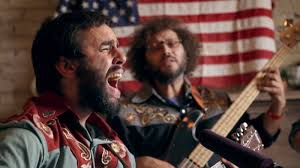
Fede Graña Y Los Prolijos are from Uruguay and play a stomping bluegrass (which is why this is called A Bluegrass Ditty By Way Of Uruguay).

Every year SXSW hosts a night of music from Uruguay.

Nestled between Argentina and Brazil way down on the southern tip of the Americas, Uruguay spends way too much time in the shadows of its better-known neighbors.

But a closer listen reveals something for just about everyone: rockeros, sure, but also fans of hip-hop, folk-influenced downtempo music and singer-songwriters with distinct voices and stories to tell.

With an electric bass and a small hand drum laying down the thumping rhythm and an accordion adding to the flair, the fascination comes from the very American-sounding guitar solo that introduces the song.  But once you comfortably know that this is bluegrass, it’s even more surprising when they all sing in Spanish.

After a couple of verses, there’s an accordion solo followed by an acoustic guitar solo (from the other guitarist).  There’s a slow down that seems like an ending but it’s a fake out as the song takes off once more,.

There’s some great guitar fingerwork by he singer as the song races to an end

What a fun song, although I never heard the word “Gigante” once..

[READ: January 5, 2017] “Chicken Hill”

Joy Williams’ stories never do what I expect them to do–for better and worse.

This is the story of Ruth.

It begins with Ruth going to a memorial fundrasier at the Barbed Wire, a biker bar “in a somewhat alarming part of town.”  She had donated $30 to the memorial of a boy, Hector, who has been run over by a sheriff’s deputy.

Ruth was pleased that the father was suing the sheriff–then she found out it was the boy’s fault–he had run in to traffic against the light.

The transition is a strange one: “It was probably just a coincidence that a child appeared not long after that.”  This was a girl who lived in a house nearby.  She was the daughter of a doctor and rather than introducing herself she said to Ruth “I would like to draw you in plein air.” (more…)

Read Full Post »

« Newer Posts - Older Posts »