Feeds:
Posts
Comments

Archive for the ‘Short Story’ Category

SOUNDTRACK: KISS-Destroyer {Resurrected} (2012).
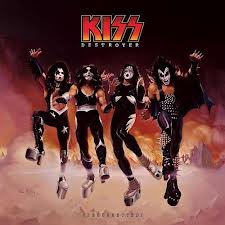
Bob Ezrin, überproducer, decided he wanted to remaster Kiss’ Destroyer album (for its 35 year anniversary).  If his notes are to believed, this was all Ezrin’s doing with little input from the band.  The notes are interesting and explain Bob’s rational at the time and his rationale for remastering it now.

The remastering isn’t major–the guitars sound more vibrant (there seems to be extra flourishes on “King of the Night Time World”, the vocals sound a little fuller (with some extra echo).  I actually think I’d like the drums to be a little louder–Peter does some great drumming here and it should be emphasized more.  Ezrin explains that do to the limitations of the originals there wasn’t a lot he could do to  re-mix the album.

The most exciting find of the remaster is the new guitar solo for “Sweet Pain.”  It’s not a huge deal, it’s only a few notes, but it is  fun to hear a new take (even if the “real: solo is better).

He adds a “Get Up/Get Down” at the end of the solo in “Detroit Rock City” (which I do not like).  He also repeats an “ahhh” in “Beth” in the middle which just makes me think the song should end.  In the liner notes, he says they added new car crashes at the end of “Detroit Rock City” although  I can’t really hear it. There seems to be more of the little kid’s voice in “God of Thunder” (I always wish they’d provided transcript of what he says).  And overall I think that song sounds the best with the new mix–more intense, more scary, more bombastic.  As for the mellower songs (“Great Expectations,” “Do You Love Me?”) there’s a bit more oomph in the backing vocals.

In the notes he says he fixed something that has been bugging him for 35 years.  The internet boards suggest that it is this: In “Detroit Rock City,” Paul sang “Moving fast down 95,” but 95 goes nowhere near Detroit, so he mixed Paul’s voice to say “moving fast doin’ 95.”  I never really understood which one he was saying to begin with, so I can’t be sure of this.  Overall, is it worth getting this remaster?  Well, probably not. It sounds better and fuller, but not radically different.

The only other  Kiss albums he produced were Revenge and The Elder–Bob, I’d love a remaster of The Elder!

[READ: September 23, 2012] “The Casserole”

This really short story (less than two pages) has a title that’s not terribly exciting.  It also prepares you very little for what will happen and just how the casserole will come into play.

The story is of a trip that a long-married husband and wife take to her family’s ancestral home–a large farm with tons of acres, tons of livestock and worth tons of money.  But he and his wife don’t want the farm (which her parents want to give them), they’re happy in the city, being school teachers who live frugally, saving for a rainy day.

The story is almost all flashback as the couple waits to board the ferry that crosses the river to the house.  He thinks about how they don’t have kids (and never wanted them) and how this drives her parents crazy (they desperately want an heir to their property).  He thinks about how they spend very little money on anything–keeping it squirreled away for their retirement.  Even if his wife might like to go to Belize to show off her still hot body.  He thinks about how the only thing he would spend money on is a beautiful room to house his record collection and maybe to buy an awesome stereo–and how his wife is unimpressed by this. (more…)

Read Full Post »

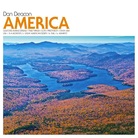
SOUNDTRACK: DAN DEACON-“Guilford Avenue Bridge” (2012).

I only know Dan Deacon from his “cover” of “Call me Maybe” (in which he layered the song on top of itself 147 times).  Deacon has a new proper album out and while it’s not quite as outlandish as the “Call Me Maybe” cover, it’s still pretty out there.

This is the opening track–a noisy barrage of sound set to a really catchy drum beat and bassline.  But you almost have to listen hard for that beat because it is just a wall of noise that goes on for 90 seconds until the song completely stops and is replaced by a manipulated banjo solo (I think).  This slowly morphs into pianos and then waves of delicate keyboards (all of which I’m sure is some kind of manipulated sound).  With about 30 seconds left the noise comes back and the songs ends much like it started.  Although it ends with a very happy chord.

This is definitely not for most, but the experimental nature is quite fun, and it’s definitely not something you’re going to hear on the radio very often.

[READ: August 22, 2012] “The College Borough”

I hadn’t read any Joshua Cohen before this story (he wrote the 800+ page buzz book Witz, but is NOT the author of a book called Leverage which Sarah reacted very strongly to–that would be Joshua C. Cohen, this one is Joshua A Cohen).  Also, I put it off because it was long.

Before I summarize, I want to state that this story is flipped on its own head by the final line.  The final few words completely changed how I felt about this story.  And I have to wonder what the risk is for a writer to do something like this.  For the entire story we don’t know why the narrator acts the way he does (in the present).  The flashback that the story provided is very thorough and detailed but it does not answer our pressing question.  Even when we return to the present, and the past comes to meet them, it still doesn’t explain it. It is literally the last few words that justify everything.  That’s audacious.

I’ll say more about this at the end.

It also begins with an audacious statement: “I helped build the Flatiron Building though I’ve never been to New York.”  Indeed, it seems that the narrator never wanted to go to New York.  But ow that his daughter, a junior in high school, wants to go to college in Manhattan (they hope she’ll stay in-state), he agrees for them all to go to New York City.

The narrator met his wife, Dem, in college (at in-state college).  They were both in the writing program and they’d had some classes together before they enrolled in Professor Greener’s seminar.

The beginning of the story is mostly the narrator’s complaints about New York.  I especially enjoyed this line: “I know no city can contain all the amenities you’d find at a place like our alma mater.”  Back home they have more pools, more StairMasters and their very own Flatiron Building (dubbed the Fauxiron).

Then the story pulls back so we can figure out what the hell this guy is talking about. (more…)

Read Full Post »

SOUNDTRACK: MOGWAI-Music for a Forgotten Future (The Singing Mountain) (2011).

This track is a 23 minute instrumental that was used for an art installation by Douglas Gordon (who made the film Zidane, for which Mogwai provided the score) and Olaf Nicolai called “Monument for a Forgotten Future”.  The more I learn about  his installation, the more intrigued I am by it.  According to wikimedia, “Monument for a Forgotten Future” is a sculpture by Olaf Nicolai and Douglas Gordon on the so called “Wilde Insel” (wild island) in Gelsenkirchen-Horst, Germany. It is 1:1 replica of a rock formation in Joshua Tree National Park with a sound installation by Mogwai that can be heard from within the “rock.”  Someone has even posted a video of their trip to it.  In the video (which is literally of a rock), as the filmer approached you can hear the music only when he or she gets pretty close to the installation. It’s just barely audible.  Cool.

As for the music itself, it is very mellow an atmospheric, quite perfect for being on a Wild Island and sitting by/staring at a rock.  There are definitely hints of Mogwai’s sound in the music, although there are a lot more keyboards than guitars (which befits their more recent albums).  It’s very peaceful and quite beautiful.  At about 19 minutes it fades out and seems to being another string laden piece into the mix as well, but it more or less fades into static (which would be a lousy time to get to the installation!).

The music comes free with most editions of Hardcore Will Never Die But You Will.

[READ: August 2, 2012] “Without Blood”

After reading Baricco’s Emmaus, I wanted to see what else he had written.  I found this short story (which is also the name of one of his novels, although I’m not sure if this is an excerpt or the inspiration for the novel–Wikipedia says it is a “revised form” of the novel, whatever that means).

I was a little disconcerted by this story when it opened because it has a very violent introduction.  The farmhouse of Manuel Roca is the site of bloodshed.  Three men, Salinas, El Guerra, and Tito pull up in a Mercedes.  Manuel Roca is the man they are looking for.  He has two children a boy and a girl, Nina.  He tells Nina that she must hide when the men come.  Hide in the cellar and be absolutely still, no matter what happens.  And to not be afraid.  The son, slightly older, wants to help, he even has a gun, but Manuel tells him to hide in the woodshed.  And then the house was riddled with bullets.

Manuel survived that first round but when he looked up, Tito (who was described as a boy but was in fact 20) was standing there with a gun pointed at Manuel.  And he shouted to  Salinas “IT’S TITO.  I’VE GOT HIM.”  When the threesome get inside, they see that Tito has shot Roca in the arm because he had a gun.

When the two men come face to face we learn that this fight has to do with the war.  Roca says the war is over, although Salinas, says “Not yours, Not mine, Doctor.”  Salinas was known as the rat because he deciphered Roca’s men’s coded messages.   But despite the war, Salinas has only shot a gun twice.  The first one was at no one, the second was at his brother who was in the hospital when the war ended.  Salinas went to the hospital with the intent of killing Doctor Roca and his men, but they had fled, leaving all of the sick and dying unattended.  When Salinas’ brother asked him to kill him…please, he could only comply.

After this flashback, Roca’s son came into the room with a shotgun.  From here the scene gets really violent with both Roca and his son killed.  The men realize that Nina must be there as well, so they look all over for her.  It is the boy Tito who finds her in the cellar.  They stared at each other, but Tito let her live.  And the men left.  After they set the house on fire.

Three days later a man on horseback found Nina and took her away.

Wow. (more…)

Read Full Post »

SOUNDTRACK: MOGWAI-Hardcore Will Never Die, But You Will (2011).

With an album title like that, you expect, well, some pretty loud music, right?

For this Mogwai album that’s not what you’ll get.  You’ll get lots of keyboards, and on the opening track “White Noise” you’ll get one of their prettiest melodies in ages.  Sure, there’s some distorted guitar by the end, but this is quite pretty.  “Mexican Grand Prix” opens with a computerized drums, keyboards, a propulsive bass line and whispered vocals.  This could be a dance hit.  What has Mogwai done with Stuart Braithwaite?  When the processed vocals start singing along (no idea what they’re saying), you can easily imagine a dancefloor packed with people for this track.

“Rano Pano” brings in the buzzy guitars again, both the first intro sounds and the noisier melody guitar, while “Death Rays” returns to the happy keyboard feel for a song that reminds me of Explosions in the Sky.  Once again, the melody is beautiful.  “San Pedro” brings guitars back in, with another killer melody and at 3 and a half minutes, it’s the shortest blast of rock.

“Letters to the Metro” opens with a spare piano melody and adds delicate washes throughout.  “George Square Thatcher Death Party” opens with some chanting (no idea what they’re saying) and then some of the loudest bass so far.  It’s another propulsive song, with some buzzy guitars way in the background, but the main force again is the keyboards.  This song sounds very 80s to me, with the processed computerized voice and the keyboard sound they use.  “How to Be a Werewolf” is 6 minutes. It’s a nice song but it doesn’t really grab me like the others.  “Too Raging to Cheers” has more 80s style keyboards (reminding me of Brian Eno or a PBS documentary about space) until about 2 and a half minutes in, when the Mogwai of old come crashes through–lots of cymbals and loud guitars.

“You’re Lionel Richie” is an 8 and a half minute song that opens with some French dialogue.  There’s a complicated guitar melody that plays for a time.  By about 5 minutes, the noise comes in–guitars, keyboards, cymbals, and while it doesn’t crescendo like Mogwai of old, it certainly gives you tastes of them.  This later section of the song brings in a good guitar melody that plays along until the slow fadeout at the end.

I continue to think of Mogwai as a loud, intense band, but their more recent output shows a band changing into something else.  Their melodies are still top notch and they definitely flirt with using noise in some of their songs, but they seems to be making more commercial sounding music (although realistically no band that makes almost exclusively instrumentals can ever be accused of selling out).

[READ: August 10, 2012] “Ghost Town Choir”

I have a read a few things from Ferris.  This story caught me completely by surprise.

The story is from the point of view of a boy who is living with his mom.  She is dating a man named Lawton.  Lawton had moved some of his stuff into their house, including his record collection–his prized possession.  They have a fight; he sings to her from outside their trailer, “What have you got planned tonight, Diana, he sang, though my mom’s name is Sheryl.”  She threw all of her dishes at him until he left.  He came back later that night calling her all kinds of unforgivable names.

Then the story shifts to Lawton’s point of view (both POVs are in first person, although they are quite distinct in style).  The boy goes to Lawton’s trailer even though he is not welcome anymore: “Your momma and me, we’re done.”  Lawton fancies himself a cowboy, and the backing singer in a cowboy band.

Back at home, Sheryl is on a cleaning binge–purging herself of everything.  When she gets to Lawton’s records, she is ready to toss them but the boy asks her not to.  She doesn’t listen and hauls them to the dumpster.  The boy grabs them later on and brings them to his fort in the forest.  That’s where he kept all of the things that the men left in his house after they were gone: “I wonder did they know about he cigarettes they’d never finish?” (more…)

Read Full Post »

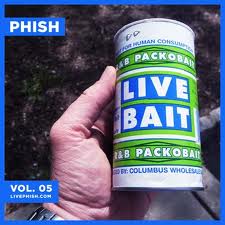
SOUNDTRACK: PHISH-Live Bait 5 (2011).

When this was released it was an astonishing free giveaway.  A mix of previously released and brand new recordings that spanned from 1987 to 2009!  Over 6 hours of music!  For free.

It’s fun to hear the really early stuff–like the songs that are from “Ian McLean’s Party at Connie Condon’s Farm” where the band is laughing with the audience (which seems like it’s about 100 people).  And when they invite everyone to another free part coming up.   This was back in 1987 before they had released their official debut Junta (who was taping all this stuff for them back then?  And with such good quality?).  But this one is especially fun because you can hear dogs barking during the quieter parts.

There’s also a big chunk of live Gamehendge material from Townshend Family Park in Vermont (circa 1989).  The middle block features the addition of The Giant Country Horns who play on “Flat Fee” and great versions of “David Bowie” and “Gumbo.”  I wouldn’t want the horns all the time, but they do add something to these shows.

Then there’s a jump to 1996 and a whole series of songs from shows at Loring Air Force base (through 1998).  There’s a 27 minute “Down with Disease” and a fun “Bathtub Gin.”  There’s then a bunch of songs from one show at the Big Cypress Seminole Reservation.

After a few year’s hiatus, they resume in 2003 back at Loring.  There’s a great version of “Waves,” although I found the “Mike’s Song” from this era kind of anemic.  And then, interestingly, there’s a “Split Open and Melt Jam” which is indeed, just the jam from the song and not the song itself.  “Suzy Greenberg” features Sharon Jones–it’s funny to me to hear r&b singers singing about a Jewish woman going to a neurologist. Fish, by the way has some of the funniest lines during the “forgotten my name bit.”  I’m also intrigued by the 2009 version of “McGrupp and the Watchful Hosemasters,” a pretty but kind of goofy song that dates back to 1985!

All in all, this was a very cool freebie to give to fans.

[READ: July 5, 2011] Five Dials 24

The newest Five Dials came as something of a surprise since Number 23 came out not too long ago and there was talk of the next issue being quite large.  But I like the small editions of Five Dials.  And this one is a cool, bite-sized nugget–a little fiction, an interview and an essay.  I have to assume this one was released when it was because it has a remembrance of David Rakoff, making this release rather timely.

…plus bear illustrations like you won’t believe by BECKY BARNICOAT (funny and dark drawings), LIZZY STEWART (beautiful pencil drawings) and NEAL JONES (blue bears). (more…)

Read Full Post »

SOUNDTRACK: RED HOT CHILI PEPPERS-“Magic Johnson” (1989).

Just before the Red Hot Chili Peppers totally took off and became stadium stars, they released Mother’s Milk.  It was a commercialized realization of their three earlier more raw sounding funk rock records.  It was one of my favorite records of the late 80s.

Since Flea is interviewed in this issue of Grantland, and since he’s still a fan of the Lakers, it seemed like a good time to mention this song.

It opens with some martial drums (from then new drummer Chad Smith) and band chanting about M A G I C.  The lyrics are sung very quickly (I’m not even sure what they say half the time).  About 80 seconds in some wild guitar work burst forth, but it’s largely a chanted song of bass and drums.  There’ s a brief jam at the end where Flea shows off some great basswork and John Frusciante gets to do his thing again.

I don’t think I’ve ever heard it played anywhere (maybe at Lakers games?), so here’s a chance to hear it:

[READ: May 8, 2012] Grantland 3

One thing is for sure, Grantland loves it some basketball.  Basketball is the most widely covered sport in the published Grantlands so far. (The first issue even looked like one).  Since basketball is such a pop culture-referencing sport it actually works pretty well as a subject–with lots of different angles–especially given the state of the NBA lately.  Some other things on the Grantland staff’s minds include–the dangers of football and inadequacy of helmets to protect kids and Tim frickin Tebow (still!).  I don’t think an issue has past without talking about him yet.  I realize that’s a function of the time of these publications but… ew!

Nevertheless, the writing remains exciting and interesting, even for a non-sports guy like me.

(more…)

Read Full Post »

SOUNDTRACK: CHEECH & CHONG-“Basketball Jones featuring Tyrone Shoelaces” (1974).

When I was a kid this was a favorite song on the Cheech & Chong’s Greatest Hit album (although not quite as good as “Earache My Eye”).  Anyone who grew up in the 70s and early 80s should know the teeny tiny voice singing “bassetball jones, I gotta bassetball jones…i got a bassetball jones oh baby ooooo.”

This song is pretty simple and straightforward–a young boy gets a basketball and he loves it and keeps it with him everywhere he goes.  And he becomes the best basketball player ever.  There’s more or less one or two verses and then an ever-increasing choir of voices sings the chorus.  The joke is about 30 seconds long but the song last for over three minutes, growing bigger and more epic.  Tyrone brags about his awesome skills (I can dunk with my nose) all the way through. There’s also a pretty great guitar solo from George Harrison!

I never knew that there was a cartoon for the song–it was made to promote the album Los Cochinos, and was shown before films in the theater! and was included in a Robert Altman film!!.  The cartoon was created by Paul Gruwell, and now you can watch it here:

[READ: August 20, 2012] “The Art of a Basketball”

The last story I read in Grantland was okay, but I didn’t have very high hopes for another one.  And when Mullen described a room as “like the lair of some mad villain from a Spiderman movie” I didn’t think I’d be enjoying this one much either.  But this story proved to be pretty interesting.

The premise is that the main character has his degree in art and he make a living touching up paintings that have eroded over the years.  As the story opens he is restoring the color to chipped sections of a $12 million Cezanne (is that even a job?).  Anyhow, he messes up the Cezanne (d’oh) and is fired.  He messed it up because he was unfocused–he just broke up with his girlfriend and that was all he could think about.  She is an artist (she says so at every opportunity) and he found her pretentious and really not very good.  And she found him very negative–they should have broken up ages ago, clearly.  Anyhow, he is fired and gets a job in Providence at CAMP.  He’s now working on Contemporary art which he doesn’t respect at all (some serious art bashing in this section!).

His first assignment is to fix up Jay Winthrop’s Water Ball from 1981 (not a real installation).  The piece of art is a basketball floating in water.  It had developed black gunk on the ball and his job was to clean it (I of course wondered how the water stayed in there for 30 years).  He created his own solvent which removed the black, bit also some of the coloring of the ball.  Now he was in deep shit. His only choice was to replace the ball without anyone knowing.  But it turns out the ball was not just a regular old 1981 championship ball (on ebay for $500) but a 1981 Championship ball with Dr. J’s signature on it (they weren’t in the playoffs that year)–a factory error valued at $5,000.  The narrator is already in huge debt, but he needs the job.  What is he going to do? (more…)

Read Full Post »

SOUNDTRACK: PINK FLOYD-Alan’s Psychedelic Christmas (1970).

I’ve always loved Pink Floyd’s Atom Heart Mother.  I have no recollection of how I stumbled upon this live bootleg, but when I saw that it contained one of the few live recordings of “Alan’s Psychedelic Breakfast” I had to give it a listen.

So this show is from 1970 and was recorded in Sheffield just before Christmas (Nick Mason evidently introduced the show while wearing a Santa Claus suit).  The sound quality is pretty good given that it is 40 some years old.  There’s a bunch of hiss, and the quieter talking bits are hard to understand, but the music sounds fine.

So the show opens with “Alan’s Psychedelic Breakfast” and what is so silly (and I assume funny to watch (a little less funny on bootleg) is that the band made and ate breakfast on stage.  As Collectors Music reviews writes: “This is the only known live recording of ‘Alan’s Psychedelic Breakfast’ but also hosts an amazing performance by the band which included them making morning tea on stage which is audible. Just like most of their earlier performances, the performance of “Alan’s Psychedelic Breakfast” slightly differs from the album version due to some nice jamming done by the band, especially Gilmour with his delay pedal.” As I said, some of the audio is static and hard to make out in this song–the band is conversing during their tea, but who knows what they are saying.  And who know what is o the radio.

Then the band gets down to business.  One of things I love about this period Floyd which is so different from their later work is that the played really long spacey jams often with very few lyrics.  So we get a 12-minute version of “The Embryo” (the only available studio version is a very short one on Works which is quite a shame as the song is really good).  A 14-minute workout of “Fat Old Sun” which is usually only about 5 minutes.

There’s a great version of “Careful with that Axe Eugene” and “Set the Controls for the Heart of the Sun” (15 and 12 minutes respectively).

Then in a killer version of “Saucerful of Secrets,” just as they get to the end, there’s a power failure (at least according to the song title).  The band is rocking out just hitting the climax when suddenly all you can hear are un-miked drums.  Ha. After a couple of minutes, power comes back and they pick up from just before where they left off.

Then the band launches into a full 31-minute version of “Atom Heart Mother” complete with horns and choir  of voices.  It sounds quite good (the horns seem a little sketchy but that might be expected with such staccato music).

The set ends and the band needs an encore.  Apparently they couldn’t remember anything else because they just re-do the last few minutes of “Atom Heart Mother” again.

One of the things that cracks me up about these shows in the 70s in England, is that the audience is so polite. Their applause sounds like a classical theater rather than a rock show.  And with a bootleg you know they didn’t try to make the audience sound bigger than they are.

The whole package is a fun trip.

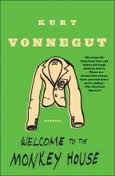
[READ: August 17, 2012] Welcome to the Monkey House

So this book is Vonnegut’s second collection of short stories.  But there’s a twist.  This collection contains all of the short stories from Canary in a Cat House except one. It also contains many of the stories he had written since then as well as stories not collected in Canary.  So you get basically 18 years worth of stories here.  And it’s interesting to see how much he has changed over those years (during which he wrote 5 novels, but not yet Slaughterhouse Five).

Since I read Canary a little while ago (see comments about the stories here), I knew that his 50’s era stories were influenced by WWII.  So it’s interesting to see how his stories from the 690s are not.  They deal more with day to day things and, of course, abstract concepts about humanity, although politics do enter the picture again once Kennedy is elected .

  • Where I Live (1964)

This was a good story to open with because it shows the then-later-period Vonnegut’s mindset and location.  This story is about Barnstable Village on Cape Cod (where I assume Vonnegut lived since there are a number of stories set on the Cape).  This is a very casually written story about an encyclopedia salesman who goes to the local library and sees that their two encyclopedias are from 1910 and 1938.  I enjoyed this line: “He said that many important things had happened since 1938, naming among others, penicillin and Hitler’s invasion of Poland.”  He is told to talk to the library directors who are at the yacht club.  I love the attitude that Vonnegut creates around the village which “has a policy of never accepting anything.  As a happy consequence, it changes about as fast as the rules of chess.” For really, this story is about the Village more than the encyclopedia salesman, and it’s an interesting look at people who move into a new place and want it to never change. (more…)

Read Full Post »

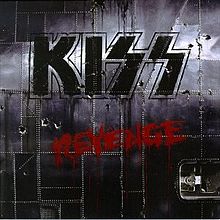
SOUNDTRACK: KISS-Revenge (1992).

Having not learned from Creatures of the Night, this time when I blew off Kiss for a few years, they came out with Revenge, a very heavy, very aggressive album.  It’s certainly one of their best post-70s albums.  I didn’t pick it up until many years later, so I never got to appreciate it to its fullest extent.  And I really like it.  But in typical Kiss fashion it is marred by a few truly ghastly songs.  Ghastly in and of themselves, but also ghastly because they do not belong anywhere near this album.

The band was having a hard time by 1992.  Eric Carr died in 1991, and that had to be pretty rough (even for the businessmen of Kiss).  Nevertheless, they regrouped with a new drummer, Eric Singer (who is blond, for god’s sake!) and came up with an album that fit in more with the aggressive alt sound of the early 90s.  It opens with “Unholy” a heavy dark song, very much like early Kiss (and interestingly co written with Vinnie Vincent, although he doesn’t play on the record).  This is the kind of aggressive song that Gene is meant to sing.  “Take It Off” is a cheesy song about going to strip clubs.  Kiss seems to live in the world of metaphor, so this very explicit song is quite shocking from them—even if the content is no surprise at all.  And Paul’s voice doesn’t seem to work with the music very well.  Although in a rare twist for Kiss, the slow middle section is actually pretty good.  “Tough Love” sounds like a very different style of Kiss–it’s all minor key and menacing.  This is especially odd for a Paul song.  It’s a respectable change of style.

“Spit” is another really weird Kiss song.  The guitar is very rough and raw—almost industrial.  But having Gene sing “It don’t mean spit to me” seems like a total cop out.  Of course, when the bridge comes in and Paul actually sings “the bigger the cushion the better the pushing” which is literally a Spinal Tap lyric (and given all the groupie photos I’ve ever seen, completely untrue) the song hits rock bottom.  The chorus “I need a whole lotta woman” actually makes it worse.  Although the odd solo section in which Gene scat-sings along with the solo is pretty wild.

“God Gave Rock and Roll to You II” may be an anthem and may have been Kiss’ biggest hit in years, but I think it’s pretty awful.  Kiss doesn’t need yet another song about rock n roll being awesome.  Although they sound very good in the little Beatles-esque breakdown near the end.

“Domino” is a popular song still, and it’s got that old school swagger.  I happen to dislike Gene’s lascivious opening and frankly, the lyrics are really, really gross.  I mean, sure, he wants to sleep with young girls, but you’re 43 and she “ain’t old enough to vote.”  Couldn’t you just make her 22 and make us all feel a lot less queasy?  I mean in “Goin’ Blind,” you were 93 and she was 16, but somehow that doesn’t seem as gross.  “Heart of Chrome” (also co written by Vinnie Vincent) is a fast rocker—another odd one for Paul (this whole album feels like it should be sung by Gene), but Paul works it very well.  “Thou Shalt Not” is mildly blasphemous and kind of interesting (Gene was born in the promised land!).

“Every Time I Look at You” is the obligatory ballad.  It sounds so crazily out of place on this heavy disc.  And it’s a pretty typical metal ballad of the time.  “Paralyzed” is an example of how Kulick’s wild soloing fits with the heavy sound of the album—it’s noisy and rough like the songs themselves. Of course the actual song, a near the end of the album track by gene, is pretty much filler.  But it’s good filler.

The end of the album has the stupid, but fun “I Just Wanna.”  I hate that the vocal melody is ripped straight out of “Summertime Blues.”  And it’s got a “naughty” chorus straight out of 7th grade—”I just wanna Fuh I just wanna Fuh I just wanna Forget you.” Okay, it is kind of fun to sing that part.  “Carr Jam 1981” is an instrumental jam that is dominated by Eric Carr’s drum solo.  It’s nice tribute to Eric (even if they did have Bruce record over Ace’s original guitar work).

I hadn’t really listened to this album all that much, but I found that when I listened to it again recently (aside from those three or four bad songs) it was a really good, rocking album.

[READ: August 13, 2012] “After Ellen”

This is a story about an asshole.  And that is deliberate.

The title is “After Ellen” and the first 8 or so paragraphs are all about what a cowardly shit Scott is.  He doesn’t want to get too serious with Ellen.  They have already picked up stakes from Long Island and moved to Portland together.  But he knew an evil seed was planted when they got there.  And so, on the day after they talked about adopting a dog, he packed all of his things into their shared car and just left.  While she was at work.  Giving her no warning.  And now, leaving her with no ride home.

How is it possible that one would want to read any more about this guy?  Perhaps to see if he gets a comeuppance or to see if he changes his mind (although one hopes that Ellen would never take him back after that).  But Taylor is a good writer and I want to read on.

He heads south to stay with his sister in Los Angeles–unannounced of course.  But he stops in San Francisco to rest for the night.  He checks his phone for the first time in two days.  Ellen called 16 times and has gone from pleading to rage. There’s also messages from his parents (who are going to cut him off if he doesn’t call) and from Andy, a college friend from Portland who says he is a shit for taking the car–how is Ellen supposed to get to work?  He texts Alan who immediate writes back and says to never even think about Ellen again.

After he settles in, he had deliberately avoided checking his past life, but when he finally logs into Facebook he sees that Ellen has not unfriended him (she was always a lazy Facebooker).  And her most recent post is Fffrrryyydddaaayyy (and five people “like It).  But Andy has unfriended him and Andy’s new profile picture is of him and Ellen.

And here’s where I say the asshole part of the story is deliberate.  (more…)

Read Full Post »

SOUNDTRACK: KISS-Hot in the Shade (1989).

Before this album came out, Paul Stanley did a little club tour.  My friends Matt and Nick and I got to see him in Wilkes Barre, PA. It was a pretty great show, and intimate in a way that Kiss shows can never be.  So we were pretty psyched for this new album.  And yes, this album holds special memories or me because we used to listen to it a lot after the show.

The biggest problem with this album is bloat.  I don’t have any kind of evidence to back this up, but this was the first Kiss album that took advantage of the compact disc’s length.  And so it’s easily twenty minutes longer than most Kiss albums (and the later albums had some filler on the already).  Plus it’s  almost longer than Kiss’ first two albums combined.     That’s just too much.

Even Kiss’ weaker albums usually start with a good song.  Not so much Hot in the Shade.  “Rise to It” is pretty generic even by mid 80s Kiss standards.  They try to make it fun with the Ri–e i-e-i part, but it doesn’t quite make it.  “Betrayed” is a bit more of a rocker and is quite a good song.  Lyrically it’s not so great (it’s funny to think of Gene Simmons trying o be down with the common man), but it rocks pretty hard.  My friend Matt and I liked “Hide Your Heart” quite a bit when it came out.  The chorus: Ah ah ah ah, hey hey hey do do do do do do do do do” is pretty bad though.  “Prisoner of Love” musically sounds like Kiss of old, until the verses come in.  “Read My Body” is really catchy until you realize it sounds just like “Pour Some Sugar on Me.”  That’s embarrassing.  Although the metaphor is well done, at least.  “Slap in the Face” might as well be “Let’s Put the X in Sex” from Thrashes Smashes and Hits.

Then comes the cheesiest ballad in Kiss’ history—actually written by Michael Bolton, yes Michael Bolton.  And man do I love it.  Paul is in full voice, he sounds great, the harmonies are spot on.  It is the cheesiest metal ballad ever, but I never get tired of it.  It even has an acoustic guitar solo—pre-made for Unplugged!  “Silver Spoon” is a good rocker, with a fun chorus.  Although the gospel singers at the end are a bit overkill—it seems silly to have invited them in for 90 seconds of singing.  “Cadillac Dreams” is just a bit too close to a Beatles song for my liking.  “King of Hearts” is a decent song, and “The Street Giveth and the Street Taketh Away” (were Kiss really hard up for money?  what’s up with these lyrics?).  We had an in-joke on my dorm floor, so I can never take this song seriously (that may also be because they steal the “Hey man” right out of David Bowie’s mouth).  Love Me to Hate You” is pretty generic although catchy.  “Somewhere Between Heaven and Hell” is also a decent song.

“Little Caesar” is the first (and only, really) song that Eric Carr sang lead vocals on.  As a singer he’s a really good drummer.  The song is pretty generic too and is unfortunately given the same name as a bad pizza company.  “Boomerang” has a good fast pace (once again, not unlike a Van Halen song).

[READ: August 11, 2012] “The Cryptozoologist”

This is yet another short story broken down into lots of little sections.  What’s neat about the way that this one is done is that because the narrator is a cryptozoologist, each section is headed by a cryptid (animals whose existence has not been proven).  But in addition to discussing these animals, the sections also describe a history of the narrator’s life.  His life in this field started when his grandfather told him about a snake which latched onto the end of its own tail and rolled away from its pursuers (section title: Hoop Snakes).  His grandfather never lied, so it had to be true.

It proceeds through The Mušhuššu (a serpent dragon spoken of in ancient Babylon), through the Jenny Hanivers (jeunes d’Anvers), into The Wolf of Ansbach (believed to be an old Bürgermeister who was transformed into a werewolf), and on to The Batutut, a monkey man in Laos.  Most of these sections describe the origins of the cryptids (and his lack of success at spotting them), but The Batutut section is also about himself and how he was in the war when this particular cryptid entered his life.

Then we move on to The Altamaha-Ha in Southeastern Georgia, while Giglioli’s Whale, which had two dorsal fins dates to 1867.  The Mongolian Death Worm, said to live in the sands of the Gobi desert is a cryptid that he actually experienced in the American desert.  he didn’t see it, but he could feel its presence.  The Madagascar Tree is a killing tree–it looks like a pineapple and eats sacrifices.  This story was told by two adventurers who saw the tree eat a woman.  The best part of is that there is no proof that the two men who are credited with telling the story actually existed themselves. (more…)

Read Full Post »

« Newer Posts - Older Posts »