Feeds:
Posts
Comments

Archive for the ‘Short Books’ Category

SOUNDTRACK: My Volkwagen Jetta hates The Beatles.

Lately, I have been playing some Beatles discs in my car.  And my Jetta clearly hates them.

First it was Please Please Me, when the entire CD player shut off mid-song.  It had lost all power.  I had to bang on it for about 5 minutes before it came back on.

The player played other discs fine after that.  Then, last night I played A Hard Day’s Night and half way through the disc it shut itself off again.  This time I was able to power it back on, but it wouldn’t play the disc anymore.  I ejected it and put in a new disc which worked fine.  When I put A Hard Day’s Night back in, same spot on the disc (“Can’t Buy Me Love”), and the player was totally off: no power at all.

A bit more pounding on the face and it came back on, and today played a Rheostatics disc with no trouble.  I guess I’ll not be listening to The Beatles in the car again.  Is it because the Beatles recorded versions of their songs in German but they weren’t included on the disc?

[READ: May 8, 2010] The Clock Without a Face

This review is about my first read of this book.  When I get to the end you’ll realize why there will have to be a second read and updated review.

This is an amusing tale.  And also a confounding (and evidently very real–see the bottom paragraph!–) mystery. (more…)

Read Full Post »

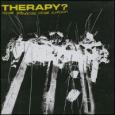
SOUNDTRACK: THERAPY?-Never Apologise Never Explain (2004).

This album is the prior release to One Cure Fits All. It’s not true that Therapy? works on a harsh release/melodic release kind of schedule, although judging by these two discs it sure seems that way.  Never Apologise begins with a blistering, noisy “Rise Up.”  The really notable difference with this disc and other Therapy? releases is the amount of noise in the track. One of Therapy?’s most notable sounds has been a guitar that is so clean it sounds almost unreal.

This disc is far more sludgy (and seems even more angry), witness: “Die Like a Motherfucker.”

The whole disc is fairly short (under 40 minutes), very fast, and in relative Therapy? terms, lyrically not very interesting.  Consider this a solid rawk album.  And, again, one that is not available in the States.

[READ: April 29, 2010] Metrophilias

Brendan Connell’s new book is a short story collection.  And the short stories are indeed very short.  The longest one is 4 pages; most are 2.  There are 36 stories in all and each is named after a city.

I love the title of the book.  Metrophilias.  Technically, what? City love?  Love in a major city?  [Of course the prefix metro- means “mother” so I guess the title is literally motherlove, but that’s not how it’s intended].  And so each short story shows a snapshot of an individual in love in that city.

Each city is represented by at least a small nod that locates it, whether it is a street name or a building, or as in many cases, by an entire culture coming to the fore.  As such, some cities are far more identifiable as cities, and yet the content of the stories is so individualized that the city itself is (in many cases) irrelevant.  Of course, some of them could only be set where they are.  But before I get too obsessed with that aspect of the stories, I should move on to the people on the stories. (more…)

Read Full Post »

SOUNDTRACK: THE DEAD MILKMEN-Chaos Rules: Live at the Trocadero (1994).

It wouldn’t be a complete look at the Dead Milkmen without mentioning their one live release.

Chaos Rules is a surprisingly good live set (taken from two separate concerts).  They had to leave all of the songs from their Hollywood Records discs off this collection, so this comes across more as a classic concert rather than a comprehensive one.

The band sounds great and the songs sound pretty close to the originals.  Not that the originals were hard but it wasn’t always obvious whether the Milkmen were doing what they were doing on purpose.  This set suggests that they were.

As any good live band, they play around with their songs, being surprisingly angry about local politics and changing the (by then twenty year old) “Bitchin Camaro” intro to reflect that.

The only reason it would have been nice if they had been allowed to include some of the Hollywood Records songs (they do sneak one in under a different name) would be to see if they played them any differently.  Since the early tracks are pretty chaotic, I wonder what would happen to the latter, more mellow songs.  Did they stand up under the weight of the nonsense or did they become more ramshackle as well?

I guess I’ll never know.  This is not essential by any means, but it is an interesting artifact for the curious and is totally enjoyable for DM fans.

[READ: April 23, 2010] Distant Star

Because Bolaño never does anything typical, this novella is a spin-off of sorts to Nazi Literature in America.  The introduction states that “in the final chapter of my novel Nazi Literature in America I recounted, in less than twenty pages and perhaps too schematically, the story of Lieutenant Ramirez Hoffman…which I heard from Arturo B.  He was not satisfied with my version…So we took that final chapter and shut ourselves up for a month a half in my house in Blanes, … where we composed the present novel.  My role was limited to preparing refreshments, consulting a few books and discussing the rest of numerous paragraphs with Artuto…”

Okay, there is so much wonderful deception in just this introduction to this book it totally cracks me up.  (Arturo B has long been a stand in for Bolaño himself). In the original, the narrator is named Bolaño (he is the narrator in jail who eventually helps the detective locate the poet).

For yes, the story is the life of a poet who is also a murderer.  And, the story is pretty much the same as the 20 or so pages of Nazi Literature.  It is now an extended meditation on this particular poet.  All of the events that were present in the short version are here, they are all just fleshed out with Bolaño’s wonderful details and full biographies of other characters.

The big, weird thing though is that almost all of the names have been changed (to protect the guilty?).  So even though the poet of this book has the same exact  life story as Lieutenant Ramirez Hoffman, he never has that name in Distant Star (and he goes through several pseudonyms).  There are twins in the short version who now get new names.  Even the poetry teachers have different names.  However, the detective who hunts him down at the end has the same name.  Weird.

The book works as a critical assessment of the Allende administration (which is why the real Bolaño was imprisoned).  But on to the story. (more…)

Read Full Post »

SOUNDTRACK: THE DEAD MILKMEN-Not Richard But Dick (1993).

After the mature Milkmen of Soul Rotation, they followed up with this mini disc (at 28 minutes it’s probably an EP (even the title suggests that maybe it’s an EP) but it’s not considered one).

This album is a bit more twisted that Soul Rotation, although it still offers some of this newer more mature music.

The two most twisted songs are the largely spoken-word “I Dream of Jesus.”  It’s a rant in which the singer (who now goes by the name Arr. Trad.) talks about his mother keeping Jesus in a bottle, and the ramifications that that can have.  (It also features a sung chorus of “Jesus Loves Me”).  “Let’s Get the Baby High” has vocals that are processed so who knows who is singing.  But the title is pretty much spot on for the content of the song.

And you can pretty guess who is singing “The Infant of Prague Customized My Van.”

Butterfly Fairweather once again sings the bulk of the songs.  And most of them are fast rockers. The first song, “Leggo My Ego” could have been a hit (with the cool keboard opening) and “Little Volcano” probably should have been a  hit, it’s very catchy.

He’s also on vocals for some of those mellow songs (that remind me so much of Dromedary Records’ Cuppa Joe.  In fact, “Not Crazy” could have been done by Cuppa Joe.

The final song is a wonderfully hilarious Lou Reed impersonation with simple guitar chords, and a tin whistle!  It’s a very mellow spoken word piece about “The Woman Who was Also a Mongoose”.

Not Richard But Dick is no longer in print (Hollywood Records really gave DM the shaft).  I’m not sure if it’s worth tracking down at this point, but there’s some interesting and fun stuff on this disc.

[READ: April 7, 2010] Antwerp

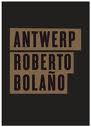
Continuing with Roberto Bolaño’s fascinating melange of styles, Antwerp (technically the first “novel” he wrote (circa 1980 although he didn’t have it published until 2002) is a series of numbered sections.  I’ve heard it described as a prose poem, and, given his (at the time) recent switch from poetry to prose, that makes sense.

I had read an excerpt from this some time ago, and I found it difficult to read as excerpts.  Unsurprisingly, I also found the entire thing a challenge as well.  And that’s because, wow, there is so much crammed into these 79 pages, and there are so many different points of view and so many unclear events (written in great detail, but trying to piece those events together…phew) that even after reading it twice, I’m still not entirely sure what’s going on. (more…)

Read Full Post »

SOUNDTRACK: THE DEAD MILKMEN-Metaphysical Graffiti (1990).

You know that it would be untrue, you know that I would be a liar if I were to say to you I didn’t set your house on fire.

You don’t have to be a philosopher to appreciate the joke of this album title (actually that may hurt the joke a little). But the “runes” that accompany the disc are quite amusing.

I haven’t listened to this disc in ages, and it turns out that I remembered about half of these songs really well.  And that’s because half of the songs are really good.  And the other half are, well, okay.

It opens with a children’s chorus which morphs into one of their heaviest rocking (although fairly uninspired) songs, “Beige Sunshine.”  The disc comes into focus with track two: “Do the Brown Nose” a funny song that outlines exactly how to do the titular dance (although at nearly 5 minutes, it’s a bit long).

The single (!) “Methodist Coloring Book”: features Joe Jack Talcum singing (clearly his success with “Punk Rock Girl” had an impact on that decision).  But on this track, he sings with a dark and distorted voice (which pales to Rodney’s dark voice) and is less interesting than his whiny normal singing voice. It’s a good song (and amusing) although as a single it’s less than successful.

I’ve always enjoyed the premise of “I Tripped Over the Ottoman” although I’m not sure it’s a very good song.  While “If You Love Somebody Set them on Fire” is funny and catchy (and astonishingly irritating with the screechier higher register notes in the chorus).

“In Praise of Sha Na Na” makes the valid point that they played at Woodstock and aren’t dead.

Joe Jack’s other songs are the very slow ballad “Dollar Signs in Her Eyes” and the rollicking (and more distorted singing) of “I Hate You, I Love You.”  But the ending tracks “Now Everybody’s Me” and “Little Man in My Head” (which is musically quite a good reggae track) just don’t have a lot of oomph.

However, the final track, “Anderson Walkmen, Buttholes and Howl!” (which parodies a short-lived but much talked about prog rock band) is delightfully twisted.

The problem with the disc overall is the four or five “improv pieces”  They all feature the same bassline, and by the end of the disc you start to cringe when you hear it (especially since the last one is 6 minutes long).  Each one is a mildly funny rant (along the lines of “Stuart” from Beelzebubba, but less focused and less interesting).  Some of them are certainly funny (Earl’s maggots and the “chills me to this day” refrain is pretty good), but they feel like comedy skits that you only want to hear once.

Erlenmeyer Flask!

[READ: April 3, 2010] By Night in Chile

In continuing with my Bolaño obsession, I moved onto yet another of his short books (144 pages).  Interestingly, By Night in Chile is written in a complete different style than the other two titles I’ve recently read (Bolaño is nothing if not diverse).

This is a stream of consciousness reminiscence told by Father Sebastián Urrutia Lacroix.  The entire book is one paragraph (actually that’s not true, the final line of the book is its own paragraph).

As the book opens, Father Urrutia is dying.  But worse than that, he has been disparaged by a wizened youth.  And his entire memory/rant is a response to the accusations of this (unseen by us) wizened youth.

And Father Urrutia uses this opportunity to describe the highlights of his life.  When he was very young he decided to join the priesthood against his family’s objections. There’s a running joke about people calling him “father,” I especially enjoyed the scene where his mother calls him father. (more…)

Read Full Post »

SOUNDTRACK: THE DEAD MILKMEN-Bucky Fellini (1987).

C’mon, I’m the walrus, damnit.

Bucky Fellini ups the ante from Eat Your Paisley in that the band sounds really accomplished at this point.  The songs are still silly, but they’re not quite as jokey (except for the hit single, but more on that in a second). There’s even lap steel guitar, violin and backing vocals!

Dave Blood’s bass is really something of a force at this point, propelling songs with interesting riffs.  Rodney  “Cosloy” Anonymous sounds great.  And, Joe Jack Talcum gets quite a number of songs to sing: the mellow (and very twisted) “Watching Scotty Die” and the more rocking “Rocketship.”

“Big Time Operator” is a supremely silly song based on a very simple blues riff.  It features the first (utterly wretched) DM guitar solo (look out Stevie Ray Vaughn!) and even showcases a “humming” solo from Rodney (just me!).  While  on the other end of the spectrum, “Surfin’ Cow” is mostly instrumental which is catchy and full of surprising intricacy.

“Instant Club Hit (You’ll Dance to Anything)” was indeed a club hit.  It’s snarky and silly (complete with a drum machine) and it name-checks some of the most prominent college radio bands of the time.  You could easily have built a good collection of British college rock from their list of who you’ll dance to. (instead of giving your money to a decent American artist like himself).

The Dead Milkmen keep getting better and better.  They’re still funny, but they’ve proven themselves to be far more than a novelty act.  Blow it out your hairdoo cause you work at Hardees.

[READ: April 1, 2010] Nazi Literature in America

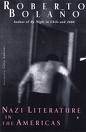
I’ve read a lot of books that are, shall I say, weird.  But this one is definitely the most unusual when I think:  what would possess a person to write it?

Nazi Literature in the Americas is written as an encyclopedia of Nazis writers who have lived in North, Central and South America.  Except that all of the writers are fake.  So, essentially Bolaño has invented 30 characters, and created rich, fully detailed biographies about all of them.

Some of them are very short (a couple of pages) while a few are over ten pages long, with details of books/poems published, critical reception and even untimely deaths.   The biographies are grouped according to categories (The Mendiluce Clan; Itinerant Heroes or the Fragility of Mirrors, Forerunners and Figures of the Anti-Enlightenment; Poètes Maudis; Wandering Women of Letters; Two Germans at the End of the earth; Speculative and Science Fiction; Magicians, Mercenaries and Miserable Creatures; The Many Masks of Max Mirebalais; North American Poets; The Aryan Brotherhood; The Fabulous Schiaffino Boys; The Infamous Ramírez Hoffman).

And although they are not chronological, Luz Mendiluce (whose bio I read separately) features prominently as a constant “reference point” and creator of one of the prominent Nazi publishing houses.  She had created a publishing empire where Nazi works were spread throughout the continent, and it seems that everyone had a title published by her company Fourth Reich.

What’s so weird about the book is that the people are fake, everything about them is fake (although they are placed firmly within history) and yet their stories are still compelling.  Bolaño has employed a mildly sympathetic tone to these people.  Not sympathizing with the Nazi aspect, but sympathizing with them as humans.

There were one or two who I didn’t really enjoy.  And I admit that I enjoyed the North Americans more; since I know more about North than South America, the facts surrounding these authors resonated more.  But I thoroughly enjoyed most of these biographies.

Of course, just when you think the book is all the same, the final biography changes everything.  In this one, Bolaño himself appears as the writer of the book.  He writes about Ramírez Hoffman in the first person, mentioning himself by name and getting personally involved in the story of this final, skywriting author.  It completely subverts the work before it and leaves you more confused than when you started (although a lot happier for having read it).

The final section of the book is an Epilogue foe Monsters.  It provides a brief biography for all of the secondary characters mentioned in the main body.  It also details the publishing houses and magazines, and finally lists  a bibliography of all books published.  The amount of detail that Bolaño created here is staggering.

But aside from all the Nazism, the book can be quite funny.  Like the conclusion for Luz Mendiluce Thompson, which ends with her driving a car into a gas station.  The final line: “The explosion was considerable.”

It’s tempting to say that this “novel” is not representative of Bolaño’s writing, but I think that’s false.  From what I’ve read so far, Bolaño doesn’t conform to any style in his books: each book is designed differently.  But like this one, they all deal with South America, with violence, with politics and are filled with humor.  So, yes, I guess this is pretty representative.

Oh, and the translation by Chris Andrews is, once again, fantastic.

For ease of searching I include: Bolano

Read Full Post »
SOUNDTRACK: THE DEAD MILKMEN-Eat Your Paisley (1986).

Who has angered the volcano gods?

My friend Paula is the only person I know who truly appreciated the Dead Milkmen.  And we spent many a car trip singing/shouting lyrics like “B.F. Skinner has eaten my dinner” (“Where the Tarantula Lives”).  While this may not be great literature or even terribly clever, there’s not too many songs (punk or otherwise) who name check B.F. Skinner.  So there.

Of course, “Beach Party Vietnam” is not quite as clever, although

– Hey Frankie, aren’t you gonna give me your class ring?
– Oh I’m afraid I can’t do that, Annette
– Why not?
– ‘Cause I don’t have any arms!

Never fails to entertain.

This second Milkmen disc jumps light years above the first.  The band sounds more accomplished, the recording is fuller and the lyrics are more bizarre and often funnier.  Rodney Anonymous Melloncamp does wondrous things with his vocal stylings (he’s still very bratty, but he does different “accents” this time).

It even features an interesting instrumental “KKSuck2” which, while under 2 minutes, holds up quite well as a solid song. And there’s some fun being poked at Hüsker Dü on “The Thing That Only Eats Hippies” (“Now it’s got  a sweet tooth for long hair so Bob and Greg and Grant you should beware.”)

Joe Jack Talcum is featured on vocals on “I Hear Your Name.” (a rather tender ballad) and on prominent background vocals on the wonderfully chaotic and super fun to sing along to “Two Feet Off the Ground.”  And “Moron” has the delicious opening verse: “Hanging out on the commode listening to Depeche Mode.”

Only six songs are under two minutes here, and that’s a good thing: their songs seems more fully realized (with actual parts!).  “Earwig” has three  different sections, even.  And while two songs are around 5 minutes long, the bulk are just under 3, the perfect length for a punk pop song (well, not quite pop, but at least pop-skewering.)

This is definitely the album to pick up for early DM fun.  ‘Scuse me while I puke and die (ha ha ha ha).

[READ: March 31, 2010] The Skating Rink

I simply can’t keep away from Bolaño these days.  I don’t even love 2666 and yet I’m very happily tracking down Bolaño’s other books, starting with this one.  (Which I guess technically is his third written novel if this bibliography is true–and why wouldn’t it be?).

This story is written in a fascinating way:  There are three narrators.  Each gets a chapter (from 1 to 10 pages) to tell the next part of the story.  The narrators are: Remo Morán, Gaspar Hereda and Enric Rosquelles.

As the story opens we learn pretty quickly that a murder has taken place.  But we don’t learn any details at all.  We also learn that the titular skating rink is going to play an enormous part in the story.  The story is set in Spain in the city of Z (which is quite close to the cities of X and Y).

In the first story line, we learn that Gaspar has gotten a job from Remo.  He knew Remo a long time ago, and when he returned to town, although he didn’t seek Remo out, it was quite fortuitous that they were acquainted.  And this job is as a night watchman at a local vacation campground.  He hangs out with El Carajillo and learns the ins and outs of the camp.  Eventually he becomes infatuated with two women, an opera singer and her younger charge.  He shares many conversations with the younger woman, and she seems (distantly) fond of him. (more…)

Read Full Post »

SOUNDTRACK: BARENAKED LADIES-Snacktime (2008).

The Barenaked Ladies have always been like naughty kids.  So, it seems almost too obvious for them to make a kids’ album.  But almost as if they want to continue being naughty, this kids album is quite smart, not just a collection of cute kids songs.

There’s a wild mix of very specifically kiddie-aimed tracks and other amusing pop cultural commentary (or jokes from kiddies past).  For instance, the opening track “789” plays on the wonderful joke of why was 6 afraid of 7.

There’s also a lot of the more delicate sounding BNL songs that came to dominate their later albums: “Pollywog in a Bog” is a cute upbeat little ditty, “Here Come the Geese” is a pretty typical Kevin Hearn track (even his adult songs sound like children’s songs).

But I think the highlight comes from when Ed Robertson and Steven Page join forces.  Robertson is the king of the goofy guys and Steven Page’s songs are always wonderful, but typically less silly.  So “I Don’t Like” is a serious look at things we don’t like (salmon, heights), while the fantastic “Crazy ABCs” is a funny and clever look at words that start with silent letters: “D is for djinn E is for Euphrates F is for Fohn etc.”

I also enjoy Roberston’s solo songs like “There’s a Word for That.”  Robertson is clearly a fan of wordplay, and this song highlights that: “There’s a word for that…little dented skin between my upper lip and nose.”

My favorite song of the disc is “The Canadian Snacktime Trilogy.”  All kinds of famous (and non famous) people tell us what their favorite snacks are.  The contributors are listed here, and they include: Geddy Lee, barbecue potato chips; Lyle Lovett, watermelon; Martin Tielli, olives; Gordon Downie, peanut butter & crackers; “Weird Al” Yankovic, honey roasted peanuts and Gordon Lightfoot, pasta.  What fun!

It’s an overall enjoyable album for kids, full of mostly hyper songs and sounds quite a lot like a typical BNL effort.

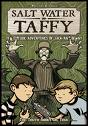
[READ:February 27, 2010] Salt Water Taffy: The Truth About Dr. True

I have yet to mention the website for this series.  So, now I’m mentioning it, and I’m also mentioning Matt Loux’s page too.  It’s a great resource for all of the books and has many sample images and pages.

I adore this children’s graphic novel series.  Each story adds amazing depth to this seemingly quaint seaside town.  Eleven year-old Jack and 8-year-old Benny are on vacation at a boring seaside town.  But mysterious things are always coming up when the kids go snooping.

In this case Benny uncovers an ancient (empty) bottle of Dr. True’s magic elixir.  (I love that Jack sneers at Benny for digging in a garbage pile, when he would have really loved to be digging in it, too).  Dr True is the ancestor of True’s Taffy shop.

While this history of the island is unfolding, we also hear the history of another famous island resident: Captain Holister.  The captain is Chowder Bay’s real hero, with a statue of him erected in the town square and everything.  The boys’ favorite new friend, fisherman Angus is directly related to him.  (more…)

Read Full Post »

SOUNDTRACK: THE ZOLAS (3 Tracks on CBC 3 Radio) (2009).

I must have heard “The Great Collapse” on CBC 3 a few weeks ago because I heard it today and it was so catchy I was sure that I knew the band.  And yet, when I saw the artist, I’d never heard of them before.

But it was so catchy I had to investigate.

The Zolas are from Vancouver, BC and must be the least self-promoting band ever.  They have a Myspace and a Facebook site, but man it was hard to find anything about their CD. It’s available at Amazon (.ca and .com) but it’s for sale at a much more reasonable price here. (Ah, except that it’s $11 shipping to the States, which is more than the disc itself.)

The band list says there’s only two member and that they were previously (or concurrently) in a band called Lotus Children.  But that this incarnation of their songwriting chops is a bit more dramatic, baroque even.

And these three songs have instantly made me want to get their disc.  They are poppy, with wonderful choruses, and yet there are tempo changes and falsettos and surprise twists and turns.

“You’re Too Cool” has about three completely different songs in it, starting as a rollicking rock song, having a rousing chorus, and then, in the middle rather than a bridge we get almost a completely new, mellow song.  “The Great Collapse” is a piano fueled romper with the real catch being the unexpected minor chord at the end of the verses.  The third song “Marlaina Kamikaze” alters the style from the other two with a magnificent guitar intro.  Although it also shifts at the midpoint to include more piano marching type music.  And another killer chorus.  The bridge then comes from out of nowhere (or perhaps from the circus) with a great piano breakdown section, slowly building up to the chanting chorus once more.

Thanks, CBC, for this band.

[READ: January-February 2010] Anonyponymous

This is the third book that Sarah gave me for Christmas.  I thought I’d read it more quickly, but I got caught up in other books.

So, we’d read a summary of this book in The Week.  This book is a collection of word origins that come from a person’s name (eponymous).  The twist is that for the most part, the people are forgotten or unknown (hence anonymous).  Anon-eponymous, aha!

There are tons of etymological books out there, but this one is very deliberately designed as a casual reader’s book.  In fact, when a book lists itself in the definition of “crapper” then you can tell the tone of th ebook?  What?  Yes:

Crapper: A toilet; also, in phr. “crapper material,” a book or magazine meant to be read in the bathroom, e.g., this one. (more…)

Read Full Post »

SOUNDTRACK: COLIN MELOY-Sings Sam Cooke (2008).

I ordered this CD from the Decemberists website.  (Sadly Colin singing Morrissey is no longer available).   This is, as the title states, Colin Meloy singing Sam Cooke songs.

I don’t know much about Sam Cooke (although I knew a few tunes from this disc).  And, in my head, Sam Cooke doesn’t have a “catalog” of songs, like, say, Morrissey does. So, this came across as a disc of standards.  And as such it’s very good.

If you like Meloy, you’ll like this.  If you don’t, this isn’t going to covert you.  It’s basically just him and his acoustic guitar (and an occasional backing vocal) singing these songs.

I have always liked “Cupid” so it’s nice to have a rendition of it.  As for “Summertime,” I’m not sure why that’s considered a Sam Cooke song since it comes from Porgy and Bess.  I didn’t know the other three songs, but they’re all quite good, uptempo jazzy numbers.

This EP makes me want to investigate a Sam Cooke Greatest Hits, to see what I’ve been missing.  And maybe that was Meloy’s point all along.

[READ: January-February 2010] Shite’s Unoriginal Miscellany

I had ordered a couple of Schott’s Almanacs from the UK, because I thought it would be fun to see what was different about them from the U.S. versions (quite a lot actually).  And while browsing for them, I found this parody of the series.  So, for a few dollars used, I ordered it too.

Now any book that bills itself as “extensively researched, eccentrically compiled and irresponsibly written” pretty much lets you know what you’re getting.   And it does conclude its summary by saying, “more than 250 pieces of useless, misleading and possibly dangerous information.”  So, what might you expect?

This is a very strange parody of the series because it does three things at the same time:  1) It provides actual lists of actual things (which are, indeed, useless and silly).  2) It provides nonsensical/hypothetical questions (more on that shortly).  And 3) It has stuff that is clearly made up and intended to be funny (but often isn’t) (more…)

Read Full Post »

« Newer Posts - Older Posts »