Feeds:
Posts
Comments

Archive for the ‘Short Books’ Category

balfourSOUNDTRACK: SLINT-Spiderland (Remastered) (1991/2014).

slint2Slint is an overlooked band except by those who think they are really super important.  Slint played what would eventually be called post-rock before people called it that–they had spoken vocals and dark guitar, loud and quiet riffs and intense building sections (and on this album no songs under 5 minutes).  Some riffs were super catchy, indeed, many of the songs on Spiderland have super catchy sections, and yet there is something that resists you casually getting into them (probably those spoken lyrics).

I’ll even say that I tend to forget about them.  They get lumped in with other Steve Albini produced bands (Albini produced their first album, but not Spiderland, and since Albini’s band was Shellac, they are even close in the alphabet), but they don’t really sound like Albini’s output.  They’re much warmer and, dare I say ,emotional–the screamed vocals are incredibly passionate.  Plus, they only released one album before they broke up (this one was after the breakup), so their legacy is bigger than their output.

So I’m thrilled about this reissue if only so that it will give them a wider audience. And you can hear the entire two hour spectacle before it come out at NPR.

At the same time I didn’t notice a huge difference in the production.  It sounded great, but then I haven’t listened to it in a while so it’s hard to compare.  The deluxe package is a behemoth: the box comes with the album, outtakes and demos on 180 gram vinyl and on CD. It also includes a 104-page book with never-before-seen photos, lyrics, and a foreword by Will Oldham and Breadcrumb Trail, a 90-minute documentary about the making of Spiderland with interviews with the band, James Murphy, Steve Albini, David Yow, Ian MacKaye, Matt Sweeney and others.  Since it retails at about $150, I won’t be buying that.

slintI did listen to the whole thing and again was reminded of how great the album is.  The bonus material is, well, a little disappointing.  You get three more early versions of “Nosferatu Man,” one of which is an instrumental.  Two demo versions of “Washer” and “Good Morning, Captain” (one is an instrumental kind of goof).  There’s three versions of a song called “Pam” which didn’t make Spiderland, so that’s interesting.  Then there’s another outtake called “Glenn” and two post Spiderland songs called “Todd’s Song” and “Brian’s Song.”  They’re all good, but are in various stages of construction.

Perhaps the most interesting bonus track is the live (from Chicago 1989) version of Neil Young’s “Cortez The Killer.”  But I have to admit that vocally, they just can’t handle it.  The music sounds good, but the singer just never seems to be in tune, but nor is he talking it either.  It was a little disappointing (especially compared to Built to Spill’s live cover).

So if you are a die hard fan of this unheralded band, this is a worthy addition (especially for the book and movie).  Otherwise, enjoy the original, it’s a great album.

[READ: April 7, 2014] Balfour and Meriwether in The Incident of the Harrowmoor Dogs

I was immediately attracted to the cover of this novella–two men in bowler hats and button down shirts wielding weapons in front of a spooky background.  What’s not to like?  Especially when the book is tiny (80 pages).  I grabbed it and brought it home to read.

That’s when I learned that Balfour and Meriwether appear in other books and that this was “the first novella-length work” about the pair.  Did that mean that there was a lengthy series and this is the first short piece about them?  Indeed, no.  There are two other stories about them which are both shorter (these first two stories have been collected in one book).  And according to Abraham, he has no plans to write more, but that doesn’t mean he won’t.

So this is a fun and surreal adventure story set in England in the 1880s.  It is taken from Meriwether’s Diary (written in 1920).  Meriwether acknowledges that God the Creator has made many beautiful things but He has also made some abominations that walk the Earth.

And that leads us into this story of subterranean creatures and British political dealings with them. (more…)

Read Full Post »

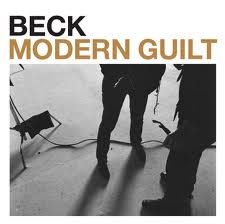
shoppingSOUNDTRACK: BECK-Modern Guilt (2008).

modern guil;As I mentioned, I missed Modern Guilt when it came out.  I guess I had burnt out on Beck after The Information.  But man, I have recently gotten into it big time.  It may be my favorite Beck album of all.  It is brief and simple but with enough going on to keep iot more than just interesting.  The feel is consistently retro by Beck but Danger Mouse throws in enough modern elements to keep it totally fresh (at least six years after the fact).

“Orphans” opens with a hyper drum beat and keyboards, but once the chords and Beck’s vocals come in it has a very sixties folk/psychedelic vibe.  But those drums keep coming it, making it sound very modern.  This has one of the catchiest verses that Beck has sung in addition to a great unexpectedly poppy bridge.  The song is unmistakably Beck, but the flourishes are very Danger Mouse.  “Gamma Ray” opens with a surf rock sound and backwards backing vocals.  It sounds very “future”, but future from the 60s.  This song ends abruptly just under 3 minutes, it’s especially abrupt after the length of some of his more recent albums.  “Chemtrails” opens like mid 70s Pink Floyd–synths and falsetto vocals.  But when the drums come crashing in it totally changes the song to a more modern sound–and yet that bass is still very Pink Floyd.  “Modern Guilt” has a very simple beat and seems like a simple catchy song.  Then the keyboards come along top and it feels kind of spacey.  Then the second guitar riff comes in underneath the song and it’s grounded again.  There’s so much going on in this little poppy gem.

“Youthless” is another straight ahead simple rocker, this one has disco synth lines over the top.  It reminds me of “Cellphone’s Dead” from The Information (I keep waiting to hear “One by One, gonna knock you out”).  It’s the only song on here that reminds me of another of his songs. “Walls” has a cool vocal melody that plays off of the music very well.  It also ends abruptly–a very cool two and a half-minute song.  “Replica” has very contemporary chaotic drumming that pins this floating song.  “Soul of a Man” makes me think of Deep Purple’s “Hush” for some reason.  But I love the way the guitars and noises just seems to come and go leaving the classic rock rhythm pulsing underneath it all.  “Profanity Prayers” has a very punk feel–buzzy guitars and a fast beat, and yet it’s also smoothed over somewhat with an interesting backing vocal line.  “Volcano” is a slow song that anchors the album nicely.  It runs a little long, but this brief album earns a longer coda like that.

I just can’t stop playing this.

[READ: April 2, 2014] “Shopping in Jail”

Just when I thought I had caught up with everything that Douglas Coupland had published, I came across this book, a collection of his recent essays.  I enjoy the very unartistic cover that Sternberg Press has put on this.  It looks extremely slapdash–look at the size of the print and that the contents are on the inside front cover.  But the essays contained within are pure Coupland and are really enjoyable.

I have read a number of his older essays in recent years.  And here’s the thing: reading old Coupland essays just makes you think, ho hum, he knew some things.  But you don’t really think that he was on the forefront of whatever he was thinking.  So to read these essays almost concurrently is really fascinating.

His thoughts are science fiction, but just on the cusp of being very possible, even probable.  He also looks at things in ways that the average person does not–he notices that on 9/11 people didn’t have picture phones–imagine how more highly documented it would have been.  These essays are largely about technology, but they’re also about the maturation and development of people and how they relate to things.  Coupland can often seem very ponderous, and yet with these essays he seems prescient without actually trying to predict anything.  I enjoyed this collection very much. (more…)

Read Full Post »

endofloveSOUNDTRACK: BECK/RECORD CLUB-LEONARD COHEN: Songs of Leonard Cohen (2010).

leonardcohenI won’t say anything because no one ever listens to me anyway. I might as well be a Leonard Cohen record.

-Neil from The Young Ones.

This second recording from Beck’s Record Club is, indeed, a Leonard Cohen record.  I like Cohen and have a bunch of his stuff.  Although he’s never been a huge favorite, I find his songwriting to be top notch.  And, since his arrangements are usually pretty sparse, it’s easy to cover his songs in a myriad of ways, which these artists certainly do.

But just to catch you up to speed about this whole Record club business:

According to the Beck/Record Club website:

Record Club is an informal meeting of various musicians to record an album in a day. The album chosen to be reinterpreted is used as a framework. Nothing is rehearsed or arranged ahead of time. A track is put up here once a week. As you will hear, some of the songs are rough renditions, often first takes that document what happened over the course of a day as opposed to a polished rendering. There is no intention to ‘add to’ the original work or attempt to recreate the power of the original recording. Only to play music and document what happens. And those who aren’t familiar with the albums in question will hopefully look for the songs in their definitive versions.

Introducing this second recording, Beck explains:

This time around the group includes Devendra Banhart, Ben, Andrew and Will from MGMT, Andrew from Wolfmother, Binki from Little Joy, and Brian and Bram returning from the first Record Club.  ‘Songs Of Leonard Cohen’ by Leonard Cohen was chosen by Andrew from MGMT. For those interested, our close second choice was Ace Of Base, which we’ll keep on the list for next time.

So, here we have Cohen’s debut.  I own it and am familiar with about half of the songs, but I didn’t want to listen to it before hearing their covers.  And so, the track listing and comments:

Suzanne (4:54)–A classic song, here given respectful treatment.  And yet they’re not afraid to play around with it, so they give it a dance beat and group vocals, all of which sound great.
Master Song (6:37).  I don’t know this song, and I don’t recognize it from this cover which is perhaps the greatest twist of a Leonard Cohen song ever. They sample Metallica’s “Master!” every time they sing the chorus.  The song is done as a rap with the voices pitched differently in every verse, there’s also a great funky bass throughout.  I assume the lyrics are the original, but I’m not sure.  The only problem with it is that it goes on for way too long.  But otherwise this is what record Club is about–having fun experimenting with songs.
Winter Lady (2:46). This is done as a pretty folk song, the way Leonard intended.
Stranger Song (5:26). This song is also dancey (with MGMT, that makes sense).  It has big drums and cool harmonies.
Sisters Of Mercy (4:36).  This is also pretty, done on an acoustic guitar with multiple singers taking turns.
So Long, Marianne (6:54).  This is also pretty faithful (of another classic).  There’s a group chorus which again sounds great.  The one difference is buzzy guitar solo.
Hey, That’s No Way To Say Goodbye (4:27).  This has a cheap Casio vibe, yet it still sounds good.  Beck sings and the whole things is quite nice.
Stories Of The Street (5:06).  The songs starts with a simple bass and xylophone, but it gradually builds into a full band song which sounds great.
Teachers (4:04).  This is an insane punk version of the song.  It is super fast with a crazy guitar section and shouted vocals.  It shows just how adaptable Cohen’s music is
One Of Us Cannot Be Wrong (5:42).  This is a pretty, slow version of this song with keyboards as the main instrument.  It’s a very nice song until it nears then end when the singer just starts screaming and going nutty  Which is okay, but that goes on for too long at the end.

So overall, this is a very enjoyable collection of covers.  The faithful ones sound wonderful and the silly songs are, yes, silly, but they are not just tossed off (except maybe Master Song.  This must have been a lot of fun to record.

[READ: March 14, 2014] The End of Love

The End of Love is four long short stories.  Each one is about the end of a relationship.  Even though I enjoyed all four stories quite a lot, the book was a lot slower to read than I would have anticipated from its scant 163 pages.  And surprisingly, the stories weren’t sad or mopey–rather, they looked at the relationships via a slightly distant narrator who was engaged and engaging.

I have been reading a lot of Latin American writers, but this book, which was written in Spanish and translated by Katherine Silver, was written by a Spanish writer.  So that’s a little bit different in feel.

“We Were Surrounded By Palm Trees”
This story is not set in Spain. It is set on an island in the Indian Ocean off the coast of Africa.  It is about a man and his girlfriend, named Marta.  They have gone to this remote island for some secluded time alone.  But it turns out that they have to share the small boat (and therefore the small island) with another couple.  Christine and Paul are a German couple who are not outgoing and friendly as the narrator fears (he doesn’t want to spent his romantic vacation with those two), but are cordial and looking to share some of the troubles of their vacation.  One such trouble is meeting with the village elder and the chief, which Paul offers to do.

The details of the island were a little unclear to me.  I think that is somewhat intentional, but there is some confusion about the nature of the power structure on the island and what exactly people get up to there.  So when Christine goes missing, Marta is instantly concerned.  And then when Paul and Christine don’t turn up for dinner, they decide to go and find them.  Christie and Paul are involved in something that I found a bit confusing, but which involved elders of the island.

As the story draws to a close and there is yet more confusion as to where the Germans are, Marta and the narrators are at odds with each other about what to do.  And the strain begins to form between them.   Even though the details of what happened with Paul and Christine are vague, the details of Marta and the narrator are very powerful and really tell the story.  It was wonderful. (more…)

Read Full Post »

stickhotSOUNDTRACK: BABYMETAL – いいね!- Iine!

babymetaI had to throw another BABYMETAL song up here, but what else to choose?  The options are astounding–the live version of “Gimme Chocolate!” where you can see them actually sing (and dance) along to the headbanging band?.  Or “ド・キ・ド・キ☆モーニング – Doki Doki☆Morning” which shows the band actually playing (although they are covered head to toe in skeleton costumes and has a chorus like Buddy Holly’s “Everyday”.  Or even “Death” which opens with some super heavy metal chords and chanting has the cute little girls singing about death.  But I chose this song whose name I don’t even understand-even the English part.

It has fast heavy guitars but the song is primarily taken over by staccato vocals and melodies.  It has one of the girls processed into death metal vocal.

And then comes the chorus which is nothing but pure J-pop–frenetic and treacly.  And then, at 1:35 (yes this has all been in about 90 seconds) the three girls start rapping. Yes.  Then at 2 minutes the whole thing reverts into the heaviest of death metal growls and a wild and catchy guitar solo.  By 2:45 the song has turned into a super fast rave up with pogoing.  And your brain just turns to mush as you want to dance along.  Surrender to the power of BABYMETAL, before they graduate from junior high.

[READ: March 5, 2014] Stick Dog Wants a Hot Dog

The second Stick Dog book follows the same basic format as the first one.  And I have to admit that while I laughed, I found it a little bit samey.  I hope the third book can keep the freshness factor).

It lacks the amusing narrator introduction that the first one had (there is some, but it’s much more brief).  And, surprisingly, the book is 40 pages longer.  This time Stick Dog and his friends are after some hot dogs.  The book is lengthened because each time there are possible ideas for the dogs to have, Watson really runs with them (it was a highlight in book one).  This pads out the book quite a lot and even the narrator makes a (quite funny) joke about delayed gratification.

But indeed, there were some very funny sequences and scenarios.  And of course the mocking of the drawings is very funny (the pancake or UFO picture is very good).

This time, instead of getting hamburgers from a family, the dogs are after hot dogs from Peter, the man with the cart that says Peter’s Frankfurters.  (There’ a very funny sequence in which the narrator explains that the dogs, or at least Stick Dog, can read and how they can do so).  How are these hungry dogs going to get the hot dogs from Peter? (more…)

Read Full Post »

stickdogSOUNDTRACK: BABYMETAL – メギツネ – Megitsune (2013).

baby My friend Lar introduced me to this colossal mash-up known as Babymetal just yesterday, and I am utterly hooked by this completely fabricated band.

The visuals absolutely make this song what it is, because without seeing it you probably can’t imagine what is actually happening.

This song is a super heavy thrash metal song.  Even when a hyperkinetic keyboard riff gets laid over the top of it, it still maintains that thrashy sound.  Then three junior high school aged girls start singing.  In Japanese.  The lead singer has a great voice that fits in very well especially around the 90 second mark when the song gets very catchy and swerves into a pop metal vein.  The other two sing in very high-pitched, only-in-Japan voices.  Some time around 2 minutes she starts screaming (heavily processed) adding a  whole new dimension of noise to the song.  And we all like the break around 3:12 which has a brief spoken word section (man I wish I knew what she was saying).

And so this winds up being a meeting of death metal and J-Pop.  And your mind will explode when you watch it.  The video shows the three girls doing their best kawaii–being adorable, in school girl outfits–while headbanging.  And the musicians behind them are all wearing masks and playing traditional Japanese-looking obi and drums while shredding like maniacs.

Everything about this is so artificial that I just love it.  Looking for any info about them, really all you read about is the three girls, there is no mention of the musicians who play amazingly fast and precise shredding guitars solos and can also switch gears into pop and (on some other songs) dance and rap.  I have no idea what this song is about, but I am totally hooked on it.  I imagine this will be a passing phase, but man, what a fun one to get hooked on.

[READ: March 3, 2014] Stick Dog

C. wanted me to grab him this book at the library and then proceeded to devour it in a few minutes. Then he suggested I should read it too.  So I did, and I devoured it pretty quickly too.  Obviously the precedent of the Wimpy Kid books is at play here–a short funny book that combines paragraphs of text and simple drawings, but this story doesn’t really have anything really in common with the Wimpy series.  Because this is all about a dog.

Stick Dog lives alone in a tunnel (but Watson assures us not to feel badly for him).  He has four friends: Poo-Poo (C. loved that name) who is a poodle; Stripes, a dalmatian; Karen, a dachshund and Mutt, a mutt.  The very simple plot of this story is that Stick Dog and his friends want to steal hamburgers from a family picnicking in the park.  That’s it.

The joy of the book is listening to Stick Dog (the smart ones) and his friends (mm, not so smart) try to figure out how to accomplish this task.  Watson prefaces the story by explaining that he could just write “woof woof” but it’s much easier for everyone if he just translates it into English for us.  The dogs are easily distracted by squirrels and garbage.  But when they put their minds to it, they come up with over-elaborate plans (and are offended when Stick Dog points out their lack of common sense).  And just as they are sure to go on a plan that works, Karen gets lost in the tall grass, and the others spend a lot of time trying to figure out how to best remember her. (more…)

Read Full Post »

toriSOUNDTRACK: RHEOSTATICS-Boo Radley’s Guelph ON (December 3 1999).

booLike the previous show, this one is also a shortened set because of technical problems in the recording.  We don’t hear the technical problems–the bad songs were just left out.  There’s some static on the first song, but otherwise the sound quality is very good.

Dave tells everyone that Harmelodia is coming out on Tuesday.  They play a lot of songs from the album and some that are not, like “Used to It” and “Superdifficult” (which would eventually come out on Shooting Stars.

There’s some wonderfully crazy nonsense in “Four Little Songs.”  It’s practically Phish-like with the silliness they throw into it, and it ends with a great dig new wave sequence.  “Stolen Car” has been getting some great renditions in the last few shows, and this ne is no exception. There’s an excellent solo and an interesting ending which is basically a cappella.

This is another great show that nearly closes out 1999.

I have found real evidence that Boo Radley’s existed as a club as late as 2002, but amazingly there are no pictures of the place.  Someone needs to make a book out of small clubs across Canada.

[READ: March 6, 2014] The Light Princess

I had no idea that Tori Amos was involved in a musical.  I saw this book at work and was really intrigued.  Evidently it has been in the works for many years and was even supposed have been finished in 2012, but these things take time.  The book was a little vague about the history of the musical, but after a little searching I discovered that the story is based on a 19th-century Scottish fairytale (see a summary of the Fairy Tale from Wikipedia).  This version has music and lyrics by Tori Amos and a book and lyrics by Samuel Adamson.  They have morphed the story quite a bit but it definitely retains some of the original elements.

As it turns out those original elements were the things I liked best about it–maybe i should just watch the children’s version of the story that i saw on YouTube.  In this version the princess, whose name is now Althea,’ was the only person in her village not to cry when her mother died when she was 6.  This makes her lighter than air and she can only remain on the ground if she is tethered.  I liked this idea a lot and I was hoping for an interesting fantastical world to enter.

There are two countries which are at war, Althea’s country of Lagobel (which is rich in gold, but has no water) and Sealand (which has water, but no gold)–there is a dangerous Wilderness (full of dragons) that separates the two countries.  They are at war for resources (although we know that Lagobel is better because it is Sealand that starts the fight).  Sealand attacks Lagobel effectively destroying its military.  The King of Sealand believes that by killing Althea (the last in line to the throne), he will have all the gold to himself.  So the king sends his son Prince Digby to kill Althea.  (There’s a lot more backstory and deaths of family members which sets up this challenge). (more…)

Read Full Post »

hewSOUNDTRACK: RHEOSTATICS-Angry Buddaz Kitchener, ON (November 7, 1999).

07Dec1999For reasons I’m unclear about there were only two available shows from 1998 for the Rhesotatics.  Similarly, there are only three from 1999.  Actually, I’m surprised there are so many shows available from so long ago at all, so no complaints, but it’s funny to see the drop off in these final two years.  These late 90s shows are notable for being short, primary because of technical glitches.  Like this one, which sounds great but because of technical snafus the first 8 songs of the show were missed.

It’s a particular shame because the show sounds so good.  They play some Harmelodia songs which is fun.  Beyond that the version of “Stolen Car” is awesome.  “Feed Yourself” has a very lengthy jam including some poetry.  They also have some fun with it being near the new millennium with a funny “outer space” sound.  And they play some “jingles” like a made up one for Snapple and one for Marlboro–the smoke that hurts.

The final song, which comes from Harmelodia has a very country music feel in this version, which is interesting–it’s not something they do much.  So this was another good show, shame about us missing so much of it.  And about the fact that Angry Buddaz does not come up on any searches as a real club.

[READ: March 6, 2014] The Swearing Jar

Once again a flurry of books have come across my desk which I felt compelled to read (even though I have other things waiting impatiently for me).  But how to resist a play called The Swearing Jar.

This play is set up in a nonlinear style which is excellent for the way the story is told.  It is actually a very simple story of love and loss.  And swearing.

As the play opens we see Carey and Owen on a stage (in fact the way the play opens sounds quite ingenious–and involves audience participation).  They are on stage performing for Carey’s husband’s birthday.  She has written many songs including, as the play opens properly, the first one which she actually wrote for him before they met.

Then there are flashbacks.  We see Carey and Simon together (we don’t see them meet)–we see them happy together as she explains that she is pregnant.  We also see that he was going to tell her something but is now holding off because of her news.  Despite their happiness, their relationship is somehow fraught–not really in danger, but there’s a lot of bickering and simple misunderstandings which imply I think more volatility than actually exists. (more…)

Read Full Post »

dogSOUNDTRACK: RHEOSTATICS-The Music Hall, Toronto, Ontario (May 2, 1998).

musichalThis show sounds different from all of their other live shows on Rheostatics Live around this time.  I don’t know much about The Music Hall, but it sounds like a more formal venue–like a bigger, perhaps seated, crowd.

There is also a string section and the ever reliable Kevin Hearn playing along with them.  Well, string section might be stretching it–there are musicians from UofT playing along with them, including beautiful violins on “Self Service Gas Station” and a surprise flute on “Take Me in Your Hand.”  There’s also a bunch of the musicians playing along on “King of the Past” which means I finally get to hear the great end section with a violin–but it gets cut off!  Agh.

With Kevin playing with them, they showcase some tracks from the Group of 7 release (which they explain didn’t have titles but now sort of do).  So they play “Boxcar Song” and “Yellow Days Under a Lemon Sun.”  They also play “Monkeybird” which they say is from Harmelodia (even though it’s not out yet).

There are a lot of glitches and weird things happening with this tape which is kind of a shame as it is a pretty unique concert.  It’s also only 90 minutes, which might just means a lot of the show was cut off.

[READ: January 3, 2014] The Bridegroom was a Dog

I bought this book years ago based on some recommendation or other.  Then I recently received a new version of it from New Directions.  Their version was just the title story.  This original book (which had the same translator, Margaret Mitsutani) contains the title story and two other longish stories.

Because I just read the other book (and its the same translation) I didn’t re-read “Bridegroom.”  But I did read the other two stories “Missing Heels” and “The Gotthard Railway.”

“Bridegroom” was certainly a weird story.  But “Missing Heels” may be even stranger.  I say this because of what may or may not be deliberate ambiguity in the word heel.  As the story begins the protagonist is stared at by people because of her heels.  I assumed she meant the heels of her shoes.  But by the end of the story it seems that she means the heels of her feet, which is even stranger. (more…)

Read Full Post »

shantySOUNDTRACK: RHEOSTATICS-Mrs. Robinson’s, Kitchener, Ontario (December 20, 1997).

kitchener

What’s most fascinating about these Rheostatics live shows is coming across venues that have no internet presence.  I can’t find a photo or anything of Mrs Robinson’s in Kitchener.  Did it even exist?  Who knows?

The quality of this show is very good although the overall volume is too low. There are also complaints from Dave about his monitor not working.  It doesn’t impact the sound for us, but I guess he couldn’t hear very well.  The intro of “Michael Jackson” is all messed up, but they play on through it.  Then they actually take a pause for an unspecified length of time to fix it (but still do a show that’s over 2 hours long).

Martin and Dave are very chatty for this show.  The intro is quite long, with some good banter including a discussion of the weird table in front of the stage which people can use for stage diving or go go dancing.  Martin explains the origins of “Junction Foil Ball” (about a guy who makes a ball out of the tin foil in cigarette packs.  They make a joke about Don the drummer being from Kirkwood Lake which is where Alan Thicke is from.  And a joke about Polkaroo.

They also introduce Tim Mech (their guitar tech) whose band PEEP-SHOW was one of the winners of Musician magazine’s “Best Unsigned Band Competition” in 1997.  He takes a long solo in “Claire.”

This was their last show of 1997, so this wish everyone a Merry Christmas.

[READ: March 3, 2014] Shantytown

This has been my favorite Aira book so far (and I’m now caught up to his English language releases).  The plot was simple and interesting, and the fantastical elements really worked with the story instead of overshadowing it (which his stories sometimes allow, but which isn’t really a criticism per se, just a point of fact).

This story begins with Maxi, a kind-hearted, but not terribly smart or sensible young man.  He is unemployed, did not finish any real schooling and doesn’t have a lot to do.  He has been going to the gym daily, so he is very strong. And he has recently begun helping the garbage scavengers.

These scavengers are people who live in the Shantytown nearby.  It is a collection of houses, most very tiny and quickly constructed, where the poorest people live.  And many of these people collect and either sell or use rich people’s garbage.  They come up every night before a garbage pick up and root through the streets for anything they can use.  And Maxi has begun helping them shift their carts  Since he is so strong, he finds that none of the their carts are very heavy.  And although he has never spoken to any of them and they have not spoken to him, he decided to start helping them and now he gets great satisfaction in carrying their stuff.

The shantytown is an unsavory place where drugs are sold and not too long ago a young girl was murdered.  Recently a policeman, Agent Cabezas has been trying to get to the bottom of this whole drug thing.  The drug of choice is proxidine which makes things clearer. Even Cabezas himself takes it (even though it is illegal).  But there has been a lot of suspicious activity with a man dressed as a pastor who might be a dealer.  And then there’s Maxi who is suddenly hanging around the shantytown.  And, quite frankly, Cabezas has decided that he’s tired of being a good cop.  He is ready to take what is his. (more…)

Read Full Post »

bidiniSOUNDTRACK: RHEOSTATICS-Bathurst Street Theatre, Toronto, ON (April 4 & 5 1997).

215px-Bathurst_St_Theatre The Rheos played two nights at the Bathurst Theatre and as I was looking at the setlists I was really impressed that in the two nights the band played 44 songs.  Of those 44 only 9 were played both nights.  So they played 26 different songs between the two nights.  That’s cool especially compared to some bands, like Rush, who play literally the same set list every night.  Of course it’s possibly more fair for a fan who can only go to one show, but for fans who will go to both, what a treat.  The first night was a bit more “hit” heavy with “Claire” and “Horses” and “All the Same Eyes.”  Whereas the second night had some other great songs like “Christopher” and “Soul Glue” and a great version of “Shaved Head.”

I have already written about these shows, but in going over them I found that I was very harsh about the April 4th show.  Unfairly so.  I complained about the quality of the sound (which is actually not that bad).  And I complained about the lack of violin in King of the Past which, come on Paul, lighten up, how are they going to play that?  I also accused Dave of being early on the  “King of the Past” first chorus, but it was actually Martin.  Oh well.

In the April 4th show they tell the audience that they are recording a live album  And they engage with a guy in the front row who I wearing a Mr Bean shirt and tell him to take it off.  They say he has an “umber 31” shirt under it I think—no idea what that is.

This is the first mention I’ve heard of Harmelodia, the kids album.  And “Easy to Be with You”‘s lyrics are not settled yet—with California being in place of Harmelodia.  “Dope Fiends” has a drum solo but sadly it is cut off.

I mentioned in the original post that the April 5 show has a lot of tracks that made it to Double Live.  Like “Good Canadian,” the improv piece—man the band was big into smoking, eh?  They also mention the demise of the CBC Radio show Nightlines (which they’d record an album for soon).

They play “Public Square” from their debut album, which sadly gets cut off.  And a fun acoustic version of “Legal Age Life.”

The band is having fun and are so nice–they seem genuinely pleased that people came from a long way to hear them.

Between the two nights, 11 songs made it onto Double Live (there are 29 on the album in total).  They sound pretty different here (mixing and all) so it’s worth checking these out too.

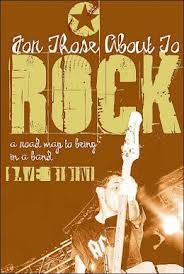
[READ: February 24, 2014] For Those About to Rock

In addition to his hockey books, Dave Bidini has written a number of books about being in a band.  On a Cold Road was his memoir of touring with the Rheostatics and The Tragically Hip.  Since he likes to write and since he’s a musician, it seemed to make sense to have him write a guide for beginning rockers.  This book explicitly states in the first few pages that if you are as old as Bidini, the book is not for you.  I am not quite that old, but I got the point.  But what’s more rock n roll than not listening to the man?  So I pressed on.

The book contains some real-world practical experiences for those who may be just starting out in a band.  He says there was no book like this when he was a kid, so he hopes it’s useful.  And the book ranges roughly between being a fun guide to rocking out and being a cautionary tale about how tedious and unfun being in a band can be (and how many people may try to take advantage of you).  This book is also very specific about being in a touring Canadian band.  He talks about slogging it through cold winters across the Trans Canada Highway, something that young bands from Florida certainly don’t have to deal with.  But his specifics really help to shape the overall completeness of the book, so take his examples and make them your own.

So I play guitar, have never been in a band and while I always thought it would be fun to rock with others, never had any real desire to “tour.”  Is this book still for me?  Why yes, it is.  Because Bidini has been playing music since the early 80s and he has some wonderful stories. (more…)

Read Full Post »

« Newer Posts - Older Posts »