Feeds:
Posts
Comments

Archive for the ‘Sexism’ Category

SOUNDTRACKBITCH FALCON-Staring at Clocks (2020).

Everyone can agree that Bitch Falcon is a terrible name.  Just awful.

Having said that, this album is pretty great.  Drummer Nigel Kenny was interviewed in the Irish Drummers book, and that book continues to introduce me to bands that I like.

Bitch Falcon is a trio who have been together for five years.  They released their debut album Staring at Clocks in 2020.

Their sound touches on grunge and shoegaze, which I rather like, but they move beyond that and  explore really interesting sounds from Lizzie Fitzpatrick’s voice and guitar.  Her guitar shimmers and wobbles and she is excellent at sculpting feedback into sounds that veer into harshness.  Her voice is strong and powerful, hitting and holding notes that ring out.  But also singing in otherworldly styles like almost wordless sound effects.

The album is held together by bassist Barry O’Sullivan’s prominent position–playing the main lines and basic rhythms of most songs and by Nigel Kenny’s not traditional almost lead drumming.

The album opens with a squealing feedback followed by a rumbling bass and some solid thumping.  And it continues in this vein for some 40 minutes.  There’s diversity in the songs–some are softer and some are dreamy–but the overall sound is consistent.  Throughout the album, there are gorgeous  washes of guitars and wicked feedback.

I love the thumping bass and drum and the ringing guitar and voice in “How Did I Know?”  “Staring at Clocks” opens with guitar sounds that are so unguitarlike, it’s wild.  The fast drums and bass propel the otherwise ethereal song along.  The guitar sounds at the end of the song are like out of a sci-fi movie.

The opening bass sound of “Damp Breath” is great and when they throw in the cool guitar rolls over the top it sounds tremendous. I love the lead bass line of “Martyr” while the guitar lays down intricate passages.  And the final song, “Harvester” is 6 minutes long with the final two allowing the guitars to roar until the album crashes to a conclusion.

This album was a great surprise.  I would love to see them live.

[READ: February 1, 2021] Dragon Hoops

Gene Luen Yang’s books are always fantastic.  He has such an excellent way with storytelling, that no matter what his books are about you know they’re going to pull you in.  Even if they’re about basketball!  Even high school basketball.

Mr Yang opens the book explaining that he never like sports–he was never interested. He got his excitement from comic books, He teaches at Bishop O’Dowd High School (in California) and has been there for seventeen years (Do his kids know that he’s an amazing cartoonist?  I assume so).  In all that time he never thought much about the school’s basketball team, but in this year 2014-2015, there was talk that their team would go all the way.  It was a big story, and Yang loves stories.

In order to see if this would work as a book, it meant talking to Coach Lou Richie.  They have obviously talked over the years, but not very much.  So Yang takes the first step (a wonderful recurring theme in the book) and approaches Lou.  They talk and Yang has an idea for his next book.

We go back through Coach Lou’s life.  He was a young nerd just like Gene.  He was short and skinny.  But when he went to a Bishop O’Dowd game at the Oakland Coliseum, Lou knew he wanted to do that one day.  So he worked out and grew some and by his junior year he was only 5’8″ (like me) but he was  a formidable player.  Lou’s team made it to the Coliseum that year (some kind of State playoffs) and, cliche of all cliches, he scored the game-winning basket.  But, cliche of all other cliches it was called a no basket because of a penalty. It was one of the most controversial calls in a high school game and obviously Lou never forgot it.  (Despite the cliches that’s all true).

Lou became head coach at O’Dowd, and since he came back his teams have been to state five times, but have never won.

But this year he has two secret weapons: Ivan Rabb and Paris Austin.

Imagine being a high school kid, being great at basketball and then having Mr Yang draw you in his book?  Wow. (more…)

Read Full Post »

SOUNDTRACK: BORIS with MERZBOW-Gensho (Disc One: Boris) (2016).

In 2016, Boris teamed with Merzbow to create Gensho, a 2 CD package that was designed to have both CDs played at the same time.  Not the easiest thing for many people, but with the advent of digital recordings it’s now pretty easy to play both discs at the same time (this release is on Spotify).

Disc 1 was all Boris.  Disc 2 was all Merzbow.

When you play them together, you get the drumless Boris with all of the glitching electronica of Merzbow sprinkled around it.  The songs are set up in a very clever way with one of Merzbow’s songs being exactly equal to two or three of the Boris songs.

I played the CD of Boris and the stream of Merzbow on Spotify.  It was cool to be able to raise and lower the volunme of one to change the intensity of Merzbow’s glitches.

Merzbow’s “Planet of the Cows” plays over the first two Boris songs “Farewell” and “Huge.”  Farewell’s quiet drone tacks on Merzbow’s squeals and glitches which fill in the gaps quite nicely.  When “Farewell” ends, the Merzbow continues until the loud gongs heavy chords of “Huge” ring out.  The Merzbow chaos sounds almost like a solo over the slow low heavy drone chords.  Atsuo’s low growling even complements the spare noises.  Both parts ends with squealing feedbacking sounds–analog from Boris and digital from Merzbow.

Merzbow’s “Goloka Pt. 1” plays over three Boris songs “Resonance” “Rainbow” and “Sometimes” (the My Bloody Valentine cover).  “Resonance” is mostly percussion–kind of randomly hit in a slow rhythm.  Merzbow’s noises sound like static in a distance echoing signal from outer space.  “Rainbow” is a piece I don’t know.  This version features Boris playing some quiet guitar and a grooving bass with Wata singing vocals. Merzbow’s electronics sounds restrained here, adding louder noises when the vocals back out  This song has some tasty soloing from Wata with the electronics almost keeping pace.  It segues into “Sometimes,” with its loud thumping echoes and eventual wall of noise.  The vocals are pretty well buried but you can hear the melody of the MBV song.

“Goloka Pt.. 2” plays over “Heavy Rain” and “Akuma No Uta.” “Heavy Rain” starts out with noisy stabs of sound–it’s actually hard to tell who is making what, but then things mellow out as Wata sings.  The guitars drone loudly and the vocals mix in with the electronics.  It ends with the noisy guitar buzzing from Boris while the noises from Merzbow continue between songs–sounds of noise and electronic bleeps.  “Akuma No Uta” starts slowly with washes of guitar build up. The glitching Merzbow adds keeps it from being purely a drone.  The drone gets louder and louder and I like the way Merzbow’s glitches seem to back off as the man riff enters the song.  As it nears the end, glitching sounds to me like a menacing voice coming through the static and heavy riffage.

The final song is Merzbow’ “Prelude to a Broken Arm” which plays over “Akirame Flower” and “Vomitself.”  It starts out with watery sounds before the big chords and vocals kick in.  Merzbow’s noise is like a screaming train underneath the slow crooning.   The main riff from Wata has some electronic percussive sounds tacked onto it.  As the final chord rings out the song segues into the musch noisier “Vomitself.”   It introduces a huge wave of low chords as Merzbow’s noise amps up to correspond with a lot of low growling percussive sounds. As the song rumbles to an end the squealing intensifies like feedback added on top of the roar with the last notes sounding like a person raging.

It’s interesting how I don’t really like the Merzbow tracks, but how they add interesting textures to the Boris songs.

[READ: February 19, 2021] Caliente

Matu Santamaria is an Argentinian illustrator and his work is really stunning.

This book has a big warning: 18+ but it’s not fully explicit.  There are drawing of naked women and sex acts, but there’s only a few things that are NSFW.

Santamaria’s work is full of clean lines and and dramatic colors.  I really enjoy looking at it, regardless of the content.

This book contains a lot of his most recent work.  It seems to be split between positive messages about sexuality, body positivity and appreciation for frontline workers during the Coronavirus.  There’s also some celebrity pictures as well.

After some definitions of the word caliente, the book opens with series of pictures of women exploring the sexuality with each other.  Interracial women kissing and a woman taking her top off with the comment–“and without realizing it, it’s poetry.” (more…)

Read Full Post »

SOUNDTRACK: THE BLUE AEROPLANES-“Veils of Colour” (1987).

In Stuart David’s book, In The All-Night Café, he lists the songs on a mixtape that Stuart Murdoch gave to him when they first met.

Although I’ve been a fan of Belle & Sebastian for a long time, I knew almost none of the songs on this mixtape.  So, much like Stuart David, I’m listening to them for the first time trying to see how they inspire Stuart Murdoch.

In the book, David writes how much he does not like “rock,” especially music based around bluesy rock.  Most of these songs, accordingly, do not do that.  In fact, most of these songs are (unsurprisingly) soft and delicate.

The Blue Aeroplanes have been around forever, forming in 1981 and releasing their most recent album in 2017.  I feel like I’ve heard of them, but I’m not sure now.  I guess I’ve never actually heard them as this didn’t sound familiar at all.   Nor does the core lineup: the mainstays are Gerard Langley, brother John Langley, and dancer Wojtek Dmochowski.  Their wikipedia pages lists about 90 other people who have played on their records.

“Veils of Colour” opens with a quiet guitar riff that, surprisingly, progresses rather than repeats.  It’s a quiet song and when the lyrics come in, they’re mostly spoken in an almost excitable whisper.  You can certainly see why they appealed to Stuart Murdoch.

The chorus is almost sung, but the addition of horns makes the it swell beyond what you’d expect from the verses.  Indeed, the song has a kind of understated urgency, but never gets very intense.

[READ: January 24 2021] “Hansa and Gretyl and Piece of Shit”

This story was peculiar for many reasons.  Obviously the title shows that this is a twist on a familiar story.  But, wow, does it veer off form what you might expect (just as the title does).

Gretyl is a girl in high school.  She wakes with terrible stomach cramps–not the “normal” cramps a girl might feel, but something far worse.  Her mother believes she is faking because she feels like a loser at school.

She walks to school and sees a man at the bottom of the hill.  His car seems to be constantly broken and he regularly asks Gretyl for help–a scrunchie to fix his carburetor, a paper clip to connect his fan belt (she gave him one from her paper, and her teacher changed her grade from an A to a B- because it had no fastener).  Today he asks her to steer while he pushes.  When his car is free, he gives her a whistle. If you need help, blow it, maybe we’ll come.

Gretyl’s family is strapped for cash. Although her father has a yacht and her mother has expensive jewelry–they don’t seem to have money to buy new things.

Gretyl’s mother resents her: Gestating you destroyed my metabolism.  Now I can’t practice medicine (she does not mention that the mother bore Gretyl at forty). (more…)

Read Full Post »

SOUNDTRACKADITYA PRAKASH ENSEMBLE-GlobalFEST Tiny Desk (Home) Concert #135 (January 13, 2021).

Aditya Prakash EnsembleGlobalFEST is an annual event, held in New York City, in which bands from all over the world have an opportunity to showcase their music to an American audience.  I’ve never been, and it sounds a little exhausting, but it also sounds really fun.

The Tiny Desk is teaming up with globalFEST this year for a thrilling virtual music festival: Tiny Desk Meets globalFEST. The online fest includes four nights of concerts featuring 16 bands from all over the world. 

Given the pandemic’s challenges and the hardening of international borders, NPR Music and globalFEST is moving from the nightclub to your screen of choice and sharing this festival with the world. Each night, we’ll present four artists in intimate settings (often behind desks donning globes), and it’s all hosted by African superstar Angélique Kidjo, who performed at the inaugural edition of globalFEST in 2004.

The second band on the third night is the Aditya Prakash Ensemble.

Performing from their home base in Los Angeles, Aditya Prakash Ensemble highlights songs borne from South India’s Carnatic tradition. Prakash uses his voice as an instrument to tell powerful, emotive stories — which he reimagines in a fresh, dynamic way. Aditya Prakash Ensemble’s modern take on traditional music mixes in jazz and hip-hop and features a diverse L.A. ensemble.

The Ensemble is a quintet.  With Julian Le on piano, Owen Clapp on Bass, Brijesh Pandya on drums and Jonah Levine on trombone and guitar.

As “Greenwood” starts, I can’t quite tell if he’s actually singing words (in Hindi or some other language) or if he is just making sounds and melodies.  It sounds great either way.  He sings a melody and then the upright bass joins in along with the trombone.  He displays a more traditional singing and then Le plays a jumping piano solo which is followed by a trombone solo.  The ending is great as he sings along to the fast melody.

“Vasheebava” is a song about seduction.  Levine plays the guitar on this song.  It starts with gentle effects on the cymbals (he rubs his fingers on them).  Prakash sings in a more traditional Indian style and Levine adds a really nice guitar solo.

“Payoji” is a traditional devotional song and Prakash sings in a very traditional style.  But musically it’s almost a kind of pop jazz.  It’s very catchy with a nice trombone solo.

This conflation of Indian music with jazz is really cool.

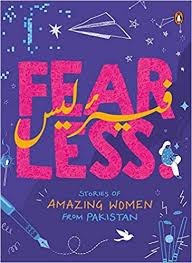
[READ: January 11, 2021] Fearless.

“If one man can destroy everything, why can’t one girl change it?”-Malala Yousafzai

This book begins with this wonderful sentiment:

Not long ago, a wave of exciting books uncovered stories of women through history, known and unknown, for young dreamers around the world.  Women who had been warriors, artists and scientists.  Women like Ada Lovelace, Joan of Arc and Frida Kahlo, whose stories changed the narrative for girls everywhere. Readers around us were thrilled to discover this treasure trove. But there was something missing. They rarely saw women of color and even fewer South Asian women in the works they were reading.

It’s a great impetus for this book which opens with a timeline of Pakistani accomplishments (and setbacks) for women.  The timeline is chronological in order of the birth years of the woman in the book.  Interspersed with their births are important events and the year they happened.

Like in 1940 when women mobilized and were arrested or in 1943 when the Women’s National Guard was formed. In 1948, a law passed recognizing women’s right to inherit property.  In 1950, the Democratic Women’s Association formed to demand equal pay for equal work (it doesn’t say if it was successful).

In 1973 the Constitution declared there could be no discetrmaton on the basis of race, religion, caste or sex.

But in a setback in 1979, the Hudood Ordinance passed which conflated adultery with rape, making it near impossible to prove the latter–and the punishment was often death.

And yet for all of the explicit sexism in Pakistan, the country accomplished something that America has been unable to do–elect a woman as leader. In 1988 Benazir Bhutto became the first female Prime Minister of Pakistan.

The woman in this book are given a one-page biography and a cool drawing (illustrations by Aziza Ahmad).  They range from the 16th century to today.  (more…)

Read Full Post »

SOUNDTRACKSEVDALIZA-Tiny Desk (Home) Concert #130 January 5, 2021).

Sevdaliza is the first Tiny desk Home Concert to be published in 2021.  Let’s hope she signals a great new year.

Sevdaliza is Iranian born although this concert is filmed in a culturally significant bookstore and publishing house in Amsterdam called MENDO.

Her collection of music is a wonderful mix of the organic and the electronic all centered around her gorgeous voice.

The set opens with “an old reel-to-reel tape machine spinning some Brazilian bossa nova.”  Then it stops and she starts singing “Human,” a song which

casts away the notion of artists — particularly female artists — as products.

It’s a moody Portishead-like track.

It opens with synths and drums as she sings achingly.  Her voice sounds a bit like Beth Gibbons as well.  Then in the middle of the song, the electronics drop off and she recites

I am flesh, bones / I am skin, soul / I am human /Nothing more than human.
I am sweat, flaws / I am veins, scars / I am human / Nothing more than human.

While she speaks, the strings of Jonas Pap (cello) and Mihai Puscoiu (violin) play an eerie backdrop.  When the strings stop a very cool electronic section takes over.  Leon den Engelsen manipulates sounds, making voices sound mechanical and machines sounds human–it’s really cool watching him do this.  Meanwhile, drummer Anthony Amirkhan adds some complex electronic and analog drums.

Then den Engelsen resumes the bossanova tape as Sendaliza announces:

“Good afternoon humans, my name is Sevdaliza, you’re very welcome on flight 808; our destination is Shabrang.”

I feel like “Dormant: sounds even more Portishead-like.  Her voice carries Gibbons’ ache as she sings “I need a different type pf caring, a different type of sharing.”  The percussion is minimal but interesting.  Meanwhile the electronics are buzzing around while the strings ground the song in melody.

As the song fades out she sings notes and words which I believe the keys are manipulating in real time.

“All Rivers at Once” opens with a pre-recorded guitar melody.  The song is just full of samples and interesting melodies and then the middle falls into place with a lovely violin solo.  It ends with a deep resonating cello note

“Gole Bi Goldoon” is sung in Iranian (I assume).  It sounds much more like an old folk song–strings and piano.

I really enjoyed this set and want to check out more of her album.

[READ: January 9, 2021] Do the Macorona

I’m not exactly sure why we have been getting so many books from South Africa at work lately, but it’s fantastic.

This book is a collection of editorial cartoons from South Africa’s Daily Maverick newspaper.  Zapiro (Jonathan Shapiro) has been making editorial cartoons and caricatures since the early 1990s and has 25 books of cartoons published.

Although I have been reading some novels from South Africa, I really don’t know very much about the country.  I have learned, however, that reading about a year’s worth of editorial cartoons is a pretty great way to learn about a country.  I don’t understand all of the jokes in here, but I do feel like I have a vague grasp on the country now. However, it’s when Zapiro turns his pen abroad–especially against trump, that I can see how good of a satirist he is.

It feels especially timely to include this post now as we prepare to get the corrupt traitor out of office for good.  He has, in fact, made a cartoon out of the insurrection. (more…)

Read Full Post »

SOUNDTRACKJAN VOGLER AND ALESSIO BAX-Tiny Desk (Home) Concert #128 (December 16, 2020).

This is the third of three Tiny Desk Home Concerts to honor Beethoven’s 250th birth anniversary. This was my favorite. The first was just piano the second was a quartet of strings.  But this one, a combination of the two, was the most exciting.  I love the way the cello (Vogler) played off of the piano (Bax).

For this Tiny Desk (home) concert, we pay a visit to the doctor’s office. Actually, the venue is called Rare Violins of New York and it’s something of a second home to cellist Jan Vogler, who pops in frequently to have the experts give his 1708 Stradivarius cello a thorough checkup. If your multi-million-dollar fiddle has a cough or the sniffles, or even needs a full-blown restoration, Rare Violins, which sits just a block away from Carnegie Hall, can help. The firm also has a lovely music room, kitted out with a fine piano – something Vogler lacks at his place.  With help from the fine pianist Alessio Bax, Vogler makes a convincing case for Beethoven as one of the great heroes of the cello. Beethoven, whose 250th birthday falls this week, wrote five cello sonatas, plus other works for the instrument, which, before his time, was primarily relegated to beefing up the bass line in various chamber music situations.

Beethoven, in essence, liberated the cello. Listen to how it dances and struts in the opening scherzo from the Sonata in A, Op. 69.

“Cello Sonata in A, Op. 69: II. Scherzo” starts with a piano and the cello quickly jumps back in.  The song builds and swells and then quiets down to a pretty piano and cello melody.

Like Jonathan Biss, these two are very chatty. They are mostly chatty with each other, but they do direct their answers to the camera sometimes too.

Up next is a short piece from the beginning of his career “12 Variations on a Theme from Handel’s Judas Maccabaeus: Variation XI: Adagio.”   In this piece the cello “sings sweetly.”  Vogler says that Beethoven was friendly with a fantastic cellist and he may have inspired the composer to write more pieces for the cello.

Although the piece starts with a lovely piano intro and has several moments of just piano, the cello adds so much to it.

Before the final song the two talk about how the pandemic has changed them and what they are looking forward to doing when it is over.

And finally there’s the opening to Beethoven’s last cello sonata, which Bax — whose role is far more than just an accompanist here — says is compact with emotion, yet “stretches the boundaries” for the instrument.

“Cello Sonata in D, Op. 102: I. Allegro con brio” feels like a call and response–two instruments in conversation.  And they had a lot to say.

[READ: December 20, 2020] The Disaster Tourist

In continuing with my around-the-world reading, I picked up this novel that was originally written in Korean (translated by Lizzie Buehler).

This story sounded really weird and interesting.

Yona works for a company called Jungle which specializes in offering vacations in areas that have suffered a disaster.

On a disaster trip, travellers reactions usually went through these stages

shock; sympathy and compassion, maybe discomfortable gratefulness at their own lives; a sense of responsibility that they’d learned a lesson and maybe a feeling of superiority for having survived where others didn’t.

For instance, a tsunami had hit Jinhae–in an instant everything was underwater.  Yona travelled there because Jungle currently didn’t offer any tours there.  But they would soon.  Yona would give donations and offer condolences to the community.  Then she would create a vacation package that involved viewing the aftermath along with volunteer work.

Yona had worked at Jungle for over ten years.  She was something of a star.  But apparently, her star was starting to fade because she had all of sudden been asked to handle some customer service phone calls–never a good sign.

Things got even worse when a supervisor named Kim got on the elevator with her.  He said:

Johnson is asking me to send my greetings to you.
Who?
Johnson.  My Johnson. Kim pointed to his crotch.

At this point I had to wonder.  Is this level of harassment something that happens in Korea?  Is this  shocking incident for any reader?  Is this a hyper real fiction in which everything is just a bit beyond reality?  I don’t know.

Then Kim grabs her bottom and put his hand in her blouse.  The gesture suggested that Kim didn’t care if he was caught.

Yona was upset, but not because of the sexual assault. Because Kim was known to only target has-beens. (more…)

Read Full Post »

SOUNDTRACK: MAC AYERS-Tiny Desk (Home) Concert #118 (November 30, 2020).

I’ve never heard of Mac Ayers and while I respect the fact that he plays everything in this Tiny Desk Home Concert (and syncs things up nicely) and even wears different clothes for each instrument, this 15 minute set was pretty torturous for me.

If you were to ask what kind of singing do I hate the most, my answer would now be Mac Ayers.  I hate the tone of his voice, I hate the way he does those whiny ooooooh at the end of his lines (note in the first song the first verse the way he says “you” and then the way he ends the rhyming word do (he even makes a face like it hurts him as much as it hurts me.

Obviously my opinion is not the popular one, because Ayers is apparently a big star.  But not in my house.

The 23-year-old Long Island native shot this in his basement back in September (hence the ‘register to vote’ comment). Mac’s modus operandi lends itself to the Tiny Desk naturally. No over-produced beats, lots of live instruments and a stunning vocal range — and he handles all duties: guitar, bass, keyboard and background harmonies for three songs from previous albums and the premiere of a new song, “Sometimes.”

He plays “She Won’t Stay Long” and then fiddles on the keyboard as he introduces “Walking Home.”  This song is a little bit more enjoyable for me.  There are fewer grace notes.  Although I do dislike the chorus.

He talks to us from his guitar to introduce the third song (I like that he’s mixing things up).

“Sometimes” is a new song.  It reminds me a lot of Billy Joel (not his voice, but the melody–must be a Long Island thing).

“Easy” has some terrific harmonies, although I hate the lead vocals.  I give him a lot of credit for being an exceptional musician, I just hate the music he makes.

We were well on the way to hosting Mac Ayres at our D.C. offices until we had to shut down and pivot.

I hope this Home Tiny Desk means he doesn’t have to do one in the office.

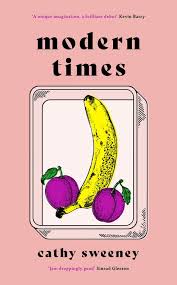
[READ: December 13, 2020] Modern Times

I saw this book at work and, given some of the blurbs, I thought it might be, if not fun then at least unusual to read flash fiction from an Irish writer.  I also prefer this Australian cover (right).

The book starts out with a bang.  “A Love Story” is bizarre and memorable.  In a page and a half, Sweeney talks about a woman who “loved her husband’s cock so much that she began taking it to work in her lunchbox.”  The story is bittersweet and outrageous at the same time.  It was a great opening.

But I feel like the rest of the book lost some steam.  Possibly because I assumed all of the stories would be this short.  It felt like the longer stories dragged on a bit (which is strange for stories about 4 pages long).

Interestingly, “The Woman With Too Many Mouths” even addresses this (to me anyway) as the narrator says, “I could expend many pages recounting my time…. but you would become bored, and worse, you would forget all about the woman with two many mouths.”  The woman with too many mouths had moths (among other things) fly out of these mouths.

“A New Story Told Out of an Old Story” is, as the title suggests, a story within a story.  It feels like a fairy tale with a Woodcutter and a Miller’s Daughter.  There’s even a Grandmother and a Wolf.   In the internal story, the wolf attacks the grandmother.  She survives, but the scar from the wolf makes her husband not want to look at her and the villagers treat her badly.  When you get to the Grandmother’s story, she has a different take on things.

This book is very current and I am reading “The Palace” as being about the pandemic.  Specifically, the outrageous bungling of the response by the current (and soon to be ex!) administration in the U.S.  

The palace was sick  no one believed it, but it was true.  

In the story the palace physically deteriorates.  The king patches it up but doesn’t actually do anything about the problem.

Soon reports of the sickness were breaking in the news on a daily basis. The king gave a rousing speech about battling the forces of evil that had created the sickness and people screamed ‘Long live the King’ until they were hoarse.’

(more…)

Read Full Post »

SOUNDTRACK: MICKEY GUYTON-Tiny Desk (Home) Concert #108 (November 9, 2020).

Mickey Guyton is a country singer, which is probably why I have never heard of her.  And yet, when Guyton sang her first song, I never would have guessed she was a country singer.

Her first song “Black Like Me” is beautiful.

In June, after the killing of George Floyd, Guyton released “Black Like Me,” which tells her own story in a way that gently but resolutely calls for change.

Her desk holds the book that inspired it.  Her voice is powerful and there’s not a twang in sight.  The lyrics are sensational, with the excellent chorus:

if you think we live in the land of the free
you should try to be black like me.

The only problem I have with the song is that although the piano accompaniment from Lynette Williams is lovely, I feel that the song deserves a much bigger arrangement.

I love the arrangement of the next song “Salt.”  Soulful keyboards, the Afro-Caribbean instruments of percussionist Paul Allen, Jon Sosin’s acoustic guitar.  She sounds a lot more country music in her delivery (there’s an actual delivery style that you can hear as she sings, even without the twang).  I liked this song, and I think it’s clever, but after the resonance of the other two songs, this one–a warning to men about women–seems beneath her.  Although the lyrics are pretty clever.

In February, as protests against sexism intensified in the country world, she debuted “What Are You Gonna Tell Her” and it caused an instant sensation.

She sang the he song at the ACM awards and was the first African-American woman to sing an original song at the awards–in 2020!

It’s back to just piano again–maybe the more important songs are more spare?  For some reason, the music of this song makes me think it could fit into Hamilton.  And the lyrics, once again, are terrific.

She thinks life is fair and
God hears every prayer
And everyone gets their ever after
She thinks love is love and if
You work hard, that’s enough
Skin’s just skin and it doesn’t matter
And that her friend’s older brother’s gonna keep his hands to himself
And that somebody’s gon’ believe her when she tells
But what are you gonna tell her
When she’s wrong?

Wow.

[READ: December 7, 2020] “Cut”

This year, S. ordered me The Short Story Advent Calendar.  This is my fifth time reading the Calendar.  I didn’t know about the first one until it was long out of print (sigh), but each year since has been very enjoyable.  Here’s what they say this year

You know the drill by now. The 2020 Short Story Advent Calendar is a deluxe box set of individually bound short stories from some of the best writers in North America.

This year’s slipcase is a thing of beauty, too, with electric-yellow lining and spot-glossed lettering. It also comes wrapped in two rubber bands to keep those booklets snug in their beds.

As always, each story is a surprise, so you won’t know what you’re getting until you crack the seal every morning starting December 1. Once you’ve read that day’s story, check back here to read an exclusive interview with the author.

It’s December 7. Catherine Lacey, author of Pew, presses every button in the elevator on her way out.  [Click the link to the H&O extras for the story].

I read this story back in April, when it was printed in the New Yorker.  It’s the only story in this collection that I’ve read before so far.  It was bizarre and I loved it.  I’m going to post a briefer version of my original post which you can read here.

This story started out is such an amusing way:

There’s no good way to say it–Peggy woke up most mornings oddly sore, sore in the general region of her asshole.

But it’s not an amusing scene at all.  It burns when she uses the toilet and she finds blood in her pajamas.

She could see a cut but only when using a hand mirror while she was crouched at the right angle.  But even so, her groin “was that of a middle-aged woman and not as strictly delineated as it once had been.”  Nevertheless, whenever she looked for it she always “paused to appreciate the inert drapery of her labia.”

The cut was there, but it seemed to migrate.   She tried to look it up online, but only found porn.  Adding Web MD brought back porn in doctor’s offices.  And adding Mayo Clinic introduced her to people with a fetish for mayonnaise. (more…)

Read Full Post »

SOUNDTRACK: TIGRAN HAMASYAN-Tiny Desk (Home) Concert #110 (November 11, 2020).

I have never heard of Armenian pianist Tigran Hamasyan.  I really enjoyed his solo pieces here and am somewhat surprised to read that he often plays with others.

The first piece,

“Road Song,” features a melody Hamasyan wrote in 2008, but recorded with a quintet on his imaginative 2013 album, Shadow Theater. He frequently plays a solo version of it live, but had never played it alone in a studio until now.

It starts quietly.  Then he begins whistling (!) which makes it even more haunting.  At around 4 minutes his  left hand rhythm remains slow and steady while his right hand flies all around the keyboard.  It’s wonderful.

That’s followed by “Our Film,” from Hamasyan’s latest and most enterprising release, The Call Within. This performance mirrors the intensity and sentimentality of the album version, but here it’s more intimate and fanciful.

It also has pretty, haunting melody (with more whistling).   It picks up the pace in the middle and gets almost frenetic (around 11 and a half minutes into the video) before settling down again.  It’s amazing how it all holds together with the more staid left hand.

The last tune, “A Fable,” is the title track of his 2011 solo album, which was inspired by 13th century Armenian writer Vardan Aygektsi.

This piece is flowing and a bit more upbeat.  He really gets into it and starts grunting at one point.

Hamasyan is a jazz pianist, but his foundation comes from Armenian folk music.  Perhaps that’s why i like this so much–it is very jazzy, but is grounded in traditional melodies.

[READ: November 30, 2020] “Ema, The Captive”

This is one of Aira’s earlier (and longer) stories.

I’m fascinated that his earlier stories seem to be grounded much more in reality–blood and gore–rather than fantastical ideas.  Although calling this story grounded in reality is a bit far fetched as well.

This is the story of Ema (at one point in the book it is mistyped as Emma) a woman who goes from being a concubine to running a successful business.  The story (translated by Chris Andrews) is broken into several smaller anecdotes as Ema’s life progresses.

But it starts out with no mention of Ema at all.

Indeed, the opening chapter is revolting. A wagon train carrying prisoners is heading across the Argentinian desert (set in the nineteenth century). (more…)

Read Full Post »

SOUNDTRACK: CARLOS VIVES-Tiny Desk (Home) Concert #95 (October 14, 2020).

This is a hugely fun Tiny Desk (Home) Concert.

Everything about Vives’ music feels uplifting and joyful.  And boy is that a nice feeling.

Carlos Vives kicks things off in high gear on this Tiny Desk (home) concert with his trademark sound: a celebration of the music from his beloved home country of Colombia, mixed with rock and other Latin music styles.

The opening song “Pa’ Mayte” starts out with a ripping accordion melody from Christian Camilo Peña and some wonderfully funky fluid bass lines from Guillermo Vadalá.  Vadalá is my favorite component of this set without question.

Vives’ voice is strong and powerful and he is joined with a chorus of backing vocalist and percussionist, especially Guianko Gómez from Cuba and Mayte and Tato Montero.

The middle of the song has a rap followed by some really fast and complicated lead guitar from Andrés Leal (followed carefully by Vadalá).

Spirited champeta dance grooves from the country’s Pacific coast permeate his classic 1995 hit “Pa’ Mayte,” and if you look closely you’ll see two of his backup vocalists also playing traditional gaitas Colombianas (flutes).

Then comes the flute solos.  First Mayte Montero on the traditional gaita then Tato Marenco joins in.  Of course no song like this would be complete without some excellent drum and percussion and Martin Velilla is fantastic in that role.

Vives speaks in Spanish between songs. He says that “Cumbiana” is dedicated to his country (Colombia) and the people there.  It opens with pretty, echoing guitar and some wonderful lead bass notes.

It starts slowly, like a love song but turns into a bit of a banger in the chorus.  He even plays a harmonica solo.  During the quiet ending there’s just guitar and harmonica as the song fades.

Next is transition between the title cut of his new album Cumbiana and “La Bicicleta” a vallenato fueled by a bit of reggaeton.

It was originally recorded with his compatriot Shakira and he dedicates the song to her–“the bike to travel the whole world.”

The song is upbeat and a lot of fun.  The middle has a lead flute solo which is echoed by the lead guitar–a great combination. It ends with with a solo accordion melody as the song fades out.

Vives says that “cumbiana is that amphibian territory that I call where cumbias vallenatos and porros are born.

Evidently this is Vives’ signature sound:

a celebration of the music from his beloved home country of Colombia, mixed with rock and other Latin music styles.

They end with “No te Vayas” (“Do Not Go”) opens with quiet guitar.  As he sings the two flutes come in playing the melody along with his voice.  It’s a wonderful combination and an altogether fantastic set.

[READ: November 20, 2020] “A is for Alone”

This story has an interesting setup,.

The narrator is an artist and her latest project is inspired by Mike Pence.  She has called it “Interrogating Graham/Pence” and plans to interview a series of men.  She will give them a questionnaire and take their Polaroid.

The two key questions are:

When, prior to today did you last spend time alone with a woman who is not your wife?  Are you aware of the Modesto Manifesto also known as the Billy Graham Rule, also known as the Mike Pence Rule?

The first man she interviews, Eddie, is an old friend from college.  They took a ceramics class together. They both have fond memories of those days, although since school Eddie has become very successful in the investment world.  Eddie is married and has children and admits that he isn’t alone with other women very often.  But he agrees that the Mike Pence rule is weird.

One of the other questions on the questionnaire is “what did you think when I invited you to lunch?” Eddie assumed that she was sick or dying.

She had planned to meet a different man each week, but then realized she didn’t know 52 men.

The next man she invited was her son’s hockey coach.  He is confused and somewhat alarmed at the lunch invitation.  He assumes there will be more people.  He thinks that the Graham/Pence rule makes sense.  He is not willing to contribute to or particulate in her project. (more…)

Read Full Post »

« Newer Posts - Older Posts »