Feeds:
Posts
Comments

Archive for the ‘Sex’ Category

SOUNDTRACK : PHISH-Live Bait: Vol 2 (2010).

Phish has been releasing live concert downloads  for years now.  And now that they’ve started touring again, they have a whole bunch of new ones.  I’m not going to be downloading new shows, (I have a  bunch of old ones that I really never listen to).  But what I like is that they are giving away a few tracks from these shows.  And what I love is that they’re calling the freebies, Live Bait.

This set is a few tracks from shows recorded in August of 2010.  There’s nine tracks  ranging from 90 seconds (“NO2” ) to 17 minutes (“Twenty Years Later”).

Although this show is from 2010, this bait contains only two songs from their last album, Joy. The older songs are fan favorites (“Wilson, “Possum”) and weird interludes (“Kung”).  The band sounds fresh and really into what they’re doing and the old songs sound rejuvenated and fun.

Nevertheless, since most of the other live releases are older, it’s so nice to have the two new songs.  You can’t be choosy on a free sample, but I’d have loved to hear them do “Time Turns Elastic.”  If you’re new to Phish, this is a good place to get a free sample of their live shows.  Three volumes of bait have been released so far.

[READ: February 16, 2011] Ladies and Gentlemen, The Bible!

I discovered this book when I read the short story “Samson and Delilah in The Walrus.  I liked, but didn’t love, the short story, but I was intrigued enough to want to see how the other Bible stories would stack up.  And since we had the book on the shelf, I decided to check it out.

So this book is a retelling of several stories from the Old Testament.  What Goldstein does is create a backstory for these biblical characters who are really just sketches.  The stories are funny, serious, weird and often enjoyable.

The introduction is a very funny kvetch about at being a Jew and having dinner in the Grey Derby; waiting online for hours with so many other Jewish families, eating kosher food with your own family, fighting over the check, pointing fingers, calling each other names and, ultimately, leaving by 5:30 PM.  It made me laugh out loud in the best Woody Allen tradition.

With no real introduction, he moves right into his new versions of Bible stories.

The biblical stories that Goldstein updates include:

  • Adam and Eve
  • Cain and Abel
  • Noah and the Ark
  • The Tower of Babel
  • Jacob and Esau
  • The Golden Calf
  • Samson and Delilah
  • King David
  • part 1: Goliath
  • part 2: Bathsheba
  • part 3: Absalom
  • Jonah and the Big Fish
  • My Troubles (A Work in Progress, by Joseph of N–) (more…)

Read Full Post »

SOUNDTRACK: RHEOSTATICS-Live at the Bathurst Street Theatre, Toronto ON, April 5, 1997 (1997).

This is the second of two nights that The Rheostatics played at The Bathurst Theatre.  It is also available for free on their live site.

This concert also features a lot on their Double Live album.  There are seven tracks that come from this show: “Feed Yourself,” “Shaved Head,” “Dead is the Drunkest You Can Get,” “Bees,” “A Midwinter Night’s Dream” “Stolen Car,” and “Good Canadian.”

This recording is a lot better (sound wise) that the previous night’s and the band seems a lot more “on.”  And, the band interacts with the audience a lot.  “Feed Yourself” is great and “Mid-Winter” is stunning (both understandably picked for the live album).  There’s an amusing “drum solo” during “Legal Age Life.”  It’s a great set.

Some interesting notes: this is the first time the band has played “Stolen Car” live (and it hadn’t been released yet). It’s the same version as on Double Live, but here you hear a lengthy pause in which “Martin left the lyrics in his bag” and Dave has to entertain the crowd.  “Good Canadian” also on Double Live, was a spontaneous little ditty that Martin made up.  Also, during the show, they encourage people to listen to Nightlines, because it is danger of losing its funding.  Fans will know that Nightlines went off the air not too long after that and the Rheos played the final show (and released an album of it).

Of the two shows, this one is definitely preferred.  And even if you have Double Live, it’s worth downloading this entire show..

[READ: February 7, 2010] “Axis”

Alice Munro has another great, subtle story here.  This one mixes things up a little bit in the storytelling, which I found intriguing and more than a little fun.

It opens with Grace and Avie, two farmers daughters who are at university.  They are studying intellectual subjects, with the hope (let’s be honest) of finding intellectual boys to marry eventually.  They are obviously not sorority material (just look at their coats), but they don’t really want boys who like sorority girls anyhow.

After we follow them for a bit, we narrow the focus to just Grace.  Her boyfriend Hugo is on his way to visit her at the farm (and to meet her parents).  He does not make a very good impression, and he is not to fond of them either.  And, worse yet, they won’t leave them any time to be alone.  Until Grace hatches a plan for them to be alone, which, if you’ve read any fiction, you know won’t turn out too well (but that’s not the climax of the story, don’t worry). (more…)

Read Full Post »

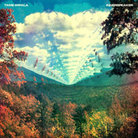
SOUNDTRACK: TAME IMPALA-“Lucidity” (2010).

I heard this song on the NPR’s 5 Artists You Should Have Known in 2010.  The album, Innerspace, is only available in Australia (imported on Amazon for big bucks) but I guess that’s why people download music.

This song is really cool. It feels very My Bloody Valentine to me.  However, inevitable comparisons to The Beatles abound, but that’s mostly in the vocals (which is kind of funny since they are Australian).  But it’s really a very sixties British vocal sound–not unlike early Who).

The big difference comes in the music which is psychedelic and wild in ways that The Beatles never quite managed.  There are great big washes of noise, and the sound quality sounds retro, even though it obviously isn’t.  Comparisons to the great Swedish band Dungen are not misplaced either.

I’ve listened to a few more tracks by them on YouTube, and I think this album could easily be one of the best of 2010 if only more people could hear it!

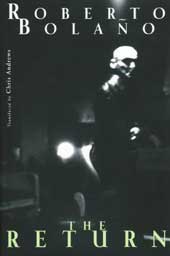
[READ: January 3, 2010] The Return

With the completion of this collection of short stories, I have now caught up with all of the published works of Roberto Bolaño (in English of course).  [The next book, Between Parentheses, a collection of nonfiction, is slated for June].

So The Return contains the 13 short stories that were not published in Last Evenings on Earth.  That collection inexplicably took shorts stories from his two Spanish collections Llamadas telefónicas (1997) and Putas asesinas (2001) and combined them into one collection in English.  It wasn’t quite as evident in Last Evenings, but it seems more obvious here that the stories in Putas asesinas are grouped together for a stylistic reason.  So, to have them split up is a bit of a bummer.  And yet, having them all translated is really the important thing.  And, again, Chris Andrews does an amazing job in the translation

This collection of stories was very strong.  I had read a few pieces in Harper’s and the New Yorker, but the majority were new to me.  Bolaño is an excellent short story writer.  Even if his stories don’t go anywhere (like his novels that never quite reach their destination), it’s his writing that is compelling and absorbing.

This collection also had some different subject matter for Bolaño (it wasn’t all poets on searches). (more…)

Read Full Post »

SOUNDTRACK: RADIOHEAD-Amnesiac (2001).

It’s with Amnesiac that I basically stop remembering any titles to Radiohead songs.  This album came out quickly after Kid A and was talked of as being something of a return to form after the experimentation of Kid A.  However, it is more of the same kind of Kid A experimentation.

But as with Kid A, just when you think there’s no hooks to grab onto, you get the compelling line from “Packt like Sardines in a Crushed Tin Box”: “I’m a reasonable man, get of my case.”

With “Pyramid Song” the disc shows signs of more conventional songwriting (a piano opens the track!).  There’s some wild electronica over the top of the piano, but it’s still a piano-based song.  Of course, just when you think things are fairly standard, you get the oddly titled “Pulk/Pull Revoloving Doors” a stuttering electronic track with distorted vocals that just sort of meanders.  Of course, the more you focus, the more you get out of it (especially with headphones).

There’s some great guitar work on “I Might Be Wrong” but the highlight of the disc has top be “Knives Out,” the most conventional song on the disc and an absolute knock out.  “Morning Bell” reprises itself from Kid A in a slightly more twisted way  It’s rather less satisfying than Kid A‘s version.  And the rest of the album, including the very cool and creepy “Like Spinning Plates” contains more of that electronic bizarreness from Kid A.  The disc ends with the cool clarinet of “Life in a Glass House”

To my mind, Amnesiac is a far more experimental disc than Kid A, and while I enjoy it and I like it in theory, I don’t find it as satisfying to listen to.   And indeed on the In Rainbows show, they didn’t play anything from it.

[READ: December 30, 2010] “Corrie”

Chalk up another great story for Alice Munro.

This one is very simple.  A not-so-young anymore woman, set to inherit a lot of money must take care of her ailing father.  He desperately wants to see her married, but she is simply not interested.

As the story opens, she is having dinner with her father and a church architect named Mr Ritchie.  Mr Ritchie is married, but he seems grateful to Corrie’s father for the work, so he lingers around, working on the church and also helping Corrie as her father worsens.

When her father dies, they begin an affair. (more…)

Read Full Post »

SOUNDTRACK: BUKE AND GASS-“Page Break” (2010).

NPR has selected the 50 best CDs of 2010.  I knew a few of them but had never heard of a bunch of other ones (about 20% are classical).  This CD with the bizarre cover has a great write up:

The wannabe tech-geek in me was initially attracted to Buke and Gass for the band’s two handmade instruments, which modify a baritone-ukulele and a guitar/bass hybrid run through heavy-duty amps (also handmade, mind you).

The problem (and perhaps its because I’m listening at Xmas time) is that the main melody line of the bridge makes me want to sing “Hark, Hear the Bells” and so this feels like a Christmas song even though it’s not.

Whoops– check that.  That melody is certainly there, but I just learned that I was listening to it in mono.  The other speaker presents all kinds of interesting things that distract from that melody (and project much more coolness).

I like the intensity of the track (and the fact that it’s under 2 minutes long).  It’s pretty heavy and the female vocals are nicely aggressive.  And by the end of the song, the syncopation is downright awesome.

It’s amazing how listening to the ENTIRE song can really change your mind.  This is definitely a cool track and will make me investigate the band more.

[READ: December 22, 2010] “One Night of Love”

I had recently gotten interested in reading Javier Marías when I was looking for information about Roberto Bolaño.  I discovered that New Directions Press, the publisher of all of Bolaño’s smaller books also published translations of all of Marías’ books too.  This story comes from his new collection of short stories While the Women Are Sleeping.  (I had also forgotten that McSweeney’s published his book Voyage on the Horizon a few years ago).

I didn’t know where Marías was from when I first started this (I assumed he was Mexican because of the New Directions connection–he’s actually from Spain).  Anyhow, when I thought he was from Mexico, I wondered if there was some kind of connection between his style and Bolaño’s, but also if he was trying to reintroduce magical realism to Bolaño (who abhorred magical realism).

Well that’s moot, (he may be doing that but not because he is from Mexico).

So this story concerns a man who is dissatisfied with his wife’s sexual appetite and performance.  He has taken to visiting prostitutes (see why the Bolaño thing rang true?), but he is concerned because the prostitutes  have grown “increasingly nervous and increasingly expensive” ([Nervous]?). (more…)

Read Full Post »

SOUNDTRACKPHISH-LivePhish 10.21.95 Lincoln, Nebraska (2007).

This Phish show is pretty unusual, even for a band whose live sets are by definition unusual.  It opens with a reprise (“Tweezer Reprise”) which is basically the end of a song.  There’s also a song that is not itself unusual but it’s one that I’ve never heard before:  an all acoustic guitar song called “Acoustic Army.”

But aside from those minor oddities, it also features the craziness of “Kung” which is more or less just nonsensical screaming.  Then Set One ends with a great cover of “Good Times Bad Times.”

Set Two is where the madness comes full bore.  After some great versions of “David Bowie” and Lifeboy” we get a 24 minute version of “You Enjoy Myself.”  After about twenty minutes the song devolves into a vocal extravaganza, with each of the four guys trying to outdo themselves with weird noises and vocals sound effects for 5 minutes.  And just when you think the nonsense is over, the band covers Prince’s “Purple Rain.”  Fish, the drummer, sings the song (rather poorly, it must be said), but the “highlight” is his vacuum cleaner solo.  Yes, vacuum cleaner solo.

I have included a video from this portion of the show to see just how odd this concert must have been (although I believe that other concerts featured similar nonsense too).  If you get bored by the noise in the beginning of the video, remember that it’s out of context and not really representative of the rest of the  show, but do fast forward to when the guy in the dress pulls out the vacuum cleaner and tell me that that’s not the best damn vacuum cleaner solo you’ve ever heard.

The set ends with Trey noodling the riff from “Beat It,” although they never play the full song.   Then there’s an encore cover of “Highway to Hell” (which rocks).  The disc comes with a bonus track, a twenty some minute soundcheck where you can hear the band experimenting with sounds and ideas for the show.  Not essential but interesting.

Lest you think this whole show is weird, there’s some great renditions of “Chalk Dust Torture” and “Guelah Papyrus.”

[READ: December 15, 2010] “The Yellow”

This story opens with a forty-something year old guy who has moved home with his parents.  To the consternation of his father (“have you turned faggot?”), he paints his attic bedroom yellow.  Who would have guessed that this (four-page) story about a sad middle-aged man would end with casual sex and zombies?

Roy is frustrated with his life (obviously).  He gets out of his parent’s house and goes for a drive.  While scanning the classic rock stations looking for the next great thing, he feels a thump and realizes that he has hit an animal.  He’s fairly certain it’s a dog. (more…)

Read Full Post »

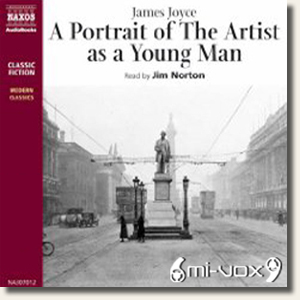
[LISTENED TO: November through December 2010] A Portrait of the Artist as a Young Man

I initially ended this post with: “Even though this audio was unabridged, it felt a bit like hearing an abridged version.  I suspect I shall have to actually read the novel again in 2011 to see what I missed.”  Well, I assumed that the audio was unabridged.  But now I see that there is another recording which is 7 discs as opposed to my copy’s 3 discs.  Gadzooks!  In tiny print on the back of the box, I see now that this is abridged.  NO WONDER I felt like so much was left out of the story.  It actually made me think that the story wasn’t all that coherent.  As such, you can kind of disregard this post until I listen to the unabridged version (which is available free for download here).

So, back to my initial review:

I was listening to this audio book while exercising.  The fact that it took me as long as it did to finish the audio book is more of a testament to my lack of exercising than the book itself.  Although I will say that unlike Dubliners, I found that listening to this book (and again, perhaps it was the distance between listenings) to be somewhat unsatisfying.  And of course, as with all of these Naxos CDs, the vocals are recorded so quietly (except when he starts screaming–the hellfire sermon is so loud it scared my family upstairs) that you really have to try to listen hard to hear the whispers.  The final chapter–Stephen’s diary–is read so quietly it was hard to hear over the exercise machine, even with the sound up all the way.

So this is the story of Stephen Daedalus before Ulysses, when he was, as the title states, a Young Man.  My favorite memory of reading this book was when I read the opening aloud to a sick friend who thought that I was messing with her:

Once upon a time and a very good time it was there was a moocow coming down along the road and this moocow that was down along the road met a nicens little boy named baby tuckoo….

Stephen is of course, baby tuckoo, so this novel is more than just the young man days.   But from this baby story, we quickly jump to Stephen at school and we see an episode that impacted his whole life: boys who were teasing him pushed him into a stagnant pool of water. (more…)

Read Full Post »

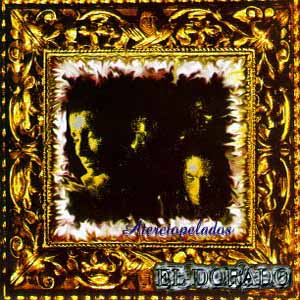
SOUNDTRACKATERCIOPELADOS-El Dorado (1995).

One of the other Rock en Español bands I bought in the 90s was Aterciopelados (the hardest to pronounce).  Aterciopelados come from Colombia and they play a variety of styles of music.  They also feature a female vocalist (Andrea Echeverri) who has a great voice in a variety of styles.

The opening song “Florecita Rockera” is a heavy blast of punk.  “Suenos del 95” is a kind of a lite pop song.  “Candela” is a latin-infused song that sounds not unlike a more psychedelic Santana track.  And “Bolero Falaz” is a winning acoustic ballad.  Meanwhile “Las Estaca” is a sort of county/cowboy song that breaks into a fun rocking chorus.

“No Futuro” starts as a slow balald and builds and builds to a heavy rocker.  I would have liked this song to go a bout a minute longer to get really crazy.  The rest of the disc works within this broad framework: ballads that turn into heavy rockers (“De Tripas Corazón”), hints of punk and latin accents.  And then there’s a song like “Colombia Conexión” which reminds me a bit of The Dead Milkmen: simple sparse verses with heavy punk choruses.  Meanwhile “Pilas!” is straight ahead punk.  The final song “Mujer Gala” has some ska-lite aspects as well (and I have to say that it seems like No Doubt may have been inspired by them).

Although for all of the different styles of music, the disc is really a venue for Echeverri’s voice.  She’s not a rocker or a screamer and she could easily sing pop ballads, but because she chooses to sing over so many styles, she really showcases the multifacted nature of her voice.  She can hold a note for quite a while and although she never really shows off, it’s clear that she’s got a powerful voice.  She even sings beautifully over the punkier tracks, never devolving into a scream, but never losing her edge either.

Aterciopelados is a hard band to pin down (especially with this one disc).  Of the rock en Español bands, Aterciopelados had one of the longer lifespans.  They released several albums with very different styles.

El Dorado suffers from weak production, some more highs and lows would really makes the listening experience better, but it’s a solid disc overall.

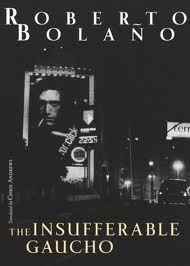
[READ: December 10, 2010] The Insufferable Gaucho

This is a collection of five short stories and two essays.  Two of the short stories appeared elsewhere (which I read previously).  This is the first time I’ve seen the essays translated into English.  The fabulous translation is once again by Chris Andrews, who really brings Bolaño’s shorter books to life.  They are vibrant and (in light of The Savage Detectives, this is funny) visceral.

“Jim” is a four page story which focuses very specifically on a man named Jim.  As the story ends, we see Jim locked in an existential struggle.  For such a short work, it’s very powerful.

“The Insufferable Gaucho” (which I had read in The New Yorker) was even better after a second read.  I find this to be true for much of Bolaño’s work.  He tends to write in a nontraditional, nonlinear fashion so you can’t always anticipate what is going to happen (quite often, nothing happens).  In this story, a man in Buenos Aires, feeling that the city is sinking, heads out to his long neglected ranch in the country.  He spends several years there, slowly morphing from a cosmopolitan man to a weather-beaten gaucho who doesn’t shave and carries a knife.  But there is much more to the story.  The countryside is virtually dead: barren, wasted and overrun by feral rabbits.  The rabbits offer an interesting metaphor for the wilderness as well.  His interactions with the few other people he encounters are wonderfully weird, and the ending is thought-provoking.  It’s a wonderfully realized world he has created.

“Police Rat,” is that strangest of Bolaño stories: a straight ahead narrative that works like a police procedural.  I assumed from the title that it would be something about a metaphorical rat in the police force.  Rather, this is a story about an actual rat who works on the rat police force.  Bolaño spends a lot of time setting up the story (details are abundant) making it seem like perhaps there would be no plot.  But soon enough, a plot unfurls itself.  And although the story is basically a police story, the underlying reality behind it is fantastic and quite profound.  The story is beyond metaphor.

“Álvaro Rousselot’s Journey” was published in The New Yorker.  This story was also better on a second reading.  In many ways this story is a microcosm of Bolaño’s stories: a man goes on a quest for an elusive man.  Unlike the other stories, he actually catches up to the elusive guy.  But, as if Bolaño were commenting on his other stories, actually catching the guy doesn’t really solve the crisis.

This basic premise is that a writer believes that a filmmaker is stealing his ideas for his films (even though he is from a different country).  But more than just the simple plot, when Álvaro Rousselot leaves the comfort of his homeland things change fundamentally within him.

“Two Catholic Tales” is, indeed, two tales.  I had to read this piece twice before I really “got” the whole thing.  There are two separate stories (each story is a solid block of text but there are 30 numbered sections (which don’t seem to correspond to anything so I’m not sure why they are there).  The first tale is of a young boy who desires to be like St. Vincent, with designs for the priesthood.  As the story ends, he is inspired by a monk who he sees walking barefoot in the snow.  The second tale (we don’t realize until later) is about the monk himself.  It rather undermines the piousness that the boy sees.  On the second reading I realized just how dark of a tale this turned out to be.  It’s very good.

“Literature + Illness = Illness”
This is the first non-fiction by Bolaño that I have read.  It is a meditation about his terminal illness.  The essay is broken down into 12 sections about Illness. They range in attitude from the realization that when you are gravely ill you simply want to fuck everything to the fear that grips you when you finally accept your illness.  Despite the concreteness of the subject, the essay retains Bolaño’s metaphorical style.  Each subdivision is “about” an aspect of illness.  “Illness and Freedom,” “Illness and Height,” “Illness and Apollo,” “Illness and French Poetry.”  But it’s when he nears the end and he’s in a tiny elevator with a tiny Japanese doctor (who he wants to fuck right there on the gurney but can’t bring himself to say anything), and she runs him through his tests showing how far advanced his liver failure is, that the reality of his illness really sinks in.

“The Myths of Cthulhu” is the other essay in the book and I have to say it’s the only thing in the book that I’m a little frustrated by.  About midway through, he reveals that this is a speech and I wish that an introductory note would have given context for this speech, or indeed, indicated whether it was really a speech or not.

One of things that struck me about it (and also about “Literature +Illness=Illness” is how frequently he is unspecific about his research (and just never bothered to go back and fix it).  For instance:

For books about theology, there’s no one to match Sánchez Dragó.  For books about popular science, there’s no one to match some guy whose name escapes me for the moment, a specialist in UFOs.

Because I don’t know his non-fiction and I don’t have context (and I’ve no idea who Sánchez Dragó is) I don’t know what to make of that unspecific recommendation.  As for Sánchez Dragó, in the speech he’s noted as a TV presenter (Wikipedia confirms this).  But why the uncertainty in a written piece?  Laziness or deliberate commentary?

This essay has many elements of local information that are completely lost on me.  However, by the end, he brings it back to folklore and literature.  He also makes some biting criticisms of George Bush, Fidel Castro, Penelope Cruz (!) and Mother Teresa. Actually, I’m not sure if he’s mocking Penelope Cruz, although he is definitely mocking Mother Teresa.

The ending is general moaning about the state of Latin American fiction.  Even though I didn’t follow all of what he was talking about, there’s something about his delivery which is so different from his fiction. It’s honest and fast and kind of funny and enjoyable to read.

——

This may be something of a minor work, and yet the stories are really wonderful and are certainly a treat to read.  The essays definitely need more context, but it is interesting to finally have a chance to read the “real” Bolaño.

Read Full Post »

SOUNDTRACK: TIJUANA NO!-Transgresores de la Ley (1994).

In the mid 90s, when I was living in Boston, I discovered MTV Latino, and the Rock en Español resurgence.  Since I’m always interested in new music, I bought a few CDs by these Spanish-singing bands.  For most of my life I’ve thought about the rabid Japanese audiences who loved bands that sand in English.  Did they understand the lyrics?  And did it matter?  Well, here was a test for me.

Tijuana No! was the first band I bought and I really liked it (and still do).

The disc opens with a rollicking ska rocker “Goples Bajos” which features a wonderful horn filled breakdown and ends with a blistering guitar solo.  The title track, “Transgresores de la Ley” opens with a military beat and a military sounding flute before taking off with a heavy verse and, more impressively, a punk/shouty chorus.

My favorite song is “Tu y Yo,” it’s funky all over the place and has a super heavy midsection.  And “Borregos Kamikazes” has a wonderful juxtaposition of speedy, almost loco lyrics in the verses with some great group vocals in the chorus.

The first surprise (for me) comes with “La Esquina del Mundo” because suddenly there’s a female vocalist on lead.  She sounds great (her voice has a cool echo on it) and although she doesn’t quite convey the heaviness of the rest of the track, it’s an interesting juxtaposition.

The second surprise is that the track “Conscience Call” is mostly in English (I got so used to not understanding the lyrics that I was quite surprised to hear words I understood).

The final surprise comes with the penultimate track: an excellent cover of The Clash’s “Spanish Bombs.” Again sung by the female vocalist, her voice works wonderfully with the track.  The chorus, sung in Spanish, is really perfect.

So, in answer to the question, do you need to understand the lyrics to enjoy the music?, I’d say no.  Although it is nice once in a while.

[READ: November 20, 2010] The Savage Detectives

This was the Bolaño novel that I had initially wanted to read because the reviews were so glowing (amusingly enough it turns out to be virtually the last book of his that I read).  And now that I have read almost all of his books, it’s obvious how this book fits into his larger scheme of writing (I wonder what I would have thought if I hadn’t read the other books, too.  In fact, I wonder if I would have liked 2666 more at the time if I had read this one first.  As it is, I think I enjoyed this more having read 2666 first).

[DIGRESSION: When I was reading 2666 I found a fantastic review of 2666/The Savage Detectives by Daniel Zalewski, which reviews 2666 and The Savage Detectives in context of Bolaño’s life].

In a previous post I noted how Bolaño doesn’t really write conventional novels.  And this one is no exception.  Part I is the diary of Juan Garcia Madero, a 17-year-old aspiring poet.  It covers from November to December 31, 1975 .

Garcia Madero talks about his introduction to the visceral realists, a group of Mexican poets whose legacy is more or less unknown to us now (in the book–in reality there was no such group).  The two main visceral realists are Arturo Belano and Ulises Lima, and we will follow or look for these two for the rest of the book.

As with other Bolaño books, there is a massive obsession with sex.  At first Garcia Madero is a virgin and thinks about sex a lot.  Then he finally has sex with first one woman and then many women.  And he writes about them in his diary and spares no details.  (Many entries reveal him having sex with one of his girlfriends 5 or 6 times a night).  And there are of course whores and other deviant sexual individuals (including a guy who carries a large knife by which he measures his penis–we never see this, it’s all hearsay, but it’s in there).

And during this time, he is writing poetry as well–a fully welcomed member of the visceral realists.   (more…)

Read Full Post »

SOUNDTRACK: CHARLOTTE GAINSBOURG-IRM (2009).

Charlotte Gainsbourg is Serge Gainsbourg’s daughter.  Segre is, of course, known for his risqué songs–although Charlotte doesn’t fall into that same camp.

This is her third album.  Her first was released when she was 13.  The second was recorded with the band Air.  This album was written by and recorded with Beck.  And it’s a fantastic forum for her wonderfully complex voice and also just a great album of varying styles and textures.

IRM is the French abbreviation for MRI (she had a life threatening accident and was subject to many MRI’s). In fact, track two, called “IRM” is an electronic workout with sounds not unlike what you might hear in an MRI.  But the album is very diverse, from whispering vocals to soaring altos.  She has some scary/creepy songs as well as some sultry tracks.  Gainsbourg is also an actress and I like to think that her skills in film have allowed her to inhabit so many characters in these songs.

“Le Chat Du Café Des Artistes” (written by Jean-Pierre Ferland) is the only cover on the disc, and man is it great.   Whether it’s the French lyrics, which add a cool Stereolab-ish feel to the proceedings or the outstanding keyboards which are creepy and alluring at the same time, I don’t know, but this song alone makes the disc worthwhile.

Luckily there’s a lot more great songs here, too.  “Heaven Can Wait” is a duet with Beck (although really, Beck takes the lead).  It sounds like a great Beck track with a stomping acoustic guitar feel.

“Me and Jane Doe” follows with a sound like it belongs on the Juno soundtrack.  It gives Gainsbourg a great opportunity to show of her vocal tricks, since she sings with a flatly American accent.  “Vanities” is a beautiful string-filled track which emphasizes Gainsborugh’s voice (and has a kind of Bjorkian symphonic sound to it().

“Trick Pony” is a heavy electronic dance track, bringing an amazing sonic change to the proceedings of the disc.  And “Greenwich Mean Time” is a nasty sounding song where Gainsbourg is not afraid a to sneer at the listener.

The disc ends with “Dandelion,” a kind of slow blues, “Voyage,” a tribal track  (sung in French) and “La Collectionneuse,” which is not sung in French, but which is a piano based song that kind of creeps along on the edge of sinister.  The end of the song has spoken French words at the end and it sounds not unlike an early Sinéad O’Connor song

It’s rare that you hear an album full of so much diversity which actually holds together so well.  Gainsbourg doesn’t have an amazing voice or a voice that makes you go “wow,” but what she has is a really good voice that she can manipulate to convey a lot of styles, and I think that may be more impressive than an eight-octave range.

[READ: November 4, 2010] “Lucy Hardin’s Missing Period”

It’s hard to talk about this story as a story because of the gimmick that is attached to it.  This is a choose your own adventure story, albeit for adults.  In the magazine itself, there are two paragraphs.  You have to continue the story online here.  The technology involved is superb (you can save your story so that when you come back you can pick up where you left off) and each time you click to go to a new section, it fills in right after the section where you were reading so that the finished story looks like a complete (printable) story.

I tried two different stories and it became obvious that there are hundreds of story segments to choose from.  I’m rather amazed at the author’s ability to create what appears to be so many different stories parts out of these few characters (although I suppose realistically there can only be a half a dozen or so outcomes, no?).  And yet for all of that, I didn’t find the story all that interesting.

(more…)

Read Full Post »

« Newer Posts - Older Posts »