Feeds:
Posts
Comments

Archive for the ‘Sex’ Category

SOUNDTRACK: BORIS-Akuma No Uta (2003).

Boris albums are never an easy thing to find.  This album was originally released in Japan in 2003.  Then it was reissued in America in 2005 with a vastly superior cover.  The cover to the right, a hilarious mock up of Nick Drake’s Bryter Layter album (left).  The original album (cover way below) was only 31 minutes, but the reissue was extended to 39 minutes because that’s how long the Nick Drake album was.

So this new album is quite different from the original: In addition to running an additional 7 minutes, the opening track of the newer version is a totally different take; both use the same riff from “Akuma no Uta,” but the original, shorter track repeats it far less and opens with over a minute of ambient, resonant amp noise absent from the longer version.

I have the newer edition and don’t know the original.  “イントロ” (Intro)” opens with a slow, simple infectious riff and then a sort of soaring siren sound starts.  The four note riff is enveloped in distortion while the backing chords cycle through slowly.  Then comes soaring guitars and washes of noise which stretch this song out to almost 10 minutes.

The opening track lulls you into a false sense of mellowness until “Ibitsu” comes blasting out with heavy rocking guitars, pounding drums and screaming vocals.  Most of the verses are just drums and Atsuo’s singing with an occasional riff from Wata. Then Takeshi joins in on the chorus and turns it into a big old crashing metal song. The middle is a three note riffs before a brief Wata solo and some wild drumming. The end is so loud it seems to blow out the speakers.

There’s a brief pause and then “フリー” (Furi) kicks off even faster and more intense heavy rock.  There’s a fast riff and a chorus that is super fun to sing along to even though I have no idea what they are saying.

“無き曲” (Naki Kyoku)” is a grooving slower song.  The first three minutes are primarily a solo by Wata.  The middle turns into a slow jam with stops and starts.  A slow grooving solo resolves into a another catchy rocking singalong before feedbacking out.  Around five minutes, the vocals come in.  The middle has another solo and some meandering bass from Takeshi–almost like a call and response musical section.

“あの女の音量” (Ano Onna no Onryou) is another big crashing rocker with heavy ponderous chords.  It’s got screaming guitars and shouted vocals but plenty of room for noisy feedback.

The album ends with “”あくまのうた” (Akuma no Uta).  A big gong introduces the three note riff.  Around two minutes the fast guitar riff begins and the song rocks out–a classic short heavy Boris rocker.

[READ: May 1, 2021] “Casting Shadows”

I haven’t read a lot of Jhumpa Lahiri’s stories, but she was very popular a while back.  I’m not sure if she still is.

Perhaps the most fascinating thing about this story is that it was written in Italian (translated by the author, which is also interesting).

Lahiri used to write in English but she has recently begun writing in Italian.  I find that fascinating, especially since she translated this work herself–how different is it than if she had written it in English first, I wonder.

This is the story of an older woman and how she interacts with the world around her. particularly the men.  She was

Never married, but, like all women, I’ve had my share of married men.

It’s a really interesting character study and shows a powerful woman who some people might (foolishly) try to take advantage of. (more…)

Read Full Post »

SOUNDTRACK: BORIS: Boris at last -Feedbacker- (2003).

Boris’ sixth album is pretty iconic, what with the bloodied head of Wata on the cover and all.

The album contains one song–43 minutes of “Feedbacker.”  But it is broken into five surprisingly discernable parts.

Part 1 (9:38) opens with low feedback and slowly played chords that ring out.  Then single notes pick out a melody that recurs throughout.  Low bass notes and low harmonic frequencies play out through the bulk of the track until it segues into Part 2 (14:54).  That’s when the drum is added.  It’s a slow beat at first with the low feedbacking tones.  Then the guitars start playing a slow chord progression.  Eventually there’s some quiet lead guitar noodling added.  After about 8 minutes, Wata start one of her big slow solos.  Then around 12 minutes, Takeshi starts sings softly.  But after a minute and a half of this, the song shifts gears and gets much louder–big chords, crashing drums and louder vocals.

Part 3 (5:52) opens with serious crashing of cymbals which turns into noisy chaos.  There’s some high-pitched feedback and and then a seriously heavy riff starts up.  The rocking part of the song takes over with heavy distorted guitars and rumbling bass and drums.  A really noisy guitar solo is followed by a buzzy riff after which things slow down for quiet vocals once again.  The drums are still heavy but the guitars are quietly echoing.  The end gets louder again with roaring and chanted vocals.  (I have no idea what they are saying but it’s easy to sing along to).

Part 4 (9:52) is basically a wall of noise and feedback with echoing distorted cymbals and crackling sounds.  Near the end, noisy piercing feedback soars through until it segues into Part 5 (3:34).  As the feedback fades, the song resumes part 2, with soft drums and slow guitar chords and a quiet feedback floating over everything.

It’s a pretty monumental record.  Not as abrasive as the cover would suggest, but with enough heavy parts so that it’s not just a pretty drone record.

[READ: April 30, 2021] “The Rivals”

I feel like I tend to read stories that are written in a convoluted way.  Either with multiple time lines, or multiple threads that eventually come together.  So it was nice to get a story that was pretty straightforward.

Sure, it started in the middle, but it flashed back, got to the opening scene, and continued along in a pretty straight line.  And it was very enjoyable.

The story is set in Madagascar.  Floristella, a plump Italian man, sees his former friend Pianon, a skinny Italian man, and jumps out at him, hitting him with a walking stick.  It takes a bunch of servants to pull these older men apart.

The narrator then fills us in on what’s going on.  Pianon and Floristella were at one time very good friends.  Pianon is from Verona.  He is a widower who always dresses nicely. He is the bookkeeper and rental manager at the Red House.  Floristella is from Sicily. He comes from a small fortune and acts like it, even if his money is mostly gone now. His house is next to the Red House.

Floristella’s wife was bored of Madagascar, so she returned home, allowing Floristella to enjoy the beach and all of its perks. Like Noelline.  She was his secretary and then his mistress.  She was no longer young, but she was voluptuous and stylish.  She also flouted all conventions on the island.

Each morning she came to his place, did work for him, had sex with him and then went home.

Most of the women on the island hated her. (more…)

Read Full Post »

SOUNDTRACKBARTEES STRANGE-Tiny Desk (Home) Concert #172 (February 22, 2021). 

WXPN has been playing the song “Boomer” a lot.  I really like it–it’s super catchy and fun.  I hadn’t heard anything else by him, so I was delighted to see he had a Tiny Desk Concert.

Bartees Strange and his band are in a basement, surrounded by electrical wiring and DIY sound-proofing, but also green plants that no doubt have names. In Falls Church, Va., the indie rocker is a stone’s throw from the much-missed Tiny Desk space in D.C., yet offers a set just as cozy and crammed.

And he starts it right off with “Boomer” which is just so catchy, with that slinky bass line from John Daise and that outrageously catchy chorus.  Dan Kleederman plays the guitar leads throughout while keyboardist Graham Richman plays rhythm.

The rest of his set proves that musically he is open to anything:

hip-hop bombast meets sprawling indie-rock riffs and mind-numbing electronic beats. “Sonically it doesn’t make sense,” Bartees Strange told NPR Music, “but it makes sense because it’s me and I think that’s like an important part of music – the person.”

For “Mustang” Richman hands Bartees his guitar and plays keyboard instead.  He says that Mustang is about where he grew up–Mustang, Oklahoma.  This time Bartees plays the pretty guitar riffs and Kleeederman adds slide guitar.

For his Tiny Desk, Bartees Strange keeps the bluesy rock and roll bravado of “Boomer” and the loping smooveness of “Mustang,” stripping down the drum kit to include a sheet music stand as an extra cymbal.

He answers the question of what has inspired him this year by saying he has been trying not not to pay too much attention to the transition, so he’s been focusing on music.  He loves Yves Tumor’s Heaven for a Tortured Mind. And Aaron Dessner for being the Indie rock Michael Jordan.

It’s in the back half where Bartees Strange does the switch-up, as “In A Cab” flows seamlessly into “Flagey God.” On record, these are louder and noisier songs that explore very different sides of his 20-sided die, but here, they become laid-back jazz club jams, deceptive in their ease, but beautifully ornate as the arrangements open up to his world.

“In A Cab” opens with a quiet but cool drum pattern from Carter Zumtobel and a sweet combination of guitar lines.  It segues quietly into “Flagey God” a more mellow song that has a great catchy guitar riff.

I’m going to have to check out the whole album.

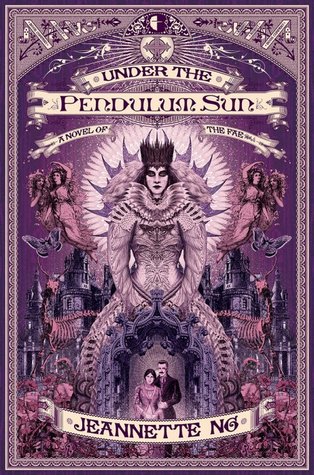
[READ: April 15, 2021] Under the Pendulum Sun

I’m not sure how I heard about this book, but I saw a rave review and it inspired me to actually buy the book, sight unseen.  I didn’t realize the book was put out by Angry Robot, a publisher I have been recently introduced to and which publishes esoteric and unusual fiction, that seems to have a religious aspect.

So this fit right in.

This is a long book and it is written in an old style–slightly formal with lots of biblical components.  The writing at times felt stiff, but not unreadable.  And, this is the weirdest part, I simultaneously felt like the book was moving too slow and yet I felt like I was flying through the chapters.

Each chapter opens with an epigram.  Most of them are fictitious but there are some from real authors and these may or may not be real quotes.

The book opens with Catherine Helstone talking about how she and her brother Laon (how in the heck do you say that?  It plagued me for the whole book) grew up fantasizing about new worlds.  But neither one of the ever fantasized about Arcadia, the land of the Fae.

Now that they are older, her brother has left for Arcadia to become a Christian missionary–to convert the souls of the Fae–if they can even be converted.  Several years later, Catherine has now set off to find him.  She has a ship and his compass in hand. But the key to reaching Arcadia is to get hopelessly lost and then the entrance will appear.

Neat. (more…)

Read Full Post »

SOUNDTRACKJUSTIN BEIBER-Tiny Desk (Home) Concert #182 (March 17, 2021).

When Taylor Swift did a Tiny Desk Concert it was HUGE news–the biggest pop star in the world at the Tiny Desk?

I assume at one point Justin Beiber would have made a similar big deal (even if this one is a home show and just a stream like any other). I didn’t even know he was still making music.  So imagine my surprise to hear that the album that these songs come from went to number 1 and that he is the youngest artist to have 8 number one records.  Who is buying Justin Beiber records?   I have no idea.

Especially now that he’s all tattooed up and sleazy looking.

Of course, it’s very likely that I don’t know anything he has done, because I really didn’t know what he sounded like.  He plays four songs here.

“Holy,” another song from Justice, opens this set without the presence of guest Chance the Rapper.

“Holy” is a slow acoustic song (the acoustic guitar from Julian McGuire sounds great).  His musicians are from We the Band.  This is a catchy pop song for sure–the holy holy holy, hold me hold me hold me part is a nice touch.  I like the addition of the record scotching from DJ Tay James in the middle.

But why is he always grabbing his crotch?  Especially the way he grabs it, like he has to pee.  It’s really disconcerting and seems like an unconscious reflex at his point.  It looks particularly weird with his big baggy clothes on.

For “Peaches” he heads over to the keyboard.  Julian McGuire picks up the electric guitar and shows how good he is.  The opening piano melody is slow and pretty.  I really like this song except that the lyrics are so unnecessarily crass.  Why have such a pretty song and yet have your call and response lyrics be so rude

I got my peaches out in Georgia (oh, yeah, shit)
I get my weed from California (that’s that shit)
I took my chick up to the North, yeah (badass bitch)
I get my light right from the source, yeah (yeah, that’s it)

And good lord he repeats the chorus so many times.

Bieber plays the slow piano solo as the scotching begins and then keyboardists O’Neil “Doctor O” Palmer takes over and plays a really groovy melody as the outro to the song.

“Peaches” will exist in a significantly different form when Bieber drops his new album, Justice, on Friday — the track will feature guest vocals from GIVEŌN and Daniel Caesar

For “Hold On” he moves away from the keys.  I prefer him standing in front of the keys because he looks so awkward when he’s just standing there, hunched over and crouching.

The song has pretty echoing electric guitar (Mcguire again).  This song starts out quietly but when it kicks in, what a super catchy song!   It’s got a killer bass sound from Harv and is just  full on bouncer.  This should be huge.   In the middle of the song the band take a verse or two to totally rock out with crashing drums from Robert Taylor as well as ripping guitars and bass.

“Anyone” ends the set as a big old ballad with satisfyingly quiet synths and backing vocals.  This is a really pretty song, but it would work so much better if he didn’t look so scuzzy.  But once again the band totally rocks the end–a big jam that is really awesome once JB stops singing,  McGuire get a ripping solo and the band turns the song into a funk jam with some cool bass and drums and the samples kicking in.

[READ: March 31, 2021] “Seventy-Two Virgins”

Comedy pieces are often funny when they are timely.  I’m not sure what was going on in 2007 that Steve Martin wanted to make a joke about Muslim martyrs enjoying 72 Virgins.  I do recall hearing about that closer to 9/11, but maybe something else new had happened?

I’m not willing to look this up.  How does one even searching for 72 virgins?  But the context is that it was widely believed that Muslim ‘martyrs’ enjoyed rich sensual rewards on reaching paradise.

So without having 72 virgins in the zeitgeist, what’s it like to read this?

Well, this is basically a kind of play with every virgin getting a line.

(more…)

Read Full Post »

SOUNDTRACK: MR. BUNGLE-The Raging Wrath of the Easter Bunny Demo (2020/1986).

In 1986, Mr. Bungle released a demo tape called The Raging Wrath of the Easter Bunny.

In 2020, after a reunion tour of sorts, the band rerecorded the album, with some slight personnel changes. Original singer Mike Patton was still there as was masterful guitarist Trey Spruance and bassist Trevor Dunn.  But they had two impressive guests stars (who also performed live with them), Scott Ian (from Anthrax) on rhythm guitar and Dave Lombardo, drummer extraordinaire.

And thus they re-recorded the initial demo.  Fans of Mr. Bungle’s later genre bending work would be a little disappointed because this was pretty much a heavy heavy metal record.  But it is Mr. Bungle so you know there’s gonna be some weird stuff too.

The only song they don’t play from the original is “Evil Satan” which is more or less a goof anyway.

“Grizzly Adams” opens the album with a very pretty guitar instrumental. Spruance really shines with this moody, weird piece.  But even when the full band joins in in the last 30 seconds, it doesn’t prepare you for the heaviness to come.

“Anarchy Up Your Anus” is old school metal–heavy guitars with an Anthrax/Slayer vibe.  There’s even a lengthy scream after the opening drum fills.  This song has an opening narration by Rhea Perlman.  Yes.  Rhea Perlman.  The narration comes from the Chilling, Thrilling Sounds Of The Haunted House Disney album (on the demo they just played the audio from the record).

“Raping Your Mind” is out of sequence from the demo (it was originally song 6).  It continues with the heavy Anthrax-like riffage and some serious drumming.  There’s a cool middle moment where there’s two guitar solos and just bass and drums in the back–there’s some seriously wicked guitar soloing going on.

“Hypocrites /Habla Español o Muere” was originally a longer song, but they decided to shorten it and add this humorous cover of the Stormtroopers of Death song.  The title is mentioned in the first few seconds, then after 30 seconds, the song jumps into a bit of “la Cucaracha” and then segues into “Speak Spanish or Die.”

“Bungle Grind” is really heavy with some classic mosh sections and faster riffage.

“Methematics” is a new song.  It’s a bit more standard heavy metal and not so much early thrash until the double bass drums kick.  There’s lots of parts including a classic punk style in the middle.  This is more akin to the later, adventurous Mr. Bungle, but at 8 minutes it is a little long.

“Eracist” is another new song.  This one is great.  Really catchy with some good old fashion metal riffs and chanted chorus.  There’s a seriously heavy middle section, too.

“Spreading the Thighs of Death” was the third song on the demo.  It’s some good fast thrash with wicked chord changes and massive double bass drum.  There’s some really wild guitar soloing too.

“Loss For Words” is a Corrosion of Conformity cover.  It’s a pretty serious cover version.  Patton’s vocal delivery is even a little different.

“Glutton for Punishment” is another new song that fits into the classic riff an thump thrash.  There’s a whispered vocal part where you can actually hear the words!  And a fascinatingly fiddly guitar solo that left me wondering how he did it.

“Sudden Death” ended the demo and ends this as well.  A heavy chugging riff and super fast thrashing–it’s impressive that they can keep it up for seven plus minutes.  I rather liked the “yes/no” chanting at the end.

This album isn’t for everyone (as most Mr. Bungle albums aren’t).  But it does show off some quality old school metal and some serious skill for a band covering themselves 30 years later.

[READ: March 24, 2021] Zed

I saw this book in Barnes & Noble and fell in love with the cover.  I made sure to look for it at the library and was pretty psyched when it came in.

And I was pleased as soon as I started reading.

Set in the not too distant future, one tech company, Beetle, dominates the world.  I thought that Beetle was pretty inspired name.  It could be Apple (who have a connection to The Beatles, with Apple Records) and it looks a lot like the word Google, although I suppose it is probably closest to being about Amazon–with their online assistant Athena.

Nearly every citizen (the book takes place in London, but Beetle is global) wears a BeetleBand which monitors everything you do–like a Fitbit or Apple Watch on steroids.

It tells you when you are stressed or when you should hydrate or that you shouldn’t have that donut.  Indeed, everything is now really “smart”: fridges, doors, cars.  Everything in your house is monitoring you. And everyone has a Veep, a personal assistant who does everything for you (except for physical things, since it has no body). You pay for all the best stuff in Beetle bucks–the cryptocurrency that replaced actual  money as the dominant currency.  If you didn’t convert your pounds, euros or dollars, when the rate was good, you’re just stuck.

When the book says everyone, it’s really mostly everyone. There are some people who can’t afford such extravagance.  People who don’t work for Beetle get paid in regular money which isn’t very useful.  There are also neo-Luddites who want nothing to do with Beetle.  But they are carefully monitored by Beetle.

Most people work and communicate in a virtual world with avatars that are some version of themselves.  And most importantly, every person has a Lifechain–the algorithm that determines the longevity and happiness you should experience.  This predictions are pretty much never wrong and everyone uses them to judge people–employers, police, etc. Everything you do, every decision you make changes our Lifehchain, which changes you likelihood of doing x y or zed. (more…)

Read Full Post »

SOUNDTRACK: JLCO SEPTET WITH WYNTON MARSALIS-Tiny Desk (Home) Concert #163 (February 2, 2021).

I was looking for some era-appropriate music for this post, then I saw this Tiny desk from Wynton Marsalis which hearkens back to big band but is very contemporary (just like this story).

Marsalis has been writing music about democracy and the call for justice for decades. “I hope that the social and political corruption and turmoil of these times cast a light on the individual investment required to maintain a libertarian democracy,” he wrote on his blog in January. “May the events of these times inspire us all to engage even more deeply in the rights and responsibilities we have as citizens.”  Wynton Marsalis and the Jazz At Lincoln Center Orchestra Septet recorded their Tiny Desk (home) concert at Dizzy’s Club, or what they call “the house of swing.”

The first of the three pieces is called “Sloganize, Patronize, Realize, Revolutionize (Black Lives Matters),” a six and a half minute instrumental that  features tasty solos from just about everyone.

“Sloganize, Patronize, Realize, Revolutionize (Black Lives Matters),” [is] a bold statement about humanity and the consequences of racism. Marsalis says this piece — as well as the rest of the music on his new album, The Democracy! Suite — deals with the timeless human issues we see exacerbated during the times of the pandemic, like social challenges and matters of the heart.

It’s got a big swinging intro and then things settle down for individual moments.  First Walter Blanding plays a grooving tenor saxophone solo.  Wynton takes a bright trumpet solo.  Carlos Henriquez gets a little upright bass solo action and has a little back and forth with Obed Calvaire on drums.  I often wonder if these solos are written out, or if they follow a general guideline or if they are all improvised.

After a return to the main melody, Ted Nash gets a very different sounding alto saxophone solo after which Elliot Mason plays a ripping trombone solo.  Dan Nimmer plays a slightly dissonant piano solo before the band returns to the main theme and brings it all home.

The next two pieces of the suite run uninterrupted into each other.

“Deeper than Dreams” is a reverential piece Marsalis wrote for those who have lost loved ones during the pandemic. Marsalis … lost his father, the legendary pianist and jazz patriarch, Ellis Marsalis, to complications from COVID-19 last spring, and [he] speaks affectionately of “the times when our old folks come and sit with us in the spirit realm when we are sleeping.”

This piece starts slow and swoony. This time the solos are more duos.  With Marsalis and Nash playing together, then Blanding and Mason going back and forth and finally a piano and bass moment for Nimmer and Henriquez.

To close, “That Dance We Do (That You Love Too)” is playful and funky and inspires a hopeful message, one that Marsalis says is “for everybody who got out and got down during this time on behalf of freedom.”

This final piece opens up with a funky introduction.  Nimmer mutes the piano strings as he plays a sound that sounds like a guitar.  The bass brings in a funky rhythm and then the horns all go to town.  The biggest surprise comes when Blanding brings out a tiny saxophone that looks almost like a toy and yet he plays a wicked and wild solo on it.

Then Marsalis plays a muted raw trumpet solo–he gets some wild and crazy sounds.

Obed Calvaire never gets a drum solo per se, but his work throughout the songs is always interesting and complex with all kind of nice percussion and rhythm.

This was a really fun set.

[READ: March 15, 2021] Matthew Henson and the Ice Temple of Harlem

I saw this book at work and thought it might be a reprinted Blaxploitation novel.  But in fact, this is an entirely new book.

I also didn’t realize that Matthew Henson was a real person.  I’m embarrassed not to know that but I see that it was almost by design that I didn’t know who he was.

Henson was an American explorer who was one of the first people to reach the geographic North Pole.  He was essentially partners with Robert Peary on several voyages to the Arctic over a period of 23 years.  [I’d never heard of Peary either, so I didn’t feel too bad about not having heard of Henson].  But unsparingly, upon the success of reaching the North Pole, it was Peary who received the accolades and Henson was dismissed as his helper or even his servant.  Henson received nothing for his work and wound up languishing until many years later when his work was finally recognized:

In 1937 he became the first African American to be made a life member of The Explorers Club; in 1948 he was elevated to the club’s highest level of membership. In 1944 Henson was awarded the Peary Polar Expedition Medal, and he was received at the White House by Presidents Harry Truman and Dwight Eisenhower. [He died in 1955].  In 1988 he and his wife were re-interred at Arlington National Cemetery. In 2000 Henson was posthumously awarded the Hubbard Medal by the National Geographic Society.

So that’s the background.

In this story, Henson has come back from his expedition and has been making a name for himself as a kind of hero for hire.  It’s a wonderful conceit and a great way to get attention for a man who deserves more name recognition.  Also very cool is that the book includes Bessie Coleman, (the first African American and Native American woman to earn a pilot’s license–although she had to go to France to earn it since America wouldn’t give her one). (more…)

Read Full Post »

SOUNDTRACK: PICTUREHOUSE-“Sunburst” (1998).

Picturehouse drummer Johnny Boyle was in the Irish Drummers book.  I was unfamiliar with them, but apparently they were pretty huge back in the late 1990s (at least in Ireland).  Boyle played on this album (Karmarama) and the follow up.

“Sunburst” was apparently all over Irish radio when it came out.  After a fun opening drumfill, this song falls into a gentle indie rock vein.  There’s some lovely harmonies, some nice gravelly vocals from singer Dave Brown and a big soaring “what a day” chorus.

The end of the song bops along on series of bah bah bahs and and a tasty fuzzy guitar solo.

It’s a delightful jangly pop song and was understandably a big hit

[READ: March 15, 2021] “Girl with Lizard”

I was sure that I had read this story, or something like it, before.  But this is the first story by this author that I have read.  This story and the resulting short story collection Flights of Love were translated by John E. Woods.

The story concerns a boy and a painting.  It was a painting of a girl looking at a lizard on the beach.  His mother and father called it “The Girl with the Lizard” and his mother referred to the girl in the painting as “The Jewish Girl.”  The painting played a large role in the boy’s childhood.  He napped under the painting every day during nap time.  He became very familiar with the details of the painting, which had a pride of place in his father’s office.

He became so familiar with it that when asked to describe a painting in detail for school, he was excited to write about this one.  He stared at the painting and took in all the details. He marveled that when he was little he had to look up at the girl and now that he was older the two were at eye level with each other.

His father admired the essay but told him that the painting was very important and it would be much better if people didn’t know they had it.  He said it was valuable and din;t want anyone to steal it.  He refused to say anything more about it and over the boy’s life, he never learned the provenance of the painting,  But his father certainly believed it was valuable. (more…)

Read Full Post »

SOUNDTRACK: BORIS with MERZBOW-Gensho (Disc One: Boris) (2016).

In 2016, Boris teamed with Merzbow to create Gensho, a 2 CD package that was designed to have both CDs played at the same time.  Not the easiest thing for many people, but with the advent of digital recordings it’s now pretty easy to play both discs at the same time (this release is on Spotify).

Disc 1 was all Boris.  Disc 2 was all Merzbow.

When you play them together, you get the drumless Boris with all of the glitching electronica of Merzbow sprinkled around it.  The songs are set up in a very clever way with one of Merzbow’s songs being exactly equal to two or three of the Boris songs.

I played the CD of Boris and the stream of Merzbow on Spotify.  It was cool to be able to raise and lower the volunme of one to change the intensity of Merzbow’s glitches.

Merzbow’s “Planet of the Cows” plays over the first two Boris songs “Farewell” and “Huge.”  Farewell’s quiet drone tacks on Merzbow’s squeals and glitches which fill in the gaps quite nicely.  When “Farewell” ends, the Merzbow continues until the loud gongs heavy chords of “Huge” ring out.  The Merzbow chaos sounds almost like a solo over the slow low heavy drone chords.  Atsuo’s low growling even complements the spare noises.  Both parts ends with squealing feedbacking sounds–analog from Boris and digital from Merzbow.

Merzbow’s “Goloka Pt. 1” plays over three Boris songs “Resonance” “Rainbow” and “Sometimes” (the My Bloody Valentine cover).  “Resonance” is mostly percussion–kind of randomly hit in a slow rhythm.  Merzbow’s noises sound like static in a distance echoing signal from outer space.  “Rainbow” is a piece I don’t know.  This version features Boris playing some quiet guitar and a grooving bass with Wata singing vocals. Merzbow’s electronics sounds restrained here, adding louder noises when the vocals back out  This song has some tasty soloing from Wata with the electronics almost keeping pace.  It segues into “Sometimes,” with its loud thumping echoes and eventual wall of noise.  The vocals are pretty well buried but you can hear the melody of the MBV song.

“Goloka Pt.. 2” plays over “Heavy Rain” and “Akuma No Uta.” “Heavy Rain” starts out with noisy stabs of sound–it’s actually hard to tell who is making what, but then things mellow out as Wata sings.  The guitars drone loudly and the vocals mix in with the electronics.  It ends with the noisy guitar buzzing from Boris while the noises from Merzbow continue between songs–sounds of noise and electronic bleeps.  “Akuma No Uta” starts slowly with washes of guitar build up. The glitching Merzbow adds keeps it from being purely a drone.  The drone gets louder and louder and I like the way Merzbow’s glitches seem to back off as the man riff enters the song.  As it nears the end, glitching sounds to me like a menacing voice coming through the static and heavy riffage.

The final song is Merzbow’ “Prelude to a Broken Arm” which plays over “Akirame Flower” and “Vomitself.”  It starts out with watery sounds before the big chords and vocals kick in.  Merzbow’s noise is like a screaming train underneath the slow crooning.   The main riff from Wata has some electronic percussive sounds tacked onto it.  As the final chord rings out the song segues into the musch noisier “Vomitself.”   It introduces a huge wave of low chords as Merzbow’s noise amps up to correspond with a lot of low growling percussive sounds. As the song rumbles to an end the squealing intensifies like feedback added on top of the roar with the last notes sounding like a person raging.

It’s interesting how I don’t really like the Merzbow tracks, but how they add interesting textures to the Boris songs.

[READ: February 19, 2021] Caliente

Matu Santamaria is an Argentinian illustrator and his work is really stunning.

This book has a big warning: 18+ but it’s not fully explicit.  There are drawing of naked women and sex acts, but there’s only a few things that are NSFW.

Santamaria’s work is full of clean lines and and dramatic colors.  I really enjoy looking at it, regardless of the content.

This book contains a lot of his most recent work.  It seems to be split between positive messages about sexuality, body positivity and appreciation for frontline workers during the Coronavirus.  There’s also some celebrity pictures as well.

After some definitions of the word caliente, the book opens with series of pictures of women exploring the sexuality with each other.  Interracial women kissing and a woman taking her top off with the comment–“and without realizing it, it’s poetry.” (more…)

Read Full Post »

SOUNDTRACKJOSEF K-“Sorry for Laughing” (1985).

In Stuart David’s book, In The All-Night Café, he lists the songs on a mixtape that Stuart Murdoch gave to him when they first met.

Although I’ve been a fan of Belle & Sebastian for a long time, I knew almost none of the songs on this mixtape.  So, much like Stuart David, I’m listening to them for the first time trying to see how they inspire Stuart Murdoch.

In the book, David writes how much he does not like “rock,” especially music based around bluesy rock.  Most of these songs, accordingly, do not do that.  In fact, most of these songs are (unsurprisingly) soft and delicate.

Josef K were a Scottish band named after the main character in Franz Kafka’s The Trial.  I had never heard of them, but they are apparently hugely influential (despite releasing only one record).

Josef K are quite unlike anyone else on the mix tape thus far.  They are far darker (in a Joy Division sort of way).  I mean look what they based their name on.  And there are drums. But they are also very un-rock–playing sharp angular guitars and lead bass lines.

“Sorry for Laughing” opens with a  snapping drum and a rumbling, almost out of control bass line.  The guitars are quieter, playing sharp chords. It’s catchy in a dark sort of way.  The weirdest part comes at the end of the bridge when the bass seems to play a tiny riff that doesn’t quite work–it’s almost an anti-hook and it happens twice.

The middle of the song has a kind of bass solo while the vocals make a chk chk sound. This must have been an incredibly unique song at the time.  And you can definitely hear how a lot of bands were influenced by them.

[READ: January 20, 2021] “Bohemia”

This story, set in the 1950s, is about Willie, a young Indian man traveling to London for the first time.

He is going to London for school–an un-famous school it turns out–modeled after Oxford and Cambridge.

Willie didn’t know much about London–Buckingham Palace and Speaker’s Corner were the extent of it.  He was disappointed by both when he saw them.  He felt the Maharaja’s palace was far superior, and the people in Speakers Corner were mostly irritating.

His father had given him the names of people to get in touch with.  Willie didn’t want to do that–he wanted to succeed on his own.  But he found things very tough going.  So he looked up one of the men–a newspaper reporter.  The man was very proud of his work and very proud of his paper  But Willie knew nothing of the paper or even enough of London to know what the paper wrote about.  It was not an auspicious meeting. (more…)

Read Full Post »

SOUNDTRACK: COCTEAU TWINS-“Oomingmak” (1986).

In Stuart David’s book, In The All-Night Café, he lists the songs on a mixtape that Stuart Murdoch gave to him when they first met.

Although I’ve been a fan of Belle & Sebastian for a long time, I knew almost none of the songs on this mixtape.  So, much like Stuart David, I’m listening to them for the first time trying to see how they inspire Stuart Murdoch.

In the book, David writes how much he does not like “rock,” especially music based around bluesy rock.  Most of these songs, accordingly, do not do that.  In fact, most of these songs are (unsurprisingly) soft and delicate.

Of all the bands on the list, Cocteau Twins were the one I know (and like) best.  I’ve been a fan since 1987, so just after this album came out.  I never remember which songs are which by them, because they have titles like “Oomingmak.”

Cocteau Twins are a magical band and at the time (and perhaps even now) no one sounded like them.  Their music is so ethereal, it practically floats away both because of the shimmering echoing guitars of Robin Guthrie and Elizabeth Frasier’s high pitched vocals–often with non-intelligible words. [I honestly never knew she was actually singing words, but I see she was].

This song is the shortest song on Victorialand.  It has a fast repeating guitar line and Fraser singing softly.  Toward the end, she sings harmonies with herself in her slightly more harsh sounding vocal style.  It’s a lovely song, as all of their are.

[READ: January 20, 2021] “Touched”

Reading this right after reading the Arthur Miller story was really strange.  Because here was another thirteen year-old boy possibly having sex with an adult woman.

The story opens on Ali, the thirteen year-old.  His Bombay family has visited him in England and are now returning to India.  Ali was very sad to see them go,

Ali was most upset because his cousin Zahida was leaving. She was a year older than him.  She had pressed her lips to his and then they ran up into the attic together and then

he continued caressinuntil, making his way through intricate whirls of material, he reached her flesh and slid his hand into the top of the crack.

He was suddenly concerned about being discovered they quickly separated.

Wow. (more…)

Read Full Post »

« Newer Posts - Older Posts »