Feeds:
Posts
Comments

Archive for the ‘Set at School’ Category

SOUNDTRACK: PJ HARVEY-Let England Shake (2011).
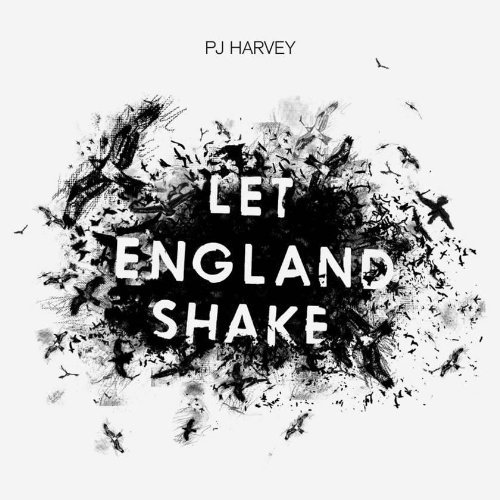
I’ve listened to this disc several times online; I have no details about the recording.  There’s samples, but I don’t know what they are and I can’t really tell what all the lyrics are (it’s obvious she’s pretty angry, but the details are lost to me).

The first question for me on hearing this disc is what happened to PJ Harvey’s voice?  It comes as such a shock when you compare it to Dry.  But once I accepted that this is not the PJ Harvey of Rid of Me, I listened to it as a new artist and I really like it.  But it’s a weird record to be sure.

The title track is played on an autoharp (!).  In fact the autoharp is a dominant instrument here.  It’s got a cool melody and, once you accept that she sounds like the singer from Rasputina, you can really appreciate what’s going on.

The second track, “The Last Living Rose,” returns somewhat to the PJ of old (the opening “God damn” sounds like she’s about to bust out some good-ol’ invective).  And there are guitars, but the music is upbeat (as are the vocal melodies) and there’s even a horn!  “The Glorious Land” has samples from the cavalry (I can see the horses riding across the plains) and a cool, slinky guitar (or is that the autoharp?).  There’s male vocals in the middle of the song, and it makes for disconcerting harmonizing (especially when PJ,’s voice ratchets up the weirdness and sounds more like Kate Bush).  But musically this song is great, it’s got a wonderful 80’s alt-rock feel.

“The Words That Maketh Murder” also has horns and some interesting male vocals chanting the lyrics.  This has one of the least subtle lyrics I’ve heard in a long time, although the re-imagining of the “Summertime Blues” refrain is pretty genius.

“All and Everyone” opens with more autoharp, and I think I’m realizing that the autoharp is what I think of as the interesting guitar sound (this song opens like a Smiths’ ballad.)  There’s more horns on this track which adds a weird dimension of sadness to it.  “On Battleship Hill” is a fast but delicate track in which PJ pulls out an astonishing falsetto–completely unexpected.  After the first verses, the rest of the song has, again, a kind of slinky 60s vibe.  “England” brings out the Kate Bush voice in PJ again.  This is a very delicate song, the music is mixed so low in the background that it feels like acapella–I guess Harvey has grown much more confident in her voiuce.  The music builds and builds though and there’s an unexpected middle eastern sounding vocal in the background.

“In the Dark Places” brings out Harvey’s guitar (in this case the Harvey is Mick Harvey, I believe) and her lower register vocals. While “Bitter Branches” is probably the loudest song on the disc, with a bunch of screamed vocals.  It’s rather startling considering the rest of the disc, but it’s nice to know just how much fire PJ still has.

“Hanging in the Wire” is another delicate song, with quiet pianos and Harvey’s sedate voice.  “Written on the Forehead” returns to that middle eastern vibe (“people throwing dinars at the belly dancers”) and that Kate Bush vocal–the backing vocals remind me of Peter Gabriel.  The album ends with “The Colour of the Earth.”  It’s the most disconcerting song of the bunch becuase it opens with a male singer (John Parrish?) singing what sounds like an old trad song (the melody is very traditional).  Then PJ joins in and makes the song her own.

It’s obvious that the lyrics are the main aspect of this disc, and I know that I’m missing something by not having them. I’m also missing a lot by not knowing all that much about England’s history.  It sounds like she has a lot of gripes with Eng-a-lund, and I’m curious to know what she’s on about.  But more than that, I’m totally hooked by the music.  It’s a great reinvention of a great artist.

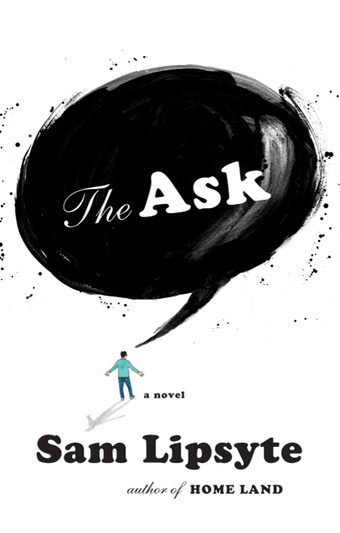
[READ: February 9, 2011] The Ask

I was planning to read nothing except books from the pile by my bed for the foreseeable future.  And then, as if calling to me, I saw this book, which I was planning to read eventually, on a display right in front of me called Booklist Editor’s Choice (a new display for our library).  I stared at it for three hours and just had to check it out.

And I’m glad I did.  For the most part I really enjoyed this book, it was quite funny and the main character, kind of a schlub, was completely relatable.  I say for the most part because I felt like it dragged a bit about 2/3 of the way through (more on that later).  But its possible that it dragged because the first half of the book was just fantastic–fast paced and clever with lots of wonderfully funny lines (more on that later too).  And a setting that I found very entertaining.

The story is about Milo Burke. He is married to Maura and they have a going-on-four-year-old boy Bernie who is nothing if not precocious.  The titular ask concerns Bernie’s job.  He works for a small arts college in New York (which he called Mediocre University).  His job is to basically ask (hence the title) rich people for money for the college. We see him in his office as the book opens and we meet the rest of the staff: the surprisingly unslacker slacker Hubert (with whom Milo shares space and ribald jokes…this section is the funniest; many paragraphs end with sentences that hilariously undermine what he just described.

We often called it, with what we considered a certain amount of panache, the Mediocre University at NewYork City.  By we, I mean Horace and I.  By often, I mean once (4).

His supervisor is Vargina.  (This name, which is obviously over the top and childish and which I absolutely laughed at and then felt was maybe too easy of a laugh, has a great origin story and is really never not funny no matter how often you see it).  Milo has obscene fantasies about Vargina, but he is a (somewhat) happily married man and would not cheat on his wife.

He’s not very good at his job, but the other askers do alright so his job is safe.  Until, that is, he insults the daughter of one of the university’s biggest donors and he is summarily let go, without severance.  And then we get to see a lot about his home life. (more…)

Read Full Post »

SOUNDTRACK: MONEEN-The World That I Want to Leave Behind (2010).

I’ve liked Moneen’s discs; they played an interesting mix of grungey noisey rock and incredibly poppy emo.  And their song titles were really long and often funny (“The Frightening Reality Of The Fact That We Will All Have To Grow Up And Settle Down One Day,” “There Are A Million Reasons For Why This May Not Work… And Just One Good One For Why It Will”).

The first sign that The World I Want to Leave Behind is different is that their song titles are all really short.  The longest one is the title of the album–which is the shortest song: a 2 minute quiet intro that features some noisy guitars at the end.   The rest are 1-3 words long.  Now, perhaps you can’t judge a band by that; however, their music, like thier song titles, has eschewed complexity and embraced pop.  (“Believe,” “Waterfalls,” “Lighters”).

Okay Moneen always had this component to it.  So it’s not like suddenly the band is all pop.  Take “Are We Really Happy with Who We are Right Now?” from the album of the same name .  The song is all emo vocals (including harmonies) but the music is punky and noisy.  It’s also got a lot of dissonance.  Similarly, “The Start to this May be the End to Another” (from their debut), opens with really blasting noise and then turns into a heavy emo track with loud and quiet sections.  They are certainly poppy, but there’s at least nods to noise.

This album removes all of that noise and chaos and settles into to some tried and true emo.  If you hate emo, you will hate this album.  There’s virtually no dissonance on the disc at all.

Okay, that’s not entirely true.  The second song, “Hold That Sound” opens with some noiy aggressive guitars (and interesting noisy effects) and “The Long Count” has some noisy heavy opening chords which propel through the track.  But unlike earlier records, the noise gets pushed to the background pretty quickly.  “The Monument” also shows some remnants of heaviness–there’s even screaming vocals at one point.

And yet, the aforementioned “Wateralls” and “Lighters” sound like Guster-lite (and I like Guster quit a bit).

The final song, “The Glasshouse” does rock pretty hard (although the harmonies are all still there and the emo certainly seeps in by the end with a piano break and the final 2 minutes being all gang vocals).

Okay so in fairnes to the band, they haven’t smoothed off all the rough edged, but the polished bits are really polished now.  The thing is, I kind of like emo, so despite my tone, I don’t really dislike this record.  I’m always diasppointed when a band moves more commerical, especially if they cut off their more interesting bits, but Moneen make good emo (if you allow that such a thing exists).  I don’t like all emo bands, but there’s still enough interesting stuff here to keep me coming back to it.  In fact, for all of its poppiness, “Believe” is a really fantastically catchy alt rock song which should be in heavy rotation somewhere, if it’s not already.

[READ: February 13, 2011] A Place So Foreign and 8 More

When I saw that Cory Doctorow had a book of short stories out, I was intrigued. I’ve enjoyed two of his books quite a bit, so what could he do with short fiction?

This is some of his earliest work and I found it a mixed bag.

The first story “Craphound” was great (and the origin of his website name).  It concerns going to flea markets and buying all kinds of crap.  When you do it a lot, you become a craphound.  But when you take a fellow craphound’s crap of choice for yourself, you break the unwritten rule.  That’s all well and good.  But in this story one of the craphounds is an alien, like from another planet.  And what he trades for his crap is pretty wild.  But why would he break the unwritten rule?  The story is a fun look at what happens when extra-terrestrials are a part of your life.

“A Place So Foreign” was my absolute favorite story in the book, and one of my favorite short stories in quite some time.  I’m happy to say that I read it last, so it totally ended the book on a high note. Despite the cover picture with an “alien” hand holding a suitcase, the story has nothing to do with that at all. (more…)

Read Full Post »

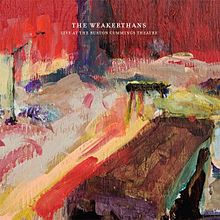
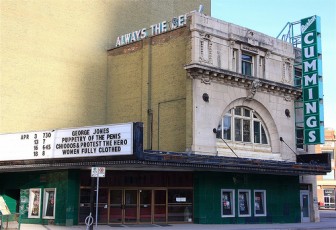
SOUNDTRACK: THE WEAKERTHANS-Live at the Burton Cummings Theatre (2010).

I’ve enjoyed The Weakerthans for a few years now, so I was pretty excited to see they had a live album out.

This live album works like a greatest hits.  All of the songs are great catchy pop songs–why aren’t The Weakerthans huge?  Maybe because their songs are literate and clever (and have weird titles (like “Our Retired Explorer (Dines with Michel Foucault in Paris, 1961)”).  In fact that song is one of only two songs that I know of that mention Jacques Derrida (the second being Scritti Politti’s “Jacques Derrida”).

Admittedly, The Weakerthan’s songs are simple and catchy and these live versions aren’t radically different from the originals.  There’s no extended jams or maniacal freak outs or anything.  But the album is very charming (John Samson is unfailingly polite) and the one big surprise is quite a surprise!

On the track “Wellington’s Wednesdays” Samson introduces a guy: “This is Ernesto.  He’s from Mexico.  He’s going to play a guitar solo.”  While listening to the disc I couldn’t imagine this peculiar introduction for a band member.  My version of the disc comes with a concert DVD of the show.  I didn’t get to watch the DVD until recently and… mystery solved:  Ernesto is a fan in the front row.  Samson talks to him mid-song, pulls him up on stage, introduces him and gives him his guitar to play the solo!  Then Samson jumps into the front row to watch.   How cool is that?

The video doesn’t deviate from the audio, except for leaving in a few moments of patter from Samson. In fact, I found the video to be somewhat choppily edited.  When Samson plays “One Great City!” (solo…which wasn’t obvious from the audio.  I mean, you can tell he’s solo, but it’s much more dramatic in the video) at the finish of the song, it immediately cuts to the next full band song, rather diminishing the return of the band.  (Although I do like the jump cuts to the audience which reveal what appears to be a room full of teenagers–it’s adorable!)

The other confusing thing is that the recording notes say that it was recorded over two days, and yet the video appears to be one night’s show. And the audio matches it, so who knows.

But those are little quibbles.  The music is great, the sound quality is fantastic and the song choices are great.  There are some cool surprises on the disc (like the horns and violin), but mostly what you get is an enjoyable evening at a small hometown concert with fans who love to sing along to the chorus of “One Great City:” “I hate Winnipeg!”

[READ: December 18, 2010] Stephen Leacock

What I’ve really been enjoying about this series of Extraordinary Canadians is how the writers of the books (at least the three I’ve read so far) are writing in such very different styles.  Obviously Coupland did his own thing.  Vissanji is a novelist, and he wrote his in a more novelistic way (its not like a novel at all, but it’s constructed in a kind of narrative style).  Macmillian is a historian, and I suppose for that reason, this biography feels more like a history (of Leacock, but also of economics) than a simple biography.

The strangest thing about this book is that although MacMillan obviously likes and respects Leacock, a surprising amount of the book is taken up with her talking about things he either said or did wrong or about his books that really aren’t that funny.  This is surprising because Leacock is a noted humorist. (In 1947, the Stephen Leacock Award was created to recognize the best in Canadian literary humour).

This biography looks at his life, but mostly it focuses on his academic and humorous works.  Leacock was an economist although he seems to generally disapprove of economists.  He had begun by teaching high school but found it incredibly stifling.  Eventually he found his niche at McGill University where he was well-respected and highly regarded by students and faculty alike. (more…)

Read Full Post »

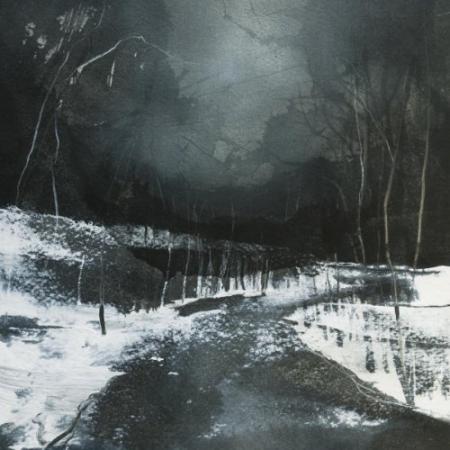
SOUNDTRACK: AGALLOCH-“Into the Painted Grey” (2010).

For this week’s music I ‘m going to look at the Top Ten albums picked by  Lars Gotrich (Viking) on NPR’s All Songs Considered.  Viking loves black metal and drone music, so most of these albums aren’t on a lot of Top Ten Lists.

Agalloch’s Marrow of the Spirit was his number one album of the year.  This is a fascinating song full of ambient guitars and rather beautiful melodies (in the intro).  It is a song of longing and distance.  The guitars intertwine and are quite nice.  Then at almost 2 minutes in (of a 12 minute song), the drums kick in and work as an introduction to the dark metal chords that are forthcoming.

At almost 3 minutes, the vocals come in and this is where they’ll lose most listeners.  The vocals are barely audible demon growls.  And yet they are low in the mix and don’t overpower the song (I have no idea what he’s singing about).

Indeed, the vocals are almost spoken (sounding not unlike Gollum) setting more of a mood than an actual story.  It’s a shame that the vocals are going to turn people off because the rest of the song is rather majestic in scope and tone.  Back when black metal first started, vocals like these were matched to equally sludgy music, but when they’re matched to this kind of progressive, epic music, they feel like another instrument, another addition to the melody.

And the rest of the song is so much more than just standard black metal.  Especially at the five and a half minute mark when all of the noise pulls back and a beautiful guitar riff comes to the fore.  Another great melody break comes again at the 10:30 mark.  They really transcend the genre.

I’ve never heard Agalloch before, but their sense of melody and composition is really top-notch, and even with the vocals, this is a pretty stunning piece of music.  Not for everyone, obviously, but a good choice for Viking’s song of the year.

[READ: December 29, 2010] “Honor Bound”

This is the first of five one-page anecdotes/stories/histories in this issue of The New Yorker that come under the heading of “Something Borrowed.”  I read all five because two of them are by Zadie Smith and Jonathan Franzen.  I haven’t read Henry Bromell before, so I don’t know how representative this story is of his other works.

This anecdote concerns Bromell’s time at a boarding school in Wales.  The school was an old castle (it sounds awesome).  Their library was structured around an honor system; the boys were supposed to write their name down on the list, keep the book for two weeks and then return the book to its place on the shelf.  Since his life had very little structure (he was an army brat and didn’t have a “home”), Bromell began keeping the books from the school’s library (carefully hidden on…the shelves in hid bedroom(!)).  He even put his name on the title page of some of them.

(more…)

Read Full Post »

SOUNDTRACK: All Songs Considered Year End Music Roundup (2010).

Every year, I like to check various sources to see if there were any albums that I missed.  My definition of good resources: allmusic, amazon, pitchfork.  (There’s another fascinating list available here at Best Albums Ever, a site I’ve never seen before, and I have a large portion of the Top 50 albums.  I didn’t buy a lot of music this year, but evidently I chose wisely!).  I don’t necessarily agree with these lists, but if I see the same album on a few lists, I know it’s worth at least listening to.

This year, since I spent so much time on All Songs Considered, I thought I’d see their Best of Lists.  What’s awesome about the site is that you can hear not only selected songs in their entirety, you can also download the audio of the original show…where the DJs talk about their selections and play excerpts from them.   There are many different lists to investigate.

The most obvious one to star with is 50 Favorite Albums of 2010.  This shows the staff’s 50 favorite albums in all genres.  I admit that there’s going to be a lot on this list that I won’t bother exploring (I’m not really that interested in new classical or jazz and I’m not too excited by most pop music, although I was pleasantly surprised by how much I enjoyed the Kanye West songs here).

But some albums did stand out that I hadn’t heard, and I will investigate them further in 2011:

Buke And Gass, ‘Riposte’
Deerhunter, ‘Halcyon Digest’ (I know, this is on many best of lists)
The National, ‘High Violet’ (This is also on everyone’s list)

Bob Boilen, All Songs Considered’s most awesome host, picks his Top 9 of the year.  I’m on board with about 1/2 of his list (haven’t heard the other half).  Sufjan Stevens is his #1.

Robin Hilton, Boilen’s partner in crime, has a Top Ten which is remarkably similar to Boilen’s.  It has most of the same albums just appearing in a slightly different order.  Lower Dens is #1. (I’ve never heard of them).

Carrie Brownstein (of beloved Sleater-Kinney and now evidently a permanent member of the NPR team) has a Top Ten (Plus One)–funny that she liked more than ten when Boilen liked less than ten.  I’m really surprised by her selection of albums because her own music is so punk and abrasive, but her top ten features R&B and some folky bands.  Her top album is by Royal Baths, a band I’ve never heard of.

Stephen Thompson also picked his Top Ten.  He has an interesting mix of alt rock and jazz.  His number one is by Jonsi from Sigur Rós. (A great album).

Perhaps the best list comes from 5 Artists You Should Have Known in 2010.  I didn’t know any of the 5.  Sarah bought me two CDs for Christmas (and she was pleased to have gotten me good music that I hadn’t heard of!).  The Head and the Heart hasn’t arrived yet, but The Capstan Shafts is great.  I’m also really excited by Tame Impala.

Another great list is Viking’s Choice: Best Metal and Outer Sound (stay tuned for much more from this list).  It is dominated by black metal, but there are a few surprises in there as well.

Even the All Songs Considered Top 25 Listener’s List was great.  I had most of the list (except for The Black Keys who I simply cannot get into).

Although I enjoyed a lot of new music this year, it’s always nice to see that there is some new (to me) stuff to investigate.  Who knows maybe some day I’ll even have listened to enough new music in a year to make my own Top Ten.

[READ: December 31, 2010] McSweeney’s #36

With McSweeney’s #36, it’s like they made my conceptual ideal.  Its weird packaging is fantastic and the contents are simply wonderful.  But let’s start with the obvious: this issue comes in a box.  And the box is drawn to look like a head.  You open up the man’s head to get to the contents.  Brilliant.  The head is drawn by Matt Furie (with interior from Jules de Balincourt’s Power Flower.

Inside the box are eleven items.  The largest are smallish books (postcard sized) running between 32 and 144 pages.  The smaller items are a 12 page comic strip, a nineteenth century mediation (8 pages) and 4 postcards that create a whole picture.  The final item is a scroll of fortune cookie papers.   The scroll is forty inches long with cut lines for inserting them into your own fortunes (I wonder if they will sell this item separately?)

Aside from the bizarre head/box gimmick (and the fact that there is ample room in the box for more items), the contents are really top-notch.  For while many of the books included are individual titles, there is also an actual “issue” of McSweeney’s (with letter column and shorter stories) as well.  So let’s begin there

ISSUE #36: New Stories and Letters.  The resurrected letters page continues with more nonsense.  I’ve often wondered if these are really written like letters or if they are just short pieces that have no other place to reside.  (Oh, and the back of this booklet contains the bios for everyone in here as well as assorted other folks who don’t have room for a bio on their items).

LETTERS (more…)

Read Full Post »

SOUNDTRACK: “WEIRD AL” YANKOVIC-Tiny Desk Concert #65 (June 22, 2010).

I can remember when Weird Al’s first album came out.  I heard about it on the radio (but hadn’t actually heard the song…I think they just talked about it being very funny) and went to my local Pathmark (which sold LPs) and asked the clueless clerk where the album with “Another One Rides the Bus” is.  Of course, he brought me to Queen.  I think I learned how to be sarcastic that day.  That was back in 1983.  Here it is 27 years later and Al is still popular enough to be invited to do an acoustic show on NPR (well, actually, the number of links about Al indicate that he may just be a perennial guest).

The Tiny Desk series is a 15 minute (or so) concert that’s all acoustic and appears to be in front of an audience of about ten (how lucky!).

This set is a fascinating look at three of Al’s songs.  The first song is “You Don’t Love Me Anymore.”  This was the ballad whose video was a parody of Extreme’s “More Than Words” video.  It is perfectly appropriate in this setting and still gets a number of laughs even though it’s from 1992.  I was astonished to hear the next song, “Good Old Days” (from 1988!).  It’s not one of my favorite songs by him, but it works well in this context.  I just can’t believe they dusted it off for the set.

The final song is a new one (he says it’s from “The Leaked Project,” ha ha) called “CNR” which is about Charles Nelson Riley.  What’s especially amusing about this performance is that the original is a style parody of The White Stripes.  Now, an acoustic version of a White Stripes song completely undermines the parodic nature of the song.  And yet it still shows the songcraft (it is an original tune after all) but also that his vocal skills are still top-notch.

These three songs aren’t his best songs, but this is a fun (albeit brief) tour through some of his more esoteric tracks.  You can listen (and download) and watch the video of it!! here.  There’s also a leaked copy of an Al song that never made it to an album.  “You’re Pitiful,” a parody of James Blunt’s “You’re Beautiful” can be streamed here.

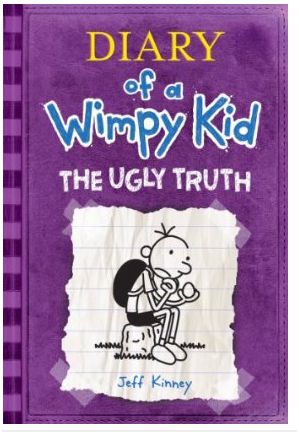
[READ: November 25, 2010] The Ugly Truth

As I’ve said before, I love the Diary of a Wimpy Kid series.  It never fails to make me laugh.  I’m kind of impressed at how many knock-offs it has spawned.  And all for simple line drawings and really funny pre-teen observations.

I was a little down on the previous book because it was about the summer, and I think the really funny bits are school related.  This book returns to school, and within the first few pages it had me laughing really hard again.

The “Ugly Truth” of the title is alluded to on the cover (Greg holding an egg); it’s that time for the girls and boys to have their own separate talks.  And there’s very little that is funnier than kids and “the talk.”  Unless of course, you’re having a kids overnight lock down at the school. (more…)

Read Full Post »

SOUNDTRACK: fIREHOSE-“fROMOHIO” (1989).

After the punk of The Minutemen, you wouldn’t expect the sound of fROMOHIO to come from Mike Watt and friends.  The opening song, “Riddle of the Eighties” is quite poppy, but with a countryish flair.  In fact, much of the beginning of the disc sounds not unlike the Meat Puppets–southwestern punk.  Track two, “In My Mind,” has a wonderful latin/Mexican feel to it (singer Ed Crawford has that whole southwestern vibe down quite well, even if they are from Pedro).

The disc also has what I’ve learned is that peculiar SST Records sound–almost nonexistent bass, despite what Watt is accomplishing.  Actually the bass is there, and it’s mixed fine but it’s much lower than you might expect for what they’re playing.

Even track three “Whisperin’ While Hollerin'” which is all about the bass (with cool blasts of guitar over the top) doesn’t have a lot of low end in it.  The bass sounds crisp and clear (which is good), just not very deep.  “Mas Cojones” is a weird one.  Funk bass with disco guitars over the top and some odd spoken word from Watt.

The highlight is “What Gets Heard,” a great funky fast bassline with angular guitars and vocals by Watt.  Near the end of the disc, “Some Things” is another solid song, really typical of this period: great bass, great guitar work and yet still a lot of punk.  And “Liberty for Our Friend” is a great folk singalong, and I dare you not to singalong by the end.

There’s also some fun, unexpected bits.  There’s a pretty acoustic guitar solo called, “Vastopol” and two (!) drum solos “Let the Drummer Have Some,” and the wonderfully titled, “‘Nuf That Shit, George.”

And its all packaged as really short songs (most around 2 minutes, with late songs running longer).  It’s a fun disc and a worthy addition to the SST catalog.

[READ: October 25, 2010] “Caught”

After the seriousness of “My Father’s Brain,” this true story about Franzen’s wicked days in high school was tremendously enjoyable, possibly one of my favorite pieces that I’ve read by him.

The piece opens with the incredibly tempting story about students successfully pranked their high school by managing to get a tire over the top of a 34-foot flagpole.  This sets in motion Franzen and friends’ attempts to do the same to their school’s 40 foot flagpole (there’s even a diagram or three!).  The story is exciting and filled with secretive plotting as they try so many different ways to get that tire over the top of the flagpole.

There’s a great bit of self-deprecation from Franzen.  He admits that although one of his friends was far more architecturally-minded, he himself was far more persuasive.  Ultimately, their gang put his “Devices” to work, which are universally decried as pieces of shit.

Although I assumed that the tale would focus only on their attempts at flag pole ringing, in fact the group undertook many pranks.  At first they called themselves U.N.C.L.E., but then they changed their name to the far more amusing (with an incredibly involved explanation) DIOTI.  DIOTI undertake several delicious pranks including removing the clappers from all of the bells in the school (and leaving a series of poems as  clues for where they are) and piling all of the classroom desks into one room.  (The “centrally located” comment and its resultant embrace by the school is simply wonderful). (more…)

Read Full Post »

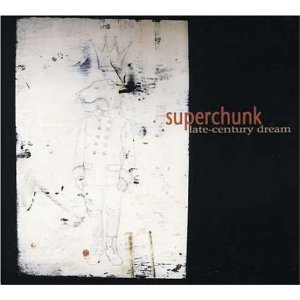
SOUNDTRACK: SUPERCHUNK-Late Century Dream (2001).

A Superchunk song that opens with keyboards, “Late-Century Dream” is one of the most mellow singles that they’ve recorded (even more mellow than some of the acoustic songs they’ve done).

It’s followed by “The Length of Las Ramblas” an even more mellow track.  This one is also full of keyboards (sort of tinny, high pitched keyboards) and acoustic guitars.

Rocking guitars return on “Becoming a Speck” which reminds me of “1,000 Pounds.”  It’s a fast-paced, punchy song with a guitar solo that sounds like it might collapse on itself any minute.

“Florida’s on Fire” is an acoustic rendition of the song from Here’s to Shutting Up. Initially, when Superchunk was a punky bratty band, these acoustic numbers were kind of a novelty.  Now they showcase the extent of musicianship that the band possesses, and this one is no exception.

It’s a good EP, and the last one that I bought prior to their return this year.  They have a couple other ones that I’m going to try to track down.  But in the meantime, it’s all Majesty Shredding.

[READ: October 10, 2010] “An Actor Prepares”

Donald Antrim is the next writer in the 1999 New Yorker 20 Under 40 issue.

This story is a funny look at college theater.  The subject is not terribly new, and yet there are so many wonderful details and the theater teacher is so over the top that this story was completely enjoyable.

The narrator is Reginald Barry, Dean of Student Life and Wm. T. Barry Professor of Speech and Drama at Barry College (ha!) and this semester his students will be performing A Midsummer Night’s Dream.   I had to look up some of the quotes in the story to make sure they were actually from the play (I didn’t know the line “Use me but as your spaniel, spurn me, strike me” was in Shakespeare), but they are, and Antrim takes lines like this and runs with them.

Barry has wonderful plans for this production which he envisions outside on the grounds of the campus, with a culminating orgy occurring just as the fireflies come out. (more…)

Read Full Post »

SOUNDTRACK: THE DUCKWORTH-LEWIS METHOD-The Duckworth Lewis Method (2009).

This is a CD released by the combined forces of Neil Hannon of The Divine Comedy and Thomas Walsh of Pugwash.  And if that weren’t enough of a sales pitch, the title of the band is a method of calculating cricket scores!  And even more…in concordance with that, this CD is largely about cricket.  Huzzah!  Buncha sellouts.

I don’t know a thing about cricket, but I know about great orchestral pop, and this disc has it in spades.  Some of the more obvious cricket songs are even understandable to non cricketers (the themes of “Jiggery Pokery” are familiar to anyone who has failed in a sport–and musically it sounds like a silent film soundtrack).

“The Age of Revolution” begins with an olde-fashioned soundtrack as well (jazz swing, including tap dancing) but quickly jumps into a dancey discoey verse (the two soundtracks blend surprisingly well in the chorus).  And the revolution?  Well, it has something to do with cricket.  Next, “Gentlemen and Players” is a wonderfully Divine Comedy-esque track complete with harpsichords.

“The Sweet Spot” is another discoey dancey track with some funky bass work (and innuendo whispered vocals).  And “Rain Stops Play” is a fun musical interlude.

“Mason on the Boundary” is the first track that seems distinctly Pugwash-y.  Hannon and Walsh have similar singing styles, and I find it hard to know who is who sometimes.  But this track is clearly Walsh’s and it’s very nice indeed.  Similarly, “Flatten the Hay” has that distinct Pugwash XTC/Beach Boys vibe and it’s quite good.

“The Nighwatchman” is also a very DC type song (it even sounds a bit like “The Frog Princess” but pulls away before being a repeat of that great single by introducing some very 70s sounding strings).  The rest of the disc follows in this same wonderfully orchestrated pop feel.  This a great record that, as far as obscure bands that get no statewide attention go, is top notch.

Oh, an it’s even more fun with headphones!

[READ: October 9, 2010] Skippy Dies

Wow, there’s a lot going on in this book.  It’s exhausting just trying to think of all the topics covered: boarding school life, failed romance (two big ones), life as a teacher, the appeal of pop singer Bethani, the Catholic priest sex scandal, drugs of all kinds, sneaking into a girls’ school, World War I, institutional cover ups, M-theory–which is pretty much the entire universe, and donuts.

But let’s start at the beginning.  Yes.  Skippy dies.  In the first couple of pages.  And what’s fascinating about this is that we don’t care.  I mean, in the scene where he dies, he’s not even the major character.  But then Skippy turns out to be more or less the glue of the book once the story proper begins.

Skippy resides at Seabrook school in Dublin (the best, most prestigious Christian academy in the country–sorry Gonzaga).   His roommate is Ruprecht (perhaps the strangest major character name I’ve read in a long time).  Ruprecht is a large boy who is incredibly smart (he will single-handedly raise the school’s average on the year’s final exams).  He is a computer geek who is obsessed with aliens and SETI.  And he hopes to be able to communicate with the other world by using techniques suggested in M-Theory.  The book does an admirable job explaining M-theory and string theory.  I’m not going to take up space here, but there’s a fine description at Wikipedia (or, if you don’t like Wikipedia, here’s an academic explanation that is written for the lay person).

Anyhow, Skippy and Ruprecht are two of a few dozen boys who reside full time at the school.  (Most of the other kids are day students).  And they have a cadre of half a dozen friends that they hang out with who make jokes at each other’s expense.  It’s a very realistically written entourage.  Mario is Italian and claims to have had sex with many many women (thanks to his lucky condom which he has had for three years).  Dennis is the ballbreaker.  He’s the abusive one (but by most standards, he’s not a bad guy).  And a few other hangers on.

This story of dorm life is a good one.  The boys are funny, their stories believable, even if they are all eccentric in their own way.  And then, one day, Skippy sees a girl playing frisbee at the girls’ school across the way (Ruprecht has a telescope which he uses for the stars, while eveyrone else uses it for the girls’ school).  And Skippy winds up becoming rather obsessed with the unknown “frisbee girl.”

This girls’ school plays a part in the story in another way too.  Carl and Barry are the Seabrook’s thugs.  When Barry hits upon the idea of selling ADD meds to the locals (as diet pills), it’s the girls’ school that he mostly preys on.  For yes, this story is also about drugs. (more…)

Read Full Post »

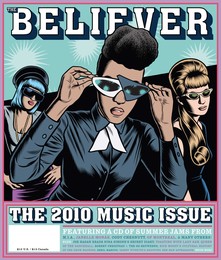
SOUNDTRACK: The Believer July/August 2010 Music Issue Compilation CD: “We Bumped Our Heads Against the Clouds” (2010).

Of all the Believer music compilations, this is by far my least favorite.  It would be oversimplifying things to say that the music is not for me, but in many respects it is not.  Chuck Lightning, the curator of the project states that this compilation is more or less a look into the state of the union for black artists.  And that invariably means a lot of R&B and songs that might be heard on Glee (I like the show, but I never know any of the music).

Deep Cotton’s “Self!” reminds me of novelty dance hit from the late 80s.  Of Montreal, who I thought sounded totally different from this, offer “Hydra Fancies” which is as catchy a disco anthem as any disco anthem can be.  Roman GianArthur’s “Depraved Valet” is an amazingly falsettoed Prince knock off.  Cody Chestnutt’s “”Come Back Like Spring” is a simple almost acapella ode to spring.  Saul Williams’ oddly titled “B.S. in a Tampon” is a spoken word with acoustic guitar that reminds me of Gil Scot-Heron.  Janelle Monáe’s “Cold War” is the first really catchy song (the la las remind me of Carole King), although  I could do without the overstated “Calinda” part and the extended fade.

The first song I really liked was BLK JCKs “Iietys” which sounded enough like TV on the Radio to be really interesting.  Spree Wilson’s “Chaos” also sounds like TV on the Radio (the more R&B side of the band, although the guitar solo is a dead ringer for “Hotel California.”  Scar’s “Rewind” is the song that should be on Glee.  I want to hate it but it is so damned catchy, I can’t.  Again, those Oh Oh Ohs are too perfect (and the auto0tune of course is unassailable).

Rob Roy’s “Velvet Rope Blues” is my favorite song on the disc by a large distance. It’s a weird rap that reminds me of The Streets, with an awesome sung chorus ala OutKast.  Hollyweed’s “Have You Ever Made Love to a Weirdo” is a trippy, juvenile space rap that is really silly.  Sarah hates it but I kind of like it, as it’s in the spirit of Frank Zappa, (although I hate the sax solo).  Fear & Fancy’ s “Off the Grid” sounds also not unlike OutKast.  And George 2.0′ s “Turn Off the TV” is a anti-TV rap rant (with the somewhat ironic conclusion that you yourself might end up ON the TV).

M.I.A. is probably the biggest name on the disc. “Born Free” is a weird little track of highly distorted vocals over a punk guitar buzzsaw sound.  But her vocals are mixed so loud in the mix that they sound unrelated.  It sounds not unlike a Go! Team track.  This track makes me wonder how she became such a sensation.

Hot Heavy & Bad’s “One” returns to that disco sound in the vocals with some contemporary bass sounds.  It wears out its welcome pretty quickly.  Tendaberry’s “Cold Boy” sounds like a less horn-y Fishbone.  Mother Novella offers one of the few all guitar songs, “Closer 9 1/2” and it’s an okay mid tempo rocker.

The final song is pretty awesome in theory: Nina Simone covering Alice Cooper.  That’s right, Nina Simone covering Alice Cooper.  Sadly I don’t know the Alice Cooper song, so it’s a bit lost on me.

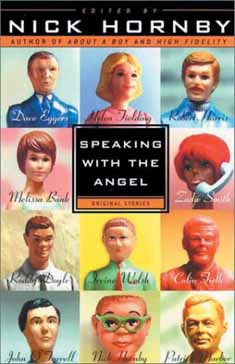
[READ: September 16, 2010] Speaking with the Angel

I bought this volume when it came out (and apparently donated $1 to TreeHouse at the same time).  It’s a collection edited by Nick Hornby (and the cover is designed similarly to the way High Fidelity and even About a Boy were at the time (“the Hornby look,” I suppose).

I didn’t buy it for Hornby alone, although he does have a story in it, but because it looked like a really promising collection of stories from authors I liked.  And for some reason I didn’t read it until now.  It includes 12 stories, and as the introduction notes, $1 was donated to TreeHouse.org.uk (in the US $1 goes to TreeHouse and another $1 goes to New York Child Learning Institute).  I don’t know if the money still goes there, but you can donate with a form at the back of the book.  (more…)

Read Full Post »

« Newer Posts - Older Posts »