Feeds:
Posts
Comments

Archive for the ‘Research’ Category

SOUNDTRACK: FRANK ZAPPA-Civilization Phaze III (1994).
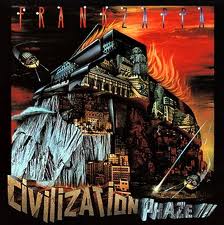
There were a number of choices for soundtracks for this week’s read.  I could have chosen the Andrew Sisters (and their wonderful “Don’t Sit Under the Apple Tree”) who get a mention in the book.  And, of course, I could have chosen Elton John’s “Rocket Man.”  But, when I read Trudi tell Magda about her boyfriend Gustav who wants to live inside a piano, well, it was hard not to think of this, Frank Zappa’s final work.

Civilization Phaze III is an opera-pantomime.  According to the libretto, “The speaking characters all wear oversized masks, gloves and shoes.  They live in an abstracted grand piano….”  And musically opens with this introductory spoken passage:

FZ: The audience sits inside of a big piano and they listen to it grow.
Spider: People are going to sit inside of a piano. They’re going to listen to this piano grow.
John: They’re going to listen to the piano grow?

Civilization Phaze III was released posthumously in 1994.  But here’s the weird thing.  Most of the sessions of “piano people” dialogue were recorded in 1967.  Zappa had a bunch of people come into the studio, sit under a piano that was miked and improvise dialogue (sounds like the 60s to me).  He released some of this dialogue on his  late 60s albums, but as far as I can tell, the parts about the piano were never included (in Lumpy Gravy someone talks about wanting to live in a drum).  I’m also not sure how well-known the “piano sessions” were at the time.

So, here’s the question…did Zappa influence Pynchon or did these two people come up with the same idea at roughly  the same time.  The reason Zappa put off using the material recorded in 1966 was because technologies were simply not advanced enough to let him manipulate the dialogue so it would sound decent, much less coherent.  So Civilization Phaze III became his exploration of the past with contemporary technology.

He also recorded new spoken dialogue in 1991 and merged the two.  It’s an interesting idea, but I fear that the new dialogue absolutely misses the vibe of the earlier dialogue.  In the early dialogue, they all sounds like they’re stoned and are talking crazy nonsense about horses, smoke and music.  The later dialogue is much more abrasive (especially Michael Rappaport, the only person who has since gone on to renown).  At the time, Rappaport had been on one TV show as a guest, but by now he is too famous for this.  I find him a distraction (not Zappa’s fault obviously), even more so because he talks as if he is black (he says “Nobody said nothin’ when y’all bought my people, right?”) while he is demonstrably not.  And then ruins it contextually by mentioning Yo MTV Raps, the only thing that places the story in time.  It’s weird that Frank wouldn’t have a black person say these lines, especially since he has so many other races and nationalities represented in his music.  But maybe that’s me intellectualizing that I just don’t like Rappaport.

So, what’s this monstrosity about?  I have no idea.  Improvised stoner dialogue from the 60s is pieced together into a kind of story.  Occasionally Frank’s voice chimes in and prompts them to talk about certain things (which is quite  disorienting).  And the whole “plot” well, I’m not even sure if it can be called a plot, but Frank tries to cobble something together–again, the 1991 dialogue seems to be more pointed, more about conflict, possibly something about overcrowding and racism, and there’s certainly some social criticism at work, but as for a story, well, not so much.

The music, on the other hand, is the culmination of Zappa’s more experimental, atonal “classical” music.  Most of the first disc is performed on the synclavier while most of the second disc contains more actual musicians.  The music is difficult and not to everyone’s tastes, for sure.

Atonal music is far more intellectual than visceral, so it’s hard to “enjoy” this music.   Zappa obviously knew how to write catchy poppy friendly music, so this is a deliberate attempt to write something more challenging.  I like Zappa’s crazy music in small dozes, so listening to this entire thing (over 2 hours) can be a tough in one sitting.  But each piece (especially the two really long pieces “N-Lite” (18 minutes) and “Beat the Reaper” (15 minutes) ) showcases something interesting or satisfying.

The libretto that Zappa includes with the discs explains the story in far more detail and shape than one would ever get from listening to the music.  Without the book, you would know that this is a dark and moody piece, but with the book, you can actually see what the music is showing.  That may be a flaw, or that may be the way of a staged performance.  I have no idea if it was ever staged.

There are certainly easier introductions to Zappa’s music.

[READ: Week of March 26] Gravity’s Rainbow 3.6-3.10

Last week was a bear of a read for me, but this week was so fast (and short) that I just kept going because I was so into the Slothrop story (I won’t go past the spoiler line, I promise).  And yes, it’s (almost) all Slothrop this week.

Section 3.6 begins with Slothrop violently ill.  [I admit I don’t think of novel characters as getting ill very much–unless it’s a plot point–but surely characters get colds and tummy aches just like everyone else, right?].  He drank out of an ornamental pond in the Tiergarten–but, duh, everyone knows to boil water before drinking these days.  This also introduces Slothrop as Rocketman, something we won’t get more details on until later. (more…)

Read Full Post »

SOUNDTRACK: LAURA BARRETT-“Deception Island Optimist Club” from Viva Piñata! (2008).

This is a musically simple song–it appears to be played entirely on, I gather, a thumb piano or kalimba.

The melody is complicated, however.  And Barrett’s voice is beautifully naked.  I especially like the way her voice doesn’t follow the musical melody exactly–she plays around with sounds and ideas a little bit.

I also just found out this neat little piece of information: Her first public performance was a cover of “Smells Like Nirvana” at a “Weird Al” Yankovic

kalimba

tribute concert.  Okay, who even knew there were “Weird Al” tribute concerts?

I’m very much intrigued by this woman, and you can hear a whole bunch of her stuff at her CBC Radio 3 site.

Oh, and that Weird Al song?  You can hear it (there’s no video) right here:

[READ: March 20, 2012] “Sea-Serpents and Scientists”

This was the second archived article that my company sent around for enjoyment.

I like any article about sea serpents, especially The Loch-Ness Monster.  But I was really surprised at the attitude taken in this article.  It actually seemed like it might be a joke, although upon further consideration, I believe it is entirely serious.

As the introductory line says, “The emergence of a fabulous monster in Loch Ness is greeted with debatable reserve by men of science.”

The first paragraph taught me something i did not know: The Loch Ness Monster’s name is Bobby!  And while Wilson says he is not going to “offer a belated biography of Bobby, the sea serpent of Scotland, as he swims like a submarine in Loch Ness,” he is sure going to take scientists to task for not investigating him.

Wilson does not argue that Bobby exists, indeed he claims not to be an expert, “All my life I have abstained strictly from the alcoholic inducements which on these occasions are said to contribute to what around Loch Ness, is called ‘perfect visibility.'”  Although I gather he does believe in him.

Rather, his point is that scientists have dropped the ball by not even looking into “by far the most interesting event in the modern annals of natural history.” (more…)

Read Full Post »

SOUNDTRACK: FRANK ZAPPA AND THE MOTHERS OF INVENTION-Over-nite Sensation (1973).

When I saw Marvy’s Mothers, it was hard not to pass up the connection to Zappa and his band.  But oh, what album to pick?  (He released like 40). I chose the one released in the same year as Gravity’s Rainbow.

It also happens to be full of all kinds of sex (imagine that).

It opens with “Camarillo Brillo” the kind of simple, catchy song that Zappa seems to whip out very easily.  I assumed that the title was some kind of sexual slang (not a bad assumption), but Wikipedia suggests it has something to do with an insane asylum (Camarillo) and the crazy hair they often had, which makes sense given the crazy lyrics.  It starts kind of trippy with inscrutable lyrics.  And then the bridge, “she was breeding a dwarf” is pretty insane.  It also features a very funny sequence that was oft-quoted in MST3K–“Is that a real poncho or a Sears poncho.”

“I Am the Slime” is a funky (a great Zappa riff) diatribe against TV (because it makes you buy crap you don’t need and makes you listen to the government).  “Dirty Love” is a perverse song with lots of guitar solos.  There’s some kind of bestiality in this song (which also ties in with parts of this section).

“Fifty-Fifty” features the vocals of Ricky Lancelotti (in a screaming style that would later be used a lot by Terry Bozzio).  It’s about an ugly guy who is crazy enough to sing to us.  The songs seem to be more about solos though, as there’s a keyboard solo an electric violin solo (from Jean-Luc Ponty) and some crazy guitar solos.

I don’t know what “Zomby Woof” is about, but it has some wicked guitar soloing and horns playing Zappa’s staccato riffs up and down the scale.

“Dinah-Moe Humm” is a song perfectly suited to this book–it’s a song in which a woman bets the narrator that he can’t make her have an orgasm.  The melody is twinkly and silly.  It’s shockingly explicit. But it’s even funnier to know that the backing vocals are supplied by The Ikettes (Ike and Tina were recording in the next room).  They got paid almost nothing and when Ike heard the song he called it “shit” and asked that their name be removed from the credits.

It also plays around with hippy slang.  “Kiss my aura Dora/It’s real angora/Would you all like some more-a/right here on the floor-a/and how about you fauna/You wanna?”

He also starts talking about Zircon encrusted tweezers, which come back in “Montana.”  “Montana” is about moving to Montana to raise dental floss (really).  It features some wonderful fast pizzicato notes that are more or less Zappa’s signature.  The middle section is  hugely difficult and very impressive for the backing vocalists (Tina apparently was really impressed that one of her girls could do it).

Zappa packs a lot of music into 35 minutes, and this album seems to be a turning point in his desire to cram sex and craziness into his commercial music.  Just about every song on this disc was played a lot live and this album has become something of a classic.

[READ: Week of March 19] Gravity’s Rainbow [3.1-3.5]

This week’s read has been the most challenging for me so far.  I enjoyed Section 2 very much.  The Slothrop scenes were funny and wild and even advanced the plot.  I never expected that Section 3 would introduce a ton of new characters, more or less ignore the old charterers and stay with these new characters so that by not paying close attention to them in the beginning I was just confused by the end.

I do admit that while skimming again for this post, I was able to focus on the new characters more and found it far less confusing.  It’s just that on a first read, suddenly there’s this whole new sequence of people and their histories to deal with!  Wow.

It was especially surprising because Section 3 begins with Slothrop (so it’s not like in 2666 where a new section means a new cast).  But he meets new characters and then we flash all the way back through each person’s life.  And yes, it was quite interesting once I actually paid attention, and the connections were pretty awesome.  But it was still pretty surprising on the first read through.

Section 3 is called In the Zone.  And the Zone is mentioned quite a lot, although I never figured out where it is meant to be exactly. (more…)

Read Full Post »

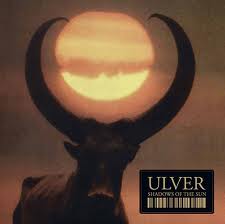
SOUNDTRACK: ULVER-Shadows of the Sun (2007).

I really wanted to like this album because of the cover–which is striking.  I know, I know, never judge…  My initial reaction to the disc was kind of poor.  I’ve followed Ulver’s progress through their many incarnations, and it’s not entirely surprising that they should make an entirely ambient record.  It just strikes me as an odd release–mellow and almost lullaby-ish but also a little creepy (the voice mostly).

But at the same time, musically it’s quite pretty.  And while it wasn’t a very good listen for a car trip to work, it was actually really perfect for listening to at work–where headphones allowed for hearing so many nuances.

There’s not much point in a song by song listing, as the songs are similar–washes of music with slightly distorted, deep vocals.   But there are some interesting musical choices that make each song unique, and consequently better than a lot of ambient in which all of the songs use the same musical palette.  “All the Love” employs piano and come cool electronic sounds near the end.

“Let the Children Go” is a much darker song (with drums!).  “Solitude” is the most melodic song of the bunch.  It reminds me of Black Sabbath’s “War Pigs” (which should tell you something about the overall tone of the album).  It has a noticeable vocal line (and really audible lyrics, which are quite melancholy and more emotional that I would have expected: “You just left when I begged you to stay.  I’ve not stopped crying since you went away.”

Another observation.  At times when he actually sings, the vocals sound a bit like XTC–“Shadows of the Sun” in particular.  And since that song has pianos it’s not inconceivable that this could sound like XTC (although not really).

With the right atmosphere, this record proves to be a very impressive listen.  Kristoffer Rygg’s vocals really suit the mood and, all in all, it does reflect the album cover rather more than I initially thought.

[READ: March 18, 2012] The Marriage Plot

I had put this book on hold a few months ago.  And I was ninety-something on the list, so I didn’t think too much about it.  I looked the other day and I was 10.  Yipes.  How was I going to read this 400 page book  in three weeks while also reading Gravity’s Rainbow??

Well, amazingly, The Marriage Plot worked as a nice foil to GR. It is a supremely easy read.  It is completely uncomplicated.  And, it actually has some unexpected parallels to GR–specifically, two of the characters travel to Europe, one on a pilgrimage the other on a honeymoon, and they travel to Paris, Geneva, Spain, Zürich, and even Nice.  There is literally no connection between these two books (although Mitchell does bring Pynchon’s V along with him), but it was fun to see new people go to the cities that Slothrop has been traveling to for very different reasons.

I powered through the book, reading large chunks and staying up way too late both because I liked the book and because I wanted to get it back on time (beware the library police!).  And there really is something about finishing a book quickly, it really keeps the story and characters fresh and makes the experience more enjoyable.

But on to the book.

This book centers around three people in a kind of lover’s triangle.  The woman at the center is Madeleine (and yes there are wonderful tie-ins to Madeline the children’s book series). The two men are Leonard and Mitchell.  All three of them are graduating from Brown in the mid 80s.

I identified with the book immediately because Madeleine is an English major (as was I).  She studies the Victorian era [and I had just read the piece by Franzen about Edith Wharton] and is on track to write her thesis on this era.  The title of the book comes from this section–novels written at that time were especially focused on marriage–if a woman did not marry, she was more or less doomed, and so the plots centered around her quest to find a suitable mate.  As Franzen noted in the above article, Wharton and some of her predecessors sounded the death knell for the “marriage plot” and Madeleine was going to do her thesis on that.

As the pieces of the triangle fall into place we learn (skeletal at first with much detail added later) that Madeleine and Mitchell were very good friends initially.  So good, in fact, that she invited him back to her parents house for a vacation.  He was head over heels in love with; however, out of fear (mostly) he never acted on the opportunities she gave him, and she thought that he wasn’t interested in anything more than friendship.  Basically, he blew it (although he doesn’t learn this until much later–I can relate to this all too well). As the story opens, she has just woken up, hungover, smelling of a party, with a mysterious stain on her dress.  She knows she did something with someone last night but she’s not sure what.  Not atypical college behavior.  But the kicker is that it is graduation morning and her parents are ringing the doorbell of her dorm right now. (more…)

Read Full Post »

SOUNDTRACK: BUGS EAT BOOKS-“Imipolex G” (2004).

I had a CD planned for this week, but when I searched for Imipolex G online to see if it was real or based on anything, I can across this song by a band I’ve never heard of.  How could I pass it up (at least it wasn’t a song about coprophagia).

I listened to the whole album (only once, so this isn’t a fair criticism) and it’s all in a similar vein–lo-fi sounding.  Like maybe it was recorded on a two-track. The vocals are slightly whiny–not bad whiny–90s indie rock whiny.

And I see that Joe Jack Talcum from the Dead Milkmen has a solo album on the same label, so that makes sense.  I probably would have lived this album back in college.  And I would have wondered what Imipolex G was and then I would have found out about Gravity’s Rainbow and tried to read it.  And given up.

So this song is just over three minutes and opens with feedback squalls, but that noise is undermined by the jangly guitar that takes over the song. It’s quite catchy (in a noisy indie rock kind of way that almost dares you to think it’s catchy.

I’ve tried to determine any lyrics I could “plans etched on the wall… target for my head…I’ve got to go away.”

I’ve embedded the song below, although clicking on the button will take you to their My Space page, rather than playing it directly.

Imipolex G

The album appears to still be available (original pressings came with a bug).

[READ: Week of March 12] Gravity’s Rainbow 2.4-2.8

This was a conveniently short read this week (I had a lot going on, so those 30 fewer pages were a nice breather).  Section 2 continued mostly with Slothrop, although it was also an extrapolation of the people who were impacted by him in the beginning of the section.

For those with weak stomachs, we saw what I have to assume is the most disgusting section of the book.  And there was also a reverie (and the use of the word reverie) that had me a little confused. (more…)

Read Full Post »

SOUNDTRACK: ARMY OF LOVERS-Massive Luxury Overdose (1991).

The only way that I, and I suspect any American, knows this band is because they were  mocked on Beavis and Butthead for their video “Crucified.”  In the video, which I have thoughtfully tacked on at the end here,  the three members of the  band are dressed up like extras from a  Duran Duran by way of Adam and the Ants music video (and maybe that’s not over the top enough).  This, by the way, seems to be their regular costumery (a French-seeming design despite their Swedish origins).

Beavis and Butthead cheer for the (impressive) cleavage and then gag at the lead singer’s  largely naked hairy body dancing in a bathtub.  It’s  pretty confusing.  But it’s also super catchy in a really over the top Europop way.

I have learned over the years that while I don’t really like pop music, I like Europpop a lot more than Ameripop.   It’s much crazier and outlandish, hence: Army of Lovers.

“Crucified” is a really fun, over the top bit of nonsense.  The chorus is incredibly catchy with a wonderful choral voice singing, and the verses are catchy too, they are spoken and in part French.   It’s good campy fun.

Having said that, the rest of the album is a mix of songs that aren’t quite as good as “Crucified” and songs that are just really bad.

The opening of “Candyman Messiah” is dreadful.  “Obsession” features a very mousey-voiced guy singing.  It’s a change and an interesting one, although like a lot of Europop, there’s not a lot of substance to it.

But it’s clear that the Army are not taking themselves seriously, “Dynasty of Planet Chromada” anyone.  The band has some really catchy choruses and I’ll bet it ‘s a hell of a lot of fun to dance to.  Especially if you have a pencil thin mustache.

Believe it or not, Army of Lovers were not just a one-hit wonder .  They released four albums.  And although their website seems to be updated often, I’m fairly certain the band broke up in 1995.  Well, why should that stop anyone?

[READ: Week of March 5, 2012] Gravity’s Rainbow Sections 1.19-2.3

I postulated that Section 1 (called Beyond the Zero) was a mostly expository set up (in one way or another).  And that seems to have been true.  Yes there was some plot development, but it was a lot of setting up new people.  New people are introduced in Section 2, but it is primarily about Slothrop (so far).  These first three sections don’t do a lot to advance the “plot” (I don’t really know what the plot is exactly but it must have something t o do with the war, right?)  Section 2 zooms in on Slothrop.  And while we do learn about the monitoring that goes on with him, for me, Section 2 is all about providing character depth and sympathy for Slothrop.

I found this week’s read to be the easiest so far, with only a few moments of stream of consciousness or reverie to get lost in.   And there were a lot of farcical moments–moments that were practically like a sitcom, which were fun to read and enjoyably insubstantial.

Towards the end of the reading, when Katje ultimately leaves Slothrop, she uses a metaphor comparing the rockets to sex.  And I wondered if maybe that’s why there is so much sex in the book–is it a physical manifestation of the theoretical idea?  Or does he just like using the word cock?

(more…)

Read Full Post »

SOUNDTRACK: ROCKWELL KNUCKLES-You’re Fucking Out I’m Fucking In (2011).

I downloaded this disc a while ago because I really liked “Silly Human

I listened to it again recently and realized just how much I like the whole disc.  Rockwell Knuckles has a great delivery style—a basso profundo voice—and a great sense of melody both in his delivery and his backing music.  He captures the best of Chuck D and Ice T.  “Bullet Train Army” has such a cool melody line—and the fact that he raps along with it is fantastic.  Apparently the Bullet Train Army is his posse or something, because it appears a lot on the disc.

“Silly Human” is a fantastic song—a wispy futuristic keyboard riff fizzes away behind Rockwell’s super fast delivery and funny (but not really) lyrics.  The chorus is delivered super quickly in a cool descending melody line.  And I love that someone in the background is shouting Yes Yes! YES! as he deliveries his lines.  It reminds me in strange way of The Flaming Lips.  “Play Catch” shows off his diversity of styles with this more gentle song.  I like the way the verses end with a repeated word which seems like it’s going faster because the beasts speed up,  It’s a cool trick.

“Baking Soda” has a guest rapper (I really don’t like guest rappers, I’m here for Rockwell not Tef Poe, who immediately lost my respect by having his first rhyme end with bitch—lazy!).  I don’t really care for the music behind this one either—cheesy sax and horns.   It’s made up for with “Point of No Return.”  This song has a sung chorus with a weird sci-fi-sounding melody and some great lyrics.  I haven’t really mentioned the lyrics yet but they stand out here “the early bird catches the worm, but the first sponge catches the germs) and a reference to Sojourner Truth.

The lyrics are even better on “Unstoppable” (which has a cool synthy sound over the chorus): “My competition ‘s delayed I’m rocking digital/
Ive been around the world in a day not in the physical/Artistic freedom in what I say y’all are to literal.”

The simple riff behind “Intergalactic” is also cool.  At first I wasn’t sold on Theresa Payne’s backing vocals but I think it works quite well.  I particularly love the chorus of “Supercalifragilisticexpiala-futuristic”

There’s another great delivery melody on “Motto of Today” with more cool sci-fi backing music.  “You Got It” has the great fast beats and delivery that I love out of Atlanta, even though Rockwell is from St. Louis.  There’s even a cool binary joke in the lyrics (1001001).  Guest rapper Vandalyzm fares better, although there’s more curses than actual lyrics in his verse, I think.

“Nomanisan Island” also features Tef Poe, but I like him better on this track.  But maybe that’s because the chorus is great: “No man is an island and we are never stranded”  I’m not sure though that Tef Poe should be singing the line “black tea party, we’re coming to impeach” with Obama in the white house.

“Controlled” I assume has a sample for a chorus, it slows things down nicely and the sound of the drums is fantastic.  I’m partial to the lines “Stone cold like Medusa” and  “Shows about to start, I don’t know when it will end, son/ Puppet on a string controlled by Jim Henson” (whatever that means, I like it).

“Every Angle” has a groovy chorus that I like despite itself.  Rockwell makes it flow wonderfully.  And the final track, “Natural Born Leader” opens with a simple rocking guitar riff.  When the lyrics kick in, the song soars with 70s keyboards and big guitars.

This album is really fantastic.  And while there are plenty of deserving artists out there, Rockwell Knuckles is amazing and should be huge.  Don’t be put off by the album title or the cover, this album is more about melody than a cursing.

You can download the whole album here for free.

Oh, and the reason I chose this is because of a note I had written in the margins of GR, which I thought had read No Man is an Island, but which didn’t.  Oops.

[READ: Week of February 27] Gravity’s Rainbow 1.13-1.18

I found a few of this week’s sections to be more challenging to get through.  There are a lot of long passages that are meandering–often with an unclear narrator (although the narrator usually becomes apparent by the end).  During these section, it feels like the book is just drifting of into a reverie for a while before snapping out of it and getting back to the business at hand.  And that seem apt given all of the crazy stuff that happens in the book (all of the mental/psychological ideas).

After reading a few of the posts at Infinite Zombies this week, I have new eyes for the book.  When I first read all of the sex in the book, I thought again about Joyce’s Ulysses and all of the sex that he described (shockingly for the time) and how modern writers seem to revel in writing about sex–not pornographically, just “real.”  But now, after reading Christine’s post, I had to rethink this attitude on sex.  I’ve been surprised by Pynchon’s frequent use of the words “cock” and “cunt” as anatomical names.  “Cock” in particular is a word I don’t hear used all that often in fiction and it has (to my ear) a kind of crass/vulgar connotation. And what more needs to be said about “cunt.”  I wondered if this was a Pynchon thing or a 70s thing or an I’m-too-uptight thing, but in Christine’s post she writes: “One of the things I most loathe about the other Pynchon books I’ve read is the latent, creepy, old-man sex fetish” and “the constant phallic status updates (noted in my paperback as I.P.R.s [infantile penis reference]” (which is hilarious, by the way).  This has made me even more aware of all the sex in the book–although to what end I’m not sure yet.

Jeff’s post at Infinite Zombies focuses on Roger and Jessica (I know that wasn’t the point of the post, but the mind takes what it will) and makes me think of Roger as more of a protagonist of the story.  Even more than Pirate (who, coming first, I assumed was the focus).  And  this week’s reading reveals more importance for Roger.

So on to the read: (more…)

Read Full Post »

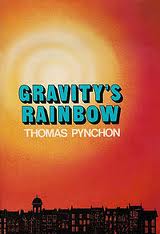
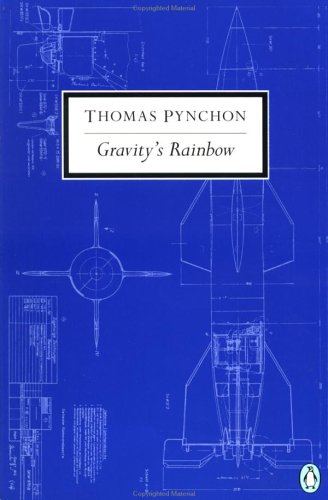
The edition I’m using.

SOUNDTRACK: KINCH-The Incandenza (2011).

I like this album more than I have any right to like an album that I bought purely for the name.  The album name is The Incandenza which is named after the main family in David Foster Wallace’s Infinite Jest.  The band name is Kinch which is named after what Buck Mulligan calls Stephen Dedalus in The Odyssey. That’s pretty high literary tributes.  So who cared if the music sucked.  But the thing is is that it doesn’t.  And I’ve been having a hard time writing about it because I like it so much and yet I don’t know what it is that grips me about the disc so intensely.  It’s not staggeringly original.  It’s more of an alt rock take on classic rock.  But even that doesn’t work because they use pianos prominently and the classic rock is more sound styles than sounds themselves.  Yet at the same time I hear a number of different band in the mix (and only a few of them use pianos).

“When I was Young” opens the disc with a great loud piano sound and a strong vocal line.  When the chorus comes in, the song picks up tempo and strings add intensity to what is already a catchy song.

“Evelyn” has a great stomping rock guitar sound.  At two and half minutes, it’s an amazing potential single with, again, a great chorus.  “45 Minutes” opens with screaming guitars and a great bass line that sounds like a classic song from The Jam.  “That’s Just the Mess That We’re In” features some horns that accentuate the chorus nicely.

“Once I was a Mainsail” starts like a pretty normal piano based rocker but the screaming chorus adds a great punk feel to the song.  “Tea Party Bomba” unravels its beginning into a great prog rock riff, with shades of Queen via Muse everywhere.  The same is true in “Bye Bye Bye Bye” which has a bombastic bridge (really showcasing the singer’s voice) until we get to the great shift to the quiet “I don’t think he ever knew.”  It’s a wonderful change of pace. It’s followed by the punky buzzy guitars and a simple melody of “Ocean”

“VHS” is another song that is just over 2 and a half minutes.  It begins quietly and (again) simply, this time with some gentle keyboard washes as the song build and builds adding drums and guitars.  It bleeds into “The Incandenza,” the longest song on the disc at just over 5 minutes.  It never feels like it’s 5 minutes long–another great bride with more sing along bits (and a great tempo change after the bridge) and a guitar and whistling solo make the song ever-interesting.  even if I don’t think it has anything to do with the Infinite Jest.

Kinch have a few other short albums out and I’m looking to get them as well, but in the meantime all of these great music can be streamed at their bandcamp site.

[READ: Week of February 20] Gravity’s Rainbow 1.1-1.12

This is my first time reading Gravity’s Rainbow.  And I know literally nothing about it.   I have always felt like I should read it (being a good modernist and a fan of Joyce and David Foster Wallace), but I never bothered to find out even a basic plot.  And it’s kind of fun going into this thing completely blind.  I had no idea even that it was set in England just Post WWII (1945).  So that was a surprise.  [Interestingly, having just read The Apothecary which was set in London right after WWII, it is cool to read another story set just around WWII and to hear similar things about the living conditions.]

But back to GR.  The only thing I have read before writing this post (aside from a few thoughts over at Infinite Zombies) was a comment (again, on IZ) that you will be confused while reading this book and that’s okay.  Phew.

Having said that I didn’t find it as confusing as I imagined.  (I’ve been intimidated by reading this book for fear of its difficulty).  I admit there are several scenes with pronouns that are somewhat elusive to me, and there’s a few other scenes where characters seem to be there without being fully introduced until later, but overall it’s not that bad.

The first section of the book seems like a lot of exposition–good, thorough exposition, which is also funny—but by section 1.12 we’re still meeting new characters.  It feels like serious plot things will happen later.   The book opens with a more or less famous line (Okay, I knew about that line before reading the book, but that doesn’t give any context).

And so, the screaming comes across the sky and the city is in the midst of an evacuation, but it is too late.  At least for some.  And the opening is a little confusing, as an evacuation might be.  It certainly seems like the end of everything, but then we also find out that some people are sleeping through it.  That this bomb is a localized attack.

Section 1.1 also introduces us to Lt. Capt. Geoffrey (“Pirate”) Prentice.  Pirate is just waking up when he notices that his flatmate Teddy Bloat is about to fall off of the minstrels’ gallery but Pirate manages to shove a cot in the way just as Teddy falls off the balcony.  Pirate is famous for his Banana Breakfasts (he’s the only person in England who has bananas).  And at this point the story settles down into a rather enjoyable domestic scene.  I mention in a post at Infinite Zombies that this opening scene of Pirate on the roof is reminiscent of the opening scene of Ulysses (I won’t go into that here).

The next scene is a raucous affair with a bunch of locals clamoring for their Breakfast plates.  The scene feels like a college dorm, although the participants are (I assume) older—Pirate himself is in his early 40s.

It’s time to mention Pynchon’s astonishing character names. I love them all, they are so weird and evocative without (always) being obvious.  So Teddy Bloat is a good name, but what about Coryson Throsp, the designer of their building.  And with the Breakfast comes names out of the woodwork:  Osbie Feel, Bartley Gobbitch, DeCoverley Fox, Maurice “Saxophone” Reed, Joaquin Stick.  I’m not going to go speculating about names in these posts, but I am sure going to highlight my favorites. (more…)

Read Full Post »

SOUNDTRACK: WILD FLAG-Live at the Black Cat, October 20, 2011 (2011).

It’s interesting to compare this show by Wild Flag with their SXSW show.  This set is longer, but they retain the same raw energy and intensity.  It also sounds as though the tour has been rough on Carrie’s voice, which sounds a bit strained and hoarse (even when she talks!).

They play most of their debut album, but they also throw in a couple of new songs and even a few covers.  Perhaps the most fascinating part is the 15 minute (!) version of “Racehorse.”  There’s a lengthy noodling section as well as a cool part where Carrie goes a little crazy asking about money.

Janet Weiss is absolutely amazing here too.  And the keyboards, definitely complement everything well, but they are always the most notable flubs, and there’s the same one as in the SXSW show (not as bad, but noticeable).

Without a doubt the most interesting thing is the hearing that Mary Timony gives guitar lessons in Washington DC.  She lives there and evidently earns extra cash by doing guitar lessons.  Wow.  How cool would that be?

Check out the show here.

[READ: January 15, 2012] The Influencing Machine

Brooke Gladstone is one of two reporters who works on NPR’s On the MediaOn the Media is an awesome show which dissects things that happen in the world and examines the way the media portrays the events.  They work pretty hard to see who is reporting bias, who is exposing bias and how things are getting out to the average media consumer.  It’s worth anyone’s time to read (it doesn’t take very long).  And it’s also fun and enjoyable.  As anyone who has heard the ending of On the Media: “and edited [dramatic pause] by Brooke” knows, there’s always a smirking grin attached to the program.

When I heard that this book came out I was pretty excited to read it.  And then I promptly forgot all about it.  Lucky for me, my wife can take a hint, and she got it for me for Christmas.

The first surprise of the book is that it is written as a graphic novel–illustrations by Josh Neufeld (who has drawn for Harvey Pekar’s American Splendor).  The funny thing about the illustrations is that I have no idea what Brooke Gladstone looks like (which I rather prefer about my NPR announcers), but I really like the cartoony style of her avatar (which reminds me of Elaine from Seinfeld and which inspired me to draw a kind of similar version on my drawing site.

On to the book.

This book works as a primer for understanding media ownership, media consolidation and media power.  The opening few chapters are going to be nothing new for anyone who has read Chomsky or Vidal on the media.  But since most people haven’t, it’s a wonderful way into some of these thorny issues of who tells us what and why. (more…)

Read Full Post »

SOUNDTRACK: TINDERSTICKS-BBC Sessions (2007).

Another great entry in the BBC Sessions series, this collection of 26 recordings, shows the band in fine form.  This works as a pretty excellent Greatest Hits collections (and surprisingly for a BBC Sessions recording there is only one duplicate song).

On the other hand, there’s not a whole lot of difference between these recordings and the originals.   Some notable exceptions include “Traveling Light” and “Buried Bones” which do not feature the female duet.  “Her” is also notably different since it’s on piano and not guitar.

But I have no criticism about the quality of the recordings. The band sounds wonderful.  Staples’ voice is great and the orchestration is perfect.  And, of course the recording quality is superb (as are all of the BBC sessions that I have are).

If you have the Tindersticks records already, there’s no compelling reason to get this set, but if you’re a fan of the band, it’s nice to have some slightly different versions of these great songs.

[READ: May 18, 2011] 2 book reviews

This month’s review is of two books.  The first is Paula Fox’s new book, News from the World: Stories and Essays.  (The book is also reviewed by Joan Acocella in The New Yorker, May 16, 2011 issue–she takes a much different angle than Zadie, and has a lot more biographical background, so the reviews work in conjunction very nicely).  I don’t know Fox (although perhaps I should, she has written a number of adult books and tons of children’s books), but Fox’s Desperate Characters has been championed by Jonathan Franzen and David Foster Wallace.

Fox sounds like an interesting character (her father was “a writer and a drunk”) and her granddaughter is Courtney Love.  And Zadie asserts that Fox has cultivated self-control and empathy and (in Fox’s own words) “a living interest in all living creatures.”  And in this new collection the interest spreads across fiction, memoir, lecture and essays (with no formal distinction between genres).

Although Zadie is fond of Fox (especially her fiction) she’s harder on Fox the essayist.  She suggests that many of Fox’s essays seem to boil down to the cliché: things were better back then.  But Zadie does make her fiction sound wonderful.  Acocella’s review is similar, saying that no one should start reading Paula Fox with this collection–the reader should go back and start with Fox’s earlier, better works. (more…)

Read Full Post »

« Newer Posts - Older Posts »