Feeds:
Posts
Comments

Archive for the ‘Religion’ Category

SOUNDTRACK: ULVER-Shadows of the Sun (2007).
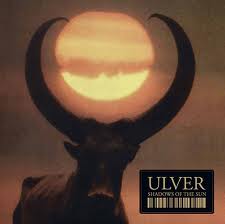
I really wanted to like this album because of the cover–which is striking.  I know, I know, never judge…  My initial reaction to the disc was kind of poor.  I’ve followed Ulver’s progress through their many incarnations, and it’s not entirely surprising that they should make an entirely ambient record.  It just strikes me as an odd release–mellow and almost lullaby-ish but also a little creepy (the voice mostly).

But at the same time, musically it’s quite pretty.  And while it wasn’t a very good listen for a car trip to work, it was actually really perfect for listening to at work–where headphones allowed for hearing so many nuances.

There’s not much point in a song by song listing, as the songs are similar–washes of music with slightly distorted, deep vocals.   But there are some interesting musical choices that make each song unique, and consequently better than a lot of ambient in which all of the songs use the same musical palette.  “All the Love” employs piano and come cool electronic sounds near the end.

“Let the Children Go” is a much darker song (with drums!).  “Solitude” is the most melodic song of the bunch.  It reminds me of Black Sabbath’s “War Pigs” (which should tell you something about the overall tone of the album).  It has a noticeable vocal line (and really audible lyrics, which are quite melancholy and more emotional that I would have expected: “You just left when I begged you to stay.  I’ve not stopped crying since you went away.”

Another observation.  At times when he actually sings, the vocals sound a bit like XTC–“Shadows of the Sun” in particular.  And since that song has pianos it’s not inconceivable that this could sound like XTC (although not really).

With the right atmosphere, this record proves to be a very impressive listen.  Kristoffer Rygg’s vocals really suit the mood and, all in all, it does reflect the album cover rather more than I initially thought.

[READ: March 18, 2012] The Marriage Plot

I had put this book on hold a few months ago.  And I was ninety-something on the list, so I didn’t think too much about it.  I looked the other day and I was 10.  Yipes.  How was I going to read this 400 page book  in three weeks while also reading Gravity’s Rainbow??

Well, amazingly, The Marriage Plot worked as a nice foil to GR. It is a supremely easy read.  It is completely uncomplicated.  And, it actually has some unexpected parallels to GR–specifically, two of the characters travel to Europe, one on a pilgrimage the other on a honeymoon, and they travel to Paris, Geneva, Spain, Zürich, and even Nice.  There is literally no connection between these two books (although Mitchell does bring Pynchon’s V along with him), but it was fun to see new people go to the cities that Slothrop has been traveling to for very different reasons.

I powered through the book, reading large chunks and staying up way too late both because I liked the book and because I wanted to get it back on time (beware the library police!).  And there really is something about finishing a book quickly, it really keeps the story and characters fresh and makes the experience more enjoyable.

But on to the book.

This book centers around three people in a kind of lover’s triangle.  The woman at the center is Madeleine (and yes there are wonderful tie-ins to Madeline the children’s book series). The two men are Leonard and Mitchell.  All three of them are graduating from Brown in the mid 80s.

I identified with the book immediately because Madeleine is an English major (as was I).  She studies the Victorian era [and I had just read the piece by Franzen about Edith Wharton] and is on track to write her thesis on this era.  The title of the book comes from this section–novels written at that time were especially focused on marriage–if a woman did not marry, she was more or less doomed, and so the plots centered around her quest to find a suitable mate.  As Franzen noted in the above article, Wharton and some of her predecessors sounded the death knell for the “marriage plot” and Madeleine was going to do her thesis on that.

As the pieces of the triangle fall into place we learn (skeletal at first with much detail added later) that Madeleine and Mitchell were very good friends initially.  So good, in fact, that she invited him back to her parents house for a vacation.  He was head over heels in love with; however, out of fear (mostly) he never acted on the opportunities she gave him, and she thought that he wasn’t interested in anything more than friendship.  Basically, he blew it (although he doesn’t learn this until much later–I can relate to this all too well). As the story opens, she has just woken up, hungover, smelling of a party, with a mysterious stain on her dress.  She knows she did something with someone last night but she’s not sure what.  Not atypical college behavior.  But the kicker is that it is graduation morning and her parents are ringing the doorbell of her dorm right now. (more…)

Read Full Post »

SOUNDTRACK: tUnE-yArDs-Tiny Desk Concert #179 (December 1, 2011).

tUnE-yArDs perform three songs in this Tiny Desk concert.  Merrill Garbus doesn’t chat a lot between songs, but she’s clearly having a good time (witness them all jumping at the end of “You, Yes You” and how much she smiles at the end of the set.  This is a wonderful opportunity to see and hear her live sampling technique in a small setting (with close up cameras!).

Her voice sounds great–she pulls off all of those voices that she conjures on the record.  And her ability to sample herself and make it work is wonderful to witness (I never imagined that some of those “sirens” and “keyboards” are actually her voice).

The live band is also really hot.  The bassist really hold everything together and the horns sound great–duplicating the sound of the record with just enough flare to keep it original.

And to think she’s making all of  that guitar noise with a ukulele!  It’s pretty groovy.

Watch it here.

[READ: January 21, 2012] The End of War

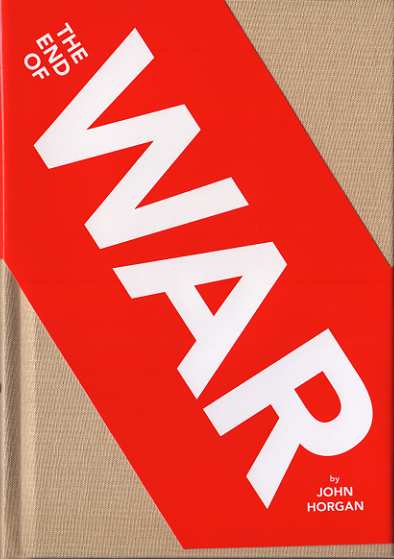
This is a non-fiction book in which Horgan believes that in the not too distant future (his lifetime I believe), we will see the end of war.  Not the end of violence, nor anger nor aggression–he’s not crazy–but military campaigns against another country could be ended if we reversed our fatalism about war’s inevitability.

Horgan is a writer for Scientific American and in this book he uses the scientific method to show that ending war is utterly possible.  Now, although Horgan is himself kind of a pacifist (he’s not entirely one, this interview explains), his family is not–his father and grandfather are both veterans and his son is looking to enlist in the army.  Nevertheless, Horgan feels that war is not a viable way to solve problems and that the cost of human life is never worth it.

His research shows him that war should be thought of as a solvable, scientific problem—like curing cancer.  The difference is that cancer is outside of our control, while war is not.  But like cancer, war can infect any society–there is no “reason” for it, but it is like a virus–it infects all cultures, even peaceful ones.  If one culture is aggressive the peaceful neighbors need to prepare for war or move away.

Horgan anticipates skepticism, indeed, many of the sources he quotes are skeptics, and he deals with all of their arguments accordingly.  He looks at those who say that war is genetically part of humanity (as many people believe) or that the best way to prepare for peace is to prepare for war (as just about everyone seems to believe).  He looks at those who say that scarcity causes war (not necessarily true), to those who say that as long as there are guns there will be war (he disagrees).  He has a reasonable, believable argument for all of these doubts.  He even shows that the whole “alpha male, XXY chromosome” argument has been disproven and while men are more prone to violence, they are not more prone to wage war.

He also shows scientific evidence that war has not been around as long as people (or even apes) have existed.  Indeed, the first evidence for “war” (as opposed to violence) is 10,000 years ago (not much in humanity’s timeline).

He culls data from previous wars to show that the causes of wars can never be narrowed down to one thing.  And yet, rather than seeing this as a negative–that so many things cause war, he sees it as a positive–that causes of war are not monolithic and impervious to breakdown.

I was skeptical of this book when I started reading it.  I was willing to accept the various scientific answers that he showed (that war is not innate, for example) but my skepticism came because of what I guess you call the military industrial complex–that our military budget is huge and is not going to go down any time soon.  Just see how much protest is garnered by the miniscule amount that President Obama wants to reduce it.  [Everybody knows this truth but it’s worth seeing in print–our military budget is more than almost every other country combined.  China, who spends the next largest amount on their military has a budget that is 1/6 the size of ours.  That is shocking and depressing and a horrific waste of money].

But his point is that like with so many other things that we have outlawed or abolished over the years: slavery, apartheid, monarchy (as opposed to democracy), acceptance of torture; if we have enough consensus we can also abolish war.  He gives examples that it’s actually not as hard as we might think.  Germany and Japan become pacifist virtually overnight (it was forced on them, but they have taken to it with no problem) and even better, Sweden and Switzerland are pacifist voluntarily.

He also points out that war is already on the wane–although the United States was in two wars very recently, the warlike nature of the world is much less than it was even as recently as the first half of the 20th century.  The number of casualties from war has dropped dramatically compared to World War I.  We simply need to find ways to solve crises that do not involve killing people.

All of the chapters were interesting in this book (the book is more or less set up to deal with an issue per chapter).  Some of the chapters were a little long but at 186 pages (plus a bunch of citation pages) this book is short overall.  I appreciate all of his scientific rigor and his ability to show the arguments and then knock them down.

For me, the most interesting and satisfying chapter was the one that found that preparing for war, despite claims that it is necessary, actually does not keep a people safe. That the allocation of resources towards war removes resources from things that actually make people’s lives  better: art, culture, medicine, health.  Preparing for war doesn’t keep us safe, it actually harms us.

Similarly, he shows that competition for resources is not necessarily a cause for war.  To the contrary they have found that in some cultures scarcity brings out altruism.

In short, he says that the only thing that prevents us from abolishing wars is our fatalism that war is inevitable.  The more fatalistic we are about war the more we accept hawkish ideas which perpetuates more war. Once we stop believing that and we try to work towards the end, he believes that we war can end very quickly.

Horgan doesn’t really calm my fears about the military industrial complex–but who knows with enough popular opinion, maybe voters can change things.  It’s a wonderful thought.  And here’s hoping that this post can spread the good word.

And here’s an interview with Horgan that addresses a lot of these questions.

Read Full Post »

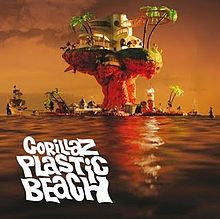
SOUNDTRACK: GORILLAZ-Plastic Beach (2010).

I have been a huge supporter of Gorillaz since the drew their way onto the music scene all those years ago.  It’s true that part of my love for the band was the art of Jamie Hewlitt, who I assume doesn’t really have any input anymore.  I also love Del the Funky Homosapien (who is also missing).  But I’m almost slavishly devoted to Damon Albarn, so I was pretty psyched when I heard they had a new album coming out and that it was getting rave reviews.

I was severely disappointed when I heard the record. 

“Welcome to the World of the Plastic Beach” features Snoop Dog who is phoning it in from a vacationland far far away.  He was more exciting on his cameo for The Lonely Island.  Even musically, it’s not very interesting.  “White Flag” is more promising, with the cool flute and string intro, but the rap by Bashy (which I wanted to like because of his accent) is just bland.  And Gorillaz must agree as the rap is less than a third of the song. 

“Stylo” has a cool bass line but the track overall is surprisingly discoey.  The Mos Def bit is interesting but I guess I’m not a fan of Bobby Womack, as I don’t care for his part of the song at all.  “Sweepstakes” has some interesting parts but the intermittent yelling of “Sweepstakes” kind of ruins it for me.  “Plastic Beach” features Mick Jones and Paul Simonon but you’d never know it.  And I actually don’t enjoy the manipulated voice much here, it sounds uncomfortably like early 80s technology.  “Cloud of Unknowing” is barely there at all (sorry Bobby Womack, I’m, not convinced)

It’s probably unsurprising that my favorite song with guests is “Superfast Jellyfish.”  I love De La Soul (although their “dopey” sounding rap is a bit much).  But I like that they play up the cartoon feel of the song (and the band).  I also didn’t even realize that the main singer was Gruff Rhys until a few listens in.  And since I love him, it all plays out nicely.  I also like “Glitter Freeze” because fun with keyboards can be interesting. I didn’t realize it was Mark E. Smith until recently.  I’m not really sure if that makes any difference since he just says a few words, but things are always more interesting when he’s around.  Of course, this song could have been 2 minutes instead of 4.  “Some Kind of Nature” features Lou Reed.  Reed has been hit or miss lately and this is more miss than hit.  “Empire Ants” features Little Dragon (unknown to me).  It is very slow to get to the interesting part, but when it does, the song is pretty cool.  The other song with Little Dragon, “To Binge” is wonderful.  It reminds me of a track from A Clockwork Orange and it also features some great lyrics. 

The few songs that I like on the album are ones that are credited to just Gorillaz.  “Rhinestone Eyes” is a bit lazy for my tastes, although the second part of the song really showcases the first decent melody on the disc, and the introduction of Damon’s voice is like a salve.  “On Melancholy Hill” has the best wispy keyboard intro this side of early 80s Madonna–a wonderful counterpoint to the title and lyrics.  “Broken” is actually a little too mellow for me, but again, the melody is a nice one.  “Pirate Jet” is a simple, dopey song that ends the album in a kind of limbo state.

I’m confused by all the rave reviews, especially the one that says the album is chock full of singles.  I mean, “Dare” now that’s a single.  I guess I just miss Del (and Russel) way too much.  And frankly, even the artwork is pretty lame on this one.

[READ: January 10, 2012] “Center of the Universe”

Simon Rich never fails to make me laugh. Sometimes his ideas are completely original.  Other times he takes a fairly common observation and runs with it into a land of lunacy.  And sometime he takes an idea that seems like it’s been done before but he puts a fun twist on it and makes it entirely his own.  Such is the case with this.

The very simple premise is that while God is busy creating the earth, his girlfriend is not only complaining that he never spends time with her, but she also feels slighted that he doesn’t seem to care how hard her job is.

A wonderful part of this scenario is that God has not yet finished making the earth–He’s only on the sixth day–but His girlfriend, Kate, is hanging out in Chelsea reading a magazine impatiently waiting for Him to show up.  (more…)

Read Full Post »

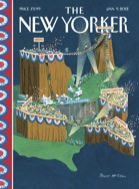
This is not the right cover for the issue. I couldn't find it online!

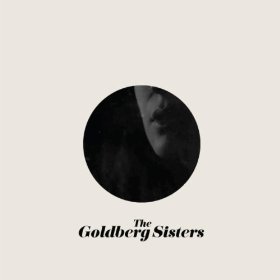
SOUNDTRACK: THE GOLDBERG SISTERS-The Goldberg Sisters (2011).

I don’t often make lists of “Best” records or anything like that.  But I’m making an exception for this.  This was easily the best album that I had low expectations for.  That sounds like half a compliment but it’s not.  I really didn’t expect much from this album when Adam Goldberg promoted it on Craig Ferguson’s show.  But when I checked out the video for “Shush” I was really impressed.  So I bought the CD.

And I have to say that it is really, really good. 

I need to get this out of the way because it will influence the whole write up otherwise.  Adam Goldberg is an actor, a very good, very funny actor.  And this is just one of his music projects.  It was not an entirely solo affair, but Goldberg plays guitar, piano, harmonium, keyboards, key sitar and melodica.  And of course, he sings as well.  I was more or less expecting an at-home-sounding demo, maybe, or some standard rock-n-roll like many other side projects.  But the album is lush and full, complete with cool psychedelic effects on certain tracks and there’s even clever wordplay. 

Goldberg has a soothing, slightly feminine singing voice (I would not have expected that from his speaking voice).  And his backing vocalists really complement him well. 

The disc opens with “The Room” a simple acoustic guitar and a very nice complementary piano (which reminds me of some of Radiohead’s acoustic moments).  The long instrumental ending is quite intense.  “Mother Please (The World Is Not Our Home)” has questionable lyrics, but a really great sound.  There’s cool spoken words deep in the mix, which bring a creepy effects to the song.  It runs very long, but there’s lots of parts and a cool coda.

“Shush” is still outstanding after all of these listens.  It has a kind of Bowie/Beatles/90’s revival of same feel.  This kind of song only works if the production is right, and Goldberg’s is perfect.  “Don’t Grow” opens with cool fiddle strings and Goldberg’s slightly sinister whispered vocals.  It’s 7 minutes long (see, psychedelic) and features a really pretty denouement with tinkling pianos and everything.

“You’re Beautiful When You Die” is a weird little interlude–muffled piano and dark, dark lyrics.  I could probably do without it, but it’s only 2 minutes so I’ll deal.  It’s made up for by “Erik Erikson” a great rocking acoustic number that reminds me of The Smashing Pumpkins (in vocal style). 

“Third Person” returns to that Beatles-y style with a folk song with full instrumentation.  And “The Difference Between” has some cool backing vocals which elevate this simple piano based song into something more.  “Skin of the Patriot” is a slow piano ballad.  It’s not my favorite song on the disc, but it leads into the wonderfully upbeat ender “The Heart Grows Fonder” (which features a surprising and surprisingly effective melodica solo).  It runs about five minutes (of an 11 minute track).  The ending 90 seconds are a goofy riff on The Beatles’ “Revolution.” 

So overall this album is really enjoyable.  There’s one or two misfires and it could use a wee bit of editing, but man, am I glad I bought this.  And I can’t wait to see what Goldberg does next.

Watch the Ferguson bit here (wait for the hilarious awkward pause at 10:30)

Find out more at his wonderfully named website: Adam Goldberg Dillettante.

[READ: January 6, 2012] “Two Midnights in a Jug”

This is the final individual story that Karen Carlson recommended to me (the rest are all in anthologies that I’ll have to check out).  She writes: “Because it’s a grim, tough read, it might take a second read to get past the oppressive weight and find the delicate art. And it doesn’t hurt to look into the background of the writer a bit; he isn’t writing about these people by accident. A little Willie Nelson might work [for the soundtrack].”

Karen’s comments sound a little defensive!  But I admit I was pretty turned off in the beginning of the story.  I’ll also admit a personal bias of mine is that I don’t really like to read stories about the rural poor or folks in the Ozarks.  I know, it’s not very nice, but it’s true. 

So, this story is set there.  And it opens with just about every stereotype I hate about the region: single wide trailer that borders a hog farm, neon orange muumuus, coon hunting and a repossessed house.  Things are even worse than my stereotypes though, because the plumbing is unconnected and their toilet sits over a bucket.  Which they cover with lime after every use and which they have to empty daily.  Good god.

Oh and the hog farm?  They had so much hog shit that they decided to burn it.  Well, the fire has been raging for a month.  And the only thing worse than the smell of hog shit is the smell of burning hog shit.  And the only thing worse than burning hog shit is having the ashes from the hog shit fall onto your property and into your trailer every day for a month. 

Oh yeah, and Cordell, the man of the trailer, accidentally shot their hound, Trixie last time he was hunting.  She’s okay but had to have a leg removed.  Jee.  Sus.

I seriously almost stopped reading. (more…)

Read Full Post »

SOUNDTRACK: LONDON PHILHARMONIC ORCHESTRA-Angry Birds Theme (2011).

My son, Clark, loves Angry Birds.  I’ve played it a few times and found it enjoyable, but he is obsessed.  He is absolutely the target market for this song.  And who knows maybe it will get him to like classical music.

I wasn’t sure if I’d recognize the tune, but it is already ingrained in my head.

This version is wonderful.  It sounds like it might be from a Tim Burton movie. 

The full CD is a collection of video game themes.  We don’t have a console, so I don’t know any of the other songs on the disc. But I do rather like this one.  I can’t wait to see his face when he hears it.

Check it out on NPR!

[READ: December 15, 2011] “What We Talk About When We Talk About Anne Frank”

This story went from being a (rather) funny piece about Hasidic Jews to being a (rather) emotional story about marriage, religion and self-preservation.

As the story opens, Mark and Lauren are visiting the narrator and Deb.  Deb and Lauren grew up together.  But after school Lauren met Mark and they moved to Israel where they became Hasidic (and took the new names Shoshana and Yerucham).  As the story opens, the narrator (a non-observant Jew) is trying to hold his tongue while these religious folks are well, kind of judging  them.  It’s wonderfully summed up by this comment:

“Jewish to you?” I say.  “The hat, the beard, the blocky shoes.  A lot of pressures, I’d venture, to look jewish to you.  Like, say, maybe Ozzy Osbourne or the guys from Kiss, like them telling Paul Simon, ‘You do not look like a musician to me.'”  [Is there a joke in there since the guys from Kiss are indeed Jewish, or no?]

The narrator and Deb has a son, Trevor, who is sixteen.  The scene where he comes into the room to discover the Hasidic couple is hilariously subtle (very well written).  Then we learn that Shoshana and Yerucham (which Deb calls them) have ten children–all girls.  Yikes.  But the narrator continues to refer to them (at least in his story) as Mark and Lauren.  And the more questions he asks the more we find out that although they keep Holy the traditions, they are a bit lax about some of the rules (maybe?)  I actually don’t know the rules so I don’t know if what they’re doing is “wrong” or not.  And, amusingly there’s a bit in the story in which Yerucham complains about non-Jews giving them shit for what they do–“Can you eat in there?” kind of questions.

So, when the narrator asks if they can drink, Yerucham says he can make the whiskey kosher.  And that starts them on their way. (more…)

Read Full Post »

I have been getting The Washington Spectator for years and years.  I was delighted with it in the beginning when the editor had the wonderful name of Ben Franklin.  I am delighted now that publisher’s name is Hamilton Fish.  But aside from these two fascinating details, I have always enjoyed the content.  It was thoroughly researched and detailed.  And the little 4 page leaflet always looked like a newspaper in design and style, and it gave it a kind of gravitas–no flashy colors or pictures.

Well, here it is, Vol 37, Issue No 21 and they have finally changed the format.  And not only that, they have created a website and have a Facebook presence!  Welcome to the 20th century!

I say that jokingly because despite these changes (which look great by the way), The Spectator has not abandoned its old school journalism practice.  21st century news is pretty much all flash and brash–style over substance–quick reporting with no concern for accuracy and very little attention brought to retractions (can anyone say “climategate” (I wish they wouldn’t call it that)).  But The Spectator is exactly the opposite, and I am delighted to say that although they are now a lot more accessible, they have not lost any of their tenacity or thoroughness.

The redesign is quite nice.  There’s an image on the front page and now there are pull quotes in red, which stand out nicely on the pale paper.  Although I always liked the pull quote box in the middle off the front page, this new format allows for a couple of different pull quotes as well as an opportunity to mix things up a bit.  (more…)

Read Full Post »

SOUNDTRACKART OF TIME ENSEMBLE WITH STEVEN PAGE-A Singer Must Die (2009).

According to their website, “Art of Time Ensemble is one of Canada’s most innovative and artistically accomplished music ensembles. Their mandate is to give classical music the contemporary relevance and context it needs to maintain a broader audience to survive.”

So what you get is a modern orchestra playing contemporary music.  It’s not a unique idea, but in this case, it works very effectively.  And what you also get is Steven Page, former singer of the Barenaked Ladies as the vocalist.  Page has an awesome voice.  I’ve often said I could listen to him sing anything.  And here’s a good example of him singing anything.

The great thing is that the song choices are unusual and wonderful–not immediate pop hits or classic standards–it’s a cool menagerie of songs with great lyrics and equally great compositions.  This is no heavy metal with strings, this is majestic songs with orchestral scoring.  The orchestra includes: piano, sax/clarinet, cello, violin, guitar and bass.

And the song choices are fascinating.  And with Page’s amazing theatrical voice, the songs sound quite different, mostly because the original singers don’t have powerful voices.  They all have interesting and distinctive voices, but not operatic ones.  So this brings a new aspect to these songs (I knew about half of them before hand).

THE MOUNTAIN GOATS-Lion’s Teeth.
This is a very dramatic reading of this dramatic song.  It pushes the boundaries of the original song.

ELVIS COSTELLO-I Want You.
I had never heard this Costello song.  With Costello you never know what the original will sound like–punk pop, orchestral, honky tonk?  It’s a fascinating song, though and Page hits some really striking and I would say uncomfortable notes.

RUFUS WAINWRIGHT-Foolish Love
I don’t know Rufus’ work very well, although I immediately recognized this as one of his songs.  Page plays with Wainwright’s wonderful theatrics and makes this song his own.

BARENAKED LADIES-Running Out of Ink
Covering one of his own songs, this is fascinating change.  The original is a fast, almost punky song, and it seems very upbeat.  This string version brings out the angst that the lyrics really talk about (Page is definitely a drama queen).

LEONARD COHEN-A Singer Must Die
This is one of the great self-pitying songs and the lyrics are tremendous.  Page takes Cohen’s usual gruff delivery and fills it with theater. It’s a great version.

JANE SIBERRY-The Taxi Ride
Coming from her early album The Speckless Sky, this is a wonderfully angsty song with the premise that is summarized: “it’s a long, long, lonely ride to find the perfect lover for your lover.”  Page hits one of the highest notes I’ve heard from him here.  Very dramatic.

THE DIVINE COMEDY-Tonight We Fly
This is one of my favorite Divine Comedy songs.  Of course it is already string filled, so this version isn’t very different.  But its wonderful to hear it in another context.

THE WEAKERTHANS-Virtute the Cat Explains Her Departure
I love this song.  This is a guitar filled pop punk song, so the strings add a new edge to it.

THE MAGNETIC FIELDS-For We Are the King of the Boudoir
I know the Magnetic Fields but not this song.  It’s quite clever and funny (as the Fields tend to be) and Page makes some very dramatic moments.

RADIOHEAD-Paranoid Android
I recently reviewed a covers album of OK Computer, wondering how someone could cover the record.  The same applies to this song.  A string orchestra is a good choice for it, as there is so much swirling and crescendo.  And while nothing could compare to the original (and they don’t try to duplicate it), this is an interetsing choice.  As is Page’s voice.  He has a much better voice than Thom Yorke, but that actually hinders the song somewhat when he gets a little too operatic in parts.  Nevertheless, it is an interetsing and enjoyable cover.

The whole record is full of over the top drama.   It’s perfectly suited for Page and it’s a side of him that has peeked out on various releases but which he really gets to show off here.  As an album, the compositions all work very well–they are, after all, trying to make classical pieces out of them–not just covering them.  And the choices of songs are really inspired.  Dramatic and interesting and when the music slows down, the lyrics lend to a wonderfully over the top performance.

If you like Page or orchestral rock, this is worth tracking down.

[READ: November 28, 2011] “Leaving Maverly”

For some reason I was under the impression that Alice Munro was no longer writing.  I’m glad that’s not true, and really, what else would she do with herself–she has so many more stories to tell.

I think of Munro’s stories as being straightforward, but this one was slightly convoluted and actually had two things going on at once.  It opens by discussing the old town of Maverly.  Like many towns it once had a movie theatre.  The protectionist and owner was a grumpy man who didn’t deal well with the public, and that’s why he hired a young girl to take the tickets and be the face of the theatre.  When she got in the family way, he was annoyed, but immediately set out to hire someone else.  Which he did.  The new girl, Leah, came from a very religious family.  She was permitted to work there under the stipulation that she never see or hear a movie or even know anything about them.  And that she get a ride home.  The owner balked at this second idea–he surely wasn’t going to drive her home.  So instead, he asked the local policeman Ray, to walk her home.  Which he agreed to do.

The next section of the story looks at Ray.  And although the story is ostensibly about Leah, we get a lot more history of Ray.   He was a night policeman only because his wife, Isabel, needed help at home during the day.  We learn about the scandalous way he met his wife and how they managed through the years until she became ill.

Ray talks with Leah on their walks home, something he found terribly awkward because of how cloistered she was.  Then he would get home and talk with Isabel about Leah. This young girl who meant nothing to him was suddenly a significant part of his life.

And then one day the theater owner came to report that Leah was missing.  They went to see her father at the mill, but she wasn’t there.  And there was really no other place where Leah went, so they were at a loss.  It was winter and they feared the worst. (more…)

Read Full Post »

SOUNDTRACK: ULVER-Themes from William Blake’s The Marriage of Heaven and Hell (1998).

Suffice it to say, if it were not for this album I wouldn’t have read this piece by Blake.  I have been aware of it through the “doors of perception” quote that created the band name The Doors, but I never had any compelling reason to read it before.

Of course when I first listened to this, I had no idea that it was literally the entire work of Blake’s piece set to music.  And I had no idea that there would be so many diverse styles of music on the album.  I’m going to focus more on the music, as I’ll address the “lyrics” later. 

The first song starts out in a kind of synthy way–maybe early Depeche Mode.  But it quickly become more sinister, with a heavy guitar section and then a spoken word over industrial keyboards like early Nine Inch Nails.   Track two, simply called “Plate 3” is a mournful guitar solo which plays behind a woman reciting plate three.  Strangely enough, this plate is split in two parts where Blake references the bible and so Ulver end the spoken part in the middle but keep the ominous music going for the final two minutes of the track.  The next track picks up with “Plate 3, Following,” a slower piece with creepy echoey male vocals that echo the female lead.

“The Voice of the Devil, Plate Four” is a very delicate guitar part.  The female voice introduces the piece and the male voice recites the statements .  It;s the most easily understood of all the tracks (the vocals are crystal clear).  When the parts are done, the song turns in to a heavy metal guitar solo over some heavy chords. It’s a really great mix.  “Plates 5-6” is also a very clearly spoken/sung track.  Over a classical guitar with occasional heavy beats, the voice narrates (with amusing mispronunciations (there are many thoroughout the piece, but hey English isn’t their first language)).

“A Memorable Fancy (Plates 6-7)” is the first of five fancies.  This one has a very electronic feel (later period Nine Inch Nails).  This one even creates its own chorus by repeating “fires of hell” where the words do not belong.  “The Proverbs of Hell” is probably the most complex and multifarious musically.  It goes through many different musical and vocals styles.  The opening is barely audible while later parts are spoken clearly.  Other lines are hidden under a fog of noise.  Musically it’s very engaging, but it’s a shame to miss out on the poetry without a lyric sheet.

“Plate 11” also opens virtually inaudibly, with a crazy echo placed on the female vocals.  Half way through the voice become clearer and the music, which was quiet and mellow, picks up, but retains the simple melody it had.  “Intro” is an instrumental, an odd thing to include if they are following the book so specifically, as there is no intro.  It is simple, repeated waves of chords which grow louder for 3:30.   It ends with some maniacal drumming .  However, it is a nice breather as we head into “A Memorable Fancy Plates 12-13,” which opens with a very slow piano.  It turns into a largely drum-based song with a clear spoken word.  Until about half way through when the voice is heavily distorted until the end.

“Plate 14” is a percussion heavy electronic track with heavily distorted vocals (this is where “the doors of perception” bit comes from).  It leads to “A Memorable Fancy (Plate 15)” which opens with more low rumblings (like “Intro” above).  When the vocals come in, after 3 minutes, they are distant and tinny, but very clear.

Disc 1 (did I mention there were two discs) ends with “Plates 16-17.”   It opens with quiet music that slowly grows louder and more electronic.  The vocals are echoed and distorted and hard to understand.  The end of the track picks up the electronic beat for about a minute.

Disc two opens with the eleven minute “A Memorable Fancy (Plates 17-20)”.  It opens with a cool beat and a dark tone with vocals that are mostly understandable.   After a couple of minutes, the song settles into a late period Depeche Mode style–distorted guitars and vocals that sounds not unlike Dave Gahan’s.  By the end, it’s a pretty standard heavy metal chugging guitar (with a simple but interesting solo).

This is followed by another “Intro,” this time a rather pleasant guitar solo over picked guitars.   “Plates 21-22” is quite enjoyable as the vocals are clear and emphatic over a standard heavy metal song.  It feels like comfort food after all of the different styles of the disc.

“A Memorable Fancy Plates 22-24” has a great weird keyboard style (kind of Marilyn Manson).  The penultimate track is another “Intro.”  This one has some swirly minor-key guitars that sound  a bit like the guitar outro to Rush’s “Cygnus X-1.”   It goes through several iterations before ending in distorted waves that lead to “A Song of Liberty Plates 25-27”.   There are three guest vocalists on this track: Ihsahn and Samoth from Emperor and Fenriz from Darkthrone.  The interesting thing about this is that Garm (the male vocalist on all the tracks) has so many different styles of singing/speaking throughout the album that it’s hard to even notice that there are guests.

It start as mainly electronic piece with heavily distorted vocals (Ihsahn sounds like he is being strangled).  In the second part, the vocals are clearer.  The drums gets louder (sounding like the Revolting Cocks, maybe).  By the third part (Fenriz) the song turns into a guitar solo and the style of recitation reminds me of Allen Ginsbregr’s Howl.  His section ends with a distorted voice chanting the final lines and then twenty minutes of silence (the track is listed as 25 minutes, but there’s only 5 minutes of song and then 30 seconds at the end).  The final “Chorus” of the book is pretty well inaudible.

Despite the complexity of the album and the hard to follow lyrics and all of that, the entre work is really something. It is powerful and complex and runs through so many wonderful pieces and movements.  I have no idea how to classify it as it has pieces of metal and electronica as well as classical.  Perhaps it’s safe to just call it a soundtrack.

I’ve spent a lot of time talking about this CD, but I barely scratch the surface of what could be said about it.  Check out this amazing review from Encyclopaedia Metallum who go into wonderful depth and a thorough comparison of the music to the text.

[READ: November 27, 2011] The Marriage of Heaven and Hell. 

The Blake piece is available online in several places, although I got my copy from the library.  Mine contained several critical essays which I looked at briefly but decides they simply weren’t all that compelling, especially since Blake’s work (aside from details that simple footnotes might hep to clear up) is pretty understandable. 

In total, Blake’s work is 27 plates long. Each plate is hand written (in a fancy script) and many have illustrations (also hand drawn and colored).  There are allusions to many different things and it helps to be familiar with the Bible and with Emanuel Swedenborg’s theological work Heaven and Hell which is directly referenced several times.  Indeed, this work is clearly a response to that one; the opening states “and it is now thirty-three years since its advent” when Swedenborg’s book was published 33 years before Blake’s.

The gist of Blake’s piece is that God did not intend for man to separate the sensual and physical from the spiritual and mental.  It is basically a plea to hedonism, although not even seemingly to excess.  More like an “if it feels good, do it” attitude.  And he lays out these ideals pretty clearly in many of the passages.  True, there are many passages that are inscrutable (like the crazy opening–don’t be put off bu Rintrah), but when he gets to his main points, he is quite clear.  Blake attacks established religion but does not condemn God or endorse atheism.  So we get quotes like this:

“Attraction and Repulsion, Reason and Energy, Love and Hate, are necessary to Human existence.
From these contraries spring what the religious call Good & Evil. Good is the passive that obeys Reason. Evil is the active springing from Energy.
Good is Heaven. Evil is Hell.”  And shortly after: “Energy is Eternal Delight.”  Blake cites Paradise Lost as a history of the separation of these two ideas and concludes “that the Messiah [Reason] fell, & formed a heaven of what he stole from the Abyss.” (more…)

Read Full Post »

SOUNDTRACK: THE FLAMING LIPS: AUSTIN CITY LIMITS FESTIVAL 2010 (on Palladia TV 2011).

It must be tough to take a festival like Austin City Limits and truncate it into 2 hours.  It must also be tough to be a pretty much headling band like The Flaming Lips and to be playing in the middle of the day when your cool stage stuff is probably less impressive (but good for them for going all out!).

Some fun things to see during their set: the camera mounted on Wayne Coyne’s microphone (huge close-ups of his face); the guns that shoot streamers, Cliph the drummer makes the sample sound effects that you need to make during the songs, tons of back up dancers (who I believe are fans that won a contest or something), the amazing multi-instrumental skills of Steven Drozd.

This broadcast only showed two Lips songs (criminally underrepresented, but I understand).  They played “I Can be a Frog” which is a wonderful audience participation song even if it’s nowhere near their best song. 

And “She Don’t Use Jelly” which I understand as it was their hit and the crowd (and even the band) always seem into it, but that song is like twenty years old and they didn’t play any other bands’ old singles.   I won’t complain to hear that song, but there are just so many good ones to choose from that it seems silly to play that one.

[READ: November 6, 2011] “The Mermaid of Legend and Art”

A while back I read a few old articles that I got from JSTOR, the online archiving resource.  This month, I received some links to three new old articles that are available on JSTOR.  So, since it’s the holiday weekend, I thought it would be fun to mention them now.

I wrote the review of this article before I realized that I had only read part 3 of 3.  There were some clues (like the start mentioning “the first few lines of my opening chapter”), but since the link I was given went here, I assumed that the other chapters were not available (until I saw the tiny footnote that said this was continued from pg 172).

So, I’m including my original post at the bottom for history’s sake, but I’m going to write the revised review here.

I don’t quite understand why this article was broken up into three sections.  This is especially egregious because of the figures included in the articles.  They do not really correspond to the sections where they are written about.  So, for instance he mentions Figure 13 on the last page of the article when we are already up to Figure 36 (and Figure 13 is fifty-some pages away).  For most of the other figures, he always seems to be a few pages behind, as if they needed to put the pictures throughout the article rather than where they are mentioned–it was bad enough having it in three sections (in my print puts) but imagine having to flip back thirty some pages to see what the hell he’s talking about!  Of course, this was 1880, they had more free time.

So, anyhow, the beginning of this article talks about the history of the mermaid in folk tales and the Bible.  Evidently Brahma visited Menu (Aka Noah) in the guise of a fish–which is how he was able to build the ark.  There is also a lengthy discussion about the importance of fish in the Old Testament.  In addition to the whole IXTHUS thing, fish were a very useful form of currency.  So it is nor surprise that they used representations of fish and sea creatures in ancient Rome and Greece. (more…)

Read Full Post »

SOUNDTRACK: SUFJAN STEVENS-The Age of Adz (2010).

Sufjan Stevens has released a bunch of albums of beautiful orchestral rock.  It is multi-layered and complex with classical elements and all kinds of cool instruments.

And this album starts out with a beautiful acoustic guitar melody and Sufjan’s delicate vocals.  Although it is a far more stripped down song than usual, “Futile Devices” seems like it is heading in the standard direction.  But anyone who heard Sufjan’s Christmas album number VIII knows that he has been having some fun with electronics.  And they show up with a vengeance on track two, “Too Much.”

All of the multilayered noise that was once orchestral and (some might say) precious has been replaced by a cacophony of gorgeous electronic noises.  The beginning of the song reminds me of the sounds in Skinny Puppy’s “Stairs and Flowers” (how many Sufjan Stevens reviews mention Skinny Puppy?).  The song is nothing like Skinny Puppy once the vocals kick in–it’s catchy and delicate–but those electronics underpin the whole thing, bringing his pastoralia into the twenty-first century.  When I first reviewed this song I didn’t like it but once you get absorbed by Sufjan’s world, it’s an enticing place to be,

“Age of Adz” takes this electronic nonsense even further with an 8 minute brew of strange sounds and choral voices.  But he always manages to throw in some catchy parts, no matter how strange the song gets.

For me one of the highlights of the disc is “I Walked” it features one of my favorite Sufjan things–falsetto vocals in a beautiful but unexpected melody.  And this song has them in spades.  “Now That I’m Older” has a very disconcerting sound–his voice is slowly warbled and mournful.  It’s a beautiful melody that is alienating at the same time.

“Get Real Get Right” returns to his earlier style somewhat (there’s more layers of music, although the electronica is still in place).   “Vesuvius” is a beautiful song and “All for Myself” is another of those great falsetto tracks that I like so much.

“I Want to Be Well” eventually turns into a manic electronic workout in which he repeats the chorus “I’m not fucking around.”

But nothing compares  to “Impossible Soul” a twenty-five minute (!) multi-part suite of electronic chaos.  It’s a fantastic song complete with autotune (used to very cool effect), repeated swelling choruses (it’s like a Polyphonic Spree tribute), electronic freakouts, and acoustic comedowns.  All in a positive, happy message.  I can’t stop listening to it.  “It’s not so impossible!”

Sufjan continues to impress me.

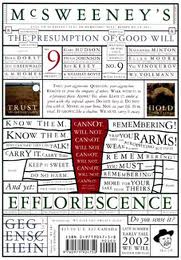
[READ: November 10, 2011] McSweeney’s #9

After the excesses of McSweeney’s #8, I was excited to get to the brevity (and urgency) of McSweeney’s #9.  This one is a paperback and looks like the first couple of issues.  The cover is mostly text with a hodgepodge of phrases and pleas.  You get things like: Thankful, Emboldened, The (Hot-Blooded/Life-Saving) Presumption of (Perpetual/Irrational (or More Likely, Irreducibly Rational) Good Will, Efflorescence, Our motto this time: We Give You Sweaty Hugs,” Alternative motto: ” We Are Out Looking,” GEGENSCHEIN (no more), and the promise: “We will Do Four This Year.”

This is the kind of issue that makes me love McSweeney’s.  There are some wonderful short stories, there are some nice essays and there are some dark moments all centered vaguely and tangentially around a theme.  There are some great authors here, too.

The back cover image is called Garden Variety by Scott Greene and it’s a fantastic painting.  You can see it here (navigate through the 2000-2004 paintings, but I have to say I really like the style of all of his work.

There are no letters and no nonsense in this issue.  So let’s get to it. (more…)

Read Full Post »

« Newer Posts - Older Posts »