Feeds:
Posts
Comments

Archive for the ‘Religion’ Category

moomin3  SOUNDTRACK: PAUL JACOBS-Tiny Desk Concert #148 (August 12, 2011).

pauljacobsPaul Jacobs is an organist.  In fact he heads the Julliard School’s organ department.  For this Tiny Desk Concert they moved in Jacobs’ massive organ–complete with foot pedals.  I feel like he should have played for an hour for all the work that must have gone into moving this.

I had thought about describing the way the Tiny Desk Concert has changed as I went through the Concerts.  But I have gone out of sequence so often that it’s kind of moot.  Nevertheless, it’s fun to marvel at how in the first few shows, it was one camera, there was little editing and what you got is what you saw.

Well, for this, the 148th Concert, they have three cameras.  And that is perfect because one is on Jacobs’ face.  One is on Jacobs’ hands as he plays these amazing Back pieces.  But the best one is on Jacobs’ feet.  Jacobs play a melody with his hands and a separate melody with his feet.  Watch as he looks like he’s tap dancing all over these massive foot pedals. The mind boggles watching him.

He plays four Bach pieces:

  • J.S. Bach: “Gigue” Fugue
  • J.S. Bach: Arioso
  • Bach/Reger: Invention in F Major
  • J.S. Bach: Fugue in A Minor

The Arioso is recognizable to me as a familiar piece.  It’s low and beautiful with washes of foot pedals.  But even more familiar is the Invention in F minor which most piano students try to play.  This version was arranged by Max Reger who turned the left hand melody into a foot pedal melody–so Jacobs is all over the keyboard on this one.  It’s stunning.

The final piece is somewhat recognizable (well, to me its recognizable as Bach, since his stuff is so elaborate and cool).  This piece is really fun to watch his hands and feet at work.  Especially at the end when he plays an intense “foot solo” before returning to an incredibly fast finger coda.

It’s such a neat instrument and he’s an amazingly talented player.

I prefer to watch on the NPR site, but its easier to embed the YouTube version:

[READ: January 13, 2015] Moomin Volume 3

Moomin Book 3 is slightly different n that it has four stories instead of three.   The stories feel shorter too, although I don’t have the other books handy to compare.

This book contains the stories: “Moomin Falls in Love,” “Moominvalley Turns Jungle,” “Moomin and the Martians,” “Moomin and the Sea,” and “Club Life in Moominvalley.”  As with the others these stories originally ran in the Evening News, London 1953-1959. (more…)

Read Full Post »

milos moo2SOUNDTRACK: MILOŠ-Tiny Desk Concert #138 (June 30, 2011).

Miloš is Miloš Karadaglić, a 28-year-old from Montenegro.  He says he wants to bring classical guitar to a younger audience–to make it cool.

The first piece is a lovely ballad called “Romance” although the author is anonymous.  It is sweetly pretty and everything you might expect from a slow classical guitar piece.  It rings familiar to me, although it’s hard to know if I’ve heard it before or not.

The second piece is where his guitar really comes to life.  Asturias by Isaac Albeniz which Miloš describes as most flamenco and most familiar.  Interestingly, eh says that this was originally written for piano. The introductory riff should indeed be familiar and Miloš plays it passionately.

For the final piece he plays the first movement of a piece by Carlo Domeniconi: “Koyunbaba – moderato.”  This piece has a strange tuning: C sharp minor.  It’s a Turkish song with extraordinary techniques.  He says it reminds him of home–the song is about the sea and the waves by his home.  Whether it’s the tuning or the structure of the song, it is enchanting and exotic and really lovely.

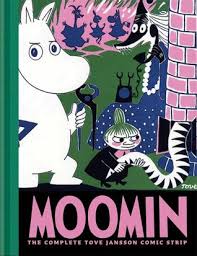
[READ: January 13, 2015] Moomin Volume 2

I enjoyed Moomin volume 1 so much that I was excited to read vol 2.  And it did not disappoint.  This volume was full of the same whimsical, often bizarre stories that were sweet and funny (and a bit cruel, which makes them funny).  It also added some new characters.

This book contains the strips: Moomin’s Winter Follies, Moomin Mamma’s Maid, Moomin Builds a House and Moomin Begins a New Life.  Each one seems to tackle a big idea and pushes it to crazy conclusions.

These stories originally ran in the Evening News, London 1953-1959. (more…)

Read Full Post »

basoonSOUNDTRACK: THE MUSIC TAPES-Tiny Desk Concert #182 (December 20, 2011).

musictaopesJulian Koster released an album in 2008 called The Singing Saw at Christmastime.  It was a complete CD of Christmas songs played on the saw.  That should tell you that Koster is an unusual fellow. But that doesn’t prepare you for what he unleashes during his Tiny Desk Concert with The Music Tapes.

Koster has a very high-pitched voice (I have a recording of him doing “I’ve Got My Love to Keep me Warm,” which is almost unbearable.  His singing is really close to the fine line of unique and bad (and I imagine for many it crosses the line). He’s also got a fascinating way of looking at things and of storytelling.  So this Tiny Desk show winds up being quite long (20 minutes) with quite a lot of different things going on.

First he tells a lengthy story about his great grandpa.  And how his great grandpa told him that baby trees can walk.  But they are tethered to the ground by an umbilical cord. And when we cut them down, we sever the cord.  And a Christmas tree is adorned and worshiped for two weeks and then set free to roam the earth.  It is a warm and strange and delightful.

Then he and a second member of the group play “The First Noel” on two saws.  It’s weird ad wonderful.  At the end of the song he has his saw bow, and Bob says he didn’t know a saw could bow.  Julian says they do and in fact that singing saws sing by themselves but we encourage them by petting them and placing them in our laps.

I don’t enjoy everything Koster does, so the second song “Freeing Song For Reindeer,” a banjo based piece about a tired old reindeer transporting Santa is slow and kind of sad and not my thing.

But then he tells a story of growing up with all kinds of culture and Holiday traditions which leads into a version of Gavin Bryars’ “Jesus Blood.”  I enjoy the original and didn’t know what to expect here.  They begin with a tape loop of an old man singing the song (possibly the one Bryars used, but I don’t know).  And then Koster starts playing the banjo with a bow.  And then a second guy does the same. Then the percussionist stars playing the toy piano and the noises build.  He switches from piano to trumpet and plays along.  Meanwhile the second banjo player switches back to the saw for the end. It’s really quite a lovely performance.

“Takeshi And Elijah” is another slow and keening banjo based song.  It’s pretty long, I don’t really like it, but by the end, as it builds with trumpet and toy piano, he ends the song sith a puppet Santa doing a tap dance as percussion.  It’s a great ending to an okay song.

The final song is “Zat You, Santa Claus?”  It’s played on bowed banjo and sousaphone.  It’s a fun and crazy rendition.   It’s one of the weirdest Tiny Desk shows and certainly the weirdest Christmas set.

[READ: December 5, 2015] The Bassoon King

I really liked Rain Wilson in The Office, but I haven’t seen him in much else (I forgot he was in Six Feet Under and Galaxy Quest) . I wanted to like Backstrom, but it got cancelled before we even watched an episode.

So why did I check out this memoir of an actor I like a little bit?  Well, primarily for the title.  The Bassoon King had an absurd ring that I really gravitated towards.  When I saw there was an introduction by Dwight Kurt Schrute, I knew this would be a good book.

The introduction (by Dwight) is very funny.  I love Dwight and I love thinking to myself “FALSE!” whenever I disagree with someone.  Dwight wondered why anyone would read a biography of a young semi-famous actor.  “Fact. NO. ONE. CARES.”  But then says he doesn’t care either because he is making a lot of dollars per word for this thing.

Rainn begins his memoir by making fun of his big head (especially when he was a baby).  It’s pretty funny.  And then he describes his hippie family and his weird name.  His mom changed her named from Patricia to Shay in 1965.  She wanted to name Rainn “Thucydides.”  But his dad always liked Rainer Maria Rilke.  Now, they lived pretty close to Mt Rainier, so they went for Rainn (“Tack an extra letter on there for no apparent reason”). (more…)

Read Full Post »

olymmp SOUNDTRACK: TORRES-Tiny Desk Concert #461 (August 10, 2015).

torresI’ve really enjoyed a lot about Torres’ music this year.  Mackenzie Scott has an interesting delivery which reminds me of certain aspects of PJ Harvey, and her songs are angry but measured.

Her songs seem to have a lot of low-end in them (without being bass heavy exactly–in fact in this Tiny Desk, there is no bassist).  And her singing voice is often rather low (and sometimes growly).  There’s a moment in the first song “New Skin” in which the music drops out and then Mackenzie Scott starts playing her guitar anew and it’s a sound unlike any in the song before (even though she has been playing all along).

Guitarist Cameron Kapoor adds cool sounds to what I think is her best song, “A Proper Polish Welcome.”  Erin Manning provides wonderful harmony vocals along with keyboards on this song which is as powerful as it is understated.  The song gives me chills.

“The Harshest Light” is a slow song that has glimpses of light as she sings slightly higher notes in the chorus.  And when her voice breaks near the end, you can hear the intensity in her singing.

It’s a great three song set that only leaves you wanting more.

I had resisted getting this album, but realizing just how good these songs are might tip the tables to a purchase.

[READ: Summer 2015] Olympians 1-6

While I imagined that I might read all of the First Second books this year, I paused about mid way through (more for me next year).  But one of the last things I read from First Second was this series of outstanding mythologies about the Greek Olympians.  It also turned out that a few years back I got these books for C., not realizing they were under the First Second imprint.  I was intrigued by them then, but I’m really glad that I read them now.

George O’Connor is a massive geek and Greek scholar.  He has done lots of research for these books, including going to Greece and visiting sites and antiquities as well as comparing all manner of ancient stories to compile the most interesting pieces. He explains that since these stories were orally passed down, they were modified over the years.  He doesn’t change the myths, he merely picks the story lines that are most interesting to him.  And then he adds a lot of humorous modern touches (and dialogue) which keep it from being at all stuffy.

O Connor’s drawing style is also inspired by superhero comics, so his stories are presented in a way that seems much more like a super hero than a classical hero, which is also kind of fun.

Each book ends with an author’s note which is hugely informative and gives plenty of context.  It also has a bibliography, but more importantly, it has a list of notes about certain panels.  Do not skip these notes!  In addition to providing a lot of insight into the myths of the characters themselves, there are a lot of funny comments like “Greeks raced in the nude (point and laugh)” which really bring new depths to the stories. (more…)

Read Full Post »

mannersSOUNDTRACK: MARTIN TIELLI-Hugh’s Room Toronto, ON (September 27, 2009).

hughsThis is the final solo show from Martin Tielli on the Rheostaticslive site.  And it’s a great final show.  The sound quality is excellent and the crowd is also really into it.

Martin says that it is the fourth show ever with this band which includes Martin Tielli – vocals, guitar
Selina Martin – acoustic guitar, vocals, bowed saw
Monica Guenter – piano, synth, viola, vocals
Greg Smith – bass, vocals
Ryan Granville-Martin – drums, vocals, glockenspiel

(That’s a lot of Martins).

They open with a Rheostatics song, “Dead is the Drunkest You Can get,” a mellow song that works really well and has outstanding backing vocals from Selina and Monica.  Then they play two Nick Buzz songs, “That’s What You Get for Having Fun” and “Love Streams.”

“Something Wild” introduces a lot of vocoder–his vocals sound very different from on the Danny Gross record.  “Underbrush” is very slow and dramatic.

There’s something about this band that really brings out the best of these songs.  “Voices from the Wilderness” is lovely and “I’ll Never Tear You Apart” is also lovely, done in a slower tempo.  Although Martin keeps correcting himself when he messes up the words.

When they get to “Hymn to the Situation” (an old Nick Buzz song) he says it was an audience request and he thought it was funny.  He asks that the audience cheer wildly when he says the word “axe” (which is what happens on the record).  His description of the song is very funny, saying that it is about love.  Not sex, which is disgusting and which is all you hear in the media.  He concludes, “Never confuse the savory and the sweet.”  The song is played entirely on the piano.

“Saskatchewan” is great.  Big and loud.  Although Martin plays some amazingly bad chords at the end of the song–presumably intentionally.  The guitar solo is played on a violin, which is also pretty neat.

The set list says that the song “Our Keepers” was supposed to be next, but it is not included.  Indeed, the set ends with “Saskatchewan” making this show only 55 minutes.  Nevertheless, it’s a great recording and a wonderful spanning of Martin’s solo career.

[READ: October 10, 2015] The Importance of Manners

I found this book at work and was intrigued by the blurb: a Dali-esque fable, and that it was “in the vein of Evelyn Waugh and PG Wodehouse.”  I was committed to the book when I saw that the print was huge and that the chapters were really short.  Not the best recommendation for reading a book, but if you’re looking for quick read, those are some good markers.

The story is a travelogue farce that involves religion, sex, more religion, death and the end of the world.

There are several main characters, although I suppose the main protagonist is Burt Darwin.  Darwin is concerned for his afterlife and he cycles through a different religion multiple times during the day to make sure he has all of his bases covered.  He also keeps a journal in which he must tell the truth because this will lead to a successful afterlife (according to some healer or another).

We next meet Lady Chanel Malory.  Chanel was a hand model, is quite pretty and is looking for adventure (sexual if possible).  But she is married to Lord Percy, an old stuck up aristocrat who says all the things you’d expect someone like him to say.  He also believes that Lady Chanel is French and she is happy to play up the charade of being French for most of the story (it cracks briefly).  The final main character is Sister Mary.  She is an exiled nun, but she dresses like Mother Theresa, blesses everything and everyone and considers everything including flossing to be blasphemous.

They are all on a cruise ship traveling to Africa (you can probably see already the kinds of jokes and scenes that are going to appear).  They meet angry Kings (one who calls Lord Percy “Hitler”), they meet a talking (at least to us) snake who is mad to be stepped on, we encounter Vodun gods (and sellers of Authentic African knickknacks (most likely made in China) and a spell that makes Sister Mary forget that she is a nun and remember the past that brought her there.

There’s even a couple of authorial interruptions.

While most of the book is made of comic episodes (and some are indeed very funny) there are also some intriguing subplots.  Like Lady Chanel’s connection to pirates (which is sadly never explored fully), there’s even the exorcism of a demon.

Oh, and there’s someone who is about to set off a nuclear bomb destined to blow up the whole word.  Although none of our cast know that, somehow one of them saves the entire world.

H.G. Watt is also known as Hande Zapsu Watt.  She was born in Istanbul but now lives in Scotland.  According to some information, she has published four more novels and four children’s books which have all been translated into several languages, but I can’t find any of them.

So this book was a little broad, with some fairly easy targets, and yet I enjoyed it quite a bit.  There was a lot that made me laugh including  the acknowledgments in which she thanks her editor “who edited all the way to page 42 before writing in the margin: “umm, isn’t this a bit racist?”  [The book is, but it attacks everyone mercilessly, so no one need feel singled out].

Read Full Post »

jottingsSOUNDTRACK: マキシマム ザ ホルモン–“え・い・り・あ・ん” (2013) [MAXIMUM THE HORMONE-“A.L.I.E.N” (2013).

maxi2This Japanese band has gained some ground in the United States (having two of their songs used in the anime Death Note).  They are a heavy, heavy metal band which explores many different genres.

This song begins with a heavy metal guitar riff.  When the song proper starts, it is clearly a heavy song sing in Japanese.  The second vocalist (who screams like Yamantaka Eye with John Zorn) screams in an unmistakably Japanese way.  And at 1:15, the song slows down into a very heavy almost mosh.

So far so good.  The first big surprise comes at 1:44 when the song is hijacked by a funk metal bass line and the follow up section is a less scary sounding but still heavy metal.

And then it’s back to the speed and noise once more, complete with a pause and a “Go!” and then a series of “He!y Hey! Hey!” metal chants.

maxiBut the real surprise comes at 3 minutes when the whole song slows to a sweet section with whispered vocals by the (female) drummer?  And then the entire song switches to a sweet song–delicate guitar and super sweet vocals with the new lyrics “Stop Stop Winny Upload.”  The boys come back in, but now they are playing along to this poppy (but guitar heavy) “Stop Stop Winny” section.

This runs on until the end of the song which has the band members conversing in Japanese (about what, I have no idea).

It is one of the most jarring songs I’ve heard, combing at least five genres in its 5 and a half minutes (and several of their other songs do this too (check out “Yoshu Fukushu”).

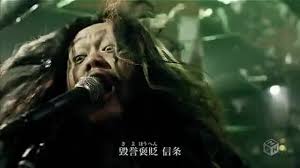
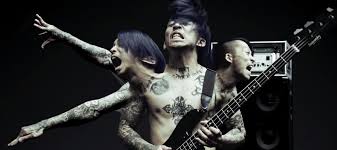
maxi3This is to say nothing of the video, which opens with the band playing in a live setting.  The  guitarist has long hair and a beard and sings the first verses.  The short-haired singer sings the really fast growly stuff and the bassist has a nifty side shave.

As the funk metal stuff starts, the band switches to a studio scene in which, why not, they all grow extra heads and limbs.

The Stop Stop Winny section switches from a segment with the drummer in a wedding dress singing gently.  And then the final section shows the band in a psychedelic set with little kids and balloons.

It’s fantastic.

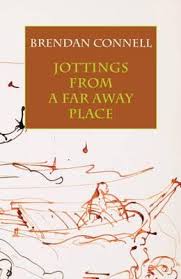
[READ: November 13, 2015] Jottings from a Far Away Place

Brendan Connell has this new book coming out (on December 1st) from the wonderfully named Snuggly Press.  (I love that it says This is a Snuggly Book) on the title page verso.

Connell has written all kinds of books in his career but this one is something of a new style in his vast oeuvre.  The title word “Jottings” is a giveaway because so many of the parts of the book are very short–notations, indeed, jottings, that may or may not relate directly to the rest of the pieces.  I found the book a little challenging to read at first because of this.  However, when I wrapped my head around what was going on, it really gelled.  And when I read it a second time, with this in mind, it worked beautifully.

Connell has created a kind of labyrinth of a book in which some fragments lead to dead ends, but other fragments lead to longer stories.  And when you hit on the right path you are rewarded with a longer story that is as well written (Connell’s eye for detail is, as always, exceptional) as it is interesting.  But unlike the mythological labyrinth, there is no Minotaur if you take a wrong path–rather there is just a fragment that forces you to think about where it might belong. (more…)

Read Full Post »

academiaSOUNDTRACK: MARTIN TIELLI-“We didn’t even suspect that he was the poppy salesman.” (2001).

popptI wrote about this album once before, and while I made notes about it after listening to it again, I found out that they were pretty much exactly what I thought of the record four years ago.  So I’m going to simply repost the review here, but I’m going to add some new notes seamlessly intermingled.

Martin Tielli’s first solo disc is a proper solo release: it’s almost all him on acoustic guitar and his gorgeous alto voice.  I hadn’t listened to this disc in a while and I was delighted by how much of the disc I knew so well.

The opening track, “I’ll Never Tear Your Apart” is deceptively simple: beautiful harmonic’d guitars and his gentle voice.  There’s a great video to go with it here.  That is followed by the wonderful “My Sweet Relief” which sounds like a great Neil Young folk song: great verses an a strong chorus.  Lyrically, though, it is all Tielli.  “Double X” highlights Tielli’s beautiful acoustic guitar work.  It’s another great story song, this one about a destitute person hanging under a superstore with a K and an M.

“Voices in the Wilderness” is a simply beautiful song, a lovely guitar melody and Tielli’s high voice singing along.. I also love that the lyric  (mis)quotes Rush very nicely: “‘If you choose not to be free you still have made a choice,’ said a high and squeaky voice.”

“Farmer in the City” is the only track that Tielli didn’t write.  It’s a nearly 8-minute song by Scott Walker.  I had never listened to the original, but having now done so, I find the Walker version to be far superior.  Walker’s voice is so eccentric and wonderful.  So even though I love Martin’s voice, he just can’t compare to the original.   Also find Martin’s version to be just a little spare (the Walker version has lovely strings. Kevin Hearn plays celeste and Selina Martin plays wine glasses on the track.

It’s followed by the delightful “World in a Wall” which uses mice in the wall as a metaphor for a broken relationship (with wonderful detailed lines like: She’s like a mouse, I know she’s around It’s a gnawing sound. Leaves little brown poohs from a little pink bum.”

This is followed by “That’s How They Do It in Warsaw” which is the first really rocking song (it has bass and drums) and a voiceover in Polish by Kasia Zaton.

It’s coupled with a slightly less rocky but still loud track “How Can You Sleep?” (which makes another fun musical allusion, this time about Guided by Voices). It has a co-songwriting credit from Dave Bidini and has a kind of vocal allusion to Bob Dylan, although I doubt it is about him.

“She Said ‘We’re On Our Way Down’” is a song that I really want to enjoy more.  But It is so spare and Martin’s vocal line is so abstract, that I can never really get int it. But the guitar riff is really powerful and cool.  And yet, the song seems to eschew melody but then a gorgeous guitar or vocal line shines through and really sounds brilliant.  “From the Reel” is a beautiful, aching acoustic ballad.

The disc ends with the odd, seven minute “Wetbrain/Your War.”  The first part (wet brain) is kind of slow but it builds into a beautiful dark song about addiction.

This is a really beautiful album, although there are moments when I fell like Martin gets too delicate, it’s amazing to hear just what he can do when he’s on his own.

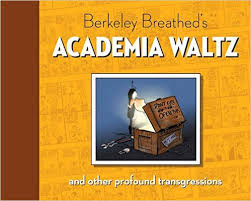
[READ: October 19, 2015] Academia Waltz

Way back a long time ago I was pretty excited to read all of the Bloom County reissue books.  Somehow I only got through Books 1 and 2, although I see now that five volumes were released in total.

Presumably at the end of that run, (which technically ended in 2011) comes this volume.  Academia Waltz is the strip that Breathed wrote back in college.  This book collects some (but apparently not all) of the strips.  It’s odd to not collect them all since there is also an art gallery with all kinds of original pieces (complete with edits and scribbled notes) that duplicate many of the earlier strips.

The first part collects pieces from Academia Waltz the 1979 collection.  The second part comes from Bowing Out, the 1980 Collection. (more…)

Read Full Post »

zweigSOUNDTRACK: TERENCE BLANCHARD FEAT. THE E-COLLECTIVE-Tiny Desk Concert #460 (August 5, 2014).

blnachAfter a few quiet Tiny Desk Concerts, it was fun to get something big and bouncy.  I don’t know Blanchard, but I really enjoyed his band set up.  Blanchard plays trumpet, and with the E-Collective, he’s got a guitarist, bassist, pianist and drummer.

In the first song “Soldiers”, I was sort of amused because when Charles Altura (a guitarist he met online) plays his 2 minute guitar solo, Blanchard isn’t doing anything.  It was  funny way to start the concert with the main guy doing nothing.  But Altura has a great sound–jazzy and interesting with a flair not unlike Frank Zappa.  It continues with a lengthy solo from Blanchard.  I like the jagged edges of this song–the funky bass and the angular rhythms.  It’s about 8 minutes long and it’s fun to watch Blanchard just digging the music when he’s not actually playing.

“Confident Selflessness” begins with a cool drum setup by Englishman Chris Bailey.  Over the great beat, Donald Ramsey, (Blanchard’s high-school classmate) lays down a great funky bass line.  And then it’s a wild solo from pianist Fabian Almazan.  I love the way the song switches back to that angular/funky sound during the refrains.  Blanchard seems to be playing the trumpet with some kind of effect on it during the first part–or he’s playing very quietly.  But later, he gets a good solo in.  Bailey also plays some wild drums fills while the rest of the band repeats the staccato motif.  This song is also about 8 minutes long.

He introduces the final song, “Breathless” by saying that there is typically a spoken word section, but he’s not going to do that.  The title references the police brutality and the dying words “I Can’t Breathe.”  This song is much more mellow, with a lengthy piano solo.  There’s a soaring, uplifting trumpet solo in the middle of the song (which is about 10 minutes long in total).  It’s a really pretty song, although I do prefer the more lively bouncy tracks.

As I was saying after the last two, quieter Tiny Desks, it’s fun to hear the audience whoop it up so much.  And Blanchard even plays a jokey riff at the end.

[READ: May 15, 2015] The Last Days of Stefan Zweig

This is one of those interesting books that I find at work whose pedigree takes some time to unravel.  This is a graphic novel.  It is based on the novel by Laurent Seksik called  “Les Dernier Jours de Stefan Zweig” (2010) which was released in English as “The Last Days.”  This graphic novel was illustrated by Guillaume Sorel and translated by Joel Anderson.

I didn’t know who Stefan Zweig was when I read this book (more shame on me, i suppose).  Zweig was an Austrian novelist, playwright, journalist and biographer.  According to Wikipedia, in the 1920s and 1930s he was one of the most popular writers in the world.

When Hitler came to power, Zweig left Austria for London (where he was considered an enemy because he was German). He was Jewish, although in an interview he said “My mother and father were Jewish only through accident of birth.”  Yet he did not renounce his Jewish faith and wrote repeatedly on Jews and Jewish themes.

He traveled with his second wife Lotte to Petrópolis, a German-colonized mountain town 68 kilometers north of Rio de Janeiro known for historical reasons as Brazil’s Imperial city.  And this is where the story actually begins. (more…)

Read Full Post »

june1SOUNDTRACKRHEOSTATICS–The Media Club, Vancouver, BC, (October 21, 2004).

media clubEvery year, the Rheostatics would perform what they called Green Sprouts Week in Toronto.  In 2004 they did a West Coast version. Five nights in a row at The Media Club (with each show being crazier than the last).  There aren’t always recording available for these shows, but on this leg there are recordings from the third, fourth and fifth nights.

This recording is about 90 minutes and I assume is edited (most of their GSMW shows are quite long and there’s no banter).  There’s also crazy static on a certain instrument, which mars the quality somewhat.

The band has added keyboards, although I’m not sure who is playing them.  Morgan from The Buttless Chaps guests on a nice rendition of “Claire.”  They play a great version of “Jesus Was Once a teenager Too” with a folky breakdown in the middle.  “Take Me in Your Hand” is slow but really good.

There’s goofing on “Song of Flight” with them ending the song quickly and booing and yelling “stinky” I wonder what happened).  “Marginalized” is blistering and “Record Body Count” is a little goofy.  Perhaps the highlight of the night is “Horses” which is an amazing rendition and ends with a few lines and acoustic guitars from “When Winter Comes”

The encore starts with “Pornography” a song later recorded by Bidiniband.  Then there’s some great harmonies on “Dope Fiends and Boozehounds.”

They do a rocking version of Talking Heads’ “Life During Wartime” which is musically spot on, even though no one really knows the words.  The last few songs are more covers.  A very fast version of Jane Siberry’s “One More Colour,” and then a perfect version of “Takin’ Care of Business” (the guitar and vocals sound right on) which segues into a sloppy/fun “My Generation.”

The Green Sprouts shows often allow the band to mess around a bit which is great for fans.

[READ: July 21, 2015] “The Duniazát”

I generally like Rushdie’s work.  This story is told in the style of a 1001 Arabian Nights tale and consequently I didn’t enjoy it that much.  Although I was interested to find out some details about those stories.  There was originally a Persian book called “One Thousand Stories” which had been translated into Arabic.  In the Arabic version there were fewer than a thousand stories but the action was spread over a thousand nights, or, because round numbers are considered ugly, a thousand nights and one night more.  Huh.

The stories featured a beautiful storyteller knows as Sheherazade, who told her tales to a murderous husband in order to keep him from executing her.

Anyone, in this story, Rushdie tells a similar type tale.

Set in the year 1195, the great philosopher Ibn Rushd (I enjoyed the play on his own name there) was a physician to the Caliph.  But when he started espousing liberal views, he was discredited (sound familiar?).  He wound up living in a village where Jews were forced to convert to Islam and could not speak of Judaism.  So he felt right at home as an outcast. (more…)

Read Full Post »

nymarc22SOUNDTRACK: YES-Tormato (1978).

TormatoTormato might be Yes’ most hated album (I think people grudgingly respect Topographic, but they hate Tormato).  I mean the cover is weird and, well, weird.  The songs are not bad but they sound so far from Yes of old, that it could possibly not be the same band.  And then there’s those lyrics.  I find myself blaming Jon Anderson for this middling period style of Yes music.  It seems like he was the impetus behind topographic and he has a number of songs that he wrote on the last two albums.  If Anderson is the flighty stratosphere, Squire and White are the ground.  And the ground is sorely lacking on the last two albums.

There’s no Roger Dean on this album either (more Hipgnosis with a giant tomato spill (get it, Tormato?  No I don’t really either.)  Wikipedia sheds some light, kind of:

Howe pitched the album’s original title of Yes Tor, referring to the highest point on Dartmoor, an area of moorland in Devon, England. Wakeman claimed to have thrown a tomato at the pictures taken for the album as he was disappointed with its design. The album’s title and cover was changed accordingly. Howe said it was someone at Hipgnosis who threw the tomato on purpose, something that he felt insulted about.  According to White, the band “couldn’t decide on the cover. I think Po … put a picture of a guy with divining sticks on the front.  He took it home one night and decided it wasn’t working. So he threw a tomato at it”. 

I always thought it was drumsticks not divining sticks.  Oh well.  So there that in no way clears up the tomato business.

So what about the music?Even though Squire shows up a bit more here, the overall sound of the album is really tinny—a problem that to me plagued Yes throughout this period—there’s just no low end to speak of, even when Squire does some rumbling lines.

“Future Times/Rejoice” opens with an interesting riff and some cool bass lines from Squire.  The song itself is bouncy and jaunty, moving along briskly with some wild riffs from Howe.  It’s kind of refreshing.  At 3 minutes the song slows down with some counting and replies from Anderson. The next section has a pretty classic Yes build up and then a return to the beginning of the song. There’s a very 70s sounding keyboard solo from Wakeman as the song reaches the end—which is a coda called Rejoice (starting at 5:44), which is mostly harmony voices until the repeat of musical themes from earlier.

Next comes the divisive “Don’t Kill the Whale” This is one of those major heart-on-your-sleeve songs.  Musically it’s pretty interesting with some wild soloing from Howe, but those lyrics: “don’t kill the whale, dig it.” It’s hard not to agree with the sentiment but it’s hard to sing along to at the same time. The synth solo is also astonishingly dated and kind of nauseating at the end.

“Madrigal” is a ballad played on a harpsichord with vocals from Anderson. By the end some classical guitar is played with it. It’s a pretty piece.

“Release/Release” is probably the most interesting track on the disc. It’s got a great riff from Howe and although (some of) the synths feel dated it rocks along like a good mid 70s rocker should. I like the audacity of having a “live” drum solo tacked into the middle of the song. It reminds me in style of a King Crimson track with the staccato voices, although it is not produced anywhere as well.

“Arriving UFO” is, indeed, about seeing UFOs.  The narrator is incredulous about them at the beginning of the song (which comes with very “eerier” keyboard notes) but I believe is a believer by the end. I do like the way the music builds for the bridge, although the chorus is bit much (as is the dreadful synth middle section). The solo section has some really bizarre sounds that I take to be “alien” conversation. Whether its made by guitar synth or voice I cannot say.

“Circus of Heaven” might just be the worst Yes song ever. It is all high notes (even the bass is high notes). Around 2 and a half minutes in the song shifts from its whimsical circus feel to a slightly more serious tone that hearkens back to better Yes moments, but it does not remain there.  Rather, the narrator asks his son what he thought of the circus of heaven and then Anderson’s actual son tells him that he’s not impressed. It’s hard to listen to I have to say.

There’s more high notes in “Onward” which is more orchestral washes and Anderson’s vocals over the top. It’s not really much of a song, frankly, even with the string arrangement.

“On the Silent Wings of Freedom” is nearly 8 minutes long.  It tries to hearken back to longer classic Yes songs but it never quite makes it.  It opens with some loud basslines, some fiddly Howe guitar bits and a lot of synths. But none of it sounds as interesting as previous long song intros. Even the wah wah bass sound isn’t as interesting as the early 70s bass sound. Anderson comes in almost 3 minutes in and around 3:30 the song picks up speed and the elements gel in a really good way. Around 4:45 the song slows down to an interesting instrumental section with bass and percussion.   After a return to vocals the fast part picks up again, although with a synth solo that is less than stellar.  There’s a lot of “la la las” in the song and a mention of “celestial seasons” which I hope came out before the tea brand.  The song isn’t bad, and if Yes didn’t have such a great catalog behind them I might actually say it ‘s quite good, but like the rest of the album it pales with their peak.

And that’s probably why Wakeman left again and, shocking, Jon Anderson split from the band too (which i find surprising since I feel like the past two albums were all about him).

Since almost every Yes album had different personnel, I’m going to keep a running tally here.   With the middling success of Going for the One, this line up stayed in place for a second album!

Chris Squire-bass
Jon Anderson-vocals
Alan White (#2)-drums
Rick Wakeman (#2)-keybaords
Steve Howe (#2)-guitar

[READ: March 22, 2015] “Sleep”

This story was written in direct address, from an “I” narrator to a “you” subject.  It really personalized the story and was interesting to watch as the story that started as one thing was able to travel to another thing entirely.

It begins with the narrator, an older man, talking in his mind to his young lover.  The younger man’s parents are concerned that the narrator is older, but they do like him.  I loved the way it was constructed with him reminiscing about how they met and about how the world allowed them to be together: “Germany, Ireland, the Internet, gay rights, Judaism, Catholicism, they have all brought us here.”  The beginning of the story really stresses their differences, which he finds charming:

“Like a good American you wear a T-shirt and boxers in bed.  I am wearing pajamas like a good Irishman.”

They have been sharing living space for a while, but the younger man is concerned that the older man’s dreams are plagued by nightmares.  The nightmares are so strong that the older man often screams out loud –but does not wake up. (more…)

Read Full Post »

« Newer Posts - Older Posts »