Feeds:
Posts
Comments

Archive for the ‘Religion’ Category

SOUNDTRACK: PATTY GRIFFIN-Tiny Desk Concert #282 (June 24, 2013).

I have Patty Griffin’s first two albums—I like her folkie sensibilities and her voice which I tend to think of as a little unusual.  And yet it’s not unusual here at all.  She sings powerfully and beautifully.

For this Tiny Desk Concert she’s playing some from her then new release:

she takes care to balance the exquisite mourning of “Faithful Son” — and the sweetly somber “That Kind of Lonely,” which Griffin describes as “a song about finally letting go of your delayed adolescence” — by closing her set with the playfully bawdy, kindly celebratory “Get Ready Marie.” Inspired by a favorite photo of her grandparents, the song finds Griffin viewing two complicated lives with the generous, hopeful eye she’s been casting on her subjects for three fruitful decades now.

She opens with “Faithful Son.” I love how the middle of this has a cool section where the two acoustic guitars (played by Griffin and Dave Pulkingham) face each other and strum hard for a bit.  The problem for me with this song is that the baritone guitar (played by Craig Ross) is either out of tune or the Ross hits a few wrong notes.  Since it resonates a bit louder than anything else, it’s really noticeable.  The accordion (played by John Deaderick) isn’t loud enough either.

“That Kind Of Lonely” is, as noted, a song about finally letting go of your delayed adolescence.  It’s a pretty, quiet number.  A good contrast to “Get Ready Marie.”  She says she is always picking on her family for stories.  She says she got this idea from a photograph of her grandparents taken just after they wed in the 1920s.  Her grandmother is looking at the camera like maybe she made the biggest mistake of her life and her grandfather (who looks really handsome) looks like he can’t wait to get his hands on her. They had a wild relationship—plates were lying.  This is a comic bawdy song that sounds like a traditional drinking song with some great lyrics:

No this isn’t the end of our story
No our marriage stuck like a habit
But I had a good hunch, when she kissed me a bunch
She could do other things like a rabbit

It’s in ¾ time and the accordion is louder here and it all sounds terrific.  It’s hard to believe that she’s been playing for 30 years, but she sure sounds like a pro.

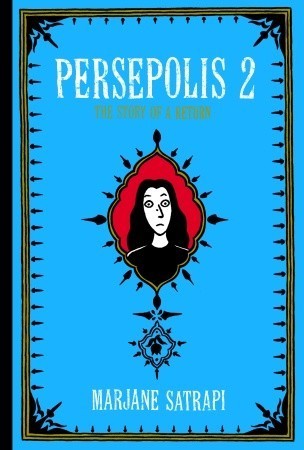
[READ: March 26, 2016] Persepolis 2

I found Persepolis to be an amazing book.  A peek inside a regime that was sort of mythically wicked during my childhood. Marjane’s personal story was interesting of course, but I enjoyed seeing just what was happening in this world that seemed so mysterious when I was growing up.

This sequel is a little less exciting because it is more or less about a lonely teenager in Europe.  I think if the first book wasn’t so groundbreaking, this one wouldn’t feel as disappointing.  Her story is interesting and her experiences are story-worthy, but compared to the first book this one is the awkward teenage years.

We see that Marjane’s being sent to Europe didn’t go quite as planned.  She stayed with her mom’s friend.  But the friend fought with her husband all the time and their house was not a happy one. They felt that they couldn’t look after Marjane so they sent her to boarding school in Vienna–Marjane didn’t speak German. (more…)

Read Full Post »

SOUNDTRACK: BILLY BRAGG-Tiny Desk Concert #281 (June 17, 2013).

I really like Billy Bragg.  Not necessarily all of his music, but I like a lot of it and I certainly love what he stands for.  If you like his instantly recognizable voice (which I do), then just about anything he does sounds good.  But no doubt some songs are catchier than others.

Bragg played a Tiny Desk Concert in 2016 with someone else as part of a duo.  I’d listened to that one first, but I liked this one more.

For this one he is accompanied on the first two songs by dobro player C.J. Hillman.

Bragg talks a lot–he has many lengthy stories between songs–and he’s pretty much always funny or thoughtful.  He introduces the first song by saying that moving into a new building always has troubles–you’ll always need someone to fix things up.  With that, his first song is called “Handyman Blues.”

It’s a great story song.  I especially like this line:

Don’t be expecting me to put up shelves or build a garden shed / but I can write a song about how much I love you instead.

It’s amusing that in the next song workers actually interrupt his song.  They were “met with lot of hammering on our rooftop by some real handymen as they put the finishing touches on NPR’s new home.”

For the second song they

channeled the spirit of legendary American folksinger Woody Guthrie, with whom Bragg collaborated — albeit posthumously, in Guthrie’s case — when he took Guthrie’s unsung words and set them to song with the help of Wilco. Here, he takes a song Guthrie himself co-opted and altered: a gospel tune (“This World Is Not My Home”) he’d turned into an anthem against inaction.

Bragg introduces this song as saying he took it over when the U.S. was having the debate about universal health care.  He says that people still face all the same problems that this classic song talks about–people losing homes to banks or families struggling to make ends meet.  But the middle verse is about a wife who dies on the floor for want of proper health care.  Bragg says that that doesn’t happen in his country anymore and it’s hard for people in his country to imagine that a generous country like the US still hasn’t resolved that issue (and five years later things are even worse with Trumpcare–#ITMFA #RESIST).

Guthrie called the song “I Ain’t Got No Home (In This World Anymore”).  After he sings a verse, the hammering starts and they pause the song to wait for the work to finish before he re-starts the song.  In the meantime they talk about what his band should do in Washington.  Someone says the National Archives and he jokes the Nashville Archive?  He says that they really enjoyed Nashville.  Then he mentions the National Archive to CJ and says

We can find out how the Americans started the war of 1812.  (chuckles).  I just played Annapolis, they’re still sore about it over there.  Never mind who won the war but who started it.

It’s another nice story song.  The dobro works perfectly with it.

“Sexuality” is the only song on this set that I knew.  It’s an old favorite that is serious and funny as well (and very progressive for when it was written).  It sounds terrific and is super catchy.  Although he comments that the acoustics aren’t that great in this new building–there’s not much bounce back off the walls “for those of us who technically aren’t great singers.  But for those of us who are buskers like myself, it’s not bad.”

Introducing the final song, “No One Knows Nothing Anymore” he says he read an article on the BBC about a kid who proved that economics professors were wrong and the article commented that “the trouble with economics is that no one knows nothing anymore.”  He says that had just written a song with that same name, so he’s with the zeitgeist.

He also interjects that there will be pedants–“and there are one or two who listen to NPR, I’m sure” who will write in to say it should be ‘no one knows anything any more.’  But the first thing they teach you at songwriting school is that alliteration trumps grammar.

And then he starts strumming “Sexuality “and says “Oh, I’ve just played that.”

“No One Knows Nothing Anymore” is a nice folkie, very-Billy Bragg song–good melody and really good lyrics.

At the end, as the camera fades to black he says “Chris, pass the hat around.”

I’m so happy that Billy Bragg is still making music.

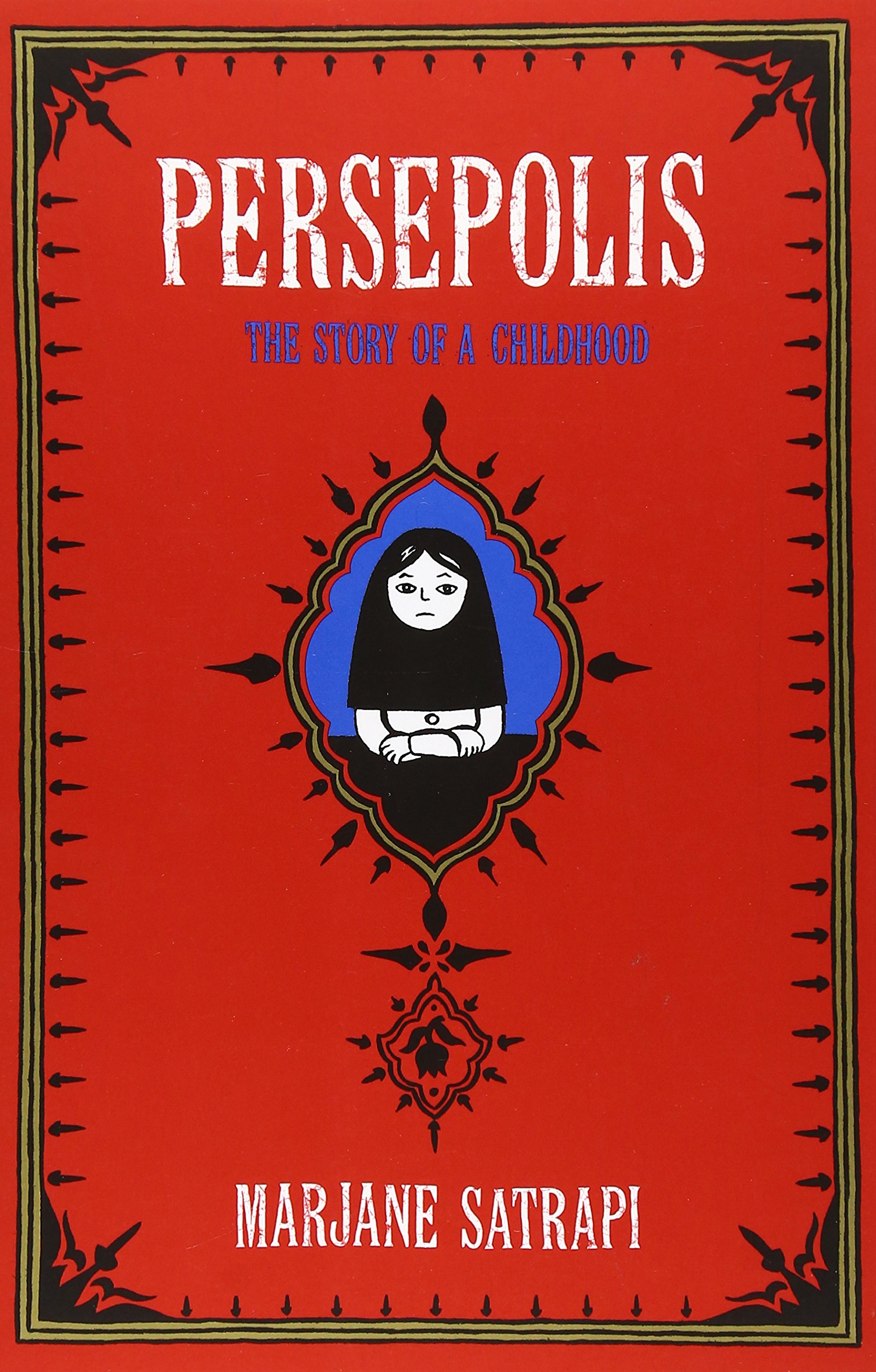
[READ: March 26, 2016] Persepolis

This graphic novel is legendary, and I’m embarrassed it has taken me 13 years to read it.

Persepolis is a memoir of a young girl growing up in Iran during the 70s and 80s.  I appreciated the contextualizing introduction in which she explains the history of the country.

The introduction lays out a basic outline of the history of Iran and the Middle East (that goes all the way back to B.C years).  She explains that Iran has always been a rich nation and has constantly been under attack.  When oil was discovered, the West came calling.  Great Britain wielded a powerful influence over Iranian economy.  During WWII, Iran remained neutral but then was invaded by the west.

The Prime Minister of Iran (not the Shah) nationalized the oil industry in 1951 which led to an embargo and a coup organized by the CIA.  The leader, Reza Shah was succeeded by his son, Mohammad Reza Shah–known simply as the Shah of Iran.  The Shah stayed in power until 1979 when he fled to escape the Islamic Revolution.

She says that since the Islamic revolution Iran has been associated with fundamentalism, fanaticism and terrorism, but she knows that this is far from the truth.  And that’s what inspired her to writ this book.

(more…)

Read Full Post »

harpers-magazine-march-2017-4 SOUNDTRACK: GUCCI MANE-Tiny Desk Concert #586 (December 12, 2016).

gucci

Usually when someone is popular I have heard of him or her.  So I’m always surprised when someone gets a Tiny Desk Concert and I don’t know them (especially given his story).

Gucci Mane sounds kind of familiar, but I don’t think I’d ever heard of him before.  So what does the blurb say:

Gucci Mane’s smile makes you feel like there’s still some good in the world. He’s really earned it, and that thing is infectious. We asked him to come to NPR because we wanted to be a part of the victory tour he’s been on this year: In the past six months or so, Gucci Mane was released early from the federal penitentiary; he proposed to his girlfriend on the kiss cam at a Hawks game, and she said yes; he’s releasing a total of three albums, all over which he celebrates his newly committed sobriety; he and Courtney Love look like they get along; and he remade “Jingle Bells.”

In this Tiny Desk concert, Gucci Mane performed with just his longtime producer and friend, Zaytoven, on piano. Their version of stripped-down is a minimal backing track and plenty of church-groomed trills. They performed with the understanding that everyone in the room knew their songs — one from 2009 and two from this year — and knew that this performance would represent a surreal dip into a parallel universe where ingenuity is rewarded, snobbery is gone and love is real. Gucci Mane agreed to this unlikely set as a gesture to those people — for remembering his work while he was away, and for cheering on his resurgence, his health, his charm and his singular nature.

Gucci does the three songs, “First Day Out,” “Waybach,” and “Last Time,” all accompanied by Zaytoven, easily my favorite stage name and the absolute highlight of this show for me.

Gucci Mane’s flow is a kind of slow drawl.  It’s kind of charming and engaging.  I find it really strange that he’s rapping over himself (I guess).  But it’s so stripped down that it’s weird to hear his backing track so clearly.  But that live piano totally make the show fantastic–Zaytoven has some amazing chops.

[READ: February 21, 2017] “Sinking Ships and Sea Dramas”

The introduction to this story was pretty fascinating.  This piece is an except from a manuscript in progress inspired “in part by lines from the work of Ben Lerner, the poetry editor of Harper’s

This was translated from the German by Isabel Fargo Cole.

I’m not sure what Lerner wrote that inspired this, but this “cycle” consists of 6 ruminations on death and the sea. (more…)

Read Full Post »

SOUNDTRACK: TEGAN AND SARA-Tiny Desk Concert #581 (November 21, 2016).

This particular Tiny Desk Concert is very painful to watch.  Not because of the music, but because it was recorded the day before the 2016 election, when the world was good and positive and happy.  Tegan and Sara are fun and optimistic about making history and about drunk tweeting the results.  And their mood is infectious.  People actually believed that goodness would win.

Sigh.

So, horrors aside, Tegan and Sara play a four song set–they say that they  couldn’t decide on just three songs.  They play three from their new album and one older song.

And the blurb notes:  It’s hard to believe Tegan and Sara have been making music for 17 years.  ….  Contrary to the poppy sound of 2016’s Love You To Death, the two insisted on performing their Tiny Desk concert acoustically — stripping down highly produced songs while hearkening back to their early recordings. Without the distraction of production, we’re left with the gorgeous sound of roughly identical voices blending. Plus, their endearing banter and jovial sibling rivalry left us defenseless against their charm.

I wondered if they did four songs so that they could each sing lead on two.

Tegan sings lead on “Stop Desire” (with lovely harmonies from Sara).  There’s a bass (by Eva Gardner) and drum, but this song is mostly a simple, pretty piano melody.  It sounds like it was meant to be poppier (at least compared to their earlier stuff), but it still sounds very nice.

When the song is over, Tegan says her instinct is she wants to banter …  “if i had known this many people were going to come, I would have applied a little more attention and focus to the application of makeup and clothing” (although she looks very good already).

Sara sings “Boyfriend,” her voice is noticeably huskier.  The lyrics of this song are great, in which a lesbian relationship might not appear that way at first listen.

You call me up like you want your best friend
You turn me on like you want your boyfriend
But I don’t want to be your secret anymore.

Then Sara talks about Ryan Adams confronting bad reviewers and how she was thinking that that was an approach they could take since they got many bad reviews.  But now she enjoys ignoring bad reviews, saying the best you can do is ignore it and then they only get three retweets or 3 hearts on Twitter and you’re like “I hope you enjoyed writing that bad review for 3 people.”  She pauses and says, “that makes me sound mean spirited…but I guess I am.  I guess deep down inside I might be a Donald Trump person.”  This elicits groans from many including Tegan.  Sara jokes, “Too soon?  We’re Canadian and we can’t wait for your election to be over too.”  That’s when Sara said the thing about making history and she apologizes that she brought the room down.

Sara sings “100x”  which has a “di-di-didnt you” chorus.  Again this hints at the poppier format, but I like the song in the stripped down version–it’s piano only (from Gabrial McNair).  Tegan gets the lead in the middle section, which is quite a change in style.  It’ s cool song overall.

When Tegan says that they couldn’t decide on three songs, the crowd applauds and she jokes, “Thank yo for your enthusiastic response.”  Then   Tegan asks if everyone else is hot, to which Sara jokes, “Honest to God, Tegan has talked about her heat issues for the last 5 years. I am so afraid when menopause hits.”

Tegan sings lead on Closer, their single from Hearthrob and it is quite pretty. The whole band is back on this one–and their voices work so well together.  I also love that Brendan Buckley is using one of those box drums for the bass drum.

I really enjoy this set a lot, if only their prediction about the elections was better.

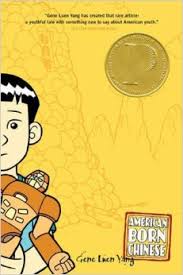
[READ: December 1, 2016] American Born Chinese

I have mentioned this book a lot.  But I only recently realized that I never posted about the book itself.   I read it a long time ago and it is the reason I fell in love with First Second graphic novels (and why I have more or less read all of their books by now).

It had been long enough since I’d read it that I didn’t remember just how fantastic it was.

This book is three seemingly unrelated stories–about a monkey god, a teenaged boy, and a sitcom with an incredibly offensive Chinese character.  The way he stitches these stories together is amazing. (more…)

Read Full Post »

2010 SOUNDTRACK: ANTIBALAS-Tiny Desk Concert #243 (October 4, 2012).

antibAntibalas (Spanish for “bulletproof”) is a Brooklyn ensemble.  Eleven members turned up for the Tiny Desk.  And they are quite the ensemble.  There are trumpets, saxophones, two guitars, a bass and a ton of percussion.  There’s a percussionist/keyboardist wearing a lucha libre mask (!) and the lead singer (singing in English and some other language) has what looks like tribal paint on his face. (He also plays conga and cowbell).

The blurb states:

There just aren’t many bands like Antibalas. These are jazz players making dance music: Their music is big and fun, and their guiding spirit is Fela Kuti, the brilliant big-band leader and Nigerian Afrobeat pioneer. Afrobeat is a musical style featuring nearly endless songs, mixing funk and jazz, grooves and riffs, with the rhythm carried by not only the drums, but everyone. Everyone — horn players, bass players, guitarists — plays rhythm in Afrobeat music.

It’s one thing for a big group to make a big sound — and, sure, Antibalas does that — but what stands out is the subtlety of this ensemble; the way the horns weave in and out of each other, sometimes complementing and at other times inspiring and creating musical conversation between players. That extends to all the players, from vocals to guitar. When you start to listen to that conversation and you hear that build in a rhythm, it’s so powerful, so full of joy. If they come to your town, drop what you’re doing and go see them. Wear dancing shoes.

They play two songs, but they are long and full of rhythm.  “Dirty Money” runs just under 6 minutes. I really like the way the horns seems to echo and answer each other during the slow sections.  While the whole band sings the backing voices.  And when the masked guy switches from percussion to keyboards, it’s got a  groovy 70s sound coming out of that machine.   All of it is anchored by the bass, keeping a steady rhythm.  One of the trumpeters switches to trombone for a solo as well.

“Him Belly Go No Sweet” has an even funkier feel–lots of percussion and staccato horns slowly working with each other to create a big sound.  Even though there’s plenty if music in this song it’s impressive how much they use silences—things are never quiet (there’s always a bass line or percussion) but for such a big outfit they can really get things to quiet own.  The end half of the song sees the band singing “go up  go down” while the lead singer seems to improvise a whole bunch of stuff.

It is, indeed, hard not to dance to this.

[READ: July 10, 2016] “Baptizing the Gun”

This was a very dark story and, if nothing else, it made me never want to go to Lagos, Nigeria.

The story is told in first person by a priest.  He is not wearing his collar and is driving a borrowed VW Beetle through the traffic of Lagos.

As the story opens, a woman is screaming because a thief just pulled an earring out of her ear–tearing her earlobe. He is caught and, astonishingly, “ringed with tires, doused in petrol, and set ablaze.”  Even though there is barely any fuel to be had “there’s always enough for the thief.”

The priest believes his trip was a success and many parishes have promised his parish in the Niger Delta money and materials.

But on his way back (at 18:03) the car dies in traffic. (more…)

Read Full Post »

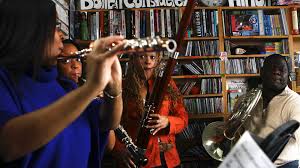
dressSOUNDTRACK: IMANI WINDS-Tiny Desk Concert #277 (May 29, 2013).

windsFor some reason this video and audio has been removed from the NPR site (no explanation is given).  But I found it elsewhere and was able to really enjoy it.

But they have left up the blurb:

When Igor Stravinsky began composing The Rite of Spring, his ballet for vast symphonic forces, he could hear the music in his head but couldn’t quite figure out how to write it down. It was just too complicated.

Today, 100 years after The Rite‘s premiere, the fearless musicians of Imani Winds make it all sound remarkably easy, given that they’ve condensed Stravinsky’s massive walls of sound down to just five instruments: bassoon, clarinet, flute (doubling on piccolo), oboe and French horn.

Make no mistake: Many of the jagged rhythms and crunching chords remain viscerally intact, albeit on a more intimate scale. As the group huddled behind Bob Boilen’s desk, bassoonist Monica Ellis noted the opposing ratios, saying, “It’s apropos in some strange way that we are playing one of the most massive pieces in some of the smallest instrumentation in one of the smallest settings that it could possibly be played in.”

The setting might be small, but in this clever arrangement by Jonathan Russell, we learn that a wind quintet, when called upon, can make a mighty and sonorous wail. Just listen to how the Imanis cap off “Dances of the Young Girls” with the entire quintet in full cry (at about 4:30 into the video). The bassoon repeats a fat bass line while the clarinet runs its snaky scales. The piccolo, in piercing chirps, serves as a foil to a frenzied oboe and snarling “whoops” from the French horn.

But not everything in The Rite is all pound and grind. Stravinsky’s transparent introduction, almost impressionistic, is a fluttering aviary of winds — even in the original — with individual colorings for each instrument. It’s all rendered beautifully here by Imani Winds, musicians brave enough to play David to Igor Stravinsky’s imposing Goliath.

This concert is fascinating to watch (and listen to) because even though this piece is familiar (to me) in theory, it’s apparent that I don’t really know it.  And I can see why this piece was so controversial when it came out–it is weird and chaotic and almost random at times.  I imagine that seeing it as a ballet might make it more cohesive, but it’s still pretty out there.

I love that the bassoon seems to be the primary instrument–one that doesn’t typically take center stage.

The group breaks up their selections into three primary chunks.

Selections from The Rite of Spring:

For “Introduction” the bassoon is the primary instrument playing the initial melody.  Then the clarinet and oboe give the whole thing an unsuaul sound–to say the least.  The French horn actually works as the the bass for this part.  It’s also neat watching the flautist switching between flute and piccolo.  I’m not sure when the second part “Augurs of Spring” begins, but I assume it’s when the bassoon repeats that initial melody and then the French horn plays a staccato bass note. The music sounds kind of threatening but whimsical at the same time.

Somewhere in here “Dances of the Young Girls”  begins.  I assume once the piccolo starts chirping and swooping.   And then the band grows very loud before abruptly stopping.

The second segment she describes as incredibly picturesque. “Ritual of Abduction” begins nosily with almost total chaos from all the instruments–the piccolo stands out as sharp and piercing.  As with the other segments, I’m not sure when “Spring Rounds” begins, but I have to wonder if this is when the music seems to go circular and then slow down. There are low notes from the French horn while someone is playing accent notes that sound, not off, but dissonant–providing stark contrast with the rest of the slow movement.  There are some blares of music from the French horn as well.

I’m guessing that “Dancing Out of the Earth”  begins with the fast bassoon melody: up down up down up down up down with trills and swirls from the flutes and clarinet.  It rises and rises very dramatically and then stops.

They tell us that it’s not possible to play the entire ballet so they have taken the “greatest hits” and for this show it’s the greatest hits of the greatest hits.  Consider it a deconstruction with five instruments. But it still evokes the spirit of this sacrificial dance.

She talks about how controversial this was in 1913, “when ballet was meant to be about… I was going to say flamingos…. fairies swans, the other water animals.”   This is the final moment the virgin who sacrifices herself dances herself to death.  And they are going to exemplify trombones and timpani and all that loud stuff (the French horn player laughs and says “Grr I am trombone”).

“Sacrificial Dance: The Chosen One” begins with a three note melody–again it is somewhat threatening.  There’s lots of little fast runs by the French horn with accents from everyone else.  It stops dramatically at one point and then resumes with so many different melodies.  And then comes the surprise ending with a rising flute line and then a low end from the horn.

Without taking away anything from Imani Winds, I ‘m sure this performance doesn’t do the whole thing any justice.  But it is amazing to imagine how much more there is to it.  And it is amazing that these five instruments can evoke so much.  It’s an uncomfortable and somewhat shocking first listen.  It’s amazing that is over 100 years old, although it sounds so contemporary.

I don’t know why it’s not on NPR any more. I found it on YouKu (whatever that is).  I have been able to watch it twice but on two other times I was unable to watch it.  So keep trying, it’s worth the effort.

[READ: May 5, 2016] The Boy in the Dress

David Walliams is best known (if he is known at all) as the tall one on the sitcom Little Britain.

I had no idea he wrote books (he has done over half a dozen children’s books), and I was happy to start with this, his first one.

This book is illustrated by Quentin Blake, who is best known (if he is known at all) as the illustrator for the Roald Dahl books.  So his simple, somewhat sloppy, style might look familiar.

The story is, as the title suggests, about a boy who wears a dress.  And the story is very funny–not because it makes fun of him for wearing a dress, oh no.  In fact, I love the story for going out of its way to show that it is normal that a boy might want to wear a dress. (more…)

Read Full Post »

7_28_08-640SOUNDTRACK: NINA DIAZ-Tiny Desk Concert #561 (August 26, 2016).

nina And here it is four and a half years later.  Nina Diaz has gone from wearing dark jeans and a v neck sweater (stripes in the purple family) to wearing a Sonic Youth T-shirt with the neck collar torn off and the sleeves removed.  Her arms are covered in tattoos.  Her hair is long and down and she’s got pink eye shadow on.  girlcoma2Here’s a comparison photo.

Her voice sounds much more powerful as well.

I’m fascinated by her bassist who is playing a seven string bass (and has crazy hair).  And I’m intrigued that there’s a dedicated melodica player in this show.

As she sings “January 9th” you can see how much more confident she is (not that she was nervous in 2012).   She sings her songs with real power and sway in her body.  The song opens with some cool bass lines (he really uses all of the 7 strings, which I like).  And as the song moves along the backup band sings harmonies which sound very good.

“Dig” has a bunch of cool things going on.  There’s an interesting, somewhat sinister main guitar melody, a cool bass line and a slide guitar from the second guitarist.  I really like the way she delivers the lines in the middle of the song–a kind of accent that works great with the lyrics.

As she opens “For You” she says she’d like to “hopefully have it on in the background when someone’s losing their virginity.”  And with a lyric like “For you I’ll go all the way.  I scream your name,” it seems pretty likely.  It begins with just her voice and acoustic guitar (with the other guitarist playing some melodies too).  The song is a sweet tender ballad and when she asks at the end if we can picture someone losing their virginity to it, the answer is certainly yes.

[READ: March 1, 2016] “The Teacher”

This story goes in some interesting directions.  It begins with the narrator (I) talking about the “girls” Betty and Maeve.  They are good girls, who do whatever they can to help people out.  In their apartment, they have taken in pregnant teens, boys caught stealing and even, once, a suspected sex offender (which didn’t make the town happy).

Maeve types documents and Betty reads manuscripts for a publisher.  And that’s how they met Dr. Chacko.

Betty received Chacko’s manuscript.  It was really long and handwritten. So Maeve copied it out on the computer and they both fell in love with the content.  When they tried to explain the book to the narrator they couldn’t do it in any way that made sense to her.  They also failed to describe him to her as well. (more…)

Read Full Post »

2016-12-05-21-06-09SOUNDTRACK: THE CRANBERRIES-Tiny Desk Concert #197 (February 23, 2012).

I’d published these posts without Soundtracks while I was reading the calendars.  But I decided to add Tiny Desk Concerts to them when I realized that I’d love to post about all of the remaining 100 or shows and this was a good way to knock out 25 of them.

cranbI really liked The Cranberries’ first album, but was turned off by them when they got overplayed on their second album (If I never heard “Zombie” again…”).

I didn’t realize that they launched a comeback of sorts back in 2012.  And this Tiny Desk Concert was a stop on their tour.  They play five songs–far more than most bands.  They may have been one of the biggest st bands to play up until now.

For this set, they strip down to acoustic guitar, tambourine, electric bass and Dolores O’Riordan’s vocals.

One of the things I liked about their first album was her delicate voice.  She found her more aggressive voice on later songs (where her accent really leaks through).  And that brash style is present here.  Which makes “Linger” sound a little odd and a little less pretty.

They play two then new songs which I rather like: “Tomorrow” and “Raining in My Heart.”  Since I’ve no expectations about them, I find her voice works very well with them.  They also seem much simpler than some of their earlier songs and she not doing anything unusual with her voice..

“Ode to My Family” (the doo-doodoo-doo song) sounds pretty good in this setting.  Although I always laughed about the “does anyone care” refrain because well, sometimes I didn’t.

They take a request to play “Zombie” and I have to say I really like it in this acoustic format.  She straps on an acoustic guitar and plays most of the “leads.”  She definitely does some unusual things to her voice, but overall its sounds good.  Somehow the electric bass really adds to all of the songs–I never noticed how much it added before,

Overall, the “lads” sound good and her voice has maintained its power.  Although I can help but think she looks a lot like Billie Joe Armstrong with that haircut.

[READ: December 24, 2016] “Being Mary”

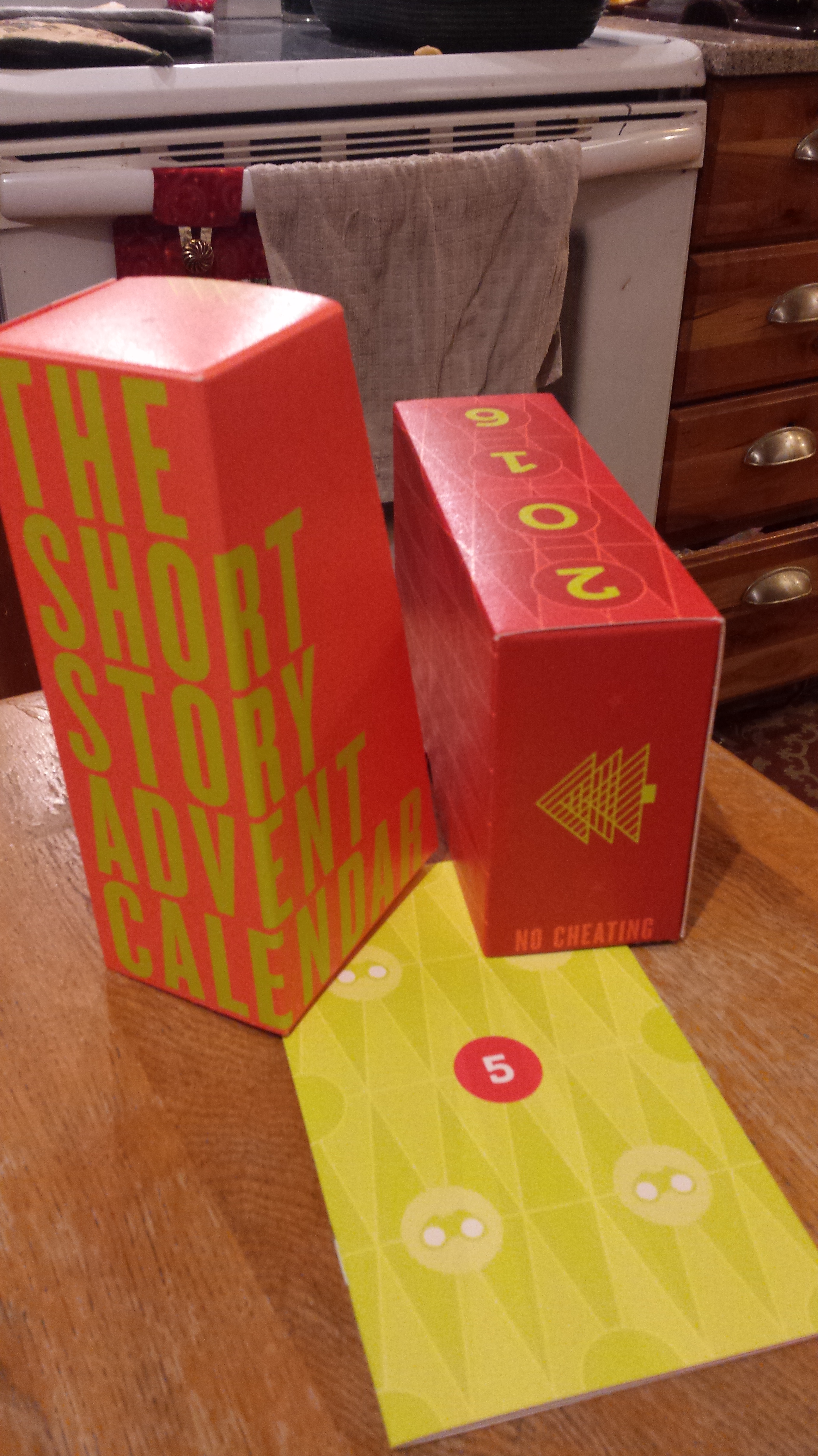
Near the end of November, I found out about The Short Story Advent Calendar.  Which is what exactly?  Well…

The Short Story Advent Calendar returns, not a moment too soon, to spice up your holidays with another collection of 24 stories that readers open one by one on the mornings leading up to Christmas.  This year’s stories once again come from some of your favourite writers across the continent—plus a couple of new crushes you haven’t met yet. Most of the stories have never appeared in a book before. Some have never been published, period.

I already had plans for what to post about in December, but since this arrived I’ve decided to post about every story on each day.

This is theoretically the final book in the Short Story Advent Calendar (wow that went fast).  But there is a bonus story for tomorrow (how cool!).  Let’s not get ahead of ourselves.

This short story is about a girl, Laura, who is supposed to be Mary in the school Christmas pageant.  She has always wanted to be Mary (she is six now) and feels she was destined to play her.  Last year she was an angel, which was disappointing.  But at least she wasn’t Jezebel or Judas or “poor old Leah, the unwanted older sister.”

But tragedy has struck.  Literally. (more…)

Read Full Post »

storiesSOUNDTRACKPOLYPHONIC SPREE-Tiny Desk Concert #259 (December 21, 2012).

The Polyphonic Spree performs a Tiny Desk Concert.I really enjoyed Polyphonic Spree’s first album (and their strange robes and cult-like following (apparently even within the band).

They put out a Christmas album some time ago, and since we have a big pile of Christmas albums, I grabbed that one.  I didn’t love it, but it was a fun addition to our collection.

This Tiny Desk Concert is notable for just how many members of the band are behind (and on the side of) the Tiny Desk (perhaps 18?).

And the band is suitably musical–trombone, trumpet, keys, drums, bass, cello, violin and a ten (or so) piece choir.

Interestingly, I find that the weak link in this whole thing is leader Chris DeLaughter.  It’s just that his voice is really not that interesting. It’s especially notable on “The Christmas Song” where he sings some high notes unaccompanied.  When the choir comes in (and they change the melody) it sounds really cool.  I especially love the way they make “reindeer really know how to fly” into a high note.

The first song is “Happy Xmas (War Is Over)” which I feel is the Christmas song they might be best known for.  It’s pretty traditional to the original, with the choir filling in for the kids.  The addition of horns really adds a lot to it.

“Silver Bells” gets a pretty rocking treatment–the buildup at the beginning is pretty cool.  They change the main melody to an almost circus-like waltz. I love the way it sounds when everyone joins in–and when the choir is singing along to the rocking end (with a very different melody) it sounds great.  But once again DeLaughter’s voice doesn’t seem up to the task of leading this larger group.

But it’s festive and fun, especially with everyone in red robes (and DeLaughters green one).

[READ: December 2016] Christmas Stories (1854-1864)

Last year, I started reading some Charles Dickens Christmas Stories in December.  I imagined that I’d finish the whole book this season (all 750 pages of it), but I didn’t come close.  I enjoy these stories but they are not quick reads by any standard.

The fascinating thing with a lot of these stories is that they appeared in All the Year Round, a Victorian periodical founded and owned by Dickens and published between 1859 and 1895 throughout the United Kingdom.  But just because these stories came out for the Christmas issue doesn’t mean they have anything to do with Christmas directly.

I thought I’d be reading a whole chunk of the book in a row, but I wound up skipping around a bit.  Maybe next year I’ll finish the remaining stories. (more…)

Read Full Post »

compassSOUNDTRACK: CAROLINE ROSE-Tiny Desk Concert #465 (August 24, 2015).

carolineCaroline Rose is a rocking country gal.  Rose’s music is inspired by rockabilly, fast country and traveling from town to town in a van.  She plays electric guitar and the rest of her band includes a bass drum and slide guitar.  The slide guitar kind of dominates the songs though, so they all sound kind of samey to me.

“Yip Yip Yow” is a fast rockabilly type of song with some silly lyrics.  It’s a fun song.  “I’ve Got Soul” This song is bouncy and rocking although I can’t help thinking of the old adage that if you have to say it you probably don’t have it

“I Will Not Be Afraid” is a more inspirational song with a real honky-tonk feel.  The guys ware wearing T-shirts that say “fuck fear” but they had to cover them up for broadcast (which is why they are wearing jackets).

Of all of the recent rocking country gals I’ve been hearing, I like her best.

[READ: March 15, 2016] The Golden Compass Graphic Novel

I loved The Golden Compass when I read it about a decade ago.  I thought it was really smart, really subversive and really engaging.

What you might notice about this graphic novel is that it was translated.  The Golden Compass was written in English.  This graphic novel was written in French (as Les Royaumes du Nord #1) by Stephanie Melchoir and then translated back in to English by Annie Eaton, which is a weird process.  The art was done by Clément Oubrerie.

The original book was quite large (about 400 pages).  This graphic novel is about 8o pages.  And, as you might guess, quite a large chunk of it is pictures.  So it has been reduced pretty drastically.

One of the great things about the book was the subtlety and evocative descriptions.  You can see where I’m going next–this condensed version is…lacking. (more…)

Read Full Post »

« Newer Posts - Older Posts »