Feeds:
Posts
Comments

Archive for the ‘Record Labels’ Category

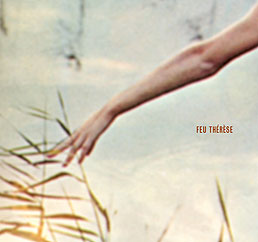
clockworkSOUNDTRACK: FEU THÉRÈSE-Ça Va Cogner [CST049] (2007).
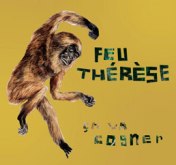
feu2Bands change sounds from one album to another all the time, but few as radically as this one. From weirdo psychedelic band to French new wave pop band, from 6 minute instrumentals to 2 and 3 minute songs with vocals.

At times the album feels like Kraftwerk meets Serge Gainsbourg (which I know is an unfair reduction, but when your singer mostly talk/sings in a deep French voice, the comparison is apt.  And yet the album is fairly poppy and catchy as well.

“A Nos Amours” opens the disc with three minutes of synth happiness. It even has a section where the music drops out and the bass resumes its place.  Recall in their debut that at 4 minutes of each song something radically different happened.  Now the songs just end. “Visage Sous Nylon” features the more Kraftwerk sound—but it’s an almost organic Kraftwerk (which I know makes no sense but there it is). “Les Deserts des Azurs” has a kind of Tangerine Dream feel with washes of analog synths.

“Le Bruit du Pollen La Nuit” has a weird kind of synthy 70 s rock feel but the music almost drops out entirely (but not quite) while the vocals (in French) are spoken. It feels like it’s mocking and serious at the same time.  It’s also got a discoey chorus singing “You’re just a just a just a pretty boy!”

“Nada” has a synthy almost disco feel.  “Ça Va Cogner” is just over 5 minutes long and consists of various delicate swells of synths.  I kept waiting to hear The Beach Boys “Wouldn’t It Be Nice” burst forth from the waves, until about half way in when it turns into a simple delicate melody and a children’s chorus. “Les Enfants” is a simple ditty with hummed lyrics.  It’s poppy and catchy as anything

“Ferrari en Feu Pt. 2” is a fast synth songs with slap bass. (Part 1 was on the debut and sounded nothing like this).  “La Nuit Est un Femme” is a slow synth track with a female backing vocals over a sung male lead. The end of the song adds some loud textures to this otherwise sweet song bringing in some really interesting tensions.  The disc ends with “Laisse Briller Tes Yeux Dans le Soleil,” a synthy instrumental that ends with cheesy charm.

This album is really wonderful–surprisingly catchy and dancey and yet exotic enough to not sound like anything else that (most) people are familiar with.  All of the Constellation albums are streaming on their site, but this one is especially worth checking out.

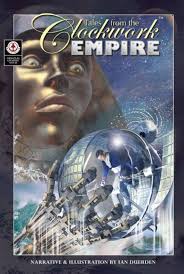
[READ: April 15, 2014] Tales from the Clockwork Empire Book 1

I was very intrigued by this book because of the steampunk nature and because I have a strange fascination with clockwork ideas–a technology that is precise and interesting yet which never really took off beyond clocks and small toys because other technologies were more powerful

I thought that the cover was kind of interesting with this gigantic metal head holding ball.  But on closer look the man in the ball was very poorly computer rendered and that should have been a tip off.  For all of the people in the book have this same unfinished-rendered look.  It looks a lot like storyboards of unfinished versions of Pixar films.  I mean, really cheesy and really unfinished and really unsettling. This is especially noticeable on the rendering of Napoleon Bonaparte in the “end credits” of the book.

I hate to harp on the graphics, but this is a graphic novel after all.  All of the non human elements looks fine, many look even better than fine, bordering on photo realistic.  But the humans all seem ugh, creepy and stiff and just dropped on top of these scenes.  It is terribly distracting and may even make the dialogue feel stiffer than it actually is.  Because the dialogue felt very stiff and mechanical as well.

It is the kind of story that seems historically accurate in the details and works very hard to let you know that it is accurate.  Indeed, in the end of the book Duerden goes to great lengths to show the accuracies in the writing.  But there’s so little flow in the dialogue that it seems like a lecture.  Basically the entire book feels like, not a first draft, but like the draft before the final draft.  Like the book is going to go back to have a final polish to make the dialogue breezier and make the pictures look better.

This is all a shame since I haven;t eve talked about the story yet. (more…)

Read Full Post »

half pastSOUNDTRACK: FEU THÉRÈSE-Feu Thérèse [CST040] (2006).

feu1Feu Thérèse is a band created because of the hiatus of Le Fly Pan Am.  They offer a melange of styles, as befits the visual arts origins of several of the members.  And yet, there is a solid rhythm section that grounds the band in a wonderful way.

“Ferrari en Feu” opens with 3 minutes of pulsing waves of synths and electronic bird-call-like sounds. It’s unclear exactly what you’re listening to and it seems like the whole album will be a kind of ambient collection.  Then a proper rock song kicks in with chords and notes and drums–it has a cool psychedelic vibe and feels very late 60s.  “Mademoiselle Gentleman” has pulsing bass notes and staccato guitars with a layers of distorted laughing throughout (there’s no “singing” on the first two songs). At around 4 minutes (out of 6) the feedback squalls too and a simple steady beat.

“Tu n’avais qu’une oreille” seems like a traditional song–with singing (in the Serge Gainsbourg, dirty old man style of whisper/singing) which has a middle section that is quite conventional (with ahh ahhs) but again at 4 minutes, the song shifts into a faster drumming section (with more spoken words).  But then a lengthy trippy guitar solo shatters the mellowness.  “L’homme avec couer avec elle” starts with what sounds like horns.  At around 4 minutes in turns into a kind of western but with a crazy clarinet solo accompanied by sped up noises that sound like Pink Floyd’s Ummagumma.  There’s more psychedelic Pink Floyd styles on the final track, “Ce n’est pas les jardins du Luxembourg.”  The song opens with “drips” that sound like “Echoes.”  And then there’s more Ummagumma birds/animals (possibly distorted seagulls?).   At (yes) 4 minutes it turns into a trippy psychedelic organ based song (with Indian music as well).  The song is 12 minutes and leaves no sound unheard.

The music is experimental but it is not terribly “difficult.”  It’s actually quite a fun album which demands multiple listens.

[READ: April 24, 2014] Half Past Danger

The tagline for this book (which is presented like a movie in a number of ways) is Dames. Dinosaurs. Danger.  And the cover features a giant Nazi flag in flames.  Sounds like pulp genius to me.

And so it is.  Stephen Mooney has been an artist for some great graphic novels over the years and this is his first book that he wrote on his own, based on a labor of love–having Nazis fight dinosaurs.  Like a dream come true.

So obviously, this is a story of an alternate past.  Set in 1943 in the South Pacific, an Army battalion is tracking an area when they discover a secret Nazi base.  There are not supposed to be any Nazis this far east, and yet there they are.   Sergeant Tommy “Irish” Flynn is surprised but he gets his team ready to take pictures and prepare a report.  But that loud rumble sounds like the biggest tank they have ever heard.  And then out steps a T-Rex (in a great reveal).  The T-Rex wipes out all of Irish’s company.  Irish escapes with a few photos and little else.

We jump cut to two months later where Irish is drinking in a bar in New York City.  In walks General Noble of the USMC and Elizabeth Huntington-Moss of British MI6.  They request his service.  He tells them to fuck off.  Actually no, he doesn’t.  This is a PG13 story, there’s a few “shite”s and an occasional “damn” but it is squarely in the realm of comics–implied sex, a lot of blood and a few mild words.  A brawl ensues, in which a Japanese fighter helps out Noble & Moss.  And soon Irish is recovering and being told what’s going on.  After some string reluctance, Irish agrees to go back to the island.

Noble proves to be a supremely tough and string fellow.  The Japanese soldier has defected to the U.S. after the non-respectful attack on Pearl Harbor.  And Moss is an enigma.  As they approach the island, there is plane trouble and a wonderfully cool scene in the water (which I won’t spoil but the art and graphics are terrifying and wonderfully drawn and colored–Mooney did the colors for the first chapter, while Jordie Bellaire did the other five).  (more…)

Read Full Post »

eaveptotterSOUNDTRACK: ELIZABETH ANKA VAJAGIC-Nostalgia/Pain EP [CST035] (2005).

This album is considered an EP, probably because it runs about 33 minutes. And yet with 3 songs and one of them nearly 20 minutes long, it feels like a much bigger release.

The first song, “Nostalgia” is 17 minutes long and begins with three minutes of scratchy violin “warm up” sounds.  Around 3 minutes guitars start playing some simple chords which gives the violin some direction.  Around 4 minutes’ Vajagic voice comes in, throaty and raw like a wounded PJ Harvey crossed with Patti Smith.  The song doesn’t vary all that much in the 17 minutes, but it’s her voice that carries the anguish and pain of the song along.  The interesting touch of the scratching guitars on the edges gives more angst to the song.  Starting around 12 minutes, the song kind of devolves into a series of noises –clicking drums, scratching violins.  A kind of free-form exploration like the beginning was.

So although the song is 17 minutes, it’s really only about nine of actual song.  The rest is sort of an experimental jam, with the volume down quite low in comparison.

Song 2, “Pain” is 12 minutes and opens with a slow guitar melody.  But the real focus is Vajagic’s voice because the instrumentation is basically a guideline.  Until, that is, the 4 minute mark comes around, when the guitar turns electric and more powerful and EAV’s voice goes away for about 3 minutes.  The melody is simple but has a good yearning and building quality with an interesting slow guitar solo meandering around.  Around 8 minutes she begins singing again, repeating the original vocal melody but now with screaming guitars behind her–it’s quite a change and a cathartic introduction of new sounds.  The ending kind of drifts away without ever really letting go.

The final sing is only 4 minutes.  It opens with cracking sounds and a music box.  When the song proper starts there’s more quiet guitars and EAV’s voice and that’s all the song is–like a microcosm of the longer songs and somewhat more powerful for its condensed nature.   Although I do prefer the louder more angsty music she makes, this is a nice showcase for her restraint.

This is the last record that I’m aware of her releasing.

[READ: April 26, 2014] Lord Tottering: An English Gentleman

I saw this comic strip book at work and decided it was interesting looking and might be fun to read.  The title made me laugh as did the Registered Trademark “Tottering-By-Gently” and is a kind of compendium of Lord Tottering comic strips.

Never heard of Lord Tottering?  Me either, but it has been appearing weekly in the magazine Country Life since 1993 and is “phenomenally successful” according to the introduction.  Which also states that Annie Tempest is one of the top cartoonists working in the UK.  (I’ve never heard of her either, but again, that doesn’t mean much).

The cast consists of Daffy Tottering, who reflects “the problems facing women in their everyday life” (if you are rich and British, and live in “their stately home in the fictional county of North Pimmshire).  She also spends time (and I feel compelled to put all of this in here because it is an amusingly long list):

“reflecting on the intergenerational tensions and the differing perspectives of men and women, as well as dieting, ageing, gardening, fashion, food, field sports, convention and much more.” [She must be exhausted].

Her husband is Dicky.  He is basically a retired rich Englishman who hunts and fishes and goes to the kind of club that is mocked endlessly in Snuff Box.

I mock this cartoon a little bit because it is pretty mockable–wealthy aristocrats suffering white people’s problems.  Think of it almost like Cathy for Rich Britons.  And yet, despite all the mocking, I got a chuckle out of a lot of the strips, and I’m sure it brings a smile to many people. (more…)

Read Full Post »

 superheroSOUNDTRACK: ELIZABETH ANKA VAJAGIC-Stand With the Stillness of This Day [CST028] (2004).

eavlpElizabeth Anka Vajagic is a singing in the vein of Carla Bozulich (whose solo album CST would release a few years after this one).  She has a powerful, raw voice that can go low but can also rage.  She has a lot of control over her voice (which is seems sometimes Bozulich doesn’t) which leads to a lot of tension-filled songs.  EAV plays guitar and some piano.  These songs are also filled with cello, harmonium and an oud.  The songs are slow but powerful, and her voice suits the melodies very well–dark and full of longing.

“With Hopes Lost” has that mournful keening vocal, and the cello really provides that hopeless-feeling component.  “Around Here” is a dark stormy song with aching strings and piano.  “Where You Wonder” is a dark song but with a fight left in it–resistance to the darkness it feels.  The song feels mostly sparse until 4 and half minutes when it rages with a screaming guitar solo and big bold chords.  “Iceland” has probably the most fun chorus of the bunch, something actually sing-alongable.    The next song is called “Why.”  I’m always suspicious of a song called “Why” and this one is a little deservedly so–vague statements are not really anyone’s forte.  She has the keening down well, but it feels a little flat–brevity helps on this one.  “And the Sky Lay Still” opens with a slow echoing guitar, and as it slowly builds, ther’s a great vocal melody that builds for the verse  “Sleep with Dried Up tears” is an acoustic song.  It’s definitely a bit of a downer after the intensity of the album (which is dark but powerful).

EAV is definitely not for everyone.  It depends on your taste for screaming and, your taste for strings instead of heavy guitars to accompany those screams.

[READ: April 23, 2014] The Adventures of Superhero Girl

I grabbed this book from the library because I like Hicks’ work.  When I brought it home, Sarah thought that I brought it for her because it is on her Hub Reading Challenge List.  But no, I liked Hicks enough for myself (so selfish–although I did let her read it first).  She loved it, and so did I.

The Adventures of Superhero Girl is an online comic which Hicks seems to have started in 2010.  Online it is black and white (this book is done with colors by Chris Peters). I didn’t check to see if this is the entire series, but I assume it is. It went on hiatus in 2012 and has been eerily silent ever since.  So at least we have this pretty hardcover document of this hilarious series.

The strip is a genuine, honest to god, comic strip–8 panels and a punchline!  (okay most have fewer than 8 panels, but that’s the set up).  It’s sort of a goof on superheroes, but as the introduction by Kurt Busiek points out, it is really not a parody of the genre.  Superhero Girl is a superhero, with powers (but not amazing powers) and she does help people and she suffers angst from it.  But Hicks plays around with the most basic tropes of super heroes.

Superhero Girl, first of all, doesn’t have a superhero name.  She’s not hugely muscular, she’s not super sexy, she doesn’t wear a sexy costume.  She’s a young Canadian girl in a mask and (sometimes) a cape. She doesn’t have an agonizing backstory.  She just has superpowers and wants to help people. (more…)

Read Full Post »

dec20133SOUNDTRACK: FRANKIE SPARO-Welcome Crummy Mystics [CST023] (2003).

sparo3It’s a shame that Welcome Crummy Mystics proved to be Sparo’s last album, because it is by far his best.

This album has more sounds, sounds that accentuate the simplicity that Sparo has constructed.  So there are all kinds of unexpected instruments on th opener “Hospitalville” including horns and bass, And the whole thing has a noir feel that pervades much of the disc.  It was was completely absent on the debut (intentionally obviously).  There are harmony vocals on “Sleds to Moderne” and “Akzidenz Grotesk” has electric guitar and Sparo’s voice mixed a bit louder.  There’s more rocking out on “Back on Speed.”

But it’s not all uptempo.  “Bright Angel Park” is a pretty  instrumental with lots of piano while “My Sistr” is a menacing slow piece that begins with just bass and voice.  Although as more instruments are added the menace is replaced by a kind of jazz feel.

“Camera” is sung in French and has interesting electronics throughout and “City as it Might Have Been” has beautiful strings layered on top of each other as it builds to an epic conclusion.  “This Lie” ends the disc with piano and organ an excellent accompaniment to his lyrics.  And on this album you can really hear what a great lyricist he is.

It’s amazing what a change this is from the debut and that he packs all of this great music in to a mere 37 minutes.

[READ: April 15, 2014] “Loving Las Vegas

I felt like I had read something else from Whitehead about gambling and it turns out he wrote an article for Grantland about the World Series of Poker in Atlantic City.  This essay is an excerpt from the upcoming book that he is writing about said World Series.

This is a story about Whitehead’s appreciation for Vegas from when he was young and dumb (well, not so dumb, really).  His friend Darren got a job writing for Let’s Go, the funky travel guide.  And the assignment was Vegas.  In 1991.  They were Gen X and they were going on a great road trip.  So naturally, the first thing to do was get new speakers for the crappy car.  [I have often felt a strong connection to Whitehead, feeling that we could have been soul mates if I were a little more daring and had lived in NY instead of NJ].

They go on a great road trip (Colson hadn’t gotten a license yet so he was a navigator).  They went to Chicago and saw the Sears Tower, they went to New Orleans to visit an old friend whose frat buddies wanted to know why he was “bringing niggers and Jews” into their chill-space (yikes).  Then they got out of there and went to the Grand Canyon and Lake Mead (which they wrote about).   And then it was on to Vegas. (more…)

Read Full Post »

dec20133SOUNDTRACK: FRANKIE SPARO-Arena Hostile (VPRO Radio Recordings) [CST017] (2001).

sparo2I didn’t love Sparo’s debut album, but a year later while on tour with A Silver Mt. Zion (whom I do love) he went into a studio in Amsterdam to re-record some of those songs.  I’ll let the Constellation site tell you what this EP is and why I like it so very very much,

In January 2001, Frankie Sparo toured Europe with a Silver Mt Zion. Musicians from the latter group worked on new arrangements of songs from Sparo’s debut record My Red Scare, adding strings, organ and electronics to Frankie’s guitar and beatbox compositions. Some of the results were captured in a live studio performance recorded live to 2-track at VPRO radio in Amsterdam, where a feverish flu found Sparo in a ravaged, hallucinatory state – which only added to the dark magic of these recordings. The four songs on this EP are all first takes, beautifully recorded by the good people at VPRO. Along with 3 songs reworked from the debut album, the EP also includes a heartbreaking cover of the Rolling Stones’ “I Am Waiting”, which Sparo performed solo a number of times in concert.

“Diminish Me NYC” is great in this version with an off-kilter electronic arrangement and strings. “The Night That We Stayed In” which I singled out on the debut album has two violins, turning the song into an even cooler number (although the “throw your hands in the air” line seems moderately less comical now).  “Here Comes The Future” has an almost dance beat—a slow dance mind you, but still, a good one and ends with some organ waves.  And the cover of “I am Waiting” must be the slowest cover of a Stones song ever.  I don’t know the original, but I bet it sounds nothing like this.

I really like this EP a lot and it makes me want to like the debut album even more–if I had more patience with it.

[READ: April 15, 2014] 3 book reviews

noveltyThis month Bissell reviewed non-fiction three books.

The first is Novelty: A History of the New by Michael North.  In this book North argues that newness, that novelty, has always been a problem: “one of the very first ideas to trouble the consciousness of humankind.”  This dates all the way back to Aristotle who argued that nothing came from nothing; that everything came from something else.  Even the Renaissance, that period of great exploration and creativity was really just mimicking classics (hence the word renaissance).  The new tends to be looked at askance, so we get terms like “novelty act.”

North says that one thing which is genuinely new is our proclivity to turn everything into information as gigabits or as abstract knowledge.

I’m intrigued by the premise of this book but not enough to want to read it and frankly, Bissell doesn’t make it sound that compelling.

Bissell connects this attitude about newness and novelty to the rock world (and rightly so).  Where we (well, some people) value novelty and criticize anything that is derivative.  Which leads to the second book (another one I don’t want to read but for different reasons).  Beatles vs. Stones by John McMillian.  The Beatles were arguably the most original band ever since no one did what they did before them.  And then, bvssarguably, the Rolling Stones came along and did just what the Beatles did a little bit afterwards.


Some easy examples:

  • The cover of the Rollings Stones’ first album is compositionally similar to the cover of The Beatles’ second album.
  • A few months after the Beatles released their ballad “Yesterday,” the Stones released their ballad “As Tears Go By.”  (The song was recorded earlier but was initially dismissed as not Stones enough).
  • After the Beatles used a sitar in “Norwegian Wood,” the Stones used one (in a different way) in “Paint It Black.”
  • And quotemaster himself, John Lennon, once said, “Everything we do, the Stones do four months later.”  [The Stones did still released some great music after The Beatles broke up, of course, even if now they play nothing they wrote after 1981 on tour anymore].

And this Lennon quote is typical of this book which is a gossipy casual look at the differences between the Beatles and Stones [Beatles when you’re writing, Stones when you’re jogging; Beatles when you’re alone, Stones when you’re with people).  But in addition to comparisons, he includes scenes like when the Beatles attended a Stones show and when Jagger and Richards were at Shea Stadium for The Beatles’ arrival.

There are many similarities between the bands, although the biggest different seems to be that the Stones never really became friends, while The Beatles were friends till the end.

Of course, the Stones has always been cooler than the Beatles, which is a nice segue into Bissell’s third book: The Cool School: Writing from America’s Hip Underground by Glenn O’Brien.

coolschoolO’Brien’s thesis is the seemingly obvious one that “cool” is not a new thing–that early tribes doing war dances had cool people playing syncopated drums in the corner.  But he is not arguing about coolness, he is collecting “a louche amuse bouche [that must have been fun to write]…a primer and inspiration for future thought crime.”  The book includes works by the likes of Henry Miller, Delmore Schwartz, LeRoi Jones and Eric Bogosian.  I like some of these guys, but as soon as I see them assembled together, I know I’m not going to be going anywhere near this book.

Bissell says that there is some cool stuff here: Miles Davis writing about Charlie Parker for example, but most of the cool seems to be trying too hard.  Like the “charmlessly dated” Norman Mailer piece, “The White Negro.”

I appreciate the way Bissell sums up what comes through from the book: “to be cool…is to make the conscious choice, every step of the way through life, to care about the wrong damn thing.”

It is comforting to come away from one of these book reviews without wanting to read anything.


Read Full Post »

harpoctSOUNDTRACK: FRANKIE SPARO-My Red Scare [CST013] (2000).

sparo1Speaking of early Constellation Records releases, Frankie Sparo was everywhere in the early stages of the label.  And then he just disappeared.  That proves to be quite literal as he was the pseudonym of Chad Jones (who i don’t know from anywhere else).  Frankie released two albums and an EP and then Chad retired him.

This debut is perhaps the most deconstructed and un-musical album of songs that I can think of.  It’s as if Sparo wrote songs and then decided to take four of every five notes out of the song.  And then he sings in a style that accompanies that spareness.  It’s actually too much of such littleness.  If Sparo’s voice filled the song the minimal accompaniment would be interesting.  If there was more music, his slow singing wouldn’t sound quite so… flat?  There’s talk of his lyrics being good, but I honestly find his singing to be so slow that I can’t really follows any of the songs.

And it’s a shame because his voice is plaintive and longing and the construction is very interesting, it just doesn’t really pan out for me.

The final two songs start to add more to them and I like them better.  I especially like the final tack “The Night That We Stayed In” which has without a doubt the slowest rendition of the oft cited phrase “throw your hands up in the air and wave them like you just don’t care” (imagine falling asleep while saying that).  But the music is fuller, bringing in a new and interesting style to the end of the album .

I suppose that in the right frame of mind this would be exquisite, I just hope I’m never in that frame of mind.

[READ: April 18, 2014] “Near-Death in the Afternoon”

I’m not  huge fan of Ernest Hemingway–I just don’t like his macho schtick.  But this piece–which is a comic story (I don’t know who the person he’s talking about is) is not only quite funny, it seems to be turning his macho image on its head.  Although perhaps I am oversimplifying Hemingway.

Anyhow, this comes from a collection of his letters, although it is considered a story and what submitted to (and rejected by) Vanity Fair in 1924.  The full title is “My Life in the Bull Ring with Donald Ogden Stewart” which implies to me that it is a longer piece, although it feels full to me.

It begins with Hemingway saying that he often encounters Donald Stewart in the bull ring (which make me laugh).  But he’d often ignored him.  Yet on this occasion the crowd is going crazy for him: “Don Stewart!” they chant.  Ernest wants to get into the ring but the crowd is insistent and, indeed, someone even throws a tomato at him (and hits him right in the face). (more…)

Read Full Post »

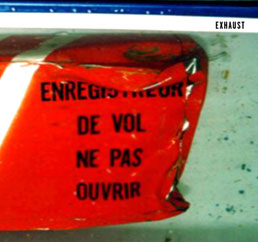
may20014SOUNDTRACK: EXHAUST-Enregistreur [CST021] (2002).

exhaust2While Exhaust’s debut was a mixed affair, their follow up really showed some great improvement.  The band feels more unified, there aren’t any single songs that were remixed (which stand out in a bad way), rather the remixing was done throughout the songs.  And, best of all there’s a lot more of that spooky bass clarinet.

The album feels more organic, “Gauss” opens with waves of music setting a mood until about a minute into track 2 “Behind The Water Tower” when the drums kick in the atmospherics gains urgency. “Voiceboxed” has a feeling of contemporary Portsihead which is neat from an album that came out almost a decade earlier.  This one has some samples of commercials , but they’re a little low in the mix so its hard to make them out. Although the spoken word part that swirls around your head is very cool and a little startling. (Headphones are a must for this album). There’s also a funny standup routine (yes, in the middle of the song)—wonder who it is.

“Ice Storm” opens with a sampled piano & a lot of static.  It morphs into a lengthy play/commercial/PSA by Heathrow Wimbledon and is called “The Maternal Habitat.”  I can’t find anything else about it online.  It’s rather fun to listen to, although when the skit is done, the music becomes strangely slow and the last two minutes (of 9) go on too long.  It bleeds into “Dither” which is mostly sampled voices and more commercials.  I love this Negativland kind of pastiche

“Behind the Paint Factory” mirrors “Water Tower” in that the drums kick in after 2 minutes and the song sounds great.  “My Country is Winter” is mostly tape manipulations including a screaming guitar solo that runs around your head.  “Silence Sur la Plateau” returns to that sort of ominous Portishead vibe with the sound of loud crinkling plastic as its main “music.”  There’ also a lengthy silence in the track which seems rather pointless to me.  The album ends much like it began with “Degauss” which is mostly clarinet solo and atmospheric sounds

It’s much better than their debut but still feels like they could have made a tighter album if they’d gotten rid of some (but not all) of the nonsense.

[READ: December 1, 2012] “The There There”

I have enjoyed Nelson’s stories in the past, and I feel like it’s time to find a collection of hers (and I see she has a lot, too).

What I especially enjoyed about this one was the way the title was used in the story and also the way it encompassed the main character in a way that was unrelated to the way it was used in the story.  In the first instance, the family is on vacation and they overhear some tourists asking “Where the hell are we?” while standing in front of the Colosseum.  The son explains that’s “like not seeing the Grand Canyon until you fell in it, like it’s the there there.”

The story is about a family–a mother, a father, and two sons.   It opens with the sons and the mother discussing the perfect murder.  The husband disapproves of the discussion but only indicates this with a cleared throat.  We see that Caroline, the mother, was imagining her husband when she was describing her murder.

While the story is basically about the mother (although told in third person), it flits back and forth to the other family members and how their behavior affects her.  First we see that their oldest son, having gone off to college, has fallen in love with his landlady–a woman with children older than him.  Caroline is appalled at this especially when Drew reveals that she’s not all that pretty, that he would have chosen one of those daughters. (more…)

Read Full Post »

may20014SOUNDTRACK: EXHAUST-Exhaust [CST004] (1998).

exhaustExhaust’s self titled album was another early release from Constellation (disc number 4).  At this point Godspeed You Black Emperor had not defined the label’s sound yet (correctly or incorrectly), so we get Exhaust.  Aidan, who is 1-Speed Bike, which did not have very good drums, is the drummer for Exhaust.  And man, the drums are awesome here.  The drums are again, loud, and they have a great live feel to them–the beats are funky and different and while they anchor what’s going on they in no way keep things settled.

The rest of the band includes a bass, a guitar, a bass clarinet and samples.  The samples just aren’t loud enough anywhere on the album.  It’s a shame–you simply can’t really hear them, which I guess is the point, but then what’s the point of having them?  So the first song, “A History of Guerrilla Warfare” is interesting (again, those drums!), but it’s in song two “Metro Mile End” when that bass clarinet comes out that it totally rules. The third song “Homemade Maggot Beer” is a 20 second hardcore song with just drums and feedback.  Song 4 “We Support Iran in Their Bid to Win the 1998 World Cup” is a remix by 1-Speed Bike, and after listening to the full length 1-Speed Bike, it sounds like it– a little dull, a little slow and nowhere near as dynamic as the album.  And it has such a good title too.

“Two Years On Welfare” has louder samples–you can hear a kind of political rant going on, but it seems like it could have been used better.  But around 1;30 the sounds get really interesting.  Track six, “This Is Our (Borrowed) Equipment” is another 1-Speed Bike remix, and it is mostly drums again.  “Wool Fever” makes good use of harmonics and drums although it goes on a bit too long.  The 8th song, “A Medley Of Late Night Buffet Commercials” is the final 1-Speed Bike remix.  Unlike the others I really like this one.  True, I wish the song was more akin to what the title says, but the drums are funky and hammering and sound great.  “Winterlude” is 40 seconds of squealing radio sounds before the final track reintroduces us to that great clarinet.  “The Black Horns Of H2T” reminds us how good this album can sound.

So it’s a mixed bag, but the highs are definitely high.

[READ: April 14, 2014] “Humor”

This article appeared in the December 1958 issue of Harper’s magazine.  Mark Twain made over 100 contributions to the magazine (geez).  I have often thought that Twain is an author I need to read more of.  But when I hear he has contributed over 100 articles to Harper’s alone, my mind reels at the output.

Anyhow, this is an article about repetition in the art of humor.  Interestingly, he relates a story that happened forty years before writing this.  So the occasions of the joke he tells was in 1918!  Woah.

The article talks about the first and second lectures that he ever gave.  The first was a success but he was concerned about the second as he had very little in the way of humor to warm up the audience.  He decided to make use of an anecdote that everyone in San Francisco had heard many times and were undoubtedly sick of.  It had been overdone as long as five years ago.  But he decided that he would simply tells the very overdone story over and over until people started to laugh (the precursor of Saturday Night Live, obviously). (more…)

Read Full Post »

gorey SOUNDTRACK: 1-SPEED BIKE-Droopy Butt Begone [CST014] (2000).

1speed1-Speed Bike is a remix project by Adian Girt who has played in Godspeed You Black Emperor and Exhaust for Constellation Records.  This is his first release as 1-Speed Bike.  He has released several more on other labels but I haven’t heard any of them.

The most interesting thing about this disc are the titles of the songs.  And those titles are so clever that it gives one high hopes for the album.  I don’t know who Mauro and Elwy are (track 1) but the rest are certainly interesting if not confrontational.

1. The Day That Mauro Ran Over Elwy Yost
2. Seattle/Washington/Prague 00/68 Chicago/Nixon/Reagan Circle-Fighting Machine
3. Yuppie Restaurant-Goers Beware Because This Song Is For The Dishwasher
4. Just Another Jive-Assed White Colonial Theft
5. Why Are All The Dogs Dying Of Cancer?
6. My Kitchen Is Tiananmen Square
7. Any Movement That Forgets About Class Is A Bowel Movement

But what’s disappointing is that the album is comprised almost entirely of a drum machine and some other sounds.  The drums are very very loud in the mix, and there’s very little variation in each song (which befits a remix, I suppose).  And yet, the “musical” section is largely nonexistent.  There’s a lot of spoken word stuff, which is fun, but it also seems randomly thrown on there. The disc opens with him asking someone to be quiet because he has to flush the toilet.  There’s a lengthy declaration of love for his family and war against capitalism.  And that everyone else can fuck off if they don’t want to hear him talk politics.

There are samples sprinkled around the disc, but most of them are inaudible or played with so much that it renders them hard to figure out.  There are some interesting sounds in “My Kitchen is Tienanmen Square,” but the rest is kind of dull.  The end of the last song offers a voice mail message that gives you the title of the album.

Overall, not an exciting debut for 1-Speed Bike.

[READ: April 12, 2014] The Strange Case of Edward Gorey

I bought this book many years ago when I was on an Alexander Theroux kick (which actually means I wanted to read some of his books but did not, although I do hope to).  Anyhow, this book has been staring at me for some time so I decided to just dive in.  I actually know precious little about Theroux except that his novel are supposed to be weird or difficult or something.  I know slightly more about Edward Gorey, although little more than his drawing style (which I love) and his sense of humor (which I share).

So this book is a sort of a biography of Gorey by Theroux.  Theroux was one of Gorey’s close friends.  This is saying something because as a rule Gorey was rather a recluse and didn’t much like people (he did like cats, though).  The book is not a proper biography–a biography of his works or even of his life.  It is more of a biography of the man and his quirks.  There’s very little about his childhood, and not a lot about his books (except for Theroux’s admiration).  But mostly its about what it was like to hang out with Gorey–and to delight in the baroque and fun turns of phrase that Gorey used.

We learn a lot about what he liked (soap operas, classic movies [Metropolis, M, Sunrise, Gold Digger series], obscure horror films [The Town That Dreaded Sunrise, Women of Straw, Suspiria (at least I’ve heard of that one)], TV shows [The X-Files, The Golden Girls, Matlock, Buffy the Vampire Slayer] and of course, classic literature [he was well versed in many original languages].  We also learn what he most assuredly did not like.  He did not like Star Wars, he did not like Mel Brooks, he did not like Robert Altman or Woody Allen [Gorey was a film critic for a time].  And as for our foremost actress, Meryl Streep, he has this to say:

“Oh please!” said he, every time she opens her mouth, the critics insist Dostoevsky’s speaking!” He paused. “And who’s even dippier is Glenn Close. Sexless as a teabag. Neither man, not woman, nor in-between! Julia Roberts’s face looks like it’s made of rubber — remember those Snap, Crackle and Pop cartoon faces? And of course Streisand. God help us, I won’t even go to see.”  Gorey loathed her with a passion, even more than John Waters does.  I once heard him fulminate for a good half-hour on the impossible stupidity of her 1962 hit, “People,” a song that, with its mawkish, politically correct soul-sharing, shrinkingly embodies to a T everything that Edward Gorey utterly loathed:  “Pee-pull, pee-pull who need pee-pull are the luuu-kiest pee-pull in the wooooooorld!.”  I cannot honestly think of a single sentiment that would have driven Edward Gorey battier faster than the flaccid lyrics of that song with its, to him, canasta-closeness, hideous interconnectedness, and ultimate meaninglessness.

He also hated Andrew Lloyd Webber, the Marquis de Sade’s writing, right-wing talk show hosts, every movie Al Pacino ever made [Of Bobby Deerfield he cried out during the movie, “oh for Christ’s sake…what is this in aid of?”] and Martha Stewart.  And while he had great disdain for Barbra Walters and Maya Angelou, he was especially appalled by “the invincible vulgarity of the preposterous Kathie Lee Gifford and the host of miniature faces she was constantly pulling” (20) saying: “her facial contortions would be excessive on Daffy Duck” (44).

One thing to note about the book.  As you can see form the page numbers above, similar sentiments about Gifford are on page 20 and 44.  Theroux tends to circle back onto the same topics a number of times.  So the same names tend to pop up three or four times (Buffy comes up at least 3).  It feels like Theroux (who published this soon after Gorey died) wrote it in fits and just needed to get down as much as possible.  And while the book feels repetitive, it never feels flaccid or like it’s full of padding.  It just feels like a huge outpouring of information.  Or like an essay collections by a person who tends to revisit similar material.

Interestingly, the book isn’t necessarily for fans of Gorey.  I honestly haven’t read any of his works in years, but I found this book funny and strangely cathartic (if you like bitchy, opinionated scholar-types).  If any of the above appeals, you’ll get a kick of out Gorey, whether you like his drawings or not.  The book is also full of Gorey’s drawings (although nothing new), from his books and from some of his posters.

I was also intrigued by the fact that Gorey, clearly no friend of people, did not shy away from the outside world.  He lived on Cape Cod and New York City where his number was in the phone book the whole time.  He walked around Manhattan in a big beard and fur coat (until he gave up the coat for animal rights reasons).  When he moved full time to Cape Cod, he lived in a residential area and did not turn away any fans (he always had manners even if he knew the whole thing was kind of silly).  And apparently his house was simply chock full of fascinating geegaws and gimcracks.

For all of his proclamations about others, he did not have a large ego about his own work.  And the book gives the impression that he was just an opinionated guy who knew what he liked and was happy to share his thoughts with others (or his cats).

I just found out that Theroux reissued this book in 2011 and updated it from 68 pages (my version) to 168 pages.  I don’t know how much has changed.  In looking online it seems like maybe all he has done is make the original pictures larger, but there may be other textual changes as well.


Read Full Post »

« Newer Posts - Older Posts »