I received an email recently from Josh Landow. I know, who? Well, he went on to tell me that he and some friends had started Y-Not Radio.
I’m still trying to piece together all the details, but Landow was a DJ for WXPN’s Y-Rock radio. His email states that he and a bunch of other DJs left (or were asked to leave?) WXPN and started Y-Not Radio as Philly’s “real alternative.” What they have going on is strangely impressive for a station that has only an online presence. There’s also a disclaimer that (despite lifting and modifying the Y Rock logo) they are not affiliated with The U of Pa of WXPN.
The YRock Branch of WXPN is still operational. And, looking at the music they still play, it’s not that radically different from the music of Y-Not Radio (in other words, it’s all great current indie rock and old school alternative music). So, basically what we have is an embarrassment of riches from alternative radio online. Of course, I don’t really like listening to the radio online (except at work). I only wish I could get them both in on my actual radio.
It’s all a fascinating fight about indie rock and online radio. Let’s see how it plays out!
[READ: March 12, 2011] Babymouse: Heartbreaker
The kids at the library love Babymouse. And since I am greatly influenced by the opinions of fourth graders, I decided to read it as well. This is the fifth book in the series (but relax, they don’t appear to have any kind of thread that makes it hard to follow).
The basic set up of the stories is that Babymouse is a mouse in school. Her classmates are other animals. It’ hard to determine very much about the school or even the setting of where Babymouse lives because this whole book is about Valentine’s Day.
The most fun aspect of the book for me was the dream sequences. I’m not even entirely sure if the targeted audience would get all of the references, but I sure liked them. For instance, while Babymouse is wondering if anyone will invite her to the dance, she has a Cinderella dream sequence and a Snow White Dream sequence (which goes astray) and, my favorite, a Dirty Dancing sequence (“Nobody puts Babymouse in the corner,”) complete with a Swayze quiff on the male mouse. (more…)
I first heard Shad on CBC Radio 3 online. The track was “Yaa I Get It” and I really enjoyed it. I haven’t listened to a lot of rap in the last few years; I’ve more or less grown bored by the genre, especially all the violence. So, I was happy to hear this track, which was boastful but funny.
I decided to get the whole disc, and I wasn’t disappointed. “Rose Garden” features a sample of “I Never Promised You a Rose Garden” which sets some of the tone of the disc. But it’s on the next song “Keep Shining” that Shad’s uniqueness shines through. This song is about women. But not in any way that I’ve heard in rap before: “I can’t speak for women. We need more women for that.” And the inspiring final verse:
My mom taught me where to keep my heart.
My aunt taught me how to sing two parts.
My sis taught me how to parallel park,
and tried to teach me math but she way to too smart.
My grandma in the 80’s is still sharp.
My girl’s cousin is in activism in art.
They taught there’s no curls to tight, no mind too bright, no skin too dark to keep shining.
Later on the disc is “We Are the Ones” an oddball jam that sounds like one of those bizarre Atlanta rap tracks (funky vocals and all) and an amusing line about being Lost like Matthew Fox. But his name checks aren’t all pop culture (Moredcai Richler gets a mention as does Glenn Beck (he “better duck like foie gras”).
And of course, there’s the wonderful “Yaa I Get It.” With great horn blast samples and all kinds of noise competing for our attention. Yet, throughout the lyrics stand out: “Maybe I’m not big cus I don’t blog or twitter…Dawg, I’m bitter.” And there’s this wonderful couplet: The precision of my flows in terms of tone and diction/Is akin to that of the old masters of prose and fiction.” Or take this lyrics from “Call Waiting,” “But what they say is hard for a pimp is harder for a man of faith.”
“Listen” has some great scratching on a heavy rocking track. It’s followed by “At the Same Time.” This is a mellow, sad song, which I don’t really like, yet which I find very affecting. And lyrically, it’s great: “I never laughed and cried at the same time… Until, I heard a church pray for the death of Obama. And wondered if they knew they share that prayer with Osama.”
The disc ends with “We, Myself and I” another noisy rocker and the one minute “Outro” an acapella rant.
Shad is a great rapper, doing interesting things and trying to make a difference. He’s worth checking out.
[READ: November 1, 2010] “Marshall McLuhan”
I learned about this book because I’m a fan of Douglas Coupland. And, as it turns out I’ve always had a vague interest in Marshall McLuhan, so it seemed like a sure thing. The problem was that the book was not readily available in the U.S. So, I had to order it from Amazon.ca. And, since you can’t get free shipping to a U.S. address from amazon.ca, I thought it would make sense to order 6 titles in the series, all of which I’ll post about this week.
So, here’s a shameless plug to the folks at Penguin Canada–I will absolutely post about all of the books in this series if you want to send me the rest of them. I don’t know how much attention these titles will get outside of Canada, but I am quite interested in a number of the subjects, and will happily read all of the books if you want to send them to me. Just contact me here!
Each book in the series has an introduction by John Ralston Saul, in which he explains the purpose of the series and states globally why these individuals were selected (“they produce a grand sweep of the creation of modern Canada, from our first steps as a democracy in 1848 to our questioning of modernity late in the twentieth century”). It also mentions that a documentary is being filmed about each subject.
Perhaps the most compelling sentence in the intro is: “each of these stories is a revelation of the tough choices unusual people must make to find their way.” And that’s what got me to read thee books.
This volume was probably a bad place to start in the Extraordinary Canadians series if only because it appears that Coupland’s volume is markedly different from the others. Coupland being Coupland, he has all manner of textual fun wit the book. The other authors seem to write pretty straightforward books, but you know something is up right away when you open the book and the first six pages comprise a list of anagrams of “Marshall McLuhan.”
On to Marshall McLuhan. The Medium is the Message. That’s about all anyone who has heard of McLuhan knows about him (and that he has a hilarious cameo in Annie Hall).
When I was a freshman in college, I took a class in Communications which focused an awful lot on Marshall McLuhan. I didn’t like the teacher very much, but the message stayed with me all these years. And so even though I’m not a student of McLuhan or anything, I was happy to relearn what I should have known about the man and his ideas.
SOUNDTRACK: LOS CAMPESINOS! Live in studio at WEXP, July 31, 2008 (2008).
For this brief in studio performance Los Campesinos! play four songs from their debut album Hold on Now, Youngster. The band sounds great in this setting. I don’t have this album, so I don’t know if they deviate at all from the originals, but the live versions are tight and very effective.
The interviews are informative and rather gushing (I’ve never heard a DJ kiss the ass of a performer in such a nice way before…and the band seems really flattered by it…it’s all very sweet). The DJ also has a funny conversation about their tendency to scream in their songs. (It’s cathartic).
What I didn’t notice so much on Romance is Boring was how many different lead singers the band has. With these four songs, there are enough lead vocalists to show a lot of diversity (and a lot of screaming, too–“don’t read Jane Eyre!”). And, as one might expect if you know their later disc, the lyrics are smart, funny and wicked.
The difference between Romance and Hold On, seems to be that the band were much punkier on this early disc, and that all comes out in these live tracks. And the songs are all short: 3 minutes and under. They really pack a lot in here.
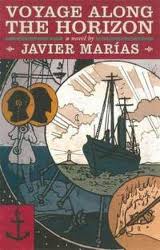
[READ: January 13, 2011] Voyage Along the Horizon
Most of Javier Marías’ books are translated and released through New Directions. But for reasons I’m unclear about, this book, Marías’ 2nd novel, was published by Believer Books (an imprint of McSweeney’s). I haven’t read any of Marías’ other novels, so I have no idea if this is similar to any of the others (there’s a Q&A at the back of the book which suggests that this is typical of his earlier novels), but it absolutely makes me want to read more by him.
What I loved about this story first off was the sense of distance we received from the main story itself. (Marías is Spanish, but this is a technique employed by Roberto Bolaño (Chilean) extensively…. Obviously, others do this as well).
The set up of the story is this: 1) An unnamed narrator has a party at his house. At this party, two individuals, Miss Bunnage and Mr Branshaw (or is it Bragshawe?–he never learns) discuss author Victor Arledge. Miss Bunnage is a scholar of Arledge and Mr Branshaw has in his house an unpublished novel that investigates the disappearance of Arledge and why he stopped writing. And so, Branshaw invites Bunnage and the narrator to his house the next day to have the novel (called Voyage Along the Horizon) read to them.
2) So, the next morning, the two go to Branshaw’s house where he does not let them see the book, preferring rather to read the novel aloud (which gives us essentially 3 levels of remove from the action of the story). That’s a long way to go before you even get to the meat of the book. (more…)
SOUNDTRACK: BELLE AND SEBASTIAN-World Cafe Live [downloaded from NPR] (2006).
This is a live in-studio session promoting The Life Pursuit. David Dye conducts an interview between songs (we learn what “Funny Little Frog” is about and how “Seymour Stein” came to be).
Stuart and Stevie are animated and in good form and the band sounds excellent. On “Funny Little Frog” in particular they sound like they’re really enjoying themselves.
The session is only 25 minutes long, but they play 4 songs: “Funny Little Frog”, “Meat and Potatoes,” “Seymour Stein” and “Sukie in the Graveyard.” It’s worth a listen and it’s available here.
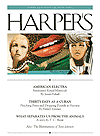
[READ: November 6, 2010] “What Separates Us from the Animals”
For some reason I always put off reading T.C. Boyle stories, even though I invariably enjoy them. And this was no exception. I saw that it was a fairly long story and I waited to read other things in this issue of Harper’s (Susan Faludi–where has she been all these years? and another NASCAR article–my second one in a few months after the article in McSweeney’s, which is pretty surprising since I’ve never seen more than a second of a race).
But back to Boyle. I loved the technique involved in this story. The narrator is a critical woman who makes claims towards being reasonable about her criticisms. And the thing is, her criticisms are entirely justified and yet her attitude makes you want to disagree with her. It’s a very cool conceit–an unlikable narrator whose opinions happened to be your own.
What she’s critical of is the new doctor who arrives on their island (I’m gathering it’s Nantucket). He was picked out of a couple of applicants to be the island’s only doctor, handling basic problems and issues (especially during the summer tourism season) but always with the understanding that serious problems would have to go to the mainland. In addition to his salary he would receive free lodging in an older, historic house.
She met him on the night of his arrival in order to get him set up in the house. She immediately invited him to dinner. He accepted for the following night and arrived at their own beautiful house in paint-spattered jeans and dirty work boots. He ate well and then fell asleep on their couch. Obviously, this did not set things off on the right foot. But what was worse was that this dirty demeanor spilled over into the rest of his life: his car has a flat tire for two months and worse, his examination office is filthy too (something I’m totally on board with criticizing). They’re also concerned with the state of the historic house, which no one has seen yet–what no invitations to cocktails? (more…)
SOUNDTRACK: A CAMP-Studio Sessions on WFUV [available on NPR] (2009).
I rather enjoyed A Camp’s latest album Colonia. I discovered this session while browsing through NPR’s archives. There’s a pretty lengthy (and amusing) interview with the band and then they play three acoustic songs: “Love Has Left the Room,” “Stronger Than Jesus” and “I Signed the Line.”
Nina’s voice sounds fantstic, and in such a simple acoustic session it’s her voice that really sells the music. But this is another instance where an acoustic, stripped down session reveals the strength of the songs themselves. The album has a lot of production, but when it’s just bare bones guitar and bass, the melodies still hold up. And again, Nina’s voice just soars through these meloides. Anyone who got sick of The Cardigans needs to hear what Nina Persson can do in other settings.
The subtitle gives the foundation of the article: Franzen loved Peanuts when he was growing up. This article was timed to coincide with the release of the awesome Fantagraphics collection of original Peanuts cartoons. I’ve only read the first of these Peanuts books, but it was really eye-opening and quite fascinating to see that such odd thoughts were published on a daily basis on the comic section! And, I hate to sound curmudgeonly (that’s Charlie Brown’s job) but Franzen is right, the original Peanuts cartoons are far more existentially dark and satisfying than the fluffy Snoopy & Woodstock cartoons of the late 70s and 80s.
Anyhow, Franzen loved these early comics (and he makes a wonderful comment about spending a lot of time (probably age-inappropriate time) with talking animals: Snoopy, Narnia, A.A. Milne). But as with all of these longer Franzen articles, it’s about much more than just Charlie Brown. One night when he was a young boy, his older brother Tom had a huge fight with their parents and stormed out. Franzen sets this up in the context of generation gap that was sweeping through the country in the late 60s/early 70s.
And it’s this unsettledness that also explains the popularity of the Peanuts cartoons. Despite all of the differences between generations, everyone agreed that they loved Peanuts (except for Franzen’s parents, evidently–his dad never read the funnies, and his mom only liked a strip called The Girls, which sounds like a prototype of Cathy).
The other angle that this article takes is about losers. Charlie Brown was a loser, there’s no doubt. But Franzen himself was a winner. He was the king of spelling bees in his school. (This relates to Charlie Brown misspelling “maze” as MAYS, a perfect misspell for a sports fan). And when a new kid comes to challenge him he steps up his game…and makes the kid cry.
This, of course, leads to guilt. Charlie Brown one said, “Everything I do makes me feel guilty.” And now Franzen feels guilty about the boy in his class, and about being mean to a frog as a kid and about the wash cloths at the bottom of the closet which don’t get used enough (Sarah and I have jokey guilt about that too) and even about the stuffed animals who don’t get cuddled enough. (more…)
I mentioned to Sarah that WRFF plays this song all the time and that I really liked it but I had no idea what the band or even the song title was because they never say it. And, I couldn’t really figure out any of the words (I’m usually working with loud tools) to investigate online.
Well, we were in the car the other day and, of course, they played it again. Happily, the Prius has a “message” button on the radio that tells you the names of the band and the song title (if the radio station provides it). Huzzah, here’s the song (hilariously, they played it on the way home from our Halloween party too, proving my point that they really over-play this song). But I still think its great.
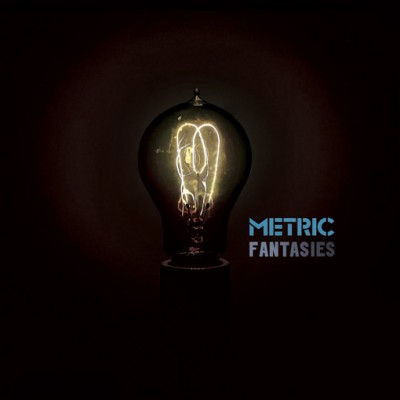
I’ve been interested in Metric for a while (there are members of Broken Social Scene in the band) but for some reason I never listened to them.
This track opens with a fast guitar riff which is undercut by this cool bass riff. Over the top staccato vocals (that come in unexpectedly) and a nice harmony type vocal (like later period Lush) make this opening really captivating.
The repeated chorus “Is it ever gonna be enough” (with I think whispered “enough”s in the background) remind me so much of the mid 90s alt rock that I love so much. I have no idea if the rest of the disc is like this, but I have finally bitten the bullet and decided to order the whole thing. I hope I’m not disappointed.
[READ: 2005 & October 25, 2010] “Bird-Dogging the Bush Vote”
A while ago I read a whole bunch of pieces by Wells Tower. I intended to read all of the pieces I could find by him and I discovered he had written a few pieces for Harper’s as well as the articles for Outside. I’m fairly certain I read this story back in 2005 when it came out, as it sounds kind of familiar, but maybe I, like Tower himself, was too bummed with the results to actually read about it in detail.
In this piece, Tower decides to go “undercover” and volunteers at some Bush/Cheney offices in Florida (a pivotal state that year and one in which malfeasance was predicted on a large scale). Tower is unabashed about his distaste for Bush (to us, not to the Floridians). He admits that he did feel a bit of hope in the President right after the events of September 11, 2001, but by September 12, he was already disgusted with him again.
And so he spends a few weeks in Florida actually asking people to vote for Bush in hopes of finding something out of the ordinary. Which, aside from some real mean spiritedness (which I’m sure was the same in the Kerry camp), there was nothing scandalous to report. Although I will say that the example he gives (telling a Democrat that voting was on the day after the actual election, which I’d seen in a number of other places too, really pisses me off despite its fairly innocuousness and no doubt ineffectiveness–as a librarian I hate telling lies to people). (more…)
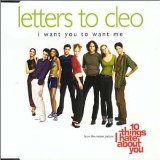
SOUNDTRACK: LETTERS TO CLEO-“Cruel to be Kind” (1999).
I’ve liked Letters to Cleo since I first heard them back on WFNX radio in Boston. And since I had a dog named Cleo and their album was called Aurora Gory Alice, how could I not love them?
This cover of Nick Lowe’s song comes pretty close to the end of their career when they were poppier and slightly less indie. In fairness, they were always a poppy band and their hooks were irresistible, but they had a bit more of an edge in the beginning.
This cover is pretty spot on. There’s not a lot of “Cleo” put into it. It sounds a lot like the original, only sung by the wonderfully voiced Kay Hanley (she sang Josie’s parts in the (terrible) Josie and the Pussycats movie, the title song for My Friends Tigger & Pooh and (gasp) as a backing singer for a Miley Cyrus tour (that’s the sound of my indie heart breaking). I love her voice (she has a strange pronunciation/accent of some words that I find endearing), so I find the LTC version better than the original, but it’s honestly not all that different.
[READ: Week of November 16, 2010] Consider David Foster Wallace [essays 4-6]
These three essays cover the novella “Westward…” and Infinite Jest. I was pleased to begin the essays about IJ because I know that novel far better than I know the short stories or Broom of the System.
As I mentioned in the previous entry: because I don’t have a lot to say about the pieces, I’m only going to mention things that I found puzzling/confusing. But be assured that if I don’t mention the vast majority of the article it’s because I found it interesting/compelling/believable. I don’t feel comfortable paraphrasing the articles’ argument. Besides, what would be the point of that? (more…)
SOUNDTRACK: BRAD-Live from WXPN’s World Cafe (2010).
Brad are most known, if they are known at all, for being the side project of Pearl Jam’s Stone Gossard.
I remember getting their first album and thinking it was okay. But since then I have re-listened, and bought their other discs and found them to be an interesting side project from one of hard rock’s most enduring bands. It’s also funny that Stone Gossard, by no means the most visible member of the band (surely Eddie Vedder wins for that and even lead guitarist Mike McCready gets more notoriety) should create a side band in which he is, again, not the main figure. Lead singer Shawn Smith steals the show with his impressive voice.
This live set is brief (six songs in half an hour) and features four tracks from their recently released Best Firends? CD (which I haven’t heard). The other two tracks “Buttercup” and “Screen” come from that first album.
The tracks from the new album seem like good classic rock (with “Low” being much harder than the other three and “Believe in Yourself” being a delicate piano ballad). “Buttercup” still sounds good here as a sort of mellow jazzy number. I’m not sure if Smith’s voice is as strong as it was, but he still sounds good.
It’s not a great show, but it’s a good collection of mellow rock songs. You can listen to the set here.
[READ: October 11, 2010] “The Book of the Dead”
Edwidge Danticat is the next writer in the 1999 New Yorker 20 Under 40 issue.
I love the name Edwidge Danticat, although I’ve never heard of her before and (therefore obviously) never read her stuff. Actually I take that back, I had heard of her book Krik? Krak! but didn’t recognize her as the author.
This story is about a young sculptor. Her subject is almost exclusively her father. He was a prisoner in Haiti and had a chance meeting, on the day he was released, with the woman who would later become his wife (and the artists’ mother). They escaped to America and have lived happily ever since.
The first sculpture that the young artist made is one that she has fondness for but one that she never thought was very “strong” as a piece. But one day she is told that a celebrity, a Haitian beauty who now appears on an American television show, wants to buy this sculpture as a gift to her own father. The sculptor is so excited, that she personally travels across the country to deliver the sculpture to the celebrity. She invites her father along since he was the inspiration. (more…)
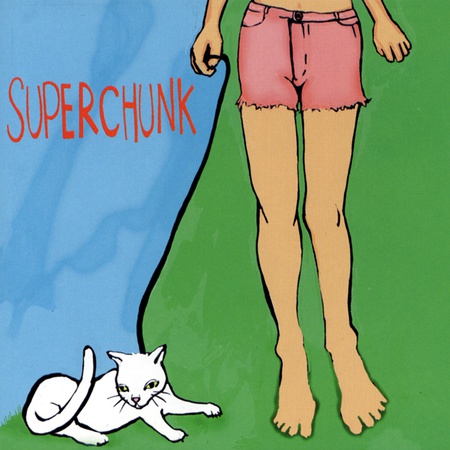
The first track “A Small Definition” is a surprisingly slow track from them. Even when the band kicks in about midway through, it’s still a fairly mellow sound And yet it is not a light track by any means. (A nice squalling guitar solo certainly helps.) But in case you thought the band had mellowed, track two “Her Royal Fisticuffs” brings back their punky bratty sound.
The third track, “The Mine Has Been Returned…” brings in a new sound altogether. It opens with a heavy heavy destorted bass riff (instead of the usual guitars). But the real surprise comes with the very distorted organ sound that throws the bass into sharp relief
The final song, “Hero,” is part surf rock part detective song, and continues the interesting departures that Superchunk explore on this disc.
And then there’s the bonus track. It’s a radio broadcast from WXYC a radio station in Chapel Hill. The track is a 42 minute deconstruction of “Hyper Enough.” It’s a few guys (and radio callers) dissecting the song in incredible detail. (hey listen to one verse about 20 times). The track starts about 20 minutes into the show, and they have just gotten past the first verse). At about 10 minutes into the track, the discussion turns into a fascinating look at deconstruction and the primacy of the author. There’s a caller’s snide comment that the band is all on crack and they should stop wasting their time–which of course, leads to a discussion of how drugs might impact the lyrics of the songs. It’s a crazy track and a crazy radio show. And shows how much fun college students can have when they really enjoy something. I listened to it when it came out, but haven’t listened to it again until this week. And I enjoyed it just as much this time. Perhaps I’ll try again in another 15 years. Oh, and until iTunes, I never knew the song was called, “Cool-Ass Mutherfuckin’ Bonus Track.”
[READ: October 1, 2010] “The Local Production of Cinderella”
Allegra Goodman was the next writer in the 1999 New Yorker 20 Under 40 issue.
The opening paragraph of this story confused me greatly. I wasn’t sure exactly what the author was trying to say. I re-read it three times, and then it finally clicked. And after that, the story flowed very nicely. The story is set in Hawaii in 1978. Two women, Roselva and Helen, have worked at the Hawaii Dept of Human Services at adjoining desks for years.
Roselva is Chinese-Hawaiian, very religious and a real believer in her job. Helen is of German descent and was born in Maine. She wanted out of human services. (more…)
[LISTENED TO: Week of October 10, 2010] David Foster Wallace interviews
There will soon be a group read of Consider David Foster Wallace, a book of essays about, yes, David Foster Wallace. In a sort of preparation for the group read, I decided to immerse myself in the available audio files online.
I started with the interviews. They cover the period from Infinite Jest to Consider the Lobster. For the most part, the interviews took place on various NPR stations. There are not a lot of details given about the items on the site (which is the only flaw that I can see with the site), but you can more or less tell from the titles given what book is the cause for the interview.
I know that DFW was not a fan of interviews, yet I can’t help but be surprised at how few interviews actually seem to be extant (or at least preserved online). You can see a list of all of the interviews on the site. I’m listing and giving very brief notations for some of the longer interviews, but I just don’t have the time/inclination to go into great detail. (more…)
 SOUNDTRACK: Y-Not Radio (2011).
 I received an email recently from Josh Landow. I know, who? Well, he went on to tell me that he and some friends had started Y-Not Radio.
 The YRock Branch of WXPN is still operational. And, looking at the music they still play, it’s not that radically different from the music of Y-Not Radio (in other words, it’s all great current indie rock and old school alternative music). So, basically what we have is an embarrassment of riches from alternative radio online. Of course, I don’t really like listening to the radio online (except at work). I only wish I could get them both in on my actual radio.