Feeds:
Posts
Comments

Archive for the ‘Racism’ Category

SOUNDTRACKFLAMING LIPS-“Two Blobs Fucking” (2011).

As I understand it, the Flaming Lips will be releasing an EP a month for the next twelve months–all in an unusual manner.  The first track, “Two Blobs Fucking” comes as a 12-part free video download.  Like with their album Zaireeka (which had 4 discs that you were supposed to play simultaneously to get the full effect), this song  comes as 12 separate audio tracks.  According to the online instructions, you’re supposed to get 12 friends with iPhones to each download a section and to play them at exactly the same time.  I don’t have an iPhone (or 12 friends that I could get in the same place at the same time to listen to a song), so I did the next best thing: I used YouTube Downloader, converted the tracks to WAV and then mixed them with Audacity.

I have received many CDs over the years that have mixing technology where you can play certain tracks and not others, but it’s very rare that I play around with them.  This whole process was easy enough that I made 20 different mixes of the song.

The “full” version is a fascinating amalgam of noises with a very cool riff that opens the track.  About midway through, the whole song is taken over by noise–a distorted squealing noise–for a few seconds.  And then the song continues as it was with gentle washes of sound.

The twelve tracks include the main riff, the riff as done by “voices” (doh doh doh), there’s a few noise (guitar) tracks and some noise (animal sound) tracks.  There’s a drum and percussion track as well as the vocal track.

The lyrics are a brief story about Wayne finding a dumpster from a factory which makes and discards manikin body parts.

It’s a weird track.  It’s not their best by any means, and the lyrics are hard to hear for the most part (unless you isolate them, of course).  But having now listened to it so many different ways, I’ve rally grown fond of it.  The riff itself is as I said, simple, but very cool.

It’s a neat experiment and nice that it was free (unlike their second release–a USB drive that is buried inside a candy skull which costs $150).

[READ: May 23, 2011] “Deniers”

This is, as far as I can tell, the first short fiction piece that Lipsyte has had published (please correct if I’m wrong), aside from that really short piece in The Revolution Will be Accessorized.  I enjoyed The Ask quite a lot, and I was excited to read more from him.

This piece, as the title implies, plays around with types of denial.  But it is self-denial that they experience.  The main character is Mandy, an adult whose father, Jacob,  is still alive but who has recently been put into a nursing home.  The opening of the story is more about Jacob.  More specifically, it’s about how Jacob relates (or doesn’t) to Mandy.  Jacob is a holocaust survivor, but he has barely said one word about it (or, really, anything) to Mandy.

Through a series of flashbacks, we see Mandy’s childhood with this distant father.  We also see what happened between Jacob and his wife–a fascinating story of duplicity on almost everyone’s part (and which is wonderfully encapsulated by the picture that accompanies the story (a Shell station lit up at night with the light from the letter “S” unlit). (more…)

Read Full Post »

SOUNDTRACK: BEN FOLDS/NICK HORNBY-Lonely Avenue (2010).

As the cover of this album notes: “Ben Folds adds music and melody to Nick Hornby’s words.”  And that is true. The only surprising thing about this combination is that Folds is quite a good lyricist himself, so it’s surprising that he would sacrifice his words.  But regardless, the fit is a good one.

Sometimes it seems like Hornby is challenging Folds to come up with melodies for some of his more difficult lyrics which Folds lives up to).  But they have such similar sensibilities that (aside from occasional references to British things) the words could have come from Folds himself (although, Hornby’s a better writer, so Folds wouldn’t have written exactly the same things).

The big surprise is the diversity of musical styles on the disc.  Folds of course does play lots of different types of music on his previous discs, but I guess since the cohesion is Hornby’s words so Folds can really let loose.

The opener, “A Working Day” is a keyboard pop confection, a surprisingly 80s sounding synth song with some wry lyrics about being a writer/performer (“some guy on the net thinks I suck and he should know, he’s got his own blog”).  “Picture Window” is a beautiful downer, a string-filled song that seems like a companion to Folds’ “Brick” (“You know what hope is, hope is a bastard”).  It’s just as sad but the melody is gorgeous.

“Levi Johnson’s Blues” is a strangely topical song (in fact, it took me a minute to remember who he was when I first listened to the song.  Anyhow, it’s a silly song about what happened to the father of Sarah Palin’s grandchild.  And yet, despite the novelty of it, it’s actually a somewhat sympathetic portrait of the guy (sure he’s a redneck, but he’s just a normal guy thrust into a ridiculous spotlight–the liner notes say the chorus came from Levis (redacted) Facebook page).

“Doc Pomus” feels like a classic piano song.  While “Young Dogs: is a fast romper (with great vocals) and more keyboards.  “Practical Amanda” is a slow ballad (and Hornby says it’s not autobiographical at all).  While “Claire’s Ninth” is a story about a young girl of divorced parents who hates having two birthdays.  (With sweeping choruses!) Hornby states that this was his first accepted short story (modified for the song, of course) but the magazine that accepted it stopped publishing before his appeared.  D’oh!

“Password” is a wonderful song which only makes sense when you know the name of it (which I didn’t at first, as I usually don’t look at titles right away).  Throughout the song Ben spells words which leads to a cool conclusion–it’s wonderfully clever writing and it’s done in a fascinating R&B-lite style.

“From Above” is a jaunty rocker about people who never meet, although their paths cross quite often.  “Saskia Hamilton” is the “single” from the record.  It’s another great 80’s keyboard fueled romp.  Since I have a friend named Saskia (hi, Saskia) I’m fond of this song–her name is fun to say.  They have a bunch of fun in the recording too.

The final track, “Belinda” is designed like a classic 70s piano ballad (there’s a lengthy email printed in the notes that explains the construction of the song–reading that makes the song even more impressive).

It’s a great Ben Folds album.  It’s not as tidy as some of his other ones–but all of that experimentation leads to some new avenues of melody. It’s a risk that paid off.

[READ: May 10, 2011] Five Dials Number 7

This issue of Five Dials was primarily about Memoir.  Typically, I don’t like memoirs, but I’m finding (and this coincides with what one of the memoirs below states), that I just don’t like celebrity memoirs.  Or perhaps I just like three page accounts of an incident in someone’s life (which these are).

Each of the writers below is given an introduction in which they summarize WHY they write memoirs.  It’s interesting to see that many of them do, in fact, take other people’s feeling into consideration (not as seriously as Mark Twain who waited 100 years for the publication of his), but they try to do something or other to spare people’s feelings.  I was intrigued also that several of the writers also talk about finding themselves through writing.  One or two of them make the exercise of writing memoir sound obnoxiously solipsistic (which of course it is), but it’s nice to read ones that are interesting and not too self-centered.

CRAIG TAYLOR-A Letter from the Editor: “On Audio Detective Work and Memoir”
This letter explains the extent of the audio detective work that went into the interview (presented later) between Raymond Chandler and Ian Fleming.  Since I love playing with audio software, this was of especial interest to me.  And it made me really look forward to the interview. (more…)

Read Full Post »

SOUNDTRACK: BUKE AND GASS-Tiny Desk Concert #95 (December 6, 2010).

Buke and Gass’ album Riposte made the NPR’s 50 Favorites of 2010.  I listened to a track and liked it but I wasn’t blown away by it.  Nevertheless, I wanted to check out this Tiny Desk concert because I was sure it would be interesting.  And so it is.  And it makes me like them infinitely more–enough to check out their whole album.

The initial attraction to Buke and Gass is their homemade instruments (and if you watch the video, you can kind of see how they work, except I want to know more details (there must be foot pedals of all kinds to make these exquisite sounds)).  Arone Dyer sings and plays a modified baritone ukulele (who even knew such a thing existed) and makes incredibly squalling, cool effects come from it.  Aron Sanchez plays a modified guitar/bass hybrid (there’s bass and guitar strings-the bass are filtered through one amp, while the guitar goes through another).  And someone is playing a tambourine and a bass drum (I think it’s Sanchez with his (unseen) feet).

The songs are weird but incredibly catchy.  Dyer’s voice is wonderful, and perhaps the most amazing thing is that she seems to be playing guitar harmonies to complement her voice and it makes it sound like there are two singers.  It’s also amazing how much noise they make with these two instruments.

The whole set is wonderful and if they can do this on live, I can’t wait to see what the can do with studio magic. Now, just what the hell does their name mean?

[READ: April 15, 2011] “Why I’m a Pacifist”

I enjoyed Nicholson Baker’s earlier works quit a bit, but I have missed a lot of his more recent releases.  Nevertheless, Baker is unafraid of controversy and I enjoy reading what he has to say.

In this article he defends his belief in pacifism. What’ surprising to me is that in his biographical introduction he talks  about his earlier life as a red-blooded Young Republican.  I never would have figured that Baker has such a past, but he evidently did. When he grew out of that phase, he opened himself up to the possibilities of pacifism (which his wife thoroughly supported). (more…)

Read Full Post »

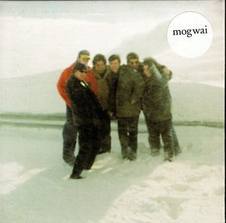
SOUNDTRACKMOGWAI-No Education = No Future (Fuck the Curfew) (1998).

This is a 3 song EP. The opener “Xmas Stripes” is one of my favorite early Mogwai songs.  The opening melody is really great, with a cool interesting bass and a nice guitar over the top.  At about 3:30 the song grows from a silent track to a menacing, growing beast until the drums start and the song and the main riff begins.  By 5 minutes it’s all out rock noise.  By 6 minutes the song is scaled back for the violin solo.  The remaining 7 (!) minutes are a denouement for the song.  Even though I love the track, I mostly love the first 8 or 9 minutes.  The ending tends to drag a bit.

But for all of their noise, Mogwai’s early releases were really quieter instrumentals, meditative songs that were really quite pretty.  “Rollerball” is a beautiful, sad three-minute track.

The last song “Small Children in the Background” continues in this quieter vein.  At nearly 7 minutes, it allows for a noisy middle section.  This noisy section is indeed mostly noise.  And yet the pretty melody of the rest of the track is just as loud throughout the mix, making for a very cool and very brief explosion mid-song.

Not all EPs are essential, but this one is pretty fantastic.  And I have Lar to thank for getting it for me.

[READ: March 10, 2011] Changing My Mind

It’s funny to me when that when I get into an author, I seem to wind up not reading the books that people most talk about until much later.  Take Zadie Smith.  Her debut, White Teeth, is something of a touchstone for many readers.  I missed it when it came out, but I loved On Beauty and figured I’d go back and read it.  That was almost a year ago.  And in that time I have read lots of little things by her and now this collection of essays.

Regardless, this collection of essays is a wonderful look in to the nonfiction world of a writer whom I admire.  And it was quite a treat.  Zadie is an intellectual, and that comes across in all of these paces.  Whether it’s the subjects she’s writing about, the footnotes she uses or just the acknowledgment that she likes art films and not blockbusters, we know where she’s speaking from.  And, of course, I’m right there with her.  The funny thing about this book then is how few of the subjects I know.

The book is broken down into five sections: Reading, Being, Seeing, Feeling and Remembering.  The Reading section is basically book reviews.  The Being section is about her experiences.  The Seeing section is about films.  The Feeling section is about her father and the Remembering section is about David Foster Wallace. (more…)

Read Full Post »


SOUNDTRACK
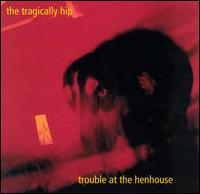
: THE TRAGICALLY HIP-Trouble at the Henhouse (1996).

After the major high of Day for Night, The Hip followed it up with Trouble in the Henhouse.

It opens with “Giftshop” which sounds like it could have come straight from Day for Night.  “Springtime in Vienna” is a marvel.  The opening is quiet with Downie’s almost whispered voice telling a compelling story until it blasts out with a wonderful chorus.  “Ahead by a Century” opens with a catchy acoustic intro.  Again, the harmony vocals add wonders to the verses.

But overall the album feels like the Hip exhausted their angst and anger on Day for Night and have chosen to go with a more mellow sound here.  It almost seems like Day for Lite.  Songs like the final track, “Put It Off” dabble with intensity, but have more atmospherics than powerful guitar and verses.  It’s like the come down after a big party.

The most peculiar song on the disc is “Butts Wigglin” which was used on the Kids in the Hall Brain Candy soundtrack.  It doesn’t really fit on this disc, but it’s such a great song that I understand them not leaving it off.  It’s very silly and musically groovy with  almost no guitars and all keyboards.  It’s a goof, but nice to see the lighter side of the band.

I find Trouble to be really enjoyable in itself, but it kind of pales in comparison to the previous two.  Nevertheless, these three albums are a wonderful trio of discs released by a great Canadian band.

They celebrated this era of the band with a live album the following year.

[READ: January 26, 2011] “An African Sermon”

Of all the stories in this Summer Reading Issue of The Walrus, this one was the most powerful.  (It wasn’t my favorite because it was rather distrubing) but it had a strong impact on me.

The bulk of the stoiry is set on a train in Africa.  Two white men introduce themselves to each other; the older one confides that he hopes no Blacks come into thier car.  Of course a Black does come into thier car and the younger man, who is a preacher, tries to embarass the racist man but immediately shaking the black man’s hand.

The black man is hostile to the young man’s advances, more or less shutting him out entirely.  Indeed, when the young man follows him to the dining car to talk (he is genuinely sympathetic to people, but he’s also very curious about the man and wants to pry a bit) the black man (whose name is Leonard Sagatwa) listens briefly and then, claiming a headche, returns to the cabin  room and goes to sleep.

During the night, the train stops because of a malfunction and it will be some time before it is fixed.  The priest goes out to the landing to find something to occupy himself when Leonard comes down.  He says to the priest that he wants to tell his story.  He wants to tell it once, to a complete stranger so that he can unburden himself and then be done with it.  The priest is tickled to hear the story.

But the story is one of Rwandan genocide:  Hutu vs Tutsi, brothers who turn  against each other; Leonard’s brother turning on him and his family.  Killing family members slowly, cruelly, calling them cockroaches.  It is harrowing and the priest is taken aback by the brutality.

But at the end of the story, the priest is resilient and insists that Leonard can forgive his brother.  Never, says Leonard.

The priest is able to use this story for his very first sermon in Africa.  He pretties up the story somewhat and makes it moral, and it works.  The new congregation accepts him and he feels welcomed to Africa.

When, several months later, the priest sees Leonard again, everything has been turned upside down.  And I’ll just leave it at that.

It is a great story.  Wonderfully powerful.

Read Full Post »

SOUNDTRACK: DAVID FRANCEY AND MIKE FORD-Seaway (2009).

Mike Ford introduced me to Louis Riel on his album Canada Needs You, Volume One.  The song “Louis & Gabriel” features the lyrics “Oh, Louis Reil, here comes your friend Gabriel” outrageously simplistic (it is for kids after all) but so incredibly catchy it’s in my head whenever I see this book.  This is Ford’s most recent album, a collection of songs by himself and David Francey–who I didn’t know before this disc.

Seaway is a collection of 16 songs which are in one way or another about the sea.  Two of the songs appear on Ford’s release Satellite Hotstove, but the rest are new.  I don’t know if Francey’s songs are new or not.  I’m also unclear from the credits if Ford and Francey worked on these songs together (the notes suggest they did) or if they were recorded separately and then compiled.

The songs are primarily folk–simple acoustic numbers, often solo guitar, but sometimes with accompaniment.  Mike Ford has a great, strong voice, and is capable of some interesting stylistic changes.  His songs are more vibrant on this disc.  Francey has a wonderful, almost whispered voice.  He has a gentle Scottish accent which is great for his storytelling songs.  Mostly he speak-sings, but on some tracks, like “The Unloading” he sings a full-bodied chorus.

But it’s Ford’s song that bring a lot of variety to the disc.  “There’s No Rush” has a sort of calypso feel to it and “When You’re the Skip” has a wonderfully dramatic sea-shanty/musical feel to it.   And “21st Century Great Lake Navigators” is a rap–Ford frequently raps a song on his various albums.  His voice is very well suited to it, and his rhymes are clever and often funny.

This is a charming disc.  I wouldn’t say it’s essential, but it’s a good introduction to both singers, and, of course .

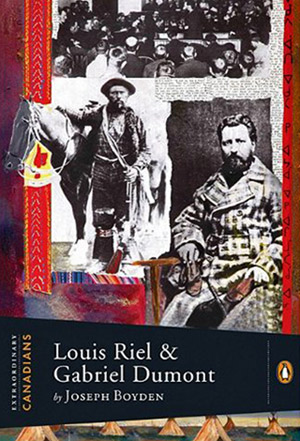
[READ: January 26, 2010] Louis Riel & Gabriel Dumont

Of the six Extraordinary Canadians books, I was least excited to read this one.  I’m not sure why, but I wound up leaving it for last.  But lo and behold it was easily the most engaging and, dare I say, exciting story of the six.  I’m sure part of that is because I didn’t know the outcome (even if Gabriel was somewhat famous in the U.S., I still didn’t know what had happened to him or to Louis).  And by the end of the book, I absolutely couldn’t put it down.

Joseph Boyden is a Métis writer (who I’ve never read before).  It’s obvious from the get-go that he is sympathetic to Riel and Dumont (which is to be expected in a biography, I would think).  He gets a tad heavy-handed about John A. Macdonald, but it seems justified.  For really you can pretty much take only one of two points of view about Riel and Dumont: they are either rebel heroes, standing up for the oppressed Métis, or they are traitors, intent upon destroying Canada’s expansion.

Now, I admit that I don’t know much about Canada’s expansion.  The first prime minister, John A. Macdonald, was instrumental in Canadian Confederation and was the driving proponent for the completion of the Canadian Pacific Railway.   But as with American westward expansion, Native cultures are in the way of this expansion. (more…)

Read Full Post »

SOUNDTRACK: THE DEARS-Live on QTV (2008).

The Dears are a wonderful band from Montreal. They create epochal noise, make concerts that are unholy messes (and yet totally amazing) and they seem perpetually about to self-destruct.   Murray Lightburn, the singer and song writer of the band is has an amazing voice and great songwriting skills.  They create full blown orchestral rock, but they’re not afraid to totally rock out (see the 20-minute live version of “Pinned Together Falling Apart” on their live album.)

These three tracks are acoustic and totally stripped down.  It’s just Murray on guitar and his bandmate (and wife) Natalia singing backing vocals.  These three songs come from the album Missiles.  Although I am partial to their over the top renditions, these stripped down version showcase how great the songs themselves are.

Dream Job” is a slow track with limited backing vocals.  “Lights Out” is a bit faster with some really great chord changes.  And finally, “Money Babies” is an amazing duet, really letting Natalia harmonize brilliantly.

You can hear more songs from The Dears at All Songs Considered.

[READ: January 11, 2011] “Meet You at the Door”

This is easily my favorite story in The Walrus in years, possibly ever.  It’s also one of my favorite stories that I’ve read in a long, long time.  It has so much to recommend it: it is wonderfully paced and it is really engaging.

The basic story is of a twenty-something black man who must travel to Gull Lake, Saskatchewan to start a job at a railroad junction house.  But that simple plot doesn’t do any justice to the multifaceted aspects of the story’s construction.

First, the position requires excellence in typing (relays that come from the main train location must be typed on an old manual typewriter in carbon.  With no typos.  And they must be typed fast!  Split second decisions must be made and any errors could be fatal.  So the employee must be smart and skilled (there’s a 75% failure rate on the test).

When the narrator passes the test he must ship off to Gull Lake that night.  And, this being “in the age of dinosaurs” the narrator is carrying his portable typewriter, a guitar and a huge afro.  And he needs a place to stay.  Fast.

He’s obviously not well received at first, until we meet the lady who will take him in.  And she is the second great aspect of this story.  She is a wonderful character (and could easily have many more pages written about her, but Hill is concise which really moves the story along).  She sizes him up, deems him worthy, and lets him have the spare room. (more…)

Read Full Post »

SOUNDTRACK: THERION-Theli (1997).

I bought this disc when I was living in Boston and I immediately fell for it.  I seem to recall I was doing a lot of driving at the time, and this mix of extreme metal, orchestral accompaniment and twinned vocals was very captivating.  It was also really fun to play very loud on a dark highway.

I’d read a very good review of this disc that claimed it was a big step forward in styles of thrash/black metal (and if you Google reviews for this album they are pretty universally great).  The disc is exemplified by the track “To Mega Therion” which is almost entirely a full choir singing what I guess is the chorus.  The verses are populated by a guy screaming in a guttural voice who is answered by an almost mechanically twinned voice which sounds great but is even harder to understand.  Follow this with a beautiful piano (!) solo not unlike something Randy Rhoads put together for Blizzard of Oz, and add a pounding double bass drum all the way through (truth be told the album could be a little heavier in the bass) and you get a crazy mix of styles which is catchy and creepy at the same time.

It’s hard to match a song like that.  And, admittedly, the band doesn’t quite manage to do so, but the rest of the album keeps up this orchestral death metal throughout.

Reading about Therion has taught me that this album is something of  touchstone for a new genre of metal, called variously symphonic or operatic metal (I suppose we have this to blame for the Trans Siberian Orchestra?).

In addition to the choirs and guitars there are a lot of keyboards. They are disconcerting when you’re thinking death metal and yet really they add an even fuller sound, even if at times they are not as grand or powerful as anything else.  At times the album seems cheesey, but that may have more to do with thirteen years distance than the music itself.

Anyone who has seen The Exorcist knows that choirs can be spooky.  And when you mix it with the heavy guitars and guttural vocals, you get a really cool sinister yet catchy (and possibly uplifting) album.  There are certainly a lot heavier albums, but this one is pretty stellar.

[READ: Summer of 2010, finished December 12, 2010] Lords of Chaos

My brother-in-law gave me this book for my birthday this year.  I was familiar with it as it is fairly well-known in heavy metal circles as a fascinating read.  And so it was.

This book is basically a history of black metal in Norway and how some bands’ antics went beyond music into burning churches and even murder.  The authors present a pretty neutral account of the story.  They let the main participants (criminals) have their say and the interviews don’t comment on their answers, they just let them tell their side of the story.  The authors also know a lot about the music scene.  Of course, in the end, the authors (thankfully) disapprove of the violence.  It makes for an interesting and somewhat conflicting read. (more…)

Read Full Post »

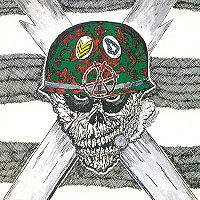
SOUNDTRACK: STORMTROOPERS OF DEATH-Speak English or Die (1985).

S.O.D. was a side project of Anthrax.  It was an over the top (and hilariously un-PC) collection of super fast (and super short) punk songs.  A lot of the “mosh” sound that Anthrax was experimenting with around this time is in place here (“Milano Mosh” for instance).  So it’s an interesting mix of speed metal and punk.

The lyrics were, as they say, designed to piss everyone off.  And they do.  Song titles like “Speak English or Die,” “Pre-Menstrual Princess Blues,” “Pussy Whipped,” “Fuck the Middle East” and “Douche Crew” pretty much give you a taste of the music.

And yet, Anthrax are silly.  So you know that the band is a parody (even if people took them seriously).  And the best way to tell about the serious intentions of the band are by other songs (and their duration): “Anti-Procrastination Song” – 0:06, “Hey Gordy!” – 0:07, “Ballad of Jimi Hendrix” – 0:05 (entire lyrics: “He’s dead”) and of course “Diamonds and Rust” (Extended Version) – 0:05.  There’s also a song about “Milk” which laments the fact that all of the milk in the fridge has been drunk.

My favorite track is “What’s That Noise.”  The band plays the opening chords of a song and this static crackles in.  Billy Milano slowly goes absolutely insane screaming about the noise, yelling at the band to stop playing.  It still makes me laugh, 25 years later.

[READ: Week of August 20, 2010] Letters of Insurgents [Last Letters]

Yarostan’s final letter is a long one, but it is justifiably long. And in some ways it makes up for all the weird incest stuff that I had to read.   Although really nothing could make up for that.

The beginning of the letter is taken up with Mirna and Yara’s “prank” at Jasna & Titus’ engagement party. There so many details to include that I’m just going to summarize. (more…)

Read Full Post »

SOUNDTRACKSARAH HARMER-“Captive” (2010).

Sarah Harmer has a new disc out.  Recently my wife Sarah has discovered her in our CD collection and has been listening to her a lot.  I’ve enjoyed her for years, and I always look forward to her new albums.

Somehow I missed that this one came out, but this track is currently #3 on the CBC Radio 3 chart.  Or you could listen to it on her page there.

This song is uptempo and catchy and could easily be a big hit. Her last album was more country/bluegrassey, but this song is pure rock (pop rock, but rock nonetheless).

The bridge of the song is a mysterious affair which adds a lot of personality to this bubbly track (with a fun chorus).  I’m glad that Sarah has more songs out and that my Sarah will soon have more music to listen to.

[READ: August 4, 2010] “An Honest Exit”

Dinaw Mengestu is another of the New Yorker‘s 20 Under 40.  This is the story of a University teacher.  His father recently passed away and he feels compelled to talk about it to his class.  So when class begins, he almost-accidentally tells them his father’s story.

Initially I was a little disappointed in the piece because, while his father’s life is horrifying and interesting, it seemed to fit squarly into my limited knowledge of what I knew about the situation: He was an engineer in Ethiopia but was reduced to nothing after attending a political rally.  He walked across the country to Sudan in hopes of escape.

When he arrived in Sudan he was starving, desperate to find any kind of work.  Finally, a man named Abrahim took pity on him and found him a job delivering hot tea to workers.  Abrahim was like a benevolent dictator to him, helping him and plotting his escape to London; however, all the while the narrator’s father was very distrustful of him, always assuming the worst (and why shouldn’t he?). (more…)

Read Full Post »

« Newer Posts - Older Posts »