Feeds:
Posts
Comments

Archive for the ‘Racism’ Category

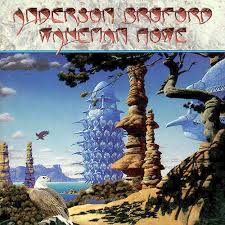
shadowSOUNDTRACK: ANDERSON BRUFORD WAKEMAN HOWE-Anderson Bruford Wakeman Howe (1989).

The band with an amazing pedigree created a band with a preposterous name and an equally preposterous album title.  But who cares, right?  After the pop frenzy of Big Generator, why shouldn’t the “real” members from Yes (excepting Squire) form a band?  They even brought Bruford back (he has said that he didn’t realize all three other guys were part of it, he thought it was a solo recording).  Perhaps the most insulted person should be Tony Levin.  Not only did I not know he played bass on the album (Bruford brought him over from King crimson), but I can’t even hear him on it!  I have listened to this record a couple times recently and I can’t hear any bass at all.  It’s like the anti-Chris Squire album!

I remember when this came out I was pretty excited.  I remember drawing the album cover (look, kids, Roger Dean is back!), and I remember joking about the preposterous “Teakbois.”  But when I listened to it again (first time in probably twenty years), I didn’t recognize a lot, and I liked even less.

abwhThe album opens with “Themes,” a six-minute, three-part mini epic which should hearken back to Yes of old.  There’s an interesting slow circular keyboard piece and a pretty piano melody and then it gets funky, sort of.  About 4 minutes in, it changes to a new thing altogether but again the sounds are so…bleah,  the guitars sound pretty good (some great guitar work from Howe) while those keys just sound….  You know I said that Wakeman would never play the sounds on 90125 & Big Generator, but he went even blander on this song.

Track two is only 3 minutes long.  It’s dramatic and angry with some good keyboard sounds.  It’s probably the best thing on the album.

“Brother of Mine” is another three-part mini epic that runs over 10 minutes.  The guitar chords and style remind me of mid 80s Rush. There’s lots of interesting elements and the main verse reminds me of maybe early Genesis or Marillion.  Although the solo and other sections seem…obvious instead of groundbreaking.  The middle part is pretty good, with a very classic Yes feel.  But the final section sounds exactly likes something from a Disney movie, perhaps The Little Mermaid (which came out the same year).

“Birthright” starts off ominous with some interesting percussion.  Although all the percussion on this album is rather disappointingly electronic.  Not that’s there’s anything inherently wrong with electronic drums, it just seems wasted on someone as amazing as Bruford.  It feels vaguely like a Peter Gabriel song.  It’s pretty good but it gets a little melodramatic by the end.

“The Meeting” is a treacly ballad.  It sounds nice but is nothing special.  “Quartet” is the third mini epic.  This one is nine minutes and four parts.  The first part is folky and reminds me of Simon and Garfunkel.  Part 2 references tons of old Yes songs in the lyrics (which seemed to make reviewers of the album giddy) but which really just shows how weak this song is compared to those other songs.

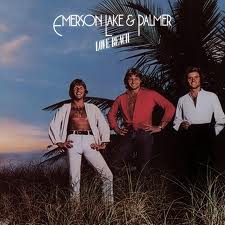
elp“Teakbois” has got to be the biggest WTF recorded.  I’m all for bands embracing other cultures and it’s awesome that after Paul Simon released Graceland other bands added multicultural elements to their sound, but this 7 minute monstrosity sounds like AWBH went to the Caribbean and joined a tourist band.  I don’t know if they released many band photos for this album, but this songs makes it seem like this could have been their cover.  There is a chorus near the end of the song in which they sing “cool running” and I was relieved to find out that the film with that name came out four years after this song.

“The Order of the Universe” is another 9 minute, four-part epic.  Just thinking of this song makes me think of the closing credits for The Lion King (which came out five years after this at least) or something.  There are some interesting parts to it.  But the “Rock Gives Courage” section is dreadful and Anderson sounds like he’s singing a pop metal band

“Let’s Pretend” closes this album.  It’s only 3 minutes long and is co-written by Vangelis.  It’s a fine song, completely inoffensive.

So what is up with this disc?  Am I imposing a 21st century attitude on it?  Am I missing that it was actually really influential (on Disney songwriters anyhow) and that it’s not their fault that other people have poisoned the sound for me?  I understand that musicians change and grow, but with these four names, you’d expect something a lot bigger and better than this.

Maybe when I listen to it in another 20 years I’ll actually like it again.

[READ: May 10, 2015] The Shadow Hero

I really enjoy the stories that Gene Luen Yang creates.   And this one (which I later found out is actually meant to be an origin story of an already extant character) was really interesting.

The story begins in China.  In 1911 the Ch’ing Dynasty collapsed and soon after the Spirits who were born with China and watched over her had to decide what to do.  The Dragon, the Phoenix, the Tiger and the Tortoise came to a council.  Later, the tortoise left the country with a man who was too drunk to know why he was even on the ship he was sailing on.

Then we see that the story is told by a first person narrator when he says that his mother came to America a few years later.  She had high hopes of the prosperity and beauty of the country, but her hopes were dashed by the realization of the ghettos and slums of Chinatown.

His father (the drunk from above) owned a grocery store and Hank (the narrator) helped out.  His mother, the stronger-willed of the two was a driver for a rich woman and took no crap from anyone. (more…)

Read Full Post »

colonySOUNDTRACK: YES-9012Live: The Solos (1985).

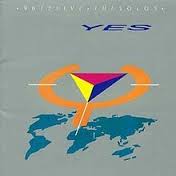
9012liveYes had released live albums before, and most of them had been quite indulgent, but none were as strange and indulgent as this live EP–a tie in with the popularity of 90125.  And yes, I have it on LP.

There are seven songs (in 33 minutes).  Two of them are proper songs from 90125.  The other five are the titular “solos.”

The two songs, “Hold On” and “Changes” both sound quite good.  The are notably less perfect than the album which is to be expected, but it’s still a little disconcerting given how perfect that album is.  The guitars are heavy and Anderson (and the other singer) sound in very good form.

Then there’s the solos:

“Si” is a rather uninspired keyboard solo.  It lasts 2:30 and the biggest cheers come when he starts playing “Toccata and Fugue in D Minor.”  I just have to wonder what Wakeman would have done with this–or if his head would have exploded at the sound of the disc.

“Solly’s Beard” is the guitar solo from Trevor Rabin.  Not unlike Howe, he plays mostly classical guitar.  It’s a good solo, although really not that mindblowing (or even as interesting as Howe’s “Clap”).  There are some keyboards in the background too, which I guess means this isn’t a solo.

“Soon” is Anderson’s solo.  He sings the end of “The Gates of Delirium” from Relayer.  I imagine that’s the only thing you’d hear from that album, so it’s a nice addition.

Chris Squire and Alan White get two solos together (so I guess they are duos, but then the title of the album is wrong).  The first is Squire playing “Amazing Grace,” which bleeds into the 8 minute “Whitefish.”  This is actually a medley of a few past performances like: “The Fish (Schindleria Praematurus),” “Tempus Fugit” and “Sound Chaser.”  Since Anderson said he would never sing anything off Drama, you can only hear “Tempus Fugit” during this solo.

I’m not really sure anyone needs to hear this more than once or twice, but it was fun to dig it out all these years later.

[READ: April 25, 2015] The Lost Colony

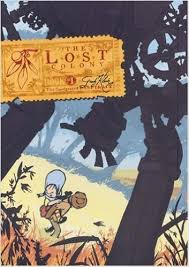
I really enjoyed the graphic style of this book.  It has a look of a wood press–thick lines and dark colors.  It was also very cartoony, which was a great way to address many of the issues that were brought up here–especially slavery.

The book opens with a man in a green suit and bowler hat hanging up signs for a slave auction.  There’ a little girl, Bertha Snodgrass, who sees the sign and thinks that she can afford one.  She follows the stranger as he heads to an island (the lost island presumably) in which Alexander Hamilton Snodgrass seems to have made himself president and treasurer.  There are black and white people on this island.

Obviously, there’ a lot of racial issues in this story.  There’s a “Chinaman” named Pepe Wong who dresses in a “bathrobe” and offers Chinese medicine but also speaks in Spanish (Madre dios!).  There’s a black woman who distrusts the heathen Chinaman and wants nothing to do with the slave auction. (more…)

Read Full Post »

staticSOUNDTRACK: YES-Fragile (1971).

fragileComing out just nine months (!) after The Yes Album, Fragile (which included new keyboardist Rick Wakeman) was a brilliant classic rock album that (depending on how much you like Wakeman) eclipses The Yes Album in greatness.

This was the first Yes album with a cover by Roger Dean (not up to his usual style for the band and prior to his creating their iconic logo).

Some might argue that Fragile is a better album than The Yes Album, and I might be one of them, but it’s really close (and depends on the day).  Fragile has bigger hits in “Roundabaout” and “Long Distance Runaround” (at only 3 minutes an actual radio song!), but it also has a number of weird little “solo” items.

“Roundabout is a staple in classic rock—not bad for an 8 minute song.  The opening notes are iconic, and then the bass comes in, big and round and heavy.  And there’s so many little fiddly bits-the keys, the guitars, even the bass, that it’s not even that clear to me how they did it all.   But there’s also the “in and around the lake” part that has such simple guitars and is so catchy.  It’s also the first time you really get to hear new keyboardist Rick Wakeman who is insanely talented and full of all kinds of interesting notions (and evidently a rack of 12 keyboards). And sure, the end of the song is mostly a chance for everyone to show off their skills and that’s pretty cool.  The final section has some great harmonies ala Crosby, Stills and Nash.

According to Bruford: “I said—brightly—’Why don’t we do some individual things, whereby we all use the group for our own musical fantasy? I’ll be the director, conductor, and maestro for the day, then you do your track, and so on.’  And that’s why there are five tiny pieces of songs scattered between the longer songs.  The first one is by Wakeman and is called “Cans and Brahms” a piano and organ piece.  Wakeman later described the track as “dreadful” as contractual problems with A&M Records prevented him from writing a composition of his own.  The following solo piece is by John Anderson and has multiple vocal lines overlapping over a simple musical base.  I never knew the lines were “Tell the Moon dog, tell the March hare.”  I love that it ends with footsteps running away and a door slamming—to what?

“South Side of the Sky” returns to a proper 8 minute song. It opens with a cool drum fill and some great guitar lines (all with Squire’s rumbling bass underneath–or actually in front).  After about two minutes there’s some interesting piano sections, including an almost spooky solo section of high notes.  There’s a pretty section of “la las” after this until the song comes bouncing back to the noisy part nearly 6 minutes in.

“Five Per Cent for Nothing” is a Bruford composition.  It’s staccato and all over the place and was, evidently his first composition (all 38 seconds of it).  Then comes “Long Distance Runaround,” another classic with an iconic guitar intro.  There’s some more unusual guitar lines (and a lot of open space) in this song.   It segues (and when I grew up the radio station often played both parts) into the next track written by Squire: “The Fish (Schindleria Praematurus).”  Even though it is Squire’s it does not have a lot of crazy bass in it, well, until the end when he gets to really fly.  This isn’t really a solo song since the rest of the band plays along.   The final solo piece is Howe’s flamenco guitar piece “Mood for a Day” which is lovely.

And then comes “Heart of the Sunrise” one of my favorite Yes songs.  It has one of the most amazing  introductions to a song.  It’s incredibly fast and intense riffage followed by a very slow section that has complex drumming an interesting bassline and keyboards.  It’s great how Squire and Bruford keep the steady beat amidst all the flourish.  The chaos goes on for nearly 3 and a half minutes before it totally mellows out to a delicate section sung by Anderson.  Then as you settle into this more mellow (and very pretty) section, around 7 minutes in we get a wholly new section of some wild keyboard.  And then some interspersing of weird keyboard and that awesome opening riff.  And although it sounds like it’s going to fade out, there’s more to come—another delicate section with repeats of the great guitar riff (not the opening heavy riff, the other one).  The song slowly builds to a climactic section that then switches back to the wild riff for a quick end.  It’s exhilarating  But that’s not exactly the end.

The disc ends with the door opening again and “We Have Heaven” reprising for a few seconds before fading out.

It’s outstanding and is unquestionably a classic.

Since almost every Yes album had different personnel, I’m going to keep a running tally here.  Our second change occurs with this their fourth album:

Chris Squire-bass
John Anderson-vocals
Bill Bruford-drums
Rick Wakeman (#2 replaced Tony Kaye)-keyboards
Steve Howe (#2)-guitar

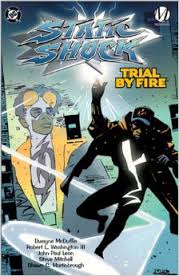
[READ: January 15, 2015] Static Shock: Trial by Fire

In the old DC vs Marvel war I have clearly become a Marvel guy.  In fact, when asked to name some DC guys, after Superman and Batman I fall flat.  And, unlike the Marvel Universe, Superman and Batman are never really seen together.  Let’s say that Marvel has done an awesome job at marketing.

So here’s a DC book, and I was pleased to give it a try. I was also pleased to see that the superhero is black–an all too rare experience in graphic novels.

The back of the book says that Static Shock is the “hot new animated series on the Kids WB!”  I wasn’t sure if Kids WB was still on, but that’s irrelevant because this book was published in 2000 (! why are we getting it now?).  The book was printed in 1993, so nothing in the introduction (which talks about the Kids WB ) is at all relevant.

Not to mention that the TV show was clearly adapted from the comic to make a much more kid friendly show.  I didn’t realize that when my son grabbed this and started reading it.  He put it down after a few pages.  I don’t know if he got to the point where the boys in high school call each other fag and queer or the black kids are called monkey, or what.  I had to apologize to him and he declared it “weird” so I don’t know what he actually thought.

Suffice it to say that this book is not for kids.  It is a harsh look at racism in high school and the opportunity for a black nerd (who is into comics) to actually fight back against he white playas (who are way too into the hip hop scene). (more…)

Read Full Post »

julySOUNDTRACK: JESSIE WARE-Tiny Desk Concert #434 (April 20, 2015).

jessieI don’t know Jessie Ware.  She is one of those singers who has a beautiful singing voice which totally masks the fact that her speaking voice has a hugely pronounced British accent (have you heard Adele speak?).  Ware’s speaking voice sounds a bit like Tracey Ullman, which I find charming.

She sings three songs.  They feature her and an electric guitar (played by Joe Newman) and they are soulful and pretty.  On the first song “Say You Love Me,” she is accompanied by her opening act Jesse Boykins III (meaning that this post features a Jess, a Jessie and a Jesse).

The other two songs are “Wildest Moments” and “Champagne Kisses.”

The blurb says that her shows are usually pretty big nightclub dramatic events (which is hard to imagine given how sweet she is).  I can see her really belting out these songs.  She sounds very good in this subdued setting, although it’s not my kind of music at all.

You can watch Jesse and Jessie here.

[READ: April 13, 2015] “To the Corner”

I didn’t really enjoy the other two items in this month’s Harper’s and I was a little disappointed with the way this story started out.  Interestingly, I checked and I didn’t like the way the last story of Walter’s that I wrote about started either.

This story starts with a bunch of kids–shirtless, pants hanging low, standing on a street corner. They are being tough, watching as the girl from their bus walks by.  And I just thought–yawn.

But after a few paragraphs, the perspective shifts to an old man who is watching the kids.  The man has lived in this house for nigh on fifty years.  He has been through boom and bust and bust and bust.  His siblings have all moved away and their houses are worth a fortune, but he remained, and his neighborhood has gotten worse.  He looks at the boys and their whole attitude offends him.  He, Leonard, worked hard all of his life: Korea, G.I. Bill, Junior College, marriage, kids.  And his kids are successes (even the one who listens to right-wing talk radio).  But look at these layabouts. (more…)

Read Full Post »

blacksad1SOUNDTRACK: GIRL BAND-Live at Kex Hostel in Reykjavik (November 8, 2014)

girlbandlive This brief concert finally allows us to see just how Girl Band make their unholy noise.  And yes, it is just four guys–guitar (and a whole lot of pedals) bass drums and a vocalist.

“Sexy Wife” has staccato guitars until the real noise kicks in for the chorus (oh, so that’s how he does it).  It’s also fun watching the bassist remain largely calm while still playing some unsuaul high notes on his instrument.  The drummer doesn’t have any fancy gizmos, but he keeps a steady loud beat.  And I love that the singer is quite a pretty fellow in his Oxford shirt and parted hair (but he can scream like the best of them).

“De Bom Bom (their newest single) is just full of noise and more noise (how can you have chords if it’s just staicky noise?) as the bass rumbles along.  This song is intense.

“Heckle The Frames” is a noisy chaotic pile of hardcore (and is about 90 seconds long).  It’s followed by “I Love You” a cover of the Beat Happening song.  For this one, it’s pretty much all bass and drums while the guitarist fiddles with his pedals making a larger wall of noise until he begins playing a ringing open note.  I don’t know the original, but I imagine it’s nothing like this.

“Lawman” shows off just how noisy the bassist can be in the opening moments.  And his riff, coupled with the noisy riff of the guitar, make for such an enjoyable combination.  I love how the song which you assume is over–at about the length of their other songs–suddenly turns into something else altogether–a sort of guitar solo, if you will.

The final song is “The Cha Cha Cha” which is all of 25 seconds.  It’s a pretty great set if you like your music noisy.

[READ: March 19, 2015] Blacksad

This book collects the first three Blacksad volumes: Somewhere within the Shadows (2000), Arctic Nation (2002) and Red Soul (2005).  I’m only bummed that it took me so long between books to read them.  They were translated by Anthya Flores and Patricia Rivera

It’s amazing to see that it takes two or three years between books, but when you look at the visuals, it is completely understandable.  The drawings/paintings in these volumes are simply incredibly.  They are incredibly realistic with exquisite attention paid to detail.  The fact that he can make people with animal heads seem sexy is really a testament to his drawing skills.

Okay so Blacksad is a noirish detective series with a slight twist.  John Blacksad is a cat.  Well, he is a human shaped person with a cat head.  But otherwise he is very much a detective–he is hunky, has smoldering eyes and is a really hard dude. And that first story opens with his former lover dead in her bead.  She is so pretty (and colored in pale fleshtones), that one might be hard pressed to see her as a car (except for the ears).

This mystery is personal and John sets out to find out who wanted his former lover dead. (more…)

Read Full Post »

harp marchSOUNDTRACK: RHEOSTATICS-Call the Office London, On (August 11, 2000).

calltheofficeCall the Office sounds like a great live venue.  It sounds small and intimate and, for this recording anyway, the sound quality is great.

The band is in great form with a ten minute version of “Fat.”   Then there’s a bunch of new songs: “In It Now” (the first time I’m aware of them playing it), “CCYPA” and a great version of “The Fire.”

Then they jump back to an old song and play “Torque Torque” with a very funny introduction about how they wrote this back in the early 60s and that it out-dorks the Doors (the Doors had no bass player).  Dave also says they’ll never play Full Moon Over Russia because it’s too hard.

There’s a lengthy introduction to “Satan is the Whistler” in which Martin tells about writing it–how it was originally going to be about Bigfoot (he used to read Bigfoot books as a kid) and the scariest thing about the Bigfoot stories was when people heard whistling.  The intro devolves into some funny talk about Whistler, the city, and extreme sports.  Someone eventually winds up describing the song as Ian Anderson skiing.

There’s a sadly aborted “Junction Foil Ball.”  Not sure if they just never played it or if there’s a problem with the recording.

There’s also an “off color” joke about Michael Jackson and Bubbles and Dave teases the jokester (Don Kerr?) saying that a guy with neck beard shouldn’t make off color jokes.

“Feed Yourself” a song they don’t play often enough sounds great here with some awesome soloing chords and effects in the middle.  And “Legal Age Life” also has some funny silly parts in the solos.

“Horses” (which the fans have been cheering for all night) sounds fantastic–a great version of it.  The middle section has Dave talking and ranting (all with his voice echoed).  It’s quite intense.  As is the final “Moon” high note at the end of “Dope Fiends and Booze Hounds” which they cap off with another fast run through “Satan.”

As I said this is a great sounding bootleg (and the notes on the site agree: “This is one of the best sounding Rheos boots I have heard. Listen to Don’s drumming. It is awesome. I loved seeing him play.”

[READ: March 2, 2015] “No Slant to the Sun”

I have read so many stories by Boyle, and they are all so very different that I never really know what to expect–or even where they will go.

This story begins with the title–“there as no slant to the sun–it was just there, overhead.”  It is about a man, Sten, and his wife Carolee on vacation.  They are on a cruise and are currently taking a day trip to an island garden path (although he seems unsure where they are–not Mexico or Guatemala or Belize–somewhere with a lot of rum where they listen to reggae).

They, along with everyone else, are on a bus, being driven maniacally by a man wearing earbuds (listening to reggae) as he flies over potholes and around harsh left and right turns.

Sten refuses to drink the water here even though everyone else does. And despite his thirst he sticks only to the rum based drinks (and so is a bit drunk and parched).  He will only drink bottled water, but he forgot his bottle.  When Carolee falls asleep he roots through her purse for her water (which he then drops and it rolls under another seat).

All the people on the bus (mostly older retirees) are unhappy with the driving.  Finally Sten gets up to say something to man and even flicks out his ear buds.  But the man ignores him, clearly disgusted by the white people on the bus.  He grudgingly says they can have a restroom break in five minutes, although it’s more like 15 before they get to the site of their hike–something that Sten now regrets given the heat and his thirst.

As soon as they settle in, a car roars up next to them and some local boys get out.  One has a gun.  And the boys start demanding everybody’s wallets and jewels.

It’s then that we learn that Sten was once in the military.   And he has to decide if he should react to this insolence.

The story went in a direction I absolutely did not expect.  I enjoyed it, especially the way the ancillary characters react to what happens.  I never intentionally seek out Boyle, but I always enjoy his stories (and I am astonished at how prolific he is).

Read Full Post »

CV1_TNY_01_13_14McCall.inddSOUNDTRACK: PHISH-Live Bait 7 (2012).

bait7This free sampler from 2012 is practically a greatest hits collection for me.  There are 8 tracks on the collection and none of them is shorter than 15 minutes.

It opens with a 1995 concert in which “Wilson” segues into “Tweezer” (for a combined total of 30 minutes).  Then there’s a 13 minute version of “Stash” from 2010 and an 18 minute version of “Split Open and Melt” from 1999.  The songs meld very nicely together with just the slightest change in recording sounds making any notable difference.

“You Enjoy Myself” comes from way back in 1992, and it ends with an extended vocal nonsense section–all four of them mouthing crazy sounds in a rhythmic pattern.  The only song of the set that I don’t love is “Runaway Jim,” but the jam section is great in this one.

“Reba” from 1996 works perfectly with “Gumbo” from 1998.  And the set closes with another 1992 recording.  The band opens with “All Things Reconsidered” which Trey explains is a reworking of the NPR theme.  But he then tells the audience that they can sing along to the next song, David Bowie” (which opens with a little nod to the Simpsons).

There’s no sign of a Live Bait 10, unfortunately, but having 9 free releases of highlights from live shows is still pretty sweet.  If only their show in Philly hadn’t sold out.

[READ: June 12, 2014] “The Paper Revolution”

Dinaw Mengestu’s first story (in the 20 under 40 issue) was about a refugee which I felt was more than a stereotypical refugee story.  This new story is about student revolutionaries, and it looks at them in a different (and somewhat confusing) way.

The narrator, who is eventually called Professor Langston by his friend Isaac, is at the University in the capital city, Kampala.  When he first meets Isaac, he finds him an interesting fellow–a man studying politics, because what else is there to study in Africa?  When the narrator says he’s studying literature, that’s when Isaac calls him the professor.

Isaac is full of information that he loves sharing (starting his sentence with “Did you know?”) He lectures about the British rule and their plan to turn this city into a new London if they lost the war.  Isaac fills him with political theory, and the university was the ideal place for it “Every aspiring militant, radical and revolutionary in Eastern and Central Africa was ran to the university.”

He and Isaac watch the “radicals” and can tell from their shoes which ones are truly poor. But there is one boy–so rarely seen as to possibly be invisible–who was the genuine article.  And soon enough there is graffiti on the walls which everyone attributes to him.  But the graffiti is whitewashed and a sign is put up admonishing: “It is a Crime against the country to deface our University walls.” (more…)

Read Full Post »

momentSOUNDTRACK: NICK BUZZ-Circo (1996).

nickbuzzNick Buzz is a side project of Rheostatics singer/lead guitarist Martin Tielli.  This album was reissued in 2002, when I bought it  But it came out in 1996, right around the time of the concerts I’ve been posting about.  Martin says that this album is pure pop, and that he is genuinely surprised that people don’t see this.  Of course, when your album has screeching monkeys, cars honking and circus music, pop is not the first thing that comes to mind.  There are certainly pretty songs on here, but it is an album that resists easy entrance.  There are short manic pieces, slow, languorous, almost lounge music pieces, and an improved cover of Joni Mitchell’s “River.” And then there’s the instrumentation: piano, violin, guitar, voice (no drums, although there is percussion on some tracks) and other weird sound effects.

“Step Inside” opens the disc.  It seems like a normal, mellow song (with slightly falsettoed vocals).  But 34 seconds in the circus music starts—a deviant and unsettling circus that pushes its way into the song briefly then vacating and allowing the pretty melody to return.  It’s like a mild form of Mr Bungle (with more actual circus).  It’s unsettling at first but then strangely catchy after a few listens.  There is fanfare as the song ends, interrupted by the sound of a tape speeding up (or going backwards) until song two bursts in.

“That’s What You et for having Fun” is less than three minutes and while weird, it is certainly accessible and funny.  The guitar sounds like he is slapping the strings rather than strumming them.  The refrain of “there’s a monkey in my underwear” gives a sense of the absurdity (especially when the President of Canada (sic) says he has one too).  “Just Because” mellows things out a lot—simple guitar with a kind of lullaby feel (it’s a bout wishing on stars).  It’s so slow after the craziness of the first two songs.  After  3 minutes of a lounge type song, it ends with a distant radio sound of an even more loungey song which melds into the live version of “River.”

The mellow “River” is followed by a raucous bass clarinet solo and wild guitar solo that is interrupted by the long (nearly 6 minutes) “Sane, So Sane.”  This is the most conventional song on the record—a simple piano melody with repeated lyrics (conventional aside from the weird distant music in the background of course).  Although it does gone on a bit long.  “A Hymn to the Situation” is an eerie two-minute wobbly song.

“Fornica Tango” is indeed a tango presumably sung in Italian. This song features a crying baby, an interesting sounding “Italian” chorus and the screeching monkey at the end.  “Love Streams” is a pretty, slow ballad.  “Aliens Break a Heart” is another pretty song.  Although this is the song that ends with traffic sounds.  “The Italian Singer/Just Because I’m Nick the Buzz” has a kind of Kurt Weill atmosphere to it with spoken words and falsettos.

It took me several listens before I could really find purchase with these songs.  I find that I really enjoy most of them now–some of those slow ones are a little too meandering for my liking.  But it seems like a fun outlet for Tielli’s songcraft.

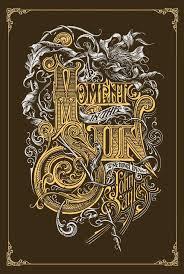
[READ: October & November 2013] A Moment in the Sun

I read this book last year…finished it just before Thanksgiving, in fact (I was proud of my pacing).  But it was so huge that I didn’t want to write about it until I had a good amount of time.  And now here it is four months later and I probably have forgotten more details than I should have and the post will be nowhere near as in depth as I was saving time for in the first place.  Bah.

When people see this book, they say, “That’s a big book.”  And it is a big book.  It’s 955 pages (and they are thick pages, so the book itself is nearly three inches thick–see the bottom of this post for an “actual size” photo); it’s got three “books” and dozens of characters whose stories we read about in full.  It is about the United States, racism, The Gold Rush, the assassination of a President, the Spanish American War, a World’s Fair and even the exploration of moving pictures.  This is a fairly comprehensive look at the Unites States from the 1890s to the early 1900s.  And, man was it good.

John Sayles is known more for his movies than his books (18 films directed, nearly as many different ones written and only 4 novels), but the cinematic quality that is clearly in his blood comes through in this book as well. (more…)

Read Full Post »

fivedials_no29SOUNDTRACK: BOB & DOUG McKENZIE-“The 12 Days of Christmas” (1981).

bob & dougThis is my preferred old school version of “The 12 Days of Christmas.”  It was one of the first parodies of the song that I had heard (and I was big in parodies back in 1981).

I loved how stupid they were (on the first day of Christmas, my true love gave to me…a beer).  I loved trying to figure out what a two-four was, and it cracked me up that they skipped a whole bunch of days.

I also enjoyed how they continued to snipe at each other throughout the song.  Not comedy gold perhaps (that would be “Take Off” recorded with Geddy Lee, but a nice way to start, or end, the season on these “mystery days.”

Evidently, decades after SCTV went off the air, Bob & Doug got an animated TV show (without Rick Moranis).  And they made a video of the song. Hosers.

[youtube-http://www.youtube.com/watch?v=l2oPio60mK4]

[READ: December 3, 2013] Five Dials #29

Five Dials Number 29 was the first issue I had read in a while.  (I read this before going back to 26-28).  And it really reminded me of how great Five Dials is.  I don’t know why this isn’t Part 2 after Number 28’s Part 1 (there was no 28b either), but that’s irrelevant.  This is an independent collection of great writing.  I was instantly surprised and delighted to see that César Aria was included in this issue (I didn’t even know he had made inroads in England).

CRAIG TAYLOR-Letter from the Editor: In Swedes and Open Letters
Taylor’s usually chipper introduction is saddened by the contents of this one.  The discussion centers on Sweden and the city of Malmo, where integration is proving to be tougher than they’d hoped.  Black skinned people are profiled pretty explicitly.  Taylor talks about meeting the writer Jonas Hassen Khemiri (who they subsequently published in issue 21) who deals with issues of race.  In March of 2013, Khemiri wrote an open letter to Swedish Minister for Justice Beatrice Ask after she brushed off concerns about racial profiling. The letter went viral including getting translated into 15 languages.  So I guess there is some positivity after all. (more…)

Read Full Post »

holoSOUNDTRACK: SIGUR RÓS-() (2003).
rosAfter a staggeringly successful tour, Sigur Rós took some time off. They returned about four years after their successful album with ().  I like to think they were trying to make it easier for English speakers to not have to pronounce their Icelandic words, but perhaps they were just being more difficult.  For they have made an album title that is hard to search for and hard to say.  To make it worse, there are no song titles on the record either.  (Although the band did have I guess unofficial titles for them):

  • 1.”-” (“Vaka”) 6:38
  • 2.”-” (“Fyrsta”) 7:33
  • 3.”-” (“Samskeyti”) 6:33
  • 4.”-” (“Njósnavélin”) 6:57
  • 5. “-” (“Álafoss”) 9:57
  • 6. “-” (“E-Bow”) 8:48
  • 7. “-” (“Dauðalagið”) 12:52
  • 8. “-” (“Popplagið”) 11:43

While looking for these song tracks, I learned that a lot of people think this album is mopey and depressing.  And I couldn’t disagree more.  I find the songs to be wonderful builders of drama.  Track 1 opens with lovely piano and vocals.  It’s a pretty melody that is punctuated with odd, squeaky voices.   Track 2 is slower, with a nice guitar melody instead of pianos. Track 3 opens with organs and more lovely pianos.  The pianos are slow which I usually don’t like, but there’s something about the simplicity and solitariness of their pianos that I find really captivating.  I love that it is repetitive and building, edging towards a dramatic conclusion.  Track 4 has low drumming that propels the echoing song.

Each of these 4 songs is around 7 minutes long.  And while they are not vastly different from Ágætis byrjun, they show the band experimenting within the form.  Also, Ágætis byrjun contained several different styles mixed between their epics, whereas this album is all epic.

After the 4th song there is 30 seconds of silence.  Which signifies something of a change for the second half of the album.

Track 5 is the slowest, saddest music on the album.  But it builds slowly, growing out of that sadness with a cathartic explosion at the end.  Track 6 opens with very loud drums (the percussion is spectacular on this album) and drones.  It builds and builds with more catharsis at the end.  Track 7 is the 12 minute epic that opens with organs and washes of guitars.  The opening is slow but you get the sense that it is building towards something–there is tension in the music, especially when it shifts to a minor key around 3:30.  It takes over 4 minutes to get to the chorus.  And then the song repeats and builds again.  The end is an unholy racket until Jonsi is left singing by himself.  It’s incredibly satisfying.  The final track is 11 minutes long and opens with an upbeat guitar sound.  It’s a good song and then the drums kick in around 6:20 and the song gets even better.

So yes, this is a long album full of long songs.  And none of it is in English.  Not exactly a pop seller, and yet there is something magical about the music on it.

[READ: October 10, 2013] A Hologram for the King

I had been putting off reading this book because I didn’t really like or get the title.  Sarah laughed at me when I said this, because the title is very explicit, but I honestly didn’t know what it was supposed to mean.  My mind reeled with the metaphorical possibilities.  So imagine my surprise when the title is indeed very literal.

The book is about a man named Alan Clay who is an IT sales person.  He will be doing a presentation–which will include an interactive hologram–to Saudi Arabia’s King Abdullah.  So, a hologram for the king.  Simple.

And indeed, the story is quite simple.  I had read an excerpt from it in McSweeney’s 38 and enjoyed it quite a bit–not realizing that it was from this book, of course.  The excerpt has been changed since then but most of the elements have been incorporated.  About the excerpt I said:

a man named Alan is on a flight to Saudi Arabia for business.  We learn through the course of the chapter that he has very little money left, that he is divorced and that his daughter is now fighting with her mother (his ex-wife).  He composes letters in his head to her trying to figure out the best way to placate the scenario.  But he also knows how important this deal is, both for him and for his daughter who needs money for school.  So he tries to put everything out of his mind so he can sleep.  There’s a lot of wonderful details in this chapter.

None of those details have changed, except we don’t really see as much of the flight.

Alan has landed in Saudi Arabia after not sleeping for 60 hours.  He misses the shuttle bust to KAEC (pronounce cake) the King Abdullah Economic Center.  So he calls for a taxi.  Instead, he gets a young man name Yousef who drives him the 60 or so miles to KAEC.  Along the way, Alan and Yousef talk a lot and they hit it off. Yousef has been to America (he studied for a year there) so he understands Americans.  He also has no hope for the future of the KAEC.  Alan likes Yousef and is dismayed by his attitude about KAEC, but finds him to be enjoyable company (Yousef enjoys jokes and, as a salesman, Alan is full of them). (more…)

Read Full Post »

« Newer Posts - Older Posts »