Feeds:
Posts
Comments

Archive for the ‘Prison’ Category

SOUNDTRACK: SUNN O)))-Flight of the Behemoth (2002).
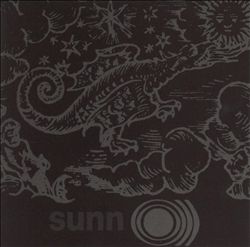
I hadn’t really heard Sunn O))) until this record (which may not be typical as they collaborated with Merzbow on this one).  I knew that Sunn O))) played loud droney “music.”  And so it is here.  On “Mocking Solemnity” (9 minutes) and “Death Becomes You” (13 minutes) (which meld into each other seamlessly), the songs are mostly slow drones on electric guitar.  The chords are heavy and heavily distorted and they ring out for a few bars–not until the chords die naturally, there is a kind of pacing involved, but for a few bars until the chords are played again (often the same chord).  This is for those who thought Metal Machine Music was too complicated.

On paper this sounds unimpressive (or downright awful, depending) but in reality it is a very physical experience (if played loud enough).

The staticy noise of “Death” melds into track 3 “O))) Bow 1” which adds what sounds like radically modified piano playing a kind of melody.  It’s about 6 minutes and it really changes the tone of the record to suddenly add an atonal racket to the almost calming drone of the bass.  But by the middle of the song, the piano becomes what sounds like a chainsaw.  Merzbow mixed that track and  “O))) Bow 2” which is 13 minutes of the same slow pulsating noise.  It’s not exactly soothing.

The final track is “F.W.T.B.T.” a “remake” of “Metallica’s “For Whom the Bell Tolls.”  I can’t hear a thing that sounds like the original, but that’s what makes a cover interesting.  Although admittedly around the four and a half minute mark there’s some faster chords (for this band anyhow) that could be Metallica-like.  There are also drums (and vocals, although I have no idea what they are saying) on this ten-minute workout.

Not for the faint of heart (or fans of melody).

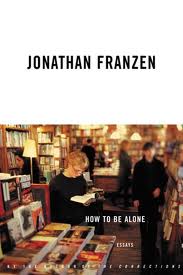
[READ: November 17, 2012] How to Be Alone

I read most of the articles in this book already.  But I read them over two years ago, so I thought it would be safe to wade into the world of Franzen again.  What I find most interesting about the title of this book is just how many of these articles are about being alone, wanting to be alone or feeling like you are alone.  Obviously that is by design but it seems surprising just how apt the title proved to be, especially given the variety of subjects  his father’s brain, being a novelist, the US Postal Service, New York City.

I’m not going to go into major detail about each article this time, although I am providing a link to the earlier review–my feelings didn’t really change about the pieces (except that from time to time I got a bit exhausted at his…whininess?  No, not that exactly…maybe his persecution complex.  But I will give a line summary about each one just to keep everyone up to speed.  The four pieces that I hadn’t read before I will give a few more words about.

One overall feeling is that when Franzen isn’t writing about the state of the novel (which he is very passionate about) his articles are well researched well documented which is kind of surprising given the state of panic he seems to be in the novel articles.  It’s also kind of funny how out of touch these articles seem (some are almost 20 years old and are kind of laughably outdated), but it’s also funny to see how poorly his predictions panned out.  The death of the novel is rather overrated (just see the success of his own Freedom.

So the book contains: (more…)

Read Full Post »

SOUNDTRACK:  PUBLIC ENEMY-Live at All Tomorrow’s Parties, Convention Hall, October 2, 2011 (2011).

NPR was cool enough to record and provide as a download most of the shows at the All Tomorrow’s Parties festival in Asbury Park, NJ.  (Portishead wouldn’t allow their show to be recorded, sadly).  But Public Enemy was a welcome surprise!
This tour is in celebration of the anniversary of Fear of a Black Planet.  And they play most of Fear and a lot of other things too (with almost nothing from their 2000 era CDs.

I can remember back in the early days of rap that it was hard to imagine what a rap show would be like live since they didn’t play instruments and much of the music was sampled.  Well, PE has musicians on stage and they have DJ Lord filling in for Terminator X behind the turntables (big shoes to fill, but done largely well–especially his fun “solo” in which he samples The White Stripes and Nirvana–although he should have mixed in Portishead, no?).  And mostly they have the personalities of Chuck D and Flavor Flav.

I suspect that this show would be a bit more fun to watch than it is to listen to–Flavor Flav’s antics don’t always translate well without his visuals.    Like when he asks the audience if that can all say “Ho” (which he eventually holds for 33 seconds!), it seems like a delay tactic in audio, but is probably fun to witness.

What’s especially cool about the show is that PE play so many songs, including small snippets of songs as segues to other ones (like the seventy second version of “Anti-Nigger Machine” that intros “Burn Hollywood Burn” which is practically hardcore) or the minute and a half of “He Got Game” that follows “Night of the Living Baseheads.”  I like that they even threw in some skits from the record like “Meet the G That Killed Me” and “Incident at 66.6FM.”

But of course the real joy is the full length songs, “Brothers Gonna Work It Out,” “911 is a Joke,” and of course “Bring the Noise” and “Fight the Power.”

Some of the improv sections don’t work all that well, the guitar solo in “Power to the People” leaves something to be desired (Khari Wynn maybe a legend, but he;s no Vernon Reid),  although the  “Jungle Boogie” riff is cool.   But the improv with guest drummer Denis Davis was pretty bad ass.  Flavor Flav hopped on the drums and was quite good for “Timebomb.”  We also got to meet Flav’s daughter Jasmine.  And Professor Griff was there too.

It’s also interesting that they keep saying they have no time left in the set (Portishead is next) but they play for at least 30 minutes after this.  Including a wonderful “By the Time I Get to Arizona and the set ending “Fight the Power.”

Chuck D has still got it and Flav is just as crazy and fun as ever (even if his screams and yos seems out of tune from time to time).  Of course, Flav has to get the last word in by raging  on for six and a half minutes  at the end (and about six-minutes in the beginning as well where he gave himself props about his reality show.

It’s a really good set–a little distorted from time to time, but really solid.  Here’s a link to the downloadable show.

[READ: October 2, 2012] Hocus Pocus

This book may have put me over the edge in terms of Vonnegut exhaustion.  I bought this book some time in 1992, but I never read it. It’s been in my house for twenty years and it was about time I read it.

But as I’ve been noticing, each Vonnegut book has been getting darker and more misanthropic.  And this one is no exception.  The construction of the book follows Vonnegut’s cut and paste style but it feels even more shuffled and indirect than usual (more on that later).  In many of Vonnegut’s books, the “climax” occurs somewhere in the middle and he fills in the details later.  For this one, the climax came around h.and I wouldn’t have felt like I missed anything.

In this book, the main character, Eugene Debs Hartke  is a Vietnam vet (usually his protagonists are military men, and Vonnegut has criticized Vietnam a lot, but this is the first time he’s had a Vietnam vet as protagonist).  He married his wife and had a wonderful family until he learned that his mother in law had a disease that made her crazy–but it only kicked in later in life, after he married her daughter.  And that his wife has the same disease–so by the middle of the story both of the women in his life are crazy “hags.”  And, like in his other stories, his children hate him. (more…)

Read Full Post »

I have been getting The Washington Spectator for years and years.  I was delighted with it in the beginning when the editor had the wonderful name of Ben Franklin.  I am delighted now that publisher’s name is Hamilton Fish.  But aside from these two fascinating details, I have always enjoyed the content.  It was thoroughly researched and detailed.  And the little 4 page leaflet always looked like a newspaper in design and style, and it gave it a kind of gravitas–no flashy colors or pictures.

Well, here it is, Vol 37, Issue No 21 and they have finally changed the format.  And not only that, they have created a website and have a Facebook presence!  Welcome to the 20th century!

I say that jokingly because despite these changes (which look great by the way), The Spectator has not abandoned its old school journalism practice.  21st century news is pretty much all flash and brash–style over substance–quick reporting with no concern for accuracy and very little attention brought to retractions (can anyone say “climategate” (I wish they wouldn’t call it that)).  But The Spectator is exactly the opposite, and I am delighted to say that although they are now a lot more accessible, they have not lost any of their tenacity or thoroughness.

The redesign is quite nice.  There’s an image on the front page and now there are pull quotes in red, which stand out nicely on the pale paper.  Although I always liked the pull quote box in the middle off the front page, this new format allows for a couple of different pull quotes as well as an opportunity to mix things up a bit.  (more…)

Read Full Post »

SOUNDTRACK: COLIN STETSON-Live at All Tomorrow’s Parties, October 4, 2011 (2011).

In addition to playing SXSW, Colin Stetson also played All Tomorrow’s Parties, and NPR was there.  Unlike with SXSW, this set appears to be full length (about 50 minutes–which is a pretty amazing amount of time for him to blow that horn).  Like SXSW (and the album) Stetston starts with “Awake on Foreign Shores” and “Judges.”  What I love about this recording is that after Stetson finishes “Judges” a guy in the audience shouts (in a voice of total amazement) “That shit was off the hook!”  And he is right.  It’s not even worth me going into how amazing Steston is once again (check previous posts for  that), but man, just look at the size of that horn he’s playing (seriously, click on the link to see it bigger).

Stetson plays a few more songs from New History Warfare, Vol. 2: Judges like “The Righteous Wrath of an Honorable Man” (which is outstanding) and “A Dream of Water” (which works without Laurie Anderson, although he does say he’s sorry she’s not there).  He also introduces two news songs “Hunted 1” and “Hunted 2” which show new levels and new styles that Stetson employs.

This is a remarkable set, and Steston is clearly in his element (and the crowd is rapt).  The only problem I have is the recording level.  It must be very difficult to maintain recording levels for Stetson’s brand of noise–his louds are really loud–but you can’t hear him talk at all.  And most of the time, the introductions to his songs are worth hearing.  I’m sure if they tried to get the speaking level a little louder the music would have sacrificed though, so I think they made the right choice–I only wish there was a transcript available.

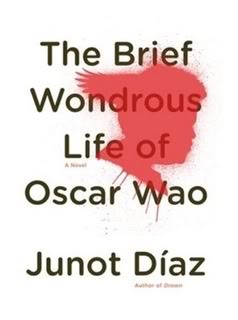
[READ: October 31, 2011] The Brief Wondrous Life of Oscar Wao

Apparently it’s pronounced, “Wow”, by the way.

Because of my new job, I don’t have a  full hour of lunch-time reading like I used to.  And so this book took considerably longer than I intended.  However, once I set aside some time to read it, I flew through the book.

I’m going to get this part out of the way because I was thinking about it throughout the book and I want to mention it without having it bog down the post.  This story reminded me a lot of Roberto Bolaño.  On the surface, sure this is because they are both writers from “Central America” (Diaz is originally from the Dominican Republic but moved to the US, while Bolaño is originally from Chile but moved to Mexico and then Spain).   But I’m not really talking about their origins so much as the style of storytelling.

Without going into a lot of Bolaño here, I’ll just say that Bolaño tends to write very detailed character studies–stories that follow one person throughout his whole life on something of a fruitless quest.  And the details of that person’s life include information about family members and distant relatives.  Further, Bolaño has written about the brutalities of both Chile and Mexico and how a person can survive in such a place.  Similarly, Díaz follows the life of Oscar and his extended family and he talks about the brutalities of the Dominican Republic.

This is in no way to suggest that there is any connection between the two writers. I mean, The Savage Detectives came out in the States in 2007 (same years as Oscar Wao) and while he certainly could have read it in Spanish, I have no evidence that he did (and as I recently found out, the first draft of the Oscar story was written in 2000).  Again, the parallels are only from my reading and have nothing to do with Díaz himself.

Okay, now that that’s out of my system…

This is the story of Oscar de Leon.  But more than that, this is the story of a fukú–a curse that befalls the de Leon family and follows them through several generations.  Oscar is the youngest member of the family and the person whom the narrator knows best.  So we see this fukú as it impacts Oscar.  And although the book is ostensibly about Oscar, it is about much more.

Oscar was born in Paterson, NJ (the town next to where I grew up!) and went to Don Bosco Tech High School (where many of my friends went).  Oscar is Dominican (his mother is from the DR, but he and his sister were born in NJ), but unlike every other Dominican male, Oscar is totally uncool, into geeky sci-fi and D&D and is clearly destined to be a virgin because he is fat with terrible hair and no social skills.

And, (no spoiler), as the title states, his life will be short. (more…)

Read Full Post »

SOUNDTRACK: BILLY BRAGG-Live at the Newport Folk Festival (2009).

Billy Bragg is one of the great holdouts of aggressive political liberalism in music.  For every “American Idiot” that young bands play, Billy can whip out “There is Power in a Union” or the more prescient, “No Power without Accountability.”  Lyrics:

IMF, WTO,
I hear these words just every place I go
Who are these people? Who elected them?
And how do I replace them with some of my friends?

He’s an old school American folkie, despite the fact that he is so outrageously British that his singing accent is stronger than most British folks’ speaking voices.

But he’s not all politics (well, yes he is, but sometimes he disguises it).  Like on his minor hit “Sexuality.”  With some of the first gay positive lyrics I can remember hearing on the radio: “I’ve had relations with girls from many nations/I’ve made passes at women of all classes/And just because you’re gay I won’t turn you away/If you stick around I’m sure that we can find some common ground.”

Billy’s set is pretty great.  He plays the electric guitar for most of it (with an amusing moment where he switches to the acoustic guitar and references Dylan), and really, he needs no accompaniment.  He plays several of his own songs as well as a number of Woody Guthrie songs (both ones that Guthrie recorded and ones that Bragg and friends recorded for the Mermaid Avenue project).

Bragg also talks.  A lot.  His stage banter is as funny as it is impassioned.  And he urges people not to give in to cynicism about their newly elected President (the task is too great for him to please everyone).   Sometimes he comes across as really inspirational and other times as simply idealistic.

The only part of the show that I don’t really like is the “cover” of “One Love.”  I don’t particularly like the song to begin with and this version is 6 minutes long.  True, he modifies the lyric, but the basics are  the same.  Aside from that it’s a pretty rousing set (even if the DJs interrupt him about 40 minutes in, apparently thinking he was going to be end).

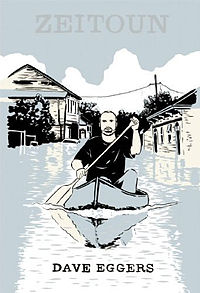
[READ: August 1, 2011] Zeitoun

I loved A Heartbreaking Work of Staggering Genius.  And I liked You Shall Know Our Velocity quite a bit too (and I just found out that YSKOV was rereleased as Sacrament with an extra 45 page section from Hand’s point of view–and that apparently there is only one copy available anywhere in the world and it costs $250!).

Anyhow, It was through Eggers that I found McSweeney’s (and its vast empire).  And yet during that time, I sort of gave up on reading Eggers’ published works.  When Zeitoun came out, I wasn’t all that interested to read it.  Mostly because I knew the book was about Hurricane Katrina, and I didn’t think I could handle a book about such a tragedy.

But recently, several people in book clubs had mentioned how good (and quick) of a read it was.  So I decided to give it a read.  And I’m really glad I did.

The book is about Abdulrahman Zeitoun, a Syrian born American.  He was living in New Orleans and was the owner of a very successful remodelling business (as well as the landlord of several properties around New Orleans).  Zeitoun is a hard-working, exceptionally conscientious man (the flashback to him running to work, carrying his broken bicycle on his back is as inspirational as it is amusing).  He rarely takes a vacation (much to his family’s chagrin) and oftentimes his wife has taken their kids on a vacation without him.  (One time they dragged into the car with his bags already in it without telling him they were going away for a weeklong vacation). (more…)

Read Full Post »

SOUNDTRACK: JÓNSI-Go (2010).

Jónsi is the lead singer from Sigur Rós. This is his first solo album and, honestly it’s not radically different from Sigur Rós (were we expecting trip hop or something?).   However, within the confines of the type of music that Sigur Rós play (swirling orchestral songs), Jónsi’s solo disc is kind of different.  And the difference comes in tone.

For while Sigur Rós records are orchestral and swirly, the are also kind of dark and moody.  Jonsi’s songs are more upbeat.  They’re ethereal both in style and tone.

I’m also surprised to see just how short these songs are.  They feel like they are very long (epic in a good way) but in fact, only two songs go over 5 minutes–most are in the mid fours.

There’s no question that if you dislike Sigur Rós you will not like this record. Jónsi’s voice is the same after all–gorgeous sweeping, helium sounding and out of this world.  But if you doubted whether Jónsi could work without his mates in the band, you need not worry. This album is a beauty.

[READ: May 19, 2011] “The Trusty”

I didn’t think I would like this story.  It concerns a subject that I generally don’t have a lot of interest in: chain gangs in the south.  And yet, Rash’s writing was excellent and the story was quite compelling.

The Trusty of the title is named Sinkler.  Sinkler is a prisoner on the chain gang–he stole money from a business and got 5 years.  He has served 18 months with very good behavior and has been given the unofficial title of Trusty, which means he can do things like walk a mile up the road to the next farm house to see if their well has water for the men on the gang.

And this is what he does.  They are working on a road and have moved far enough past their current source of water that Sinkler offers to walk up to the next house to bring water back.  When he arrives, the door is answered by a young woman (between 18-22–Sinkler himself is in his 20s).  She is standoffish and unmoved by him.  She is also married–her (much older) husband is plowing the field.  She agrees to give Sinkler two buckets of water if, at the end of the day he agrees to leave one bucket there as payment.

Sinkler agrees and decides that he would like more than water from the young woman.  And over the next few weeks he returns every day and tries to win her over.  And Lucy begins to sweeten on Sinkler. (more…)

Read Full Post »

SOUNDTRACK: ROBYN-Body Talk Pt 1 (2010).

Robyn’s Body Talk albums got a lot of praise in 2010.   When I looked at them online, they were really cheap (and considered EPs), so I bought Pt 1.  I was disappointed when I first listened because it seemed like such a sparse album, that I felt there wasn’t much to it.  (Oh, and before I continue, yes, I knew that Robyn was a big time pop singer, but reviewers that I respected–like Sasha Frere Jones raved about the albums).

The opening song “Don’t Fucking Tell Me What to Do” is a really strange song.  The verses are simply Robyn stating that different things are killing her.  It’s strangely compelling despite the repetitiveness.  There’s virtually no music (eventually a single keyboard line keeps a bare melody.  And then the titular chorus.  After two listens I found that I really liked the song even though the first time I heard it I totally blew it off.

“Fembot” is the first proper song, and it’s a simple twist on the stereotype of “woman as robot” since she, the fembot, embraces her sexuality (over a very simple catchy pop melody).  “Dancing On My Own” is an even better song.  Fuller, more complex and with a great chorus.  Two songs seemed like they’d have been destined for Glee: “Cry When You Get Older” & “Hang with Me” they’re a bit too pop for my liking.

The second half of the disk is where it gets odd and interesting.  “Dancehall Queen” has Robyn (a Swedish sing mind you) singing in a Jamaican dancehall accent–which, since I’m infrequently exposed to it, I really like).  It’s super catchy (and I love when she sings “the riddim goes boom boom boom”).  “None of Dem” is another odd song, with a great minor key transition in the chorus and music by Royksopp.

The disc ends with “Jag Vet e Dejlig Rosa” a sweet lullaby sung in Swedish.

The entire EP displays her impressive vocal range and styles.  And even though I really didn’t like it at first it has not only grown on me but gotten my to consider getting Pt 2.  (She released Body Talk Pt 1 (an EP) and Pt 2 (an EP) and then Body Talk which is a combination of some of 1 & 2 with more songs thrown in–a cash in, in my opinion).

[READ: April 30, 2011] “The Good Samaritan”

This was a rather dark story that explores people’s generosity and gullibility.

I was confused through the whole story because the main character’s name was Szabo, and I couldn’t figure out if the ethnicity of the character made a difference (I don’t think so) or even if that was his first or last name.  But that’s a very minor criticism of an otherwise thoroughly engaging story.  I was particularly delighted that while I thought Szabo was going to be a certain kind of character, he turned out to be something else entirely.

As the story opens, it reveals Szabo’s land.  He doesn’t like to call it a ranch (the word is abused by developers), rather he calls it “the property.”  I kind of assumed this story would be about a downtrodden rancher, but that turns out to not be the case at all.  Szabo owns and runs “the property” as a not-very-lucrative side business.  He grows racehorse-quality alfalfa hay for a handful of grateful buyers (he sells in small amounts which most dealers won’t).  It’s true he barely breaks even, but he loves it.  He loves everything about the property–the planting, the reaping and especially the John Deere, which he treats like a baby.

Then one day the baby bites back.  While climbing on the tractor, Szabo slips and dislocates his shoulder.  He calls on his secretary and she assists him to the hospital.  His secretary, Melinda, is from his “real” job, and she is a saintly woman. I was delighted that the story went into so much detail about his “other” life and this woman who helps him.  Szabo’s main career is as a kind of middle man for parts.  He used to manufacture them, but he learned where the money was and took advantage of it  Now he sits in an office (and “the property” is his release).  But Melinda is his saving grace.  She knows everything about him and what he wants and their history together is wonderfully explained. (more…)

Read Full Post »

SOUNDTRACK: MOGWAI-Ten Rapid (1997).

The release of this disc hot on the heels of Young Team rather confused me, especially when trying to keep track of which discs were “real” and which ones were compilations.  This one is a compilation.  It’s subtitled: (Collected Recordings 1996–1997).  And the fact that it has ten songs on it tells you just how much they released in those two years.  (It appears that they released 4 or 5 singles, although all the songs don’t seem to appear on Ten Rapid, and there seems to be a song or two unaccounted for.  Wikipedia also suggests that some of the songs were re-recorded for Ten Rapid.  Gosh, what’s a completist to do?).  And given all that they released back then, it’s also a surprise at how short this collection is  (just over 30 minutes).

The amazing thing is how much the disc sounds like a complete recording and not a collection of singles.  It is mostly Mogwai’s slower, quieter pieces, and the overall tone is one of “mood” rather than “songs.”  And, for those of us who thin of Mogwai as a really loud band, the prominent use of glockenspiel comes as something of a surprise (as does the quiet singing on two of the tracks).

The opener “Summer” is not the same as “Summer [Priority Version]” on Young Team.  This one is a beautiful track with glockenspiel while the YT version is much heavier and darker. “Helicon 2” (also known as “New Paths to Helicon, Pt. 2”), is a wonderful track with an interesting riff and texture.  On a recent live disc, it was expanded greatly. “Angels vs Aliens” and “Tuner” are the two tracks with vocals.  They’re both rather quiet and kind of soothing.

“I am Not Batman” is mostly washes rather than a riff based song.  “Ithica 27ϕ9” is one of their best early songs. It’s also the one track here that really experiments with sound dynamics.   It opens with a beautiful melody that swirls around for a bit.  Then the loud guitars come screaming out until it returns to that melody (and all in under 3 minutes).

The final track “End” is an entirely backwards recordings.  Wikipedia says that it is “Helicon 2” backwards, and I’ll take their word for it.

Ten Rapid is a really solid collection of songs showing just how good Mogwai was from the start.

[READ: March 8, 2011] Donald

This book is a speculative piece of fiction that answers the question: what would happen if Donald Rumsfeld was sent to Guantanamo Prison.  Note also that the cover is a parody of the cover of Rumsfeld’s own memoir (released around the same time).

The main character is clearly Rumsfeld, although he is never mentioned by his full name, always “Donald.”  But his description and his biography make it obvious that it is him.  There is a Note at the end of the book which states that the information about Donald is as accurate as possible.

First we see Donald in a library, presumably working on his memoirs.  He is accosted by a young kid who asks him questions.  Donald is annoyed by the kid and more or less blows him off.  Donald then has a fancy dinner with his wife and “Ed and Peggy” (two people who I can’t place historically).

That evening, masked people break into Donald’s home and haul him off to a prison (he is bound and his head is covered so he doesn’t know where).  The rest of the book sees him taken from one prison to the next, tortured in various ways (nothing too graphic, most of the torture consists of thinks like disrupting sleep, keeping the temperature really hot or really cold, and asking him lots and lots of questions, sometimes for 20 hours at a time.  There is no physical torture (again, it’s not graphic). (more…)

Read Full Post »

SOUNDTRACK: MOGWAI-Young Team (1997).

When Mogwai released Young Team there was quite a bit of buzz around them.  I remember when I bought the album, that I had no idea where they were from.

With the Asian-looking characters on the cover and a picture of Fuji Bank (and no band members names listed) I assumed they were Japanese.  Of course, a closer listen reveals a lot of Scottish voices quietly chatting away during some of the songs (which doesn’t necessarily mean they are Scottish…but indeed, they are).

Young Team is a great debut and Mogwai shows a lot of versatility.  It opens with a spoken word bit about Mogwai (If the stars had a sound it would sound like this).  It’s a slow instrumental, actually quite pretty, with picked guitar and continual bass and even harmonics.   It gets loud by the end, yet even that is restrained.  But just when you think that Mogwai is going to be another post rock instrumental chill out band, they hit you with “Like Herod.”

“Like Herod” is one of the more amazing songs in instrumental rock.  It plays with loud and soft dynamics like nobody’s business.  Opening with a slow rumbling bass, the guitars pick out intricate melodies.  Then at 3 minutes, all hell breaks loose in the form of big guitar chords and screaming guitar notes.  Things slow to a crawl about 6 minutes into the song. But we’re only half way done.  And those quiet notes are once again blown away by those same chords and screaming notes.

You could pretty much end the disc right there and call it a success.  But “Katrien” shows off another side of the band: a spoken word side.  Behind some gorgeous melodies there’s something of a rant.  It’s followed by “Radar Maker,” a 90 second piano-based instrumental.  It’s quite delicate and it leads right into “Tracy” a beautiful 7 minute song with a pretty melody and lovely washes of sound.

The middle of the album has two shot songs: “Summer [Priority Version]” is a condensed version of that quiet/loud dynamic that Mogwai does so well.  And “With Portfolio” plays havoc with a pretty piano song by throwing in washes of noise and sound effects which completely take over by the end.

The unfortunately titled “R U Still In 2 It” belies its bad name with some beautiful quiet guitar work played behind a vocal turn by Aidan Moffat.  There’s even a sung chorus!

“A Cheery Wave from Stranded Youngsters” is a two-minute sort of intro to the final track on the disc, the amazing “Mogwai Fear Satan.”  A 16 minute instrumental that is quite beautiful as it opens: distorted chords that don’t overpower the melody.  They bolster it as it builds and builds until it reaches a moment of silence which is filled by…a flute (!).  The song continues to build with a gorgeous repeating motif.  Then it slows down again to let the flute really sync with the song until it reaches its beautiful end.

It’s a great debut, deserving all of the praise that was heaped on it.

[READ: March 3, 2011] To Ruhleben and Back

This is a true account of one man’s escape from Ruhleben prison in Germany during WWI.  I admit that I had never heard of Ruhleben before (and frankly I’m really surprised I never have, as roughly 4,000 British citizens were interned there from 1914-1918).

This story was published in 1916 as one man’s account of his escape from the prison.  And then it quietly went out of print. McSweeneys’ Collins Library has now (well, in 2002), seen fit to get it reissued once again.

The introduction explains the historical veracity of the book, and also promises a rather ripping yarn.  And indeed, Pyke does not disappoint.

Well, maybe a little in the beginning.  The early parts of the book are a little slow.  It explains who he was and how he wound up in Germany during the war.  The short version is that he was a journalist who was frustrated that he wasn’t hearing proper news from the war, so he volunteered to go to Germany (even though at this point all English men and women were being incarcerated).  He moved there and since he spoke fluent German, he was able to blend in.  Until he was caught. (more…)

Read Full Post »

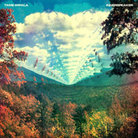
SOUNDTRACK: TAME IMPALA-“Lucidity” (2010).

I heard this song on the NPR’s 5 Artists You Should Have Known in 2010.  The album, Innerspace, is only available in Australia (imported on Amazon for big bucks) but I guess that’s why people download music.

This song is really cool. It feels very My Bloody Valentine to me.  However, inevitable comparisons to The Beatles abound, but that’s mostly in the vocals (which is kind of funny since they are Australian).  But it’s really a very sixties British vocal sound–not unlike early Who).

The big difference comes in the music which is psychedelic and wild in ways that The Beatles never quite managed.  There are great big washes of noise, and the sound quality sounds retro, even though it obviously isn’t.  Comparisons to the great Swedish band Dungen are not misplaced either.

I’ve listened to a few more tracks by them on YouTube, and I think this album could easily be one of the best of 2010 if only more people could hear it!

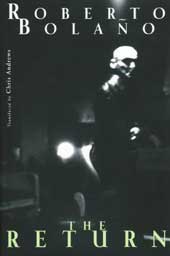
[READ: January 3, 2010] The Return

With the completion of this collection of short stories, I have now caught up with all of the published works of Roberto Bolaño (in English of course).  [The next book, Between Parentheses, a collection of nonfiction, is slated for June].

So The Return contains the 13 short stories that were not published in Last Evenings on Earth.  That collection inexplicably took shorts stories from his two Spanish collections Llamadas telefónicas (1997) and Putas asesinas (2001) and combined them into one collection in English.  It wasn’t quite as evident in Last Evenings, but it seems more obvious here that the stories in Putas asesinas are grouped together for a stylistic reason.  So, to have them split up is a bit of a bummer.  And yet, having them all translated is really the important thing.  And, again, Chris Andrews does an amazing job in the translation

This collection of stories was very strong.  I had read a few pieces in Harper’s and the New Yorker, but the majority were new to me.  Bolaño is an excellent short story writer.  Even if his stories don’t go anywhere (like his novels that never quite reach their destination), it’s his writing that is compelling and absorbing.

This collection also had some different subject matter for Bolaño (it wasn’t all poets on searches). (more…)

Read Full Post »

« Newer Posts - Older Posts »