Feeds:
Posts
Comments

Archive for the ‘Politicians’ Category

SOUNDTRACK: BORIS-Archive Volume One “Live 96-98” (2005/2020)

In early August, Boris digitally released six archival releases.  Volume One is called “Live 96-98” and that’s what it contains.  There’s eight songs all recorded in the same place Koenji 20000V, once a year or so.

Originally released in 2005 from the US label “aRCHIVE”, limited to 600 copies which sold out immediately. Compiled from live recordings during Boris’s “Power Violence” period 1996 – 1998, including songs from the 1998 studio album “Amplifier Worship” and Archive Volume Zero “Early Demo”.  (Reissued as part of Archive 1 on March 5, 2014. Limited to 1,000 copies).

The first two songs were recorded in December 1996.  They are not for the faint of heart.

“Huge” is a ten minute drone.  It’s full of feedback and slow chord progressions that repeat until after five minutes, when Wata hits a high note and Atsuo starts screaming along with the thumping drums.  It segues into “Hush” which is 53 seconds of thrash: pounding guitar and drums, including something of a drum solo by the end while someone sings to it.

The next chunk of songs were recorded six months earlier.  “Soul Search You Sleep” is nearly 9 minutes of crashing chords with lots of screamed vocals.  There’s a brief fast section before the slow drones return.  Wata takes a guitar solo near the end which segues into “Vacuuum” which is a minute and a half long.  It starts with that wailing guitar solo until the pummeling drums and screamed vocals take over.  It ends with feedback that segues into “Mosquito” a slower song that has chanted vocals from both Atsuo and Takeshi.

“Mass Mercury” was recorded almost a year later.  Things aren’t radically different, but they allow some of the noise to drop away a bit more.  It opens with feedback and fast riffing guitars.  After a minute and a half everything drops out but some pulsing bass and guitar effects from Wata. The pulsing runs through to the end after a middle section of growls and drums.  It segues into “Scar Box,” which is a big slow riff.  Unexpectedly, mid song it briefly turns into a crushing hardcore song with shouted growly vocals until it slows back to crashing heavy chords.

The final track is the newest of the bunch.  It’s 8 minutes long and starts as a fast hardcore song.  Then a bass and drum rumble takes over and things slow down while Wata makes some airplane-like sounds it her guitar.  The solo loops and phases through to the end until about a minute left when both singers start shouting through to the crashing end.

I’m not sure if they are singing in Japanese or just growling, but it’s a pretty intense 45 minutes of live music.

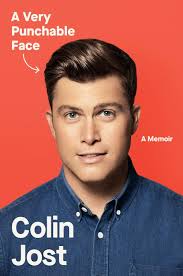
[READ: August 12, 2020] A Very Punchable Face

I wasn’t really sure how I felt about Colin Jost.  I like him on Saturday Night Live’s Weekend Update and yet as the title of his book says, he has a very punchable face.  And, as I say every time I read a memoir–I don’t really care about memoirs all that much.  And yet here’s another one I’ve read.  And it’s yet another one from a cast member of Saturday Night Live–a show that I don’t think is all that great (but the memoirs are usually quite good).

There was an excerpt form this book in the New Yorker and it made me laugh at loud, so I looked forward to reading the rest of the book.

The beginning is interesting in that he says he had a hard time learning to speak–an odd thing for a TV news presenter.  But really the most fun part starts when he tells us about the astonishing amount of bad fortune he has had–his delivery about it all is hilarious.

The chapter “You’re Gonna Need Stitches” lists the six times (throughout his life) that he has had to get stitches–one was from getting a surfboard to the face!  Indeed there are two stories of surfing –not something I expected from a guy from Staten Island.  The second one involves being saved by Jimmy Buffet (and how much Jost enjoys eating at Margaritaville restaurants–I can’t get over how much alcohol must be consumed at a this franchise).  There’s also a crazy story about him visiting Google and getting injured by the VR machine.  He even somehow managed to possibly have insect eggs laid under his skin.  Ew! (more…)

Read Full Post »

51196238._SX318_SY475_SOUNDTRACK: LYRIC JONES-Tiny Desk (Home) Concert #57 (July 29, 2020).

download (69)Lyric Jones is a delight.  A smart, thoughtful woman who not only raps really well, she has a great singing voice too.

She talks A LOT between songs.  She plays 3 songs in 21 minutes.  She talks a lot about her hustling–driving for Uber and Lyft as well as all of the running around one has to do to be a musician.

Lyric makes it abundantly clear that her hustle is nonstop – writing, rapping, singing, drumming, engineering, and grinding it out to make Gas Money (the title of her latest album).  This quintuple threat, trained in the Berklee College of Music’s City Music program, recorded this Tiny Desk (home) concert from her studio in Los Angeles in May.

“All Mine” opens the song and I love how she plays her electronics while keeping her flow fresh.

My favorite song is “Adulting.”  I love watching her create the song a capella–making the beats and the music looping her voice and manipulating it with electronics.

 Her multi-layered prowess is present on “Adulting” a song about the evolutionary growth that happens in your late 20s and early 30s. Lyric uses a TC Helicon vocal processor to create percussive beats, looping her voice as a backdrop and packing a punch with vocal harmonies and ad libs.

After the song she jokes about how in the song she is complaining about wanting to stay home all day and not get up and do shit.  Be careful what you wish for.

Before the last song she has two important things.  First, how you can support Lyric Jones (ha).  But she takes the virus seriously, encouraging everyone to be kind to ourselves and patient with ourselves. It’s important to feed ourselves mentally, creatively and to literally feed ourselves.

In grappling with the pandemic, Lyric expresses the deep importance of this moment: “Whatever we put out in this time, in this era is a bookmark in history. Especially as musicians. … For me, my personal testament, I want to be intentional. … My children’s children are gonna know about this time. And I want to know that I impacted it with intentional music, intentional thoughts, insights and perspectives.”

She ends with “Lush Lux Life,” her “affirmation song” about “what I should be doing–living luxuriously.”  I really like this song for the excellent retro-sounding music behind the song.  I’m really curious if the jam at the end of the song is new or a sample from an interesting rocking jazzy solo.  Her producer Nameless has some great skill.

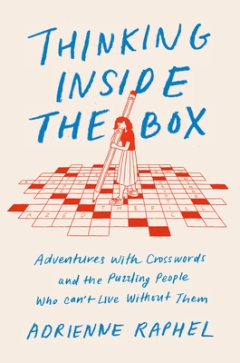
[READ: July 29, 2020] Thinking Inside the Box

A couple of years ago I read Cluetopia, a history of the crossword puzzle written from a British writer.  Now here’s a book about crossword puzzles written from an American writer.

Is the country significant?  In some ways, very much so.  Because Americans and Britons have very different styles of crossword.  Americans’ puzzles are full of puns and definitions as well as facts and information.  British crosswords are known as cryptics and are mostly full of wordplay–you don’t need external information to solve the puzzles, exactly.  Most of the time the clue contains all you need to find the answer (sometimes it even contains the answer itself) but they are quite challenging.

Other than that, the origin of the author is not that significant, because the origins of the crossword are the same regardless where you write from.  Arthur Wynne was a Liverpudlian lad who moved to Pittsburgh and then to New York City.  He worked on the New York World which was eventually run by Joseph Pulitzer.  (It’s ironic that awards of excellence are in his name since he ran the World full of pulpy news and yellow journalism).

In 1913, Wynne was put in charge of the FUN section.  He needed to fill space so he came up with a Word-Cross Puzzle.  It was shaped like a diamond and the three and four letter answers ran around a center hole.  He based it on similar word puzzles he had seen as a child in England.  The puzzle became a weekly feature.  Eventually a typo changed it to crossword.  The puzzles weren’t especially challenging because they were meant to be fun.

Wynne wanted to patent the crossword but the paper wouldn’t pay for the expense. (more…)

Read Full Post »

SOUNDTRACK: A moment of silence (July 30, 2020).

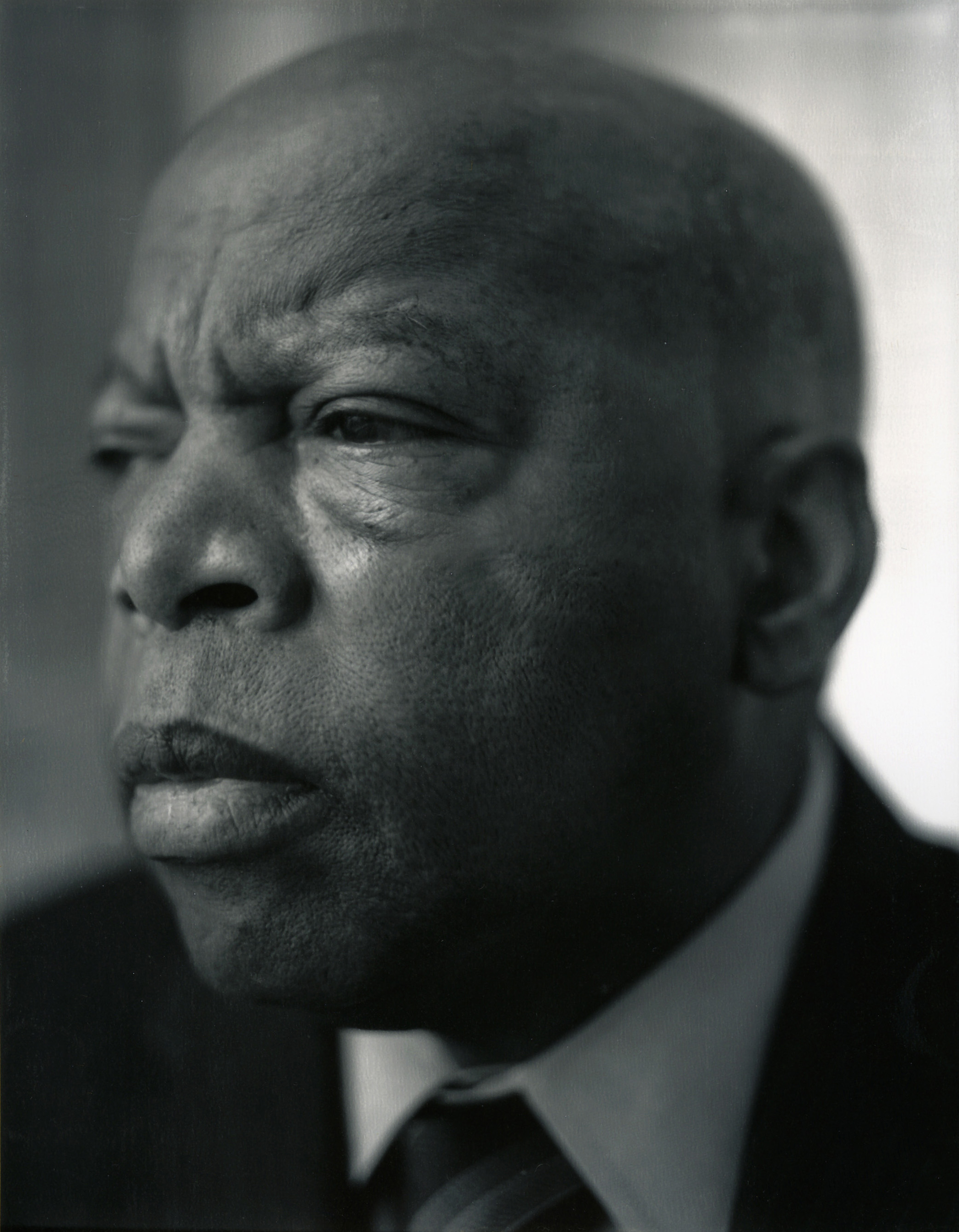
[READ: July 30, 2020] “Together, You Can Redeem the Soul of Our Nation”

Congressman John Lewis is one of the most important civil rights leaders of the 20th and 21st century. His graphic novels March are required reading.

Lewis died on July 17.  He had the presence of mind to write this essay shortly before his death and asked The New York Times to publish it on the day of his funeral.

I am presenting it here in full because it is so full of hope, so full of love and so meaningful, that everyone should read it.

~~~~

While my time here has now come to an end, I want you to know that in the last days and hours of my life you inspired me. You filled me with hope about the next chapter of the great American story when you used your power to make a difference in our society. Millions of people motivated simply by human compassion laid down the burdens of division. Around the country and the world you set aside race, class, age, language and nationality to demand respect for human dignity.

That is why I had to visit Black Lives Matter Plaza in Washington, though I was admitted to the hospital the following day. I just had to see and feel it for myself that, after many years of silent witness, the truth is still marching on.

Emmett Till was my George Floyd. He was my Rayshard Brooks, Sandra Bland and Breonna Taylor. He was 14 when he was killed, and I was only 15 years old at the time. I will never ever forget the moment when it became so clear that he could easily have been me. In those days, fear constrained us like an imaginary prison, and troubling thoughts of potential brutality committed for no understandable reason were the bars.

Though I was surrounded by two loving parents, plenty of brothers, sisters and cousins, their love could not protect me from the unholy oppression waiting just outside that family circle. Unchecked, unrestrained violence and government-sanctioned terror had the power to turn a simple stroll to the store for some Skittles or an innocent morning jog down a lonesome country road into a nightmare. If we are to survive as one unified nation, we must discover what so readily takes root in our hearts that could rob Mother Emanuel Church in South Carolina of her brightest and best, shoot unwitting concertgoers in Las Vegas and choke to death the hopes and dreams of a gifted violinist like Elijah McClain.

Like so many young people today, I was searching for a way out, or some might say a way in, and then I heard the voice of Dr. Martin Luther King Jr. on an old radio. He was talking about the philosophy and discipline of nonviolence. He said we are all complicit when we tolerate injustice. He said it is not enough to say it will get better by and by. He said each of us has a moral obligation to stand up, speak up and speak out. When you see something that is not right, you must say something. You must do something. Democracy is not a state. It is an act, and each generation must do its part to help build what we called the Beloved Community, a nation and world society at peace with itself.

Ordinary people with extraordinary vision can redeem the soul of America by getting in what I call good trouble, necessary trouble. Voting and participating in the democratic process are key. The vote is the most powerful nonviolent change agent you have in a democratic society. You must use it because it is not guaranteed. You can lose it.

You must also study and learn the lessons of history because humanity has been involved in this soul-wrenching, existential struggle for a very long time. People on every continent have stood in your shoes, through decades and centuries before you. The truth does not change, and that is why the answers worked out long ago can help you find solutions to the challenges of our time. Continue to build union between movements stretching across the globe because we must put away our willingness to profit from the exploitation of others.

Though I may not be here with you, I urge you to answer the highest calling of your heart and stand up for what you truly believe. In my life I have done all I can to demonstrate that the way of peace, the way of love and nonviolence is the more excellent way. Now it is your turn to let freedom ring.

When historians pick up their pens to write the story of the 21st century, let them say that it was your generation who laid down the heavy burdens of hate at last and that peace finally triumphed over violence, aggression and war. So I say to you, walk with the wind, brothers and sisters, and let the spirit of peace and the power of everlasting love be your guide.

Read Full Post »

SOUNDTRACK: DIANA GORDON-Tiny Desk (Home) Concert #51 (July 15, 2020).

I was immediately attracted to this Tiny Desk (Home) Concert because I (still) have the exact same neon green iBook.  I don’t know how old Gordon is, but I have to wonder if it’s original.

I don’t know anything about Diana Gordon.  That’s probably logical since although she’s been in the music world for a while, it was mostly a s songwriter and under a different name.

After years of writing hits for others and releasing music under the moniker Wynter Gordon, the Queens, N.Y., native has awakened new aspects of her artistry in recent years that she’s finally ready to share under her given name.

So if she wrote hits, her music must be poppy, right?  Not exactly

But while her earlier work routed through the pop and dance worlds, Wasted Youth balances influences of Whitney Houston, Alanis Morissette and The Cranberries’ Dolores O’Riordan.

I actually hear a lot of Natalie Merchant in her quieter singing–especially with the gorgeous acoustic guitar of her masked-up guitarist, Davin Givhan.

Like the workplace props that flank her, [folders, boxes and a Curb Your Enthusiasm mug and check out that phone!] Gordon’s latest EP, 2020’s Wasted Youth, feels so fitting for these unprecedented times.

Starting with “Rollin,” you can hear “Gordon’s nihilistic invincibility” in a song that name checks Nirvana.  It starts with a great deep guitar riff (it even sounds bad ass on the acoustic guitar).  She adds a raspy vocal intro before singing with a cool (dis)affected 90’s alt rock vocal style.  I really dig it (the record version has a more thumping bass sound making it more danceable but also more distorted).

When the song is over she demonstrates a yodeling sound that underpins her singing in “Rollin.”

“Wolverine” is a quiet ballad that showcases her “forlorn lilting yodel.” It’s a more traditional song with her Natalie Merchant-esque delivery.  This is a pretty song from one of her earlier EPs.

The blurb describes “Wasted Youth” as “a sonic eyeroll-shrug,” but I feel it’s more of an intense song of pain.  Although not to be prudish but I wish there wasn’t quite so much cursing in it.  I mean every instance if the phrase “wasted youth” (several times per chorus) is preceded by “fuckin.”  It would be effective once, but just gets worn out for an entire song.  It’s a really good song otherwise.

“Once A Friend” is another ballad. This one features her “tear-jerking honesty.”  The record version sounds much the same–acoustic guitar, straightforward vocals and a gut punch of a lyric–all in less than two minutes.

I’m definitely going to have to listen to her some more.

[READ: July 20, 2020] “The American Persuasion”

This was a New Yorker Shouts & Murmurs.  These pieces are usually one page, but this one was three.   It’s also labelled “Part 1: The Scent of Liberty.”  I can’t decide if that means there are actually more parts or if that is part of the joke (there’s no part two in a future issue).

The premise of this piece is amusing, it is even more amusing reading it after Hamilton has come out because it also deals with the founding fathers in an unusual way.

The piece starts with George Washington trying to impress the Marquis–the man who would “be known as the noble Lafayette.”  Washington is a dandy, admiring himself in the mirror with fragrance dabbed behind his ears.  He “understood the power of his beauty, and he was not above using it now.”  Lafayette finds him hard to resist.

Washington was assisted in his Revolutionary quest by “noted voluptuaries and lovers of pleasure” Paul Revere, John Hancock and the Adamses. (more…)

Read Full Post »

SOUNDTRACK: KT TUNSTALL-“Wash ya Hands” (2020).

KT Tunstall has been on my radar a lot lately (I think she’l l have about five posts about shows I’m not going to).  Turns out that she released a special COVID-19-related song called “Wash Ya Hands.”

It’s not a great–but it is danceable and funny–for a song that’s all about a message.

The music starts kind of menacing (which is appropriate I suppose) with some swelling strings.  But it’s all about dancing and washing your hands.

Lyrically it’s pretty straightforward and easy:

Here’s the rules you have to follow
Wash your hands while you can
Keep on following the plan
Keep your fingers off your face
Keep your distance, give a wave
Call your fiends that you love
Shout out who you’re thinking of
If you gotta cough don’t be dumb
And don’t forget your thumbs.

Those last two lines fall flat, for sure.

However, the video is pretty cute and it’s full of kids dancing around (and the song is clearly for them).

The middle breakdown section is interesting with strings and lots of percussion, including water droplet sounds.

The end adds a bit more fun when the song moves up a step and the lyrics continue:

Wash your hands while you dance
in your favorite underpants.

It’s a positive message in a negative time.  Remember: all you’re spreading is love.

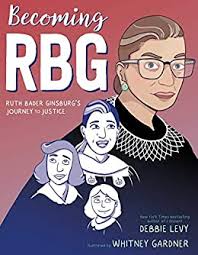
[READ: July 4, 2020] Becoming RGB

Why is is that children’s (graphic novel) biographies are so good?  Is it because they can focus on all of the important things in a short amount of space?  Is it because it is written at a levy that is easy for anyone to understand?  Whatever the reason, this biography of the amazing Ruth Bader Ginsburg is fantastic.  The illustrations from Whitney Gardner are great too–clean and informative.

Most Americans know that Ruth Bader Ginsburg is the tiny woman on the Supreme Court.  She’s been there for a long time and she is steadfast and true–very much unlike the two jokers who were recently appointed.

But aside from that, what do most of us know about her?  Well, for me, that was a big “not much.”

Her real name is Joan Ruth Bader.  But there were three Joans in her kindergarten class so she went by Ruth (everyone called her Kiki anyway). She grew up in Brooklyn.  She was left handed and the school forced her to switch (which she refused to do).  It was the first of many time she bristled at what a girl was supposed to do.

Ruth’s family was Jewish and they listened to the horrors of the Nazi progression on the radio.  Her grandparents immigrated from Russia and Australia years earlier assuming they could escape prejudice in America.  But Antisemitism was alive in New York.  As was racism and sexism.

And yes, it’s still here–somehow more vocal than ever.

But RBG saw it and wanted to do something about it.  She was inspired by Eleanor Roosevelt who said that “cruelty is a double-edged sword, destroying not only the victim but the person who indulges in it.” (more…)

Read Full Post »

31423478SOUNDTRACK: FABIANO DO NASCIMENTO-Tiny Desk (Home) Concert #43 (July 2, 2020).

fasbiFabiano Do Nascimento was born in Brazil and now lives in L.A.  he is an amazing guitar player, creating gorgeous soundscapes–‘an amalgamation of Afro-Brazilian jazz, folklore, bossanova and samba.”

For the first piece, “Nanã,” he plays what I think is a 10 string guitar (the fretboard is so wide!).  he starts a lovely melody and then the screen splits into four.  David Bergaud adds quiet piano and Julien Cantelm adds some complex drum patterns.  The fourth quarter is Fabiano again (it took me a moment to realize it, because he is in a different room).  He plays a lead guitar melody on a tiny ten stringed guitar.

The combination of his overdubbed rhythmic and melodic guitar lines, coupled with the delicate hands of piano player David Bergaud and drummer Julien Cantelm … flow into the first number, “Nanã,” a folkloric composition that “is the spirit that comes from African lineage and represents the forest … and is the primordial mother of earth.”

Up next is “Etude,” a composition by Fabiano inspired by Cuban classical guitar virtuoso Leo Brouwer.

For this piece, he switches to a six string guitar.  He has a different accompaniment.  Adam Ratner plays electric guitar (quietly) and Leo Costa play a some great complex drum (and cymbal) patterns as well as the chocalho.

Both Fabiano and Adam play leads, slow jazzy, pretty, while thr drums really do take much of the action.

Fabiano expresses

love for his motherland Brazil — an “endless foundation of inspiration” — is threaded deeply into the tapestry of his sound and ethos. If you’re looking for a musical moment of zen, this set comes highly recommended.

The final piece “Tributo” is a tribute to Brazilian composer Baden Powell de Aquino.  This piece is for solo guitar.

[READ: June 20, 2020] Make Your Bed

My son completed a leadership training course for the Boy Scouts and he was given this book as a gift.  I was intrigued by the title and because I like the guy who gave it to my son, so I thought I;d read it.

It’s a fast and easy read and I think a younger person (this was originally a college commencement address) could be inspired by it.  I’m a little too set in my ways t make many changes (although I have made sure my bed has been made ever since reading this).

The book is set up in ten chapters: the ten points that he made during the speech.  Each chapter gives a suggestion.  It is followed by the practical origin of that suggestion and then a more intense incident in life in which he used that suggestion. (more…)

Read Full Post »

SOUNDTRACK: KASENETZ-KATZ SUPER CIRCUS-“Up in the Air” (1968).

katzReading about bubblegum music has led me to a fascinating trove of information.  Like that most of the songs were written by two guys who “created” many of the bands.  Most of these bands have a revolving cast live but had the same band on record.  The two creators were Jerry Kasenetz and Jeffry Katz.

In 1968, Kasenetz and Katz created a “supergroup” which consisted of members of their “Super K Production.”

Their first album was hilarious, because according to the inner gatefold cover’s liner notes, the “supergroup” consisted of 46 members. However, the album cover itself only shows 33 members (plus Kasenetz and Katz in tuxedos) while the individual inner cover photos total 37 (excluding the non-existent St. Louis Invisible Marching Band, whose photo is represented by a white block). To add to the confusion of the actual number of participants, the LP package came with a page of stamps with each member of the “supergroup”, including their names and the individual group he or she represents. The members of The Teri Nelson Group (except Teri Nelson herself) are shown as INVISIBLE BAND on the stamps. Side 2 opens up with Music Explosion leader Jamie Lyons announcing the individual members of the newer or lesser-known groups. Some of the names mentioned do not coincide with the members shown on the stamps.

Hilarious and crazy.  This song “Up in the Air” comes from the supergroup’s second album in a year.  They renamed it “Kasenetz-Katz Super Circus” and the roster was reduced to five groups: The 1910 Fruitgum Company, Ohio Express and Music Explosion, with the other groups replaced by Shadows Of Knight (who had just been acquired by Super K and signed to Buddah’s Team label) and White Whale label group Professor Morrison’s Lollipop (formerly the Coachmen of Nebraska). Despite these representations, the tracks were actually recorded by studio musicians with lead vocals by Ohio Express lead vocalist Joey Levine.

That’s a lot of setup for an amusing almost novelty song.

There are two different guitar lines. One playing high notes and the other playing a melody).  Thumping bass and drums enter and then the song shifts to a groovy bassline and vocals that seem sped up.  And the lyrics are sort of political.

I don’t read poems by Poe
Look at Palooka Joe
Watch the Ed Sullivan Show
I love Governor Reagan

There isn’t a real chorus, just a repeated final line about Governor Regan (pronounced “Reegan” for some reason–like “Regan,” the King Lear character).

Don’t dig Joe Pepitone (la la la la la)
Or talk on the telephone (la la la la la)
One thing stands all alone
That’s my governor Reagan

Hail, Hail, hail our leader!
[Clavichord solo while backup singers chant “Hail Reagan, Hail to the Chief”]

Reagan was governor of California at the time.  The creator of the site Bubblegum Reviews asks, What is Reagan actually being criticized for here? He hadn’t actually done much to damage American democracy at that time.

Some may say he’s the Gip
Some say he’s lost his grip
I say that he’s a pip
He’s my Governor Reagan

A man who has so much hair
A man that is not all there
A man who just loves the chair
That’s my governor Reagan

More from Bubblegum Reviews:

The song seems to be making fun of him for having an inane persona derived from his good looks and movie career (“he’s the Gip”/”so much hair”).  It also denigrates him for having a feeble intellect or a weak grasp on sanity (“lost his grip”/”not all there”).  His supporters are equally dimwitted: instead of reading poetry, they look at Palooka Joe.

According to Wikipedia, “in Reagan’s campaign, he emphasized two main themes: “‘to send the welfare bums back to work,’ and, in reference to burgeoning anti-war and anti-establishment student protests…’to clean up the mess at Berkeley.’”  In one incident, his actions led to the death of one protester and the blinding of another;

[WHAT?  HOW DID THIS GUY BECOME PRESIDENT?]

later, he sent out the National Guard to occupy Berkeley.  It may have been his anti-protest stance that rankled with Levine et al. — youthful revolt seems to have been something people in the music biz were generally in favor of, even if they weren’t particularly interested in what was being revolted against. This autocratic approach to free speech may also be what’s behind the song’s implication that Reagan demanded unquestioning fealty (“hail, hail, hail the leader”).

How timely.

Is this a bubblegum song?  It’s hard to say for sure.  Kasenetz & Katz wrote most of the biggest bubblegum songs so they knew what they were doing.  Maybe they were trying to branch out.  It’s really nifty. I’ll have to listen to more.

[READ: June 15, 2020] Bubblegum Week 6

Over at the Infinite Zombies site, there was talk of doing a Quarantine book read.  After debating a few books, we decided to write about a new book, not a book that everyone (or some people) had read already.  This new book would be Bubblegum by Adam Levin.  Many of us had read Levin’s massive The Instructions which was not especially challenging, although it was a complex meta-fictional story of books within books.  It was kind of disturbing, but also rather funny and very entertaining.

So I’ll be posting weekly ideas on this schedule

Date Through Page
May 11 81
May 18 176
May 25 282
June 1 377
June 8 476
June 15 583
June 22 660
June 29 767

You Can Be Right and Kind At The Same Time,
or: Why Would You Hate a Part of Speech, Dude?

I was really looking forward to seeing Jonboat again.  He has been this looking figure–billionaire, astronaut, husband of the most beautiful woman in the world, father of Triple J.  And we know very little about him besides that.  And WOW does he make an impression.  Sort of.  Actually, he doesn’t make any impression except on Belt’s psyche.

This section begins with a bit of a misdirection: Belt picking up a magazine at the White Hen because astronaut Jonboat was on the cover. Flipping through, he couldn’t find the article (typical of big glossy magazines) and wound up looking at an article about the famous chef Clem.

Clem (I’m guessing inspired by Emeril?) was eggplant shaped with arms like noodles–he looked like a combination of Ringo Starr and Yasser Arafat–he seemed all wrong and yet he looked fantastic.  This was because everything in the room was custom made just for him.  He was measured for an oven, molds were made of his hands for his knives etc.  Somehow the objectively handsome assistant looked unfit in the room because everything fit Clem.

I love the librarian joke that Pang shouts at him: You think my name is Marian? (and a wonderful discursive joke about this not being a library).  But Belt didn’t buy the magazine because he needed money for Quills.

This is all a set up to say that Jonboat looked in his office as if every inch of it was measured to fit him.

As Belt walks in, Jonboat says “Hey, you,” and holds out his arms for a hug.  It take a second before Belt realizes he’s talking to Fondajane who is next to him.

There’s some playful banter between Jonboat and Fon.  And yet I can’t decide how to read this.  Is Jonboat a pedantic jerk or is he fun and good at teasing?

She says “As the kids say…Now we’ve come to the part where I make my exit.”  I love that Fon either doesn’t know or doesn’t care what the kids actually say.  Jonboat suggests they say, “I guess that’s my cue [to leave].”  But Fon retorts that that was two eras back.  They gave that up for their name and out: “Fondajane: out.”  Jonboat says that he never heard of it: “Jonboat: incredulous.”

When Belt tries to interject into the banter, Burroughs pats his arm to tell him to keep out of it.  As Fondajane leaves she says she has to meet Robbie bin Laden for dinner. This story’s skirting of 9/11 with lines like this is fascinating and I wonder if there will be any kind of payoff, or if it’s just reminders of the slightly-off timeline.

Finally Jonboat turns his attention to Belt.  He gets out his business gear (he is there to sign the contract for Triple J) and Belt notices a cure running on top of a globe.  Jonboat is trying to train it to walk on four feet, but it is disposed to walk on two–a sort of glorious defect.

The cure is really cute.  Even for Belt.  Belt starts to get uneasy–so much so that Burroughs steps in his line of sight to avoid any trouble.  Belt is surprised and dismayed that he didn’t just want to hold it, he wanted to squeeze it–and he imagined in some detail what the experience would have been like. (more…)

Read Full Post »

SOUNDTRACK: 1910 FRUITGUM COMPANY-“Goody Goody Gumdrops” (1968).

19101910 Fruitgum Company has a great, bizarre name.  Especially for a band that released such poppy songs.

I thought I knew most of the bubblegum hits just from casual awareness of them.  I was quite surprised how many of these chart-hitting songs I’ve never heard before.

I don’t think I knew this one before, and I quite like it.

The opening verses are quiet, almost dark, with just a chugging guitar and a stomping drumbeat.

It segues into a chorus that is really catchy (of course).  I really like the chord change from “goody goody gumdrops, my heart is doing flip flops” to “gee what love can do.”  It feels like perhaps a minor chord introduction.  There’s even some mildly interesting drum patterns in the middle.

The return of the opening verse brings back a slightly darker mood before the return of the joyful chorus.

It feels like it slightly defies the conventions of the pure bubblegum song.  Maybe that’s why it only got to #37.

[READ: June 15, 2020] Bubblegum Week 6

Over at the Infinite Zombies site, there was talk of doing a Quarantine book read.  After debating a few books, we decided to write about a new book, not a book that everyone (or some people) had read already.  This new book would be Bubblegum by Adam Levin.  Many of us had read Levin’s massive The Instructions which was not especially challenging, although it was a complex meta-fictional story of books within books.  It was kind of disturbing, but also rather funny and very entertaining.

So I’ll be posting weekly ideas on this schedule

Date Through Page
May 11 81
May 18 176
May 25 282
June 1 377
June 8 476
June 15 583
June 22 660
June 29 767

Coffee with Honey

Part IV of the book is called Compound. In it, Belt visits the Jonboat housing compound (they took over most of a cul-de-sac).

There’s a few interesting revelations here, and a remarkably lengthy discussion of a sexual practice that I don’t think I’ve ever seen discussed–certainly not at length–in a book before.  But overall this section does what I like best about this book–have lengthy passages that don’t move the plot along but make me laugh at the ideas and the extent to which Levin is willing to stretch out an idea.

Part IV Section 1 is called “New Modes of Fascination.”

As Belt wakes up his pillow is talking to him.  This is new.  Or, not new exactly, but unusual.  Indeed, the pillow is mad because Belt hasn’t talked to it at least six years (and it’s grumpy because of it).  There’s not much more with inans in this section (aside from a false interaction with a bracelet at the compound), but it’s probably important not to forget about them.

One interesting idea that the pillow suggests is that it can talk with books.  Belt wonders why he never talked with books.  Or had he?  Was the book reading the words to him as he held it or did books have other things to say besides the words on the page?  That idea must be tabled for now.

Belt runs into his dad who is standing in the kitchen acting like he’s had a stroke. He’s acting very strangely, frying up a huge pack of bacon and getting grease on a Jonboat shirt.  There’s a nice call back to Belt smashing the frame that held the Jonboat Says t-shirt.  For this is the shirt that Clyde has.  Clyde essentially believes that he blacked out and smashed the frame but doesn’t remember doing it.  he finds this disturbing because he distinctly remembers why he wanted to do it, but is concerned that he blacked out and doesn’t remember that part.  Belt does not put his mind at ease with the truth.

Belt also learns that his father never really liked Jonboat–he wasn’t rubbing it in by buying that T-short–rather it was … overcompensation because he felt bad that he didn’t like belt’s new friend.  This made Belt feel very good about his dad and they even shared a lengthy, sincere hug.

This week’s reading had several sections that I just loved.  The don’t advance the plot.  They are long-winded, almost set-pieces.  And each one delights me.

Like when Belt decides to sweeten his coffee with honey. (more…)

Read Full Post »

SOUNDTRACK: THE BANANA SPLITS-“The Tra La La Song (One Banana, Two Banana)” (1968).

traOf all the bubblegum pop songs, this is probably the one I know the best.

I was surprised to discover that the song and TV show were from 1968, because I used to watch it all the time.

But I see that the series originally ran from September 7, 1968 to September 5, 1970, but then it was in syndication from 1971 to 1982, which is when I watched it.  Amazingly, it was in syndication for 11 years and there were only 31 episodes made.

Is there anything catchier than a bunch of people singing tra la la, la la la la?

And then the lyrics couldn’t be simpler:

One banana, two banana, three banana, four
Four bananas make a bunch and so do many more
Over hill and highway the banana buggies go
Coming on to bring you the Banana Splits show
Making up a mess of fun
Lots of fun for everyone
Four banana, three banana, two banana, one
All bananas playing in the bright warm sun
Flipping like a pancake, popping like a cork
Fleegle, Bingo, Drooper and Snork

This was the theme song for the TV show.  It was a minute and a half and is insanely catchy.

The Dickies did a punk cover in the 1970s, which doesn’t sound very different from the original, expect that instead of bright keyboards, the music is all guitars and drums.  It is faster-paced and yet longer because of a guitar solo and some extra sing along parts.

For those unfamiliar with the show, the Banana Splits were:

  • Fleegle — A greenish-brown dog wearing a large red bow tie, black buttons, brownish-orange chucks, with his tongue is always sticking out. He plays a guitar and sings.
  • Bingo — A nasal-voiced orange gorilla wearing white glasses and a yellow vest, featuring a toothy grin. He plays drums and sings.
  • Drooper — A lion with a very long tail wearing yellowish-orange glasses, spats on his feet, and speaks with a Southern drawl. He plays a bass guitar and sings.
  • Snorky — A mute furry elephant wearing pink glasses. He becomes a regular elephant in season 2, wearing a green vest with yellow stripes. He communicates through honking sounds akin to a clown horn, and one of the other Splits would translate what he is saying. He plays a keyboard.

What a great time to be a kid.

[READ: June 8, 2020] Bubblegum Week 5

Over at the Infinite Zombies site, there was talk of doing a Quarantine book read.  After debating a few books, we decided to write about a new book, not a book that everyone (or some people) had read already.  This new book would be Bubblegum by Adam Levin.  Many of us had read Levin’s massive The Instructions which was not especially challenging, although it was a complex meta-fictional story of books within books.  It was kind of disturbing, but also rather funny and very entertaining.

So I’ll be posting weekly ideas on this schedule

Date Through Page
May 11 81
May 18 176
May 25 282
June 1 377
June 8 476
June 15 583
June 22 660
June 29 767

A Fistful of Fists is a Handful

After the academia and “high brow” thoughts of Triple J’s essays, this week’s transcription of Triple J’s film A Fistful of Fists: A Documentary Collage is rather tough reading.  It reminded me of reading something like David Foster Wallace’s Brief Interviews with Hideous Men or Roberto Bolaño’s 2666 (The Part About the Crimes) in that there’s some really horrible things to witness but their inclusion serves to prove a point and even to further the plot and fill in some gaps.

A Fistful of Fists is a collage of twenty-seven short films all about the joy of killing cures.  The transcription is a print version of what is seen on the videos, sometimes in graphic detail.  Scenes of it reminded me of some of the “torture porn” stories that were trendy a while back. (more…)

Read Full Post »

SOUNDTRACK: THE FUN AND GAMES-“Elephant Candy” (1968).

indexI’d never heard of The Fun and Games before looking up this bubblegum pop song.

Amazingly there were six members of the band (and none of them were cartoons).

The band members and name were constantly in flux and they released only one album, Elephant Candy in 1968.

“Elephant Candy” is a two and a half minute pop delight.

The main music of this song sounds almost like the music of a merry-go-round–a kind of sugar-coated pipe organ.

The song opens with the preposterously catchy “elephant elephant candy did you know that elephants can be fun eating candy on the run.”  The second go-round features backing vocals of a steady “Ahhahahh” that sounds simultaneously unsettling and catchy: kind of like a fun house mirror.

The verse seems like its just an opportunity to pause in between the next appearance of the chorus.

If that weren’t catchy enough, the song moves up a step so it’s even more treacly. Somehow, the song even has time for two keyboard solos.

[READ: June 1, 2020] Bubblegum Week 4

Over at the Infinite Zombies site, there was talk of doing a Quarantine book read.  After debating a few books, we decided to write about a new book, not a book that everyone (or some people) had read already.  This new book would be Bubblegum by Adam Levin.  Many of us had read Levin’s massive The Instructions which was not especially challenging, although it was a complex meta-fictional story of books within books.  It was kind of disturbing, but also rather funny and very entertaining.

So I’ll be posting weekly ideas on this schedule

Date Through Page
May 11 81
May 18 176
May 25 282
June 1 377
June 8 476
June 15 583
June 22 660
June 29 767

Sometimes One Looks Like The Other, Bad Taste and Stupidity

This weeks reading was really intense.  It also showed things that I never imagined would come up.

  • A lengthy and carefully edited suicide note.
  • A lengthy treatise on transgendered persons/prostitution/homosexuality
  • Academic papers that are simultaneously well-written and yet obviously the work of a child.

Part Two, Section 5 of the book is called “Letters and Facts.”

This was an interesting place to stop/resume reading because, although they reference the same incident, the beginning of this section differs from the end of the previous section.  (more…)

Read Full Post »

« Newer Posts - Older Posts »