Feeds:
Posts
Comments

Archive for the ‘Poetry’ Category

SOUNDTRACK: PUBLIC ENEMY-Fear of a Black Planet (1990).

NPR recently broadcast a PE show from the All Tomorrow’s Parties Festival.  I didn’t know that PE was still touring, so that was a surprise to me.  The show was largely a celebration of Fear of a Black Planet, which meant that I had to go back and listen to the original.

Man, is this a solid album.  The lyrics pack a punch even twenty years later and what is perhaps more amazing is that the sound collages that Terminator X created, which were something of an oppressive sonic assault are now fairly mainstream-sounding (forward thinking or what?).

What I like about this (and most PE) albums, is that  they have little skits between songs, but unlike most rap skits they’re not one-not jokes that you listen to once and then skip every future time.  A wonderful skit (for lack of a better word) is “Incident at 66.6 FM” in which we hear an amazing amount of racist epithets thrown at PE apparently on the radio.  Or the rather disturbing “Meet the G That Killed Me.”  “Anti-Nigger Machine” is a great collage of samples like “Think” and James Brown and a dozen more songs.

“Can’t Do Nuttin for Ya, Man!” is a (sort of) comic song from Flav that is catchy as anything. While “Reggie Jax” is a confusingly titled song that has nothing to do with baseball, but everything to do with funk.

Of course, this disc has some of PE’s best songs as well.  From the awesome “911 is a Joke” to one of the best rap songs ever, “Welcome to the Terrordome” (my favorite story of this song is when I was wearing a  Welcome to the Terrordome shirt and my philosophy professor asked me quite pointedly, “What in the hell is a terrordome.”  That was a fun conversation).  “Terrordome” is still amazing–powerful, musically intense and for all of its lyrical acuity, it still has funny moments….boing.

And of course, “Burn Hollywood Burn” is an amazing critique of the movie industry (and it’s catchy too).  I got Black Caesar back at the crib, right Lar?

I’ve always been a little confused by “Pollywannacracker.”  Not lyrically, but vocally, as Chuck’s (is it really Chuck?) voice is treated in a surprisingly tinny way.  I liked the song more on this listen than any other, I guess in the past it just kind of snuck by me.

The album is a little front loaded with greatness.   “Power to the People” is another powerful song, but it’s not quite as memorable as the other tracks.  “Fear of a Black Planet” has some really cool sounds on it (where did they get that “black man, black woman, black baby” sample?).   “Revolutionary Generation” is a great track in which Chuck and Flav stand up for black women: “R-E-S-P-E-C-T, my sister’s not my enemy.”  Not your average rap subject.

And the last couple of proper songs, “B Side Wins Again” and “War at 33 1/3” are fast paced and furious, but they don’t really have much in the way of a hook.  Nevertheless, lyrically they are really great, and I love to hear Chuck D flow that quickly.

The biggest surprise for me is the censored version of “Fight the Power” (the song that got me into PE in the first place, thanks Spike).  It’s really surprising to me that PE allowed their music to be bleeped–unless it was just for a deliberate radio play (which I can accept).  Although they also list a title as “Leave This Off You Fu*Kin Charts” (did I buy a Columbia House version or something?)

This is an amazing album, one that still sounds fresh and sadly, is still relevant.

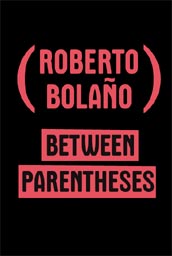
[READ: October 15, 2011] Between Parentheses

I never expected to get so addicted to Roberto Bolaño.  And despite his death, there is no shortage of works coming out in English (that is one of the advantages to reading a translated author–even death doesn’t cease the available materials).  Indeed, this year alone, New Directions is publishing Between Parentheses, and Tres and FSG is publishing The Third Reich (a collection of non fiction, a collection of poetry and a novel respectively).

When I really get into an author, I fall for his or her works, not necessarily him or her as a person (heck, some author are downright jerks).  But there are some authors that I want to know about, personally.  Bolaño is a pretty polarizing figure–he seems obnoxious, his works don’t shy away from very specific opinions, and sometimes it’s unclear what kind of views Bolaño himself has in his works (or if he’s even telling the truth about his so-called truths).  One thing in particular is the constant use of the word “faggot.”  It is used often in 2666 (and I know that is a translator’s choice, but still) and used derogatorily.  Now, clearly the context is everything for something like that.  But it seems to speak badly of Bolaño.  And yet, when reading these essays he is not homophobic in the least.  He is obviously well aware of institutionalized homophobia in Latin America, and he is obviously not supportive of it.

But that’s just one interesting thing about this book.  So let me back up. (more…)

Read Full Post »

SOUNDTRACK: TOM WAITS-Small Change (1976).

Half-naked woman on the cover and all (Wikipedia say that this might be Elvira, before she was “Elvira”), this is what people thing of when they think Tom Waits: That gravelly voice is in full form here, with poetic rants and bluesy, drunken musings.

The opening track, “Tom Traubert’s Blues (Four sheets to the wind in Copenhagen)” (I love that many of these titles have parenthetical additions) features the repeated chorus from “waltzing Matilda” which is kind of cheating, but which certainly makes this song potent and memorable.  “Step Right Up” is a skit and scat sales pitch for a miracle product.  It’s a wonderful piece of snark aimed at hucksters (this actually makes sense given that nearly 40 years later he still hates advertising (according to this interview on NPR)).

“Jitterbug Boy” is a mournful piano ballad.  It makes me think of William Kennedy’s Ironweed (of course, Waits was in the film of Ironweed, so maybe that’s got something to do with it).  “I Wish I was in New Orleans (In the Ninth Ward)” has a very Louis Armstrong feel to it (I never noticed how close this early style is to Armstrong until I started playing “What a Wonderful World” for my kids (no Tom for them yet). And of course, the Ninth Ward was really devastated by Hurricane Katrina, so maybe they should have used this as their anthem.

“The Piano’s Been Drinking” is forever etched in my mind from Mystery Science Theater 3000–Tom Servo does a wonderful Tom Waits impersonation.  Incidentally, Waits himself had been drinking, quite heavily at the time.  The track “Pasties and G String” is a scat-fueled description of the lady on the cover, more or less.  It’s accompanied by simply drums and a cymbal and is not too dissimilar from “Step Right Up.”  “Bad Liver and a Broken Heart” begins and ends with the melody of “As Time Goes By” and ends with a confession to drinking too much.

A song like “The One That Got Away” is Waits rambling around with his poetry in his gravelly, slurry followed by a sultry saxophone.  It sets a mood faster than anything I know.  Of course, if you don’t want that mood, you won’t want this album.

Of his first four albums, this one is my favorite (just ahead of Closing Time).  I’m not a huge fan of his early work, and I don’t listen to it all that often, but it’s a perfect treat when the mood strikes.  Waits also was beginning to get into something of a rut.  Despite his varied styles per album, all of the albums were beginning to blend a little.   There are still some great songs coming, but it would take until Swordfishtrombones before he went really far afield from this comfort zone.

[READ: September 21 2011] “Dog Run Moon”

This is one of those stories that seems so pointless that you can’t stop reading.  The good thing is that it was so well-written and engaging that its pointlessness is part of its charm.

As the story opens, Sid is running stark naked through a desert landscape–his feet are bleeding, he is covered in the red dust from the ground and there is a white Spaniel running alongside him.

Essentially, the entire story is that Sid has stolen this dog from Montana Bob and his friend Charlie Chaplin.  They caught him and he ran away with the dog through the desert.  As I say, it’s kind of pointless because he’s running naked and barefoot and they are chasing him on ATVs–he’s obviously not going to escape.  But what makes the story worth reading is the way the plot is irrelevant (except that it tells you a lot about Sid), because it’s really the impetus for his actions that comprises the story. (more…)

Read Full Post »

SOUNDTRACK: TOM WAITS–The Heart of Saturday Night (1974).

What would be more shocking–hearing this and then going to Bone Machine, or listening to Bone Machine and then hearing this. Holy cow. Tom’s voice is so NOT Tom Waits on this record. It kept me thinking of The Eagles or something. The tone, the pacing, I kept expecting him to bust out “Desperado.”  He also has some crazy beat-inspired poetry (what the kids today call spoken-word pieces)  Indeed, these spoken pieces would stay with him in one form or another for his whole career.  But seriously, how much a man can change in thirty years!

Like Closing Time, this album has several different styles.  Primarily, it has a sloppy, bar sound, the sound that Closing Time‘s cover conveyed.  And that sound is all over “New Coat of Paint.”   But there’s also piano ballads.  And those ballads, combined with Waits’ non-gravelly voice, give “San Diego Serenade” and “Shiver Me Timbers” that Eagles’ ballady sound.  And then “Semi Suite” brings back that muted trumpet. 

“Diamonds on My Windshield” is a beat poem set to a walking bass.  It’s clichéd, except that no one actually does it as well as Waits.  And although I don’t really like the blues in general, I enjoyed “Fumblin’ with Blues” quite a bit.  There’s something about Waits’ sloppy (but not) style  that makes the song interesting.  Even though this is considered a classic, this album is just not really my style and it’s one I listen to quite infrequently.

[READ: September 21, 2011] “An Anonymous Island”

This story is translated from Korean by Heinz Insu Fenkl.  

I felt like the heart of this story was completely unoriginal in content; and yet I can’t tell if it is a common story, if it is a kind of folklorish story, if it’s sort of a story from ancient writings or if it’s just something that happens.

The beginning of the story shows a woman listening to her husband.  He is watching the television,bemoaning the fact that anyone can be anonymous these days (this struck me as a funny sentiment given how much everyone in America bemoans the lack of privacy or the fact that everyone is on the internet).  You can get off at one bus stop past your own and no one knows you.  Back when he was a kid everyone knew everyone else, a village was a family.  And as the woman listens, she flashes back.

The flashback is to when she was a teacher in a small village.  A village where everyone is related.  Everyone treats each other with respect and deference.  Except for one man, Ggaecheol.  Ggaecheol is a bum–he has no job, he has no home.  The village tolerates him because he is an idiot and he is impotent.  But whenever he wants a meal, he simply walks into someone’s house and sits down and says, feed me.  Which they do.  Typically he sleeps outside, but when it’s cold, he walks into someone’s house and sits at the foot of their bed.  He says he wants to keep the woman warm, so the men, amused by his impotence, allow this.

There’s an old Monty Python skit in which the town idiot, despite being mocked by all, does great with women.  The punch line, showing the idiot with a couple of hot girls in bed with him: “I may be an idiot, but I’m no fool.”  And so it is with this story.  The bum is sleeping with everyone in town.  (more…)

Read Full Post »

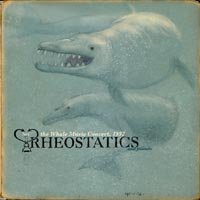
SOUNDTRACK: RHEOSTATICS-The Whale Music Concert, 1992 [Sets 1 and 2] (2005).

This is the second Rheostatics live CD that’s available from ZuniorWhale Music is a simply stellar album, and this concert focuses primarily on that disc, although there are a couple older tracks (and the then-new “Michael Jackson”) as well.  The big surprise about this concert is that they consider it a night of 1,000 stars: there are a ton of guests in this show (the majority of whom are even more obscure than the Rheostatics, I believe–the only two that I knew of before hand were Kevin Hearn and Andy Stochansky (who drummed with Ani Difranco for a while).  But guests like Tannis Slimmon, Doug Feaver, Tim Mech, Kevin Gould, Richard Burgman, Mitch Perkins and The Bird Sisters (and if you like Canadian music, the link for The Bird Sisters is to a cool blog called Raised on Canadian Radio: 1 Song per Day by 1 Uniquely Canadian Artist) add to the party atmosphere.

Anyhow, sometimes guests can really heighten a show.  And that’s the case for some of this show.  Of course, anyone who has read my criticisms of rap knows that I feel that too many guests spoil a good thing. None of these guests are “too much” here, but it does seem odd that there are so many!

The first set of this concert is awesome (the whole show was recorded to DAT and although there are a few weird drop outs, the set sounds great).  It’s like a greatest hits of early Rheos songs; the band sounds tight and they really respond to the audience.  “Rock Death America” is blistering, “Green Sprouts” is a fun little treat and “Palomar” and “King of the Past” sound fantastic.  It’s also funny to me how many great songs Tim Vesely is responsible for.  And they all seem to be featured here.

Set 2 is a little different.  It feels looser, a bit sillier, and is filled with much more Dave Clarke.  I’ve always known that Clarke was the goofball of the band.  He’s the chatty one when they’re onstage–he is full of goofy banter and he introduces most of the guests.  While it’s true that the Rheos aren’t entirely serious, I find Clarke’s goofiness to be a little off-putting.  And by the end of Set 2, he sees to have taken over the show.  He’s an excellent drummer, no doubt, but he hams it up on “Full Moon Over Russia” and I think he rather ruins “Queer” (one of my favorite songs) with his , yes, bad, singing.  And on “When Winter Comes,” the bridge is so beautiful, that his rantings in the verses are just too much for it.  Having said that, while I like the sentiment of “Guns” (although it is oversimplistic), the drum solo bit is quite cool.

The other thing that I kind of dislike in Set 2 is that the songs are really extended, but not in a good way.  I mean, “Queer” is 9 minutes, but it’s a lot of Dave Clarke and Kevin Hearn’ keyboard silliness.  And “Record Body Count” seems really slowed down or something.  However, the band closes strong with a great version of “The Wreck of the Edmund Fitzgerald” and what sounds like an amazing version of “Horses” (the beginning of “Horses” is cut off, which is a shame).

So overall, despite some flaws, this is a really good live release.  And since, it’s only $8.88, it’s totally a bargain.  Plus, there’s some great artwork by Martin Tielli as well.

[READ: August-September 2011] Tree of Codes

I first heard of this book through the Five Dials news feed (and there’s an excerpt of the book in Five Dials Issue 20 which you can see here).  Anyhow, I read about it and decided I wanted a copy for myself.  It’s not cheap, but you can just look at it to see how complicated it was to make (or you can watch this video) .

So this book follows the exact same logic as Of Lamb.  But unlike Harveys’ execution, in which she wrote out the words and made them into her own pages, Safran Foer creates a story out of an extant book.  The way the book is presented, he literally cuts out what he doesn’t want you to read. It’s also fascinating to me that this book came to my house in the same week as Of Lamb did (even though this came out much earlier–but as Foer says, there was no way for him to advertise the book).  They are absolutely similar ideas and yet their execution is so radically different.

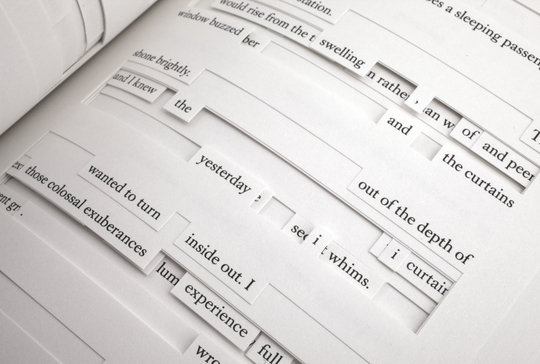
When you open this book, you see holes.  Lots and lots of holes.  The pages have massive squares of text missing.  When you first open it, you can see many layers of text, some penetrating thirty pages down.  So you can read words that comes later in the book (you often read words from the following page if you don’t hold the page up correctly or put a piece of paper under each page).  Don’t believe me?  Here’s a picture:

Safran Foer’s explanation (at the end of the book) is that he loved the book The Street of Crocodiles by Bruno Schulz (which I’ve never heard of and have no idea what it’s about).  And he often saw a story within the story.  So, he decided “to use an existing piece of text and cut a new story out of it,” using only Schulz’s words.  But rather than presenting it in a conventional way (or even in an unusual way like Of Lamb), he wanted to push the boundaries of what a physical book could do. He was “curious to explore and experiment with the die-cut technique.” (more…)

Read Full Post »

SOUNDTRACK: THE DEARS-Degeneration Street (2011).

I’ve loved The Dears for a long time now.  And yet with every new album I feel like I have to prepare myself for what’s to come.  And with every release I’m a little disappointed when I first play it.  Maybe for the next release I’ll realize what my problem is–The Dears do not stand up to cursory, casual listening.  They demand attention.  If you put them on as background music, you miss everything.  So when I finally gave Degeneration Street some attention, I realized how great it is.

The Dears write emotional songs that are fairly straightforward.  But the magic of their music comes in the layers of ideas and sounds that they put on each track.  And of course, there’s Murray Lightburn’s voice.  He sounds like Damon Albarn if Damon Albarn could sustain a note for a long time–could emote with his voice.  Now I happen to like Damon Albarn quite a lot, but Lightburn can really just out-sing him.  It’s wonderful.

“Omega Dog” opens with an electronic drumbeat, eerie keyboards and skittery guitars.  When the vocals come in–falsettoed and earnest, you don’t anticipate the full harmonies in the forthcoming chorus that lead to an almost R&B sound.  Not bad for the first 80 seconds of a song.  That the song is actually 5 minutes long and by minute 3, it sounds like an entirely different song is even more testament to the versatility of The Dears (check out the harpsichord solo that more or less ends the song).

“5 Chords” is a chugging anthem, a song with potential to be a hit (but which of course never will).  I find myself constantly singing the infectious chorus of “Blood”: “Since I was a baby I have always been this way; I could see you coming from a million miles away.”  Or the excellent chorus of “Thrones” “Plucking our eyes out, turning to stone, give up on heaven, give up the throne.”

“Lamentation” mixes things up with a slower pace and backing vocals that come straight out of Pink Floyd (any era really, but probably more of their later albums).  It adds an amazing amount of depth.  “Galactic Tides” has more Floydian stuff–the guitar solo (and the instrumental break) are really out of mid 70s Floyd–more backing vocals again).

Follow all of this intensity with the super poppy “Yesteryear”. It’s got an upbeat swing to it: happy bouncy chords and an inscrutable chorus: “What’s the word I’m looking for; It starts with ‘M’ and ends with ‘Y'”  It’s followed by the more sinister “Stick w/Me Kid,” in which Lightburn shows off his bass range.  There’s an awesome guitar riff in “Tiny Man,” simple and mournful that sticks with you long after it’s over.

The last couple of songs don’t really live up to the excitement of the first ten or so.  But the final song brings back the drama, with a swelling chorus and soaring vocals.  The Dears have managed to do it again, an emotional album that comes really close to being a concept album yet with none of the pretensions that that implies. 

[READ: July 13, 2011] Five Dials Number 16

Five Dials Number 16 is a brief Christmas Present from Five Dials.  The issue even seems longer than it is because the last ten pages are photos from the Five Dials launch party in Montreal.  The photo essay, titled In Montreal, includes local scenery and (unnamed) people photographed by ANNIKA WADDELL and SIMON PROSSER.

That leaves only 7 pages of text: The Editor’s Note, a look at London, a Christmas Poem and a short story from Anton Chekov.  And there’s another cool illustration from JULIE DOUCET

CRAIG TAYLOR-Letter from the Editor
Taylor thanks Montreal for their warm welcome (despite the crash course in what Wind Chill actually means).  He also hopes we enjoy the Christmas offerings contained within: the traditional Christmas poem and the Chekov story. (more…)

Read Full Post »

SOUNDTRACK: FOO FIGHTERS-Wasting Light (2011).

The Foo Fighters are huge.  Duh.  But when I think of that, it amazes me that a) the Foo Fighters are the band from “the drummer from Nirvana” and that b) while Dave Grohl knows his way around a melody, he is a metal dude at heart, and some of his most popular songs are really heavy.  He can scream with the best of them.

I’ve enjoyed the Foos for many years, but I didn’t listen to their previous discs all that much (or at least I didn’t listen to the mellow disc from In Your Honor and I don’t remember anything off of Echoes…), but this new one is fantastic.  There’s not a dull song on the disc, and Grohl has hit new heights of catchiness and singalong-ness. 

I also like how noisy the disc is.  It opens with some great discord before turning in a majorly heavy rifftastic scream fest in “Bridge Burning.”  Despite the screaming and noise of the opening, the chorus is super catchy.  “Rope” was said to be inspired by Rush.  Knowing that, I can hear a lot of little Rush-isms in the track: The main riff is very Rush-like, there’s a cymbal tapping that reminds me of Neil Peart in the verses, as well as a little drum solo in the middle (with a cowbell!) and the solo is very Alex Lifeson. (It also feels longer than 4 minutes).

“Dear Rosemary” features Bob Mould on backing vocals (but you can hardly tell it’s him).  It’s got a great chorus as well.  “White Limo” is a wonderful punk song, completely incomprehensible lyrics and all.  Meanwhile “Arlandria” (whatever that means) is another totally catchy track (I find myself singing it a lot).

“These Days” should be the next single: catchy and easy on the ears.  I wonder why it hasn’t been released yet.  “Back and Forth” has another great noisy riff.  One thing that I like a lot about the Foos is that they put different things in the same song:  so “A Matter of Time” has a very simple verse and a catchy chorus, but there’s some really buzzing heavy guitars too.  “Miss the Misery” has a kind of sleazy feel which I think is new for the Foos.  And “I Should Have Known” is a kind of angry ballad (I’d like to see Richard Thompson cover it). 

The final track, “Walk” is a fast rocker that sums up the album really well.  Bravo Dave Grohl.  I can’t get enough of this disc, regardless of how popular it is.

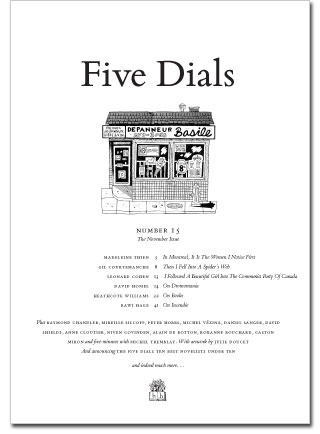
[READ: July 2, 2011] Five Dials Number 15

After the brevity of Number 14, Five Dials Number 15 comes back to a fuller size.  It’s strange to me that the issue is titled The November Issue, in part because they never tell us when the issues were published, but even more because this is actually the Québec Issue.  Most of the authors are Quécbecers and the issue release party was in Québec as well.

I’d like to point out that while I was looking something up about this issue (more later) I discovered the Five Dials News Page.  There are currently 43 pages worth of posts.  But most of them are short.  If there are any especially noteworthy ones, I’ll add them to reviews of future issues, but for the most part so far they’re just announcements of how well received their books are (I’ve already made notes to read two of them).  They also give release dates for the issues, which is how I have been able to retroactively attach dates to some of them.

There are many Québecois writers included in this issue (thoughtfully translated into English), as well as some standard features by Alain De Botton and frequent contributors David Shields and Raymond Chandler.

CRAIG TAYLOR-On Our Québec Issue, and Young Novelists
Taylor’s introduction discusses many Canadian’s attitudes about Québec and their (seemingly perennial) vote concerning separation from the country (“so, let them go”).

creepy beard

The confusing thing here is that it appears that Taylor is Canadian (or at least lived there in 1995/6).   But surely he is British, no?

There’s lots of information about Québec in here but no grand statement (except that Celine Dion’s husband’s beard is still creepy).

He also introduces a new section called “Our Town” which is all about London.  The final section of the note says that

we are releasing our second Five Dials list of Top Ten Novelists Under Ten (or ‘Ten Under Ten’,or ‘Ten-Ten’, or as some of the writers themselves call the list: ‘Tintin.’) As you know, many of the writers we chose for our first Ten Under Ten list went on to things such as high school.

This is how I discovered the Five Dials News page, because there certainly was no Ten Under Ten section in a previous issue of the magazine.  Of course, nor is there any mention in the news that I have seen.  So I can’t decide if the whole thing is just a big joke or what.  I assume it is (but I’d hate to not give credit to the waaaay precocious kids at the end of the issue). (more…)

Read Full Post »

SOUNDTRACK: GUSTER-Easy Wonderful (2010).

This Guster album is confusing.  It’s rather short (compared to their other discs).  Combined with the (kind of flimsy) cardboard packaging, it feels almost like an EP.  It also seems to be kind of religious (although I don’t think it is)–like a themed EP.  And yet it isn’t off-putting or anything (a few mentions of Jesus is all, although that’s a lot more than usual).

But, like most of Guster’s releases, it’s super catchy kind of alternative jangly pop.  After one or two listens the songs are instantly recognizable.  There isn’t a bad song in the bunch.  However, they’re also mildly underwhelming compared to their previous releases.  The songs feel a bit more subtle, but really it seems like they might be just a little too smooth.  The dynamics aren’t quite as exciting as they have been.

Having said all that, the disc is still pretty great and I find myself humming a lot of these songs all day long.

[READ: June 18, 2011] Five Dials Number 12

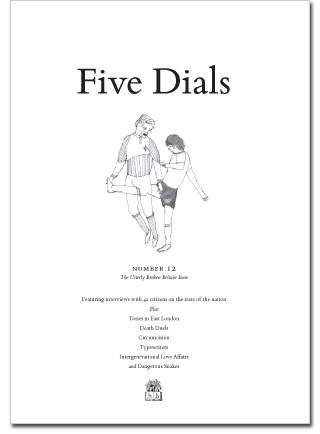
Five Dials Number 12 has a theme explicitly stated on the cover.  The premise of the theme is that the Conservative Party of Britain had been claiming (in their TV ads and billboards) that Britain was broken.  This idea was relentlessly pushed across Britain.  And Five Dials wondered if people thought that that was true in general.  So they asked 42 citizens (no idea what kind of random sample it may have been, realistically) and they recorded the results.

The rest of the issue has some of the standard Five Dials material we’ve come to expect: essays and fiction, advice and lists.  The theme gives an interesting tone to the proceedings.

CRAIG TAYLOR-A Letter from the Editor: On Broken Britain and Nick Dewar
Taylor addresses much of what is said above.  David Cameron (I still can’t get used to him being Prime Minister, it’s still Gordon Brown in my head–I guess Cameron hasn’t done much yet) is the man who keeps trying to “mend our broken society.”  Even though (and statistics are similar in the U.S.):

They found that violent crime had almost halved since 1995, while crime generally fell by an extraordinary 45%. The figures for teenage pregnancies – a favourite of those talking about social decay – remain constant since Labour came to power in 1997; so too do those for teenage abortions.

The rest of the letter is devoted to the passing of Nick Dewar.  Dewar drew the illustrations for Five Dials Number One.  I really liked Dewar’s style, and his absurdist sensibilities.  Taylor says that Dewar’s color work was even better.  And I think he’s right. (more…)

Read Full Post »

SOUNDTRACK: CITY AND COLOUR Live at the Sasquatch Festival, May 29, 2011 (2011).

City and Colour have a new album coming out soon.  So it’s kind of surprising that this seven-song show is three songs from their previous album, two from their first album, a cover, and only one new track (“Fragile Bird”).

This is the first time I’ve heard City and Colour live with a band (most of the recordings I have by them are just Dallas Green solo).  It’s nice to hear how powerfully they work together (giving some of those songs an extra push).

Despite the brevity of the set (and the amusing banter about airport etiquette) you get a pretty good sense of what the “pretty-voiced guy” from Alexisonfire can do on his own.   I found the cover, Low’s “Murderer,” to be a really perfect choice–one that suits the band and their slightly-off harmonies, rather well.

I’m looking forward to their new release–“Fragile Bird” is another beautiful song.  But in the meantime, this is a good place to hear what they’ve been up to.

[READ: early June 2011] 2011 Fiction Issues

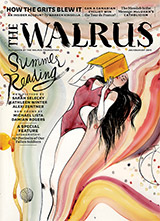
Five Dials seems to always generate coincidences with what I read. Right after reading the “”Summer’ Fiction” issue from Five Dials, I received the Fiction Issue from the New Yorker.  A few days later, I received the Summer Reading Issue from The Walrus.

I’m doing a separate post here because, although I am going to post about the specific fictions, I wanted to mention the poetry that comes in The Walrus’ issue.  I have no plan to write separate posts about poetry (I can barely write a full sentence about most poetry) so I’ll mention them in this post.

The main reason I’m drawing attention to these poems at all is because of the set-up of The Walrus’ Summer Fiction issue.  As the intro states: “We asked five celebrated writers to devise five guidelines for composing a short story or poem. They all traded lists–and played by the rules.”  I am so very intrigued at this idea of artificial rules imposed by an outsider.  So much so that I feel that it would be somewhat easier to write a story having these strictures put on you.  Although I imagine it would be harder to write a poem.

The two poets are Michael Lista and Damian Rogers.  I wasn’t blown away by either poem, but then I don’t love a lot of poetry.  So I’m going to mention the rules they had to follow. (more…)

Read Full Post »

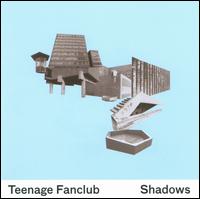
SOUNDTRACK: TEENAGE FANCLUB-Shadows (2010).

Back in the 90s, Teenage Fanclub released a few noisy, feedbacky records that were quintessential 90s alt rock.

Since then they have mellowed considerably, and this album is one of their most mellow to date. Usually for me this kind of mellowing is a sign that I’m done with a band; however, Teenage Fanclub’s songwriting gets better with every disc.  And these folky tracks are all fantastic.

What’s neat about the arrangement of the album is that each of the three members of the band writes four songs.  They are collated so that you cycle through each singer before repeating. You get maximum diversity–and it’s easy to tell which songwriter is your favorite.

The opening two songs, “Sometimes I Don’t Need to Believe in Anything” and “Baby Lee” are two wonderful upbeat pop confections.  They sound very different and yet both are infused with wonderful pop chops.

It seems that Blake is my favorite songwriter on this disc. He did “Baby Lee”, “Dark Clouds” (a pretty piano based number) and by far the prettiest song on the disc “When I Still Have Thee.”  It’s an amazingly catchy folk song that sounds timeless (and even has the great couplet: “The Rolling Stones wrote a song for me/It’s a minor song in a major key.”

That’s not to dismiss the other songwriters at all.  In fact, hearing their different takes on pop music is really pretty amazing.  It’s a shame that it takes them so long to put albums out (about 5 years these days).

[READ: June 10, 2011] Five Dials Number 9

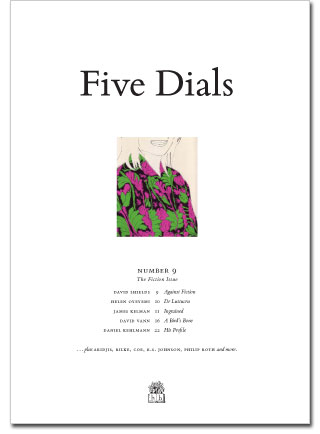
Five Dials Number 8, The Paris Issue, was pretty big (45 pages), but it had a lot of pictures.  Five Dials Number 9 is also pretty big (41 pages) and it’s (almost) all text.  For this is the Fiction Issue, and there are a lot of short stories in here.

CRAIG TAYLOR-A Letter from the Editor: On ‘Summer Reading’ and Fiction Issues.
Since most of what I talk about in the introduction to these posts is covered in Taylor’s Letter from the Editor, I figured I’d switch formats and start talking about his letter right away.  In this letter, Taylor talks about the serious pitfalls of  ‘Summer Reading’: We pledge to read mammoth books over the summer, but really we never finish War and Peace over the summer, do we? (except those of us who finished Infinite Summer, am I right?).  And so, this Fiction Issue was released in December (finally, a date is given to a Five Dials!).  Taylor briefly talks about all of the authors who contributed (including a pat on the back to Five Dials for securing the rights to a Philip Roth contribution in its first year of publication).  He also talks about the essay from David Shields that is decidedly anti-fiction.   And the final note is that Taylor’s own father has a piece in this issue (nepotism is alive and well!) (more…)

Read Full Post »

SOUNDTRACK: LOW-Tiny Desk Concert #129 (May 22, 2011).

In March, I reviewed (and loved) Low’s new single, “Try to Sleep.”  That song and two others are presented here in this Tiny Desk concert.

The band for this gig is just Alan Sparhawk on guitar and vocals and his wife Mimi Parker on backing vocals (and thigh slaps).  It’s a very stripped down sound, but it really suits these songs (I don’t know the originals of the other two–“Nightingale” and “Something’s Turning Over”) which all come from their new album C’mon.

Their harmonies are wonderful (they are quite striking on “Something’s Turning Over” where I thought she was playing a keyboard, but it is her voice!) and the melodies are pretty terrific too.   As I said last time, I’ve never really listened to Low very much (I’ve been sort of turned off at the idea of their being spare and depressing).  Strangely, this session which is just the two of them is the opposite of spare.  I don’t know if this is a good introduction to the band, but it’s a wonderful introduction to this album.   And it’s a surprisingly catchy collection of songs from a bunch of ol’ mopesters.

Although, perhaps the biggest surprise comes at the end of the show when, before leaving, Sparhawk starts playing “Sweet Home Alabama” and Parker even gets the “turn it up” part right.

I wasn’t expecting to listen to this more than once or twice, but I’m really entranced by this session.

[READ: May 10, 2011] Emily of New Moon

Sarah loves the Anne of Green Gables and Emily of New Moon book series.  She still has the books from when she was a kid (the copy I read has her signature and phone number (several area code changes ago) written on the inside front cover).  After reading the L.M. Montgomery biography, I figured it was time to look into these books. I was going to start with Anne, but we watched the movie not too long ago so I decided that I’d start fresh with an unknown subject.

Emily is a 12-year-old girl whose mother has died and whose father is deathly ill.  Indeed, within a chapter or two, Emily finds herself an orphan.  I don’t know a thing about 100 year old adoption laws in Canada, but the upshot is that someone from Emily’ mother’s family, the Murrays, will take care of her until she is old enough to do so on her own.  However Emily’s mother ran off with a boy when she was very young (which was a disgrace to the family name), and Emily herself is a willful and strong child.  Frankly, no one wants her.  So, with Emily eavesdropping, the Murray clan discusses her future and decides to make her draw straws for her fate. (more…)

Read Full Post »

« Newer Posts - Older Posts »