Feeds:
Posts
Comments

Archive for the ‘NPR/PRI/PBS’ Category

SOUNDTRACK: LIDO PIMIENTA-Tiny Desk (Home) Concert #94 (October 13, 2020).

This set is utterly fascinating.

I’d never heard of Colombian vocalist Lido Pimienta, although apparently she

had one of the musical highlights of a year marked by tragedy and uncertainty. The healing magic of her album Miss Colombia transfers beautifully to this visually stunning Tiny Desk (home) concert.

Pimienta is dressed nicely with ribbons in her hair. Her hair is fascinating and, in braids, reaches the floor!

The set design is set up to recall a quinceañera.

I actually thought that Pimienta was a teenager (she is in her thirties), because after the first song she says:

Welcome the show that celebrates … me.  I am fifteen years old and I am a musical prodigy.

She even acts fifteen when she says, “you can hire us for the very cheap price of one million dollars USD” and “Wikipedia, get my birth date correct, I am fifteen and just starting out.”

The quinceañera design is

a coming of age tradition that Pimienta could not share with her mother who had to flee Colombia. With her mom, Rosario Paz, present at the video shoot, Pimienta uses her energetic performances to close a dramatic circle with her mom as we celebrate with her.

The first song “Eso Que Tu Haces” is mostly voice and percussion.  There is just so much percussion here, it’s hard to believe only two guys play it all: Brandon Valdivia and Reimundo Sosa.

The vocalists are varied and add such a wall of beautiful voices to the song.

Backed up by a bevy of international musicians based in her new home of Toronto (I see you, members of the Cuban group Okan).

Magdelys Savigne and Elizabeth Rodriguez of Okan sing along as do The Road to Avonlea choir: Felicity Williams, Robin Dann, Isla Craig, and Ivy Farquhar-McDonnell.

The song gets bigger and more musical as it moves along with a tenor saxophone solo from Karen Ng that combines with the trumpet from Tara Kannangara.

“Nada” starts as Ng plays flute (Pimienta comments that this is her show not Ng’s so she should stop being so multitalented).  It’s a catchy dancey song and the end is a beautiful mix of the backing vocals and Pimineta’s solo soaring voice.

When her mom comes out on stage she jokes, are you glad that I’m finally a woman?

Introducing “Coming Thru” she says she always likes to work with women and feminine energy.  The world needs feminine energy so we can heal.

As the song starts, Elizabeth Rodriguez plays violin while Lido sings.  They are joined by the horns which flesh out the sound nicely.  Lido really does have a wonderful voice.

And as the variety of sounds indicates,

you can hear… how Pimienta’s quartet of songs challenge the concept of just what qualifies as “Latin music” in a way that both honors and expands tradition.

They are also joined by Prince Nifty, who plays keys and fleshes out the songs.  Although the start of the final song, “Resisto Y Ya” begins with just voice and percussion.

Lida explains that the song means, “I just resist.”  She says it is about Colombia and all of its drama and beauty.  The country is full of anger and also breathtaking landscapes.  The full band joins in by the end and the song just grows and grows as the set ends.

This is a terrific introduction to Pimienta’s music, whatever her age is.

[READ: November 20, 2020] “The Ability to Cry” 

This essay came out over a month after yesterday’s essay.  But they seemed so thematically similar that they work well together.

I’ve really enjoyed Yiyun Li’s stories over the years.  This piece of nonfiction was remarkably sad.

It begins with the death of a valued friend.  Or maybe not a friend so much as a caretaker.  The woman Julia, was supposed to dog and baby sit for Yiyun while she was out of town before her husband got home.  But she never answered the phone calls.  Julia had dogsat for thame on many occasions in the past and she always took pictures of the dog to show how well the dog (and garden) were doing.

Yiyun Li says that death has been prominent in her life in the last year and a half.  Her eldest son, her mother-in-law and her father have all died.

She did not cry when any of then died.  But when she saw Julia’s obituary, she broke down.   She felt like she was part of the delayed crying club. (more…)

Read Full Post »

SOUNDTRACK: THE FLAMING LIPS-Tiny Desk (Home) Concert #93 (October 9, 2020).

The Flaming Lips have recently performed a live concert in front of an audience (Yes!).  They did this by putting themselves and every audience member in one of Wayne Coyne’s giant bubbles.  What an amazing idea and a wonderful experience, I’m sure (especially after nine months of no live music).

Back in October, The Lips did their very first Tiny Desk Concert.  And, being the Lips, they decided to do their home concert entirely in their own bubbles.  (Although technically two people share two bubbles).

This Tiny Desk Concert features two songs from their newest album American Head.

The Flaming Lips have always embraced the surreal. Drugs are undoubtedly part of the culture, and on their new songs from American Head, drugs are at the core. These are songs for the lost, the overdosed dreamers, the damaged, the car crashed.

The open the set with “Will You Return/When You Come Down,” a simply wonderful song.

On the album’s opening track “Will You Return/When You Come Down” (which also begins this concert), Steven Drozd asks in falsetto, “Will you return? Will you come down?” while Wayne Coyne responds, “Thinking back to those lost souls / And their ghosts / Floating around your bed / Hear it said / Now all your friends are dead.”

I love everything about his song.  Gentle bells (from percussion Nicholas Ley) open the song along with Steven Drozd’s falsetto singing the refrain.  (Drozd is an amazing guitarist but only plays the keys in this set).  Wayne begins singing the verse.  It’s gentle and pretty, and then with a drum flourish from Matt Duckworth in comes Michael Ivins’ typically wonderful bass lines.

The song builds beautifully into a big major chord with Derek Brown’s acoustic guitar leading the way.

Whenever I’ve seen The Lips live, Jake Ingalls almost always sits on the floor.  In this set he’s sitting with Steven.  I’m never quite sure what he does, but I imagine he’s creating all kinds of interesting sounds.  Ingalls’ band Spaceface is pretty wonderful, but the way.

“God and the Policeman” features one of Ivins’ coolest basslines around.  It’s a stuttering rumble that seems to come from nowhere and adds a fantastic element to this song.  Ley adds in some tubular bells and Wayne plays the siren on his megaphone.  The main musical melody is a pretty piano circuit that soars with Wayne’s voice.

On the record, Kacey Musgraves sings the backing vocals but Steven takes them here. Wayne says that he has a good Kacey-esque voice.

Steven replies:

It sounds like you’re saying something nice but I can’t hear anything you’re saying.

The go back to 2013’s The Terror for “Be Free, A Way.”  Wayne says he wrote this when he was depressed.  He’s only been really depressed once or twice and this song came out of one of them.  I love the echoing vocals as Steven follows Wayne’s lead.  The vocal melody of two word sentences is just fantastic.

They end the set with “It’s Summertime” from 2002’s Yoshimi Battles the Pink Robots. Yoshimi is a fantastic album from start to finish, although this song is somewhat of a left-field choice–not one of the big hits from the album. Wayne gets a nice trumpet solo too.

This is a wonderful set to see.  And I really hope they bring their bubble shows to a theater near me.

[READ: November 20, 2020] “My Three Fathers”

I have not read any of Ann Patchett’s books, although I keep meaning to.  Her soon to be released novel is supposed to be fantastic.

This essay sounded kind of interesting even without knowing anything about her.  She talks about having had three fathers during her life.  She prefaces all of this by saying that marriage is irresistible to her family members: “we try and fail and try again.”  She and her sister have both been married twice, while her mother married three times (thus, three fathers).

Her first father was her biological father.  He and her mother divorced when she was little. Her second father was her mother’s second husband–he adopted her.  Her third father was her mother’s third husband.  Her mother married him when Ann was an adult.

She writes about this third wedding, the rare time when all three of Ann’s fathers were together and at which she got a picture of herself with the three of them.

Then she talks about all three men. (more…)

Read Full Post »

SOUNDTRACK: BORIS-“asia” (2015).

Back in 2015, Boris released three albums on the same day all under the “new noise literacy” banner: “urban dance” “warpath” and “asia” [according to their label numbers, this is the order they go in, but I’m posting them out of sequence].

All three records are experiments in abrasive noise.  Despite the adorable child on the covers, these records will scare children.

This album has three songs.

“Terracotta Warrior” Runs for 20:38.  It opens with quiet, slow rumbling–almost inaudible for the first 30 seconds or so.  Then the pulsing sounds start bubbling up under a hissing, mechanical sound.  Around seven minutes the rumble stays pretty steady, but the higher noises–hissing, clanging, horror movie sounds, start to grow more intense.  At 8 minutes, some discernible guitar chords ring out (heavily distorted, but clearly guitars).  It turns into a lengthy drone with squeaky feedback noises throughout.  At 17 and a half minutes the feedback gets louder and louder until it abruptly cuts off and after moment of silence distance guitars start ringing out again.  There’s even the first sign of drums (a gentle hi-hat).

“Ant Hill” is half as long, but similar is tone.  It is primarily pulsing electronics and high pitched squealing electronic manipulation.  There’s also some digital glitching sounds. After 8 minutes the song fades to a pause only to resume a few seconds later with some more digital glitching and manipulation.  With 30 seconds to go, a drum beat comes in and the distortion takes on a more melodic sound including what sounds like someone sawing in the distance.

“Talkative Lord vs Silent Master” is also ten minutes long and it is the most unpleasant of the three songs.  It is full on static and noise with what sounds like a monstrous voice growling in the distance.  By the end of the song it sounds like being in the middle of a howling winter storm.  And as it closes up there is some serious digital glitching.  Not for the sensitive of hearing.

The album is credited to: takeshi: guitar & bass / wata: guitar & echo / atsuo: drums & electronics.

[READ: January 19, 2017] “The Very Rigid Search”

Jonathan Safran Foer has become something of a more serious writer over the last few years, so I’m alway happy to read one of his earlier funnier works (himm, that sounds familiar).

This story is written from the point of view of a Ukrainian tour guide named Alexander Perchov.  He is writing this tale in English, although his English is slightly off (as the title hints at).  He speaks very good English, but his word choices often eschew idioms for literal translation (and much hilarity ensues).

Alex’s family own a Ukrainian branch of an international travel agency and it is his job to pick up and translator for an American traveller.

Alex refers to the traveler as the “hero” of the story.  And the hero’s name is Jonathan Safran Foer.

Jonathan Safran Foer is not having shit between his brains  He is an ingenious Jew.

JSF was travelling from New York to Lutsk. (more…)

Read Full Post »

SOUNDTRACK: GERMS-GI (1979).

In the middle of this graphic novel, the main character Bina says she is listening to the Germs.  Her friend Darcy says “classic.” 

Germs were a seminal LA punk band.  They released one album before their singer Darby Crash killed himself.  Their guitarist Pat Smear has since played with Niravana, Foo Fighters and many other bands.  Belinda Carlisle (yes of the Go-Gos) was briefly their drummer (she went by Dottie Danger).  She was replaced by Don Bolles.  And their bassist Lorna Doom, was one of the first women in the punk scene.

This album is 38 minutes long but that’s with a 9 minute live improvised song tacked on at the end.  Otherwise these songs are short and fast.

“What We Do Is Secret” opens the album with a statement of purpose.  It’s less than a minute of fast drumming roared vocals and the title repeated twice.  “Communist Eyes” plays a standard punk melody in the verses and an even faster chorus.  Pat Smear plays around with some scratchy noises but it’s mostly just fast fast fast.   “Land Of Treason” also has a simple catchy melody in the verses.  Even though Crash’s vocals aren’t always clear, they are mixed very well so if you listened, you could probably make out most of the words.

“Richie Dagger’s Crime” is the first song where Smear’s guitars really stand out.  He plays lead riff and then in the middle of the song, it’s only Lorna Doom’s bass holding the melody together while Smear plays some leads through the verses.

“Strange Notes” has some ringing guitars notes and quick little improv solos that keep this pummeling song nicely off kilter.  “American Leather” is just over a minute and Don Bolles’ galloping drums pretty much never stop.

“Lexicon Devil” was the name of their first EP.  The verses have a fun Ramonesy beat verse that feels especially punk.  “Manimal” is a slower more menacing song with a nasty lead guitar line.  This song even takes a breath before launching into the faster part full of Darby Crash’s snarls.

“Our Way” is another slower, more mancing song with a the bass sounding more prominent over smears chords.  “We Must Bleed” has a really fast descending guitar melody that introduces the song and serves as the chorus. It also hangs around at the end of the song. The song is 2 and a half minutes in total but the end is one minute of the band racing through that four note melody, sometimes falling  apart a little but plugging on.

“Media Blitz” starts side two abruptly has an abrupt opening with vocals and a brief pause before the song takes off nonstop for a minute and a half.  There’s some samples from TV in the song

“The Other Newest One” This chorus features a four notes and a pause as Darby’s voice rings out over the brief silence: “you’re not the first / you’re not the last”

“Let’s Pretend” is a bit more staccato in the bassline in and reminds me of a conga from the cartoons.  Five notes and a thump.  Once again darby stops singing early to let he band jam out the riffs for another 40 seconds to the end.

“Dragon Lady” has a short drum solo from Bolles as the intro.  It leads to one of the poppier melodies on the album. Then “The Slave” ends the disc (sort of) with a one-minute rumbling that’s all bass and jagged chords on top.  When Darby stops singing briefly, Smear’s guitar bursts forth as if Crash was in the way. Then it abruptly ends.

The disc ends properly with “Shut Down” a 9-minute live song that I have read was typical of how they ended their shows.  Lorna Doom plays a simple, slow bluesy riff on the bass. The drums follow along and Pat Smear makes all kinds of lead noises –solos, feedback, crashing chords while Darby mumbles, screams and rants about wanting your soul and wanting control and being an Annihilation Man.

Who knows what the Germs would have done next, but with one album, their legacy is secure..

[READ: October 21, 2020] All Together Now

This is a follow up to Larson’s book All Summer Long.  That book was a fun story about friendship, distance and guitar playing.

As this story opens, Bina and Darcy have been practicing with their band Fast Fashion [which is basically what Depeche Mode means], but they decide they need a drummer.  They meet up with a boy in their calls called Enzo.  He’s a drummer and very robotic.  He’s very good and he likes their songs, so they agree to be a band. But he hates the name Fast Fashion, so they change it to The Candids.

After a few practices, Darcy and Enzo start dating.  Then Enzo starts making some suggestions for changing Bina’s songs.  And Darcy agrees with him.  Now Bina’s losing her best friend to a boy, just like she lost her previous best friend Austin to a girl.

Then Darcy texts her that the band is moving on without her (even though it was her band!).  This new band gets the best band name yet: AC/Darcy.  But that means that Darcy and Bina have basically broken up and are not speaking to each other. (more…)

Read Full Post »

 SOUNDTRACK: THE DISTRICTS-A Flourish and a Spoil (2015).

A Flourish and a Spoil feels like an extension of The Districts‘ EP. And that’s no bad thing.

It’s got more of the same vibrato guitars and thumping bass all wrapping around Rob Grote’s angsty voice.  The big difference from the EP is that most of the songs are shorter (around four minutes with the exception of the end of the album).

A propulsive bass opens up the super catchy “4th and Roebling.”  The song starts somewhat quietly but turns into a raucous brawl by the end with crashing cymbals, smacking drums, and the whole band singing along.

“Peaches” has a fuller sound as the whole band plays the main parts until the catchy chorus where the guitar gets to play the lead melody along with the vocals.  “Chlorine” starts loud and then slows down for the verses.  Followed by the catchy chorus which is bigger and louder.  “Hounds” is built out of a simple riff that is played with a little delay so that it lurches interestingly until the shambolic ending of “hounds in my head, hounds in my head.”

“Sing the Song” is a slower song with a loud but spare chorus.  It’s got a rousing ending and then a lovely delicate denouement.

“Suburban Smell” is under three minutes. It’s a pretty acoustic song with some lovely guitar melodies and Grote’s more delicate vocals (and yes, there’s a questionable lyric in there). The song ends with a mic shutting off, like a real bedroom recording. It’s followed by a full on echoing drum intro of “Bold.”  The song is full of noises and sounds like a song in search of something.  It finds it with the soaring catchy ending section, fast chords, highs notes and a powerful repetition.

“Heavy Begs” is the last short song on the record.  It features the one thing that has been missing: some “oohs” (although only once).  It’s also got a new sound introduced in the guitar solo–a buzzing that works nicely with their overall sound.

“Young Blood” stretches out to almost nine minutes.  After a siren-like introduction, the song settles into a relaxed lope with catchy vocal melody.  The first four minutes jump back and forth between verses an chaotic crashing chorus.  Then comes a pause followed by a quiet bass line while the other instruments slowly add sounds and melodies (and what sounds like a party in the background).  This instrumental section builds on itself for two minutes until the coda.  The quiet “it’s a long way down from the top to the bottom” which repeats until the drums start pounding  before the final guitar solo takes the song out with a riff that sounds like it came from Built to Spill.

That feels like an album ender to me, but they put in one more song, the nearly 6 minute “6AM.”  This song also sounds like a bedroom recording–it sounds raw and rough–and it never sounds too long.

[READ: September 30, 2020] “Rainbows”

I liked the way this story seemed to be settling into a time frame and then leaped away from it to move on to something else.

The story is told in first person, by an Irish woman named Clodagh.  She came to America when she was twenty-three.  She’d never heard of mentors or office hours or anything like that in an educational system.  She was getting a Master’s Degree in Applied Analytics. 

She decided to audit a class in anthropology just to take her mind off the degree.  The teacher, Paola Visintin, became something of an unexpected mentor to her.  Paola was twenty years older, but cool in a way that younger teachers weren’t.  The bonded in coffee shops and talked about many of Clodagh’s problems.  Paola’s answers were short, direct and sometimes beside the point.

The passage of time is delivered in a fun way:

My kitten grew into a cat, turned into an old lady, died. The obstetrician lifted a red-blue creature from behind a blue paper curtain–and, flash, the creature, Aoife, turned eighteen. (more…)

Read Full Post »

SOUNDTRACK: ANGEL OLSEN-Tiny Desk (Home) Concert #92 (October 7, 2020).

Angel Olsen is a favorite of many critics. I rather enjoyed her new album–but I think more for the sound of the production than the songs themselves.

I had the chance to see her recently but didn’t go and later heard the show was amazing.

This is a super-stripped down set (just her and her guitar on a balcony in North Carolina).

She opens with “Whole New Mess.”

The song is actually about addictions, defining her “home” amidst a life of touring that kept her on the road for large chunks of time. Much like this Tiny Desk performance, the original recording is just her stunning voice and guitar (minus the birds and the trees), recorded in a church-turned-studio a few years ago.

Up next is “Iota”

a song that wishes “that all the world could see something for what it is at the same time.”

“What It Is” is the only song I knew.  It was played on the radio a bunch and I grew to really like it.  This spare version is less interesting to me, but the melody is still lovely.

Angel leaves us with “Waving, Smiling,” a farewell song. She says goodbye to the sounds around her, the birds, the chainsaws, and leaves us with a theme of acceptance, bittersweet but without regret.

The whole set is gentle and lovely–it’s hard to believe she put on a dynamic and exciting live show.

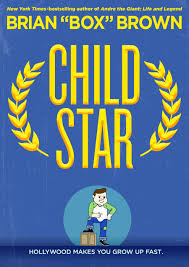
[READ: October 1, 2020] Child Star

I am only mildly upset to learn that Box is not Box Brown’s real name (it seemed unlikely but amusing, nonetheless). But I am in no way upset about how great this book is.

In the author’s note, Brown says that he grew up watching TV in the 80s–he especially enjoyed the shows that had child actors in them.  He learned that the lives of child actors tend to follow a particular, tragic arc.

So for this “biography,” he created a child star, Owen Eugene, as an example of the kind of life.  If you grew up watching the same shows, you’ll recognize the children that he is drawing from.

You’ll recognize some of the notable episodes from shows.  Like the “very special episodes,” about drugs, or pedophilia or smoking or whatever; or the one where Nancy Reagan came on set; or when the younger, cuter kid came on to take over being the cute one.  And of course, the inevitable catch phrase.

The book is written like a Behind the Scenes kind of TV show.  There’s interviews with all kinds of people–his parents, his costars, washed up actors and ex-wives.

Owen Eugene had a hormone issue so he didn’t grow very tall–which meant he stayed adorable for a long time.  He was also a lot older than he looked.  So he could try out for roles and get them because he was the most talented 5 year old (because he was ten). (more…)

Read Full Post »

SOUNDTRACK: LITTLE BIG TOWN-Tiny Desk (Home) Concert #91 (October 6, 2020).

Little Big Town is a country band that has been around for a while.  I feel like I’ve heard of them, but I’m not sure.

Evidently the band is really the four main singers, but they have added more touring members for this Concert.

They open with “Nightfall.” It has nice folkie guitar and Karen Fairchild sings with a strong folksinger style. The snaps from Hubert Payne’s drums really ring out in a cool way.  Thee upright bass John Thomasson adds a nice anchor to the melody.

I thought maybe they weren’t all that country after all.  But as soon as the chorus jumps in and the accents start flying–especially the high notes from Kimberly Schlapman–the country has come into the house.  The song is catchy though.

Up next guitarist Phillip Sweet jokes is the “most profound thing” they’ve done.  “Wine, Beer, Whiskey” opens with a surprise trumpet intro from Jacob Bryant.  Although songs about drinking are about as cliché as they come, the stompin,’ dopey tone is quite fun and Jimi Westbrook’s lead delivery sells it well.

They apparently use some songwriters known as the Love Junkies who came up with “Girl Crush.”  There’s some nice harmonies on this track.  You really can’t hear keyboard player Akil Thompson on the other songs, but his chords ring through here.  Westbrook puts down his guitar while Sweet plays.

They end with “Boondocks” their first hit about where they come from.  I like the bowed bass and Evan Weatherford’s slide guitar lead, but the thought of thousands of people stompin’ along to these lyrics is a tad disturbing.

[READ: October 5, 2020] Parable of the Talents [an excerpt]

During the COVID Quarantine, venerable publisher Hingston & Olsen created, under the editorship of Rebecca Romney, a gorgeous box of 12 stories.  It has a die-cut opening to allow the top book’s central image to show through (each book’s center is different).  You can get a copy here. This is a collection of science fiction stories written from 1836 to 1998.  Each story imagines the future–some further into the future than others. As it says on the back of the box

Their future.  Our present.  From social reforms to climate change, video chat to the new face of fascism, Projections is a collection of 12 sci-fi stories that anticipated life in the present day.

About this story, Romney writes:

I’ve ended this collection with a meteor.  An African -America woman born with “hyperempathy” must navigate the 2020as and 2030s in a hellscape formed by climate change disasters…  The reader is introduced to a rising demagogue whose slogan in “make America great again.”  Did that send chills down your spine?

At the time she was writing, however, it’s more likely she was inspired by the past than by the future.  When Ronald Reagan accepted the presidential nomination from the 1980 Republican National Committee, he gave a speech in which he promised, “For those who’ve abandoned hope, we’ll restore hope and we’ll welcome them into a great national crusade to make America great again.  Butler perceived the problems behind that phrase and used science fiction to explore how such a mindset could lead to history repeating itself, resulting in story that is even more powerful today than when she first wrote it.

I first looked at the date of 1998 and thought it was so current, not exactly realizing it was 22 years (and a lifetime) ago.  Without even reading the story, just reading the above paragraph, it’s pretty easy to see exactly what Reagan wrought.  He really was the beginning of the end for the country.

And Butler could totally read the writing on the wall.

Not much happens in this excerpt.  A farm is burned and most people killed. the refugees take shelter with the narrator at their farm/commune.

It’s the details below that are so chilling. (more…)

Read Full Post »

SOUNDTRACK: LINDA DIAZ-Tiny Desk Concert (October 5, 2020).

In the past I’ve been quite aware of the Tiny desk Contest winner.  But this year, with the pandemic , it passed me by completely.

So I don’t know anything about Diaz or any of the other competitors, except for what I just looked up now.

And I find it a little cheaty that she won because

Diaz actually made an appearance at the Tiny Desk last year, as a backup singer for Jordan Rakei.

However, she seems very nice and I’m happy for her that she won, especially after reading the blurb she wrote for this concert.

At one point, we finally had everything set and ready to go. Then, days before the shoot, I tested positive for COVID-19. I will spare you all the details (lots of tears, lots of phone calls), but I am so grateful for my band, the NPR Music team and the Javits Center for going above and beyond for me, the human as much as me, the musician.

That’s right, the Javits Center.  This set is filmed on op of the Javits Center fifty days before the election.  That’s September 15–potentially a chilly day to be on top of a New York City building.  Also, who knew the top of the Javits Center was green and lush?

But more important than any of that is this quote that she reiterates in the set and mentioned earlier this year, that “Black joy is radical.”

“I do think it is a radical thing to be like, ‘I’m happy and I’m focusing on my joy and I’m focusing on my purpose and I’m not necessarily focusing on an audience or what other people want from me,’ ” she says. “But truly, I am recognizing the things in my life that are good, and many of those things are coming from my community. I think in that way, it’s super radical to love yourself as a Black person in this time.”

She sings three songs from her Magic EP.  She says that the EP was inspired by her favorite book The Ten Loves of Nishino Paperback by Hiromi Kawakami.  I find it a little strange that he favorite book came out only last year but whatever.

I don’t know a lot about R&B (duh), so I can’t honestly see what would have set her apart from the 6,000 other entries.  Her voice is lovely.  Her songs, like “Magic” are gentle and sweet.  But I don’t find her any more memorable than many other singers.

Having said that, her Tiny Desk Contest winning song “Green Tea Ice Cream” is really catchy and of the three is the most musically interesting.  It opens (like the other two songs) with sprinkling of gentle keys from Jade Che and a mildly funky bass from “Fat Mike” Mike Fishman (who co wrote and produced the record).  Her backing singers, Bianca B. Muniz and Jacqueline A. Muniz (the only two who aren’t socially distanced up there because they are sisters) really shine in their backing vocals here.

Throughout the set drummer Andrés Valbuena plays some cool drums and percussion sounds, but they really stand out on this song.

After showing some of the personal effects she brought with her (I wonder if doing the Tiny Desk here instead of at the actual desk with the in house audience was less nerve-wracking), she encourages everyone to vote.

Then it’s on to the final song “Honesty” which is about “speaking your mind and talking about what’s important to you and communicating with others and how that’s a really scary thing to do.”

The set is pleasant and enjoyable, but far less memorable than past winners.

[READ: October 2, 2020] “The Forbidden Words of Margaret A.”

During the COVID Quarantine, venerable publisher Hingston & Olsen created, under the editorship of Rebecca Romney, a gorgeous box of 12 stories.  It has a die-cut opening to allow the top book’s central image to show through (each book’s center is different).  You can get a copy here. This is a collection of science fiction stories written from 1836 to 1998.  Each story imagines the future–some further into the future than others. As it says on the back of the box

Their future.  Our present.  From social reforms to climate change, video chat to the new face of fascism, Projections is a collection of 12 sci-fi stories that anticipated life in the present day.

About this story, Romney writes

In this story an imprisoned Black woman is forbidden to speak because her words are too powerful.  I’m including it here for two reasons. First, because it captures my central theme of predicting not just individual pieces so technology, but also what t feels like living in 2020.  I read this story an I recognized its truth: that a woman’s words can be powerful, but they can just as often be viewed as dangerous.  The second reason I included it is because it is really, really good.

Romney is right, this story is really, really good. It is also pretty simply summed up by her first sentence.

The story is written as a report for The National Journalists’ Association for the Recovery of The Freedom of the Press.

The report is from the journalist who was able to meet Margaret A. in prison. (more…)

Read Full Post »

SOUNDTRACK: JHENÉ AIKO-Tiny Desk (Home) Concert #89 (October 1, 2020).

This is the 89th Tiny Desk Home Concert (if I’m counting correctly) and I am really surprised that this is probably the 40th one (not counting at all) in which I’ve never heard of the artist even though they are referred to as a star or at least wildly popular.

In this Tiny Desk (home) concert, R&B star Jhené Aiko coasts through an eight-song medley that plays like the ultimate nod to her legions of fans — fans who’ve been begging for a Tiny Desk for a long time.

Is “star” warranted?  I don’t know.  But here’s her raving blurb:

The Los Angeles native’s star status is a result of her music’s versatility and vulnerability. Jhené Aiko Efuru Chilombo has carved out a space of her own over the past decade, despite a rapidly changing R&B landscape. As a songwriter, she leaves no stone unturned, explicitly expressing her struggle, joy and sexuality while always administering the vibe.

The set begins with Aiko stirring a singing bowl, which I admit is pretty nice. I have a tiny one, but it’s nowhere near as cool as hers are.

Backed by an ensemble of masked players, Aiko bookends her set with a sound bath of singing bowls that’s peace personified through sound.

I appreciated the way the note of the singing bowl segues perfectly into Julian Le’s opening piano for “Lotus (Intro).”  Aiko has an old-fashioned vocal style–deep and breathy.

The short song fades out and in comes Brain Warfield’s thumping percussion and a gorgeous harp trill from Gracie Sprout that signals “Stranger.”

It is also short and as it fades and she drinks some tea, the bass from Bubby comes sliding in to open “Do Better Blues.”  The song pauses and she says she wants only three things in a relationship:

Eyes that won’t cry ; lips that won’t lie ; love that won’t die

Things slow down to the piano and chimes as the band jumps into “To Love & Die.”  Iam quite impressed wit her vocal restraint.  There’s a few moments of R&B diva wailing, but mostly, she sings very nicely and prettily with no histrionics.

This works especially well on “Born Tired” which opens with just a harp.  It’s impressive how well this acoustic setup works with these songs.

This medley of songs is disconcerting because everything is so short. She only plays two minutes of “Born Tired,” before Bubby’s high chords on the six string bass introduce “W.A.Y.S.” which has the most R&B styled-vocals so far.

“Summer 2020” opens with harp and piano and a spoken introduction from Jhené  as she introduces the “quarantine edition” of her band.  After a verse she throws in a verse from “Everything Must Go” without changing the music.  I do have to wonder about the mindset of someone who writes the lyrics:

I am no god or messiah
But here’s what I know

Three chimes on the singing bowls introduce “Eternal Sunshine” as she sings almost a capella.  The band comes in to flesh out the song and she ends with a lengthy R&B warble which quickly fades out as the song comes to an end.

I’m still not sure if she’s a star, but I am really impressed with her voice and musical choices in this set.  Often, I have found that when I really like an R&B performer’s Tiny Desk, it’s because of the way it is stripped down–both instrumentally and in production terms.  So I’m not going to listen to her album because this set was a perfect introduction to her and just enough for me to enjoy.

[READ: September 24, 2020] “The Intensive Care Unit” 

During the COVID Quarantine, venerable publisher Hingston & Olsen created, under the editorship of Rebecca Romney, a gorgeous box of 12 stories.  It has a die-cut opening to allow the top book’s central image to show through (each book’s center is different).  You can get a copy here. This is a collection of science fiction stories written from 1836 to 1998.  Each story imagines the future–some further into the future than others. As it says on the back of the box

Their future.  Our present.  From social reforms to climate change, video chat to the new face of fascism, Projections is a collection of 12 sci-fi stories that anticipated life in the present day.

About this story, Romney writes

When I first thought about stories for this collection, I knew J.G. Ballard had to make an appearance.  Initially, I had chosen an entirely different piece.  Then COVID-19 came to the United States and I learned how very bad I was at predicting the future.  ‘The Intensive Care Unit’…is a story about living entirely in isolation: no human-to-human contact, ever. Even families live together through screens, not physically in the same space.

Frustratingly, she ends with

I’ll leave you to guess which other Ballard story this one replaced.  [I don’t know him well enough to even hazard a guess].

I haven’t read many J.G. Ballard stories, but I have it in my head that all of his stories are very dark and very violent.  The few that I have read certainly were.  And this one is no exception.

It’s starts off with a violent sentence: “Within a few minutes the next attack will begin.”

The room he is in is filled with his wife’s faint breathing, his son’s irregular movements, marked by smeared hand prints on the carpet, and his daughter’s limp body under the fallen lamp. (more…)

Read Full Post »

SOUNDTRACK: JASON ISBELL & AMANDA SHIRES-Tiny Desk (Home) Concert #88 (September 30, 2020).

I can’t decide if I like Jason Isbell or not.  I like his songs quite a lot and after watching this set I like him a whole lot. But I find his voice unpleasant–too twangy and country, which just rubs me the wrong way.

And yet the chorus of “Dreamsicle” is wonderful.  The way he and Amanda Shires harmonize is just fantastic.  I’ve heard the song on the radio, but it sounds amazing here.

The songs for this Tiny Desk (home) concert are from Jason Isbell and the 400 Unit’s Spring release, Reunions. “Dreamsicle” shares the story of a child seeing his family falling apart all around. Reflecting on those times, he finds fond memories, and the chorus of the song — “a Dreamsicle on a summer night in a folding lawn chair” — conjures up bright light even amidst the darkness.

Between songs, Jason is very chatty, making a lot of humorous observations, like that he’s been to the Tiny Desk and “The Tiny Desk Desk is not tiny, it is larger than average for a desk….  It’s a tiny concert at a desk.  [Call it a] cluttered desk concert.”

The next song “Overseas” is a louder song (it think it even distorts their sound equipment some).  Introducing the song he says, “Lets do ‘Overseas.’ Because we cant go overseas were gonna sing ‘Overseas.’  There’s a lovely lead violin and more terrific harmonies in the bridge.  They have this back and forth at the end

JI: That’s Amanda Shires playing the fiddle.  That’s really good.
AS: Thanks for having me.
JI: That was so good.
AS: I like to the play the fiddle, man. It’s a violin though.
JI: We should do this more often.
AS: Yeah we should.

This interchange is all the more funny because

Jason Isbell and Amanda Shires feel fortunate. They have their 4-year-old daughter, Mercy, a wonderful home, and each other.

Jason says that Mercy “tells me that she is an expert yodeler…. And it’s good, especially for a four year old who is not Scandinavian or Jimmie Rogers.  But then she says can you send that video to Jewel?   Jewel seems very nice but I’m afraid she’s going to come to our house and say “you can’t yodel for shit” and I want to be the barrier between my daughter and the cutthroat world of yodeling.

Amanda says they got a new rooster who is learning to crow.  Mercy named their new rooster Captain Love Heart. He has a lot of love in his heart and he is a captain. Makes me think of Captain Beefheart and makes me think of the chicken crowing “Upon the Me Oh My” or something from Trout Mask Replica.
The final song, “It Gets Easier,” deals with Jason’s drinking demons, with a refrain filled with such stark truth: “It gets easier, but it never gets easy.” These words could be an anthem for all those in recovery. It’s the nature of Jason Isbell to sing the truth.
I really enjoyed their banter and it made me like their songs even more.

[READ: September 24, 2020] “Birth of a Gardener”

During the COVID Quarantine, venerable publisher Hingston & Olsen created, under the editorship of Rebecca Romney, a gorgeous box of 12 stories.  It has a die-cut opening to allow the top book’s central image to show through (each book’s center is different).  You can get a copy here. This is a collection of science fiction stories written from 1836 to 1998.  Each story imagines the future–some further into the future than others. As it says on the back of the box

Their future.  Our present.  From social reforms to climate change, video chat to the new face of fascism, Projections is a collection of 12 sci-fi stories that anticipated life in the present day.

About this story, Romney writes

the story works because the woman’s husband is a mansplainer.  He loses her to another dimension simply because he assumed he understood the principles of physics better than she did. Not to worry: that isn’t a spoiler.  …  [Pitkin Buck shows that] even as we are simplified into the roles that prioritize our relationships — mother, wife, sister, daughter, partner — over our individuals identities, women in 2020 (as with women in 1961, and women in 1861, and…) have to fight to retain our own rich interior experiences.

In this story, Payne is a physicist–Fermi Research at the Droxden Foundation, famous for his work on anti-matter.  His wife, Lee, is not.  And he hates to see her “spraining her mind” over books about physics. Why did she waste her time with books like that when she has such a green thumb.

He is so frustrated with her that he finally says she should just give it up “If you would be happy for life, plant a garden.”

She replies “That wasn’t why I evoked you.”

He doesn’t understand what she means, even when she says, “I just thought very hard and–finally one day, there you were.”

He says “Stop playing around with a rigorous logic that isn’t your style.”

She retorts: “Rigorous logic!  Rigor mortis!”

Finally, she says she wants him to teach her to see physics.  It would help them both.  She says she can already see neutrinos.  

He gets angry and asks why she keeps talking fairy tale when he has serious work to do.

After more back and forth he ends the discussion with, “Darling, you bore me.”

The next morning Lee was dead. It was shocking to him, but he felt closer to her now than he ever had while she was alive.

Suddenly he started seeing her–as if she were down at the end of a tunnel looking at him. He sees that she is looking at book. It is called The Validity of Thought Patterns as Determined by Their Elegance. He sees that she is the author of the book.

Then she starts demonstrating a diagram on a black board. She made a beautiful arabesque–it was the work of a clear and intelligent mathematical. But he had to laugh because she had gotten one thing crucially wrong–of course she would be confused in the end. 

Then he realized the mistake was his own.  She was not drawing matte but anti-matter.  His own field of study!  He and Lee were even closer than he’d ever realized.  He must try to communicate with her.

The end of the story is outstanding.

(more…)

Read Full Post »

« Newer Posts - Older Posts »