Feeds:
Posts
Comments

Archive for the ‘The Rolling Stones’ Category

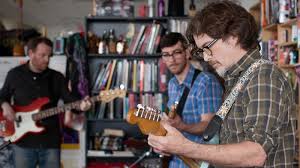
moors SOUNDTRACK: CHRIS FORSYTH & THE SOLAR MOTEL BAND-Tiny Desk Concert #549 (July 15, 2016).

solarIn the blurb about The Solar Motel band, Lars Gotrich says that Chris Forsyth’s group usually plays high energy and maximum volume.  But here, they have picked some of their more mellow pieces.  And I frankly think they are all fantastic (I actually don’t even want to hear their louder stuff).

“Harmonious Dance” opens with four single repeated notes before the slow echoed chords fill the room.  The drummer is playing with brushes and dangling some bells (which he eventually holds in his mouth while playing with both hands).  There’s a feeling of Explosions in the Sky on this song–but without as much drama.  Rather, the mid section turns away from the vibrato to a more structured picked section which allows room for a guitar solo.  The blurb says the song “meditates on a gently unfolding melody shared between Forsyth and guitarist Nick Millevoi.”

Speaking of the drummer, the blurb tells us that “due to touring conflicts, The Solar Motel Band’s rhythm section is different here than on record, but bassist Matt Stein provides a grounding force, as drummer Ryan Jewell … loosens the very ground beneath it all.”

Forsyth introduces the second song with the strange comment: “It gives me great pleasure to say the title of this next song: ‘The First Ten Minutes Of Cocksucker Blues.'” Why great pleasure?  Anyhow, the title refers to the unreleased Rolling Stones documentary directed by Robert Frank.  There’s a kind of funky, rougher edge to this song that has Forsyth playing some simple chords while Millevoi plays some wailing classic-rock-style solos.  In fact, the whole thing has a classic rock feel, except with a more contemporary jamming feel.

A buzzing drone segues into “Boston Street Lullaby.”  Unlike the other two songs this one is very mellow and kind of trippy. At times (especially the way that Millevoi bends some of his guitar licks it feels distinctly like Pink Floyd’s “Echoes.”  The end has some cool jangly spacey guitar and Jewell is doing all sorts of interesting things to the kit, including changing the sound of his snare by pressing on it at different spots.

I am curious to hear what other kinds of stuff they play.

I am bummed to read that they opened for Super Furry Animals this summer.  I really wanted to get to that show, but I was out of town.  That would have been a great double bill.

[READ: November 14, 2016] The Moors

Back in 2014, I ordered all 16 books from Madras Press. Unfortunately, after publishing the 16 books they seem to have gone out of business (actually they are switching to non-fiction, it seems). They still have a web presence where you can buy remaining copies of books.  But what a great business idea this is/was

Madras Press publishes limited-edition short stories and novella-length booklets and distributes the proceeds to a growing list of non-profit organizations chosen by our authors.  The format of our books provides readers with the opportunity to experience stories on their own, with no advertisements or miscellaneous stuff surrounding them.

The format is a 5″ x 5″ square books that easily fit into a pocket.

Proceeds from Marcus’ book go to the Friend Memorial Public Library in Maine.

This is a story that is set in the time it takes for a woman to fill up her mug of coffee.

It begins with the amusing concept that our protagonist Thomas saying that he felt bad about speaking in baby talk to a colleague.  And then it pulls back so we can see just what is happening.

Thomas has incredibly low self esteem.  He immediately takes a dislike to this colleague who is so composed and together.  He wonders if there’s a word for the contempt that he imagines she feels for everyone around her (based on the way she walks and is dressed).

And then over what seemed like three dozen too many pages, we learn the extent of his insecurities.  He is too fat, he might have erectile disfucntion, he believes that they are throwing pigeons at the windows every hour to mark time.

He is so insecure and his lashing out is just so unpleasant that I really didn’t want to read about why he acts this way (which we do sort of learn at he end).

Essentially this is man at a loss.  The way his home life has been going has certainly compounded his loss.  But the road to get there felt too long and either too misogynistic or self-pitying most of the time.

If this had been half as long I would have liked it much better.  Although I really don’t think I could ever actually enjoy reading about this character–baby talk or not.

Read Full Post »

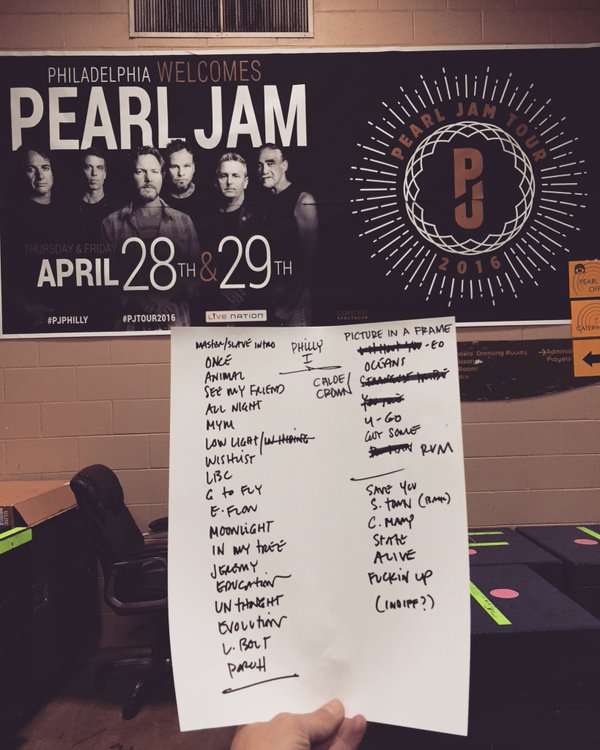
[ATTENDED: April 28, 2016] Pearl Jam

pjphilyWells Fargo Center is becoming one of my favorite venues.  Not because the acoustics are so good (although they are pretty good), but because now I’ve seen three of my favorite concerts there: Rush, Muse and now Pearl Jam.

I’ve been a fan of Pearl Jam for nearly their entire 25 years of existence.  I loved their first few albums, lost my way a bit in the late 1990s and then came back big time in 2001 when I enjoyed listening to their Live bootleg series.   Their live shows sounded amazing–super long, playing different songs every night–and making all of their songs sound more alive than on record.  They just sounded amazing.

And yet I had never seen them.  I should probably have gone on the 2003 tour but didn’t.  And then I met Sarah and Pearl Jam was one of her favorite bands, but she’d never seen them either.  Since we’ve been married they’ve toured near us 6 times.  We had some excuses of little babies for a couple of those tours, but we should have certainly gone in 2013.

Well, here it is, their 25th anniversary tour and Sarah and I finally got to see them.  And, although I do wish we’d gone before, was it ever worth the wait. (more…)

Read Full Post »

Cover_Blue_Angel_MarohSOUNDTRACK: LAIBACH-Sympathy for the Devil (1988).

sympathyAfter recording Let It Be, Laibach decided to tackle another sacred cow–the Rolling Stones’ “Sympathy for the Devil.”  “Sympathy” is my favorite Rolling Stones’ songs and even so, I love this incredibly different version of that song.

The Laibach version does everything that they did to Let It Be–changing tempo, deep spoken vocals, marching beat and chanting and they do it eight times.

This is an album/EP (it’s 50 minutes long) and it features several (quite different) versions of the song as well as some recordings by Laibach side projects Dreihunderttausend Verschiedene Krawalle and Germania.

I’ve broken the track listing down by artist, although on the disc, they are interspersed a bit more which adds to the variety.

Laibach: “Sympathy for the Devil” – Done in a big bombastic style–with deep spoken words.   I love the way the horns (after the second or third verse) bring in this cool militaristic/triumphant feel.
Laibach: “Sympathy for the Devil (Time for a Change)” – This version isn’t that different.  The music is minimal–the keyboards are stripped away, although the triumphant horns seem louder and the hoo hoos seems to be more present in the mix.  There’s some wild orchestration in the middle and some very cool tubular bells at the end as well as an instrumental denouement.  I think I prefer this version.
Laibach: “Sympathy for the Devil (Dem Teufel zugeneigt)” – Features some quotes from Kennedy and is spoken in German (with sitar (!) accompaniment).  The remaining verses are done in the original deep voice.

300.000 V.K.: “Sympathy for the Devil (Anastasia)” or “Anastasia” – Sirens open this song as pianos lull us into a sense of peace before the chaos of sampled music and loud beats takes over.  Even though it has really nothing to do with “Sympathy” the “oh ohs” from the Laibach version are also sampled.
300.000 V.K.: “Sympathy for the Devil (Soul to Waste)” – Vocals slowed down even more, sounding deeper than Laibach (in fact he kind of sounds like Andre the Giant).  I’m not even sure what he’s saying in the beginning (the “Sympathy” lyrics do kick in properly at some point).  It does have the same feel as the Laibach version but faster and even more dancey.  The female backing hoo hoos are a nice lightening touch.  There’s also a rocking guitar solo.
300.000 V.K.: “Sympathy for the Devil (Soul to Waste – instrumental)” –Just an instrumental dance version of the above, probably the least interesting on the disc.  Twice as long as the non instrumental version.

Germania: “Sympathy for the Devil (Who Killed the Kennedys)” – This song opens with an interviewer asking if someone has a theory about who killed Kennedy.  The answer is a sullen no.  This interviewer pops up throughout the song repeating the questions and then asking about mixing drugs.  There are all kinds of samples buried in the mix (I hear “All You Need is Love”).  The lyrics are whispered by a female vocalist while the original Jagger vocals are played quietly behind her.  The deep male voice comes in too.  The music is kind of a discoey dance version of the Laibach bombast.
Germania: “Sympathy for the Devil (Who Killed the Kennedys – instrumental)” – Only has a little of the spoken word business–it is basically just a dance remix.

So even though these versions are all basically variations on a theme (and yes 50 minute scan get a little maddening), the variety is pretty impressive (especially since they reuse many of the parts in the different versions).  No one is going to love this version more than the original, but all these years later, I still think it’s pretty cool.

To see the original Laibach version in all its glory, check out this video which I’ve not seen before:


[READ: January 17, 2015] Blue is the Warmest Color

I was intrigued enough by Maroh’s Skandalon, that I wanted to check out her earlier book, Blue is the Warmest Color.  I had no idea that it was a really big deal or that it has been made into a movie.

This book, which was translated by Ivanka Hahnenberger, is about a woman who is sure of her sexuality until she meets a woman who changes her mind.

The book is incredibly moving and touching, and it is told in a way that gives you the (sad) end right up front, although the end is not exactly what you think it is.  It’s incredibly well done.

As the book opens up, we see that a woman is riding a bus to go to her lover’s house.  There are superimposed words from her lover’s diary which says that when the woman on the bus (Emma) reads these words, the writer will be dead.  As the first sequence ends, we read: “I love you Emma, you are my life.  Signed Clementine.”  Emma has gone to Clementine’s parents house (where Clementine was living) to retrieve the diary.  Her parents are not happy with Emma.  And they seem to blame her for Clem’s death.

The book is kind of a visualization of Clementine’s diary from when she received it on her 15th birthday until her final entry. (more…)

Read Full Post »

greatestSOUNDTRACK: PINK FLOYD-“The Hard Way” and “Wine Glasses” (1974).

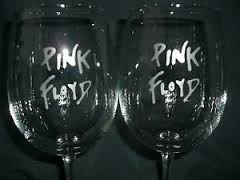
glassThis book informed me about these two unreleased Pink Floyd songs (there’s a Wikipedia site that lists some fifty more !).  While the were unreleased in 1974 (from the abandoned Household Objects album), they were eventually released in 2011 on expanded versions of albums.

“The Hard Way” features some “percussion” that sounds like someone taking steps.  There’s a bass riff which I gather is from rubber bands (but very well tuned).  There’s clocks ticking and chiming and tape being unspooled.  It’s a neat idea and while it is absurd to think you could make a whole album with this kind of stuff (in 1974), it’s a surprisingly good sounding track.

“Wine Glasses” was apparently made with wine glasses.  It is all of 2 minutes long.  It was designed to be a full song but was eventually used in the introduction to “Shine on You Crazy Diamond.”  I never really considered that there were wine glasses making the sounds (and clearly there are synths added on top), but yeah, so that ‘s kinda neat.

[READ: November 25, 2014] The Greatest Albums You’ll Never Hear

I found this book at work and knew I had to read it.  I was actually surprised at how long it took me to read (there’s a lot of entries).

The title and subtitle pretty much say everything you need to know about this book (and if you need to read it or not).  This book collects a series of writers who give a brief history of some of the more famous (and some not so famous) albums that were never released.  It explains (as best they can) why the albums weren’t released and even gives a percentage chance of likelihood of the album ever seeing the light of day (interestingly, most seem to be a 3/10–they may have been able to use a 5 point scale).

I knew some of the records they talked about (The Beach Boys’ Smile, Neil Young’s Chrome Dreams), but was ignorant of quite a lot of them. And while big fans of the artists may know all of the details about their favorite lost album already (these are sketches, not exhaustive research), there will certainly be some new information.  For instance, I’m a huge Pink Floyd fan but had no idea about the two shelved works mentioned here.

I liked the way the book was done chronologically and grouped by decade.  It was also interesting to see how the “reasons” for the non-release morphed over the decades from “the record label didn’t like it” to “it was leaked online.”

The one major gripe I have with the book is that it is chock full of “imagined” album covers.  This in itself is okay, but it is not made explicitly clear that they are all imagined (credits are given at the bottom of each image, but it took me a few entries to realize these were just people’s ideas of what the covers could look like).  And most of them are gawdawful.  Just really lame and dull (as if they had 20 minutes to come up with an idea).  They mar an otherwise cool collection,especially since some of the unreleased records actually do have proposed covers (even if they were never released).  I see that there is in fact a paragraph about the covers in the front pages of the book, but it is almost hidden away.

In addition to the albums I’ve listed below, I learned some fascinating things.  That Bruce Springsteen has hundreds of songs that he wrote but never released for various reasons.  That Pink Floyd did try to make an album out of household objects (with no instruments).  That the Sex Pistols’ Never Mind the Bollocks was almost simultaneously released illicitly as Spunk.  And that Danger Mouse’s The Grey Album was recently remastered.

The end of the book includes two small sections: other favorites that were never released.  Not sure why they earned only a small column instead of a full entry, but that’s okay.  The second was albums that we eventually did see, like My Bloody Valentine’s MBV and Guns N’ Roses’ Chinese Democracy.

So if you ever wondered what happened to that long lost album, this may be the book for you.

A sampling of the unreleased records include:

  • The Beach Boys-Smile
  • Buffalo Springfield-Stampede
  • The Kinks-Four Respected Gentlemen
  • The Beatles-Get Back
  • Jeff Beck-The Motown Album
  • Jimi Hendrix-Black Gold
  • The Who-Lifehouse
  • Wicked Lester
  • Rolling Stones-American Tour ’72
  • CSN&Y-Human Highway
  • Pink Floyd-Household Objects (1974), Spare Brick 1982
  • Dusty Springfield-Longing
  • David Bowie-The Gouster (1975), Toy (2001)
  • Sex Pistols-Spunk
  • Neil Young -Homegrown (1975), Chrome Dreams (1976)
  • Frank Zappa-Läther
  • Beastie Boys-Country Mike’s Greatest Hits
  • Weezer-Songs from the Black Hole
  • Jeff Buckley-My Sweeetheart the Drunk
  • Van Halen-IV
  • Foo Fighters-The Million Dollar Demos
  • Green Day-Cigarettes and Valentines (the author doesn’t believe it was actually stolen)
  • Tapeworm (Trent Reznor and Maynard James Keenan among others)
  • Deftones-Eros
  • U2-Songs of Ascent
  • Beck-The Song Reader


Read Full Post »

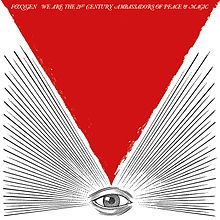
jun9SOUNDTRACK: FOXYGEN-We Are the 21st Century Ambassadors of Peace & Magic (2013).
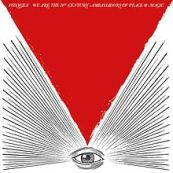
foxyI had no idea this was Foxygen’s third album (they have a new album out this week as well).  I had only heard of this because of NPR.  And I was delighted with the band’s utterly retro feel and sound–so much retro that it is almost too much.  But they do it with such flair that it works.  Indeed, the whole feeling of this album is one of sampling all of recent music history–with elements thrown in haphazardly (but effectively) and really celebrating a whole 60s/70s vibe with a sprinkling of modern technology.

“In the Darkness” is a 2 minute piano heavy track with horns, big swelling vocals chorals and all kinds of joy.  “No Destruction” though is where the retro sound really shines.  Sounding like a Velvet Underground track with a sweeter singer (who is no less blase).  Except that the chorus rises into a glorious hippie happiness.  It also features funny lines like the deadpan, “There’s no need to be an assshole you’re not in Brooklyn anymore.”

“On Blue Mountain” opens with a kind of Flaming Lips vibe (deep morphing voices counting down), but Sam France has a much higher pitched voice as he sings the slow intro.  Once the song kicks in faster, the real hippy vibe (combined with some Rolling Stones and some girlie backing vocals) kick in.  There’s even a big friendly chorus (that reminds me of “Suspicious Minds”).  After almost 4 minutes, the song shifts gears entirely into a raucous sing along  (with what sounds like a children’s choir).

After the manic intensity of “Mountain,” “San Francisco” emerges as a sweet delicate flute filled hippie song.  This was the first song I heard by them and I loved it immediately–the simple melody, the delicate (funny) female responses, the swelling strings. it was delightful.  “Bowling Trophies” is a weird little less than two-minute instrumental that leads to the glorious “Shuggie.”  “Shuggie” is the least hippie song on the album and screams more of a kind of French disco pop, with some wonderful lyrics.  The chorus is just a rollicking good time and the wah wah synth solo is terrific.  At three and a half minutes the song is just way too short, although it seems that anything that last longer than 4 minutes will shift gears into something else eventually anyway.

“Oh Yeah” brings in a staggered kind of sound, with some interesting breaks and stops.  It also inserts some doo-wop into it.  I love how the end once again shifts gears into a “freak out” with a wild guitar solo and fast drums.  The title song is fuzzy and distorted (the vocals are nearly inaudible).  It’s fast paced but still very retro sounding (Jefferson Airplane?) except for the modern electronic and guitar breaks.  And of course, the last minute is entirely different from the rest of the song, as well.

The album ends with “Oh No 2,” a five-minute track that begins as a slow swelling almost soundtrack song.  Indeed, when the spoken word part (“I was standing on the bed, birds were landing on my head”) emerges later on, it comes close to The Rocky Horror Picture Show (which is not a bad thing), including the piano outro (with slightly out of tune voice).

This whole album could just be an obnoxious rip off of old timey sounds, but instead it’s more like a fun reference point for those who know the music and just a fun good time for those who don’t.  And at something like 35 minutes, it never overstays its welcome.

[READ: September 17, 2014] “The Bad Graft”

This year’s Summer Fiction issue of the New Yorker was subtitled Love Stories.  In addition to all of the shorter pieces that were included in this issue, there were also four fiction contributions.

This was the final story in this issue and, sadly for me, it was the one I liked least.  It has three sections: I. Germination; II. Emergence; III. Establishment.  And while I enjoyed (mostly) section I., I really didn’t enjoy the turn the story took once it entered section II and the “plot” emerged.

The story opens with two young (actually not that young) lovers traveling towards Joshua Tree.  This couple is madly in love and are basically eloping.  Except, of course, that they don’t want to ever get married, so it is a symbolic elopement.  On their first date they had decided to run away together.  They left their homes in Pennsylvania more or less unannounced, took all their money and drove to the desert.

Andy and Angie, for that is what their names are, prepared well with Andy having, among other things a large knife (note to Chekovians).  After a few days they are startled to discover how expensive this road trip is.  But they are undaunted because they are in love.  Of course, they are also exhausted and perhaps a little on edge.

When they arrive at Joshua Tree, it is 106 degrees.  The park ranger informs them that they have arrived in time to see the yucca moths do their magic with the trees.  he calls it, the ‘pulse event.”  The entire range of Joshuas is in bloom and the moths are smitten.  This sounds exciting but it is also sad, as the Joshua Teees may be on the brink of extinction and this massive blossoming is like a distress call.

With all of this set up, it is a total surprise when half way through the section, the story informs is that “This is where the bad graft occurs.” (more…)

Read Full Post »

[ATTENDED: July 28, 2014] Beck

As I mentioned, I was pretty psyched to get tickets for Beck.  Although for some reason he’s not an artist I ever considered seeing before.  Recently I went through his back catalog which reignited my interest in him and I realized just how many great songs he had.  I figured it would be a fun show (although it never occurred to me just how dancey the show would be!)

But then I heard that his recent shows were spending a lot of time with his songs from morning Phase.  I really like Morning Phase, but it’s not an album I’d want to see performed live.  My friend Cindy saw him in NYC a few months back and said that the first half of the show was all Morning Phase stuff.  And I thought that might not have been the most fun show in the world.  So in the days before the show I was a little less than super psyched.  But, as with Band of Horses, I was blown away by what a great and fun and rocking show he put on.

Unlike at the NYC show, he did not spend the first half of the show in Morning Phase.  In fact, he launched right in with a loud, rollicking version of “Devil’s Haircut” and I was in motion for the next 45 minutes. (more…)

Read Full Post »

dec20133SOUNDTRACK: FRANKIE SPARO-Arena Hostile (VPRO Radio Recordings) [CST017] (2001).

sparo2I didn’t love Sparo’s debut album, but a year later while on tour with A Silver Mt. Zion (whom I do love) he went into a studio in Amsterdam to re-record some of those songs.  I’ll let the Constellation site tell you what this EP is and why I like it so very very much,

In January 2001, Frankie Sparo toured Europe with a Silver Mt Zion. Musicians from the latter group worked on new arrangements of songs from Sparo’s debut record My Red Scare, adding strings, organ and electronics to Frankie’s guitar and beatbox compositions. Some of the results were captured in a live studio performance recorded live to 2-track at VPRO radio in Amsterdam, where a feverish flu found Sparo in a ravaged, hallucinatory state – which only added to the dark magic of these recordings. The four songs on this EP are all first takes, beautifully recorded by the good people at VPRO. Along with 3 songs reworked from the debut album, the EP also includes a heartbreaking cover of the Rolling Stones’ “I Am Waiting”, which Sparo performed solo a number of times in concert.

“Diminish Me NYC” is great in this version with an off-kilter electronic arrangement and strings. “The Night That We Stayed In” which I singled out on the debut album has two violins, turning the song into an even cooler number (although the “throw your hands in the air” line seems moderately less comical now).  “Here Comes The Future” has an almost dance beat—a slow dance mind you, but still, a good one and ends with some organ waves.  And the cover of “I am Waiting” must be the slowest cover of a Stones song ever.  I don’t know the original, but I bet it sounds nothing like this.

I really like this EP a lot and it makes me want to like the debut album even more–if I had more patience with it.

[READ: April 15, 2014] 3 book reviews

noveltyThis month Bissell reviewed non-fiction three books.

The first is Novelty: A History of the New by Michael North.  In this book North argues that newness, that novelty, has always been a problem: “one of the very first ideas to trouble the consciousness of humankind.”  This dates all the way back to Aristotle who argued that nothing came from nothing; that everything came from something else.  Even the Renaissance, that period of great exploration and creativity was really just mimicking classics (hence the word renaissance).  The new tends to be looked at askance, so we get terms like “novelty act.”

North says that one thing which is genuinely new is our proclivity to turn everything into information as gigabits or as abstract knowledge.

I’m intrigued by the premise of this book but not enough to want to read it and frankly, Bissell doesn’t make it sound that compelling.

Bissell connects this attitude about newness and novelty to the rock world (and rightly so).  Where we (well, some people) value novelty and criticize anything that is derivative.  Which leads to the second book (another one I don’t want to read but for different reasons).  Beatles vs. Stones by John McMillian.  The Beatles were arguably the most original band ever since no one did what they did before them.  And then, bvssarguably, the Rolling Stones came along and did just what the Beatles did a little bit afterwards.

Some easy examples:

  • The cover of the Rollings Stones’ first album is compositionally similar to the cover of The Beatles’ second album.
  • A few months after the Beatles released their ballad “Yesterday,” the Stones released their ballad “As Tears Go By.”  (The song was recorded earlier but was initially dismissed as not Stones enough).
  • After the Beatles used a sitar in “Norwegian Wood,” the Stones used one (in a different way) in “Paint It Black.”
  • And quotemaster himself, John Lennon, once said, “Everything we do, the Stones do four months later.”  [The Stones did still released some great music after The Beatles broke up, of course, even if now they play nothing they wrote after 1981 on tour anymore].

And this Lennon quote is typical of this book which is a gossipy casual look at the differences between the Beatles and Stones [Beatles when you’re writing, Stones when you’re jogging; Beatles when you’re alone, Stones when you’re with people).  But in addition to comparisons, he includes scenes like when the Beatles attended a Stones show and when Jagger and Richards were at Shea Stadium for The Beatles’ arrival.

There are many similarities between the bands, although the biggest different seems to be that the Stones never really became friends, while The Beatles were friends till the end.

Of course, the Stones has always been cooler than the Beatles, which is a nice segue into Bissell’s third book: The Cool School: Writing from America’s Hip Underground by Glenn O’Brien.

coolschoolO’Brien’s thesis is the seemingly obvious one that “cool” is not a new thing–that early tribes doing war dances had cool people playing syncopated drums in the corner.  But he is not arguing about coolness, he is collecting “a louche amuse bouche [that must have been fun to write]…a primer and inspiration for future thought crime.”  The book includes works by the likes of Henry Miller, Delmore Schwartz, LeRoi Jones and Eric Bogosian.  I like some of these guys, but as soon as I see them assembled together, I know I’m not going to be going anywhere near this book.

Bissell says that there is some cool stuff here: Miles Davis writing about Charlie Parker for example, but most of the cool seems to be trying too hard.  Like the “charmlessly dated” Norman Mailer piece, “The White Negro.”

I appreciate the way Bissell sums up what comes through from the book: “to be cool…is to make the conscious choice, every step of the way through life, to care about the wrong damn thing.”

It is comforting to come away from one of these book reviews without wanting to read anything.


Read Full Post »

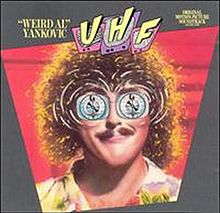
tippy SOUNDTRACK: “WEIRD AL” YANKOVIC-UHF Original Motion Picture Soundtrack (1989).

UHFsingleHot on the success of Even Worse, Al was given the green light to make a movie.  It was called UHF and it tested very well with audiences.  But then it tanked at the box office (well, it made back the money but little more).  Although it has since gained a huge following as a cult movie.  It is very weird indeed (and Kramer is in it!) but it’s also very quotable and quite funny.  The soundtrack has a few songs and skits from the movie as well as a few extra songs that were not in the movie.  And, despite it’s rather middling status as a soundtrack, it features a couple of Al’s best songs.

“Beverly Hillbillies” is a surprisingly effective pastiche of Dire Straits’ “Money for Nothing” and the theme from the “Beverly Hillbillies.”  The fact that Al originally wanted to use a prince song (but was not given permission) shows just how creative he can be to twist it around in a totally different way.  Mark Knopfler plays guitar.  Another sci-fi original is “Attack of the Radioactive Hamsters from a Planet Near Mars.”  It kind of updates “Slime Creatures from Outer Space” which also wasn’t that good.  “Isle Thing” is a parody of Tone Loc’s “Wild Thing” which is about Gilligan’s Island, but from the POV of someone who hasn’t watched the show and whose girlfriend is hooked on it.  It’s surprisingly funny   It’s interesting that Tone Loc sampled Van Halen, but I believe Al’s band plays the whole thing.

The Medley returns on this album (sorely missed on Even Worse).  Strangely, “The Hot Rocks Polka” is a medley of Rolling Stones songs.  The theme song “UHF” is a good theme song.  It’s funny but more importantly it explains the movie nicely.

The disc also includes snippets from the movie Gandhi II promo.  “Let Me Be Your Hog” is a 17 second clip from a show in the movie.  There’s also the awesome commercial for Spatula City.  And “Fun Zone” is a 2 minute instrumental that is the theme to Stanley Spadowski’s Clubhouse.

“She Drives Like Crazy” is a parody of Fine Young Cannibals (the fact that Al can hit Roland Gift’s notes is quite impressive) although the song is merely okay.  “Generic Blues” is just that–an over the top version of any blues song you’ve heard.  Those few low points are more than made up for by these closing high points.  “Spam” is a great parody of R.E.M’s “Stand.”  It works as both parody and as its own lyrical theme.  “The Biggest Ball of Twine in Minnesota” is the first of Al’s epic songs (this one clocks in at almost 7 minutes).  It’s a story song told in the spirit of Harry Chapin’s  30,000 Pounds of Bananas.”  It’s one of my favorite early Al songs.  It’s fun and silly but it never loses focus.  And the thought of the family loving the biggest ball of twine is just too funny.  And who knew there were so many things that rhymed with Minnesota?

But the tanking of UHF meant that Al had to regroup.  And as he waited for the next Michael Jackson song to parody, a little thing called grunge happened.

[READ: February 22, 2013] Captain Underpants and the Terrifying reTurn of Tippy Tinkletrousers

Pilkey had been away from writing for several years with family emergencies.  So it has been six years since the previous Captain Underpants book–that’s a long time for most readers who may now feel too old for the books, although no doubt many new readers to the series (like me!) have sprung up in the meantime.

So, what does Pilkey do for his return?  He produces a 300 page epic!  One that brings back a bad guys from past books (as was promised in the last book), one that features a lot of mind bending time travel and, ultimately, one which focuses mostly on George and Harold as kindergarteners (five years before the usual present in his books).  And it is an amazing book, one that really shows how creative the boys are and one which deals with bullying–a subject that has never really been present in these books (except from the teachers).  Pilkey really created a great book (the other books were great too, but they were more slight.  This one is packed with goodness).  And I have to assume he aimed the books for slightly older audiences.

The book opens with the usual history of Captain Underpants by George and Harold, although given the six year absence, this one recaps everything that has gone before.  It also explains how in the last book, George and Harold were getting in trouble because of their evil twins from another dimension when Professor Poopypants (now named Tippy Tinkletrousers) showed up in his mechanical pants shooting ice rays at everyone.

Then Pilkey breaks the story and the animation style to introduce the banana cream pie paradox (in a very formal computer generated style of picture which really sets it apart).  In a nutshell–a man makes a banana cream pie.  He goes back in time and the tree that he got the bananas from is killed–so how can he have made the pie?  (His version is much funnier).  But the point is, be really really REALLY careful when you time travel. (more…)

Read Full Post »

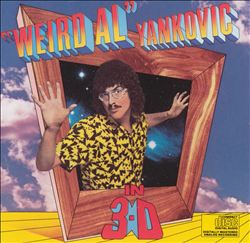
booger1SOUNDTRACK: “WEIRD AL” YANKOVIC in 3-D (1984).

in3dAfter Al’s debut he came roaring back the next year with In 3-D a disc which opens with his first Michael Jackson parody “Eat It.”  The song was leaps and bounds above anything on the debut (even if there are still hand farts in it).  The song actually sounds like the original (if a little less “full” and a little goofier and on the whoo hoos).  But the solo by Rick Derringer rocks and the whole song works very well.  The rest of the album is a solid mix of originals and parodies

I didn’t really understand that “Midnight Star” was meant to parody the Weekly World News and such (I didn’t really know those papers at the time) but I thought the headlines were funny.  And yes its a lot of fun to sing a long to.  It’s always funny when Al parodies a song that is already rather stupid (My Sharona, or in this case Safety Dance), and “The Brady Bunch” opens with a general overview of stupid TV shows and then morphs into the The Bunch’s theme song to the music of “Safety Dance.”  “Gonna Buy Me  A Condo” is a reggae song which I never really got the joke of as a kid.  I mean, I knew it was reggae but I didn’t know enough about reggae to know that this song is kinda funny, about selling out for the mainstream life.  It’s not genius or anything but it’s kinda funny–in fact I think it’s funnier now than I ever did as a kid.

“Jeopardy” works perfectly as a parody.  It retains all of the weird sounds and “drama” of the original and yet it works entirely unto itself.  It’s definitely an early highlight.  This disc also introduces what would be come a staple on all his later albums:  “Polkas on 45” where he mashes together a string of songs into a polka beat.  They are always fun and clever.  This one is a mix of new wave and classic rock bands Devo, Deep Purple,  Berlin, The Beatles,  The Doors,  Iron Butterfly, Jimi Hendrix, Talking Heads, Foreigner, The Police,  The Clash,  The Rolling Stones,  and The Who.

“Mr Popeil” is another one that I didn’t full get until later (why did i like Al if I didn’t get any of the jokes?).  Ron Popeil is the king of the As Seen on TV  product (as listed in the song).  The thing that I really didn’t get was that this is was a parody of the B-52s–one of the first parodies he’d done that’s a parody of band but not really a song.  This is not a parody of Rock Lobster exactly, but it sounds quite a lot like it–and that’s a neat trick.

“King of Suede” is a parody of The Police–I never really liked it even though it does work as a parody–perhaps the original isn’t a very string song.    “That Boy Could Dance” is instantly forgettable, so much so that I had forgotten all about it.  “Theme from Rocky XIII” is a pretty funny parody of “The Eye of the Tiger.”  But it doesn’t prepare you for the genius that is “Nature Trail to Hell.”  An epic song about horror movies with the great line “if you lie the 6 o clock news you’ll love Nature Trail to Hell (in 3D).”  It’s over the top and very silly–the music escalates  with screams and strings and several different sections (although the solo section is a little anemic).  I can’t imagine what he would do with it today if he rerecorded it.

So In 3-D was a big jump in quality for “Weird Al” and was actually a pretty big hit (charting at #17).

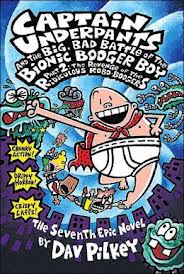
[READ: February 22, 2013] Captain Underpants and the Big Bad Battle of the Bionic Booger Boy Part 2

Since it is 2013 and not 2003, I don’t have to wait several months for Part 2.  Huzzah!

The opening comic in this book not only gives all of the Captain Underpants background that it usually does, it also includes what happened in Part 1.  At the end of the book, the robotic booger monsters (Carl, Trixie and Frankenbooger) were on the attack.  They destroyed the Combine-O-Tron 2000 so it would not reverse the effects of the machine on Captain and Melvin.  But Sulu the hamster rescued them by hurling the boogers into space (with his mouth, ew).

The boys want to get things back to normal.  But Professor Krupp (who is in Melvin’s body) is going about his business getting everyone in trouble.  Except that since he looks like Melvin people are getting angry at him rather than listening to him.  This book features a wonderful letter swap from “Check out our school’s big internet website at http://www.jhes.com” to “We shake our big butts when we swim in the toilet.”

The boys give up on trying to fix the Combine-O-Tron and decide to use the Purple Potty Time Machine that is in the library and go back in time.  There’s a great sequence in which the librarian has banned every book but one and I love the posters that are up encouraging the banning of books–it’s another awesome dig at those who censor.  And the librarian is named Miss Singerbrains. (more…)

Read Full Post »

SOUNDTRACK: KISS-Dynasty (1979).

I was pretty excited to buy this album when it came out–a new Kiss album that wasn’t solo albums!  Woo hoo!  And the fact that it was disco?  Well, even though I said I “hated disco,” I didn’t really know what disco sounded like then (and really, aside from the middle “I Was Made for Lovin’ You” it’s not really a disco record) and plus my other favorite band was the Village People (and really, that makes a lot of sense–tw0 bands in over-the-top costumes talking about sexuality that I totally didn’t understand).

So, this album is hard for me to be critical about because it was such an essential part of my childhood, especially “I Was Made for Lovin’ You.”  I love it, and yet I can listen critically and appreciate that it’s really not that good.

But I’ll move on to the other songs.  “Sure Know Something” and “Magic Touch” really don’t seem that out of place chronologically with, say, the Kiss solo albums–they sound an awful lot like something off of Paul’s album.  So, despite the sort of slinky 70’s bass on “Sure Know Something”, they can’t have been that much of a surprise.  The guitar solos are short but have some interesting Ace sounds (I like the harmonics on “Magic Touch”).  It seems that while the other guys were embracing disco, Paul was keeping the Kiss sound alive.

Then there’s the Ace songs.  “2,000 Man” made total sense as an Ace song. I had no idea it was a Rolling Stones cover until fairly recently (and I like Ace’s version much better).  “Hard Times” feels like the sequel to “New York Groove.”  Not the music so much although maybe a little, but the lyrics–now that he’s in the city here’s what happened–the gritty reality. It’s one of Ace’s great, lost songs.  And check it out, Ace sings on three songs here!  (Guess having a #1 hit wasn’t lost on the Kiss powers).  “Save Your Love” has a cool descending chorus and a nice bass feel to it.  Ace certainly wins on this record.

Peter got only one song, “Dirty Livin'”.  In fact, this is the only song that Peter had anything to do with (his drums were re-recorded by Anton Fig).  It reminds me (in retrospect) of the Rolling Stones disco era even more than “2,000 Man,” the backing vocals remind me of something like “Shattered.”  I always liked this guitar solos on this (cool feedback).  Although I liked the song (along with the rest of the album), I don’t think it holds up very well.

Gene only gets two songs.  It amuses me how little he has to do with these late 70s albums even though he is always the leader of the band.  I always liked “Charisma” (I had to look the word up back then) even though it is, admittedly, rather discoey and really not very good.  It is fun to ask “What is my…charisma?”  But “X-Ray Eyes is the better Gene song on this record.  It harkens back to earlier Kiss songs and even has a bit of menace in it.

So, Dynasty was a huge hit for the band.  And they even got to mock it in Detroit Rock City the movie.  Cynical marketing ploy or genuine fondness for disco?  Who would ever know.

[READ: November 1, 2011] “The Brief Wondrous Life of Oscar Wao”

Readers of this blog know that after finding an author I like, I will try to read everything that he or she has written.  Close readers will know that if a writer is reasonably young and reasonably unpublished, I will try to read his or her uncollected work as well.  Well, I really enjoyed Oscar Wao the novel, so I decided to see what else Díaz had written. There’s really not a lot, to be perfectly frank.  There’s his short story collection Drown and a few fiction pieces published here and there (mostly in the New Yorker) and a few non-fiction pieces as well.

So this “short story” from the New Yorker (with the same title as the novel) is in fact an early, mostly the same, version of the Oscar story in the novel.  The thing here is to note the date: 2000(!).  The novel came out in 2007.  So, Junot had been working with this character for easily five years (giving time for the publishing industry to get a book out and all). The remarkable thing the is just how accomplished and polished this piece is and how much of it was used in the novel.

I’m curious to know whether this was written as a short story (it’s quite a long short story) or if it was always intended as a part of a novel.  Interestingly, when you read this story by itself and you realize that it is pretty much all of Oscar’s story in the novel, you realize just how little of Oscar is actually in the novel.  The novel is about Oscar, obviously, but it is really about his family and the fukú that was placed on them by the Trujillo clan.  Oscar is sort of the touchstone for the fukú, and the person whom the narrator knows most intimately but his story is also brief. (more…)

Read Full Post »

« Newer Posts - Older Posts »