Feeds:
Posts
Comments

Archive for the ‘Rush’ Category

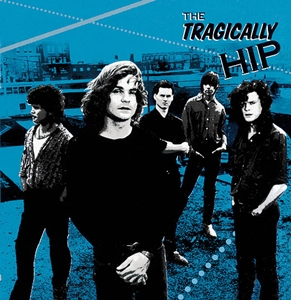
SOUNDTRACK: THE TRAGICALLY HIP-The Tragically Hip (1987).

It’s not really fair to review a successful, long-lived band’s first album over 30 years after the fact.  I mean, Rush’s first album doesn’t show any of the prog tendencies they’d be known for (not to mention a different  drummer/lyricist).  In fact, virtually no bands come out fully formed, which is good for all fans.

Having said that, from this album, you’d have very little indication that the Hip would become as dynamic as they eventually did.

This is a 7 song EP full of rocking tracks with overlays of acoustic guitars.  Unlike later discs, there’s only a minor indication that they’re from Canada (“Last American Exit”) or overly literate.  Mostly they seem like a rocking bar band.  The songs are good, somewhat generic, but solid.  In fact, “Small Town Bringdown” is still played in concert from time to time.

The biggest surprise is Gord Downie’s voice.  By now his voice is pretty distinctive, but on this first disc it seems like he’s still trying to figure out what he’s doing.  On “Killing Time” he’s unrecognizable from the frontman of today.  He seems to be working in a much gruffer range than he would later use.  Lyrically, the songs are also tougher than they would eventually become.

The most memorable song is probably the most embarrassing: “I’m a Werewolf, Baby” is as silly as it sounds, but the riff is really great and it has staying power.  Shame about the lyrics.  This disc is probably not worth getting since “Small Town” is available on their Greatest Hits.  Although if you really want to hear “Werewolf” it’s only available here.

[READ: January 26, 2011] “Live Large”

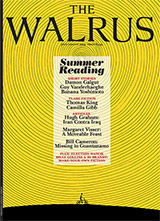
Just as I settle into the idea of reading 25 back issues of The Walrus for all of the fiction contained therein, I get to this 2004 Summer Reading Issue which features seven stories!  Three of them are short stories and the other four are flash fiction.

This first story was my favorite of the bunch.  It is a fairly simple story about a down-and-out man who longs for one day of joy.  Billy Constable has slowly seen his money evaporate.  He has had to sell off a lot of his luxuries, including the membership  to the Fairview Golf Club.  He has also had a recent medical scare (a minor heart attack) which has made him go straight and clean: no booze or smokes.

Except that things have gotten really bad lately, and who can resist the slide back into temptation.  When he gets a call to play a round of golf, from the very man he sold his golf membership to, he is about to tell him where to go, until he realizes that the man is calling him because he genuinely wants him to play in their foursome.  He decides why the hell not. (more…)

Read Full Post »

SOUNDTRACK: JIAN-The First 6 Songs (2001).
Being American and apolitical in my youth, I had no idea who Pierre Trudeau was until about 2001.  And my first real introduction was through this album by Jian Ghomeshi.  Jian was one of the four guys in Moxy Früvous (and man has his career skyrocketed since then…watch his great interview show Q online–in particular, check out the crazily uncomfortable interview with Billy Bob Thornton or the wonderful hour long interview with Rush).

Moxy Früvous had just broken up and Jian, who was one of my faves in the band, put out the optimistically title The first 6 songs (no other songs have arrived yet).

Jian is a mostly folk rock album which features Jian’s gentle voice.  And gentleness is one of Jian’s trademarks, it would seem.  But more than gentleness, his songs are about accountability and justice.  And yet lyrically, he’s not naive or obvious.  “Quebec City” is about the Summit of the Americas in Quebec City in 2001 (“the whole world is watching”).

I’ve always felt connected to the last track, “Lousy Boy”:

“And a man Is a man If he’s got a gun in his hand
Well I never wanted to destroy I always made a lousy boy….  And I know guys who are just like me
They like hockey and poetry
I think in retrospect that we have won
I’m a full-grown man and I don’t own a gun.”

Früvous has similarly thoughtful lyrics but in addition to the lyrics, the music is always interesting.   So the unexpected chord changes in the bridge to “Astronaut” turn the song from a simple folk song into a moving rocker.  And “Baby Don’t Lie” is a 5 minute track that builds on a folk base and is a catchy sing along.

of course, this all leads to the song “Father (For Pierre Trudeau)” the song that first taught me a little bit about the Prime Minister.  The song covers a few moments of his media-saturated leadership.  But mostly it’s a reflection about Trudeau on the day of his death.  The personal touch of course is that Ghomeshi’s father wanted to meet him (as did Jian) but now they w0uld never get to.  It’s a very touching song, and I have a hard time imagining someone writing a similar song about a President.

It was this song that got me to investigate the life and leadership of Trudeau.  (I even wrote an email to Jian, to which he quickly responded…I only wish I still had that email account active).

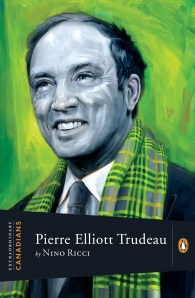
[READ: January 12, 2011] Pierre Elliot Trudeau

This is one of the more exciting biographies that I’ve read.  Which is pretty great.  Although one of the reasons it is so exciting is because he presumes that the reader knows a lot about Trudeau already.  And to be fair, I assume most Canadians would know the global picture (and most of the details) about him already.  So, basically, you get a summary picture of Trudeau, but instead of a quick outline that glosses over details, we get a lot of details, but no gloss.

What I’m getting at is that there are a number of places where Ricci talks about events and movements as if we know them.  So this makes for incredible fluency even if the novice is left puzzling exactly what all the fuss was about.  In fairness, contextually it’s easy to figure out, it’s just a bit surprising.

Another fascinating thing: Ricci skips over Trudeau’s childhood pretty much completely.  The book opens with Ricci’s memory of seeing Trudeau in 1967 when he (Ricci) was a young boy and seeing the way his teachers an adults seemed mesmerized by him.

Nostalgia aside, Ricci quickly explains what a polarizing figure Trudeau has been.  Warmly loved by many and yet (according to Macleans) ranked 5th of all Canadian Prime Ministers (despite being re-elected several times).  Actually, the way that Ricci words it it sounds like he came much lower than that (he says “third tier” which seems much mower than 5th).  And, judging by comments on YouTube videos, utterly hated by others.

The next chapter continues in 1968 at the beginning of Trudeaumania. Treudeaumania sounds a lot like Obamamania–a young, relatively inexperienced politician makes some noise and is thrust into prominence.  (Of course, in 1968, Trudeau only ran for office for a month and a half before being elected–ah the bliss of a short campaign season).

A video of Trudeaumania shows people swooning over him.

The biography does cover some of Trudeau’s earlier years (taken largely from Young Trudeau by Max and Monique Nemni).  He was a somewhat rebellious youth and his teen behavior was full of the usual (and not so usual) rebellions.  But the thing with Trudeau is that it is never clear whether he seriously held certain beliefs or if he was just trying to get a reaction out of people.

He established a society called les X whose purpose was to create an independent Quebec (organized under fascist principles).  les X faded from Trudeau’s life and existence with very little fanfare, and evidently radical groups like that sprang up all the time in Quebec at that time.  Really, it seems to point to his growing bored at his school and with the provincialism of Quebec.

When he left Quebec for Harvard and later for Europe, his mind was expanded and his beliefs opened up accordingly.  He had written many anti-Semitic things in his Montreal youth but once he actually met some Jews, he quickly changed his tune. Indeed, Harvard seems to have really shaped his later outlook in life.  And his exposure to vastly different attitudes during his studying Paris and then later in London exposed him to so much more in the world.

When he returned home to Quebec he found everything small and narrow (which is exactly how it (and he) was when he left it).  And he quickly finds himself embroiled in politics with the Asbestos Strike of 1949.  He took a position (and offered free legal assistance to anyone striking) which raised his profile and quickly made him persona non grata in his province.

This led him to leave for Ottawa, where he was less known and (since his credentials were great) where he could easily get a low position in politics and establish his career.  The main thing he learned, though, was that Ottawa was not the enemy (as is generally held to be true in Quebec).

Trudeau eventually returned to Quebec for Cité libre.  This is one of the things that Ricci glosses over…I’m still not exactly sure what Cité libre is (okay, an influential political journal), but I’m well aware of Trudeau’s involvement in it.  And how it helped him to state his principles and beliefs.

There’s a lengthy passage where Ricci explains how Trudeau’s federalism came to blossom so powerfully for him.  And this argument is one of the reasons why I am in the camp of Trudeau, because even though his piece is meant to be just about Quebec, I find it holds true for the U.S. as well (substitute out Quebec for any special interest).

The sort of independent Quebec he had dreamed of as a young man, he saw now, would only have given greater rein to the ruling elites to exploit nationalism for their own end, as Duplessis has done. In a Quebec obsessed with the survival of French-Canadian culture it was too easy for leaders to manipulate the electorate by promoting vague ideological goals rather than more practical ones, such as those providing infrastructure and employment (103).

Trudeaumania quickly swept him into office, but he was most reviled by his home province which felt betrayed by his turning his back on separatism.  He was the target of an attack by the FLQ, which captured and killed Trudeau’s friend and cabinet minister Pierre Laport. This was known as the October Crisis.  Trudeau’s reaction was swift and hard, he called for martial law (and the Mounties certainly abused their rights). But when questioned about whether he should or could step so hard on a province his answer was “Just watch me”

Now, it turns out that that quote comes at the end of a lengthy interview and makes for a glib soundbite when in fact Trudeau was anything but glib.
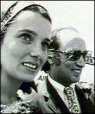
The next big moment of excitement for Trudeaumania was when he married Margaret Sinclair.  For a brief time, they were the it couple.  He was 51, she was just 22, and she was beautiful.  Trudeau seemed to be a confirmed bachelor or at least a consummate playboy, so to have him settled down was quite a story.  But how hard must it have been to be a young woman suddenly thrust into the political spotlight.

Naturally, cracks would surface in their marriage.  In fact, in 1977, Maggie decided to party with The Rolling Stones rather than attend her sixth wedding anniversary party (read the wonderful article in People about it–I love the tsk tsk tone!).

But the penultimate chapter is, mostly, about Trudeau’s disappointments.  He had taken office in a hail of excitement but really had not a lot to show for it.  He was even set for retirement, until he was drawn back in.  And in this final term, he was finally able to achieve his legacy.  And this legacy seems to be summarized by two words: federalism and patriation.  (With the downside being summed up in the word “notwithstanding”).  Now, this is obviously something that Canadians know all about, and it seems foolish to summarize what this meant for readers who lived it.  But for me, who knows precious little about the mechanics of Canadian politics, I was a little lost in the details.

I got the Federalism thing, but the constitution is a bit confusing.  And the whole notwithstanding clause really kind of lost me.  Nevertheless, the chapter that covered this was rather exciting because Ricci writes as if there is one man whose mission is to see him fail.  And this nemesis is Rene Lévesque.  It’s a classic mano a mano battle between two Quebeckers and it’s really rather exciting (especially if you didn’t know the results).

The final chapter talks of Trudeau’s legacy.  And in this chapter Ricci seems to side with Trudeau.  He cites specific examples of being the best man at a same-sex wedding ceremony, something that would not be possible without Trudeau (even though Trudeau never envisioned it).  Indeed, there’s a comment that:

during the 1968 leaders’ debate, Réal Caouette, leader of the Ralliement créditistes, joked that Trudeau’s Criminal Code amendments might lead to a situation where “a man, a mature man, could in the future marry another mature man” Caouette had his joke while Trudeau, awaiting his response time, smiled civilly and held his tongue.

Because I’m not part of the culture, I don’t know to read Ricci’s take on the man.  He is not afraid to show off all of Trudeau’s faults.  In fact, in many instances he rather highlights them.  For instance, the debt under Trudeau expanded exponentially.  When Trudeau took office in 1968 Canada had a debt of $18 billion; when he left office in 1984, that debt stood at $200 billion, an increase of 83% in real terms.  And yet at the end of a nasty passage he will present some evidence which ameliorates Trudeau either in whole or (more typically) in part.

I guess in that sense it is an excellent primer on Trudeau’s political life.  But it’s also personal enough that you can see how one man impacted people.  Not citizens, but people.  And when he describes the people lined up for Trudeau’s funeral it ties right back to Jian’s song.  It really shows the impact that one person can have on the lives of so many.

And, here’s a shameless plug to the folks at Penguin Canada–I will absolutely post about all of the books in this series if you want to send me the rest of them.  I don’t know how much attention these titles will get outside of Canada, but I am quite interested in a number of the subjects, and will happily read all of the books if you want to send them to me.  Just contact me here!

For ease of searching I include: Fruvous, creditistes, Real Caouette, Rene Levesque, Cite libre

Read Full Post »
SOUNDTRACK: RUSH-“BU2B” (2010).

I’m a little freaked out that Rush has a song that is just initials (it’s so text message-y).  And, listening to the lyrics tells me that the 2 is for “to.”  That is no way for 50-some year-old men to behave!

Of course, neither is the pounding heavy song that is “Bu2B.”  Like “Caravan,” the song opens with a dark and dirty riff.  The song is not as complex as “Caravan” although it also features a quieter section.  After the verse, the quiet bridge comes as a more natural progression (and it, too has some strong bass stuff going on).

What’s fascinating about the song is that despite its heaviness, it is layered with some really delicate keyboards that plink along the top of the sections.  It showcases both sides of Rush in one track.  And lyrically it’s quite dark as well.

These two early release songs have me really excited for the new album, Clockwork Angels, due out in 2011.

[READ: October 11, 2010] “The Oracular Vulva”

Jeffrey Eugenides was the next writer in the 1999 New Yorker 20 Under 4o issue.

I really enjoyed Eugenides’ The Virgin Suicides, and I regard him highly as a writer (even though I haven’t read very much else by him).  About midway through reading this story I realized it must be an excerpt from Middlesex (which I haven’t read, but hope to one of these days).   The bad thing about realizing this is that it impacted my reading of the end, making it kind of hard to assess the story as a story (which, I realize it isn’t, so maybe it’s moot anyhow).

This excerpt focuses on Dr. Peter Luce (the famous sexologist).  The title of the story certainly implies a degree of sexology, right?  I was surprised however, that the story opens with the doctor in a jungle, studying the Dawat tribe.  Luce, a very comfortable middle class sexologist is miserable out in the jungle, with crazy animal sounds, oppressive heat and, worst of all, little children trying to pull down his pants.

The doctor is studying this tribe because they have very specific gender roles–so specific, that the men and women are not permitted to interact with each other at all, except for once a month for three minutes, for procreation.  So, for sexual outlet, the men engage in oral sex with each other (semen being a very important thing for the young men to consume).  Yet no matter how progressive Dr Luce is, he simply can’t deal with the thought of this young boy, who is trying to do his culture’s most honorable thing.  (more…)

Read Full Post »

SOUNDTRACK: RUSH-“Caravan” (2010).

I was watching a great, lengthy interview with Rush on CNN.  At the end of the interview they mentioned that Rush had released two new songs (somewhat unheard of for the band to release a “single”).  I had some extra download cash from Amazon, and was even able to get the “booklet” yeeha.  The song is also available on YouTube, if you want to check it out.

When a song throws you a curve, it’s really only a curve the first time you listen to it.  And boy, “Caravan” has crazy curves in it.  In fact, musically, “Caravan” is easily my favorite Rush song in years.

It opens with some faint chords and sound effects and then kicks in with a loud riff, the likes of which Rush has specialized in lately–heavy, heavy, nasty guitars.  The bass is insane throughout with some breakneck stuff, and then at the 1:30 mark, the bass slides and the song drops out into a delicate, gorgeous guitar piece; it surprised the heck out of me.  It’s brief and effective and sets the stage for the next heavy riff.

The beautiful quiet bit returns and is then followed by another twist: a mildly funky bass solo (which hasn’t featured prominently on the last few albums) which leads into a really cool instrumental mid section, that’s almost like a self-contained song.  All of this leads to one of Alex’s insane solos.  It’s noisy and crazy and wonderful.

I’m very excited about this new album.

[READ: October 10, 2010] “The Wide Sea”

Tony Earley is the next writer in the 1999 New Yorker 20 Under 4o issue.

After several funny, clever and witty stories this rather simple story came as a bit of a welcomed respite.

This is a very straightforward story about Jim and his Uncle Al. They live in Aliceville (which, I had to look up, is in Alabama).  Jim takes many trips with Uncle Al “to see a man about a dog.”

This particular trip is Uncle Al’s chance to buy Belgian horses (Uncle Al and Uncle Zeno currently use mules on their farm).  They travel to South Carolina (which, looking on the map is quite far–over 550 miles!). (more…)

Read Full Post »

SOUNDTRACK: MARTIN TIELLI-“We didn’t even suspect that he was the poppy salesman.” (2001).

Martin Tielli’s first solo disc is a proper solo release: it’s almost all him on acoustic guitar and his gorgeous alto voice.  I hadn’t listened to this disc in a while and I was delighted by how much of the disc I knew so well.

Te opening track, “I’ll Never Tear Your Apart” is deceptively simple: harmonic’d guitars and his gentle voice.  There’s a great video to go with it here.  That is followed by the wonderful “My Sweet Relief” which sounds like a great Neil Young folk song: great verses an a strong chorus.  Lyrically, though, it is all Tielli.  “Double X” highlights Tielli’s beautiful acoustic guitar work (and his dark lyrics).  “Voices in the Wilderness” is another delicate song (which opens with a sound that reminds me of Led Zeppelin’s “The Rain Song,” although in no way is the rest of the song like that. This song also (mis)quotes Rush very nicely: “‘If you choose not to be free you still have made a choice,’ said a high and squeaky voice.”

“Farmer in the City” is the only track that Tielli didn’t write.  It’s a nearly 8-minute song by Scott Walker.  I don’t know the original, but Tielli’s version is a bit too meandering to be really satisfying (although it fits in with the album style quite nicely).  It comes across as an atmospheric song more than a song proper.

It’s followed by the delightful “World in a Wall” which uses mice in the wall as a metaphor for a broken relationship (with wonderful detailed lines like: She’s like a mouse, I know she’s around It’s a gnawing sound. Leaves little brown poohs from a little pink bum.”

This is followed by the odd rocker “That’s How They Do It in Warsaw” (which features a woman speaking Polish–no idea what she’s saying).  It’s coupled with a slightly less rocky but still loud track “How Can You Sleep?” (which makes another fun musical allusion, this time about Guided by Voices).

“She Said ‘We’re On Our Way Down'” returns to the more ethereal sounding songs (although this has some great guitar tricks thrown in).  Like the bulk of the album, the song seems to eschew melody but then a gorgeous guitar or vocal line shines through and really sounds brilliant.  “From the Reel” is a beautiful, aching little ditty.  And the disc ends with the odd, seven minute “Wetbrain/Your War.”

There is a really wonderful review of post-Rheostatics work here at The Ohs.  He’s pretty harsh on the Bidiniband (although I haven’t heard the disc proper, just the live concerts that toured it, so I can’t say for sure) but his assessment of Tim Vesely is spot on (I love the idea of a Canadian Wilburys) as is his review of this disc.  I particularly like the Mary Margaret O’Hara comparison: Achingly beautiful but in need of an editor from time to time.

[READ: November 1, 2010] “The man who saw grey”

One thing I have really come to appreciate about Connell’s stories over the years is that he is not afraid to deal with dark aspects of humanity that many people would rather not think about.

The thing that surprised me about this story is that, in the past, Connell has used very specific language, one might even say two-dollar words (some of which I had to look up), to convey his ideas.  But in this story, he largely refrains from such language, keeping the language down to earth and familiar, much like his protagonists.

So this is a fairly simple story: a man hits his head and can thereafter only see in shades of grey.  What makes the story much more interesting than that simple plot is that the protagonist is a painter (well, his hobby is painting, in reality he is an administrator at the DMV). (more…)

Read Full Post »

SOUNDTRACK: RUSH-Oak Oppression: Cobo Hall, Detroit, December 17, 1978 (1978).

This is another bootleg from Up the Down Stair.  This is a 1978 show, right after the release of Hemispheres.  I have always loved this era of Rush, and the fact that they play so many looooong songs in this show is music to these ears.

We’ve got a 12 minute “Xanadu”, a 10 minute “Cygnus X-1”, followed by “Cygnus X 1 Book 2 Hemispheres” (18 minutes), a 10 minute “La Villa Strangiato” and and 18 minute complete “2112.”  That they can fit 10 more songs into this concert is pretty amazing.

The show is of good quality, although aside from the track listing there aren’t a lot of surprises here (Rush shows don’t deviate all that much from the records).  The nice surprise is in the drum solo.  It’s pretty much the same one from All the World’s a Stage, but it has some really fun effects on it at the end.

[READ: August 4, 2010] “The Train of Their Departure”

David Bezmozgis is another of the New Yorker’s 20 Under 40.  I enjoyed this story, set in Russia in 1976, because it was like two different stories combined into one saga.

Polina is a twenty-one year old married woman.  As the story opens, we learn of the cute courtship that her husband Maxim treated her to.  He followed protocol, her treated her very nicely.  He waited every step of the way, from kissing to petting to more.  He even used contraception (something most Russian men didn’t bother with).  Their courtship felt inevitable, even if Polina was never really smitten with him. (more…)

Read Full Post »

SOUNDTRACK: RUSH-The Fifth Order of Angels (bootleg from the Agora Ballroom,Cleveland, 26 August 1974) (1974).
When I was browsing the internet I found this cool blog called Up the Down Stair.  And this blog features some bootleg concert Mp3s.

When I was in college, there was an awesome used record store called The Electric Mine Shaft.  We would go there once a week or so and browse the collection.  He caried all kinds of bootleg shows.  So I have a  lot of Rush live vinyl bootlegs from over the years.  Really they were pretty much a waste of money as I didn’t (and really don’t) enjoy listening to poor quality recordings, so, yes, wasteful.

Anyhow, with the advent of the web and free MP3s, I don’t mind listening to a bootleg.  So, this one, from 1974 is pretty interesting.

Here’s what the notes from the site say:

Neil Peart had only joined the band about a month earlier and played his first gig less than two weeks prior to this concert on the 14th. It’s a great document of the early phase of the band’s career and is notable for featuring unreleased songs as well as versions of a couple tunes that had not yet seen the light of day on vinyl. “Best I Can” and “In the End” were most likely not recorded at this point and wouldn’t emerge for another six months when Fly By Night was released. “Fancy Dancer”, a take on Larry Williams’ “Bad Boy”, and “Garden Road” were never recorded to the best of my knowledge. I believe that the snippet of “Garden Road” that you hear in the Rush documentary Rush: Beyond the Lighted Stage comes from this recording.

The most fascinating thing to me about it is that the guitar solos are in stereo (although this is a mono recording, so the solos disappear sometimes).  That’s fine; the weird thing is that it was actually recorded with the solos in stereo! In a live setting?  The guitars went around the room?  Cool!

So, obviously Rush around thier debut were nowhere near the prog mavens that they eventually became, but there’s something fun about these early shows when they just rocked and rocked.  (There’s even a drum solo!).  And I really like that the “Working Man” solo incorporates part of the as yet unreleased solo from “By-Tor and the Snow Dog.”

It’s available here.

[READ: July 30, 2010] “The Laugh”

Téa Obreht is one of the New Yorker‘s 20 Under 40.  They included her short story in a recent issue and I didn’t love it.  It was okay, but it wasn’t really moving.

Nevertheless, they mentioned that she had another story in The Atlantic, and I was led to believe it was her only other published story, so I decided to read it too.

And I am so glad I did!  It wasn’t a terribly exciting story (until the end!) and it wasn’t a very poweful story (until the end!) and I thought something very different would happen (and am so glad it didn’t!).  But there was a sense of danger, forboding, concern, something terrifying that worked as a low level hum through the whole story which made it very compelling.  Maybe it had something to do with the accompanying picture.  I mean, Jesus H. Christ, look at the this thing: (more…)

Read Full Post »

SOUNDTRACK: RUSH-“The Trees” (1978).

I suppose many people know this kind-of popular song from Rush.  But lyrically it seemed relevant to Insurgent Summer.

There is unrest in the forest,
There is trouble with the trees,
For the maples want more sunlight
And the oaks ignore their please.

The trouble with the maples,
(And they’re quite convinced they’re right)
They say the oaks are just too lofty
And they grab up all the light.
But the oaks can’t help their feelings
If they like the way they’re made.
And they wonder why the maples
Can’t be happy in their shade.

There is trouble in the forest,
And the creatures all have fled,
As the maples scream “Oppression!”
And the oaks just shake their heads

So the maples formed a union
And demanded equal rights.
“The oaks are just too greedy;
We will make them give us light.”
Now there’s no more oak oppression,
For they passed a noble law,
And the trees are all kept equal
By hatchet, axe, and saw.

I’ve liked this song for some twenty-five years and my interpretation of it changes every once in a while.  I’m not sure if the book influences my thoughts on the song, but it seemed relevant.

Oh, and it totally rocks, too.

[READ: Week of July 30, 2010] Letters of Insurgents [Eighth Letters]

Yarostan replies to Sophia’s letter by saying that her victory is complete, that he has been looking through opaque lenses all these years.

But the main focus of this letter is the dance at the factory that Yara and Mirna have coordinated.  They decorated the whole room (moving machinery aside) to have the experience of the life that Sabina lived.  It even included signs that said “everything is allowed” and “nothing is banned.”

The dance is basically a retelling of Mirna’s story, complete with Mother with Broom, Devil, and all the other characters that we’ve heard about in their bizarre “love games”  Although the dancing part with the spinning and circling and all the music sounds like it might have been fun, I feel like the audience must have been very confused and a little bummed that there wasn’t more dancing for all.

After the dance Jasna reveals that she asked Titus to marry her.  Twice.  And Jasna reveals that Titus has said some awful things about Luisa and Vera (and, yes, Mirna) over the years.  Yara still hates him. (more…)

Read Full Post »

SOUNDTRACKRUSH-“La Villa Strangiato” (from Rush: Beyond the Lighted Stage) (2010).

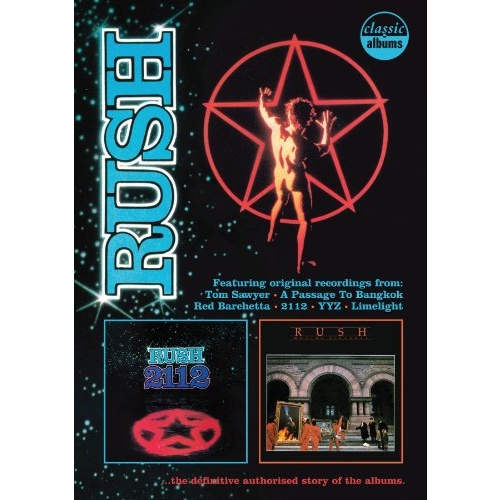
In the bonus features of the DVD for Rush: Beyond the Lighted Stage, we see (in addition to some awesome live footage of Rush in 1974 with original drummer John Rutsey) a fantastic live clip of Rush playing “La Villa Strangiato,” one of the best instrumentals around.

The camera angle focuses mainly on Alex Lifeson.  And man does he rock!

It’s common knowledge, even among Rush haters, that Geddy Lee and Neil Peart are (or at least were) always at the top of the list of “Best” bassist and drummer respectively.  And yup, they are pretty amazing.  But this has always left Alex in the shadows.

Admittedly, there are thousands of great, amazing, ear melting guitarists.  And, typically, the bassist and drummer are kind of dull, so it makes sense that Alex’s playing is in the shadows of the other two.  But I fear that he is often labelled as just not very good.

This video should totally prove that suggestion incorrect.  He plays quickly and with amazing accuracy, in a multitude of styles.

And speaking of the movie, I always wondered if their families minded that Alex and Geddy changed their names for the band (it’s never addressed in the film). It seems like a weird thing to have done circa 1974 in Canada, although Kiss did the same thing at the time in New York (removing the Jewishness of their names).  I just love the name Živojinović, and it’s a shame it’s not better known.  (Huh, although Wikipedia tells me that Lifeson is a sort of literal translation of Živojinović.  Who knew?)

[READ: July 29, 2010] “Grokking Rush”

Since Rush has been everywhere lately, I figured I’d mention this recent article in The Believer.  There’s nothing terribly new in the article.  In fact, it seems like something of an introduction to the uninitiated, giving a basic history of the band and their lyrical themes.

The only thing I didn’t know, which is teased out in the subtitle, was that so many academic papers have been written about the band. Dissertation titles include “Permanent Changes: Rush, Musicians’ Rock, and the Progressive Post-Counter-Culture” and “Grand Designs: A Musical, Social and Ethnographic Study of Rush.”  They have also been written about in The Journal of American and Comparative Cultures and Popular Music and Society.  And, they are the only band ever to be cited in the Journal of Ayn Rand Studies. (more…)

Read Full Post »

SOUNDTRACK: YOUNG RIVAL-“Got What You Need” (2009).

I was only able to hear this song once.  It’s surprisingly on available on the Young Rival playlist on CBC Radio 3).  Young Rival play a kind of fast, noisy punk and yet the melodies underneath the noise are very poppy.

I also played the track “Authentic” which is similar in style.  I found both songs very catchy, but have to admit that even a few minutes later I couldn’t recall them at all.  I’d say it’s perfect  for radio airplay.

[READ: June 14, 2010] “Say the Names”

This, indeed, is the quintessential Canadian story.  Every line in the piece is taken from a Canadian song, book or movie.  (I only learned that from the introduction to all of the stories. There’s nothing in the story to reveal that.  Although given its fractured nature and the very obviousness of some of the titles, it wouldn’t be too hard to figure out.]

It’s kind of fun to play “spot the lyrics” or what have you.  I knew some, but far fewer than I would have guessed.

As for the story itself, well, it’s a little disjointed. (more…)

Read Full Post »

« Newer Posts - Older Posts »