Feeds:
Posts
Comments

Archive for the ‘Rush’ Category

SOUNDTRACK: RUSH-Permanent Waves (1979).

When my friend Doug and I were hanging out back in the 80s, we both were getting into Rush at the same time.  And because this album was in black and white this was the last Rush LP we bought.  Imagine our surprise when it turned out to contain “The Spirit of Radio” one of the best hard rock anthems ever.

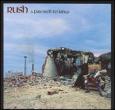
The cover art also featured a newspaper that read Dewey Defeats Truman.  But the band got in trouble for it from the Chicago Tribune!  I’ve never actually seen an actual cover with that headline (or the proposed fix: Dewei Defeats Truman).  Huh, thanks internet, here’s a picture of it.

The disc  also contains some (more) of my favorite Rush tracks.  “Freewill,” a fantastic “smart” song features some insane guitar and bass work in the middle sections.  And side one ends with “Jacob’s Ladder,” a 7 minute mini epic with precious few words that really evokes the simple concept of the sun’s rays bursting through clouds.  It’s surprisingly moving.

Side two features two more short tracks: Entre Nous suffers from side two syndrome: it would have been a hit if it was on side one.  While “Different Strings” is probably the last mellow song the band would write until the acoustic tracks on Snakes and Arrows.

For me, the best song is “Natural Science.”  A three-part mini 9 minute mini epic that features very cool lyrics, acoustic and electric guitar, a mid-song (short) drum solo and an incredibly intense heavy metal section.  And I have been really really psyched that they play this live again.

This disc marks an interesting transition from the prog rock heyday to the poppier commercial side that would soon arrive.  It’s a great mix of truly classic classic rock, real virtuoso performances and a couple of nice pretentious epics.  You’ll but it for Spirit of Radio, but you’ll get hooked by Natural Science.  “A quantum leap forward, in time and space….”

[READ: Week of March 29, 2010]  2666 [pg 565-633]

Before I start with the final week of the Crimes, I wanted to acknowledge everyone else who has been doing a great job in the endurance-o-rama that is the winter/spring 2666 online readathon.  I have been terribly remiss in mentioning (and even reading) as many of these posts as I would have liked (oh where does the time go).  But there’s some folks who have been doing a great job bringing up issues and suffering through The Part About the Crimes with me.

Obviously our friends at Bolanobolano are hosting this event and keeping wonderful track of details that I’m too exhausted to do myself.

And of course, the cohosts in Crimes, Infinite Zombies, are keeping tabs on all manner of thoughtful aspects of this book.

Steve, who I often read on IZ, also posts at his own site: A Solipsist’s 2666.

The Daily Snowman has been offering interesting thoughts, as well as a Paragraph of the Week (often from 2666).

Naptime Writing always offers thoughtful comments as well as a quote of the week.

Bleakonomy offers brief summaries and ideas, as well as non-2666 related thoughtful ideas.

Alone with Each Other offers that rarest of birds: someone who really likes The Part About the Crimes.

I haven’t been reading these blogs as much as I would have liked (and maybe someday I’ll post a comment to one of them long after we’ve all finished reading), but what I’ve read, I’ve appreciated.  So thanks for keeping me company out here.

And on to the last (and best) section of the Part About the Crimes.

I don’t know if the slow plodding death after death was like climbing a hill, but these last 68 pages were like speeding downhill with the top down.  So much was packed into it.  I was totally rejuvenated, thrilled to meet new (!) characters and totally unsurprised when the Part ended and absolutely nothing was resolved. (more…)

Read Full Post »

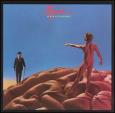
SOUNDTRACK: RUSH-Hemispheres (1978).

Or maybe this is my favorite Rush album.

And what’s not to like?  A naked man on the cover, a 20 minute song (in 6 parts (which is a sequel to a previous song!)), and a 9 minute instrumental.  It’s prog rock heaven.

The “title” track is a continuation of a song from the last album (and so is called Cygnus X-1 Book II; Hemispheres)).  It’s a thoughtful look at balancing the two halves of the brain: love and reason.  In true epic style, the forces are represented by Apollo, bringer of Wisdom and Dionysus, bringer of Love.  Apollo teaches the people how to fend and care for themselves.  They’re thrilled and delighted with themselves until they feel kind of empty inside.

Dionysus arrives: he teaches them love and music, dancing and drinking.  And they embrace this wholeheartedly.  But this leads to cold and starvation.

And so, as is natural, the people were split with the two sides coming forth [hey this sounds familiar].  And of course, they fight each other.

It gets a little confusing from there when the spaceship from Part 1 arrives and after telling his story of going through the black hole it unites the fighting forces (You can also hear musical snippets from Part 1).  And yet, musically it works wonders.  The epilogue is a peaceful, well-written acoustic bit that sums up the themes of the song quite nicely.

The second side has three tracks: “circumstances,” a short, heavy rocker that I have always loved.  I think the main reason is because each time they enter the chorus, Neil plays either 1, 2 or 3 cymbal crashes depending on which verse they’re in (math geek!).

The next song, “The Trees,” is another classic.  Starting quietly, with a classical style acoustic guitar, we learn that there is trouble in the forest.  As the song rocks to an end, the trees are all keep equal by hatchet, axe and saw.  Over the years I’ve thought of many different explanations for this song.  And to me that’s the mark of a good story.

The final song is probably my favorite Rush song.  “La Villa Strangiato” is a 9 minute instrumental with a dozen sections and is subtitled “An Exercise in Self-Indulgence.” It is a tour de force showcasing all their skills.  I was delighted that they had started playing it live again on their more recent tours.  And, I was even more delighted to see that the middle section featured Alex telling a ranting, random, crazy story.  Alex has always been very silly, but it hasn’t come out all that much musically. So, this was a great opportunity for him to let loose.  I have no idea what he was rambling about in any of his bits, but the snippets I’ve heard have all ben quite funny.

This was definitely the heyday of prog rock, and yes, it is sadly missed.

[READ:  March 28, 2010] “I.D.”

It’s been a little while since I’ve seen a Joyce Carol Oates story anywhere.  For a time, it seemed like I read one every few days.  So it’s nice to have her and her gruesome stories back.

This story focuses on a young girl, Lizette.  As the story opens we learn that she is feeling the effects of a beer buzz and it is making her 7th grade math class drag on.  (We later learn that she had about a quarter of a can of beer, but that’s still too much at 13)!

She is currently concentrating very hard on getting a napkin with her lipstick print to classmate, J.C.  J.C. has been left back and he is baaaad.  Lizette is wearing lipstick because her mother didn’t come home last night.  In fact, Lizette is not sure when her mom last came home.  It’s been a few days at least. But then, her mom has left her alone before, so she’s not terribly concerned. (more…)

Read Full Post »

SOUNDTRACK: RUSH-A Farewell to Kings (1977).

Although I recently said that Caress of Steel is one of my favorite Rush albums, I’m really torn between a number of their albums from the 1970s.  I’ve loved A Farewell to Kings since the time I got it: it’s over the top, and it showcases all of the band’s strengths.

The opener “A Farewell to Kings” features a wonderful classical guitar intro that morphs into a heavy rocking masterpiece.  There’s time changes galore and it’s all over in just about 5 minutes.

It’s followed by “Xanadu,” one of Rush’s all time great epics.  Tubular bells, cool guitar effects, Rush’s first great use of keyboards-as-effects, even a cowbell solo all open this song with sufficient grandeur for what’s to come.  A slow vocal intro leads to a super fast exploration of Coleridge’s “Kubla Khan.”  Whenever people wondered why Neil’s drumset was so big or why Alex (and Geddy) had doublenecked guitars, they needed only listen to this to be amazed that three men could play it all.  11 minutes long and not a wasted second.

One of Rush’s biggest hits and perennial favorite “Closer to the Heart” comes next and it still sounds pretty fresh all these years later.  “Cinderella Man” is an overlooked track on this disc, but it showcases Rush’s drift away from the individualism vs state of 2112, and move toward the individualism of doing what’s right for all: “he held up his riches to challenge the hungry.”  It also features a blistering solo from Alex.  “Madrigal” is a very short acoustic song, quite a departure for the time but a nice delicate track before….

“Cygnus X-1.”  The other epic on this disc.  And right from the start you know you’re in new territory here.  A fully distorted voice, bells echoing like they are floating at sea (or in outer space), all kinds of build-up lead to a noisy bass line coming from far away in the depths of space.  And after 2 and a half minutes of build up, the whole band kicks in with this off kilter heavy rocker.  It’s basically the story of a space ship flying into a black hole. It also features some of Geddy’s most screechy vocals.  I wish I could remember the exact quote, but my friend Joe’s bandmate had a wonderfully derogatory description of the end of this song.

But aside from the end, the main body is great.  From the 5 minute mark, the song is a catchy, driving song as the Rocinante flies through the galaxy.  From the 7 minute mark, the song is seemingly caught in the black hole, as the song drifts about, compressing the song into a manic session of fast fast fast riffs and Geddy’s tortured screams.  It’s pretty intense, and guaranteed to alienate as many people as it wins.

The album features so much experimentation, and it’s wonderful to see a band with so much creative energy release a disc with so many fantastic moments.  Very few records take risks like this anymore.

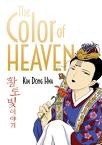
[READ: March 21, 2010] The Color of Heaven

This final book of the Kim Dog Hwa’s trilogy is a wonderful conclusion to this sweet story.  If you’ve read my previous two posts about these books, you know that this is the story of, Ehwa, a young woman as she matures in rural Korea several generations ago.  By this third book, she has turned 17 and has met the love of her life.  Sadly for her, Duksam has had to leave suddenly.  At the end of book two, he set sail in part because he was fleeing an angry mob, but also in an attempt to make money as a fisherman so that he can save up for his beloved Ehwa. (more…)

Read Full Post »

SOUNDTRACK: RUSH-Caress of Steel (1975).

Despite the fact that this album is largely considered a failure, it’s one of my favorite Rush albums.  There’s so much weirdness about it that I can see why it isn’t terribly popular but there’s so much goodness that it makes me a bit bummed that some glorious tracks are overlooked.

It opens with the one track people know from the disc: “Bastille Day,” a rough raw rocker that is heavy and really sets the tone for the first side of the disc. The heavy heavy riff is reminiscent of Black Sabbath and other early metal pioneers.  I also learned that they were touring with Kiss around this time, so maybe that’s where they got some of their heavy riff ideas from. I of course cannot imagine Rush and Kiss touring together.  That must have been a real trip.

The second song, the amusing “I Think I’m Going Bald” is rather obvious, especially the way he delivers the title line, but man the guitar solo just rocks and rocks and rocks.  “Lakeside Park,” a real location outside of Toronto is a gentle tribute to youth.   This quote amuses me no end, and is something I just read about.

The first real highlight for me is “The Necromancer,” a wacked out 12-minute mini epic.  It opens with a spoken word introduction, setting the tale of three travelers fording a river. The first part is pure psychedelia, with screaming guitars going from ear to ear.  The second part is heavy with a slow pounding riff and Geddy’s screamed vocals  It features a long headphone-happy guitar solo.  And just when you think it’s over, there’s some crazy sound effects and, yes more guitar soloing.

The third and final movement sees the return of By-Tor from “By-Tor and the Snow Dog.”  By-Tor is now a good guy and he scares off the Necromancer.  I always enjoyed playing this part on the guitar as the chord progression is really pretty.

Side Two is one song, a full side, their first proper epic. Called “The Fountain of Lamneth” it focuses on a man’s quest for this elusive Fountain.  It has six parts.  The first, “In the Valley” is a pretty, acoustic ballad that expands into a loud rocker.  It introduces our anonymous narrator, and by the end its sets the tone with a loud/quiet explanation of his satisfaction and dissatisfaction with his life.

It’s followed by the insane “Didacts and Narpets” (Teachers and Parents (anagram on Narpets).  It’s just drums and shouting.  Evidently it’s designed to show a young man fighting with teachers and parents, and sure why not.  It’s pretty out there, but it’s only 90 seconds long.  (I’ve always enjoyed it).

The middle sections are really quite mellow.  More of that beautiful classical guitar that Alex does so well.  The songs don’t remain mellow the whole time, with “No One at The Bridge” adding some loud aggressive bits.  But “Panacea” stays quite mellow, with some beautiful guitar harmonics.  The next bit, “Bacchus Plateau” is a really pretty song despite its ultimately downer message, and probably could have been a hit if tit weren’t part of  20 minute song..

The song ends with him finding the fountain.  And yet rather than rejoice, he’s exhausted.  But I’ve always enjoyed the “message” of the song: “Life is just a candle but the dream must give it flame.”  It’s inspirational and depressing at the same time.  It ends with a reprise of the opening acoustic bit. It’s a tidy song and a wonderful first attempt at an epic track.

The only reason I’m surprised this didn’t sell well is that it works so well as a trippy 70s disc, ideal for sitting around with headphones on in one of those round chairs.  I assume its the heaviness that turned away fans of Pink Floyd and the like.  And, well, probably the downer message and really weird title of the disc (what does Caress of Steel mean anyhow?) might have had something to do with it.

[READ: March 10, 2010] Rush, Rock Music and the Middle Class

I read about this book in an article from The Walrus. And I thought to myself, it’s geeky enough to love Rush, but how about reading an academic treatise about Rush? I’m so there.

Well, I haven’t really read a truly academic (as in published by a University Press) book in a while, but it didn’t take too long to get back in the swing of things.  Plus, if I may be so bold, ethnomusicology seems like a lot more fun than philosophy.

As the subtitle implies, this book looks at Rush as music for the middle class.  The only thing I had a hard time with the book was the definition of middle class.  It is specifically aimed at a U.S./Canadian middle class (although the UK does enter into it too), and with all of the definitions thrown around, middle class seems very broad.  The easiest breakdown to see was based on employment and the most prominent type of employment among Rush fans was “professional” (including librarians and IT people).  So, evidently I am middle class.  I only say this because for the most part classes are hidden in the US (they aren’t, of course, but there are many attempts to try to keep them hidden).

This concept of class obviously pervades the entire book.  But before we get too hung up on that, we must not forget that the real focus of the book: the music of Rush. (more…)

Read Full Post »

SOUNDTRACK: BLUE ÖYSTER CULT-compilations and live releases (1978-2010).

For a band that had basically two hits (“Don’t Fear the Reaper” and “Burnin’ for You”) and maybe a half a dozen other songs that people might have heard of, BOC has an astonishing number of “greatest hits” collections.

Starting in 1987 we got Career of Evil: The Metal Years (1987), Don’t Fear the Reaper (1989), On Flame with Rock n’ Roll (1990), Cult Classic (which is actually the band re-recording their old tracks (!)) (1994), and the two cd collection Workshop of the Telescopes (1995).  There’s even Singles Collection, (2005) which is a collection of their European singles & Bsides.

This doesn’t include any of the “budget price” collections: E.T.I. Revisited, Tattoo Vampire, Super Hits, Then and Now, The Essential, Are You Ready To Rock?, Shooting Shark, Best of, and the 2010 release: Playlist: The Very Best of).

The lesson is that you evidently won’t lose money making a BOC collection.

I don’t know that any of these collections are any better than the others.

The 2 CD one is for completists, but for the most part you’re going to get the same basic tracks on all of them.

And, although none of them have “Monsters” for the average person looking for some BOC, any disc is a good one.

Regardless of the number of hits they had, BOC was tremendous live.  And, as a result, there have also been a ton of live records released.  Initially the band (like Rush) released a live album after every three studio albums. On Your Feet or On Your Knees (1975) Some Enchanted Evening (1978) and Extraterrestrial Live (1982) were the “real releases.”

Then, in 1994 we got Live 1976 as both CD and DVD (which spares us nothing, including Eric Bloom’s lengthy harangue about the unfairness of…the speed limit).  It’s the most raw and unpolished on live sets.  2002 saw the release of A Long Day’s Night, a recording of a 2002 concert (also on DVD) which had Eric Bloom, Buck Dharma an Allan Lanier reunited.

They also have a number of might-be real live releases (fans debate the legitimacy of many of these).  Picking a concert disc is tough if only because it depends on the era you like.  ETLive is regarded as the best “real” live disc, although the reissued double disc set of Some Enchanted Evening is hard to pass up.  Likewise, the 2002 recording is a good overview of their career, and includes some of their more recent work.

If you consider live albums best of’s (which many people do) I think it’s far to say that BOC has more best of’s than original discs.  Fascinating.  Many BOC fans believe that if they buy all the best of discs, it will convince Columbia to finally reissue the rest of the original discs (and there are a number of worthy contenders!) in deluxe packages.  I don’t know if it will work, but I applaud the effort.

[READ: October 2009-February 2010] State By State

This is a big book. And, since it’s a collection essays, it’s not really the kind of big book that you read straight through.  It’s a perfect dip in book.  And that’s why it took me so long to get through.

I would love to spend a huge amount of time devoting a post to each essay in the book.  But, well, there’s 51 (including D.C.) and quite a few of them I read so long ago I couldn’t say anything meaningful about.  But I will summarize or at least give a sentence about each essay, because they’re all so different.

I’ll also say that I read the Introduction and Preface last (which may have been a mistake, but whatever).  The Preface reveals that what I took to be a flaw in the book was actually intentional.  But let me back up and set up the book better.

The catalyst for the book is the WPA American Guide Series and sort of Steinbeck’s Travels with Charley.  The WPA Guides were written in the 1930s as part of the Works Progress Administration.  48 guide books were written, one for each state.  Some famous writers wrote the books, but they were ultimately edited (and many say watered down) by a committee.  I haven’t read any of them, but am quite interested in them (and am looking to get the New Jersey one).  Each guide was multiple hundreds of pages (the New Jersey one is over 800).

State By State is written in the spirit of that series, except the whole book is 500 pages (which is about 10 pages per state, give or take).  And, once again, famous writers were asked to contribute (no committee edited this book, though).  I’ve included the entire list of authors at the end of the post, for quick access.

So I started the book with New Jersey, of course.  I didn’t realize who Anthony Bourdain was until I looked him up in the contributor’s list (I’m sure he is thrilled to hear that).  And his contribution was simultaneously exciting and disappointing,.  Exciting because he and I had quite similar upbringings: he grew up in North Jersey (although in the wealitheir county next to mine) and had similar (although, again, more wealthy) experiences. The disappointing thing for me was that Bourdain fled the state  for New York City (and, as I now know, untold wealth and fame (except by me))  I felt that his fleeing the state, while something many people aspire to, is not really representative of the residents of the state as a whole.

And that dissatisfaction is what I thought of as the flaw of the book (until I read the Preface).  In the Preface, Matt Weiland explains that they asked all different authors to write about states.  They asked some natives, they asked some moved-ins, they asked some temporary residents and they asked a couple of people to go to a state for the first time.  In reality, this decision makes for a very diverse and highly entertaining reading.  In my idealized world, I feel like it’s disingenuous to have people who just stop in to give their impression of an area.  But hey, that’s not the kind of book they wanted to compile, and I did enjoy what they gave us, so idealism be damned.

For most of the book, whenever I read an essay by someone who wasn’t a native or a resident of a state, I assumed that there weren’t any famous writers from that state.  I’ve no idea if that played into anything or not.  From what I gather, they had a list of authors, and a list of states (I was delighted to read that three people wanted to write about New Jersey-if the other two writers ever decided to put 1,000 words  to paper, I’d love to read them (hey editors, how about State by State Bonus Features online, including any extra essays that people may have wanted to write).

From New Jersey, I proceeded alphabetically.  And, I have to say that I’m a little glad I did.  I say this because the first few states in the book come across as rather negative and kind of unpleasant.  Alabama (written by George Packer) comes across as downtrodden, like a place you’d really have to love to live there.  Even Alaska, which ended up being a very cool story, felt like a veil of oppression resided over the state (or at  least the part of the state that Paul Greenberg wrote bout.)  But what I liked about this essay and the book in general was that the authors often focused on unexpected or little known aspects of each state.  So the Alaska essay focused on Native fisherman and the salmon industry.  Obviously it doesn’t do justice to the rest of that enormous state,  but that’s not what the book is about.

The book is meant to be a personal account of the author’s experiences in the state. (more…)

Read Full Post »
SOUNDTRACK: RUSH, obviously (1974-present).

I’ve loved Rush since seventh grade.  They introduced me to prog rock, Canadian accents, Lakeside Park and Ayn Rand.  They taught me how to play killer bass lines, wild guitar solos and to ponder the existence of washing machines on stage.

[READ: March 5, 2010] “Living on a Lighted Stage”

I don’t often write about non-fiction pieces in magazines, but because this one is about Rush, it seemed necessary to bring it up.

The rather humorous subtitle of the piece sets the tone here. Rush has been together since 1974.  They’ve been taken seriously by musicians and die-hard fans, but aside from that, the average person likes “Tom Sawyer” and that’s about it.

This article notes that Rush is appearing more and more in unexpectedly public places (to both the delight and consternation of fans).  From the Colbert Report (their first time on American TV in 30-some years), to appearances is movies, including appearing as themselves playing live in I Love You, Man.

In addition to all of this there are two new works that are designed to really delve into the history of Rush. One is a new book, an academic treatise that I am sure I never would have heard about if it weren’t for this article, called Rush, Rock Music and the Middle Class: Dreaming in Middletown by Chris McDonald (which I just received and hope to start reading shortly).  And, there’s also a new documentary coming out (possibly in the Spring) tentatively called: Rush A Documentary.

And finally, a new film coming out has Alex Lifeson (as well as about 100 other musicians) in a cameo (he plays a border guard). It’s called Suck, and you can see the trailer (which has Lifeson in it) at Rushisaband.com.

I can’t possibly explain the recent influx of Rush (“Tom Sawyer” even played a major plot point on Chuck not too long ago) except to suggest that maybe all the die-hard Rush fans have grown up and gotten jobs in some kind of prominence.

Some Rush fans bristle at the idea of the guys selling out (yeah, right) or, heaven forbid, having fun.  They’ve always had a silly side (read the liner notes, look at Geddy wearing a Devo pin in the late 80s), and it’s nice to see them showing that side off a bit.  And the thing is, none of this attention is going to make “Cygnus X-1” any more popular than it is.  But if it gets some new people into prog rock, well, where’s the harm in that?

I won’t be first in line when the documentary comes out, but I’ll certainly watch it!

This article is available here.

Read Full Post »

I’m continuing to move all of the old TV Posts from my TV Tab to individual posts. So here’s some thoughts from the 2008 TV season.  There were some updates midway through on this one, but I’ll add some updated thoughts as necessary.

With the Fall 2008 Lineup mostly underway, I’m listing the shows that we are giving a chance this year.  There are some new ones, but mostly its a continuation of last year: (more…)

Read Full Post »

SOUNDTRACK: BARENAKED LADIES-Snacktime (2008).

The Barenaked Ladies have always been like naughty kids.  So, it seems almost too obvious for them to make a kids’ album.  But almost as if they want to continue being naughty, this kids album is quite smart, not just a collection of cute kids songs.

There’s a wild mix of very specifically kiddie-aimed tracks and other amusing pop cultural commentary (or jokes from kiddies past).  For instance, the opening track “789” plays on the wonderful joke of why was 6 afraid of 7.

There’s also a lot of the more delicate sounding BNL songs that came to dominate their later albums: “Pollywog in a Bog” is a cute upbeat little ditty, “Here Come the Geese” is a pretty typical Kevin Hearn track (even his adult songs sound like children’s songs).

But I think the highlight comes from when Ed Robertson and Steven Page join forces.  Robertson is the king of the goofy guys and Steven Page’s songs are always wonderful, but typically less silly.  So “I Don’t Like” is a serious look at things we don’t like (salmon, heights), while the fantastic “Crazy ABCs” is a funny and clever look at words that start with silent letters: “D is for djinn E is for Euphrates F is for Fohn etc.”

I also enjoy Roberston’s solo songs like “There’s a Word for That.”  Robertson is clearly a fan of wordplay, and this song highlights that: “There’s a word for that…little dented skin between my upper lip and nose.”

My favorite song of the disc is “The Canadian Snacktime Trilogy.”  All kinds of famous (and non famous) people tell us what their favorite snacks are.  The contributors are listed here, and they include: Geddy Lee, barbecue potato chips; Lyle Lovett, watermelon; Martin Tielli, olives; Gordon Downie, peanut butter & crackers; “Weird Al” Yankovic, honey roasted peanuts and Gordon Lightfoot, pasta.  What fun!

It’s an overall enjoyable album for kids, full of mostly hyper songs and sounds quite a lot like a typical BNL effort.

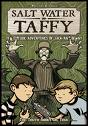
[READ:February 27, 2010] Salt Water Taffy: The Truth About Dr. True

I have yet to mention the website for this series.  So, now I’m mentioning it, and I’m also mentioning Matt Loux’s page too.  It’s a great resource for all of the books and has many sample images and pages.

I adore this children’s graphic novel series.  Each story adds amazing depth to this seemingly quaint seaside town.  Eleven year-old Jack and 8-year-old Benny are on vacation at a boring seaside town.  But mysterious things are always coming up when the kids go snooping.

In this case Benny uncovers an ancient (empty) bottle of Dr. True’s magic elixir.  (I love that Jack sneers at Benny for digging in a garbage pile, when he would have really loved to be digging in it, too).  Dr True is the ancestor of True’s Taffy shop.

While this history of the island is unfolding, we also hear the history of another famous island resident: Captain Holister.  The captain is Chowder Bay’s real hero, with a statue of him erected in the town square and everything.  The boys’ favorite new friend, fisherman Angus is directly related to him.  (more…)

Read Full Post »

SOUNDTRACK:CBC Radio 3

I listened to CBC Radio 3 briefly when I had Sirius Radio, but I just learned that I could listen streaming online.  In addition to playing (as they say) Independent Canadian Music, they also have a really multifunctional website where you can input any band’s name, read about them and listen to bands’ tracks.  And of course, you can also listen to their live streaming station as it happens (you can even play recently played and even upcoming songs).

Since it’s a CBC station there are no commercials.  And since they are from the CBC they focus exclusively on Canadian bands.  I’m not sure how literally to take the Independent part; however, they don’t include Neil Young, Rush or The Tragically Hip.  But you can get City And Colour (and even AlexisonFire) and even Vancouver’s own 3 Inches of Blood!.

So let’s say you want to hear some tracks from Metric, a band you’ve heard good things about.  Type in their name, get to their page, and play away.  As far as I can tell, the band uploads songs and videos for you to stream.  And, unlike other streaming sites, you can listen to the same tracks multiple times.

If you like your music Canadian and independent, this is the place to be.  Check it out!

[READ: January 29, 2010] Festering Romance

Recently I complained that the Oni graphic novel Wet Moon had the worst title I have ever heard.  And then I found out that “wet moon” is actually an astronomical phenomenon, and I retracted that complaint.  Regardless, this graphic novel now replaces that one as the single worst title in the history of books.  Festering Romance?  Surely not.

Merriam Webster gives us this: 1. To generate pus  2. Putrefy, rot  3. To cause increasing poisoning, irritation, bitterness.

So, okay, the 3rd definition might work, but you have to overlook those first two really radically inappropriate definitions first. (And if you’re afraid to read a book with that title, rest assured, there is no festering pus of any kind in the book).

This terrible title does a huge disservice to what is a really, really great comic, and apparently the first self penned releases by Renee Lott. The artwork is fantastic (more on that in a moment) and the plot was really moving.  I enjoyed it enough to have already passed it along to someone else. (more…)

Read Full Post »

socSOUNDTRACK: TINDERSTICKS-The Hungry Saw [CST055] (2008).

hungryIt was the releases of this Tindersticks disc (their first in 5 years) on the venerable Constellation Records (in North America) that inspired my trip through their back catalog. I was completely surprised to see them released on Constellation, as the band doesn’t exactly fit with the label’s stereotypical style (although, realistically with the last dozen or so releases, Constellation has really expanded the kind of music they release).

And this is a fantastic Tindersticks release!  There’s not a bad song on the disc. And, even though nothing is as immediately gripping as say “Can We Start Again,” the disc contains some of the band’s strongest songs.  “The Hungry Saw” is simply amazing, both lyrically and in its catchy (yet creepy) chorus.  But the highlight is probably “Boobar, Come Back to Me,” a song that begins slowly and builds gloriously, including a call and response segment that makes this song really swagger.

“Mother Dear” features a strangely comical musical episode.  In an otherwise very mellow piano based track, right in the middle of the song, come slashing, somewhat atonal guitar chords.  It’s as if a more rocking song is trying to overtake the mellow track.  (The coup is rebuffed, though).

The biggest thing to note about the disc is that longtime co-songwriter Dickon has left the band.  And so, some of the co-writing duties have been taken up by David Boulter.  While it is obviously sad that Dickon has left, Staples seems revitalized on this disc, and Boulter’s additions (especially his quirky instrumentals) bring a new point of view to the proceedings.  Also of note is something of a return to the orchestral style (albeit a much more understated version).  However, different songs emphasize different aspects: horns on one, strings on another, but always underscored by the ubiquitous Hammond organ.

It’s not a radical departure or anything like that.  It’s more of a continuation after a well earned vacation.  And it’s certainly their strongest release since their first four.

[READ & WATCHED: October 2009] Souvenir of Canada, Souvenir of Canada 2 & Souvenir of Canada (the movie)

I got the first Souvenir of Canada when it came out.  (I was on a big Coupland kick and may have even bought it in Montreal).  I didn’t get #2 when it came out, probably because I didn’t really invest a lot of effort into the first one.  But after recently reading City of Glass, I wanted to get a little more involved in Coupland’s visual art.  So, I picked up #2 and, while investigating this second book, I discovered that he had made a film of the books, too.

Coupland explains in the introduction that this book is his personal vision of what Canada is like. It is designed for Canadians as something of a nostalgia trip, but it is also something of an introduction to unseen Canada for non-Canadians.  And so, what you don’t get is pictures of mounties and Tim Hortons and other things that fit the stereotypical Canadian bill. Rather, you get things that are significant to Coupland (and maybe the average Canadian born on the West Coast in the 60s). (more…)

Read Full Post »

« Newer Posts - Older Posts »