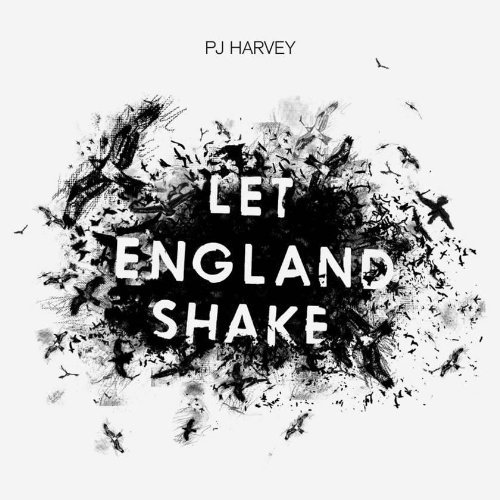
 SOUNDTRACK: PJ HARVEY-Let England Shake (2011).
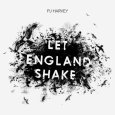 I’ve listened to this disc several times online; I have no details about the recording. There’s samples, but I don’t know what they are and I can’t really tell what all the lyrics are (it’s obvious she’s pretty angry, but the details are lost to me).
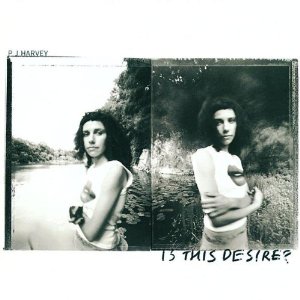
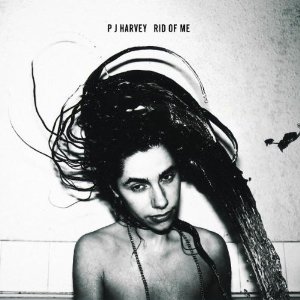
The first question for me on hearing this disc is what happened to PJ Harvey’s voice? It comes as such a shock when you compare it to Dry. But once I accepted that this is not the PJ Harvey of Rid of Me, I listened to it as a new artist and I really like it. But it’s a weird record to be sure.
The title track is played on an autoharp (!). In fact the autoharp is a dominant instrument here. It’s got a cool melody and, once you accept that she sounds like the singer from Rasputina, you can really appreciate what’s going on.
The second track, “The Last Living Rose,” returns somewhat to the PJ of old (the opening “God damn” sounds like she’s about to bust out some good-ol’ invective). And there are guitars, but the music is upbeat (as are the vocal melodies) and there’s even a horn! “The Glorious Land” has samples from the cavalry (I can see the horses riding across the plains) and a cool, slinky guitar (or is that the autoharp?). There’s male vocals in the middle of the song, and it makes for disconcerting harmonizing (especially when PJ,’s voice ratchets up the weirdness and sounds more like Kate Bush). But musically this song is great, it’s got a wonderful 80’s alt-rock feel.
“The Words That Maketh Murder” also has horns and some interesting male vocals chanting the lyrics. This has one of the least subtle lyrics I’ve heard in a long time, although the re-imagining of the “Summertime Blues” refrain is pretty genius.
“All and Everyone” opens with more autoharp, and I think I’m realizing that the autoharp is what I think of as the interesting guitar sound (this song opens like a Smiths’ ballad.) There’s more horns on this track which adds a weird dimension of sadness to it. “On Battleship Hill” is a fast but delicate track in which PJ pulls out an astonishing falsetto–completely unexpected. After the first verses, the rest of the song has, again, a kind of slinky 60s vibe. “England” brings out the Kate Bush voice in PJ again. This is a very delicate song, the music is mixed so low in the background that it feels like acapella–I guess Harvey has grown much more confident in her voiuce. The music builds and builds though and there’s an unexpected middle eastern sounding vocal in the background.
“In the Dark Places” brings out Harvey’s guitar (in this case the Harvey is Mick Harvey, I believe) and her lower register vocals. While “Bitter Branches” is probably the loudest song on the disc, with a bunch of screamed vocals. It’s rather startling considering the rest of the disc, but it’s nice to know just how much fire PJ still has.
“Hanging in the Wire” is another delicate song, with quiet pianos and Harvey’s sedate voice. “Written on the Forehead” returns to that middle eastern vibe (“people throwing dinars at the belly dancers”) and that Kate Bush vocal–the backing vocals remind me of Peter Gabriel. The album ends with “The Colour of the Earth.” It’s the most disconcerting song of the bunch becuase it opens with a male singer (John Parrish?) singing what sounds like an old trad song (the melody is very traditional). Then PJ joins in and makes the song her own.
It’s obvious that the lyrics are the main aspect of this disc, and I know that I’m missing something by not having them. I’m also missing a lot by not knowing all that much about England’s history. It sounds like she has a lot of gripes with Eng-a-lund, and I’m curious to know what she’s on about. But more than that, I’m totally hooked by the music. It’s a great reinvention of a great artist.
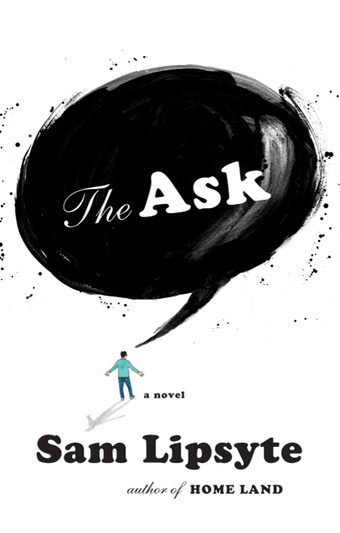
[READ: February 9, 2011] The Ask
I was planning to read nothing except books from the pile by my bed for the foreseeable future. And then, as if calling to me, I saw this book, which I was planning to read eventually, on a display right in front of me called Booklist Editor’s Choice (a new display for our library). I stared at it for three hours and just had to check it out.
And I’m glad I did. For the most part I really enjoyed this book, it was quite funny and the main character, kind of a schlub, was completely relatable. I say for the most part because I felt like it dragged a bit about 2/3 of the way through (more on that later). But its possible that it dragged because the first half of the book was just fantastic–fast paced and clever with lots of wonderfully funny lines (more on that later too). And a setting that I found very entertaining.
The story is about Milo Burke. He is married to Maura and they have a going-on-four-year-old boy Bernie who is nothing if not precocious. The titular ask concerns Bernie’s job. He works for a small arts college in New York (which he called Mediocre University). His job is to basically ask (hence the title) rich people for money for the college. We see him in his office as the book opens and we meet the rest of the staff: the surprisingly unslacker slacker Hubert (with whom Milo shares space and ribald jokes…this section is the funniest; many paragraphs end with sentences that hilariously undermine what he just described.
We often called it, with what we considered a certain amount of panache, the Mediocre University at NewYork City. By we, I mean Horace and I. By often, I mean once (4).
His supervisor is Vargina. (This name, which is obviously over the top and childish and which I absolutely laughed at and then felt was maybe too easy of a laugh, has a great origin story and is really never not funny no matter how often you see it). Milo has obscene fantasies about Vargina, but he is a (somewhat) happily married man and would not cheat on his wife.
He’s not very good at his job, but the other askers do alright so his job is safe. Until, that is, he insults the daughter of one of the university’s biggest donors and he is summarily let go, without severance. And then we get to see a lot about his home life. (more…)
Read Full Post »
 SOUNDTRACK: BASIA BULAT-“In the Night” (2008).
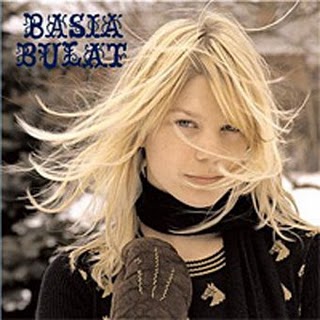 I recently came across Basia Bulat via NPR. She played a Tiny Desk concert and I discovered that she had several other entries in the NPR canon.
















 I Just Read About That...