Feeds:
Posts
Comments

Archive for the ‘Negativland’ Category

may20014SOUNDTRACK: EXHAUST-Enregistreur [CST021] (2002).
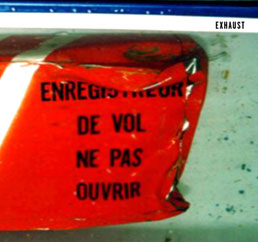
exhaust2While Exhaust’s debut was a mixed affair, their follow up really showed some great improvement.  The band feels more unified, there aren’t any single songs that were remixed (which stand out in a bad way), rather the remixing was done throughout the songs.  And, best of all there’s a lot more of that spooky bass clarinet.

The album feels more organic, “Gauss” opens with waves of music setting a mood until about a minute into track 2 “Behind The Water Tower” when the drums kick in the atmospherics gains urgency. “Voiceboxed” has a feeling of contemporary Portsihead which is neat from an album that came out almost a decade earlier.  This one has some samples of commercials , but they’re a little low in the mix so its hard to make them out. Although the spoken word part that swirls around your head is very cool and a little startling. (Headphones are a must for this album). There’s also a funny standup routine (yes, in the middle of the song)—wonder who it is.

“Ice Storm” opens with a sampled piano & a lot of static.  It morphs into a lengthy play/commercial/PSA by Heathrow Wimbledon and is called “The Maternal Habitat.”  I can’t find anything else about it online.  It’s rather fun to listen to, although when the skit is done, the music becomes strangely slow and the last two minutes (of 9) go on too long.  It bleeds into “Dither” which is mostly sampled voices and more commercials.  I love this Negativland kind of pastiche

“Behind the Paint Factory” mirrors “Water Tower” in that the drums kick in after 2 minutes and the song sounds great.  “My Country is Winter” is mostly tape manipulations including a screaming guitar solo that runs around your head.  “Silence Sur la Plateau” returns to that sort of ominous Portishead vibe with the sound of loud crinkling plastic as its main “music.”  There’ also a lengthy silence in the track which seems rather pointless to me.  The album ends much like it began with “Degauss” which is mostly clarinet solo and atmospheric sounds

It’s much better than their debut but still feels like they could have made a tighter album if they’d gotten rid of some (but not all) of the nonsense.

[READ: December 1, 2012] “The There There”

I have enjoyed Nelson’s stories in the past, and I feel like it’s time to find a collection of hers (and I see she has a lot, too).

What I especially enjoyed about this one was the way the title was used in the story and also the way it encompassed the main character in a way that was unrelated to the way it was used in the story.  In the first instance, the family is on vacation and they overhear some tourists asking “Where the hell are we?” while standing in front of the Colosseum.  The son explains that’s “like not seeing the Grand Canyon until you fell in it, like it’s the there there.”

The story is about a family–a mother, a father, and two sons.   It opens with the sons and the mother discussing the perfect murder.  The husband disapproves of the discussion but only indicates this with a cleared throat.  We see that Caroline, the mother, was imagining her husband when she was describing her murder.

While the story is basically about the mother (although told in third person), it flits back and forth to the other family members and how their behavior affects her.  First we see that their oldest son, having gone off to college, has fallen in love with his landlady–a woman with children older than him.  Caroline is appalled at this especially when Drew reveals that she’s not all that pretty, that he would have chosen one of those daughters. (more…)

Read Full Post »

lynchSOUNDTRACK: Deconstructing Beck (1998).

decon  Back in 1998, Illegal Art made (small) headlines by releasing this collection of songs that were comprised exclusively of Beck samples, none of which were cleared by Beck.  The whole thing was, well, illegal.  Naturally, there was a lawsuit, but Illegal Art is still around, and so is Beck, so who knows where this went.

I’ve always appreciated Illegal Art and the whole pastiche style best represented by Negativland and Plunderphonics.  And I believe the point of this CD was quite valid–you shouldn’t be allowed to sample artists simply because you have lots of money.  Since Beck’s label could afford to pay people, he was allowed to sample them.  Whereas small time and unknown artists could never afford to sample someone.  So, how is that fair or even a good way to create art?

So Deconstructing Beck seems like an awesome idea.  Beck in 1998 (just after the huge success of Odelay!) was known for his sampling.  So why not sample him?

But here’s where the theory is better than the practice.  Most of the artists on the disc aren’t making music, they’re making art or a point.  So they cut and paste Beck’s sounds into what is mostly 3-4 minutes of unrecognizable chunks.  Unrecognizable as Beck, unrecognizable as music.  Some of them reduce the sounds to essentially a drum beat.  Others have taking snips and sounds and have pasted them together in a very jarring way–which is kind of the point of a lot of this style of music.

Occasionally Beck songs are actually recognizable in the noise.  You can hear “Where It’s At,” a bit of Devil’s Haircut,” the obligatory “Loser” cut, “Jack-Ass” which in track two is played basically in its entirety but has the sound randomly dropped out, and for some reason, “Readymade” is in two songs. Some of the samplers go all the way back to Soulmanure and One Foot, but mostly they grab the spoken tracks–Beck as a young boy and the old man Ken–and they just sample them in chunks, not really manipulating them at all.

Aside from the general unlistenableness of the disc (and clearly it’s not really meant to be easy listening), it’s really disappointing that they were given the task of deconstructing Beck and in at least 5 of the songs you would never even know that it was Beck that was sampled in the first place.  What’s the point?  I realize that in 1998, technology wasn’t as easy to use as it is now, but I understand that these were made on a Mac, not with tape.  Not to mention at least two or three make songs that are actually interesting to listen to.  So, worthy cause or not, Deconstructing Beck is disappointing and isn’t likely to convince anyone.

[READ: March 15, 2014] Naming

Like Deconstructing Beck, I really wanted to like this book.  It is a collection of art by director David Lynch.  Lynch has been making static art for years.  I have another book of his called Images which is mostly photographs.

The premise behind this collection is Lynch’s use of words in his art.  So for instance the cover drawing is of a very simple house with the words “modern house” at the bottom.

Every picture in this collection has words in it, either written by Lynch or included in the photograph.  And they date back as old as 1979 . (more…)

Read Full Post »

SOUNDTRACK: OKX: A Tribute to Ok Computer (2010).

OK Computer is one of the best records of the 90s.  Every time I listen to it I hear something new and interesting.  So, why on earth would anyone want to cover the whole thing?  And how could you possibly do justice to this multi-layered masterpiece?

I can’t answer the first question, but the second question is more or less answered by this tribute which was orchestrated by Stereogum.

The answer is by stripping down the music to its bare essentials.  When I first listened to the songs I was really puzzled by how you could take a such a complex album and make Doveman’s version of “Airbag,” which is sort of drums and pianos.  Or gosh, where would you even begin to tackle “Paranoid Android?”  Well Slaraffenland create a bizarre symphonic version that excises many things–in fact half of the lyrics are missing–and yet keeps elements that touch on the original.  But it’s an interesting version of the song and shows  a bizarre sense of creativity.  And that is more or less what this tribute does–it makes new versions of these songs.

Mobius Band make a kind of Police-sounding version of “Subterranean Homesick Alien.”  Again, it radically changes the song, making it a fast and driving song (although I don’t care for the repeated “Uptights” and “Outsides” during the verses).

Vampire Weekend, one of the few bands that I actually knew in this collection (and whom I really like) do a very interesting, stripped down version of “Exit Music, for a Film.  The “film” they make is a haunted one, with eerie keyboards.  Again, it is clearly that song, but it sounds very different (and quite different from what Vampire Weekend usually sound like).

“Let Down” (by David Bazan’s Black Cloud) and “Karma Police” (by John Vanderslice) work on a similar principle: more vocals and less music.  The music is very stripped down, but the vocals harmonize interestingly.  Perhaps the only track that is more interesting than the original is “Fitter Happier” by Samson Delonga.  The original is a processed computer voice, but this version is a real person, intoning the directives in a fun, impassioned way.  There’s also good sound effects.

Cold War Kids take the riotous “Electioneering” and simplify it, with drums and vocals only to start.  It’s hard to listen to this song without the utter noise of the original.  “Climbing Up the Walls” is one of the more manic songs on this collection, with some interesting vocals from The Twilight Sad.

There are two versions of “No Surprises” in this collection.  Interestingly, they are both by women-fronted bands, and both treat the song as a very delicate ballad.  Both versions are rather successful.  Marissa Nadler’s version (the one included in sequence) is a little slower and more yearning, while Northern State’s version (which is listed as a B-Side) is a little fuller and I think better for it.  My Brightest Diamond cover “Lucky.”  They do an interesting orchestral version–very spooky.

Flash Hawk Parlor Ensemble (a side project of Chris Funk from The Decemberists) do a very weird electronic version of the song (with almost no lyrics).  It’s very processed and rather creepy (and the accompanying notes make it even more intriguing when you know what’s he doing).

The final B-side is “Polyethylene (Part 1 & 2),”  It’s a track from the Airbag single and it’s done by Chris Walla.  I don’t know this song very well (since it’s not on OK Computer), but it’s a weird one, that’s for sure.  This version is probably the most traditional sounding song of this collection: full guitars, normal sounding drums and only a slightly clipped singing voice (I don’t know what Walla normally sounds like).

So, In many ways this is a successful tribute album.  Nobody tries to duplicate the original and really no one tries to out-do it either.  These are all new versions taking aspects of the songs and running with them.  Obviously, I like the original better, but these are interesting covers.

[READ: November 5, 2011]  McSweeney’s #8

I had been reading all of the McSweeney’s issue starting from the beginning, but I had to take a breather.  I just resumed (and I have about ten left to go before I’ve read all of them).  This issue feels, retroactively like the final issue before McSweeney’s changed–one is tempted to say it has something to do with September 11th, but again, this is all retroactive speculation.  Of course, the introduction states that most of the work on this Issue was done between April and June of 2001, so  even though the publication date is 2002, it does stand as a pre 9/11 document.

But this issue is a wild creation–full of hoaxes and fakery and discussions of hoaxes and fakery but also with some seriousness thrown in–which makes for a fairly confusing issue and one that is rife with a kind of insider humor.

But there’s also a lot of non-fiction and interviews.  (The Believer’s first issue came out in March 2003, so it seems like maybe this was the last time they wanted to really inundate their books with anything other than fiction (Issue #9 has some non-fiction, but it’s by fiction writers).

This issue was also guest edited by Paul Maliszewski.  He offers a brief(ish) note to open the book, talking about his editing process and selection and about his black polydactyl cat.  Then he mentions finding a coupon in the phonebook for a painting class  which advertised “Learn to Paint Like the Old Masters” and he wonders which Old Masters people ask to be able to paint like–and there’s a fun little internal monologue about that.

The introduction then goes on to list the 100 stores that are the best places to find McSweeney’s.  There are many stores that I have heard of (I wonder what percentage still exist).  Sadly none were in New Jersey.

This issue also features lots of little cartoons from Marcel Dzama, of Canada. (more…)

Read Full Post »

SOUNDTRACK: THE RESIDENTS-Meet the Residents plus Santa Dog EP (1973/1972).

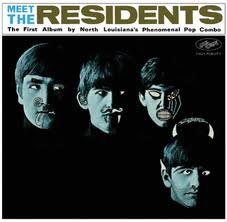
Like a proto- Negativland meets Primus, The Residents took the world by storm in 1973.  Their debut album (pictured here) bore the unmistakable tagline: The First Album by North Louisiana’s Phenomenal Pop Combo.  And so it is.

Read more about the album in the Jon Savage essay below.

“Boots” is a sampled and remashed version of “These Boots Are Made for Walking.”  “Gylum Bardot” sounds like a Primus demo.  “Breath and Length” is noise and noise and effects and a soothing female vocal singing the title.   “Consuelo’s Departure” is a noisy soundtrack to nothing and “Smelly Tongues” sounds like a hammered dulcimer with a menacing bassline behind it until the vocals come in: “Smelly tongues looked just as they felt”.   And all 6 of these songs last less than ten minutes total.

“Rest Aria” changes tempo of things.  It’s five minutes long.  It starts as a simple piano track (slightly out of tune) but it slowly adds crazy horns and what sounds like children’s instruments.  The other longish song, “Spotted Pinto Beans” comes with a kind of faux chorus (female and then male) singing a kind of call and response which is overtaken by noise.

The one-minute “Skratz” comes between these two longer songs and is mostly  mumbling spoken vocal.  “Infant Tango” sounds like a normal song.  It opens with a funky wah wahed guitar.  Of course, the skronking horns and mumbled bass vocals tell you this is not going to be a hit.  It runs 6 minutes long with a strange little “guitar solo” in the middle.

“Seasoned Greetings” (with it’s weird holiday wishes at the end) segues into the 9 minute “N-Er-Gee (Crisis Blues”).  “N-Er-Gee” is a piano “melody” which is really someone banging the same notes very hard on the piano.  The voice on both tracks sounds like the aural equivalent of blackface until the sample (a very long sample that apparently voided placement on some releases) of “Nobody But You” morphs into a manipulated sampling of the word “boogaloo” and eventually becomes a dissonant chant of the title.

The appended Santa Dog is a bit more song-like.  Totally weird songs yes, but there’s actual melodies and lyrics.  Like on “Fire”: “Santa dog’s a Jesus fetus.”  “Aircraft Damage” is mostly a bunch of people reciting bizarre lyrics over each other.  The whole EP was about 12 minutes.  It’s weird but more palatable than the LP.

Despite how much this album foreshadowed loony alternative bands in the future, there is a clear predecessor in Trout Mask Replica.  Although Captain Beefheart followed a (relatively) more conventional song structure, you can hear elements of the Beefheart within.  This album is also notable for being made in the early 70s when the technology to do this easily was very far away.  You could whip this album up in a few minutes now, but back then with splice and paste, it would take ages.

It did not sell as well as the similarly titled Meet the Beatles.

[READ: June 16, 2011] Five Dials Number 11

Five Dials Number 10 was a special issue, but Number 11 goes back to the format we know.  It sort of has a theme about lists.   It contains half a dozen short essays and one long short story by Paul Murray (author of Skippy Dies).  This issue is also something of a surprise as it weighs in at a fairly small 16 pages (sometimes smaller is perfectly fine).  The issue also raised a couple of totally weird coincidences which I will point out as they come up.

CRAIG TAYLOR-A Letter from the Editor: On Wilton’s and Lists
Number 10 was designed to be ready for an evening at Wilton’s Music Hall on February 26th.  But the real theme of the issue is lists.  In part this is inspired by the Raymond Chandler entry, it’s also inspired because Taylor keeps lists around the office.  At the end of the letter he provides a list of all of the notes he’d left to himself in the office.  Some are about the issue (Paul Murray manuscript), other are seemingly more random (USA 5 Canada 3, men’s Olympic ice hockey result;  Canada 7-Russia 3, men’s Olympic ice hockey result; ‘Range Life’–Pavement).  And the one that is most coincidental to me–(The Umbrellas of Cherbourg–Jacques Demy).  This is coincidental because on the day that I read this, my friend Lar wrote a post about this very movie, which was completely unknown to me. (more…)

Read Full Post »

createdSOUNDTRACK: ONE RING ZERO-As Smart as We Are (2004).

orzI had this CD sitting around my house for about 4 years.  I had received it as a promo disc from Soft Skull Press (along with several other books on CD) and I just never put it on.  Then one day I was going through all these promos to see if any were books I wanted to listen to.  It was then that I actually read the disc label and saw that it was a band with lyrics written by some of my favorite authors.

I liked the disc so much I wound up buying it because the packaging is truly cool.  It’s a little booklet and it features an interview with the band and some really cool insights into how the songs came about, how they got the writers to submit lyrics, and the cool fact that One Ring Zero became McSweeney’s house band, accompanying writers during their weekly readings.

One Ring Zero is comprised of two guys (and guests).  And for this disc they split the tracks in half and one of them wrote melodies for 8 songs and the other guy wrote melodies for the other 8.  I’m not sure that I could tell the song writers apart by their styles, though.

But sure, the lyrics are probably great, but what does the band sound like?  Well, in the introduction, they are described as specializing “in the sort of 19th century, gypsy-klezmer, circus-flea-cartoon music you mainly hear in your dreams.” And, yep, that is a good summary of things.  The band uses water pipes, claviola, slide whistle and a theremin (among other homemade instruments).

And so, as with other McSweeney’s things, I’m going to list all of the lyricists with their titles.  But lyrically it’s an interesting concoction.  The authors were asked to write lyrics, but not necessarily songs.  So some pieces don’t have choruses.  Some pieces are just silly, and some pieces work quite nicely.  But most of them are really poems (and I can’t really review poems).  They’re fun to read, and it is fun to see what these authors made of this assignment.

PAUL AUSTER-“Natty Man Blues”
A rollicking opening that lopes around with the nonsensical lyrics, “There ain’t no sin in Cincinnati.” This one feels like a twisted Western.

DANIEL HANDLER-“Radio”
A supremely catchy (and rather vulgar) song that gets stuck in my head for days.  “Fucking good, fucking good, fucking good…”

DARIN STRAUSS-“We Both Have a Feeling That You Still Want Me”
A Dark and somewhat disturbing song that is also quite fun.

RICK MOODY-“Kiss Me, You Brat”
A delicate twinkly piece sung byguest vocalist Allysa Lamb *the first female vocalist to appear) .  Once the chorus breaks in, it has an almost carnivalesque tone to it.  This is the only song whose lyrics were written after the music.

LAWRENCE KRAUSER-“Deposition Disposition”
A twisted song that works as a call and response with delightful theremin sounds.  It has a very noir feel.

CLAY McLEOD CHAPMAN-“Half and Half”
This is a sort of comic torchy ballad.  Lyrically, it’ a bout being a hermaphrodite (and it’s dirty too).  Vocals by Hanna Cheek.

DAVE EGGERS-“The Ghost of Rita Gonzalo”
This has a sort of Beach Boys-y folky sound (albeit totally underproduced).  But that theremin is certainly back.

MARGARET ATWOOD-“Frankenstein Monster Song”
This song begins simply with some keyboard notes but it breaks into a very creepy middle section.  It’s fun to think of Margaret Atwood working on this piece.

AARON NAPARSTEK-“Honku”
This song’s only about 20 seconds long.  It is one of a series of haikus about cars, hence honku.

DENIS JOHNSON-“Blessing”
The most folk-sounding of all the tracks (acoustic guitar & tambourine).  It reminds me of Negativland, somehow.  It is also either religious or blasphemous.  I can’t quite be sure which.

NEIL GAIMAN-“On the Wall”
A tender piano ballad.  The chorus gets more sinister, although it retains that simple ballad feel throughout.  It’s probably the least catchy of all the songs.  But lyrically it’s quite sharp.

AMY FUSSELMAN-“All About House Plants”
An absurdist accordion-driven march.  This is probably the most TMBG-like of the bunch (especially when the background vocals kick in).

MYLA GOLDBERG-“Golem”
This song opens (appropriately) with a very Jewish-sounding vibe (especially the clarinet).  But once that intro is over, the song turns into a sinister, spare piece.

A.M. HOMES-“Snow”
This song opens as a sort of indie guitar rock song.  It slowly builds, but just as it reached a full sound, it quickly ends.  The song’s lyrics totally about twenty words.

BEN GREENMAN-“Nothing Else is Happening”
This song has more of that sinister carnivalesque feel to it (especially when the spooky background vocals and the accordion kick in).  The epilogue of a sample from a carnival ride doesn’t hurt either.

JONATHAN AMES-“The Story of the Hairy Call”
This song has a great lo-fi guitar sound (accented with what sounds like who knows what: an electronic thumb piano?).  It rages with a crazily catchy chorus, especially given the raging absurdity of the lyrics.

JONATHAN LETHEM-“Water”
This track is especially interesting. The two writers each wrote melodies for these lyrics.  So, rather than picking one, they simply merged them. It sounds schizophrenic, but is really quite wonderful.  The two melodies sound nothing alike, yet the work together quite well.

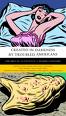
[READ: Some time in 2004 & Summer 2009] Created in Darkness by Troubled Americans

This was the first collection of McSweeney’s humorous stories/pieces/lists whatever you call them.  Some of the pieces came from McSweeney’s issues, but most of them came from McSweeney’s Internet Tendency.

The humor spans a great deal of categories, there’s some literary, some absurd, some nonsensical and, most amusingly, lists.  The back of the book has an entire selection of lists, but there are also some scattered throughout the book as well (I don’t know what criteria was used to allow some lists to be in the “main” part).

As with the other McSweeney’s collections, I’m only writing a line or two about each piece.  For the lists, I’m including a representative sample (not necessarily the best one, though!)

Overall, I enjoyed the book quite a lot (which is why I re-read it this year).  There are puns, there are twisted takes on pop culture, there are literary amusements (Ezra Pound features prominently, which seems odd).  It spans the spectrum of humor.  You may not like every piece, but there’s bound to be many things that make you laugh. (more…)

Read Full Post »

juiceSOUNDTRACK: WRSU 89.7 FM.

wrsuComing straight out of Rutgers University in New Brunswick (my grad school alma mater), this was the first station that I happened upon while I was scanning the lower numbers on the radio station.
The brief set that I heard was amazing.

I heard the end of a song that I didn’t know, but which I found very intriguing. It was followed by Les Claypool’s new track “Mushroom Men” (which was wonderful) and then the 180-Gs doing an a capella rendition of Negativland’s “Christianity is Stupid.” I had heard about this band but never heard one of their recordings.  First, if you’ve never heard Negativland, then you’re missing out.  They are a surreal band of audio collagists, playing with sounds and samples and all kinds of weird things.  To have an a capella rendition of a five minute song, the bulk of which is a spoken loudspeakered voice saying “Christianity is Stupid” goes beyond bizarre into the sublime. I have tuned to this station from time to time and each DJ plays his or her own weird and often wonderful thing. What a great experience.

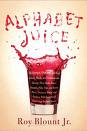
[READ: May 14, 2009] Alphabet Juice

My mother-in-law gave me this book for Christmas because she heard about it on NPR and thought I’d like it. And boy was she right.

waitI hadn’t heard of this book, although actually I’m sure I had–but I ignored it.  Roy Blount Jr is on Wait Wait… Don’t Tell Me, NPR’s news quiz, almost every week.   We love the show because it is funny and it tests your awareness of what’s going on in the world (both serious and ridiculous).  And we try our best to get our kids to let us listen to it each week.  (more…)

Read Full Post »

« Newer Posts