 SOUNDTRACK: DO MAKE SAY THINK-Winter Hymn Country Hymn Secret Hymn [CST025] (2003).
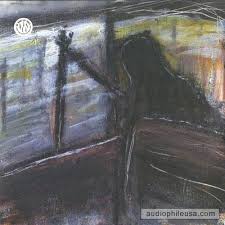 This album, at least according to the liner notes, seems to be broken into three sections, as the title suggests. Although there is no explicit attachment of a particular hymn to the songs, there is a gap between the listings, giving each section three songs.
“Federica” is 9 minutes long and opens with a very lovely slow guitar melody. Then the drums crash in and the song doesn’t change so much as intensify. At around 3 minutes the song pauses before a loping bass adds to the mixture and the songs gets bigger and bigger, and even a little funkier. When the distorted guitar comes in at 5 minutes, it’s hard to believe it’s basically the same song all along. It builds to a cacophonous explosion and then settles down again. A new style emerges—slow and plaintive with mildly distorted guitars. But they can’t stay muted for long. The distorted guitar comes back and forces the song forward with some distorted bass and other noises until it resumes a reprise of the original guitar melody.
“War on Want” is only 2 minutes long. It is mostly strings that seemed to be looped in some way. There haven’t been a lot of strings in DMST records so far, so this is new. They drift slightly out of tune as they introduce the 3rd song “Auberge le Mouton Noir.” The song opens with some crackling noises and some pretty, slow chords. which resolve into a simple riff. The song builds, growing faster with a great propulsive beat. I like that it switches back and forth between the chords and the guitar riff. Is that a slightly out of tune bass guitar before the ringing guitar solo takes over?
The second section begins with “Outer Inner & Secret.” It’s ten minutes long and opens with an interesting bass line and guitar motif. It’s quiet and insistent, kind of dreamy. After exploring some quieter avenues some feedback squalls float in and out. About 4 minutes in the song builds, but it quickly recedes only to build again and recede once more. For the third build the drums kick in and the song launches in a louder direction for a few measures. But just as you think it’s going to take off for a while, it settles down and then comes back to a quitter style with martial beat and keyboards. The remainder of the song switches between loud building guitarists and quitter moments with just bass and drums. For the last-minute or so horns burst forth and then the music drops away except for the horns, which end the song with a plaintive melody.
The 4 minute “107 Reasons Why” is a slow horn & guitar melody song. There’s some interesting sounds that play over the top of the delicate melody, including a nice horn line.
“Ontario Plates” is 7 minutes long and opens with very jazzy drums and bass–it’s rather noir with a quiet saxophone. Once the sax plays over the top it just increases the jazziness. DMST has always had a jazz feel but this one really pushes it about as far as the band has gone. The drums start to come to the fore and I love the way about 3 minutes in the drums morph into something else and the song almost imperceptibly switches into a new song entirely. The bass takes over and a new riff enters the piece. About 5 minutes in, the song switches to a very bright and uplifting motif–big horns, bright guitars and a catchy riff. It’s quite lovely.
The third section opens with “Horns of a Rabbit.” This song introduces big drums and kind of electronic bass sound. About two minutes in the noise beaks through—bashing guitars and intense drums. It even includes a pretty wild guitar solo. I like how the song (which is only 4 minutes (kind of disintegrates on itself before merging into the two-minute “It’s Gonna Rain,” which may indeed be simply the sound of rain on a tin roof.
The final track, the 7 minute “Hooray! Hooray! Hooray!” opens with some synths sounds—unlike anything else on the record. And then a pretty guitar intro mixes with some lovely horns. It’s probably the most delicate thing they have created. After 3 minutes the occasional guitar swirls grow louder and it grinds it way to a happy and uplifting keyboard riff. Then a bunch of surprises for DMST: A slide guitar plays a little solo and then, most surprisingly, a chorus of voices sings the melody. The ending slide guitar sounds like it could come from Mercury Rev or The Flaming Lips. If you listen closely, you can hear people shouting Hooray! in the background.
This album feels a bit more claustrophobic than their others, and while I like pretty much all of the songs, I really like their other albums more.
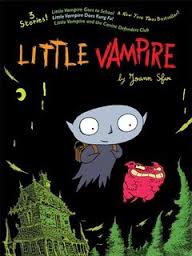
[READ: December 20, 2015] Little Vampire
Joann Sfar is responsible for the Sardine comics which I kind of liked but mostly didn’t (I think that may have been because of the uglyish drawing style). But here Sfar has another series called Little Vampire. (I also just learned that Joann Sfar is a man, so apologies earlier, but I think that’s an understandable mistake).
This book collects three stories into one volume, all translated by Alexis Siegel. Each story is about 30 pages. And they follow the “life” of little vampire. He is a sweet boy with a bald head, big eyes and pointy ears. He lives in a castle with call all kinds of undead people including his dog Phantomato (he is bright red and rather devious) and several other monsters.
“Little Vampire Goes to School” introduces us to the home where the monsters live. As the undead are partying, Little Vampire comes down and says he wants to go to school. The others are horrified, but he won’t give up the idea. He says he’s bored and wants to meet other children (most of the undead are adults).
Little Vampire’s mother (who is strangely pretty in her weird design) and the other elders allow him to go to school, but he can only go at night when it is closed. So the undead come and all attend school with him. The class is taught by The Captain of the Dead who is an old dead pirate. (more…)
Read Full Post »
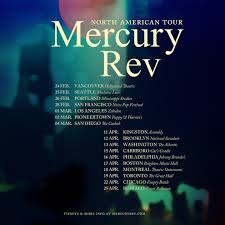 I enjoyed Mercury Rev’s 1990s albums. But the 2000s records lost me. I was surprised that they were playing Johnny Brenda’s since Deserters Songs was a relatively big album. But they really haven’t done anything much since then.





 This is another of my favorite recent Constellation Records CDs. Clues remind me of Mercury Rev, if they had remained a more indie/underpolished band instead of their more recent orchestrated pop. The lead singer sounds a but like Jonathan Donahue (and sometimes Wayne Coyne from the Flaming Lips) and the band in general plays the sort of unusual pop that these bands have made common.
 I Just Read About That...