Feeds:
Posts
Comments

Archive for the ‘Morality’ Category

march2014SOUNDTRACK: VALENTINA LISITSA-Chasing Pianos: The Piano Music of Michael Nyman (2014).

Inym,an don’t listen to a lot of classical music, but I do like it. I also enjoy some modern composers, in particular I have a strong fondness for Michael Nyman. Yes, yes, he’s a soundtrack composer, blah blah, but I find his music to be very pretty and often delightfully eccentric.   His music reminds me of Phillip Glass, in its repetitive nature, but he goes beyond the minimalism that Glass was trying to create by implementing inventive melodies and expansive sounds.

 Valentina Lisitsa is a 44 year old Ukrainian pianist and she tackles music from throughout Nymans’ soundtrack career.  Nyman came to prominence with The Piano, which is a beautiful score.  And this is where this album starts out.

I’m not going to talk about each piece.  Rather, the album overall has a consistent feel–piano versions of Nyman’s music.  Nyman isn’t the most difficult composer, but he has his own style and so the entire album has a nice flow (although it does get a little slow by the end).

She plays songs from eleven of his soundtracks (which I’ve listed at the end).  Many of them get only one track, but Wonderland gets two and The Diary of Anne Frank gets 5 cuts.  I actually don’t know either of those two scores.  The bulk of the disc is, unsurprisingly, from The Piano which has ten cuts here.

I actually know his older soundtracks a lot better, so it was interesting to hear these piano versions of many of these familiar tracks.  Like “Time Lapse” from A Zed & Two Naughts and “Chasing Sheep is Best Left to Shepherds” (ne of my favorite pieces by him) from The Draughtman’s Contract.

Stripping down Nyman has an interesting effect because you can really hear how pretty the melodies are.  Although the real pleasure I get from his songs is the weird embellishments he puts on them, like the interesting sounds (horn and didgeridoo?) in “Here to There” from the Piano (which are absent here).

Although it has the feeling of a piano concerto the end (with several songs from The Piano in a row) is a bit samey.  It was smart to end the disc with a reprise of the opening.

There’s also songs from Drowning By Numbers, Carrington, The End of The, Man with a Movie Camera, The Claim and Gattaca

[READ: April 3, 2014] “On Nudity” and “The Trees Step Out of the Forest”

I am linking these two essays because I read them very close to each other and they are almost diametrically opposed in their content. And I thought it would be an interesting contrast.

“On Nudity” is a very simple essay about nudity. When Norman Rush was a kid–9 or 10–his father was really into nudism. He always wanted to go to nude beaches, he was very lax with nudity around the house and he tried to get his wife to join him. She was reluctant. Indeed, she didn’t really seem to like her husband very much and it seems they only got married because she was pregnant (and he may not have thought that was a good enough reason, to be honest).  She tried her best to make him unhappy because of this, and that seemed to involve declining his nudity bug.

So there were copies of Sunshine and Health (the premiere nudist magazine) hidden in the house (although Norman knew where they were), and yet, despite this access, he couldn’t get enough.  Rather than sating his needs, he was more obsessed than ever.  He wanted the real thing, whether it was getting his cousin to play strip poker or trying to spy on women in changing rooms.  He talks about the various hings he did just to get a peek of flesh.  And as the essay comes to close he apologizes to the two women whose privacy he invaded by spying on them.  The guilt about what he did to these women made him stop, although the women likely never knew what had happened to them. (more…)

Read Full Post »

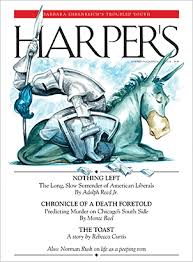
Harpers-1404-302x410SOUNDTRACK: BECK-Guero (2005).

gueroGuero is one of Sarah’s favorite albums, I would say.  It’s hard for me to believe that it is almost ten years old.  It’s a return to the more wild style of Odelay!, but it’s a bit more modest in scope–there’s a lot of different styles, but it’s not quite as manic as his earlier record.  And the sampling is not quite as excessive.

It opens with “E-Pro” a big loud guitar riff and lots of fun sing along material.  The drums are loud and snappy, and it all hearkens a great return to form.  the manic sampling is not present.  There is a return to rap-lite (and lots of Español) in “Guero.”  I like the horns and the street chatter.  “Girl” is an incredibly poppy, almost synth poppy song although just what is he saying in that chorus?  It’s a really pretty summery anthem.

“Missing” slows things down but keeps some great sounds (including big strings) and cool percussion.  It’s got an unusual melody that I find really memorable.  “Black Tambourine” has a great thumping drumline and pumping rhythm and is so much fun to sing along to–whoah oh oh oh oh oh.  “Earthquake Winter” brings in more sitar and a weird tropical vibe to this slow song.  But the chorus is just great, especially the way it rises out of the murky verses.

“Hell Yes” is a very weird song with a funky staccato bass line and weirdly processed vocals.  It’s the first song that really stands out as being unlike the rest and hearkens back to his older style.  It’s also really cool.  “Broken Drum” slows things down again.  I like the melody but I feel this is a little too slow for this record. (Although I like the guitar melodies that are overlaid on top of the song).  Scarecrow” brings back an uptempo beat and a slinky guitar sound.  “Go It Alone” has big handclaps and a stripped down sound but lots of great backing vocals.

“Farewell Ride” has  very creepy stripped down sound with weird (almost out of tune) acoustic guitar and creepy harmonicas.  It’s like a demented western song, and it works very well.  “Rental Car” returns with another great fuzzy guitar opening.  It has a super fun chorus (of yeahs and harpsichord ) and very funny sample of women singing very fast la la las.  “Emergency Exit” is a slow handclappy song that ends the disc with a bit more variety.

Although this album may not reach the intensity of Odelay! (and the singles may not be quite as catchy) overall, I think this record is probably Beck’s best.

[READ: March 19, 2014] “Coup de Foudre”

I have only read a few short things by Kalfus so this is more or less a first for me.  And wow, what a lengthy and detailed story to start with.

There is a ton of stuff going on here, but I’m not willing to go into that much detail in reviewing it.  Primarily because the detail is the emotion and heart of the story, and his descriptions of what happened are designed to influence your opinion of the narrator.

So, the nutshell version of the plot is that the narrator is David León Landau, a powerful banker who can absolutely influence global monetary policy.  He has Timothy Gueithner’s ear and is soon to be meeting with Angela Merkel to talk about the Greek economic collapse and Germany’s potential role in the bailout.  He is that important.

He is writing a letter to Mariama, a maid in a very expensive hotel in New York City.  He has been arrested for sexually assaulting her, and she has effectively brought his entire career (and presidential plans), not to mention his marriage, to a grinding halt.

Simple enough.  So why is he writing to her?  He is writing to her to explain in great detail everything that happened in the days leading up to what he did.  He seem contrite, and yet he also knows that his lawyers prevented him from getting in as much trouble as he should have.  He also knows that she will never read this, but he needs to write it anyway, just to get it out, like a confession.  Even though he knows that if anyone were to see it in print it would mean the end for him. (more…)

Read Full Post »

holoSOUNDTRACK: SIGUR RÓS-() (2003).
rosAfter a staggeringly successful tour, Sigur Rós took some time off. They returned about four years after their successful album with ().  I like to think they were trying to make it easier for English speakers to not have to pronounce their Icelandic words, but perhaps they were just being more difficult.  For they have made an album title that is hard to search for and hard to say.  To make it worse, there are no song titles on the record either.  (Although the band did have I guess unofficial titles for them):

  • 1.”-” (“Vaka”) 6:38
  • 2.”-” (“Fyrsta”) 7:33
  • 3.”-” (“Samskeyti”) 6:33
  • 4.”-” (“Njósnavélin”) 6:57
  • 5. “-” (“Álafoss”) 9:57
  • 6. “-” (“E-Bow”) 8:48
  • 7. “-” (“Dauðalagið”) 12:52
  • 8. “-” (“Popplagið”) 11:43

While looking for these song tracks, I learned that a lot of people think this album is mopey and depressing.  And I couldn’t disagree more.  I find the songs to be wonderful builders of drama.  Track 1 opens with lovely piano and vocals.  It’s a pretty melody that is punctuated with odd, squeaky voices.   Track 2 is slower, with a nice guitar melody instead of pianos. Track 3 opens with organs and more lovely pianos.  The pianos are slow which I usually don’t like, but there’s something about the simplicity and solitariness of their pianos that I find really captivating.  I love that it is repetitive and building, edging towards a dramatic conclusion.  Track 4 has low drumming that propels the echoing song.

Each of these 4 songs is around 7 minutes long.  And while they are not vastly different from Ágætis byrjun, they show the band experimenting within the form.  Also, Ágætis byrjun contained several different styles mixed between their epics, whereas this album is all epic.

After the 4th song there is 30 seconds of silence.  Which signifies something of a change for the second half of the album.

Track 5 is the slowest, saddest music on the album.  But it builds slowly, growing out of that sadness with a cathartic explosion at the end.  Track 6 opens with very loud drums (the percussion is spectacular on this album) and drones.  It builds and builds with more catharsis at the end.  Track 7 is the 12 minute epic that opens with organs and washes of guitars.  The opening is slow but you get the sense that it is building towards something–there is tension in the music, especially when it shifts to a minor key around 3:30.  It takes over 4 minutes to get to the chorus.  And then the song repeats and builds again.  The end is an unholy racket until Jonsi is left singing by himself.  It’s incredibly satisfying.  The final track is 11 minutes long and opens with an upbeat guitar sound.  It’s a good song and then the drums kick in around 6:20 and the song gets even better.

So yes, this is a long album full of long songs.  And none of it is in English.  Not exactly a pop seller, and yet there is something magical about the music on it.

[READ: October 10, 2013] A Hologram for the King

I had been putting off reading this book because I didn’t really like or get the title.  Sarah laughed at me when I said this, because the title is very explicit, but I honestly didn’t know what it was supposed to mean.  My mind reeled with the metaphorical possibilities.  So imagine my surprise when the title is indeed very literal.

The book is about a man named Alan Clay who is an IT sales person.  He will be doing a presentation–which will include an interactive hologram–to Saudi Arabia’s King Abdullah.  So, a hologram for the king.  Simple.

And indeed, the story is quite simple.  I had read an excerpt from it in McSweeney’s 38 and enjoyed it quite a bit–not realizing that it was from this book, of course.  The excerpt has been changed since then but most of the elements have been incorporated.  About the excerpt I said:

a man named Alan is on a flight to Saudi Arabia for business.  We learn through the course of the chapter that he has very little money left, that he is divorced and that his daughter is now fighting with her mother (his ex-wife).  He composes letters in his head to her trying to figure out the best way to placate the scenario.  But he also knows how important this deal is, both for him and for his daughter who needs money for school.  So he tries to put everything out of his mind so he can sleep.  There’s a lot of wonderful details in this chapter.

None of those details have changed, except we don’t really see as much of the flight.

Alan has landed in Saudi Arabia after not sleeping for 60 hours.  He misses the shuttle bust to KAEC (pronounce cake) the King Abdullah Economic Center.  So he calls for a taxi.  Instead, he gets a young man name Yousef who drives him the 60 or so miles to KAEC.  Along the way, Alan and Yousef talk a lot and they hit it off. Yousef has been to America (he studied for a year there) so he understands Americans.  He also has no hope for the future of the KAEC.  Alan likes Yousef and is dismayed by his attitude about KAEC, but finds him to be enjoyable company (Yousef enjoys jokes and, as a salesman, Alan is full of them). (more…)

Read Full Post »

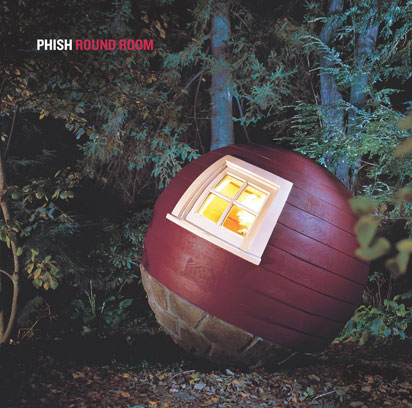
wallsSOUNDTRACK: PHISH-Round Room (2002).

round After Farmhouse, Phish went on a hiatus.  No one knew it would be quite so brief, but there was really a feeling that they were done.

And then they quietly released Round Room in 2002.  And it bursts forth with an 11 minute song.

“Pebbles and Marbles” has an interesting riff—complex and pretty.  And when I listened to it again recently I didn’t really quite recognize it.  But that’s because it’s nearly 12 minutes long and the really catchy part comes later in the song.  At around 5 minutes, the catchy chorus of “pebbles and marbles and things on my mind” announces itself.  And it is a good one.

“Anything but Me” is a pretty, mature song that is slow and piano heavy.  “Round Room” is a boppy little ditty (clearly a song written by Mike).  It is sweet and a little weird.  “Mexican Cousin” sounds a lot like a cover (maybe an old song by The Band) except for the solo which is very Trey.  It’s a funny, silly ode to Tequila.  “Friday” is a slow six minute song with two sections.  The verses are spaced out a bit, delicate riffs that are mostly piano once again.  The middle section is sung by Mike (which makes it more mellow somehow).

“Seven Below” is an 8 minute song.  It has another great riff (and the intro music is cool and bouncey).  When the vocals come in, it’s got gentle harmonies as they croon the sweet song).  Most of the 8 minutes are taking up with a guitar solo.  “Mock Song” is another of Mike’s songs.  This one seems to be a random selection of items sung to a nice melody.  Then when the chorus comes it’s quite nice, how this is a “just a mock song.”  The first verse is sung by Mike, then Trey does a kind of fugue vocal with different words in verse two.

“46 Days” opens with funky cowbells and turns into what seems like a classic rocking folk song—few words but a great classic rock melody (complete with 70s era keyboards).  “All of These Dreams” is a mellow piano piece, another mature song.  “Walls of the Cave” has an interesting piano melody that opens the song. The song is nearly ten minutes long and the middle part has a nice flowing feel to it.  There’s also a few sections that are separated be drum breaks—something that doesn’t often happen in Phish songs.  When the third part opens (to almost exclusively percussion, their vocals all work in a very nice harmony.  It’s a long song but with so many parts it always stays interesting.  “Thunderhead” is another piano-based song with some guitar riffs thrown on top. But it is largely a slow, mellow piece.

“Waves” is an 11 minute song with long instrumental passages.  It also begins with a kind of Santana feel to it, but it is a largely meandering song, with a simple melody that they stretch out for much of the song.  So this album proves to be an interesting mix of long jams and mellow ballady type songs.  It seems like Phish had a big mix of things to let loose.

[READ: November 1, 2013] If Walls Could Talk

This book reminds me of the work of Mary Roach—exploring a topic in great detail and including lots of amusing insights.  The two big differences here are that Worsley is British and that she goes back very far in British history to give us this fascinating information about the development of certain rooms of the house.

Worsley begins with the bedroom.  She looks at the furniture—the history of the bed from lumps with straw to fantastically ornate full poster beds that were made for kings who might never actually use them.

Then she moves on to more personal matters—sex (including deviant sex and venereal disease); breast feeding (for centuries mothers felt they were not equipped to take care of and nurse their own children, hence wet-nurses) and knickers (royalty had an entourage designed specifically to assist with underthings).  Indeed, privacy was an unknown thing in olden times.  Even royalty was expected to receive people in all of the rooms in the house.  Initially the bed chamber was for their most intimate friends, not just for sleeping.

The section on old medicine was also fascinating, they believed that it was vaporous miasma that did you more harm than say, excrement-filled water.

The section on Sleep discusses what was also in a recent article by Gideon Lewis-Kraus—that there were two sleep times at night.  With no electricity there was no artificial light to keep people up late so they would go to sleep early, wake up in the middle of the night (the best time for conception of children) and then sleep again. (more…)

Read Full Post »

questionableshapeSOUNDTRACK: PHISH-Live Bait Vol 09 (2013).
live bait 9I just recently realized that Live Bait 9 has been released.  So I grabbed it just in time.  Vol 9 is full of long jams.  The shortest track here is 10 and a half minutes and there are three over 30 minutes (true, some of them are actually multiple songs melding into one track, but they still retain that long jam feel).

What I especially liked about this set was that it included a few songs that I feel like aren’t represented all that well in the Live Bait catalog.  Like “Foam” from 1994—a solid rocking jam (at 10:47).  And “A Song I Heard the Ocean Sing” (from 2004—I like how they splice the cuts together, so in this case they jump a decade but it doesn’t sound it).  I feel like this song is not played as much, so it’s nice to hear.  And then there’s a lively “The Moma Dance” from 2000.

There are a number of quirky moments in many of the songs.  Like “Split Open and Melt” which comes in at 31 minutes.  Around 11 minutes, they morph into “Kung,” and what’s weird about this version (aside from the fact that the song itself is bizarre) is that instead of it just being them making noise and shouting, there’s actually music behind it—mostly drums—I’ve not heard it done like that before.  During the jam, at around 15 minutes, Mike plays Collective Soul’s “Shine” riff on the bass, but the rest of the guys don’t join in.

“Mike’s Song” (from 1999) begins a 40 minute jam.  The song seems slower than usual, which I find odd.  But it works well for the very mellow jam that constitute the big instrumental section—they even use the echoey guitar the runs for a few minutes keeping the beat and setting a pace.  At 17 minutes the song morphs into a rousing version of “Twist”.  Then at 31 minutes they morph into “Weekapaug Groove” (with Gordon’s great bass opening.  At 36 minutes Trey starts playing the Macarena, although not exactly right, which is pretty funny in and of itself.

“David Bowie” (from 1995) is a 25 minute jam that gets pretty dark in the middle.  Then comes the most interesting juxtaposition of songs jam.  From “AC/DC Bag” one of their earliest songs to “Ghost” one of their then newest ones.  “Tube” a, to my mind, underplayed song is next.  It has a funky jam and is appreciated.

This free set ends with “Undermind,” one of my favorite new songs (this one recorded n 2012). It opens with a staccato riff which gives it a kind of reggae feel.  But it soon returns to its normal sound and proves to be a great ender to this “set.”

I can’t say enough good things about the Live Bait series.  I’m not one to buy many concert sets, but having free samples is really cool.

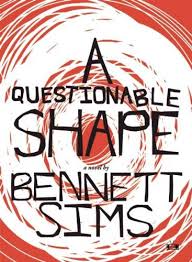
[READ: July 28, 2013] A Questionable Shape

Karen read this book and not only raved about it, she personally recommended it to me. So imagine my surprise to find out that it’s a zombie novel!  But it is a zombie novel like no other.  If Colson Whitehead (in Zone One) made a zombie novel that was literary, Sims has gone one step further, making a zombie novel that is philosophical.

The story is set in Baton Rouge and takes place some time after a zombie epidemic has broken out. In the time since the zombies started appearing (worldwide, it is suggested), the police and emergency teams have managed to contain the worst of it (already that’s something new).  Panic has subsided somewhat and the government has even released a pamphlet on how to deal with everything that’s been going on (called Fight the Bite–I never checked to see if there was a version online, it would make a great “online extra” (having now read Karen’s review, I’m glad to see she agrees)).

The book focuses on two primary characters: the narrator (Michael Vermaelen–referred to mostly as Vermaelen whose name is not given until very long into the story) and Matt Mazoch.  There is a third important character–the narrator’s live-in girlfriend, Rachel, who plays as something of a foil.

The simple plot takes place over a week.  Mazoch is searching for his father.  Mr Mazoch died just before the epidemic and Matt believes that he is among the walking dead.  And so Matt has asked Michael to go with him to try to find him.  There’s a couple things to note right off the bat (the pun was not intended, although Matt carries a bat with him as his line of defense and who knows what else).  Matt and Mr. Mazoch had a weird relationship, one which fell apart considerably over the last few years. Mr Mazoch let himself go completely and seems opposed to everything that Matt believed in–physical fitness and intellectual pursuits (or, as Michael points out, perhaps Matt pursued them to be the exact opposite of his father). The second is that while Michael is happy to go along with Matt, he has no idea and is even afraid to ask what Matt plans to do should he find his father.  And this issue comes to a head later with Rachel.

Matt has given them exactly one week to find his father, with the explicit instructions that after a week thy give up pursuit so that it doesn’t drag on indefinitely.

Okay so far so good–they are going zombie hunting.  But the thing is, the zombies have become a part of the landscape, but they have been tamed.  It is illegal to kill them (what an interesting twist).  Despite their zombie-ness (it’s actually considered an insult to call them zombies), and their desire for human flesh, rather than eradicating them, they are being rounded up and put in camps.  Naturally there are still a number of stragglers (zombies get everywhere), but there is a hotline to call if you see one and within minutes the police come and quarantine them.

So, what’s one to do on a day long adventure hunting zombies–or more specifically, one zombie–if you aren’t actually hunting them?  Well, mostly, you talk.  Michael is a philosophy student (he intended to read all of the important philosophical works although the outbreak has taken him off his goal somewhat), Matt is a literature student (Rachel is an art history major), so the discussions get very philosophical.  In addition to quoting Heidegger, Kant, Nietzsche and many other big names, they also talk video games and seek for metaphors for the zombie invasion.  The video game discussion was quite fascinating–Matt imagines the grid of zombie takeovers to be like a video game–going into blank nothingness. But Michael imagines it more like a filmy haze.

Indeed, since this is all told from Michael’s first person point of view, we learn a lot about what is in his head.  And it turns out that Michael is obsessed with the zombies (which is understandable, really).  But his obsession is different.  When the outbreak first happened he, like everyone else, refused to go outside.  But soon, when the government gave the all clear, Rachel not only went outside, she volunteered at the facilities. But Michael refused–seeing potential contamination everywhere. Indeed, even though he goes out with Matt every day, he still imagines and worries what would happen if and when someone he knows is infected. When they go to a diner, Michael won’t even eat the food, imagining some kind of contamination.

He even tries demilitarization exercises with Rachel (which she is understandably freaked out by).  But as the story moves on Michael’ footnotes (did I say there were footnotes? There are–almost one per page) spend more and more time wondering what the zombies are experiencing–he seems to be trying to pick the best one.  And he goes over and over these ideas in great detail.

After a few days (each chapter is a day) Rachel needs to know what Matt is intending to do if (when) he finds Mr Mazoch, especially since Matt suddenly believes he has some “evidence.”  Michael doesn’t want to know, which enrages Rachel.  She assumes the worst (that he wants to kill his father).  She assumes he would kill him out of malice towards zombies, but Michael suggests it would be to put him out of his misery).

Rachel has a personal stake in this issue.  Her father died before the epidemic, but she was convinced that he would be turned (before they proved that the longer-dead weren’t rising, it was only the recently dead).  So she waited at his graveyard, with the intent of digging him up if need be.  She proves to be a real bleeding heart on the issue.  To make her case, she gives the recent example of a scientist training a  zombie to speak.  She discusses the emotions of the woman whose father was the zombie.  She says this shows that these creatures still have humanity in them and to kill them all would be genocide.

By the end of the book, Matt has taken a polar opposite position–hurricane season is coming and these things are a security risk for all the living.   They should all just be killed.  For the safety of everyone.   Michael–always the intellectual–has a somewhat more nuanced position–he feels that perhaps they should be spared because we have so much to learn from them. And each case is made rather convincingly.

There are some wonderful passages–the discussion about leaves and greenery and the amazing description of Michael’s first encounter with a zombie (not at all frightening, just chilling) show what a great writer Sims is.

The strange thing about this book (aside from the whole “it’s about zombies, but not” premise) is that for such a short book (just over 200 pages), it’s a pretty slow read.  Between the footnotes and the philosophy, the book doesn’t exactly flow quickly.  It’s not light reading by any stretch.  And at times it’s a little…dull?  too in its own head?  Something?  But those moments seem few and far between, because ultimately the language is so interesting and fulfilling.

The end is one of those endings that’s not a real ending–it’s more of a “what would you, the reader, do?” kind of ending.  That’s always unsatisfying.  And yet at the same time, I have not stopped thinking about what I would do in his case.  And so it almost becomes the perfect ending.

Bennett Sims was a student of David Foster Wallace and although this book does have footnotes, the author he resembles most is Nicholson Baker–where not much happens in the body of the work and all of the “action” (which is really thought) is in the notes.

Karen put Bennett Sims along  with Seth Fried and Manuel Gonzales on her “magnificently weird” list, a list that I am intrigued enough by to hunt down these other two authors (and Sims’ story “House-Sitting” which i don’t seem to be able to find online.  So thanks Karen, i wouldn’t have found this one on my own.

Read Full Post »
38SOUNDTRACK: SAN FERMIN-“Crueler Kind” (2013).
sanfermin-91f624c3b893c51669028614cc4bbf4973704a7c-s1

This was the final song that NPR played in their summer new music collection.  It was a band that Bob didn’t know, but he liked the song and then saw them live and put the song here.

It opens very simply, quietly with beautiful harmonies over a simple synth.  After about 45 seconds, the drums and horns (!) kick in and the backing harmony vocals take on more of a choral sound (AHHHH!) that punctuates rather than accompanies the vocals.

The main riff stems from that horn—a bass saxophone?  And yet during the verses, everything resorts to that pretty, mellow sound.

It’s a very interesting mix of musics, and it reminds me of some of the more experimental bands of the 1990s.  I’ll bet they would be fun to see live.  And I’d like to hear more from this album.

[READ: June 20, 2013] McSweeney’s #38

And with this book, I have now read all of the McSweeney’s issues (except that Mammoth Treasury which I will get to, probably by the end of the year).  This one was a great collection of fiction and non-fiction, it also had an inserted comic.  The book itself was paperback, with a nice, textured cover and a cool design for the numbers. In looking for a picture I learned that it came in two colors (the yellow that I received and a black cover with white lines).

It continues with the later issues’ less frivolous style (in that there’s nothing weird about the book) and throughout, the quality of the work is great.  I really enjoyed this book.  It opens with letters and contains color pictures, too.

Letters (more…)

Read Full Post »

hpl;oveSOUNDTRACK: NO AGE-“No Ground” (2013).

An ObjectI’ve been hearing a lot about No Age lately, but I don’t really know much about them.  I keep thinking they are a different, older band (although I can’t think of which one for some reason).  Anyhow, this new song from their new album is a simple, propulsive rocker.  It starts out with some echoing guitar notes until the fast, fast bass comes in.

It’s followed by some quickly strummed guitars and low sung, almost chanted vocals.

The song feels like it builds speed throughout, although I don’t think it actually does.  I didn’t realize that there were only two guys in the band—and that explains their limited musical sound.  But unlike a number of other two person bands that I’ve really enjoyed as of late, this song feels a little flat.  There is some appeal to it, but overall I want a little bit more.

[READ: June 16, 2013] H.P. Lovecraft: Against the World, Against Life

I have been “into” H.P. Lovecraft for about thirty years.  Interestingly, I had never read anything by him in that time.  I got into him via Dungeons and Dragons which had a whole selection of monsters from the Cthulhu mythos.  And then Metallica did a song called “The Call of Cthulhu” and even though I bought several of his paperback collections and proudly displayed them, I never read them.  When McSweeney’s imprint Believer Books published this little title by the practically Lovecraftianly named Michel Houellebecq, I was excited to read it, too (because at this time I had assumed that I had actually read some Lovecraft).  But like my Lovecraft books, it languished on the shelf.

Until now.

I decided that it was time to finish off some of those McSweeney’s books that have been sitting on my shelf for years.  And this was on the top of my list. (more…)

Read Full Post »

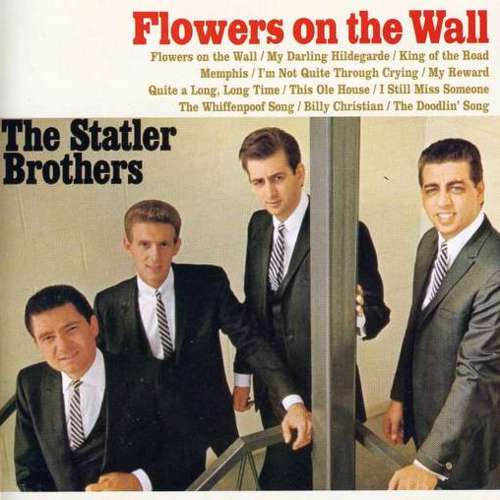
200px-FatesWorseThanDeathSOUNDTRACK: THE STATLER BROTHERS-“Flowers on the Wall” (1965).

flowersonthe Vonnegut mentions this Statler Brothers song in Palm Sunday as well.  I know this from Pulp Fiction–a song that I found very amusing and never would have guessed was a classic country song.  Country music was very different in 1965 than it is now.  I don’t even know if there was a folk or bluegrass category back then, and this song, with its banjo and bouncey acoustic guitar is a great example of the kind of country music I like.  And those harmonies!

This song certainly seems to be about insanity–about a man counting flowers on the wall, playing solitaire with a deck of 51 cards, smoking cigarettes and watching Captain KAN Kangaroo.  Don’t tell him he’s nothing to do.  What a weird little song.  And man is it catchy.  No wonder it was a #1 hit.

[READ: May 31, 2013] Fates Worse Than Death

After reading Palm Sunday I learned that Fates Worse Than Death was a kind of autobiographical sequel to that non fiction book.  I also learned that the two essays that make up Nothing is Lost Save Honor which is impossible to find (and for which I can’t even find a cover) are available in FwtD.  However, since there is no real contents or index, you do have to read the whole thing to find out which chapters contain the essays.  Or you can just look here and see that “The Worst Addiction of Them All” (which was published in The Nation) is in Chapter XIV and “Fates Worse Than Death” appears in Chapter XV.

The last time I read a bunch of Vonnegut together I got a bit burnt out on him and the same thing happened here.  The problem with Vonnegut’s nonfiction is that he tends to repeat himself.  A lot.  And while this book is ostensibly about the 1980s, he talks an awful lot about his family and his friends from the war and his other literary acquaintances., like he did in Palm Sunday.  In a number of places, he says that he doesn’t like to read himself in English, and it would seem that he doesn’t proofread to see if he said something already either.

This is not to say that the book is not worth reading.  Indeed, if you read Palm Sunday in the 80s and then this one in the 90s, you might not remember all of the details that pop up again, but when you read them days apart…well. (more…)

Read Full Post »

highlySOUNDTRACK: FAMILY GUY-“Everything is Better with a Bag of Weed” (2009).

familyguyI recently posted about the song “Me Ol’ Bamboo” from Chitty Chitty Bang Bang.  When I was looking it up, I discovered that Family Guy had created a song called “Everything is Better with a Bag of Weed” that is sung to the tune of “Me Ol’ Bamboo.”  And holy crap I nearly busted a gut laughing when I watched it.

Of all the weird songs to parody, this was a brilliant choice.  The song is catchy and fast paced and absurd and just adding these new lyrics has made it funnier and more absurd.  There’s even the same odd instrumental break which they animate as playing glass bottle with drumsticks and as far as I can tell that’s really what it is.

My o my, this is very funny indeed.

I can’t seem to embed the video here which is a shame, but by all means check it out here.

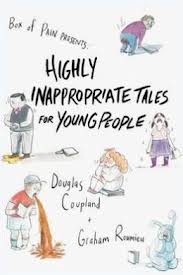
[READ: April 9, 2013] Highly Inappropriate Tales for Young People

I have read most of Douglas Coupland’s work and I like him quite a bit.  But I have discovered from re-reading his books recently that he’s not exactly the author I thought he was.  And one thing is that he’s really not very funny.  Existential? Yes. Comically absurd?  Yes.  Funny?  Not so much.  So I was surprised to see that he made this book with the rather funny title.

I assume this book is supposed to be funny since the inside flap says “Seven pants-peeingly funny stories featuring seven evil characters you can’t help but love.”  And indeed, the premise is funny, the title is funny.  But the stories are really not funny at all.  Here’s the list of the seven stories: Donald the Incredibly Hostile Juice Box; Sandra, the Truly Dreadful Babysitter; Hans, the Weird Exchange Student; Brandon, the Action Figure with Issues; Cindy, the Terrible Role Model; Kevin, the Hobo Minivan with Extremely Low Morals; Mr. Fraser, the Undead Substitute Teacher.  Judging from the titles of the tales you may think there’s humor in them…a juice box as a main character?  But there’s something about them that falls flat. (more…)

Read Full Post »

SOUNDTRACK: NADA SURF-Live at KEXP January 30, 2008 (2008).

Nada Surf is criminally underrated and shamefully treated as a one-hit wonder for a song that sounds nothing like the rest of their work.

This four song set at KEXP features four acoustic renditions of songs from their wonderful  album Lucky.  The songs are stripped down, but the harmonies are all there.  The only song that really suffers in this format is “See These Bones,” which is a little less spirited than the recorded version (although the harmonies stand out even better).

They are also funny guys and very personable, as the interview shows.  This set is definitely worth downloading.  You can get it here.

[READ: October 6, 2012] Timequake

Timequake is Kurt Vonnegut’s last novel.  It is very much unlike any of his other novels because it is actually more of a fictional memoir than a novel.

There are two main characters in the book–Vonnegut himself and Kilgore Trout.  Vonnegut talks about his life a lot–and if you know anything about Vonnegut’s life, you know that the details in the novel are accurate.  At the same time, he talks about Trout’s life, specifically the end of his life and how he went from being a destitute bum to a celebrated and oft-quoted author.

And then there’s the matter of the timequake.  In 2001, there was the first timequake.  The world stopped expanding and moving forward and instead flashed back to 1991, where everyone picked up exactly where they were on that date in 1991, and relived every detail of their lives in exactly the same way.  Only this time they knew what was going to happen.  So every person lived on autopilot through every day for the next ten years–all the good and all the band (like the man who spent several years in prison and had to relive those years all over again).  Even the dead were resurrected and relived their days.

It’s an interesting concept and yet in the end it’s really not that interesting of a topic.  In the Prologue, Vonnegut says that he had originally written Timequake (which version he calls Timequake One) with that very premise, and that Vonnegut himself made a cameo. And yet I can see that it wouldn’t really have worked as a very good novel–unless he made up ideas for what happened to everyone and we the readers lived them for the first time– or something.

But so he bailed on that novel, but he certainly left parts of it intact for this one.  And rather than a cameo, Vonnegut features largely in this one. (more…)

Read Full Post »

« Newer Posts - Older Posts »