Feeds:
Posts
Comments

Archive for the ‘Morality’ Category

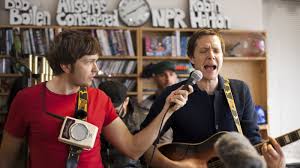
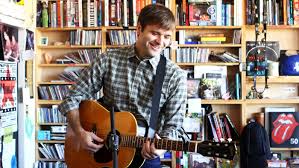
SOUNDTRACK: OK GO-Tiny Desk Concert #278 (June 3, 2013).

I love OK Go’s music videos.  They are stupendous. I have watched all of them several times.  And yet I can’t remember a single song.  But that doesn’t diminish my appreciation for them.

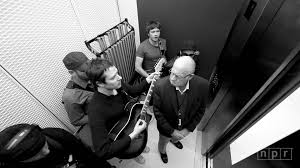
When NPR was moving offices, they made a “Tiny Desk Concert” of the band proceeding from their old location to the new one.  And in OK Go fashion, they made a great video to go with it.  The music is live (I believe), even though they must have shot the footage hundreds of times.  It’s sort of a stop motion video, except that it’s not single frames but short 2 second clips spliced together.

You can watch as the old office is dismantled, as they walk through the halls to the moving truck.   As they play on the truck in the streets of D.C. and then as they enter the new building.  There are cameos from NPR colleagues: Ari Shapiro, Audie Cornish, David Greene, Guy Raz, Scott Simon, Alix Spiegel, Susan Stamberg and more.  There’s a hilarious moment with Karl Kassel who gives them a dirty look.  And then they march through the offices, the news room and into the new Tiny Desk location where they finish the song.

The song is fun and catchy and even has new lyrics that reference the NPR move.  It has to be seen to be appreciated.

And if you like figures here are some details from the shoot:

  • Number of video takes: 223
  • Number of seconds Carl Kasell spent in the elevator with OK Go: 98
  • Number of times Ari Shapiro played the tubular bells: 15
  • Number of days it took to shoot: 2
  • Number of cameras: 1

Incidentally, NPR and I are out of sync with our counting of Tiny Desk Concerts.  I can’t figure out what happened.  The reason mine is correct is because I have written down every concert and numbered them.  So I feel that for them one doesn’t count?  They say this was number 277.  Someday they’ll read this and we’ll get to the  bottom of everything.

[READ: April 1, 2016] No Mercy Vol. 1

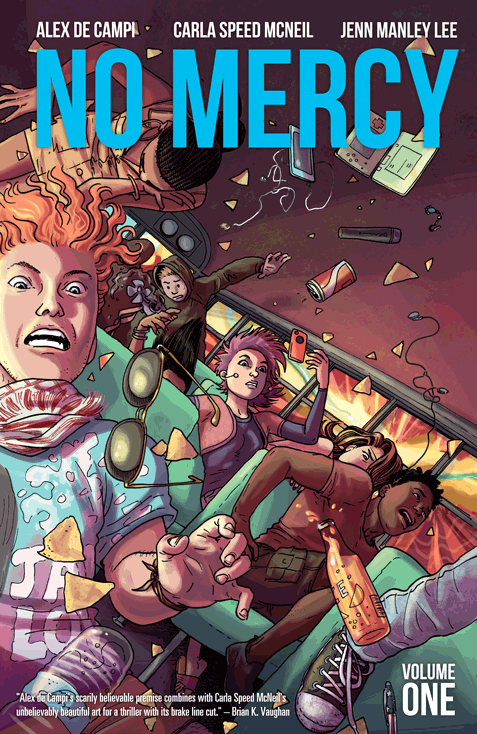
Because of the way books are being handled at my work now, I don’t get to see as many books as I used to. So i was pretty delighted to get this graphic novel on my desk.  Even if I didn’t quite know what it was about, I wanted to read it.  And boy did I enjoy it.

I had no idea that the cast was a group of aspiring Princeton University students on a per-freshman trip to an underprivileged county (I like the t-shirts that say Building Bridges Helping Hands with a kinda Princeton P on the front.

We meet the cast in a cool way–each one steeping forward a bit in the crowd and giving a bit of information about themselves…mostly through text messages. Oh and I loved the way the opening colophon pages looked just like Facebook (or whatever) with a timeline photo and then on the right side–sponsored images with drawings of the author and the illustrators and an ad for an other Image comic by Alex de Campi called Valentine–genius layout idea.

There’s also a comment under the photo which says “OMG how sad, they were also young.”  So you know something bad is going to happen these poor kids. (more…)

Read Full Post »

bythewaySOUNDTRACK: KAYHAN KALHOR-Tiny Desk Concert #203 (March 24, 2012).

kayhanWhy not continue February’s Resistance with an Iranian performer?

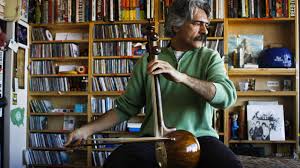
Kayhan Kalhor plays the kamencheh, a four-stringed fiddle-like instrument.  The piece he plays is a 12 minute improvisation.  It is otherworldly and unlike anything I’ve heard–although the blurb makes it sound like a fairly common instrument in his native country.  I don’t have much to say about the piece, so I’ll let the blurb do most of the talking:

For Persians, the New Year comes not in the dead of winter, but right at the vernal equinox. As spring renews the earth, people celebrate this fresh beginning as Nowruz, a joyous 12-day festival to celebrate beauty and abundance. We were lucky enough to have a master musician and composer from Iran, Kayhan Kalhor, visit us in time to celebrate with his gorgeous and deeply moving music.

As one of our interns observed during Kalhor’s mic check, Kalhor’s instrument does the dancing as he kneels with his legs folded beneath him. (This performance actually marks a Tiny Desk Concert first: having a musician perform on top of Bob Boilen’s desk, covered for the occasion by a rug, as Persian tradition dictates.) As Kalhor plays, his bowed, four-stringed kamencheh, a spiked fiddle, spins this way and that, swaying gracefully from side to side.

Before Kalhor played for us, I asked him what he was going to perform. He told me that it was to be an improvisation: “I don’t know yet where I’ll start, or where I’ll end up,” Kalhor said simply. That humble comment aside, Kalhor is a great master who embodies the core principles of this style of music: the ability to perform, entirely by heart, a huge amount of music composed over centuries — but then to take that tradition to new places through the art of improvisation. For us, he then proceeded to spin out a soulful, contemplative and beautifully moving improvisation in the mode of Nava.

The piece has been given the title: “Improvisation In Dastgah Nava.”

As the screen goes black, Kalhor asks: “Was this enough for you? I wanted to go on but I wasn’t sure how much time you had.”

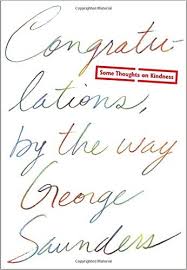
[READ: February 1, 2017] Congratulations, By the Way

Children’s books will commence shortly. But as hatred continues to spread in Washington, one more post on kindness.

Have you ever read George Saunders’ convocation speech at Syracuse University for the class of 2013?  It is stunning and moving and profound.  And yet at heart it is so simple–be kind.

This book, much like David Foster Wallace’s This is Water, is a padded-out book version of Saunders’ speech.  (With illustrations of stars by Chelsea Cardinal).  I am generally opposed to this sort of cash grab book ($14 list price for content that is freely available), but as with Wallace’s book, the speech is so great that any way it can get into people’s hands is a good thing.

There’s not much I can say about the speech, because it is all true and beautiful and doesn’t bear me summarizing.  But I wanted to compare the wisdom of this speech with our horrifying new President and his band of hate-spreaders.  As you read this and know it to be true, wonder what in the hell happened to the people currently running our country that they have fallen so far from the common decency of this speech.

I was thinking how we are taught as children not to lie (Trump lies daily, egregiously) to study hard (Trump is unqualified and none of his cabinet picks are qualified–half of them are downright simpletons), to be kind and obey the golden rule (Trump is literally harming / hurting / damaging / ostracizing / potentially killing people every day with his executive orders).  How did a wicked liar actually win?  Why aren’t the good guys coming to take him out?  I am prepared to RESIST, but it get harder every day with every evil thing he and his minions do.  And watching our spineless elected officials (on both sides, but especially Democrats who were pushed around for eight years) cave to this dictator’s dreams is the most disheartening thing I have ever experienced.

And so, it takes someone liked George Saunders to lift you up.  To believe that somehow this will all be made right.  And to espouse try to kindness where you can.  Because it sure isn’t coming from anyone elected.

The full content of the speech is below.  Read it all, it’s worth it.  Share it with everyone.

(more…)

Read Full Post »

manner SOUNDTRACK: BEN GIBBARD-Tiny Desk Concert #251 (November 19, 2012).

benBen Gibbard is the voice of Death Cab for Cutie.  His voice is instantly recognizable and his melodies are surprisingly catchy.

This Tiny Desk Concert (they say it’s number 250, but I count 251) is just him and his acoustic guitar.  I didn’t know he did solo work, but apparently he does (in addition to being in The Postal Service and All-Time Quarterback).

Gibbard just released a solo album, Former Lives, which he’s said is a repository for material that didn’t work as Death Cab for Cutie songs; from that record, only “Teardrop Windows” pops up in his Tiny Desk Concert. For the rest, he draws from Death Cab’s most recent album (“St. Peter’s Cathedral,” from Codes and Keys) and, of all places, last year’s Arthur soundtrack (“When the Sun Goes Down on Your Street”).

As mentioned he plays three songs and his voice is so warm and familiar I felt like I knew these songs even if I didn’t.

I knew “St. Peter’s Cathedral.” It is a lovely song with very little in the way of chord changes.  But the melody is gentle and pretty.  And the song appears to be entirely about this church.  Which is interesting because the second song is also about a building in Seattle.  “Teardrop Windows” is a surprisingly sad song about an inanimate object.  It’s written from the building’s point of view as he mourns that no one uses him anymore.  And such beautiful lyrics too:

Once built in boast as the tallest on the coast he was once the city’s only toast / In old postcards was positioned as the star, he was looked up to with fond regard / But in 1962 the Needle made its big debut and everybody forgot what it outgrew

The final song “When the Sun Goes Down on Your Street” was indeed for the Russel Brand movie Arthur.  Somehow I can’t picture those two together.  It’s a lovely song, too.

I prefer Gibbard’s more upbeat and fleshed out music, but it’s great to hear him stripped down as well.

[READ: January 2017] “My Writing Education: A Time Line,” “The Bravery of E.L. Doctorow,” “Remembering Updike,” and “Offloading for Mrs. Schwartz” 

I had been planning to have my entire month of February dedicated to children’s books.  I have a whole bunch that I read last year and never had an opportunity to post them.  So I thought why not make February all about children’s books.  But there is just too much bullshit going on in our country right now–so much hatred and ugliness–that I felt like I had to get this post full of good vibes out there before I fall completely into bad feelings myself. It;s important to show that adults can be kind and loving, despite what our leaders demonstrate.  Fortunately most children’s books are all about that too, so the them holds for February.

George Saunders is a wonderful writer, but he is also a very kind human being.  Despite his oftentimes funny, sarcastic humor, he is a great humanitarian and is always very generous with praise where it is warranted.

The other day I mentioned an interview with Saunders at the New York Times.  Amid a lot of talk with and about Saunders, there is this gem:

Junot Díaz described the Saunders’s effect to me this way: “There’s no one who has a better eye for the absurd and dehumanizing parameters of our current culture of capital. But then the other side is how the cool rigor of his fiction is counterbalanced by this enormous compassion. Just how capacious his moral vision is sometimes gets lost, because few people cut as hard or deep as Saunders does.”

These first three pieces are all examples of his love and respect for other writers–both for their skill and for their generosity.

“My Writing Education: A Time Line”

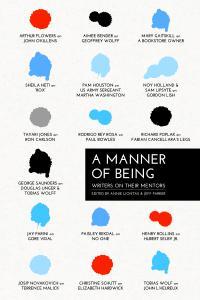
“My Writing Education” comes from a book called A Manner of Being: Writers on Their Mentors.  Saunders’ mentor was Tobias Wolff.  And for this essay, his admiration takes the form of a diary.  (more…)

Read Full Post »

storiesSOUNDTRACKPOLYPHONIC SPREE-Tiny Desk Concert #259 (December 21, 2012).

The Polyphonic Spree performs a Tiny Desk Concert.I really enjoyed Polyphonic Spree’s first album (and their strange robes and cult-like following (apparently even within the band).

They put out a Christmas album some time ago, and since we have a big pile of Christmas albums, I grabbed that one.  I didn’t love it, but it was a fun addition to our collection.

This Tiny Desk Concert is notable for just how many members of the band are behind (and on the side of) the Tiny Desk (perhaps 18?).

And the band is suitably musical–trombone, trumpet, keys, drums, bass, cello, violin and a ten (or so) piece choir.

Interestingly, I find that the weak link in this whole thing is leader Chris DeLaughter.  It’s just that his voice is really not that interesting. It’s especially notable on “The Christmas Song” where he sings some high notes unaccompanied.  When the choir comes in (and they change the melody) it sounds really cool.  I especially love the way they make “reindeer really know how to fly” into a high note.

The first song is “Happy Xmas (War Is Over)” which I feel is the Christmas song they might be best known for.  It’s pretty traditional to the original, with the choir filling in for the kids.  The addition of horns really adds a lot to it.

“Silver Bells” gets a pretty rocking treatment–the buildup at the beginning is pretty cool.  They change the main melody to an almost circus-like waltz. I love the way it sounds when everyone joins in–and when the choir is singing along to the rocking end (with a very different melody) it sounds great.  But once again DeLaughter’s voice doesn’t seem up to the task of leading this larger group.

But it’s festive and fun, especially with everyone in red robes (and DeLaughters green one).

[READ: December 2016] Christmas Stories (1854-1864)

Last year, I started reading some Charles Dickens Christmas Stories in December.  I imagined that I’d finish the whole book this season (all 750 pages of it), but I didn’t come close.  I enjoy these stories but they are not quick reads by any standard.

The fascinating thing with a lot of these stories is that they appeared in All the Year Round, a Victorian periodical founded and owned by Dickens and published between 1859 and 1895 throughout the United Kingdom.  But just because these stories came out for the Christmas issue doesn’t mean they have anything to do with Christmas directly.

I thought I’d be reading a whole chunk of the book in a row, but I wound up skipping around a bit.  Maybe next year I’ll finish the remaining stories. (more…)

Read Full Post »

dfwreadSOUNDTRACK: CHRISTIAN SCOTT aTUNDE ADJUAH-Tiny Desk Concert #477 (October 9, 2015).

aacsChristian Scott aTunde Adjuah and his septet play what he calls stretch music: “the particular type of jazz fusion he’s up to: something more seamless than a simple collision of genre signifiers.”

They note that even his appearance stretches traditional jazz: “You may note that he showed up in a Joy Division sleeveless T-shirt and gold chain.” It’s sleek and clearly modern, awash in guitar riffs, but also bold and emotionally naked.

Christian Scott aTunde Adjuah (not sure how to abbreviate that) is a trumpeter and he can hit some loud powerful and long –held notes.   It’s funny that when he bends over the trumpet grows quieter—those ic really are direction-based.

For the first song “TWIN” he does some impressive soloing over a simple and cool beat—piano and delicate guitar riffs (there’s also an upright bass and drummer).   After his lengthy solo there’s a flute solo that also works perfectly (if less dramatically) with the background music.  (Christian plays tambourine during her solo).  He says that this song is about being a twin.  His brother, Kyle Scott is a film director and for whom Christians scores the music.  Christian also explains that he comes from an African-American and Native-American background and that this song has rhythms as a sort of history of his family that touches on Mali, Senegal Gambia and The Ivory Coast and makes its way to the Caribbean, Cuba and into New Orleans.

He’s pleased to play the Tiny Desk Concert for an audience that appreciates “Music that has nutritional value.”

For the second song, “West of the West” he brings on a young alto-saxophonist who plays with his drummer in a different band. The song opens with a rocking electric guitar solo and then the jazzy band kicks in behind it.  The instrumental features a couple of solos by the saxophonist, the pianist and the bassist.

“K.K.P.D.” is a dramatic song for which he gives a lengthy back story.  Many years ago in his home of New Orleans, he was stopped by New Orleans police late at night for no reason other than to harass and intimidate him.  he was coming back from a gig.  He resisted and was in a serious situation and was seriously threatened—the story is long and very affecting, especially given how articulate (I know, terrible word, but true) and calm he is about retelling this horrifying story.  His pride almost made him do something ill-advised, but instead he channeled that pent-up frustration into a piece of music whose long-form title is “Ku Klux Police Department.”

He adds that we see things on TV about inner cities or the ninth ward and we believe them to be true.  Like that the neighborhood is happy that the police are clearing out the youth there.  We begin to think that the narrative is true, although the people who live there can tell you otherwise.  Despite the title and the origin, the is song is designed to reach a consensus to move forward –not to build derision or hate.  He says that we have to start working on that now, because if it doesn’t start now then our children will continue to inherit this situation.

It opens with a noisy guitar wash and fast drums.  It’s quite noisy and chaotic although it resolves very nicely into an almost sweet piano-based song with slow horns.  The middle of the song ramps up with some intense soloing from Christian.  I love how that segues into a very different section with an electronic drum and delicate piano.  Chritsian’s next solo is much more optimistic.  The final section is just wonderfully catchy.

When he introduces the band, he points out just how young some of his newest members are: Drummer Corey Fonville (another new member) used a djembe as a bass drum, and also brought a MIDI pad so he could emulate the sound of a drum machine; Lawrence Fields, piano; Kris Funn, bass; Dominic Minix , guitar (21 years old); Braxton Cook, saxophone (24 years-old) and Elena Pinderhughes, flute: 20 years old!

I don’t listen to a ton of jazz, but I really liked this Tiny Desk Concert a lot.

[READ: July-October 2016] The David Foster Wallace Reader

I’ve had this book since Sarah bought it for me for Christmas in 2014.  I haven’t been in a huge hurry to read it because I have read almost everything in it already.  And some of that I have even read recently.  But this summer I decided to read some of my bigger books, so this was a good time as any.

One of the fascinating things about reading this book is the excerpting in the fiction section.  I have never really read excerpts from DFWs longer books before.  And once you decontextualize the parts, you can really appreciate them for themselves rather than as a means to the end of the story.  This is especially true of the excerpts from Broom of the System and Infinite Jest.  But also just reading some of these sections as a short story makes for an interesting experience.

It was also very interesting to read the non-fiction all together like that.  These pieces come from difference anthologies, but they have thematic similarities  So, placing them together like that allows for really comparing the stories.

And of course, the selling point for most DFW fans is the teaching materials in the center of the book–an opportunity to look into the man’s mind at work shaping younger minds.

I have written about virtually everything in this book already (title links refer back to previous posts), so mostly these are thoughts about the pieces themselves and not a part of a whole. (more…)

Read Full Post »

2008_03_03-400SOUNDTRACK: FOREIGN EXCHANGE-Tiny Desk Concert #370 (July 5, 2014).

FeIt’s amusing how “religious” lead singer Phonte Coleman comes across in this set given how profane his language is.  He begins the set by telling us what a “church clap” is: a church clap is when you clap for someone when they sing in church but they suck.  It’s a slow clap that says keep trying, baby.

Foreign Exchange is Phonte on vocals, guitarist Nicolay, keyboardist Zo! and percussionist Boogie.  Their music (in this setting anyhow) is a kind of mellow stripped down soul pop.

“On A Day Like Today” is a kind of acoustic r&b with acoustic guitar and gentle keyboards. Phonte is an engaging and fun performer enticing people to clap and singing that he’s gonna wipe the sweat off his face as he does so.

He says he’s “sweating like a preacher here.”  After the first song he hits the gong ans says “when you hear this sound, that means turn the motherfuckin’ page.”   he describes the second song, “Listen to the Rain” as when you need to wind down and things ain’t going right.  It is a delicate ballad full of nice percussion.

Before the final song he says, “You never get a second chance to make a first impression so I hope this is a good motherfuckin impression.”  Then as he is ramping up the song, he tells everyone to turn to your neighbor and say “‘Neighbor, put home in your heart,’ goddamn right.” “Call It Home” is a pretty, smooth rocker.  Phonte has a good solid voice and these songs are all pretty enjoyable.

Phonte is a great front man having fun right up to the end as he jokes about how he “felt it” and was overcome during the final song.

[READ: January 29, 2016] “Leaving for Kenosha”

Richard Ford is a famous writer whom I have never read.  I think of him as writing very large books, so I’m surprised to see this short story here.

I have this image of what Ford writes, but I was rather surprised that this was set in New Orleans soon after the flood.  Interestingly, the main character is not the one leaving for Kenosha.

Walter Hobbes (which is the name of the dad in Elf, by the way) is a lawyer.  He is picking up his daughter from school before taking her to the dentist.  His daughter, Louise, is thirteen and trying to be independent.

I really enjoyed the way the Ford set up the family dysfunction–Louise needs a sleep guard to keep her from grinding her teeth–which she has only started doing since her parents got divorced.  There’s some back story about Walter’s wife leaving him and the fact that she still lives in town.  (more…)

Read Full Post »

photoSOUNDTRACK: WILCO-Tiny Desk Concert #509 (February 23, 2016).

wilcoAs far as I can tell, Wilco is the first band to be invited back for a Tiny Desk Concert (there was a stated rule that no one would come back twice, with some people skirting that by coming with another band).  Laura Gibson was invited back since she was the very first attendee, but since Wilco’s newest album has been so successful, it seems somehow fitting that they get invited back.

And perhaps in honor of that, while their last performance was noisy and raucous, this one is decidedly more mellow—with all acoustic instruments.  But that doesn’t mean it’s quiet and calm either.

For the first song “The Joke Explained” from Star Wars, they used banjo, acoustic bass, hollow bodies electric guitar (w/ slide), the ever-present melodica and muted drums (w/shakers).  And it sounded great.

For the second song, the older “Misunderstood” everybody seemed to switch instruments.  Tweedy switched guitars, the acoustic bass became an acoustic guitar, the hollow body became a slide guitar.  Nels Cline’s slide guitar brings so much to the song by doing seemingly so little.  I love how this simple, sweet song has a wild middle section–a crazy breakdown with noisy cymbals and drums–drummer Glenn Kotche is fantastic–and everyone else playing some crazy high-pitched notes until it all settles back down again.

Tweedy has another guitar for the third song “I’m Always In Love” and the melodica is back.  There’s xylophone keeping the melody.  And as with all of these songs, Tweedy sounds great and the backing vocals add wonderful harmonies.  Cline plays a wonderful slide solo, too.

Before the final song and there’s another guitar change for Tweedy, and he says that after this song, “you guys need to get back to work solving this Trump problem. Figure it out! Its weird!”  They play “Shot in the Arm,” another great old song.

The band sounds excellent—a wonderfully full sound even without amplification. I am really excited to see them his summer.

There’s also a nifty video showing “Misunderstood” with two 360 degree cameras so you can see what goes on in the audience during a Tiny Desk Concert.  Check it out.

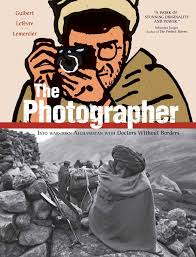
[READ: February 7, 2016] The Photographer

I loved Guibert’s book Alan’s War, in which he took the words of Alan Cope and put them to an amazing graphic novel.  Well, he is back again doing the same thing with the words of famed photograph Didier Lefèvre.

Didier Lefèvre died in 2008, but before he died he left a legacy of amazing photojournalism.  That includes this trip to Afghanistan which he took with the team from Doctors without Borders.

Alexis Siegel translated this book again, and he offers an excellent introduction which not only explains Lefèvre’s life, it also gives context for everything tat these men and women were up against in that war-torn region.

As mentioned Guibert draws out the story that Lefèvre told him.  But this book is different from Alan’s War in that it also uses the photos that Lefèvre took.  Guibert fills in the gaps where Lefèvre, didn’t or couldn’t, shoot.  And there was a lot he couldn’t shoot. (more…)

Read Full Post »

redSOUNDTRACK: LE FLY PAN AM-fpamCeux qui inventent n’ont jamais vécu (?) [CST019] (2002).

After their previous EP, Le Fly Pan am (note the addition of the Le) come back with an album that can be described as funky.  True, it’s weird funky that gets dismantled while its going along, but it’s still pretty funky.

They wouldn’t be them if there weren’t some crazy noises.  And so the first song (parenthetical translations are from Wikipedia), “Jeunesse sonique, tu dors (en cage)” (“Sonic Youth, You Sleep (In a Cage)”) is just noise and static for 90 seconds before leading to the first song proper:

“Rompre l’indifférence de l’inexitable avant que l’on vienne rompre le sommeil de l’inanimé” (“Break the Indifference of the Inevitable Before We Come to Break the Sleep of the Inanimate”) which kicks in with a really funky bass guitar and drum section. It’s really catchy and almost danceable. But throughout the song’s ten minutes there are elements of destruction going on. There’s screeches that sound like a dentist’s drill. About a minute in, the guitars just seems to stop playing riffs and just tart going crazy–playing loosened strings and just random notes like a beginner (even though the original rhythm is still there).  That funkiness stays for about 5 minutes until the songs shifts gear into a loping melody with a big bass and simple repetitive guitar lines. And then it kind of falls apart all together with some sounds like broken strings and lots of chatter (in French).  At 7 and a half minute it resumes at breakneck speed with the drums and bass pounding away and all kinds of effects splashing on top. The song ends with low rumbling noise before jumping into….

“Partially sabotaged distraction partiellement sabotée” (“Partially Sabotaged Distraction Partially Sabotaged”) This song opens with a four-note, slightly off-key guitar and then loping bass riff that reminds me of SST Records bass guitar of the 80s. It switches between this and a slightly funkier sounding section. But the destruction is apparent from the get go as early in the song, the sound just completely drops out on a couple occasions, making you think the disc is broken (it isn’t).  The song starts to get more intense as the notes seem to get faster and more insistent (those repetitive notes and ringing guitars just seem to scream tension).

“Univoque/Équivoque” (“Univocal / Equivocal”) opens with static and then a very funky bass line.  There a music box playing over the top and some quiet guitars. About half way through the bass ends but the music box (tiny and distorted) continues.  At 3:30 a new bass line, similar to the previous but with a new section added pops up.  It’s a simple song showcasing their groove and their noise.

“Arcades-Pamelor” starts with low distorted noises.  Like the first “song” this is mostly sound effects and things slowed down. Until a screaming noisy static takes over about half way through.  It’s really quite unpleasant.

“Sound-support surface noises reaching out to you” opens with another funky bass and drums and some simple guitar notes. About a minute in a sound emerges that sounds like a skipping CD (but it’s not your CD).   And then a new, different bass pattern emerges with lots of noisy percussion(sounds like people banging things). The skipping sounds seems to work as a segue between section, with some great funky parts and and then the final section which opens with what sounds like a mildly out of tune guitar ran and more great bass. This really enjoyable section winds up glitching to a halt with the  sound of a skipping record player.

“Erreur, errance: interdits de par leurs nouvelles possibilités” (“Wandering Error: Prohibited by Their Opportunities”) has the sounds of sticks clacking together and silverware dropping and mechanical sounds.  And they all seem to somehow settle into a rhythm of piano notes. Unlike the other tracks this one is pretty consistent—strange noises and a simple piano motif.  It’s also probably the least interesting of the bunch.

The disc ends with “La vie se doit d’être vécue ou commençons a vivre” (“Life Must Be Lived or Begun to Be Lived”) another great, funky bass and piano line, with some interesting guitar sounds round the corners. This song is so catchy, it’s wonderful.  After about 2 minutes there’s another breakdown. The music all stops except for the guitars which sound like they are getting strangled.   The second half of the song has the same funky bass but very different guitars and lots of squeals and feedback. After a couple more glitches at 6 minutes in, the bass takes off playing fast rocking riff as the guitar tries to keep up. It’s such a satisfying ending that it’s hugely disappointing that it only last 45 seconds before the album ends.

While it was always obvious that Fly Pan Am were going to play weird experimental stuff, it wasn’t clear before just how funky and dancey they could be too.  If you can handle some noise in your dance, this is a great album.

[READ:January 10, 2016] Red Handed

I absolutely loved this graphic novel.

I had never heard of Kindt before and I didn’t really know what to expect from the book, but I certainly didn’t expect the complicated and super clever plot and structure that this book had.

It opens with a newspaper story that tells us about Detective Gould’s ten years on the force.  Since his arrival there have been no unsolved murders.  He credits the rise in technology for his success.  (continued on A12) and then it moves into the graphic format.  It is headed Detective Gould (in black and white).  Then it shows some mug shots of suspects in color.  And it turns out that these people’s stories will comprise the bulk of the book.

The next chapter opens with a woman fleeing a diner with a stool.  She worked there and is told the stool is coming out of her paycheck,.   We learn that stealing chairs is kind of her thing.  And then we see what her next acquisition after this stool is.

The next chapter is called the Jigsaw and it involves a man who is an art dealer.  As the story opens he steals a giant painting form a woman he has picked up at a bar. And then we learn what he did with it and how he made his reputation.

After he is caught, the story shifts to a series of dialogue boxes on a black background in which Sgt Gould is speaking to a woman who Sgt Gould assumes is connected to all of the cases in the book.  She is playing innocent and has explanations for everything.

After this there is another black and white section designed to look like newspaper stories of The Detective’s Wife  (in which the two are sweet together) and then Tess’s True Heart in which we learn that Tess (whoever that is) is a very smart girl.

The next chapter is The Ant in which an artist wants to tell a story told from the point of view of an ant.  But since the ant cannot write, it must collect letters from the newspaper.  This turns into an art installation in which the author’s editor begins finding the words all over town and using them to tell the story (it’s much more convoluted than that and really clever).  Then we learn that Tess is the author’s editor–the first connection is built.

And after that short piece, we see more black and white stories from Detective Gould and Tess’ True Heart.

The next chapter is The Forgotten about a sleight of hand magician who has stopped doing magic and has become a pickpocket.

The Repair Man is about an elevator repair man who takes pictures up women’s skirts when they are stuck between floors.  And then he begins selling them to a smut dealer.  The way these pictures connect to the rest of the story is amazing.

The next section is The Performance Artist in which a woman is set up to look like she is cheating on her husband (elaborate ruse once again).

The Escape Artist tells the story of a car thief and how so many thieves think they are going to stop but they are afraid of losing the rush.  Well, this guy retired for real.  Until he ran into Tess.  He knows from long ago.  And she brings him back to the city.

Finally, The Fire Starter is about a guy who gets paid to start fights with the intention of a payout coming somewhere down the line.

The last fifty or so pages show how all these crimes, all these cases solved by Detective Gould, are tied together.  And the way it is told just gets more and more interesting.

This was an outstanding book.  I loved the art and design–the various ways that the medium was used to tell the story.  I loved that it was confusing but not too confusing and that it unraveled in the way it did.   I really can’t say enough about this book.  This was another big win for First Second in their #10yearsof01 celebration.

Read Full Post »
americusSOUNDTRACK: FLY PAN AM-Sédatif en fréquences et sillons EP [CST011] (2000).

330px-SedatifsEnFrequencesCover This is an EP that works as a kind of remixes and deconstructs further the debut. There are three songs, the first is fourteen minutes, the second is 11 and the final is 4.  As the Constellation site describes the disc:

This 3-song EP of fractured, tape-infested experiments is an intransigent slab of self-referential auto-criticism. The band was sticking to its agenda of acutely self-conscious musical manipulations, re-working its own materials and assumptions to yield new compositions of uncompromising formalism. Side A is a medley of sorts, consisting of phrases and fragments reconfigured and replayed from their self-titled debut (Fly Pan Am). Various melodies are reassembled and played off of one another, creating an extended live remix with blissful passages of layered guitars, drones, sampled backing vocal lines, and the requisite incidental noise break in the middle of the piece. The result is something like a ‘Stars On 45’-style musical encapsulation of the entire debut record.

“De cercle en cercle, ressasser et se perdre dans l’illusion née de la production de distractions et multiplier la statique environnante!” (“From Circle to Circle, Rehash and Get Lost in the Illusion Born of Production and Increase the Static Distractions Surrounding!”) opens with the sounds of machinery rumbling and then slowing to a stop. The song proper opens with a rapid bass line and squalls of feedback.   Some beautiful guitars play over the noise. More guitars come in along with all kinds of crazy noises—scrapes and scratches, radios and distortion.

The propulsive music stops around 3 and half minutes in and the noise takes over. There’s loud noises and static and all kinds of things. Then the noise shifts to what sounds like someone emptying a bag of ball bearings onto a metal table.  And then maybe making microwave popcorn.  About five minutes later (seriously) a drum starts playing in the background and then a guitar line that references the debut album starts up.  It sounds a bit like the two note guitar from “Dans ses cheveux soixante circuits” with the voices from “Nice est en feu!” thrown on top.  And then at 11:20 that two note half-tone thing from “Dans ses cheveux soixante circuits” resumes, but it’s only for 20 or so seconds before different sounds come to take away the repetitiveness (although the guitars do continue that until the end of the song).  It seems like the band wanted to revisit their debut but also wanted to make sure that it was properly buried under chaos as well.

The second song “Éfférant/Afférant” (“Unrelated / Related”) (11 minutes long) is described as “somnambulist clockwork repetition.” The bass and drums are kinda funky with some simple guitar chords playing in the background. While things do change somewhat throughout song (including notes that seem inappropriate at times), the main source of change is the weird electronic sounds that play over the top. The noise starts to grow louder and louder around 9 minutes and just when it gets unbearable it fades out to the end of the song.

“Micro Sillons” (“LPs”) is only 4 minutes long and it opens with static and noises—different ones in each ear.  After about three minutes of that, the noise mutates into a kind of machine-like hum.

This is definitely a challenging listen.  There are rewards to be had, and it s amazing what good songwriters these guys are, if they’d ever let their songs stay unmolested.

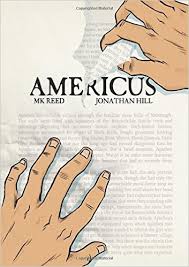
[READ: December 17, 2015] Americus

I didn’t really have any idea what this book was about–the title Americus evokes many different things.

So imagine my surprise to find out that this First Second graphic novel [go First Second!, #10yearof01] tackles the idea of banning books in schools.  It looks at religion, freedom of speech and middle school.

The story is about Neil Barton, an unpopular kid who loves fantasy and books, especially the Apathea Ravenchilde series (such a great name). Neil and his friend Danny race to library after school because the latest volume is out.  Neil is bummed that his library could only afford one copy of the book (budget cuts!) and Danny gets it first.  And as he starts reading, the artistic style switches to the Ravenchilde world (I loved that).

Then we meet Neil’s and Danny’s families.  Neil’s parents are divorced.  He lives with his mom who is harried and exhausted.  Danny’s family is an intact nuclear family, with two younger siblings.  And we learn soon enough that his mother (and father to a degree) are very Christian. (more…)

Read Full Post »

aboveSOUNDTRACK: DO MAKE SAY THINK-& Yet & Yet [CST020] (2002).

DmstandyetandyetAfter the previous album, keyboardist Jason McKenzie departed the band.  I’m not entirely sure how this impacted the band, but this album is warmer and a little more delicate feeling.  It’s also their first album that was recorded all in the same place (in band member Justin Small’s house).

The disc opens with static and effects before a jazzy drumbeat comes in.   “Clasic Noodlanding” is mellow with a complex (for them) riff on the guitar and nice washes of keyboards.  It is primarily atmospheric until about two minutes in when it suddenly changes with the introduction of a great bass line.  And then this atmospheric song turns really catchy. The five and a half-minutes feel too short in this song.

“End of Music” opens with jazzy drums and keyboards.  It’s a slow piece that stretches to nearly 7 minutes.  About half way through the song, the drums come crashing in and a brighter, noisier melody takes over.  This end section is really catchy with some great chords and excellent drumming.

“White Light Of” opens with a cool slow bass line and drum pattern.  As the song grows in complexity I like the new bass rumble that is added and the way the guitar lines seem to intertwine. About half way through horns get added to the mix, quietly at first and then they slowly take over the song. About five minutes in the song comes to abrupt halt with some interesting echoed effects on the drums. It resumes again with a stranger version of the song—it feels unsettled and really interesting, with a nice riff interspersed with one that feels off somewhat.

“Chinatown” opens unlike any DMST song.  The bass sounds electronic and skittery with some interesting keyboard sounds over the top (it actually sounds a bit like later period Radiohead).  The song is slow and moody for all of its 5 and half minutes with keyboard washes and skittery guitars.  There are quotes thrown in throughout the song but I can’t tell what they are saying.  This song was features in the film Syriana.

“Reitschule” is one of two songs that are 9 minutes long. It opens with a slow meandering guitar line interspersed with another guitar playing an interesting counterpoint.  A cool bassline comes in around 2:30 which takes the song in a new direction.  Horns propel the song along until about 4 minutes when a jangly guitar takes over the song. It builds with some abrasive guitar chords until everything washes away except the bass.  And then it rebuilds as something else.  Distant horns play in the back as the guitars play overlapping lines.  It’s an epic song that demonstrates how much this band can do.

“Soul and Onward” has a pretty conventional melody line. It’s warm and friendly It also features wordless vocals by Tamara Williamson. I love the little tiny guitar lick that works as a bridge between the two sections.  This is my favorite song on this record.

“Anything for Now” is the other 9 minute song. It is slow and pastoral to start with a beautiful multi-guitar piece with gentle drums. At around 4:30 all the instrument vanish except for a single organ note. It plays for a bout a minute and it seems like the disc will end that way but then the chords build up again from the drone.  An acoustic guitar lick begins around 7 minutes in and runs through the end of the song.

Overall this album is more mellow than their previous discs, and there are some amazingly beautiful sections of music on this album.

[READ: February 8, 2016] Above the Dreamless Dead

I’m continuing with books that I wouldn’t normally read, to celebrate First Second’s #10yearsof01 challenge and to read something out of my comfort range.

This is a collection of poetry about World War I, written before during and just after the war.  Each of the poems is illustrated by a different contemporary artist.

As you can imagine, the book is pretty gloomy.  But the poetry is pretty spectacular and the illustrations were really interesting.  Obviously this book is not going to be a happy one.  But some of the artists do add a more positive spin on the poems (while some are just brutally violent as well). (more…)

Read Full Post »

« Newer Posts - Older Posts »