Feeds:
Posts
Comments

Archive for the ‘Meta’ Category

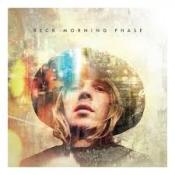
salSOUNDTRACK: BECK-Morning Phase (2014).

morningThe release of Beck’s latest album is what got me investigating Beck’s back catalog–just to see how Beck arrived at this mellow chillout place.

I read a lot about this album when it came out and, even hearing Beck discuss it, I feared it would be a little too slow and mopey for my tastes.  It is slow, but it’s not really mopey.  It’s quite pretty, in fact.  And as I’ve come to learn by going through Beck’s back catalog, he likes to experiment in all sorts of ways, but at his core, he is just a really good songwriter.

So it opens with 40 seconds of strings that act as  nice introduction to the tone of the album, but don’t prepare you for the pretty acoustic song “Morning.”  Lyrically it’s pretty dark, although with his falsetto, it’s kind of hard to realize that.  The melody and vocal line are really lovely (especially the weird echo they put on his voice).  And it has a surprisingly big sounding chorus–redemption even in sadness.  “Heart is a Drum” has piano and an acoustic guitar with swelling strings–once again, the chorus is big and (relatively) fun.  “Say Goodbye” is a sad song, and yet it is still catchy (which is nice), with a simple acoustic guitar.   “Blue Moon” has a wonderfully catchy verse structure and it picks up the tempo somewhat with beautiful swells of music.  And the chorus is dynamite too–it is a worthy single.

“Unforgiven” slows things down even more, making one of the moodiest Beck songs.  And then comes “Wave,” perhaps Beck’s darkest and moodiest song–just waves of strings with no drums and Beck’s longing voice over the top.  “Don’t Let It Go” has some very nice singing from Beck.  His voice has always been good, but he sounds like his voice is maturing somewhat here.

“Blackbird Chain” is the prettiest melody on the record, and it feels especially light after the downcast last few songs.  It has a great chorus and really strong verse melodies. My only gripe is the very brief string accompaniment in the middle of the song which feels like overkill–the piano solo is nice, bit the strings are too much.  But they’re very brief and don’t ruin the song.  “Phase” is a 1 minute instrumental that leads into “Turn Away.”  “Turn” has Beck’s layered vocals and a wonderful easy guitar sound.  The whole song has a sixties acoustic vibe, an again, the melody is great.  “Country Down” has a, yes, country feel (including harmonica solo ala Neil Young), and Beck’s lower, more powerful voice.  It’s a strange turn on this album, but it keeps with the mellow vibe.  The disc ends with “Waking Light” a slow, building song with more great vocals and a wonderful chorus, that makes good use of loud and soft.  It’s a very strong ending to an album.

Unlike other Beck albums this one is definitely a “have to be in the mood” for it.  There’s no pop singles, no dancey hits.  It’s all very mellow.  But it’s very pretty.

[READ: April 2, 2014] The People of Paper

An excerpt from this book was published in McSweeney’s #12.   Here’s what I thought of the excerpt:

This is an excerpt from Plascencia’s novel of the same name, a novel that I own but have not read yet.  And wow is this crazy.  There is, indeed a person made of paper and there are people made of meat, and there are different narrators.  Federico de la Fe is a grown man who wets the bed–as the story begins he and his wife (who tolerates the wet spot) are going to the water’s edge to fill it with new straw.  His wife has gotten used to it (ew), but once their young daughter is potty trained and her husband isn’t, she gets quite cross.  It is only after his wife has died that he learns of a cure–sticking his hand in the fire.  See, crazy–and we haven’t even gotten to the lady of paper yet.  I’m assuming that actually reading the full novel will bring some clarity to this story.

I included this as an introduction because this story is very very unusual, even after reading the whole thing.

In addition to the story being unusual (and, as it turns out, completely metafictional), even the physical product is unusual.

The story is broken into several styles, which are distinguished at the front of each chapter by either three lines, three dots or one dot.  In the three lines chapters, each page is broken into 3 columns–each column is about a character.  In the three dots section, the chapter is formatted normally, but different characters are written about.  And in the one dot section, the small chapter is about one person (you can read more about this in the interviews below). (more…)

Read Full Post »

jetpackSOUNDTRACK: WE WERE PROMISED JETPACKS-“Quiet Little Voices” (2009).

jetpacksWhen you have a book with “Jetpack” in the title, the appropriate band is We Were Promised Jetpacks, no?  I’ve heard a lot of good things these guys.  But all I knew for certain was that they were Scottish.

I listened to their debut EP, The Last Place You’ll Look, which I liked a little.  But I didn’t care for the sound of the EP itself, it was rather flat.  A few listens got me enjoying the melodies and such but it never grabbed me.  Especially when I compared it to “Quiet Little Voices,” the lead single from their debut full length, These Four Walls.

The vocals are a bit stronger, the guitars and bass are both more clear.  The overall feeling is just brighter.  Now this may be a sign of selling out (is that something bands still do?), but really I think it’s just a better production for this song.  Which has a big chorus (and good backing vocals).

I listened to a few more tracks from These Four Walls and they are all good too.  I guess start with the albums and save the EP until after you’ve absorbed the band.

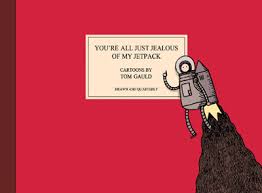
[READ: July 5, 2013] You’re All Just Jealous of My Jetpack

Gauld makes comics like no one else I know.  Most of his people are silhouetted or are the most rudimentary designs–simple triangle-shaped clothes, circle heads with dots for eyes and little else–maybe a nose if it’s profile. (Okay, there’s a bit of Chris Ware, but more like a much more relaxed Chris Ware).  And the wonderful thing is just how much he can convey with these painstakingly simple drawings.

The content of his comics is usually quite clever and often literary.  While I admit there were some I didn’t get (Like the Eric Gill cartoon–shame on me?–Aha: “[Gill’s] personal diaries describe his sexual activity in great detail including the fact that he sexually abused his own children, had an incestuous relationship with his sister and performed sexual acts on his dog.”  Geez, now the comic is very funny.).  There were some in which I liked the set up but would have preferred something funnier (like the Tom Waits comic–shame on him?)

But overall this collection was really enjoyable.  And I laughed a lot. (more…)

Read Full Post »

2013SOUNDTRACK: ARCADE FIRE-The Suburbs (2010).

suburbsWhen The Suburbs came out, it was hailed as a masterpiece and also panned as a hack job (more the former than the latter).  It was impossible to listen to it without hearing raves and rants.  And then Arcade Fire became a kind of punchline or punching bag, the band people loved to hate (although not as much as Nickelback).  I didn’t write about this record then because I wanted to let the air clear.  And then I kind of forgot about it.  I pulled it out again recently and found that I really enjoyed it.  It’s a long album with a lot of different tempos.  It reminds me of the kind of albums I used to listen to as a kid, yes in the suburbs, in which I could absorb an entire hour in one sitting (preferably while driving).

It’s not as indie as their first album nor is it as dark as Neon Bible.  Indeed, with the instrumentation and easy melodies, the album is almost pop (or more like radio friendly AOR music from the 70s and 80s).  There’s orchestration (but Arcade Fire has always had orchestration, that’s why there are eight of them in the band).  There’s heavy piano (which is possibly the most notable difference on this album–the keys have gone acoustic, which definitely makes the album sound more 70s than 2000s.  And there’s big choruses.

“The Suburbs” starts the album, but it’s really hard to deny “Ready to Start”–a bouncy number with a very winning chorus (yes, nominated as song of the year, but deservedly so).  “Empty Room” opens with a violin section that I assume is sampled (its sounds very classical and more as a quote than an introduction to the pumping, rocking song that follows.

“Private Prison” has great backing vocals in the chorus–Wim Butler and Régine Chassagne play off each other so well.  “Suburban War” has a great guitar riff–melodic and pretty in its repetition.  “Wasted Hours” is one of the few folky songs I can think of Arcade Fire playing–but it’s a traditional kind of folk–with la la la las–with a twist.

There are two tracks with a Part I and a Part II.  In both cases the second part complements and surpasses the first part in terms of overall energy and catchiness. “Half Light II” is a beautiful soaring track and “Sprawl II” (the one with Régine singing lead), is one of the best tracks on the album (the way the “mountains beyond mountains” section soars is wonderful).  That honor of best tracks also goes to “We Used to Wait” with its simple piano and cool guitar riff at the end of the verses.

The album feels like a lot of music I grew up with–radio friendly hits that perhaps Butler listened to as a kid, and as he reflects back on them he updates and deconstructs them.  “Modern Man” and “Empty Room” feel this way.  “Month of May” sounds like “Beat on the Brat” while “Deep Blue” opens with a  vibe of “Happy Together” but moves beyond it to a massive (and massively good) chorus.

It’s safe to believe the hype–there’s nothing here that will blow your mind, but  taken together it is a very satisfying collection of songs.  I also just learned that there were 8 different covers created for the album (although they all look vaguely the same).  The one above is the version I happened to get.

[READ: January 4, 2013] “Knowledge”

I didn’t know anything about Gordon Lish when I read this story.  The name sounded vaguely familiar.  Then I looked him up.  Evidently Lish has been writing for a long time, although he hasn’t written much recently.  He is more known for his editing than his writing.

This story is a self-obsessing tale in which the words that the narrator is saying are more important than what the words mean.  So the beginning of the story has the narrator stumbling, repeating, reiterating and then alliterating (which he criticizes himself for doing) without really getting anywhere.  He frets that everyone is watching him–the neighbors, the doorman–and that his sneaky actions were seen by all, especially when the masking tape stuck to him.

Strangely, as the story reaches its midway point we see that the narrator is Gordon Lish himself and he asks rhetorically if the reason he has removed the flyer from the telephone pole (hence the masking tape) is because he himself had something to do with the message on the flyer itself. (more…)

Read Full Post »

SOUNDTRACK:  DINOSAUR JR and HENRY ROLLINS-Live on KEXP, December 27, 2011 (2011). 

Back in 2011, Dinosaur Jr did several shows in which they played their Bug album in its entirety.  They also brought Henry Rollins along.  Not as an opening act–he rightly suggests that rock audiences wouldn’t want to hear him talk for 45 minutes, but as an interviewer.  Before each set he asks the band a few questions that a long-time fans might want to know.

In this concert spot he asks some questions as well, although none are all that interesting (I assume he saved the good ones for the paying audience).  But that’s neither here nor there because what we care about is the reunited Dino playing songs.  And they sound great!

It’s a four song set: “Little Fury Things” an absolute scorcher of a version of “Yeah We Know.”  And great version of “Freak Scene” and (a surprise for me) their cover of “Just Like Heaven” (which I think of as a novelty but which still sounds great).  I love that it still ends with the roared “YOU!!!”

The band sounds great–the guitar is loud and overwhelming -Murph and Barlow sound great too.  And Mascis’ voice sounds exactly the same–which is a good thing.  It’s hard to believe they were separated for so long.   This set is totally worth hearing.

[READ: October 16, 2012] “Jack and the Mad Dog”

This is a strange story in which the protagonist is “Jack, that Jack, the giant-killer of the bean tree.”  This story works to update the Jack story now that many years have passed and Jack is older, less mythical.

It begins with Jack waiting for a farmer to fall asleep so he can have sex with the farmer’s wife (for $4).  Then we see that Jack had drunk some moonshine on the way there (he is drunk for the first time).  He waits and waits for the farmer to leave, but the farmer is on to him and tells him to go home.

Frustrated, Jack leaves only to run into the Mad Dog.  The Mad Dog is sent to bite Jack and give him rabies–in other words, the fairy tale is over.  But Jack has a few resources left and he evades the dog’s bite.  As he flees, with the dog in hot pursuit, Jack sees a number of maidens and he runs with them until they catch him checking out their asses.  They turn tables on him and ask him to defend his past of lechery and debauchery. (more…)

Read Full Post »

[WATCHED: October 10, 2012] Close Personal Friend

While I was browsing Coupland’s bibliography on Wikipedia I saw this movie: Douglas Coupland: Close Personal Friend.  There is no information on Coupland’s site about it and there is precious little information about it anywhere else, frankly.  However, it has been uploaded to YouTube!

It’s a 24 minute film made for commercial TV.  It was made in 1996 and is very much of that time.  I’m not sure if Coupland was working on Girlfriend in a Coma at the time, but ideas in the film inform that book as well.

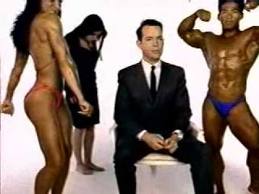
Basically it has Coupland, looking very clean-cut and smart–suit, skinny tie, hair parted hard–sitting in a white chair (a rounded chair that swivels–very “futuristic” looking).  He is sitting in front of  a white  background so his chair disappears from time to time (I’m willing to accept that that could just be the effect of a poor video transfer though).

There is an interviewer who asks him puffball questions, because it’s basically a chance for Coupland to talk about the his views of the late nineties and the future.  For instance: Do you consider yourself a citizen of the late 20th century?  (That’s just a weird question).  She asks him what the two dominant activities will be 20 years from now (which would be 2016).  His answer? Going shopping and going to jail.   Not too far off.

Coupland has always been concerned with the future (or more specifically, the millennium–I’m not sure how he has wrapped his head around the 21st century).  As I mentioned about his short story yesterday, he is very like-minded with Vonnegut about the state of humanity as we reach the millennium.   So he talks about lot of different topics including: individuality (and how we have lost it–he talks about a flock of birds seeing a group of people and finding them indistinguishable); the idea of not having a life–this was interesting, because as he points out even 20 years ago (1976), that expression would have been meaningless; consumerism; the uselessness of pop culture (how reading about Burt and Loni uses brain cells that could have been used to cure cancer).  And how technology can dehumanize us. (more…)

Read Full Post »

SOUNDTRACK: FIONA APPLE-“Every Single Night” (2012).

Many things have been said about Fiona Apple, and I’ll not repeat them here.  I will say, however, that she has put out some of the most consistently interesting music over the years.  From her introspective pop to her lavishly orchestrated pop, to the two mixes of her last album (one official, the other leaked), I’ve enjoyed all of it.

This is her first song in some seven years.  And it doesn’t skimp on what makes Fiona Fiona.  Specifically, it really showcases her voice.  And that’s because it is practically a capella.  The music is very spare–simple instrumentation (which sounds like a music box) and it more or less simply keeps the pace for Fiona’s voice (which sounds more full and powerful than ever) which creates the wonderful melody.  This may sound like a weird comparison, but I actually hear a bit of Eddie Vedder in her voice, too.

It’s a haunting song and the arrangement is curiously cool.

And I’ll share it here (well, actually I won’t share it, I’ll give you the link because it doesn’t want to embed):

http://w.soundcloud.com/player/?url=http%3A%2F%2Fapi.soundcloud.com%2Ftracks%2F43923280&show_artwork=true

[READ: April 18, 2012] Varamo

Varamo is the most recently translated of César Aira’s hundred or so books.  It was written in 2002 and translated by Chris Andrews.  So far it is my favorite of the Aira books I’ve read.

It’s a fairly simple premise, although like most of Aira’s books, the premise isn’t exactly followed from start to finish.  And like his other books, there are fun avenues of detours.  But unlike his other books, it is a remarkably consistent story.  Except of course, that even though the book is set on the day that Varamo writes his famous poem, we never even get to see him entering his house to do so.

What?

Well, I’m going to quote from the beginning because it really summarizes the “plot” of the story: (more…)

Read Full Post »

SOUNDTRACK: LE BUTCHERETTES-Tiny Desk Concert #185 (January 9, 2012).

The write up for this Tiny Desk show implies that I should know who Le Butcherettes, and leader Teri Gender Bender, are.  I don’t.  But that doesn’t matter.

In this set, it’s just Teri Gender Bender and her acoustic guitar.  And she is channeling early PJ Harvey like nobody’s business.  If you like PJ’s new album but miss the less than subtle aspects of her earlier  records (and who doesn’t, honestly), this is a very enjoyable set.  Teri is angry and it shows.  But it’s all done on an acoustic guitar, so the anger is modified by the music.  It’s a neat trick.  But it’s also a little disconcerting.  Not least because she seems so nakedly honest when she sings (when she coughs aggressively during “Henry Don’t Got No Love” it’s not entirely clear if that’s part of the song or not.  But also because Teri is not afraid to look right at the camera (or, indeed, the audience) when she sings the songs.  Teri is very pretty but there is something haunting about her, which makes these songs of loss and love all the more effective.

See for yourself here.

[READ: January 22, 2012] “Notes on The Chelsea Girls”

I’m not going to start reviewing films, or, worse yet, reviewing reviews of films.  But since I like to try to read all of the academic articles that get recommended to me, I wanted to mention this one too (I admit I will not be subjecting myself or readers to a thirty plus page article about Charles Darwin and pigeon fanciers (which seemed interesting, especially the pictures, until I saw that it was over thirty dense pages).

It’s childish to laugh that a reviewer of Warhol’s The Chelsea Girls is named Battcock, but I’m not above that sort of joke.  What is amazing, to me, is how intellectual this review is.  I’m used to reading reviews in Entertainment Weekly or even The New Yorker, which talk about the plot of the film and the quality of the direction and what not.  And The New Yorker often trashes mainstream film on highfalutin grounds.  But even that doesn’t come anywhere close to:

Warhol still questions the very nature of the medium and its relationship with the cultural matrix and the contemporary value structure–for which he clearly holds no brief.  He is determined to prove that only vital institutions can provide vital art statements; his challenges to the medium serve ultimately to assure its legitimacy.  If in his earlier movies he attempted to redefine the nature of film and to clarify its limitations, the new works may be said to check out the remaining restrictions of the art form.  These include such physical aspects as the two distinct types of images (the retinal-visual and the cerebro-visual), as well as the nature of the auditorium, projection and screen.

Battcock is kind of hash on the film–which is actually several short films–two of which are projected side by side at the same time.  He says the individual shorts, which run about 30 minutes each, are “a little bland.”  Although, as he points out above, the actual films themselves are kind of beside the point.

Indeed, he criticizes other critics for missing the “point” of these films, which is that Warhol is “stripping the cinematic medium of its pretension and decorations.”  Rather, he complains, “Nearly all the other critics writing in the popular press dwelt with the lugubrious insistence on the squalidness, sordidness, perversion, etc of the lives depicted in the film” (more…)

Read Full Post »

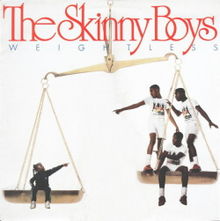
SOUNDTRACK: THE SKINNY BOYS-“Jockbox” (1986).

I didn’t realize that the theme song from Workaholics was from a real song.  I loved the “I’m fresh” bit in the show, but I thought it sounded like it might actually be from something.  Sure enough, the internet led me to this.  The Skinny Boys (evidently a response to The Fat Boys) from the hip hop mecca of Bridgeport, CT put out this beatbox song (with that cool sci-fi keybaord) as a shocase for their member: The Human Jock Box.

This is a pretty bizarre track.  And I’m not even sure what they’re talking about.  But I love the hiccups around the three minute mark.  Note also how by the end of the song, the keyboard plays the riff from Herbie Hancock’s “Rockit” and then a little later “America the Beautiful” (with accompanying beatbox).  Wha??

The Workaholics bit is from 1:13 to 1:23.  You gotta be fresh!

[READ: July 25, 2011] “Matinée

I’m not going to say how I just don’t get Coover.  Every time I read one of his stories I think the same thing: it’s clever but, well, so wha?  I know that Coover is an experimental fiction writer, but I just feel that there’s no emotional resonance to his stories.  Perhaps I like experiemntal art and music but not fiction.

There were some really cool tricks with this story.  All of the (unnamed–don’t get attached to them) characters are watching movies or are in the movies.  And so, in a series of what, infinite regresses? chance encounters? something, new characters are introduced, they watch a film (possibly of the people who were watching them?) they may or may not have sex and then the “camera” shifts to a new couple. (more…)

Read Full Post »

ATTENDED: WEIRD AL YANKOVIC-Live at the State Theater, New Brunswick, NJ May 19, 2011 (2011).

I’ve seen “Weird Al” live three times now and I have never been disappointed by the show.  The first year my friend Matt and I waited out by the bus and got the bands’ (minus Al’s) autograph.  The second time we waited even longer and Al had an autograph (and picture taking) session in the theater after the show (how cool is that?).

This year, Sarah and I didn’t wait around afterwards (kids at home) but the show was still great.  Al made a joke after the first song thanking his opening act, Technical Difficulties. (There were indeed 45 minutes of technical difficulties before the show, but Al’s joke made us quickly forget it–and, kudos to the State Theater: I ordered my tickets online from their site and the day after the concert, the theater owner sent an email apologizing for the delay. Classy!).

Sarah had never seen him perform before, so she was pleasantly surprised by the set selection.  I was also surprised by the set selection because he pulled out a few older, more obscure tracks (“Frank’s 2000″ TV” (!), “You Don’t Love Me Any More”–complete with Al smashing a guitar!).  But he also dazzled with some new tracks from his forthcoming album.

The set opened with the polka medley (“Polka Face”).  This is the first polka medley that I didn’t know any (well almost any) of the sped up songs, but it’s always a treat to watch them play it live.  The one complaint with the show was that the sound in the theater wasn’t very good (which is surprising given that it’s an old theater) so it was hard to make out a lot of the words, especially to the new songs–and what’s Al without the lyrics?).  But his new song “I Perform This Way” (parody of Lady Gaga’s “I Was Born This Way”) was fantastic (Al was dressed up like a cartoon peacock).

Yes, costume changes.  One of the most entertaining things about Al’s shows is the costume changes.  For all of his big video hits, he comes out dressed like the video (the band does as well, although it’s a bit more subtle).  So, we get the Amish garb in “Amish Paradise,” the Michael Jackson red jacket for “Eat It”–(another surprise) and, my personal favorite, the fat suit from “Fat.”  One of the funniest costume changes was for a song that will sadly not be released on the album (but you can hear and download it here), “You’re Pitiful,” in which he wore multiple T-shirts (about 5) which all expressed some kind of funny comment (anyone know who was the face on one of the shirts?) and finally ended in a Spongebob Squarepants shirts and tutu.

So how does he do all of these costume changes? In between songs, when the band runs offstage, they play wonderful video clips.  Some of the clips are from his TV shows, some are faux documentaries, and the best are interviews that Al splices together (you can see a whole bunch here) which are hilarious and surprisingly mean-spirited.  I wish he would release them (and any other AlTv segments) on DVD, but I imagine that no one would ever give permission for that–check out the Kevin Federline one, for instance.  But they’re all pretty great.

The crowd was also totally into it (including the guy behind us with an Al wig (and a Harvey the Wonder Hamster).  And the age range was fantastic–from kids to grandparents.  My only hope is that my kids are old enough to come to a concert next time he comes around.

Oh and a brief word about his band.  He’s had the same four guys with him for years and years and years.  Rubén Valtierra is the newest member of the band and he’s been with them since 1991.  Jim West (guitar), Steve Jay (Bass) and Jon “Bermuda” Schwartz (drums) have been with Al since 1980.  They are tight as a drum, can play incredibly diverse styles at the drop of a hat (check out “CNR” which sounds exactly like The White Stripes) and they all seem to have a lot of fun on stage (see them jump in the air on “Fat” or the crazy vocal-only solo at the end of “Yoda”

–which I think is longer than ever and totally mind-blowing).

[READ: May 21, 2011] This is a Book

I recently read Martin’s “This is Me” in the New Yorker. “This is Me” is, along with about 100 other things in This is a Book.  I also heard Demetri Martin on NPR a few Sundays ago and he read a few short things from This is a Book.  And they were quite funny.

Indeed, the funny things in this book are really very very funny.  It seems to work that the shorter the item, the bigger the laugh.  Conversely there are a number of longer, extended jokes which just go on and on, like a Saturday Night Live sketch that just won’t end.  Those quickly lose their humorous value.  Fortunately  there aren’t too many of those in here.

What makes me smile a lot about the book are the jokes he plays with book conventions.  So the title page says “This is a book by Demetri Martin called This is a Book by Demetri Martin.”  Or the previous page:

Also by Demetri Martin

*

*Nothing yet.  This is his first book.

The book opens with “How to Read this Book.”

If you’re reading this sentence then you’ve pretty much got it.  Good job.  Just keep going the way you are.

I’m not going to spoil the rest of the book (or talk about each piece).  But I will mention some real highlights: (more…)

Read Full Post »

SOUNDTRACK: THURSTON MOORE-World Cafe Studio, November 16, 2007 (2007).

This World Cafe set is a nice contrast to the all-acoustic performance mentioned yesterday (even if it was recorded earlier).  Thurston has a full band with him (including Steve Shelly on drums).  Samara Lubelski from the other session is here too.  The band brings new dimensions to what are mostly the same set of songs.  Both sets included “The Shape is in a Trance,” and “Fri/End” but this one also includes “Honest James.”  The contrast is striking though.  The songs are bigger with the band (and allow for more intricacies) but they are still intimate.

  The interview is also interesting.  David Dye is a fantastic interviewer and he gets some great (and funny) answers out of Thurston. The whole description of how the lyrics to “Fri/End” came about is really cool (if unlikely).

Thurston and NPR: perfect together.

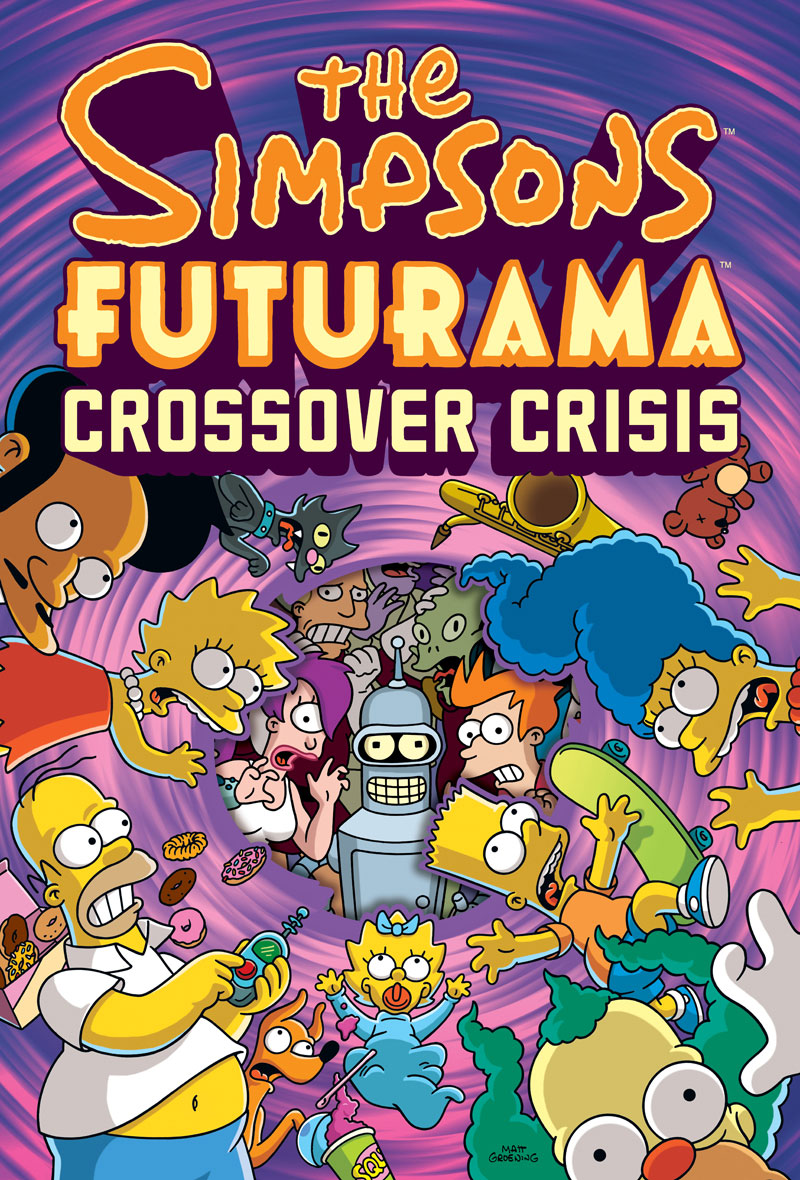
[READ: April 15, 2011] The Simpsons Futurama Crossover Crisis.

This was a wonderful Christmas surprise from Sarah this year.  It is a beautifully packaged (slipcase with a cut-away opening) hardcover edition of the 2002 & 2005 Simpson/Futurama crossover comics issues.

Despite all of my fondness for The Simpsons and Futurama, I never really got into the comics (gotta draw a line somewhere).  But they have Matt Groening’s seal of approval, and they play jokes with things that the show never really touches (not to mention, the shows never tries a crossover event–I can’t even imagine how that would work). (more…)

Read Full Post »

« Newer Posts - Older Posts »