Feeds:
Posts
Comments

Archive for the ‘Marriage Trouble’ Category

tny6.16&23.03 cvrSOUNDTRACK: SIGUR RÓS-Ba Ba Ti Ki Di Do (2004).

babaI didn’t realize that this was a soundtrack to Merce Cunningham’s dance piece Split Sides.  That doesn’t really change my opinion of the music, although it does make me wonder just what kind of dance this would have been.

There are three tracks on this short EP.  The primary instrument seems to be the music box.  There are no real vocals on the album, except for what sounds like sampled children and a few spoken words in the final track (the words are the title of the EP sampled and thrown around, apparently spoken by Cunningham).  Of course, it’s not all music box, there are synths and interesting percussive sounds (what sounds like the winding up of said music boxes).  The first two songs are quite similar, with the second being a bit more fleshed out.

The final track, with the sampled words, sounds much different and feel a bit more aggressive, although that is all relative of course.  The whole EP is about 20 minutes long.  Of all of Sigur Rós’ varied output (singles and EPs) this is probably the least essential one that is all new music.

[READ: November 8, 2013] “City of Clowns”

I had printed out all of the New Yorker stories that Alarcón had written because I enjoyed his previous ones so much. This was the first and I was blown away by how good it was.

It is a long and somewhat complicated story.

It opens with Oscarcito going to the hospital because his father died the night before.  He finds his mother mopping floors because his father’s bill was unpaid.  And in that very first paragraph, she introduces her son to Carmela—the woman whom his father left them for.  She was mopping the floor with Oscarcito’s  mother.  He is confused and enraged by this.

His half brothers are also there.  He had never met them before, preferring to stay away from his father’s other life.  But he saw them in front of him and clearly saw that they were related to him.  But the most galling thing was that although he was the oldest of all the children, they were clearly the chosen children—after all, his father stayed with them.

Then we learn about his father’s life.  He was born in Cerro de Pasco and moved to Lima when his young family was still young.  He worked hard in semi legitimate businesses and then brought his family to the city.  Young Oscarcito, age 8, loved it.  But his mother hated missing her family in Cerro de Pasco.  And now they we reliving with his father who was practically a stranger. His father worked hard and succeeded, but he was rarely home (more…)

Read Full Post »

holoSOUNDTRACK: SIGUR RÓS-() (2003).
rosAfter a staggeringly successful tour, Sigur Rós took some time off. They returned about four years after their successful album with ().  I like to think they were trying to make it easier for English speakers to not have to pronounce their Icelandic words, but perhaps they were just being more difficult.  For they have made an album title that is hard to search for and hard to say.  To make it worse, there are no song titles on the record either.  (Although the band did have I guess unofficial titles for them):

  • 1.”-” (“Vaka”) 6:38
  • 2.”-” (“Fyrsta”) 7:33
  • 3.”-” (“Samskeyti”) 6:33
  • 4.”-” (“Njósnavélin”) 6:57
  • 5. “-” (“Álafoss”) 9:57
  • 6. “-” (“E-Bow”) 8:48
  • 7. “-” (“Dauðalagið”) 12:52
  • 8. “-” (“Popplagið”) 11:43

While looking for these song tracks, I learned that a lot of people think this album is mopey and depressing.  And I couldn’t disagree more.  I find the songs to be wonderful builders of drama.  Track 1 opens with lovely piano and vocals.  It’s a pretty melody that is punctuated with odd, squeaky voices.   Track 2 is slower, with a nice guitar melody instead of pianos. Track 3 opens with organs and more lovely pianos.  The pianos are slow which I usually don’t like, but there’s something about the simplicity and solitariness of their pianos that I find really captivating.  I love that it is repetitive and building, edging towards a dramatic conclusion.  Track 4 has low drumming that propels the echoing song.

Each of these 4 songs is around 7 minutes long.  And while they are not vastly different from Ágætis byrjun, they show the band experimenting within the form.  Also, Ágætis byrjun contained several different styles mixed between their epics, whereas this album is all epic.

After the 4th song there is 30 seconds of silence.  Which signifies something of a change for the second half of the album.

Track 5 is the slowest, saddest music on the album.  But it builds slowly, growing out of that sadness with a cathartic explosion at the end.  Track 6 opens with very loud drums (the percussion is spectacular on this album) and drones.  It builds and builds with more catharsis at the end.  Track 7 is the 12 minute epic that opens with organs and washes of guitars.  The opening is slow but you get the sense that it is building towards something–there is tension in the music, especially when it shifts to a minor key around 3:30.  It takes over 4 minutes to get to the chorus.  And then the song repeats and builds again.  The end is an unholy racket until Jonsi is left singing by himself.  It’s incredibly satisfying.  The final track is 11 minutes long and opens with an upbeat guitar sound.  It’s a good song and then the drums kick in around 6:20 and the song gets even better.

So yes, this is a long album full of long songs.  And none of it is in English.  Not exactly a pop seller, and yet there is something magical about the music on it.

[READ: October 10, 2013] A Hologram for the King

I had been putting off reading this book because I didn’t really like or get the title.  Sarah laughed at me when I said this, because the title is very explicit, but I honestly didn’t know what it was supposed to mean.  My mind reeled with the metaphorical possibilities.  So imagine my surprise when the title is indeed very literal.

The book is about a man named Alan Clay who is an IT sales person.  He will be doing a presentation–which will include an interactive hologram–to Saudi Arabia’s King Abdullah.  So, a hologram for the king.  Simple.

And indeed, the story is quite simple.  I had read an excerpt from it in McSweeney’s 38 and enjoyed it quite a bit–not realizing that it was from this book, of course.  The excerpt has been changed since then but most of the elements have been incorporated.  About the excerpt I said:

a man named Alan is on a flight to Saudi Arabia for business.  We learn through the course of the chapter that he has very little money left, that he is divorced and that his daughter is now fighting with her mother (his ex-wife).  He composes letters in his head to her trying to figure out the best way to placate the scenario.  But he also knows how important this deal is, both for him and for his daughter who needs money for school.  So he tries to put everything out of his mind so he can sleep.  There’s a lot of wonderful details in this chapter.

None of those details have changed, except we don’t really see as much of the flight.

Alan has landed in Saudi Arabia after not sleeping for 60 hours.  He misses the shuttle bust to KAEC (pronounce cake) the King Abdullah Economic Center.  So he calls for a taxi.  Instead, he gets a young man name Yousef who drives him the 60 or so miles to KAEC.  Along the way, Alan and Yousef talk a lot and they hit it off. Yousef has been to America (he studied for a year there) so he understands Americans.  He also has no hope for the future of the KAEC.  Alan likes Yousef and is dismayed by his attitude about KAEC, but finds him to be enjoyable company (Yousef enjoys jokes and, as a salesman, Alan is full of them). (more…)

Read Full Post »

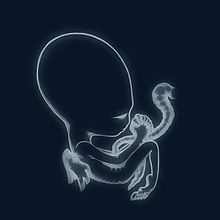
tj amalSOUNDTRACK: SIGUR RÓS-Ágætis Byrjun (1999).

AgætisByrjunCoverIn this book, Amal is listening to Sigur Rós and TJ says “Sounds like nature vomiting.”  This is not a totally inaccurate description of the band, but I mean it in a good way.  Weaver says one of her friends described the band this way and while she disagrees, she thought the quote was too good not to include.  This was Sigur Rós’s first well-distributed album (and the one that shot them into the stratosphere.)

The disc opens with “Intro” (it’s funny to think of a 9 minute symphonic track as needing an intro, but there ya go).  I believe the song is backwards music.  The vocals may be backwards, but it’s so hard to tell.  It morphs into “Svefn-g-englar” which is just stunning (and reviewed a few days ago).  “Starálfur” opens with a beautiful string section over some washes of keyboards.  It’s a pretty melody.  Then the middle of the song switches to what sounds like an unplugged electric guitar strumming. The “solo” is a big string section, and the song ends abruptly with more of the unplugged guitar.  It’s an amazingly different kind of song.

“Flugufrelsarinn”  opens with noisy guitars that don’t sound like guitars.  Although overall this is the most conventional songs.  It’s got a steady beat and Jonsi’s vocals are mixed pretty loud and (relatively) deep.  “Ný batterí” opens with quiet horns for 90 seconds.  Then a bass line emerges.  At 2:30 the vocals kick in and the song builds gentle swells until the really loud drums kick in–its a great use of drums for drama.  “Hjartað hamast (bamm bamm bamm)” opens with a harmonica and a Hammond organ!  It’s got drums and loud guitars with lots of bass and, again, Jonsi’s more growly vocals—there’s unexpected diversity in sound for this track. Especially when the guitars roar into distorted crackling.

“Viðrar vel til loftárása” was also reviewed with the above single.  “Olsen Olsen” opens with distant vocals and drums then some very loud bass guitar.  “Ágætis byrjun” is a mellow ballad, with acoustic piano and guitars.  There’s nothing over the top or dramatic about the song, it’s a pretty standard ballad (except that it’s 7 minutes long).  And it works as a perfect ending to the disc.  There is actually a final track called “Avalon.”  It is electronics and other noises—a clear denouement for the record.

This is an amazing statement of what the band is all about.  It’s over 71 minutes, and the shortest song is 6:46, except for Avalon and Intro (4:01 and 1:36 respectively).  And they would perfect this palate over their next several albums.

[READ: September 24, 2013] The Less Than Epic Adventures of TJ and Amal Volume 1

This book came across my desk the other day and I was instantly attracted to the style of drawing.  And then I read the summary: “In one night Amal calls off his arranged marriage, comes out to his parents, goes on a bender and wakes up next to a dreadlocked guy named TJ. Who says they’ve agreed to travels across the country together.”  Who could pass that up?

And man, is it an enjoyable story.

I was right about the art, E.K. Weaver is a masterful artist, conveying a great range of emotion with her characters.  She also has an excellent rendering skill for places and locations.  The streets and highways are recognizable and the occasional scenes of nature are very pretty as well.

But I was also won over by the story.  It opens with Amal storming out of the house, heading to a bar in Berkeley and blacking out.  When he wakes up, a white, dreadlocked, hippie dude is making eggs in his kitchen and smoking.  Amal is confused about the guy, pleased about the eggs and pissed about the smoking.  But he has too much else going on for him to worry too much about this guy who seems nice enough, and obviously didn’t kill him or steal from him (although Amal has to confirm that they didn’t have sex).

And then TJ, for that is the dreadlocked man’s name, explains that they are both heading east (Amal’s sister is graduating from Brown and TJ keeps mentioning Graceland, but that doesn’t seem to be where he is going) and last night Amal agreed to drive him if TJ paid for everything.  TJ proves to be very cool about it—allowing Amal to back out if he wants to, but Amal says he’ll do it.  He gets some stuff together and off they go.

On the road trip we learn a bit about Amal—how his parents arranged his marriage and have now disowned him because he is gay.  We don’t learn very much about TJ though.  And while he seems to be on the up and up—he indeed pays for everything and is very generous, there are some shifty-eyed moments where we know something is unusual with the guy. (more…)

Read Full Post »

2000_05_15_p323

SOUNDTRACK: DR. DOG-Tiny Desk Concert #7 (October 20, 2008).

drdog

I have been hearing a lot about Dr. Dog lately (they are from Philly and the radio station we listen to is from Philly, so that makes sense).  But I had assumed they were a new band.  So imagine my surprise to see that they were the 7th Tiny Desk Concert and the first full band to play the Tiny Desk.  (Their first album came out in 2005!).

It’s fun to watch a five piece band squeeze into the Tiny Desk (the drummer is playing a small pink suitcase) and the fifth member of the band is playing some various percussions (I wonder if he does more in the band).  It’s also funny when one of the guitars breaks a string and the singer says “son of a bitch.”

Dr. Dog proves to be quite interesting.  Their first song is “The Beach.”  It’s a rocking awesome track–the guitar is great and bassist Toby Leaman’s move is raspy and powerful.  I really like this song a lot.  The second song is quite different, it’s a bouncy boppy song that sounds a bit like a more rocking Grateful Dead (that bass).  This song has a different singer–Scott McMicken, who plays lead guitar on “The Beach,” but acoustic guitar here.  (The other guitarist, Frank McElroy  played acoustic on The Beach and electric on this one).

After a lengthy discussion they play the third song (in a different version from the record) “How Dare.”  This song opens with their great harmonies (a wonderful feature of the band).  It also has a jam band quality (Toby’s back on vocals but less raspy and powerful, and more bluesy)/on this track.

The band seemed to think they were only to play two songs, and frankly it’s a shame they only play 3. At 12 minutes it one of the shorter Tiny Desk concerts.  But I am a convert to Dr. Dog, and I need to hear more from them.

[READ: November 10, 2013] “Reunion”

After listening to Richard Ford in yesterday’s podcast, I decided I wanted to read his take on the Cheever story “Reunion.”  And while I can definitely see that it was inspired by a kernel of an idea in Cheever’s story, I probably never would have put the two together had I not known.

Ford’s story opens the same way as Cheever’s with someone waiting in Grand Central Station.  It turns out that the person is Mack Bolger.  Bolger is waiting intently for someone.  We quickly learn that the narrator who spies Bolger had had an affair with Bolger’s wife, Beth about a  year and a half prior to this meeting.  It ended abruptly when Mack confronted them in their hotel room (in St. Louis).  Mack (who is a large man) boxed the narrator’s ears a bit and sent him running from the room in varying stages of dress (and without a precious scarf which his mother had given him).

He had not seen Mack again, although he did see Beth on one final instance–a sort of final closure.  They met in a bar and tied up loose ends, and that was that.

So when the narrator sees Mack he gets this sudden urge to speak to him:

just as you might speak to anyone you casually knew and had unexpectedly but not unhappily encountered. And not to impart anything, or to set in motion any particular action (to clarify history, for instance, or make amends), but just to speak and create an event where before there was none.  (more…)

Read Full Post »

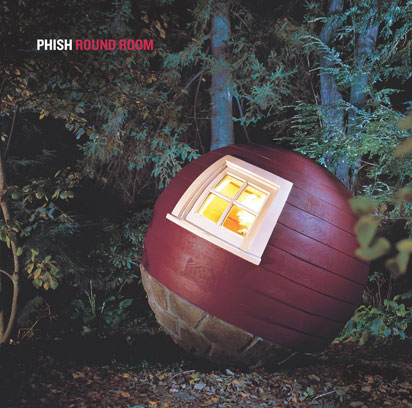
wallsSOUNDTRACK: PHISH-Round Room (2002).

round After Farmhouse, Phish went on a hiatus.  No one knew it would be quite so brief, but there was really a feeling that they were done.

And then they quietly released Round Room in 2002.  And it bursts forth with an 11 minute song.

“Pebbles and Marbles” has an interesting riff—complex and pretty.  And when I listened to it again recently I didn’t really quite recognize it.  But that’s because it’s nearly 12 minutes long and the really catchy part comes later in the song.  At around 5 minutes, the catchy chorus of “pebbles and marbles and things on my mind” announces itself.  And it is a good one.

“Anything but Me” is a pretty, mature song that is slow and piano heavy.  “Round Room” is a boppy little ditty (clearly a song written by Mike).  It is sweet and a little weird.  “Mexican Cousin” sounds a lot like a cover (maybe an old song by The Band) except for the solo which is very Trey.  It’s a funny, silly ode to Tequila.  “Friday” is a slow six minute song with two sections.  The verses are spaced out a bit, delicate riffs that are mostly piano once again.  The middle section is sung by Mike (which makes it more mellow somehow).

“Seven Below” is an 8 minute song.  It has another great riff (and the intro music is cool and bouncey).  When the vocals come in, it’s got gentle harmonies as they croon the sweet song).  Most of the 8 minutes are taking up with a guitar solo.  “Mock Song” is another of Mike’s songs.  This one seems to be a random selection of items sung to a nice melody.  Then when the chorus comes it’s quite nice, how this is a “just a mock song.”  The first verse is sung by Mike, then Trey does a kind of fugue vocal with different words in verse two.

“46 Days” opens with funky cowbells and turns into what seems like a classic rocking folk song—few words but a great classic rock melody (complete with 70s era keyboards).  “All of These Dreams” is a mellow piano piece, another mature song.  “Walls of the Cave” has an interesting piano melody that opens the song. The song is nearly ten minutes long and the middle part has a nice flowing feel to it.  There’s also a few sections that are separated be drum breaks—something that doesn’t often happen in Phish songs.  When the third part opens (to almost exclusively percussion, their vocals all work in a very nice harmony.  It’s a long song but with so many parts it always stays interesting.  “Thunderhead” is another piano-based song with some guitar riffs thrown on top. But it is largely a slow, mellow piece.

“Waves” is an 11 minute song with long instrumental passages.  It also begins with a kind of Santana feel to it, but it is a largely meandering song, with a simple melody that they stretch out for much of the song.  So this album proves to be an interesting mix of long jams and mellow ballady type songs.  It seems like Phish had a big mix of things to let loose.

[READ: November 1, 2013] If Walls Could Talk

This book reminds me of the work of Mary Roach—exploring a topic in great detail and including lots of amusing insights.  The two big differences here are that Worsley is British and that she goes back very far in British history to give us this fascinating information about the development of certain rooms of the house.

Worsley begins with the bedroom.  She looks at the furniture—the history of the bed from lumps with straw to fantastically ornate full poster beds that were made for kings who might never actually use them.

Then she moves on to more personal matters—sex (including deviant sex and venereal disease); breast feeding (for centuries mothers felt they were not equipped to take care of and nurse their own children, hence wet-nurses) and knickers (royalty had an entourage designed specifically to assist with underthings).  Indeed, privacy was an unknown thing in olden times.  Even royalty was expected to receive people in all of the rooms in the house.  Initially the bed chamber was for their most intimate friends, not just for sleeping.

The section on old medicine was also fascinating, they believed that it was vaporous miasma that did you more harm than say, excrement-filled water.

The section on Sleep discusses what was also in a recent article by Gideon Lewis-Kraus—that there were two sleep times at night.  With no electricity there was no artificial light to keep people up late so they would go to sleep early, wake up in the middle of the night (the best time for conception of children) and then sleep again. (more…)

Read Full Post »

slippageSOUNDTRACK: PHISH-Farmhouse (2000).

farmhouseThis album has a very acoustic feel to it and I really enjoy this disc.  It is one of their most “mature” records and I feel a lot of fans don’t enjoy it as much, but I think the songs are really pretty.

“Farmhouse” is another one of my favorite Phish songs.  I love the harmonies and the melody is beautiful.  The end of the song with the two singers doing different lines of vocals is just beautiful.  “Twist” is a live favorite although here it opens with percussion only before Trey starts singing.  But then the song proper starts and it is just a riot of fun. Woo!

“Bug” is a mellow contemplative song about God.  It a little long and I must admit, a little dull.  “Back on the Train” is usually much faster live—it sounds like a slow train here.  “Heavy Things” returns the album to excellence, it’s a wonderful uptempo song that is fun to sing along to.  “Gotta Jibboo” is a silly dancey song with horns.  It’s a long jam about 5 minutes most of which is instrumental.  “Dirt” is a piano ballad.

“Piper” is a wonderful round with a melody that circles around the song, I really enjoy this song live and it’s fun to hear how fast they do it here.  I love the way the “words and words I say” gets cycled through.  “Sleep” is a 2 minute gentle ballad.  And “The Inlaw Josie Wales” is a pretty acoustic guitar/piano instrumental.  “Sand” is a funkier number that brings up the tempo.  Of all the songs on the album, I don’t know this one all that well, but it is very Phish like.  “First Tube” ends the disc with a staccato guitar riff that sounds very much like Santana to me.  It’s got a great beat and is very cool.

Perhaps I’m showing my age but I so is Phish, and I think this is a really solid album.

[READ: November 4, 2013] The Slippage

I knew Ben Gereenman from Superbad, a McSweeney’s book.  I liked it a little—but it was more trickery than story telling.  I had gotten it in my head that The Slippage was a good novel (I’m not sure why), and when I saw it at work on Friday, I grabbed it in hopes of reading it before I got back to work on Monday.  And I am pleased to say that I polished off this 288 book in a weekend (and suffered for my lack of sleep).  But I didn’t only finish it because of a self-imposed challenge, I really got into the story.

For this book Greenman’s style is simple and straightforward (a far cry from his earlier, more deliberately challenging work) and the story itself is also rather simple.  But it is engaging, funny and emotionally exhausting.  So the simple story is one of suburban discontent.  The blurb that stayed with me was “If Emma Bovary had lived in the ‘burbs, she would have left a novel like this in her wake.”

The main characters in the story are William Day, his wife Louisa and her brother Tom.  Indeed, the book is really about William and how he handles suburban discontent.  We meet all of the Day’s friends.  In addition to these people there is Emma, the woman who William has an affair with. (more…)

Read Full Post »

ornerSOUNDTRACK: PHISH-Hoist (1994).

hoistI always think of Hoist as a kind of goofy album because of the way they are dressed on it (and the crazy cover).  But it is absolutely not.  Indeed, opener “Julius” sounds like a ZZ Top song.  In fact, every time they’ve played it live I assumed it was a cover.  It is less restrained in the live setting, because this version has more acoustic guitar.  There’s even backing vocalists and horns.  “Down with Disease” has that great watery bass, but the song (which sounds good) here is a little stiffer than the live version.  It also has something of an R&B feel (with backing vocals) even if the guitar is certainly not R&B at all.  It bleeds right into “If I Could” a pretty harmony-voiced mellow song.  The big surprise comes from the Alison Krauss vocals–she gets a solitary line or two and then harmonies.  The song is very pretty but the strings are overkill.

“Riker’s Mailbox” is indeed a reference to the Star Trek character, although the 30 second burst of noise is pretty hard to explain. Nevertheless, the trombone is played Mr Riker himself, Jonathan Frakes.  It jumps into the rocking “Axilla, Pt. 2” which is usually a little faster live (I like the sloppier crazier live version better). There’s some vulgar dialogue in the middle of the song.

“Lifeboy” is a mellow acoustic song that builds from just guitar.  Lyrically it’s interesting: “God never listens to what I say…and you don’t get a refund if you overpray.”  It folds into “Sample in a Jar,” which is just as good here as any live set.  “Wolfman’s Brother” ahs horns thrown on top and some interesting sound effects.  Although overall l don’t like this version nearly as much—I don’t care for the horns or the backing vocals plus in the live version they emphasize the bruh of brother more which is cooler.  (Although I do enjoy the weird “Shirley Temple” line at the end).  “Scent of  Mule” opens so strangely with crazy guitars and a thundering drum.  The singing is very silly (with silly voices) and has a very twangy style (complete with banjo and yeehah).

“Dog Faced Boy” is a sweet (but weird) acoustic guitar number.  “Demand” is a ten minute song which I don’t really know at all.  It has a strange, staccato style riff.  At 2 minutes in, a car starts and after a commercial on the radio the driver pops in “Split Open and Melt” (a nod to “Detroit Rock City,” perhaps?).  This goes on until 9:30 at which time there’s a car crash and choir of angels (sick!).

I don’t car for the horns and R&B flavoring of this album, but the song selection is really quite good.

[READ: September 24, 2013] Last Car Over the Sagamore Bridge

I read about this book in Tom Bissell’s reviews recently.  He really made it sound like an interesting book.  So when I saw that we had just received a copy, I grabbed it and brought it home for the weekend.

There are 52 short stories in the short book (which is less than 200 pages).  Some of the stories are very short (1 page) with a few coming in at 5 or 6.  The 1 page stories are like flash fiction but they seem to be more of snapshots than actual full stories and they seem like they might be diary entries or something. The fact that a number of them are italicized with dates at the end make them seem like a selection from the same person rather than individual stories.

The stories are set all over the world, although they tend to focus on Chicago and Boston.  They are pretty universally dark with themes of death and loss permeating the collection.  And yet despite their overall negative feeling, the stories aren’t really depressing, exactly.  Bissell described the narrators as like someone telling a story about someone telling a story.  And that is true and that distance seems to take some of the edge off the stories.

But what’s impressive is the consistently strong and powerful writing.  The way that Orner is able to convey so much with such few words.  Some stories are just a scene, others are a whole lifetime.  But either way they are all really gripping.

I wasn’t going to write about each story, but it would have nagged at me if I didn’t, so here’s a few words about 52 stories. (more…)

Read Full Post »

SOUNDTRACK: PHISH-Live Bait 04 (2011).

bait04This Live Bait free sampler is compiled of songs from some of their summer tours (all songs are from June-August).  And it’s a fun collection of mostly long jams.

“Scent of a Mule” dates from 1996 and has a very “old” quality, like the band doesn’t sound as full as normal (the vocals also have an unexpected country feel). There’s a bit of “Sunshine of Your Love” from the guitars while Page is doing an elaborate solo.  Indeed there’s a lot of piano on this track—much more than usual (and some of it is crazy).  There’s a Jewish music section done on both guitar and voice which abruptly ends when the song returns to “Scent”.

“You Enjoy Myself” is one of my favorite Phish songs.  This version clocks in at almost 25 minutes.  At around 21 minutes the song devolves into them making a bunch of silly rhythmic noises, which must be very fun to see.  The next track is “The Landlady” (from 1993), a wonderful instrumental that morphs into “Tweezer” which has a pretty wild and raucous jam component.  There’s also a repeated guitar motif (which I don’t recognize) that seems to be a cue for the band to do things (play loud and fast or really slow—including their impossibly slow rendition of The Simpsons theme song.  It’s a neat trip.

The next track is “Mike’s Song.”  It opens a 36 minute jam that devolves at around 18 minutes into real silliness with spacey effects and controlled laughter.  At about 20 minutes, it morphs into the simple song “Contact” and eventually into “Weekapaug Groove.” Which starts in an unusual way—instead of Mike only playing the bass, the band joins the song in progress.

“Split Open and Melt” has some loud bass—I hadn’t really noticed the bass so much before, and in this version in particular Mike seems like maybe he’s mixed a little louder and he’s playing some really funky stuff (and making quite a few errors, it must be said).  Next comes the silly “NO2” (from 1999), which duplicates the effects of the record pretty well, and the guitar solo at the end of very pretty.  “My Friend My Friend” is a pretty dark song but it starts with the very pretty guitar work until the minor keys take over.  It slowly morphs into “McGrupp and the Watchful Hosemasters,” a lyrically insane but musically great song.  Page gets a lot of solo time in this song, too.

The next song is “Twist” always a fun and energetic live track.  There’s a very slow jam in the middle of the song (which in total is 29 minutes) before it turns into a very echoey “Slave to the Traffic Light.”

The next song is a nearly 20 minute, joyous “Free”.  It morphs into a beautiful “What’s the Use” yet another or f Trey’s gorgeous rising melodies.  “Axilla” is a fast almost punky version as is the near barbershop quartet riot of ”My Sweet One” which is the fastest I’ve heard it done.  And “Run Like an Antelope” is as frenetic as I’ve heard it—the pace of this segment (from 1993!) is insane.

“David Bowie” begins but then pauses as Trey sings “Catapult” a short piece that I don’t think I’ve ever heard played before.  Then “David Bowie” resumes for the remaining 10 or so minutes and it is a fast and furious cut as well.  This great free set ends with a 15 minute “Divided Sky,” which sounds as good as ever.

Phish releases a lot of concerts, so it’s nice that they throw these free compilations to us once in a while.

[READ: October 15, 2012] “Puppy”

This story is included in George Saunders’ new collection Tenth of December.  But since I was able to find it at the New Yorker, I figured I’d read it now (this means that of all of the stories in the collection I have only not read two).

This story is dark.  Although it doesn’t seem so at first.

The story begins by looking at a married woman who has their two kids in the car with her.  She is trying to get them interested in the beautiful autumnal day but they have heard it all before.  And besides, her son is deeply engrossed in his video game Noble Baker “Not now, Mom, I’m Leavening my Loaves” (ha).  Which is better than the game he wanted, Bra Stuffer.  We go into the woman’s head and (at least in my case) pity her a little bit for trying so hard with kids who clearly aren’t interested.  Like when she read the instructions to her son’s video game so she could offer him tips while he played (and he swats her away, but at least it is “affectionately”).

She keeps her spirits up.  But every example seems more sad than nice.  When she thinks about her husband who says “Ho HO!” to anything that comes up.  Like all of the animals that they own, and how few of them are actually played with by the children.

The other day she spoke of their dog as a puppy and her daughter cried because she didn’t remember it.  So of course she had to get them a new puppy.  She saw an ad for a puppy and decided to go check it out. (more…)

Read Full Post »

ailisSOUNDTRACK: THE BLOW-“Parentheses” (2006).

blow1I learned about The Blow from NPR Music.  The lads played a new song by them, but this song, which is also available on NPR, is from 2006.  I don’t know anything else about The Blow.  But I do know that “Parentheses” is a delightful little pop confection (with enough elements of weirdness that explain why it was never a hit).

“Parentheses” immediately sounds like something I’ve heard before.  That chorus is just so perfect—“when you’re holding me, we make a pair of parentheses” that I can’t believe no one has thought of it before.  Of course, the bit in the verses about the deli aisle is certainly unexpected.

I normally don’t like the bap bap // bap drum beat, but it’s perfect here.  The stripped down nature of the music (simple chords on a few different keyboard sounds) accompanies this perfectly.  It’s sung with Khaela Maricich’s sweet and almost fragile (but not) voice.

It is so catchy I have now listened to it three times in a row.  And that little guitar tail at the end is very inviting as well.  I can’t believe this song wasn’t huge.

[READ: September 26, 2013] Desolate Heaven

I read this play because of my friend Ailish—I’ve never seen anyone with a name almost like hers—Ailís—before.  And, given the Irish name it is no surprise that the story is set in Ireland.  But rather than Dublin, it is set on a desolate beach.  We see two young girls: Orlaith (13) and Sive (12) messing about.  They are acting like adults—complaining about the beach and “the kids” and how everything is awful.  Despite some tensions, the girls bond over their difficult lives.  Each lives with a single parent and in each case, the parent is an invalid.  Each girl has to do everything for her parent in addition to going to school.  And in the next few scenes we see just how desperate their situations are: Sive’s mother has broken her pelvis (and has been unable to move for two years) and Orlaith’s father didn’t get up at all today because he didn’t feel he was able to.

In the next scene, we see the girls acting out a plan—to meet at the beach with as much money as they can grab.  And just like that, they are off on a road trip. (more…)

Read Full Post »

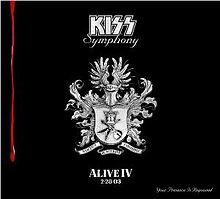
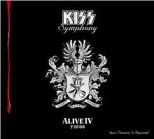
CV1_TNY_09_23_13Brunetti_spine.indd 220px-Alive_IV_KISSSOUNDTRACK: KISS SYMPHONY-Alive IV 2/28/03 (2003)

This CD is a bit out of order in the Kiss chronology, but since I’ve just looked at a few live Kiss albums and looked at “Atom Heart Mother,” the ultimate orchestra rock, it seemed like a good time to throw this in.

This is from a Kiss concert in Melbourne Australia.  The disc (and I assume the concert) is broken into three sections: regular Kiss, Kiss with the Melbourne Symphony Ensemble and Kiss with the Melbourne Symphony Orchestra.

The first six songs rock pretty hard.  It’s an interesting collection of songs from throughout their career.  “Deuce” and “Strutter” sound good.  “Let Me Go, Rock n Roll” is a surprise and one that I like a lot, (although I find it weird that Peter Criss says exactly what he said at the end of the song on Alive! –it was in audible then and it is inaudible now).  Of course I wish they hadn’t chosen “Lick It Up” but it is better than on Alive III (I like the way he turns the “I want you, I need you” into a simple plea “to clap your hands”).  It makes me laugh that Paul is still using the “rock and roll pneumonia” schtick thirty years after I first heard it to open “Calling Dr. Love”.  And then there’s the new song, “Psycho Circus,” I haven’t mentioned that album yet but it’s a new song and they play it with verve.

The one thing about the disc that is especially obnoxious is how proud of themselves they are about doing this tour with an orchestra.  Paul says, ““Some people said we were crazy to attempt this Maybe we are crazy but that’s what makes us Kiss.”  And yet, clearly it’s not an original idea (I mean even Metallica, the most obvious comparison did theirs three years earlier).

When the Ensemble comes out, they play 5 mellow songs.  The first (and most obvious) is “Beth”.  But man does it sound lousy here. Peter doesn’t seem to have any of the oomph to make it sound any good.  (The orchestra sounds good though).  The next obvious song is “Forever.”  What I find odd about these “Ensemble” songs is that it sounds like the band is using acoustic guitars which just add a strange percussive sound (since you can barely hear the guitar over the orchestra).  I understand being unplugged for the Ensemble, but it sounds weird.

The huge surprise comes with “Goin’ Blind” in which Gene sings in a quite pretty falsetto.  He sounds old (for sure), but it’s a surprisingly pleasant voice.  Another huge surprise is the inclusion of “Sure Know Something “ from Dynasty.  And then the craziest surprise of all is “Shandi.”  “Shandi” is one of those songs that I used to joke asking if Kiss played it live.  I cannot believe they played it (even with an orchestra)  I wonder if Australia especially liked the Dynasty/Unmasked era.  Of course, I love that era as well and am thrilled to hear this song live (even if Paul sounds a little stilted singing it).

Then comes the bloat.  Disc two brings in the full orchestra and the sound is…weird.  The orchestra is sort of playing along with the band (mostly like added strings to pop songs and swells as needed). The big surprise is that the strings don’t play the iconic solos—which would be frankly amazing–imagine the whole string section playing the solo to “Detroit Rock City.”  Rather, the sounds that we hear most from the orchestra are the horns, which make it sound kind of like a marching band playing Kiss.  But the real problem is that the band seems to be fighting with the orchestra.  Since the guitar and entire orchestra are playing the same thing, you can’t really hear one or the other very well.  Worse yet, by the end, both Paul and Gene seem to be screaming to be heard over the orchestra, which makes them sound quite bad.

It’s not a total disaster.  Some songs work just fine.

“King of the Night Time World” had orchestration on the album, but in this version, they just seem to be throwing in strings everywhere.  “Do You Love Me?” works great in this setting for the exact opposite reason that I didn’t work in Unplugged—the orchestra brings up the chorus to higher levels.  “Shout It Out Loud” is pretty successful with the orchestra although Gene seems really flat.  The orchestra works well on “God of Thunder” probably because the music itself is so spare that the orchestra fills in the gaps nicely.

I’m always disappointed when Paul plays around with the vocal styling in popular songs—he does it a lot in “Love Gun.”  I’m not saying that every song should sound just like the record, but it’s weird unsettling when he mixes things up in weird ways as he does here. The orchestra is good for this one though.  And, the strings work great with “Black Diamond.”

On the other side of things, It is very creepy to have a children’s choir sing to the groupie-anthem “Great Expectations” but it does sound good—until the end when Gene doesn’t even seem to care a bout the spoken words.  “I Was Made for Lovin’ You” gets less disco and a bit more rock here.   And the set ends with “Rock n Roll All Nite” which is something of a throwaway here.  It’s the inevitable conclusion to the show, with the orchestra being little more than accents.

So the orchestra is not really a very successful addition to the set.  It may have been great to see live (the orchestra in Kiss makeup and all), but the recording leaves something to be desired.  The set list, on the other hand is pretty great and I would love to have these songs in any future show that I see.

[READ: September 25, 2013] “Bad Dreams”

I’ve enjoyed most of the Tessa Hadley stories I’ve read in the New Yorker.  And most of them have had similar themes.  But this one is quite different.

I’ve been finding with a lot of stories lately that I really like the way a story starts out and that I kind of wish it would keep doing whatever the story is doing, but that the author has something else in mind.  It’s hard to complain about that because it is the author’s story, not mine, but it still bums me out a little even if I ultimately like where the author went with the story.

So in this one, a child wakes up in the dark.  We get a glimpse of the house and where she is at, but the crux of her waking up is that she had a dream about her favorite book, “Swallows and Amazons.”  The really cool and spooky thing about the dream is that she dreams an epilogue to this story that she has read so many times.  And the epilogue is disturbing—not horrifically, but just enough to freak out a young girl.  She dreams that that one of the boys drowned, that her least favorite girl, the plainest girl went on to a long happy life, etc.

This is such an interesting idea tha I couldn’t wait to see where it went.  Of course, I can’t even imagine where you could go with that, and maybe Hadley couldn’t either.  Because instead we leave the girl’s room and head to her father’s study.

We learn about her father but during her visit she decides to upend all of the furniture in the room.  Not out of malice, but in a dreamlike state.  And then she imagines her parents’ reaction to this and thinks it will be very funny.   She vows to never admit that she did it.  Then she goes back to sleep. (more…)

Read Full Post »

« Newer Posts - Older Posts »