
Feeds:
Posts
Comments

Archive for the ‘Marriage (Happy)’ Category

eaveptotterSOUNDTRACK: ELIZABETH ANKA VAJAGIC-Nostalgia/Pain EP [CST035] (2005).

This album is considered an EP, probably because it runs about 33 minutes. And yet with 3 songs and one of them nearly 20 minutes long, it feels like a much bigger release.

The first song, “Nostalgia” is 17 minutes long and begins with three minutes of scratchy violin “warm up” sounds.  Around 3 minutes guitars start playing some simple chords which gives the violin some direction.  Around 4 minutes’ Vajagic voice comes in, throaty and raw like a wounded PJ Harvey crossed with Patti Smith.  The song doesn’t vary all that much in the 17 minutes, but it’s her voice that carries the anguish and pain of the song along.  The interesting touch of the scratching guitars on the edges gives more angst to the song.  Starting around 12 minutes, the song kind of devolves into a series of noises –clicking drums, scratching violins.  A kind of free-form exploration like the beginning was.

So although the song is 17 minutes, it’s really only about nine of actual song.  The rest is sort of an experimental jam, with the volume down quite low in comparison.

Song 2, “Pain” is 12 minutes and opens with a slow guitar melody.  But the real focus is Vajagic’s voice because the instrumentation is basically a guideline.  Until, that is, the 4 minute mark comes around, when the guitar turns electric and more powerful and EAV’s voice goes away for about 3 minutes.  The melody is simple but has a good yearning and building quality with an interesting slow guitar solo meandering around.  Around 8 minutes she begins singing again, repeating the original vocal melody but now with screaming guitars behind her–it’s quite a change and a cathartic introduction of new sounds.  The ending kind of drifts away without ever really letting go.

The final sing is only 4 minutes.  It opens with cracking sounds and a music box.  When the song proper starts there’s more quiet guitars and EAV’s voice and that’s all the song is–like a microcosm of the longer songs and somewhat more powerful for its condensed nature.   Although I do prefer the louder more angsty music she makes, this is a nice showcase for her restraint.

This is the last record that I’m aware of her releasing.

[READ: April 26, 2014] Lord Tottering: An English Gentleman

I saw this comic strip book at work and decided it was interesting looking and might be fun to read.  The title made me laugh as did the Registered Trademark “Tottering-By-Gently” and is a kind of compendium of Lord Tottering comic strips.

Never heard of Lord Tottering?  Me either, but it has been appearing weekly in the magazine Country Life since 1993 and is “phenomenally successful” according to the introduction.  Which also states that Annie Tempest is one of the top cartoonists working in the UK.  (I’ve never heard of her either, but again, that doesn’t mean much).

The cast consists of Daffy Tottering, who reflects “the problems facing women in their everyday life” (if you are rich and British, and live in “their stately home in the fictional county of North Pimmshire).  She also spends time (and I feel compelled to put all of this in here because it is an amusingly long list):

“reflecting on the intergenerational tensions and the differing perspectives of men and women, as well as dieting, ageing, gardening, fashion, food, field sports, convention and much more.” [She must be exhausted].

Her husband is Dicky.  He is basically a retired rich Englishman who hunts and fishes and goes to the kind of club that is mocked endlessly in Snuff Box.

I mock this cartoon a little bit because it is pretty mockable–wealthy aristocrats suffering white people’s problems.  Think of it almost like Cathy for Rich Britons.  And yet, despite all the mocking, I got a chuckle out of a lot of the strips, and I’m sure it brings a smile to many people. (more…)

Read Full Post »

CV1_TNY_10_14_13McCall.inddSOUNDTRACK: GRIPE-In His Image (2014).

gripeinhisimageWith the new year, I was excited to see what albums NPR would be streaming.  Imagine my surprise when the prominent album was by a grindcore band called Gripe.  I’d never heard of Gripe before.  But Lars, the guy who posted the album, said that they’ve released two albums and two singles (most of which you can download for free at Grindcore Karaoke).

I downloaded their album Pig Servant and their split single with Chulo (all 15 songs fit in under 13 minutes).  And now I’m giving this one a listen.

So grindcore is a fair name for the sound of the music–take hardcore but make it sound like it is grinding against something.  On Pig Servant, the longest song was 1:47, and that included a lengthy sample.  I have to assume it took longer to draw the elaborate cover than to record the album.  It sounds fast and noisy and chaotic and like it was recorded on a boombox.  I was surprised that there was a liner note with the download because I didn’t believe that the noise he was making was actually lyrics, but if you follow along you can kind of tell that he’s screaming actual words.

In his Image is a more sophisticated sound.  The drums don’t sound like tin plates, there’s an actual bass sound and one of the songs is over 3 minutes long.  You still can’t understand any words. But song titles like “7 Billion Reasons Not to Reproduce,” “Assisted Genocide” “Stuff Your Wretched Face” and “Nothing Left But Hate” give you some idea of what you’re in for.  I was surprised by how articulate the words from  Pig Servant were–not poetry mind you, but articulate at least.  There’s no lyrics sheet for this so I have no idea what to make of the words here.

This album is 23 minutes, which is a bit long for grindcore (and may be longer than all of their existent recorded output).  I just like the idea that you can listen to this on NPR.  If you dare, check it out.

By the way, this recording has literally nothing t do with this story.  Nothing.

[READ: January 8, 2014] “Katania”

Wow, I really liked this story a lot. It is fairly simple and the end may be a bit obvious and/or gimmicky, but Vapnyar earned it.

It opens with the narrator, Katya,  reflecting back to when she was a little girl living in Russia.  She did not have a lot but compared to some, her family was comfortable (they had a three room apartment).  But the thing that held her interest and love was her doll family.  They lived in a shoebox.  It was painted to look like a house.  It also had furniture and even some animals–a cow, a pig and a very large chicken.

As for the doll people there were only girls.  One became a mother, one became the daughter (or herself) and a hedgehog head on a human body was the grandma.  But there was no father.

Katya suggests that this was not uncommon for the time and location–there seemed to be no fathers around.  Her own father had died, but many other fathers had simply run off.  Like the neighbor’s father who shouted “I’m sick of all of you” and then left.

Then her uncle brought her a father doll.  He was perfect–he fit in with the family and had a beautiful smile.  He did have a disjointed leg, but the narrator didn’t mind.  Until Tania made fun of it. (more…)

Read Full Post »

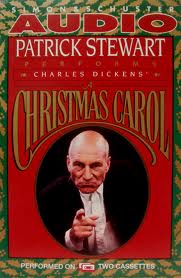
[LISTENED TO: December 29, 2013] A Christmas Carol

patAfter enjoying the play of A Christmas Carol, we decided that since we were on a longish trip for Christmas, that we’d listen to the audiobook and see what was different.  The kids were certainly less engaged than a more kid-friendly book, and that’s understandable—the language is pretty opaque from time to time.  But I was pleased at how they were able to tell where we were in the story (as compared to the place) most of the time.

I felt that the play was different, so i was listening for them.  I don’t know anything about the adaptor of the play and his choices to change things—I don’t even know if the version we saw is a standardized version of the play (I feel like next year we should see it somewhere else for comparison).  But there were more than a few things that were changed. (more…)

Read Full Post »

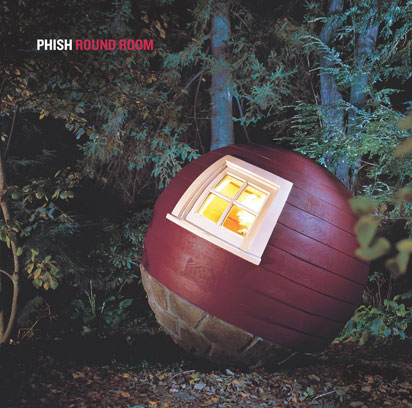
wallsSOUNDTRACK: PHISH-Round Room (2002).

round After Farmhouse, Phish went on a hiatus.  No one knew it would be quite so brief, but there was really a feeling that they were done.

And then they quietly released Round Room in 2002.  And it bursts forth with an 11 minute song.

“Pebbles and Marbles” has an interesting riff—complex and pretty.  And when I listened to it again recently I didn’t really quite recognize it.  But that’s because it’s nearly 12 minutes long and the really catchy part comes later in the song.  At around 5 minutes, the catchy chorus of “pebbles and marbles and things on my mind” announces itself.  And it is a good one.

“Anything but Me” is a pretty, mature song that is slow and piano heavy.  “Round Room” is a boppy little ditty (clearly a song written by Mike).  It is sweet and a little weird.  “Mexican Cousin” sounds a lot like a cover (maybe an old song by The Band) except for the solo which is very Trey.  It’s a funny, silly ode to Tequila.  “Friday” is a slow six minute song with two sections.  The verses are spaced out a bit, delicate riffs that are mostly piano once again.  The middle section is sung by Mike (which makes it more mellow somehow).

“Seven Below” is an 8 minute song.  It has another great riff (and the intro music is cool and bouncey).  When the vocals come in, it’s got gentle harmonies as they croon the sweet song).  Most of the 8 minutes are taking up with a guitar solo.  “Mock Song” is another of Mike’s songs.  This one seems to be a random selection of items sung to a nice melody.  Then when the chorus comes it’s quite nice, how this is a “just a mock song.”  The first verse is sung by Mike, then Trey does a kind of fugue vocal with different words in verse two.

“46 Days” opens with funky cowbells and turns into what seems like a classic rocking folk song—few words but a great classic rock melody (complete with 70s era keyboards).  “All of These Dreams” is a mellow piano piece, another mature song.  “Walls of the Cave” has an interesting piano melody that opens the song. The song is nearly ten minutes long and the middle part has a nice flowing feel to it.  There’s also a few sections that are separated be drum breaks—something that doesn’t often happen in Phish songs.  When the third part opens (to almost exclusively percussion, their vocals all work in a very nice harmony.  It’s a long song but with so many parts it always stays interesting.  “Thunderhead” is another piano-based song with some guitar riffs thrown on top. But it is largely a slow, mellow piece.

“Waves” is an 11 minute song with long instrumental passages.  It also begins with a kind of Santana feel to it, but it is a largely meandering song, with a simple melody that they stretch out for much of the song.  So this album proves to be an interesting mix of long jams and mellow ballady type songs.  It seems like Phish had a big mix of things to let loose.

[READ: November 1, 2013] If Walls Could Talk

This book reminds me of the work of Mary Roach—exploring a topic in great detail and including lots of amusing insights.  The two big differences here are that Worsley is British and that she goes back very far in British history to give us this fascinating information about the development of certain rooms of the house.

Worsley begins with the bedroom.  She looks at the furniture—the history of the bed from lumps with straw to fantastically ornate full poster beds that were made for kings who might never actually use them.

Then she moves on to more personal matters—sex (including deviant sex and venereal disease); breast feeding (for centuries mothers felt they were not equipped to take care of and nurse their own children, hence wet-nurses) and knickers (royalty had an entourage designed specifically to assist with underthings).  Indeed, privacy was an unknown thing in olden times.  Even royalty was expected to receive people in all of the rooms in the house.  Initially the bed chamber was for their most intimate friends, not just for sleeping.

The section on old medicine was also fascinating, they believed that it was vaporous miasma that did you more harm than say, excrement-filled water.

The section on Sleep discusses what was also in a recent article by Gideon Lewis-Kraus—that there were two sleep times at night.  With no electricity there was no artificial light to keep people up late so they would go to sleep early, wake up in the middle of the night (the best time for conception of children) and then sleep again. (more…)

Read Full Post »

ornerSOUNDTRACK: PHISH-Hoist (1994).

hoistI always think of Hoist as a kind of goofy album because of the way they are dressed on it (and the crazy cover).  But it is absolutely not.  Indeed, opener “Julius” sounds like a ZZ Top song.  In fact, every time they’ve played it live I assumed it was a cover.  It is less restrained in the live setting, because this version has more acoustic guitar.  There’s even backing vocalists and horns.  “Down with Disease” has that great watery bass, but the song (which sounds good) here is a little stiffer than the live version.  It also has something of an R&B feel (with backing vocals) even if the guitar is certainly not R&B at all.  It bleeds right into “If I Could” a pretty harmony-voiced mellow song.  The big surprise comes from the Alison Krauss vocals–she gets a solitary line or two and then harmonies.  The song is very pretty but the strings are overkill.

“Riker’s Mailbox” is indeed a reference to the Star Trek character, although the 30 second burst of noise is pretty hard to explain. Nevertheless, the trombone is played Mr Riker himself, Jonathan Frakes.  It jumps into the rocking “Axilla, Pt. 2” which is usually a little faster live (I like the sloppier crazier live version better). There’s some vulgar dialogue in the middle of the song.

“Lifeboy” is a mellow acoustic song that builds from just guitar.  Lyrically it’s interesting: “God never listens to what I say…and you don’t get a refund if you overpray.”  It folds into “Sample in a Jar,” which is just as good here as any live set.  “Wolfman’s Brother” ahs horns thrown on top and some interesting sound effects.  Although overall l don’t like this version nearly as much—I don’t care for the horns or the backing vocals plus in the live version they emphasize the bruh of brother more which is cooler.  (Although I do enjoy the weird “Shirley Temple” line at the end).  “Scent of  Mule” opens so strangely with crazy guitars and a thundering drum.  The singing is very silly (with silly voices) and has a very twangy style (complete with banjo and yeehah).

“Dog Faced Boy” is a sweet (but weird) acoustic guitar number.  “Demand” is a ten minute song which I don’t really know at all.  It has a strange, staccato style riff.  At 2 minutes in, a car starts and after a commercial on the radio the driver pops in “Split Open and Melt” (a nod to “Detroit Rock City,” perhaps?).  This goes on until 9:30 at which time there’s a car crash and choir of angels (sick!).

I don’t car for the horns and R&B flavoring of this album, but the song selection is really quite good.

[READ: September 24, 2013] Last Car Over the Sagamore Bridge

I read about this book in Tom Bissell’s reviews recently.  He really made it sound like an interesting book.  So when I saw that we had just received a copy, I grabbed it and brought it home for the weekend.

There are 52 short stories in the short book (which is less than 200 pages).  Some of the stories are very short (1 page) with a few coming in at 5 or 6.  The 1 page stories are like flash fiction but they seem to be more of snapshots than actual full stories and they seem like they might be diary entries or something. The fact that a number of them are italicized with dates at the end make them seem like a selection from the same person rather than individual stories.

The stories are set all over the world, although they tend to focus on Chicago and Boston.  They are pretty universally dark with themes of death and loss permeating the collection.  And yet despite their overall negative feeling, the stories aren’t really depressing, exactly.  Bissell described the narrators as like someone telling a story about someone telling a story.  And that is true and that distance seems to take some of the edge off the stories.

But what’s impressive is the consistently strong and powerful writing.  The way that Orner is able to convey so much with such few words.  Some stories are just a scene, others are a whole lifetime.  But either way they are all really gripping.

I wasn’t going to write about each story, but it would have nagged at me if I didn’t, so here’s a few words about 52 stories. (more…)

Read Full Post »

esqSOUNDTARCK: VOIVOD-Dimesnion Hatröss (1988).

hatrossDimension Hatröss takes the advances from Killing Technology and moves them even further into craftsmanship and prog excellence.  In the Killing Technology band photo and in this one, Blacky had shaved part of his head—which was pretty outrageous for a metal band in the late 80s.  It’s just a small visual showing how the band was different from other metal bands.

It also opens with some interesting sounds—a swirling noise that coalesces into a fantastic solid heavy riff—a confident metal riff that is more sophisticated than most of their output already.  And then a cool noisy chord from Piggy lets you know that this album is going to be…different.  And so it is, a wonderful mix of metal and prog rock chords (and long songs)  all used as the background of a sci-fi story of The Voivod.  The dissonance is amazing on the album—Piggy is playing chords that seem like they shouldn’t come from a guitar.

“Tribal Convictions” is a little less harsh than “Experiment” and you can really hear Snake has been honing his singing skills.  There’s even multiple tracks of vocals (including a deep voice singing along on this track).  And there are so many different sections—and the first that stands out on the album is Piggy’s echoed guitars just before the “who’s the God” section.  Or the repeated chords that open the fantastic “Chaosmongers”—sounding for all the world like electronic malfunction.  And yet for all of the experimentation, the songs are still heavy—the chorus of this song is very fast and full of Away’s noisy splash cymbal.  My favorite parts comes at around 2:15 where Piggy plays these great fast chords and Blacky plays a very cool accompanying bass line.  Indeed, Blacky’s bass sounds great on this record.  And when that riff repeats later in the song, it’s followed by a great concluding section.

“Technocratic Manipulators” is a fast heavy song—a very traditional sounding metal song until the “that’s not for me” comes in with a  huge time change that last… for one measure.  I love how the song ends with a repeated section of “I’d rather be…” until the final line, “I’d rather…think.”

Then comes one of my favorite Voivod songs with the awesome title “Macrosolutions to Megaproblems.”  It opens with some increasingly dissonant chords, but also features some loud chanted singalong sections followed by a ringing guitar solo that sounds like a siren.  All within a few seconds of each other.  It also has the thoughtful bridge, “You better shake up your mind, coz if you’re just staying blind, integrity you won’t find.” And another super cool dissonant chord sequence on the high notes of the guitar—I don’t know how Piggy thought of these sequences.  Just to top it off, the ending sequence is a series of descending chords, each one odder than the last.

“Brain Scan” has a cool riff at the end of each verse that is actually surprisingly major chord bright—amidst the chaos of the rest of the song (more great bass from Blacky and some crazy sounds of a brain scan—Snake’s voice processed?).  “Psychic Vacuum” is one of the songs where I have to wonder how they can switch to different sections so fast.  “Cosmic Drama” opens with a distant echoic riff and then nothing but heaviness.  And yet it keeps up that sci-fi experimental feel.  This is one of the great heavy metal records of the 80s.  technically brilliant playing, odd time signatures and yet still some really catchy music.

The CD has an addition of the Batman theme song.  It’s a very odd addition and has no place on the record, but I’ve always liked it because it is so weird. (It’s also only 1:45).

[READ: August 29, 2013] “Nirvana”

I was apprehensive about reading this story because I tend to dislike Esquire fiction. But Adam Johnson won the Pulitzer Prize for fiction for The Orphan Master’s Son (which I haven’t even heard of), so I figured this must be better than the male bonding stories that usually appear in Esquire.

And so it was.

This also happens to be the second stories about a virtual reality President that I’ve read in a few days.  How about that.

So this story is set in some kind of future.  And in this future the President has been assassinated (and has been dead for three months).  The story seems like it is set in the near future (so I kept imagining Obama as the dead President and I wonder if others do too).  But something is odd, because the protagonist has been whispering to the President (and evidently the President is talking back to him).  However, what’s more significant to the narrator is his wife. (more…)

Read Full Post »

wilderSOUNDTRACK: WHITEHORSE-Live from Mountain Stage (May 16, 2012).

whitehorseWhitehorse is opening for Barenaked Ladies on the current leg of their tour (we’re going to see them in October).  I hadn’t heard of them.  Turns out Whitehorse is the duo of Luke Doucet and Melissa McClelland.  They are from Canada, which may be why they are touring with BNL–because they’re not very funny or very upbeat.

They play four songs in this Mountain Stage show.  I really like “Killing Time” which has a very alt-country feel—McClelland’s harmony vocals are great on the chorus, which has a very low down dirty feel.  I particularly like the lines:

Pimms in the cooler and daughter in the yard Playing California strip croquet

And

Tongue is a sharpened razor Little miss know it some But get her alone she cries I wanna go home Oh, this little piggy plays dumb.

They have some good stories too, like the one about “Emerald Isle” which is about Luke running a marathon in Ireland.  His Irish mother, who had never been to Ireland, flew out to meet him at the finish line and his wife, Melissa, flew in from Australia as well.  There are more great harmonies in this song which, while mournful has a wonderfully uplifting feel.  “Night Owls” is a very slow ballad which, while lyrically interesting, is a little too slow for my tastes.

For the final song, Melissa explains that the two of them had been playing solo and then they got married and still played solo.  And then they decided to join forces. “Broken One” was a song that Luke wrote for his ex-girlfriend (and it is mean); Melissa says that she fixed it for Whitehorse.  It’s a pretty standard country song with a honky tonk feel.  It has a great blow off line: “You gotta have a heart to have a broken one.”

There’s something about Canadian Country music that I like so much more than American country music.  I wonder what that is.

[READ: August 24, 2013] Wilderness

I recently stumbled upon this book at the library.  I was only vaguely aware that Doyle had written a children’s novel, but there it was on the shelf.  This is not a young child’s book, which is kind of a shame.  I know my son would love half of the book, but I didn’t think he was ready for the other half.

The two parts of the story are about different members of the same family.  The father, Frank, is the same.  He married a woman quite young and they had a daughter.  When the daughter was about 4 years old, the father and mother realized they could no longer live together.  After some fights, the mother left for America.  Where she stayed.  Gráinne, the daughter, is now 18 and she is a sullen, angry teenager.  Her dad is still okay, but most of the time she wants to treat him like he’s not.  But he seems okay with that and gives her space.  The crux of her story is that her mother has decided to come back after all these years.  And Gráinne now has to deal with that.

Her story is a little mature, (especially for my 8 year old son), and she has some pretty harsh things to say about her parents, (which I hope he doesn’t have yet).

The other half of the story concerns her half brothers, and I know my son would love this part.  Conveniently, the two stories are easy to demarcate–the ones with the boys are named Chapter 1 etc, the one with Gráinne are named things like The Bedroom, The Bus etc.  So I did consider telling him to read just those parts.  But maybe I’ll just wait.  Anyway, her half brothers, Johnny and Tom, belong to her dad and her stepmom, Sandra.  Sandra loves her boys and her husband and even Gráinne–most of the time.  But lately Gráinne has been a little much.  And Frank has encouraged Sandra to take the boys and go on a trip, just with them.  That will let her focus on the boys and give him some time with Gráinne. (more…)

Read Full Post »

snapperSOUNDTRACK: KISHI BASHI-“Philosophize In It! Chemicalize With It!” (2013).

kishiI’m still really enjoying Kishi Bashi’s debut album 151a, so it’s a treat to get a new track from him.  This one is a 7″ (and apparent digital download).

It doesn’t depart radically from Kishi Bashi’s formula (high vocals, violins and bouncy, exuberant melodies).  Although this song just has…more.  More instruments, more layers, more everything.

The biggest surprise comes around two minutes in when some of the layers drop out and we get this really cool bass (which reminds me of Paul Simon) that propels the song along.  But that’s a fleeting moment amidst the swirling and swelling violins.

Kishi Bashi is one of those artists who seems to release a lot of singles and digital releases and unless they get compiled somewhere, NPR podcasts are the only place I’ll ever hear them.  Nonetheless, I’m delighted to get to jam to this one.

[READ: August 19, 2013] The Snapper

When I first got into Roddy Doyle (around 1993), I read all three of the books that are considered the “Barrytown Trilogy” (which I have just learned, thanks Louise, that there’s going to be a fourth) very quickly.  Doyle’s writing in these books is very fast and very funny–tons of dialogue that flow easily and wittily.

The Snapper was also made into a film (not as popular as The Commitments, but much funnier–check it out just to see Colm Meaney down a pint).  And Doyle’s writing is just as sharp and screenplay-friendly as The Commitments was–which makes it a real joy to read.

Although this is considered part of a “trilogy” there’s very little connection to The Commitments.  The family is the same but Jimmy Rabbitte, the protagonist of The Commitments, is a minor character in The Snapper (I’m actually not sure if it is set before or after The Commitments).  [Oh and in the movie, the family name had to be changed from Rabbitte to Curley because the company that made The Commitments owns the rights to Rabbitte (Jaysus!)].  This book is about Jimmy’s sister Sharon and, for the most part, their da, Jimmy Sr.  [There’s a slew more members of that family–Veronica their mammy, Darren, the twins Tracy and Linda, Les, and of course, Larrygogan, the new pup.

So, what the hell is The Snapper about?  Well, “Snapper” is a slang for baby (apparently).  And it seems that young Sharon (19) has gotten herself “up the pole” (pregnant).  The surprising thing about the story is the family’s reaction.  It is largely positive.  She won’t say who the father is, and after the family accepts that, things seem largely fine.

Sharon is afraid to tell her friends, but even they, including her best friend Jackie, take it well (especially after a few drinks).  So where is the conflict? (more…)

Read Full Post »

yitaSOUNDTRACK: WXPN (88.5 Philadelphia) xpnand wxpn.org online-Prog rock Marathon (2012-??).

Every January, Dan Reed plays a prog rock marathon on WXPN.  This year I was able to enjoy portions of it.  I rather wish the playlist was still available (you can search, but only by artist), because I’d love to rave about the tracks they played (like the live “Supper’s Ready.”)

I was delighted by the great mix of songs they played and (as I learned from reading this book) I was surprised by how many prog artists I didn’t even know.

In 2014 I’ll be listening again and maybe this time I’ll copy the playlist to document what I’ve missed.

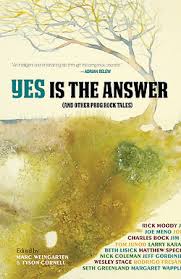
[READ: July 7, 2013] Yes is the Answer

This book was sitting on a cart outside of my cube.  I was intrigued by the title (it didn’t have that trippy cover, so I didn’t know what it was).  But “Yes is the Answer” was calling me.  Especially when I looked at the cover and saw that the cover had an excerpt from a William Vollmann story in which the protagonist plays In the Court of the Crimson King (track 5) for Reepah and watches her face as they band went Ahhhhhhhhhhhhhhhhhhhhhhhhhhhhhhhhhhhhhhhhhhhhhhhhhh!.

Quoting Vollmann (from The Rifles), playing King Crimson?  What could this book be?   Then I saw the subtitle and I knew I had to read it all.

I’m not going to review these essays because that would be like making a radio edit of a side long track, but I’ll mention the band the author focuses on and any other relevant details. (more…)

Read Full Post »

hpl;oveSOUNDTRACK: NO AGE-“No Ground” (2013).

An ObjectI’ve been hearing a lot about No Age lately, but I don’t really know much about them.  I keep thinking they are a different, older band (although I can’t think of which one for some reason).  Anyhow, this new song from their new album is a simple, propulsive rocker.  It starts out with some echoing guitar notes until the fast, fast bass comes in.

It’s followed by some quickly strummed guitars and low sung, almost chanted vocals.

The song feels like it builds speed throughout, although I don’t think it actually does.  I didn’t realize that there were only two guys in the band—and that explains their limited musical sound.  But unlike a number of other two person bands that I’ve really enjoyed as of late, this song feels a little flat.  There is some appeal to it, but overall I want a little bit more.

[READ: June 16, 2013] H.P. Lovecraft: Against the World, Against Life

I have been “into” H.P. Lovecraft for about thirty years.  Interestingly, I had never read anything by him in that time.  I got into him via Dungeons and Dragons which had a whole selection of monsters from the Cthulhu mythos.  And then Metallica did a song called “The Call of Cthulhu” and even though I bought several of his paperback collections and proudly displayed them, I never read them.  When McSweeney’s imprint Believer Books published this little title by the practically Lovecraftianly named Michel Houellebecq, I was excited to read it, too (because at this time I had assumed that I had actually read some Lovecraft).  But like my Lovecraft books, it languished on the shelf.

Until now.

I decided that it was time to finish off some of those McSweeney’s books that have been sitting on my shelf for years.  And this was on the top of my list. (more…)

Read Full Post »

« Newer Posts - Older Posts »