Feeds:
Posts
Comments

Archive for the ‘Magazines’ Category

SOUNDTRACK: PITCH BLACK PROCESS feat. HAYKO CEPKIN-“Zahid Bizi Tan Eyleme” (2019).

Pitch Black Process is a Turkish heavy metal band.   All of the members played in a band called Affliction in the 90s and 2000s.  As PBP they have released an EP and two albums and have a new EP on the way from which this song comes.  And I found it because of the Hayko Cepkin connection.  Interestingly, some of the songs on their albums are in English, but this song is in Turkish.

Metal Shock Finland says of the song

In “Zahid Bizi Tan Eyleme”, Pitch Black Process interpret a poem from the 16th century, of which melody is anonymous. With this significant work by “Muhyî”, their aim is to contribute to bring the culture of this land to the world scene, via building a bridge between east and west. It is a modern but also a folkloric song which blends traditional and authentic instruments with rock/metal elements; it is emotional, touching and sombre, but at the same time it’s moving, encourages individuality and gives a sense of fight and battle.

This song opens with traditional instrument–drums, flute and oud (I believe).

After 45 second the band kicks in with heavy guitars sludging through a traditional-sounding melody.    I really love the way the heavy guitars produce the djent sound along with traditional riffs.  Midway though an instrumental break highlights the zurna, I believe.

The end of the song features Cepkin and PBP singer Emrah Demirel singing in harmony over a quiet musical interlude that builds to a crushing end.  It’s a short song but it’s a terrific mix of the traditional and the modern.

The video is pretty outstanding.

[READ: June 4, 2019] “Hard Seat”

The June 10th issue of the New Yorker features five essays by authors whom I have enjoyed.  They were gathered under the headline “Another Country.”

Jennifer Egan is the only writer born in America writing in this series of essays and her perspective is as an America in another country.

In 1986 she turned twenty-four while travelling with a friend in China.  Her friend wasn’t quite as excited by this journey as the night before in Hong Kong rats had gnawed through her satchel at the youth hostel.

But they took a ferry to China (Guangzhou), a city full of tea shops and sunny gardens.  They stayed in a dormitory style hotel designed for travelers. (“this was practically a job description for most of our bunkmates, who’d been travelling in Asia for months.”  She felt silly around them–she was a grad student studying in England.  Hong King was still under British rule at the time and felt barely exotic). (more…)

Read Full Post »

SOUNDTRACK: HAYKO CEPKIN-“Kabul Olur” (“Accepted”) (2018).

Hayko Cepkin is a Turkish singer of Armenian descent.  He was born on March 11, 1978 in Istanbul.

It’s hard to find out anything about him that’s not in Turkish.  So I’m including what I find interesting

In June 2005, he released his first album “a collection of compositions he recorded at home and all lyrics, music and arrangements of his own.”

He left Istanbul in 2014 and moved to Selçuk, İzmir.  He bought 9 acres of land from Şirince, and created a place where the lovers of Varil / Barrel Camping will enjoy and relax. The artist continues his music studies here.

He even had a festival there some years ago.

This song is from his latest album which is a great example of Anatolian rock–a fusion of Turkish folk and rock music.  He has taken it to some heavier levels than other bands with heavy electronics.

“Kabul Olur” starts with some electronic sounds and a flute before Cepkin starts singing in his rather lovely, powerful voice.

A minute it the drums kick in and the song starts to rock.  And then comes the power chorus at 1:20 (the second time through is even more powerful).  The post-chorus–the repeated title–is like a decompression after the intensity of the chorus.

The pounding middle section is a great combination of his growls and a traditional flute.

The denoument is him repeating “tamam” which means okay.  Its an ntense ending to a song that totally rocks.   Here’s the translated and original lyrics and the video below.

“Accepted”

My path is long, slow
Yolum uzun, ağır ağır geçer 
Life is tired I lean a little, see me
Ömür yoruldum eğilin biraz, beni görün 
The road is not this life desperation
Yol değil bu ömür biçaresizlik 
Stop, this is the final final way to death.
Durdurun, kesin final bu yol ölüm. 
Hear my voice, my voice is a little choked.
Duy duy sesim sesim biraz biraz kısık kısık buruk. 
He sees the end, walks, crazy heart.
Sonunu görür, yürür, deli gönül. Why isn’t my day in the season. 
Neden mevsim olupta günüm geçmiyor. 
Why is it born in my hands and dying? 
Ellerime doğupta neden ölüyor 
Even after all life goes by 
Bile bile sonuçta ömür geçiyor 
Heavy heavy heavy heavy heavy …
Ağır ağır ağır ağır ağır…Acceptance?
Kabul mu olur? 
Yeah, okay.
Evet, tamam.
Why isn’t my day in the season. 
Neden mevsim olupta günüm geçmiyor. 
Why is it born in my hands and dying? 
Ellerime doğupta neden ölüyor 
Even after all life goes by 
Bile bile sonuçta ömür geçiyor 
Heavy heavy heavy heavy heavy … 
Ağır ağır ağır ağır ağır… It’s okay.
Kabul olur. 
Yeah, okay.
Evet, tamam.


[READ: June 4, 2019] “Geneva, 1959”

The June 10th issue of the New Yorker features five essays by authors whom I have enjoyed.  They were gathered under the headline “Another Country.”

I do love a story which features lots of diacritics, and this one sure does.  Orhan talks about his brother Şevket and their mother Şekure and how they left Turkey because their father had gotten an good job with IBM in Switzerland.  The boys were seven and nine and their mother wanted them to learn French.  She had learned French in Istanbul and believed she could teach them at home.

But the boys were willful and she gave up, assuming the children would learn the language on the shore of Lake Geneva, in the parks, on the streets, or even at school.

But Orhan resisted the French language.  All of school was in French and Orhan seized up.  Mostly he hated being separated from his brother and he felt at sea. (more…)

Read Full Post »

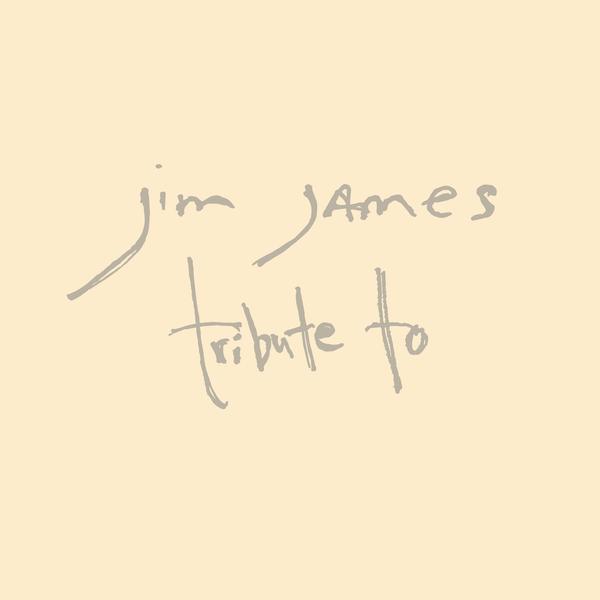
SOUNDTRACK: YIM YAMES-Tribute To (2009).

I really like My Morning Jacket, but I find that Jim James’ solo work is a little too slow for me.  This album is a collection of six coves of George Harrison songs.  I’m not a particularly big fan of George Harrison’s solo work, so really this just doesn’t work for me all that way.

This record is incredibly languid.  Although after several listens I finally found a way in and have begun to enjoy the melodies.  Also, reading this quote makes me like the album more

James recorded the album in December 2001 on a relative’s eight-track reel-to-reel tape recorder, just days after Harrison’s passing. Of the recording, James told Billboard magazine that “I felt like I was in the weirdest head space when I did that EP … I felt really confused a lot of the time. I wanted to just do it and let it come out even if I messed stuff up. It’s definitely not the tightest or most professional recording you’re ever going to hear in your life but I like that. I think it lends it a more childish atmosphere.”

“Long, Long, Long” has a nice melody in the chorus.  While “Behind the Locked Door” has a nice melody in the verse.

“Love to You” introduces a banjo, which adds a nice texture to the EP.  “If Not for You” is the most uptempo song on the record and is quite lovely.

The first time I listened through this album the only song I knew was “My Sweet Lord,” which was never a particular favorite.  Although I like the way Yames multitracks himself.

“Ballad of Sir Frankie Crisp” has piano in it and it is also fairly upbeat, although boy does it go one for a long time.
the final song is “All Things Must Pass.”  This track is also quite pretty but also slow and long.

The whole EP definitely sets a mood, and if you are in the mood for pretty, slow acoustic songs, this is the place to be.

[READ: June 4, 2019] “Hereafter, Faraway”

The June 10th issue of the New Yorker features five essays by authors whom I have enjoyed.  They were gathered under the headline “Another Country.”

This essay is about the author’s mother’s death and the author’s subsequent return to Vietnam.

Her mother believed that another world awaited her and was not concerned.  The author imagines this other world was was like those found in Hirokazu Kore-eda’s film After Life.  In the film the newly dead pass through a halfway house run by angels.  The travelers must pick one even from their life that the angels will make into a movie, starring the travelers themselves. Heaven is this short film played on an endless loop. (more…)

Read Full Post »

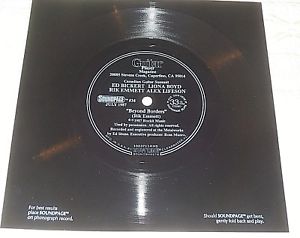
SOUNDTRACK: CANADIAN GUITAR SUMMIT (RIK EMMET, ALEX LIFESON, LIONA BOYD, ED BICKERT)-“Beyond Borders” (Guitar Player Magazine, July 1987).

I was not familiar with this recording and just happened upon it this weekend while looking up Rik Emmet.  So it turns out that back in 1987, around the time of the release of the final Triumph album with Rik Emmet, Rik had created this instrumental composition.  It features four superb Canadian guitarists.  I didn’t know Liona Boyd (classical) or Ed Bickert (jazz), but if course I know Rik and Alex.

Evidently Rik wanted to do something which fused genres together (Rik plays all manner of guitar quite successfully).

Fusing different musical forms is hardly new in the guitar world: The marriage between jazz and rock has survived nearly two decades, while jazz and classical get together fairly often. Of course, the more styles you try to blend, the less probable success becomes and the greater the risk of producing something whose sum is smaller than each individual element.

Rik Emmett, leader of the rock power trio Triumph and the author of Guitar Player’s Back To Basics column, was fully aware of the artistic hazards involved when he proposed a Sound page recording to Editor Tom Wheeler in late 1986 that would fuse rock, jazz, and classical. While such a project promised to be the most complex one of its nature since the Sound page’s debut in the Oct. ’84 issue, after hearing Emmett’s concept and who he had in mind to fill out his guitar quartet-Alex Lifeson, Liona Boyd, and Ed Bickert-the go-ahead was given.

The resulting composition-Emmett’s masterful “Beyond Borders” -succeeds in melding its various elements on a number of levels. Although brilliant playing abounds, the piece is more than a vehicle for virtuosic displays as it integrates various styles and weaves in and out of different moods, textures, tones, rhythms, key centers, and time changes. The players receive ample solo space; however, the emphasis clearly is on interaction-a surprising outcome, considering the ever-present temptation to fall back on excessive blowing (Emmett discusses “Beyond Borders” on page 80; the Sound page and musical excerpts are on page 82).

It’s a really lovely piece with each musician playing to his or her strength but also doing some unexpected things.  I feel like Alex has the most fun with th epiece as he seems to create a lot more textural stuff that actual solo material.

This recording is available on line in many places, but I chose this one because the sound quality is quite good.

During this lengthy piece in Guitar Player, there’s an interview with all four guitarists as well as some background information about the piece itself.

There’s also this explanation from Rik about who plays what, so you can follow along:

“Beyond Borders” is basically 120 bars long, and it begins with an adagio section with a tempo of 72 beats per minute. I do the lead guitar off of the top, and Alex plays the atmospheric stuff in the background, which includes low weird things and floating sound effects. Ed comes in with a little melody that lasts from bar 4 into measure 5, and then Liona’s little melody enters at bar 6. The lead that comes in at measure 8 is Alex. In measure 15 Liona plays a little classical lick that Richard Fortin wrote. At bar 17 I play a long feedback melody that continues to measure 26.

Liona begins her classical tremolo solo at measure 22; in the background you’ll notice the feedback guitar part. Liona’s and Ed’s parts cross at bar 28, as Ed takes over with a rubato chord-melody solo. At measure 33 he kicks into an allegro tempo of 140 beats per minute. That’s where I back him up with a simulated bass guitar part that I play on my Yamaha arch-top. For the warm bass sound I rolled the treble back and played with the fleshy part of my thumb. Ed does a cadenza at measure 64, and Alex plays an atmospheric technique where he holds a chord and brushes the strings quickly with the fleshy pads of his right-hand fingers; Lenny Breau was the first person I saw use that.

Bar 65 has an adagio tempo of 70 beats per minute. I play the lead guitar, and Alex adds the arpeggiated electric guitar part behind it. That continues to bar 76, where Liona plays her Lenny Breau octave harmonic lick. That’s also where I begin using the Coral Electric Sitar, with echo repeats on it. Bar 77 is semi-country acoustic fingerpicking with an andante tempo of 90 beats per minute. I play the acoustic steel-string, and Liona plays nylon-string in unison, all the way to bar 102; sometimes I break into harmony, but it’s a unison part essentially. During that same section I also play the Dobro part and all of the electric fills that have a Pat Metheny-esque sound. Alex did the violin sounding swells in the background with a volume pedal.

Where measure 101 crosses over to 102, I did a little lap steel thing with a volume pedal and echo that goes up from a fifth to an octave; it’s kind of a Steve Howe cop. Measure 102 is the beginning of the end. Liona plays the little classical part, and then I break into the harmonies above it. During this section I did all of the wire choirs, which are triads with some of the voices doubled, and I also played the 6/ 8 melody lead guitar fills on the tag right near the end.

It’s really great.

[READ: June 4, 2019] “Javi”

This was a wonderful, slowly evolving story that was one thing on the surface, but had so much more roiling underneath.

As it opens, Javier has knocked on the house of a “lady” in the middle of nowhere, New Mexico.  The person who answers the door doesn’t like that word and to Javi’s mind he’s not sure if the person is even a woman.  He clarifies that he’s looking for the painter.  She concedes that she is the only painter in the area.  He says that his moms heard she needed help.  She asks how old he is.  He replies “I’m four– I’m sixteen.”  The painter says she is 82, how can a young boy help her?  He lists the various things he can do for her–cook, clean, drive etc.  She is concerned that people are talking about her but he assures her it was for his benefit, not hers.

He explains that he walked the twenty miles from Pueblo.  If she’s impressed by this it’s hard to tell.  She is rather inscrutable.  She is supposed to go to an old age home, but if Javi can help her, she can delay that for a year or so.

There’s plenty of wonderful details that unfold slowly, because that is how she is: ‘watching her work is calming, hypnotic.” (more…)

Read Full Post »

SOUNDTRACK: JADE JACKSON-NonCOMM (May 17, 2019).

I thought this was Jade Bird when I saw her name listed.  I have come to like Jade Bird quite a bit.  I had also forgotten about Jade Jackson.

Jackson is getting ready to release her second record, Wilderness, next month, and she and her band came prepared with a seven-song set of catchy country rock tunes.

I guess it’s the “country” part that meant I’d like her less.  I don’t like country music (duh) but I do really like the feminist lyrics that so many country singers have been writing lately.  All of these new country singers who are getting crossover airplay write about strong women.  I just wish I liked their music and their voices (too twangy) better.  Having said that Jackson’s voice is far less twangy than most.

And her lyrics are pretty good. Like in “Bottle It Up”

I cross my heart
I don’t need a man’s hands to open the jar

Although it seems like a lot of modern country songs are about drinking (old ones too, of course).

But her songs are certainly more rocking than country, I’d say.  “City Lights” rocks a lot harder and was more enjoyable to me.

 Jackson pushes the boundaries of that genre label in any way she can, citing influences from Lucinda Williams to Mazzy Star and The Smiths, and enlisting seasoned punk rocker Mike Ness of Social Distortion to produce her records.

Jade Jackson flew in from California just in time to play the last set of NonCOMM this afternoon. But you’d never guess the singer-songwriter was a bit jet-lagged — and struggling with a guitar that had just endured a cross-country flight in the cargo hold — if she hadn’t told us.

“Finish Line” is slower but still pretty catchy.  “Tonight” is even slower.  She says it’s a personal song about something that happened to her.  The lyrics are not explicit although it is clear what happens and “Jackson emphasized that its very personal content made it the most difficult one on Wilderness to write.”  It’s surprising to make it have such a catchy chorus.

She thanks the audience for being so nice and promises that they will carry on their guitars next time.

Her older songs have a lasting familiarity, like the foot-stomping “Good Time Gone.”

This does sound familiar, but I’m not sure if I’ve ever heard it before.  It is catchy and foot stomping.

“Secret” opens with an guitar intro that sounds a bit like U2’s “Sunday Bloody Sunday” but which goes in a different direction.  There’s a pretty ripping guitar solo which I adds an edge to the song.  She says she wrote it in her car on the way to the gym.

She ends the set with “Troubled End.”  This one is the real foot-stomper, the one kind of country song I like.

So yes, I guess she’s a country crossover sing that I do like.

[READ: June 3, 2019] “Prosperity”

After reading the essay from Salman Rushdie about India, I was interested to read a story about India–using what I learned from that essay to help flesh out this story.

And this story had everything: torturing dogs, torturing cats, child prostitutes, religious violence, infidelity and incest!

This was, without question, the most horrible story I have ever read.

All of the above things were done by the narrator (well, he didn’t torture the animals, but he did calmly report about it and described it in detail).  All of it is told in first person, which makes it so much worse. (more…)

Read Full Post »

SOUNDTRACK: JAY FARRAR-NonComm (May 17, 2019).

I didn’t like Uncle Tupelo back in the day. So when they broke up I didn’t really care.  I was supposed to care about the alt-country movement, but I didn’t. So I wasn’t interested in Sun Volt or Wilco.

Years later I have really gotten into Wilco and I feel like I’m supposed to dislike Jay Farrar because of the acrimonous split back in the day. But heck without the split, there’d be no Wilco.

I’ve never given Jay Farrar or Son Volt much thought.  So here’s my first real listen to him.

In this setting I find that he sounds a lot like John Doe, a deep soulful voice with acoustic guitar and electric accompaniment.

Jay Farrar‘s soulful folk sound graced the NPR Music stage Friday afternoon for the last day of NonCOMM. While he softly strummed his acoustic guitar, his Son Volt bandmate Mark Spencer backed him up on electric.

This set was made up of Son Volt songs.

He started with “The Reason” a thoughtful song and an indicator of what the rest of the set would sound like.  Calm music, lovely harmonies and pretty backing guitars.

Up next was “Reality Winner” which he introduced as saying “she was put in jail for sharing the truth.”  It’s a powerful song about a real incident that made news at the time but, like so many other things, it was eclipsed by the daily insanity of our government.  From The Boot:

Reality Winner, born in the South Texas town of Alice, is a veteran of the United States Air Force. On June 3, 2017, Winner was arrested after leaking a confidential document to an online news site, The Intercept.  “It’s a really unjust situation where Reality Winner leaked information for the right reason,” Farrar tells The Boot. “She proved that there was Russian interference in the 2016 [presidential] election.”

The lyrics:

What have you done, Reality Winner?
Reality Winner, what have you done?
This jail is a stone-cold answer
The biggest mistake of a Texas lifetime
In this ballad of the commander-in-chief
Is there any mercy for this standing belief?
Felt like gaslighting, not something to just accept
Proud to serve, just not this president
Those that seek the truth will find the answers

Up next was “Devil May Care”

Spencer harmonized with Farrar on a few songs; their vocals joined beautifully together for the chorus of “Devil May Care.”

There isn’t a lot of diversity in these songs.  Farrar’s voice is great but doesn’t change all that much.  They are good folk/country songs.  But I think it might be his presence that makes these song work so well:

The crowd was singing along to Farrar’s set and there was a feeling of mutual respect flowing between the performer and his audience. He has a stage presence that’s just plain cool. Not everyone can wear sunglasses inside without looking like a total jerk.

He introduced the next song saying that these songs are on the new Son Volt album of protest songs.  You may say “What is there to protest and I’d say Just about everything.”

Before singing “Union,” Farrar made a statement about there being protests about everything lately. He continued to tell this story through song while Spencer killed it on steel guitar.

This is a simple song that lays out our country’s divide and recounts Farrar’s father’s belief about the need for something to bind the country together: “He said national service/ Will keep the union together.”

“The 99” is also straightforward.  It may not be timely in the title (I don’t think people use that phrase as much anymore), but the sentiment is spot on:

Journalists in jail covering the scenes
The profit columns rise for the corporate machines
Take the stand now, protest and holler
Desecration of the land for the almighty dollar
Ninety-nine percent
Ninety-nine percent
It’s a trickle-down world
Like you’re stuck in cement

All of the songs were from the new album Union, but he ends the set with an old song.

The mood was brought back up as the set concluded with “Windfall”, a two-decade-old Son Volt song [from Trace].

It is certainly more positive, I guess from back when things were a bit better (the 90s).

[READ: June 3, 2019] “A Dream of Glorious Return”

It’s not often that people intentionally read twenty-year old news.  Maybe for historical reasons or, in my case, because you want to read a piece by a particular author.

So here is a twenty-year old essay from Salman Rushdie about the first time he returned to India after the fatwa had been put on his head twelve years earlier.

He returned to India in April 2000 (I guess the 90s weren’t great for Rushdie).

But first he talks about the many times he left India.  First when he was thirteen and went to boarding school in Rugby, England.  While he was away his father sold their family home in Bombay.  Salman was devastated and is still angry about it.  He believes he would be living there today if they still owned it. (more…)

Read Full Post »

SOUNDTRACK: QUINN CHRISTOPHERSON-Tiny Desk Concert #854 (June 3, 2019).

Quinn Christopherson won the 2019 Tiny Desk Contest.

Despite the fact that I watch all of the Tiny Desk Concerts, I don’t really get involved in the Contest.   There’s just too many entries and too many bands to root for.  So I just sit back and wait to see who the judges pick.

When I first listened to Christopherson’s winning entry, “Erase Me,” I wasn’t that impressed.  It was spare and his voice was unusual.  His voice was kind of punky–the kind of voice that might work really well with some loud guitars around it, but this song was just a voice and a quiet guitar.  The song was pretty long and it was very angsty.

It built up some interesting tensions.  And by the end, I kind of liked it.

Then I read about Quinn, and how he is a transgender man, and I started thinking about how many people will say that he won because of that (like they said that Gaelynn Lea won because of her “condition” as well).  And that annoyed me (I’m not reading comments this time).

Then I listened to the song again and I really got it–the honesty, the power in his voice and the vulnerability behind the words.  It’s definitely not a song for everyone.  It is not catchy (although the chorus is kind of catchy), it is not easy.

One of the things about the Tiny Desk entrants is that there are some 5,000 of them and you never know how serious they are as musicians.  I mean, I could submit a song.  Quinn’s video, is fascinatingly set up in an art gallery in Anchorage, Alaska, where he lives.  But you never know if it’s his only song.

Indeed, no, as the blurb says,

What was most striking about the performance was [Quinn and his musical partner, guitarist and singer Nick Carpenter’s], unfettered confidence. Watching them play together and hearing their songs, with their interweaving guitar lines and vocal harmonies, feels like seeing two brothers performing old favorites.

This Tiny Desk confirms that his delivery is more of a melodic storyteller than a singer.

Quinn writes story-songs about what he knows best, his mom and sister, about their addictions and his love for them.

He opens with his brand-new tune, “You Told Me.”  It’s a slow song, with Nick playing the more active guitar parts.  It’s personal and intimate and yet still vague enough that you’re not entirely sure what it’s about.

And then comes an insight into life in Alaska.

A moment after our 2019 Tiny Desk Contest winner, Quinn Christopherson, finished his first song at the NPR offices, he made a confession. He looked at me, while tuning his “vintage white” Fender Telecaster, and said, “I don’t know if you know this, but when you called me and you told me, ‘You won!’ I got off the phone and I thought, ‘Dang, I should buy a guitar.’ Legit, did not have one. But that’s Anchorage; that’s the music community there. Everyone just borrowed me their stuff long term.”

The next song, Glenn,” is about his father.  Quinn and Nick play their chords back and forth chuckling with each other before Quinn starts singing

a moving song about his father and their beautiful two-peas-in-a pod relationship. There’s a line in that song that goes to the heart of Quinn’s songwriting talents: “My dad, he plays guitar, says he knows more than he can do. He tells me that I do more than I know.”

I enjoyed this verse:

He asks me what I wanna do when the weekend came
I always wanna go camping but not too far away
So we head to Eagle River and make ourselves a fire
Just the two of us eating pancakes and listening to …N… PR.

In the middle of the song Quinn says, “if my dad was here right now he’d probably say… wheres the bridge?”

They definitely have fun at the Concert.   Even during Quinn’s contest-winning song “Erase Me,” their excitement is palpable.

“Erase Me” is about his recent transition, what it now means to be a man and how he sees the way the world treats him differently after so many years of being “used to pulling the short stick” as a woman. It’s a revealing look at the roles of men and women in our culture at a pivotal time from a songwriter who, I believe, will be a defining voice in the future of music.

They lyrics are really affecting

“I got so used to pulling the short stick /
I don’t know what to do with all this privilege /
‘Cause I got a voice now and I got power /
But I can’t stand it,”

But even during this intense song, they can still have fun.  In the video submission, Nick’s guitar cuts out during the transition to the loud part.  It’s fascinating that they left it in, but they did.  During the Concert everyone sort of chuckles at how Nick handles that moment.

I’m curious to see what kind of success Quinn has after this.

[READ: June 3, 2019] “Canvas”

This story starts in a fascinating way.

The narrator talks about a woman, Agnes, who may or may not be in the upstairs apartment.  The narrator was renting the place and Agnes said she may be back to work in the studio upstairs.  The situation was weird but affordable. And the narrator would only be there for maybe a year longer while she did research on Gothic iconography of the soul.

She didn’t see much of Agnes and then one day there was a note on her door from Agnes inviting her to the studio.

I love this description of Agnes:

She was sitting on a stool, her bones jutting out in a frenzied geometry.

Agnes thanked her for coming saying it was good to be among friends “She looked at me quickly, to see my reaction.” (more…)

Read Full Post »

SOUNDTRACK: CHRISTONE “KINGFISH” INGRAM-NonCOMM (May 16, 2019).

Generally speaking, I don’t like the blues.  I think it’s pretty boring music-wise, with most songs sounding vaguely the same, especially on record.  I would never go to a blues show on purpose.  However, if all blues shows were like this one from Kingfish, I’d go to a lot more.

Christone “Kingfish” Ingram a Mississippi guitar player has a lot of hype around him (XPN loves him) and while I haven’t enjoyed the songs they’ve played, this set was stunning.  And when you learn how old he is, it’s even more incredible.

Ingram’s otherworldly guitar playing and ridiculously rich voice make it hard to believe that he is only twenty years old. He is clearly aware of the absurdity of his talent given his age, as he sings “they say I got an old soul and I ain’t even 21.”

He opened with “Before I’m Old”, off his debut album Kingfish.  The song opens with a lengthy guitar solo and lyrics that are basically an autobiography.  When I was younger, I used to rate guitar players by their soloing skills.  I don;t do that anymore.  In fact I don;t really care if there are solos in songs these days.  But I do still enjoy a guitarist who can play a wicked solo live.

I don’t care much about the structure of “Before I’m Old” because it’s all about the jamming solo he plays.  The great part of the solo is the tone he gets.  It’s just him and a bassist (and a drummer), but it doesn’t sound like a bassist playing notes and a guitarist soloing independently.  His guitar is full enough that it sounds like a bigger band.

But his skills are really tremendous.  He seemingly casually busts out a minute and a half solo mid-song that is exciting and full of passion.  There’s basically two verse sin this five minute song which ends with a little nod to Jimi Hendrix.

Next came “Fresh Out”, which Ingram started solo. Eventually he was joined by his bassist and drummer, but his solo verse demonstrated that in a way, they’re just extras; he can carry this all on his own.

This is a slower, classic blues song about having no love.  But it’s all about the three and a half minute solo.  In the middle of it, he quiets everything down while playing a slow, moody passage while the band is almost silent, playing just enough to keep the song going while Kingfish jams.

The final song, “Out of This Town” is the one I’ve been hearing on the radio.  It’s catchy in a classic bluesy way, but I never thought much about it.  I do like the five note hook and pause just before he sings “out of this town” but otherwise it was just a blues song.

But this live version was a revelation.

Ingram stretched each of his tracks out, squeezing every last drop of possibility out of them. He stretched them so much that he was only able to fit three songs in his twenty minute slot. Like with the two before it, Ingram led “Out of This Town” into an explosive electric blues epic.

This song stretches out to 9 minutes, five of which are the guitar solo.  In the wrong hands, a five minute guitar solo can be an interminable wank-fest.  But Kingfish makes it interesting–you actually don’t want the song to star up again because the guitar is so good.  And yet, when his sings, his voice is deep and rich as well.

This show may even get me to enjoy the song more the next time I hear it on the radio.

[READ: June 1, 2019] “In the Hay”

This essay is a fascinating insight into manual labor, immigration and alcohol.  All in three columns of type.

In 1959, Wolff looked for summer work on the farms along the Skagit River near Seattle.  Wolff was fourteen and kind of small, so he worked at a farm for a bit and then moved on.  Then he met a farmer who paid him better and treated him well, so he settled in.

The more permanent field hands bucked hay, but Wolff was not strong enough to do that, so he hacked weeds or shoveled shit. He would pause from time to time, catching snippets of conversation on the wind.

The following summer he returned bigger and strong and he joined the hay crew.  The crew was four people: Wolff, Clemson, the farmer’s nephew and two Mexican brothers, Miguel and Eduardo. (more…)

Read Full Post »

SOUNDTRACK: ORVILLE PECK-NonCOMM (May 16, 2019).

I have been intrigued by Orville Peck what with his masked face and all.  But then I heard this set and was disappointed.

What was even more disappointing was this blurb

Yeehaw is having a moment … country’s future has never seemed brighter.

My only hope is that the moment is brief and goes away soon.

Toronto-based Country crooner, Orville Peck, treated NonCOMM attendees to a taste of that future.

It’s interesting when you read a review of something and you wonder if you are listening to the same thing.

With his bulletproof voice, punk-inspired playing, and masked face, Peck put on a rousing and fringe-filled set.

His “bulletproof” voice sounds like a preposterous Elvis impersonation for most of “Dead of Night.”  I’d heard this song on the radio, but his voice is even more insane here. I mean, if someone came out and started singing like that I’d be on the floor laughing, assuming we were both in on the joke.

Although reading this, I’m inclined to like him more:

His backing vocalist joined only for the line “see the boys as they walk on by,” perhaps to highlight the novelty of a country song being about a gay relationship.

And, yes, I do like that part of the torch song because his falsetto is much better than his Elvis.

Punk-inspired? Well, “Turn to Hate” has some fast guitars for sure, although it slows down in a way I don’t like by the end.

“Big Sky” just sounds so absurd to me, like he is trying so hard to hit those notes that it is comic.  Again I feel like I listened to a different song that the blurb:

The somber “Big Sky” started slow, and dripping with melancholy. By the time Peck reached the second verse, it exploded.

In this case, exploded means it got slightly louder.  Weird.

I do agree with the “thunderous stampede of ‘Buffalo Run’” which would have been great aside from the “head on by” croon.

The final song, “‘Take You Back’ was played like a straight-up country jam, complete with a whistled intro and outro.”

I obviosuly don’t like country music, but I do enjoy a good stomping track like this.  Once again, it would be so much better if he didn’t try to croon like Elvis.

I guess people like him for this voice, but I don’t and, even worse, I found his voice mixed too loud throughout the show–it always seemed to be louder than the music.

His masks are cool, though.

[READ: June 1, 2019] “European Wedding”

I’ve enjoyed most of what I’ve read by Klam, but I found this story to be a little offputting.

It’s the story of, yes, a wedding in Europe.  I enjoyed many of the details of it, but the characters all sucked.

Nobody wants to get married in France except for the bride’s mother who has family there.  Gynnie the bride doesn’t want to get married there.  No one in the groom’s family wants to even go to France.

The groom, Rich, is terrible. (It’s also odd that I recently read his 2017 novel Who is Rich about a man named Rich.  It’s not the same Rich, but it is weird to have recycled the name).

Anyhow, as the story opens Rich is having sex with Nora, a client of his.  He wanted to have a little makeout session as a kind of last fling before his wedding.  But as soon as he kissed her, Nora took it really far. As she stripped, he found himself revolted by her.  And as she was sitting on his face and he was gasping for breath, he was revolted by himself. (more…)

Read Full Post »

 SOUNDTRACK: STRAND OF OAKS-NonCOMM (May 15, 2019).

I’ve seen Strand of Oaks three times, although only once as a full band. Usually I see Tim Showalter’s Winter Spectacles–intimate shows with just him and a partner.  I forget how big the can sound with a full band.

“Weird Ways” opens the set.  I love the moment about two minutes in when the second guitar kicks in.  It seems like the song is going to be one thing but that second guitar changes the texture of the song up until the end.  The end is a catchy coda–synth waves, a big crescendo drums and a sing along “That’s a weird way to say goodbye.”
As Showalter introduced the band’s biggest hit, “Goshen ’97,” he recalled one of his favorite moments from the last decade. “I guess this is the first song of mine I ever heard on the radio, and it was one of the best experiences of my life. I’ll never forget it. So if you know it, help us sing it.” The song describes Showalter’s memories of beginning to make music as a teenager in his hometown of Goshen, Indiana. “I was lonely but I was having fun!” he cried out during every pre-chorus.
I like mid-song when he says “gimme some shred!” and whoever is on guitar totally rocks out.
Up next is the new single “Ruby.”  I love the way he exaggeratedly slows down the chorus–it’s very effective.
Strand of Oaks stretched out many of their selections to make room for jamming and imagining, even though they were only scheduled to play a thirty-minute set. As usual, they made sure to enjoy every moment on stage to the fullest — they never rush. “If you know anything about this band, a half an hour is pretty tough for us to do,” Showalter admitted after fading out the end of “Ruby.” “That’s usually about one song,” he chuckled.
He dedicated “Keys,” to his wife, Sue.  “It’s easy to let your life slip away,” he sang.  The song featured slide guitar at its most melancholy and Showalter’s voice at its most wistful.
He dedicated “Radio Kids” to everyone who stayed up late listening for that song on the radio…pressing record and hoping to hear the name of the band.
They geared up for a set-ending “Hyperspace Blues” which I thought would be a lot longer.  But he was expecting his time to be over, so he kept it brief.  Then there was a surprise.
My favorite moment came after midnight, after Strand of Oaks were already supposed have finished their set. “So, the good folks at NonCOMM said that we can play a little bit longer,” Showalter announced with a grin. “We did this one a few days ago and dedicated this to a very dear friend of mine. Someone who’s changed my life for the better and I’m so happy and I’m so proud of him, and it’s just so good to see him …” He trailed off but then continued, almost broken up, “We’re gonna do this one for my dear friend Bruce Warren — let’s give Bruce Warren a big round of applause. The world’s a better place ’cause you’re here, Bruce, and we love you, so we’re gonna do this one for you. And we’ll burn it a little extra long for NonCOMM.”
“Forever Chords,” burns for twelve minutes.  It starts out slow, with a great tone and Showalter’s aching vocals.  There’s lengthy guitar solos, and pianos solos.  “The problem with living…. is one day you won’t” is not the happiest not to leave on, but the repeated chorus of “you hope it never ends” leaves us with an optimistic jamming moment.
[READ: May 30, 2019] “Revival Road”

Louise Erdrich writes unusual stories that I find very gripping.

This one is about a couple of families who live on Revival Road in rural new Hampshire.

The narrator is a middle aged woman who lives at home with her mother.  There is this wonderful passage:

It is difficult for a woman to admit that she gets along wit her own mother.  Somehow, it seem a form of betrayal.

The narrator is the lover of Kurt Heissman, a local artist.  His wife had died in a car accident many years earlier and he only had his daughter left.  She went to Sarah Lawrence.  She did not like the narrator.

Heissman’s work involved massive pieces of native slate or granite.  Pieces he couldn’t possibly move by himself so he always had a young man living in the guest house as his employee.  He had him stay nearby to be ready the moment that inspiration struck. (more…)

Read Full Post »

« Newer Posts - Older Posts »