SOUNDTRACK: MITCHMATIC-“Why Don’t You Know” (2012).
This song reminds me in spirit of the old Fresh Prince songs–buoyant and fun, funny and a little silly. And although it doesn’t sample I Dream of Jeannie, the mood is the same.
The track opens with a great sound of an old rotary phone. When the music comes it, it’s completely loungey: strings and easy music propel this song to the heights of Cool.
The delivery style is gentle but fast and the lyrics are funny “I’m gonna tell you some reasons that you wanna date me.”
Mitchmatic is a Canadian rapper and his record is coming out soon on Old Ugly records. Listen to the track at NPR and explore his stuff at his bandcamp site.
Darling I would like you so much more if you loved me back…
[READ: December 31, 2011 and January 24, 2012] “Wolves at the Door” and “Comment”
This is a blog post from Barry that deals with politics. Although it was written in 2004 it is completely relevant to the current state of affairs in American politics. I suppose it was ever thus, but it sure seems worse now.
He opens, “Stop me if I ‘m getting too cynical, but I think elections are won by the guy with the stupidest policies.” He explains that it’s not because people are dumb; rather, it’s because when you are marketing to an entire country, “your best strategy is to scramble straight to the bottom of the barrel and start groping around in the muck there for the lowest common denominator.” This is very true.
But I think the perfect summary for politics is (as Barry writes): “smart is complicated, but dumb is catchy.” (more…)
I learned about Le Butcherettes from their Tiny Desk Concert. So I thought I’d check out their album. I’ve listened to it a few times now and it’s really quite good.
While the Tiny Desk Concert showed a subtle side of Teri Gender Bender, this album rocks really hard. All three songs from the Tiny Desk Concert rock much harder here, and are actually better in this full band context (especially “Henry Don’t Got Love”).
It has a punk feel and reminds me of a more commercial sounding Bikini Kill or other Kill Rock Stars punk. “Dress Off” is all Teri’s voice shouting over drums: “You take my dress off. Yeah, you take my dress off.
Yeah, You take my pretty dress off.”
In the Tiny Desk concert, Teri Gender Bender channeled PJ Harvey completely. On the album, she has a bunch of different vocal styles that all work well for the songs. Although “New York” is totally PJ, “The Actress That Ate Rousseau” reminds me of punkier No Doubt and”Tainted in Sin” has a simple stark keyboard melody with Teri singing a more aggressive guttural style.
Unsurprisingly for someone named Teri Gender Bender, there are some political songs as well. “Bang!” has the lyric, “George Bush and McCain taking over Mexico. Next thing you’ll see is their army banning seranata“
Although there’s a lot of short songs (7 are 2 and a half minutes or under), there’s a few long ones too. “The Leibniz Language is over 5 minutes and “I’m Getting Sick of You” and “Empty Dimes” are both over 4. There’s also an instrumental, “Rikos’ Smooth Talking Mothers” which is a simple song spurred on mostly by scratchy guitars.
The final song, “Mr. Tolstoi” is the anomaly on the album. Teri “sings” with a fake Russian accent over a very Soviet-style keyboard march. The chorus:
I want Raskolnikov To be inside of me. I want Sonya’s eyes. I want Sonya’s eyes.
Weird. But not outrageously crazy for this record. It’s good noisy fun.
[READ: January 23, 2012] “Labyrinth”
It’s no secret that I love Roberto Bolaño. And I’ve said before that one thing I love about him is the astonishing variety of subjects and styles that he comes up with.
So this short story is forthcoming from his newly translated collection of unpublished short stories called The Secret of Evil. What I love and find so unique about this story is that the entire story is based upon a photograph. The New Yorker includes the photograph (I wonder if the The Secret of Evil will include it also). In the photograph, eight writers/thinkers sit around a table. Thy are: J. Henric, J.-J. Goux, Ph. Sollers, J. Kristeva, M-Th Réveillé, P. Guyotat, C. Devade, and M. Devade. The only person I know of this list is J. Kristeva, whose work on semiotics I have read. [I just looked her up on Wikipedia and learned that she has also written novels, including: Murder in Byzantium, which deals with themes from orthodox Christianity and politics and has been described by Kristeva as “a kind of anti-Da Vinci Code.” Gotta put that on my list]. But the others are (evidently) prominent in their fields as well (editor of Tel Quel, author of several novels and non-fiction, etc).
The beginning of the short story is an extensive detailing of the photograph. Bolaño looks at each man and woman in the photo and describes them with exquisite accuracy. Beyond that he imparts a bit of speculation about what they are wearing, where they are looking, their attractiveness and even, about the length (or lack) of necks. (more…)
SOUNDTRACK: LE BUTCHERETTES-Tiny Desk Concert #185 (January 9, 2012).
The write up for this Tiny Desk show implies that I should know who Le Butcherettes, and leader Teri Gender Bender, are. I don’t. But that doesn’t matter.
In this set, it’s just Teri Gender Bender and her acoustic guitar. And she is channeling early PJ Harvey like nobody’s business. If you like PJ’s new album but miss the less than subtle aspects of her earlier records (and who doesn’t, honestly), this is a very enjoyable set. Teri is angry and it shows. But it’s all done on an acoustic guitar, so the anger is modified by the music. It’s a neat trick. But it’s also a little disconcerting. Not least because she seems so nakedly honest when she sings (when she coughs aggressively during “Henry Don’t Got No Love” it’s not entirely clear if that’s part of the song or not. But also because Teri is not afraid to look right at the camera (or, indeed, the audience) when she sings the songs. Teri is very pretty but there is something haunting about her, which makes these songs of loss and love all the more effective.
[READ: January 22, 2012] “Notes on The Chelsea Girls”
I’m not going to start reviewing films, or, worse yet, reviewing reviews of films. But since I like to try to read all of the academic articles that get recommended to me, I wanted to mention this one too (I admit I will not be subjecting myself or readers to a thirty plus page article about Charles Darwin and pigeon fanciers (which seemed interesting, especially the pictures, until I saw that it was over thirty dense pages).
It’s childish to laugh that a reviewer of Warhol’s The Chelsea Girls is named Battcock, but I’m not above that sort of joke. What is amazing, to me, is how intellectual this review is. I’m used to reading reviews in Entertainment Weekly or even The New Yorker, which talk about the plot of the film and the quality of the direction and what not. And The New Yorker often trashes mainstream film on highfalutin grounds. But even that doesn’t come anywhere close to:
Warhol still questions the very nature of the medium and its relationship with the cultural matrix and the contemporary value structure–for which he clearly holds no brief. He is determined to prove that only vital institutions can provide vital art statements; his challenges to the medium serve ultimately to assure its legitimacy. If in his earlier movies he attempted to redefine the nature of film and to clarify its limitations, the new works may be said to check out the remaining restrictions of the art form. These include such physical aspects as the two distinct types of images (the retinal-visual and the cerebro-visual), as well as the nature of the auditorium, projection and screen.
Battcock is kind of hash on the film–which is actually several short films–two of which are projected side by side at the same time. He says the individual shorts, which run about 30 minutes each, are “a little bland.” Although, as he points out above, the actual films themselves are kind of beside the point.
Indeed, he criticizes other critics for missing the “point” of these films, which is that Warhol is “stripping the cinematic medium of its pretension and decorations.” Rather, he complains, “Nearly all the other critics writing in the popular press dwelt with the lugubrious insistence on the squalidness, sordidness, perversion, etc of the lives depicted in the film” (more…)
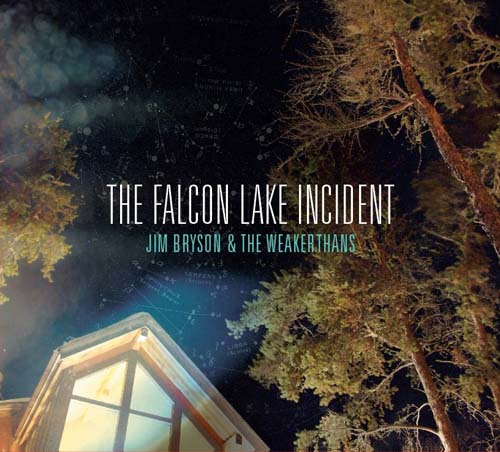
SOUNDTRACK: JIM BRYSON & THE WEAKERTHANS-The Falcon Lake Incident (2010).
I don’t know who Jim Bryson is (he’s a Canadian folk singer, duh), but I do know The Weakerthans. And since this CD is always listed in The Weakerthans’ discography, I thought it was worth investigating.
All of the songs have a Weakerthans feel, there is no question (I mean, they play all the music). And while I like the album quite a lot, I feel like without John K. Samson’s voice, the disc is missing something. Nevertheless, the album is a wonderful folky album, a great mix of upbeat and slow tracks.
“Metal Girls” is a wonderful upbeat folk rocker. It’s incredibly catchy. “Fell Off the Dock” is a much slower, sadder song with the final repeated line, “everybody loved it here, but you.” “Wild Folk” ups the tempo again. “Constellation” is another slow song, this one with beautiful harmonies.
“Freeways in the Frontyard” has even better harmonies, from Jill Barber–a kind of minor key harmony that works very well. “Up All Night” is another more uptempo track that could easily be an adult alternative hit. “Kissing Cousins” is a slight track that seems like it should be funny but isn’t really. “Decidedly” is one of my favorite tracks on the disc. It’s boppy with a fun chorus: “Why would you ever grow leaves just to watch ’em fall off again.”
The first and last tracks feel more like filler or intro/outro than real songs. But that’s okay. It’s a tidy little album of very pretty songs. And the tempo changes keep everything interesting for half an hour or so. You can’t complain about that.
And in case you were wondering, the Falcon Lake Incident is a reported UFO encounter near Falcon Lake, Manitoba, Canada claimed to have occurred on May 20, 1967 (thanks Wikipedia).
[READ: January 19, 2012] “Happy New Year”
Of course, I wish I had read this article earlier in the month, but then I only found out about it a couple of days ago.
This is an article (I assume from the editor of The Lotus Magazine) which bemoans the loss of the New Year’s Day tradition of going to (pretty much) anyone’s house for meals and snacks and drinks and good times.
The article states that it may have been about 35 years ago (circa the 1880s) that the Dutch custom was abandoned. Before then, people in New York City would throw open their doors and it was:
a breach of etiquette to omit any acquaintance in these annual calls, when old friendships were renewed and family differences amicably settled. A hearty welcome was extended even to strangers of presentable appearance.
Indeed, it seems that certain houses were known for:
particular forms of entertainment. At one was eggnog; at another, rum punch; at this one, pickled oysters; at that, boned turkey, or marvelous chocolate, or perfect Mocha coffee, or, for the connoisseur a drop of old madeira, as soft as rainwater and as delicate in flavor as the texture of the glass from which it was sipped. (more…)
Wild Flag has released one of the best albums of 2011. I can’t stop listening to it. So, it’s funny that this show has been sitting on NPR’s download page for months without me checking it out because I didn’t know who the band was until the album came out. Wild Flag is Carrie Brownstein, Mary Timony and Janet Weiss (and a keyboardist who I will never remember because I never heard of the band she was originally in).
This show at SXSW is one of their earlier shows. It’s so early that one of the songs in the setlist appears on the album with a different title. And the band is full of raw energy and passion.
Although research shows that they’d been touring since November, Mary Timony seems somewhat hesitant in a few songs. But Carrie Brownstein seems fired up to be playing again, and she rages and jumps around the stage, her voice as aggressive and fun as it was in Sleater-Kinney. Janet Weiss, as ever, kicks massive ass on the drum kit. man can she wail–she is a vastly underrated drummer.
The band has great cohesion and they seem like they’re really enjoying themselves.
In many respects this band sounds like Sleater-Kinney (2/3 of the band are here). But the addition of Timony’s lyrics and more gentle voice bring a cool change. And the keyboards flesh out the songs in wonderful ways as well–for a band with no bassist, it’s funny that the most pronounced keyboards riffs are at the high end of the register.
There’s a few flubs during the set, in one of the more pronounced keyboard riffs, there’s a pretty major gaffe. And sometimes it seems like they don’t know exactly how they should be harmonizing with each other (not true on the record at all). And during the extended soloing of “Glass Tambourine” (6 minutes), I’m not really sure what Mary is up to. But that’s okay. The band is all about rawness, so that can be forgiven.
While the album is better, this live show is a good introduction to the band.
Since Carrie Brownstein worked for NPR I almost expect all of their shows to be available here. But for now, watch the whole show here.
[READ: January 17, 2012] “Old Mrs. J”
Stephen Snyder translated this story that was originally written in Japanese. It’s interesting to me when a work is translated from another culture. Does the translator intend to keep the other culture obvious or does the translator try to make the story, in this case, more European or American. There’s some inevitability in that, since the language is changed, and yet the sensibility of the original often remains.
I bring this up because I tend to think of Japanese writing as being very distinctive. And yet this story didn’t really “read” very Japanese to me (Kiwi fruit aside). It did read a little bizarre, but that was the fun part.
The story starts out simply enough: a young writer (who is a woman, although you don’t find that out until very late in the story unless, unlike me, you assume the main character is a woman because the author’s name is Yoko). The author works late and sleeps in til noon or so. It’s a quiet, peaceful place. The landlady is older and somewhat feeble. Until, that is, she gets into her garden and then she seems possessed by a fire.
The landlady hasn’t really talked to the writer. Then one day the writer hears the landlady in the garden cursing at a stray cat. The landlady hates cats and curses them up and down. Finally the writer tells her to put pine needles down, that cats hate prickly things on their feet. This I did not know.
And they strike up a friendship. The landlady reveals that her husband was no good and that he left her. She also reveals that she gives massages. And she begins leaving the writer vegetables from her garden. Then one day, the landlady brings her a strange carrot with 5 “fingers” coming off of the central stalk. The carrots are quite special. And she keeps them a secret until sure enough, she begins growing lots and lots of them. Even the newspaper comes to take a picture.
This idyllic story is interrupted in the last few paragraphs. First by what seems like metaphorical scariness and then, ultimately, with reality. It is a wonderfully realized story, wonderfully told and with enough hints of magical realism throughout that the ending isn’t totally unbelievable–even if it is quite unexpected.
Adele is one of the few pop superstars who I not only like but who I like quite a lot. 21 is a really great album. And what this Tiny Desk Concert proves is that, whatever she is marketed as, she is not just a pop singer.
Adele sings three songs here (and she has a cold or something). She does the biggie, “Someone Like You” which sounds even more naked and unprotected in this version, because the piano is mixed quite low. Next is “Chasing Pavements,” a song I knew from when it was first released two years ago. It’s got a straightforward adult alternative vibe and sounds great here.
The final track is “Rolling in the Deep” which is one of my favorite songs lately, even if I don’t quite understand what the lyrics mean. But this is where you know that Adele’s voice is amazing. She belts this song out like she’s in a massive concert hall, not a tiny office. And she sounds incredible. It’s a wonderful version of the song.
The funniest thing about this Tiny Desk Concert is hearing Adele talk. I don’t know a thing about her. And I had no idea that her speaking voice was so heavily accented. She sounds like some crazy teen from a British sitcom. Especially when she cackles. To hear her prattling on about something and then shift in a second to that amazing singing voice is a moment of mystery to behold.
[READ: January 13, 2012] “A Brief Encounter with the Enemy”
Saïd Sayrafiezadeh has written some very cool stories (and some cool pieces for Five Dials). But I have to admit I was a little concerned when I saw that this was going to be a military story.
Lately I’ve been reading outside of my comfort zone quite a bit. And this is another one. I just don’t like military stories. I’m not a war guy, I don’t really like guns, and in my limited experience, military stories are about little more than degradation, death and violence, glorious violence.
But as I said, I’ve enjoyed Sayrafiezadeh’s varied stories quite a lot, so I wondered what his take on the issue would be. And I was pleasantly surprised by the story. Even though, really, the story (the bulk of it anyway) is kind of a downer. (more…)
This is an abrasive album. Not only does it has some massively skronking free-jazz, but it is also aggressively political, dealing with slavery and race. So, if the heart-rendered screams of Roberts don’t make you uncomfortable, the description of a woman on the auction block will do it.
I listened to this album a number of times and kept thinking that it would probably work much better live than on record. Lo and behold, if I’d read the liner notes more closely I would have known that it was performed live. (The final song has an introduction and cheers at the end, but none of the rest of the album indicates that it’s live).
I like free improv jazz (when I’m in the mood of course) and I also like noise jazz (John Zorn mostly). So I’m not averse to a lot of the genre. But there was something odd about this recording to me. And this is where that whole “live” recording comes into play. This music felt like it was being performed for an audience. I don’t know what the difference is, but it’s one I heard. I can imagine images going along with the show. And because of that, I feel like I was missing a crucial element.
The liner notes don’t explain anything about the show itself, nor how this person apparently named Coin Coin relates to her (it seems vaguely autobiographical, but I’d love to know more).
There are moments of rather conventional beauty on this recording. The song that contains the “Bid ‘Em In” section is a great singalong (of course, when you realize what you’re singing about, you’re horrified). And there are some other sections where Robert’s voice melds perfectly with her band and with Gitanjali Jain’s backing vocals.
The final song is a very moving song written for her mother.
The only thing I really don’t like about the album is Roberts’ poetry-slam-type singing. I have complained before about this type of sing-song delivery, which just irks me. I can see that there are times on the album where it works, but for the most part it feels arbitrary (as it always seems to me). And when you have crazy improv jazz you need something to hold it down. The poetry slam lyrics don’t do that.
This is not for everybody, but it is certainly a powerful album.
[READ: January 16, 2012] Vicky Swanky is a Beauty
McSweeney’s has gotten me to like a lot of things that I never thought I would–a cooking magazine, a sports magazine, long out of print unheard of titles. But they simply cannot get me to like flash fiction. Okay, that’s not entirely true. Deb Olin Unfurth is quite a master of the genre. But man, I just cannot get into Williams’ short short stories.
The majority of these stories are two pages long. This means 12 lines on the first page and anywhere from a quarter to a full-page on the second. But there are also some stories that end after one page (12 lines). So here’s the little drinking game I invited. Since Williams’ stories end so arbitrarily, try to guess which ones end after those first twelve lines and which ones continue on to the next page (it’s not really a fair game because some stories end in ten lines or so, but you get the idea).
SOUNDTRACK: JEFF The Brotherhood-“Bone Jam” (2009).
My friend Andrew pointed me to this song after reading my write up about JEFF’s other song a few days ago. I’m still not sure just who JEFF the Brotherhood is, but this is easily the most catchy song I’ve heard in ages. I mean, the whole song is practically one long “oooh”. And the parts that aren’t “oohs” are simply: “I’m gonna grind your bones to make my bread” and “How much money can we spend?” This latter lyric is hilariously appropriate when paired with the cheap cheap cheap video that they’ve made.
The song is simple, fuzzy guitars, three chords and a steady beat. It’s free of pretension and complexity. And it will stay with you all day and you’ll wonder why you’re just walking around going “oooooh. oooohh. ooooh”
Speaking of the video, I don’t think there’s anyone who looks less like a rock front man than the lead singer and guitarist of JEFF. I don’t even know what his name is, but look at him. His mustache makes Prince look hirsute. Somehow it’s even more charming. As is the fact that there’s only two of them (not including the guy playing the leaf blower).
The JEFF package just gets better and better with each exposure.
[READ: January 6, 2012] “Expectations”
Following hot on the heels of a broke family in the Ozarks who I didn’t think I’d care about, I get this story about a rich son a bitch London banker who I didn’t think I’d care about.
The story starts with Roger Yount trying to figure out if he’ll be getting £1,000,000 for his bonus this year. “Oh, fuck you,” was my first thought. The story seems to try to give us perspective on this guy and how he needs the million pound bonus because their huge house with £600,000 of additions and their £1,000,000 summer house simply cost a lot of money to keep up. Especially since the million pound summer house is a bit too dowdy to go for the summer, so they still need a vacation spot.
Why did I still keep reading this?
There was something about the prose. It didn’t give sympathy for the man, but it also didn’t vilify him. It just made him seem human. Not a bad thing at all. Plus at this point I figured the story had to end with a massive comeuppance. I figured the comeuppance would be obvious and predictable and I was bound to be disappointed when it happened. But I was still curious to see what the comeuppance would be–a poor person who makes him see the goodness of people at Christmas (bleah)? OWS protestors (too topical)? A bomb in the building (unexpected by possible)? What? (more…)
This is not the right cover for the issue. I couldn't find it online!
SOUNDTRACK: THE GOLDBERG SISTERS-The Goldberg Sisters (2011).
I don’t often make lists of “Best” records or anything like that. But I’m making an exception for this. This was easily the best album that I had low expectations for. That sounds like half a compliment but it’s not. I really didn’t expect much from this album when Adam Goldberg promoted it on Craig Ferguson’s show. But when I checked out the video for “Shush” I was really impressed. So I bought the CD.
And I have to say that it is really, really good.
I need to get this out of the way because it will influence the whole write up otherwise. Adam Goldberg is an actor, a very good, very funny actor. And this is just one of his music projects. It was not an entirely solo affair, but Goldberg plays guitar, piano, harmonium, keyboards, key sitar and melodica. And of course, he sings as well. I was more or less expecting an at-home-sounding demo, maybe, or some standard rock-n-roll like many other side projects. But the album is lush and full, complete with cool psychedelic effects on certain tracks and there’s even clever wordplay.
Goldberg has a soothing, slightly feminine singing voice (I would not have expected that from his speaking voice). And his backing vocalists really complement him well.
The disc opens with “The Room” a simple acoustic guitar and a very nice complementary piano (which reminds me of some of Radiohead’s acoustic moments). The long instrumental ending is quite intense. “Mother Please (The World Is Not Our Home)” has questionable lyrics, but a really great sound. There’s cool spoken words deep in the mix, which bring a creepy effects to the song. It runs very long, but there’s lots of parts and a cool coda.
“Shush” is still outstanding after all of these listens. It has a kind of Bowie/Beatles/90’s revival of same feel. This kind of song only works if the production is right, and Goldberg’s is perfect. “Don’t Grow” opens with cool fiddle strings and Goldberg’s slightly sinister whispered vocals. It’s 7 minutes long (see, psychedelic) and features a really pretty denouement with tinkling pianos and everything.
“You’re Beautiful When You Die” is a weird little interlude–muffled piano and dark, dark lyrics. I could probably do without it, but it’s only 2 minutes so I’ll deal. It’s made up for by “Erik Erikson” a great rocking acoustic number that reminds me of The Smashing Pumpkins (in vocal style).
“Third Person” returns to that Beatles-y style with a folk song with full instrumentation. And “The Difference Between” has some cool backing vocals which elevate this simple piano based song into something more. “Skin of the Patriot” is a slow piano ballad. It’s not my favorite song on the disc, but it leads into the wonderfully upbeat ender “The Heart Grows Fonder” (which features a surprising and surprisingly effective melodica solo). It runs about five minutes (of an 11 minute track). The ending 90 seconds are a goofy riff on The Beatles’ “Revolution.”
So overall this album is really enjoyable. There’s one or two misfires and it could use a wee bit of editing, but man, am I glad I bought this. And I can’t wait to see what Goldberg does next.
Watch the Ferguson bit here (wait for the hilarious awkward pause at 10:30)
This is the final individual story that Karen Carlson recommended to me (the rest are all in anthologies that I’ll have to check out). She writes: “Because it’s a grim, tough read, it might take a second read to get past the oppressive weight and find the delicate art. And it doesn’t hurt to look into the background of the writer a bit; he isn’t writing about these people by accident. A little Willie Nelson might work [for the soundtrack].”
Karen’s comments sound a little defensive! But I admit I was pretty turned off in the beginning of the story. I’ll also admit a personal bias of mine is that I don’t really like to read stories about the rural poor or folks in the Ozarks. I know, it’s not very nice, but it’s true.
So, this story is set there. And it opens with just about every stereotype I hate about the region: single wide trailer that borders a hog farm, neon orange muumuus, coon hunting and a repossessed house. Things are even worse than my stereotypes though, because the plumbing is unconnected and their toilet sits over a bucket. Which they cover with lime after every use and which they have to empty daily. Good god.
Oh and the hog farm? They had so much hog shit that they decided to burn it. Well, the fire has been raging for a month. And the only thing worse than the smell of hog shit is the smell of burning hog shit. And the only thing worse than burning hog shit is having the ashes from the hog shit fall onto your property and into your trailer every day for a month.
Oh yeah, and Cordell, the man of the trailer, accidentally shot their hound, Trixie last time he was hunting. She’s okay but had to have a leg removed. Jee. Sus.
SOUNDTRACK: ERIC CHENAUX-Warm Weather with Ryan Driver [CST068] (2010).
I just checked my review of Chenaux’s previous album and it’s funny how similar it is to what I figured I’d write about this one: soporific, free-form, sweet, hard to get into at first but ultimately rewarding. Chenaux must be the most mellow person ever. His songs just sort of drift around without any real theme to guide them. Sometimes the chord changes even seem arbitrary. And Chenaux’s voice is so slow and gentle that it’s not always clear he’s even singing along with the music. But the thing about all of this is that it sounds very pretty (so he must know what he’s doing).
It’s not even worth me doing any kind of song by song evaluation because they are all pretty much the same–slow guitar with occasional keyboards and backing vocals. I find the disc maddening at times and yet at other times I find it achingly beautiful. My favorite song, the one with the most compelling melody to me, is “Mynah Bird.” I suppose it’s the most “obvious” song, very Nick Drake-like, but it’s a great way into this record.
The Ryan Driver of the title is a piano/synth/melodica player who contributes all of the accents to the record.
There are times when I adore this album. In the right frame of mind, this is simply a gorgeous record. But in the wrong frame of mind, this is just slow plodding dullsville. Choose wisely–and you will be rewarded.
[READ: January 4, 2012] “Final Dispositions”
This is another story recommended to me by Karen Carlson (see all of her recommendations in the comments to this post). Of this one she writes: “from her linked-story collection This Road Will Take Us Closer To the Moon, available online in The Sun, Feb. 2009. A little sentimental, but well done. Try it with S&G’s “Bookends” or Janis Ian’s “Hymn [as a soundtrack].”
I loved the way this story was set up. It opens with a woman, Margaret, who seems off somehow: “I am the oldest sibling. Always have been. I thought the years might mute the effect of that, but nothing so far.” Her siblings are deciding “what to do with her.” And after they have their confab, they call her up and ask her questions based on what they decided.
Initially you feel angry on her part, that her family is so dismissive of her. But it soon becomes clear that they feel she needs help. Interestingly, since the story is from Margaret’s point of view and she is lucid, it’s hard to know exactly what is wrong with her. She talks of depressive things and speaks very deadpan but then wonders why no one has a sense of humor.
There’s not a lot of plot in the story, but there’s an initial “subplot” point when Margaret’s sister (“Irene–I mean, Eileen…. I like it that I can never keep her name straight”–[I love this joke/telling remark. It is such a smart encapsulation of a person who is forgetful but still with it]) sends her husband over to pick Margaret up. Tom, her brother-in-law, was previously married and the beginning of the story focuses on that a bit–on Margaret’s prying into Tom’s past presumably to needle Eileen. The narrator soon finds out Tom’s ex-wife’s name and plans a surprise for her sister. (more…)
 SOUNDTRACK: MITCHMATIC-“Why Don’t You Know” (2012).
 This song reminds me in spirit of the old Fresh Prince songs–buoyant and fun, funny and a little silly. And although it doesn’t sample I Dream of Jeannie, the mood is the same.