Feeds:
Posts
Comments

Archive for the ‘Magazines’ Category

SOUNDTRACK: MOGWAI-Burning DVD (2010).

What might one expect from a Mogwai DVD?  Well, what one gets is a high contrast black and white concert with excellent sound (I have since burned the audio on a CD).

The film zooms in on the players–the guitar necks, the cymbals–and occasional two or three person shots (but very rarely faces).

The faces come in the interstitials, where the filmmakers show the band walking around (getting on subways–walking in rain), and where they talk to fans.

The film is gorgeously shot, but I have to admit it’s not the kind of live show that I enjoy watching.  It’s a little dull–not in individual moments because just about every shot is gorgeous, but in five-minute blocks.  Don’t get me wrong, I love seeing how these guys make this wall of music.  I love watching Stuart’s hands on the neck of his guitar, but this is not a very mobile bunch.  Indeed, many of the people in the audience seem to just be closing their eyes and absorbing the music rather than watching them.  And I found myself doing the same thing (in which case, I would just get an audio concert, right?).  This is compounded by the fact that the camera is in so tight, any big movements are missed.

This is not to say that there aren’t moments of brilliance to see.  Watching the band wait and wait and wait as the chords from “Fear Satan” fade out before they blast into the finale is pretty darn awesome.  And there are moments like that–crisp clarity where everything comes together.

Some kind souls have put the entire show on YouTube.  Here’s part 3 (with “Fear Satan”)

And the fan who speaks over the closing credits is trippy but cool.

[READ: July 31, 2012] “The Places You Find Yourself”

I found this story because a reader left a comment that Junot Díaz’ story ”The Cheater’s Guide to Love” was just like this one.

I have to disagree almost entirely with that sentiment because Díaz’ story talks about what it is like after someone has broken up with you and this story is about being stuck in a relationship that you feel compelled to get out of.

Edwards’ story (which won the 2009 Open City Rrofihe Trophy) is about settling.  And it’s a very realistic portrayal of the frustrations of life: relationships, job, commute–it’s a rather cathartic story.  It is especially cathartic because there is no main character, only “you.”  And Edwards keeps this second person narrator throughout the story.

The story is set up as a series of monogamous relationships: “Then one morning you’ll wake up and there will be another one lying next to you, maybe this one a brunette…” (more…)

Read Full Post »

SOUNDTRACK: MOGWAI-Zidane: A 21st Century Portrait-An Original Soundtrack by Mogwai (2006).

It’s no secret that I love Mogwai.  I like them so much that I even track down soundtracks to obscure films that I’ll never watch.  (Of course, since Mogwai play mostly instrumentals, soundtrack work suits them quite well).

The Zidane of the film is Zinedine Zidane, a French footballer whom many consider to be the greatest ever (don’t yell at me for that, I don’t have an opinion of the man).  I had to look up exactly what the film is about and I have to say I’m intrigued: The film is a documentary focused on Zidane during the Spanish Liga Real Madrid vs. Villarreal CF game on April 23, 2005 at the Santiago Bernabéu Stadium and was filmed in real time using 17 synchronized cameras.  I watched a couple minutes on YouTube, and indeed it is a football match.   How on earth did they decide on that game (in which Zidane is ejected for fighting as the match nears its end).

The music is designed primarily for background and pacing, although there are certainly moments of great melody as well.  There are three songs that are more or less played twice (with different variations): “Terrific Speech 2″ and Terrific Speech” “Half Time and “Time and a Half” are similar piano melodies, and the opener and closer “Black Spider” and “Black Spider 2.”  “Black Spider 2” opens with the same melody as 1, but this song is thirty minutes long.  After a few moments of silence, it tuns into 17 minutes of quiet noise.  The remaining five experiment with distant feedback squalls.  Not loud and crazy, but something that creates a lot of tension, which goes with the end of the film.

Despite the titles, “Wake Up and Go Berserk” and “I Do Have Weapons” are a mellow songs.  They’re very pretty tracks.  Indeed, there’s nothing too wild at all here.  Fans of Mogwai’s wilder music will be a little disappointed.   And indeed, the overall feel is almost kind of sleepy, but it really captures another side of Mogwai, and the music is quite good.

[READ: June 20, 2012] “The Cheater’s Guide to Love”

Not bad… Junot Díaz had a story in the New Yorker just a few weeks ago, and now he’s got another one.

The familiar criticism of Díaz is that he writes the same story over and over (well, the other criticism is that he always writes in Spanish and English, but I think that’s a stupid complaint).  So here’s another story about Yunior and how he cheats on women and is basically a shit-heel.

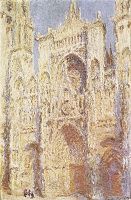
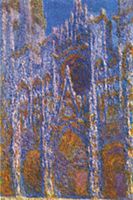
While there is some validity to criticizing an author for retelling the same basic story, it is not unheard of in art.  Monet, for instance painted over 30 paintings of Rouen Cathedral.  And while they are all the same composition, individually they are very different.  Here’s four paintings (not prints a la Andy Warhol):

While I’m not suggesting that Díaz is on par with Monet, I am trying to say that you can work with a similar subject and create very different pieces of art.

So, yes it’s another Yunior story and yes, Yunior has cheated on his girlfriend again.  But this story is constructed differently.  And at this point I’m starting to wonder if maybe there aren’t multiple Yuniors–I’ll even think of them as in alternate realities.  Because Yunior sure has cheated on a lot of women by this time.

It makes him the perfect writer for “The Cheater’s Guide to Love.”

Unlike in the other stories, this one takes place over five years!  In Year 0 you are caught cheating by your girl (the story is set in second person).  She sticks it out with you for a time and then dumps your ass.  I liked how it was revealed just how many women he had cheated in her with over the years that they were together–he really is a shit.

In Year 1, you act like it doesn’t matter, but it does.  And you are crushed.  Your friends try to help out, but how much can they really do?  You think suicidal thoughts and imagine that that will make her forgive you.  It doesn’t.  By year 2, you have met someone.  But you find some bullshit reason (she hasn’t put out yet) and you break it off and go into another spiral.

Year 3 sees you looking after yourself–running and fitness.  In what I think of as a wholly accurate happening, you injure yourself running and are knocked back on your ass for months–momentum and caring are gone.  You look for substitutes but nothing feels as good as running.  So you stop.  And you let yourself go.

What I also liked about this story is that despite this background of the break up, there are other interesting things spiraling around Yunior.   There’s a fascinating look at racism in Boston (perceived or real?); there’s the woman who claims to be the mother of his child, the woman back in the DR who claims to be the mother of his friend Elvis’s son.  Both men act very differently to the news.  Elvis is thrilled to have a son, Yunior is freaked by this woman.  This is probably the first time that I’ve seen Díaz have a woman do behave the way they do in this story.  It’s also interesting to compare Yunior and Elvis by the end of the story.

I also got a kick out of all the women he used to cheat on his girlfriend with star getting married and they all start sending him invitations: “Revenge is living well, without you.”  Year 5 sees a completion of the spiral for all parties.  And a cool resolution to this story.

Much like with the Monet paintings, if  Díaz can keep his Yunior stories interesting (and varied enough), I will keep reading them.

For ease of searching I include: Junot Diaz, Bernabeu

Read Full Post »

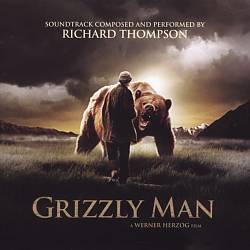
SOUNDTRACK: RICHARD THOMPSON-Grizzly Man Soundtrack (2005).

This is a largely instrumental soundtrack by Richard Thompson.  It features some wonderful guitar work (no surprise there).  There are several slow acoustic numbers (“Tim & the Bears,” “Foxes”–which is in the style of his old traditional folk ballads) there’s also the slow impassioned electric guitar solo (set over a simple beat) of “Main Title.”  “Ghosts in the Maze ” is a dark piece, the exact opposite of “Glencoe” a traditional-sounding song, both of these are under two minutes long.  “Parents” adds a cello, which means a sombre song.  “Twilight Cowboy” is one of the longer pieces, and it really conveys an openness of nature.

“Treadwell No More” is a slow six-minute dirge type song.  “That’s My Story” has spoken dialogue by Treadwell, over a simple unobtrusive guitar.  But as the title of the record says, Music composed and performed by Richard Thompson.  Which means there are other musicians on the soundtrack too.  “Small Racket” is where things start to get noisy and a little uncomfortable.  There’s some squeaks and slashes of sound, but it’s mostly a tense guitar feel.  Then comes the darker, scarier stuff.  “Bear Fight,” is a series of cello noises and swipes.  “Big Racket” is indeed that, with guitar from Henry Kaiser and noises from Jim O’Rourke.  “Corona for Mr Chocolate” is all Jim O’Rourke, it’s also odd noises and moods.  None of these three songs are terribly off-putting but they reflect a very different tone.

The album ends with “Main Title Revisited,” which is what it says and “Coyotes” by Don Edwards which has some coyote yodels.

It’s a good soundtrack, really conveying what the movie is about, and while not essential Richard Thompson, it is still some great guitar work

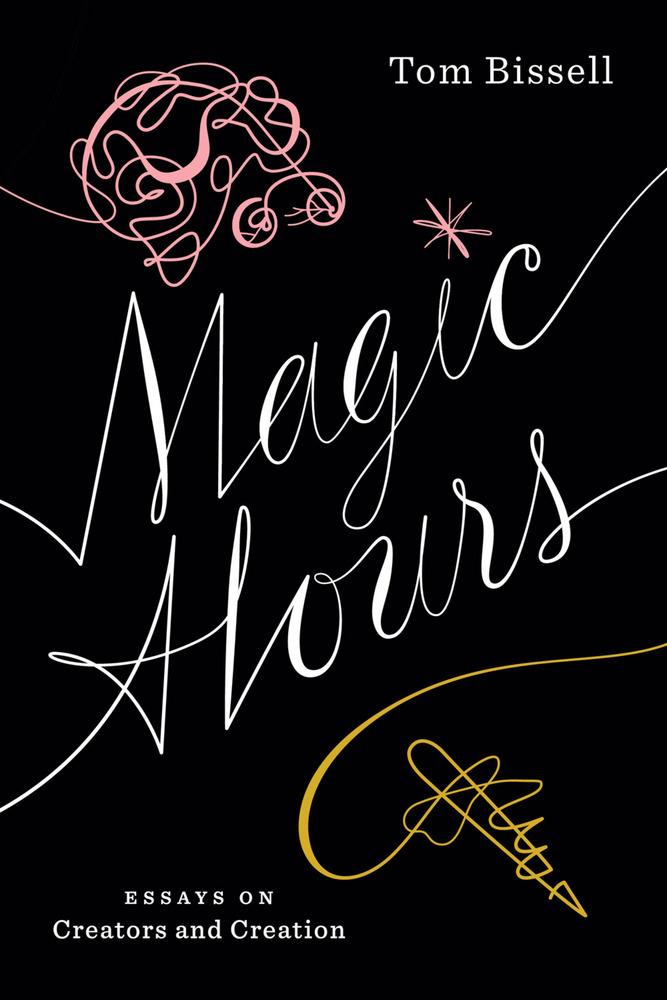
[READ: July 23, 2012] Magic Hours

I thought that I had never heard of Tom Bissell, but I see that I have read three of these articles already (I guess I don’t always pay attention to the author’s name).

This collection of essays comes from the last eleven years (2000-2011).  The articles have appeared in The Believer & The New Yorker (these are the ones I have read) and Boston Review, Harper’s, New York Times Magazine, Virginia Quarterly Review, New York Times Book Review and Outside (which I am starting to think I should really check out more).

Primarily they are articles about writing–he looks at fiction, non-fiction, film or a combination of them.  Bissell is a strong writer and he does not hold back when he sees something he likes or dislikes.  I found his articles (all of which are quite long–about 30 pages each) to be engaging, funny and very persuasive.  I’m really glad I read the book (and was even glad to re-read the articles that I had read before). (more…)

Read Full Post »

SOUNDTRACK: CHUMBAWAMBA-“That’s How Grateful We Are” (1990).

Chumbawamba called it quits this week after 30 years of being a band together.  Most people assume they put out one single and that’s all. And in some ways that is true.  Because most of their other music was way too radical to be played anywhere–even when it was as catchy as this.

This is a six-minute dance-funk song off of the first Chumbawamba album I ever heard (Slap!).  It opens with a little girl saying “Okay, lay some drums on me.”  After some drums and hammered percussion, she says, “gimme some bass” and a funky riff starts.  It’s followed with accordion, horns guitars and, Chumbawamba’s signature–chanting.

It’s a call and response song with a wonderfully catchy chanted chorus.

On first listen you might catch a few unexpected words (black lung, attack, attack, we took to the streets).  But then you get swept up in the chorus again (and maybe the accordion solo).  But on further inspection, the song is about the Hungarian Revolution of 1956:

Working in a forge, black lungs, burnt skin
Callouses, arched back, hammering, hammering
Stalin watching over us pigeon shit head
We’d spit on the floor at this red bastard god.

Not exactly pop music, but you can sure dance to it.  I haven’t listened to too much of their more recent music, but their early stuff is wonderful and worth looking for.  Thanks for the music lads and lassies.

[READ: July 2012] Lucky Peach Issue 4

I can’t get over how much I enjoy Lucky Peach.  I just loaned a past issue to a friend and he loved it too.  He’s looking forward to trying some recipes and he’s been fascinated by the articles, too.  I don’t read any other cooking type magazine, and yet I can’t get enough of this one!

DAVID CHANG & CHRIS YING are still on board with their note “From the Editors” and PETER MEEHAN, JONATHAN GOLD & ROBERT SIETSEMA talk about “American Cuisine, Whatever That Is”

This issue features a choose your own adventure from COURTNEY McBROOM AND ALISON ROMAN–“Voyage of the Taco Belles” in which they travel to Texas and California to compare “Mexican” food.  It’s a fun adventure with many pitfalls and many delicious locations.  No one could conceivably eat that much.

DREW ALTIZER-“Swan Oyster Depot” photos from the independent seller.

DAVID TREUER-“No Reservations” gives a fascinating history of the Objiwe peoples.  How they don’t have a cuisine per se, but they do have specific foods they eat.  Also, that their way of life was not decimated when the white man came because they did not eat bison, they ate from the water and from smaller animals.  But when the white man gave them fatty fried foods, their diet was changed for the worst.  A fascinating look and an unexpected content from a “food” magazine.

PETER MEEHAN, BRIAN KOPPELMAN, ANTHONY BOURDAIN and ELVIS MITCHELL all talk about the movie Diner.  I have never seen it, but it sounds pretty important in a certain range of cinema.  I liked hearing their various opinions of the movie.  Elvis Mitchell (from NPR’s The Treatment) is particularly funny.

TOM LAX-“The Schmitter” talks about The Schmitter a crazy sounding sandwich from Philadelphia that should give the cheese steak a run for its money.  (Cheese, Steak, Grilled Salami, “Special” sauce, Tomatoes, More Cheese and Friend Onions).  Yum!

HAROLD McGEE-“Harold McGee in Outré Space”–He’s back with a lengthy article on eggs and his attempts at peeling hard-boiled eggs without ripping the egg inside–his experiments are pretty out there!

BEN WOLFE–“American Microbial Terroir” How microbes and bacterium form on salami in different regions and how those bacteria inform the flavor of the meat.  Gross but very interesting.

STEVE KEENE-“Portfolio”  He did the cover for Pavement’s Wowee Zowee album and here has a new portfolio of his new style of painting–on plywood.

DANIEL PATTERSON-“We Waited as Long as We Could” He talks about the Rascal House, a restaurant that he went to as young kid with his grandfather.  It’s about the demise of this kind of establishment in general too.
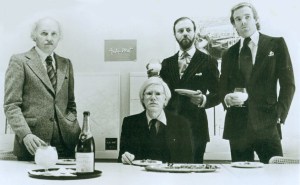
BOB NICKAS-“Someone Has to Bring Home the Bacon” Nickas looks at Andy Warhol and his various accomplishments regarding foot (including the aborted Andymat)

JOHN GALL-“Defrosted Foods” a photo of defrosted foods

NOZLEE SAMASZADEH-“A Modest Proposal”  This clever article talks about eating foods and plants that we consider invasive.  The best idea is to sell back the Asian carp to the Chinese–they love it and we don’t eat it, meanwhile it is invading our waterways.  Seems we could get back all the money they owe us!  Plus, why not eat Nutria?

MATTHEW RUDOFKER-“Knives Out” Look at these amazing knives (that I will never buy).

JONATHAN PRINCE-“Photo-Op Food” A very funny article about politicians trying (and often failing) to blend into regions by eating “local” food.  And the funny photo-ops they often provide.

MARC MARON-“Pan-American” The tale of a used cast iron frying pan and the story behind it.

DOUGLAS WOLK-“Love, Love, and ALE-8 One” This is the story of an independent locally created soda.  It’s based in Winchester, KY and serves more or less the Winchester area.  The soda is in huge demand there.  It’s the story of a brief but failed expansion and a determined independent spirit.  Check out their site and stuff.

DAVID SIMON-“Pickles and Cream” appreciating the only contribution Simon’s grandfather ever made to the culinary arts.

LAUREN WEINSTEIN-“Sushi, USA” a comic about sushi.

MARK IBOLD is still on board (hurray!) bringing culinary fun from Southeastern PA.  This time: John Cope’s Fancy Golden Sweet Corn.

There’s of course lots of delicious (and sometime crazy) recipes written in their own wonderful somewhat disrespectful style.

Oh, and just to put your mind at ease, the picture on the cover is of a cow eating a veggie dog.  Even knowing that it’s still disturbing.

Read Full Post »

SOUNDTRACK: TRES MTS.-Three Mountains (2011).

Tres Mts. are a side project that features dUg Pinnick from King’s X and Jeff Ament from Pearl Jam.  It also features Mike McCready from Pearl Jam on some solos (and he played live with them as well).  The drummer is from the Fastbacks, but I don’t know the Fastbacks.

To me this sounds like a King’s X project–dUg is just to powerful a presence to not dominate.  And of course there is some heavy off-beat stuff, just like King’s X.  The biggest differences are the lack of harmonies and the more screaming guitar solos.  And yet it also sounds a lot like a Pearl Jam record–Ament writes most of the songs and his Pearl Jam instincts are in full force.

Overall the disc plays with different sounds–some hard fast rockers a few slow soulful numbers and some big choruses.

“My Baby” is a fast blast of rock–one might even say dUg fronting a Pearl Jam song (Mike McCready plays a wailing solo).  “Oh Lord” has some really dissonant chords on it, it shows the noncommercial side of the band.  I really like it, although I gather it’s not a favorite of others.  “God Told Me” sounds a bit more like King’s X’s slower ballads with gentle vocals.  “Makes Me Feel” is a meandering, atmospheric song with subdued vocals and tribal drums–Pearl Jam makes songs like this although it’s unusual for King’s X.  dUg does the whispery vocals really well.

“Holes in the Road” is just a straight out rocker–pretty much a classic rock song.  “In the Middle” and “Life” are gentle ballads.  I get “Life” stuck in my head quite a lot.  “Afrosheena” is a beautiful soulful song–dUg’s voice soars through the chorus–it really highlights what a great voice he has.  “She’s My New Song” has more of that classic rock feel–guitar solos after every verse.  This song feels like it could be thirty years old, it’s great.

“Utah” is probably my favorite track on the disc–it’s funny (“she moved to Utah…with the mailman”), it’s fast (the opening riff is great), it’s got stop and start sections and a little dissonance, all in under 3 minutes!  “Break” is a slow ballad that opens like a Pearl Jam ballad–a beautiful slow guitar intro.  The final proper song is “Mystery” a noisy rocker with dissonant chords and interesting guitar sounds.  The bridge is very King’s X.

The disc ends with “Shes My New Reprise” which is an instrumental (mostly) jam of “She’s My New Song” that gets super fast at the end (with bongos!).  It’s a great fun ending to a great fun record.

These three (four) guys hit all the right strides on this record.

[READ: July 13, 2012] “Kikwaakew”

Sometimes it’s fun to read a story about something that is completely unfamiliar to you.  In this case, this is a story about a Cree man trapping animals in the snow.  Xavier, who has only one leg (!), is away from his sons looking for the animals he has trapped.  Xavier has had a hard life.  His wife died giving birth two his twin boys, and he has to work very hard during the winter to have sustenance for the year.

Before this journey his Aunt Niska came and told him she would use her shake tent and offer prayers.  He knows that she is trying to tell him something from far away–possibly that something bad is coming.  He can just tell, from the way something seems to be watching him.

This was a fascinating look at  trapping–how he baits his traps but has to snowshoe (with the prosthetic keg) out to check them all.  He hopes to find a fisher (I had never even heard of this animal) which is like a giant weasel, whose pelt will give them enough money for the rest of the year.  He knows there is a fisher around, and he is trying his best to catch it, only to find that something has taken his bait and destroyed the traps. (more…)

Read Full Post »

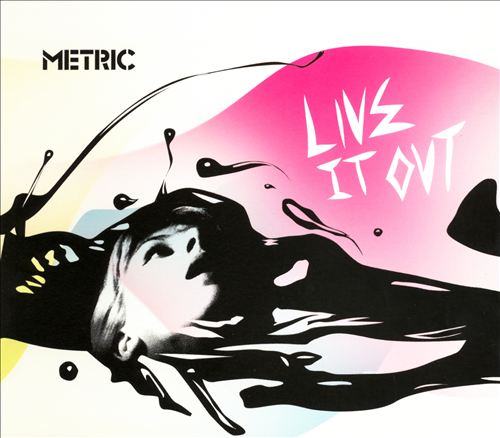
SOUNDTRACK: METRIC-Live It Out (2005).

I enjoyed Metric’s Fantasies album so much that I bought their previous album (an album that I had written down as worth checking out about 5 years ago).  At first I was a little disappointed–the album doesn’t have the glow (or perhaps sheen or polish) of Fantasies.  Normally I prefer raw to polished, but it’s surprising to go the other way sometimes.  And after a couple more listens I really started to appreciate this album’s rawness.

The guitars are loud and pushy.  There are keyboards that dominate some songs, but they never make the songs poppy.  And Emily Haines’ voice sounds great.  The opener “Empty” has a lot of quiet sections, but the guitars really just burst forth.  It’s 6 minutes long but that’s mostly through a long intro and outro.  The rest of the songs stick firmly in the 3-4 minute range.  “Glass Ceiling” has a cool stuttering riff and a kind of awkward bridge–these first two songs kind of resist admittance (the piano/guitar solo is certainly a weird combination–which I like now of course).  “Handshakes” shows their more commercial side–a slick kind of guitar riff with Haines’ more aggressive vocals.  True the siren sound may turn off some, but it’s certainly a signature.  “Too Little Too Late” is a slow sultry number, but even more sultry is the sleazy-feeling (no doubt because of the keyboards) “Poster of a Girl.”  In addition to a cool spoken word section in French (the whole song is bilingual), we get the English lines “Coming in your pants/For the off chance/With a…poster of a girl.”

“Monster Hospital” is a fun punk blast that is still a live favorite for the band.  “Patriarch on a Vespa” has another rough riff with some cool bass.  It also features some disconcerting singing (ahahs that sound more than a little spooky).  “The Police and the Private” is one of the cool songs with easily singable but easily confusable lyrics.  While “Ending Start” has some great guitar riffs near the end.   “Live It Out” ends the disc with a staccato punk number.  It’s a perfect summation of Metric before they got more commercial.  And it’s a great addition for fans of the band.

[READ: July 8, 2012] The Big Meal

This play came as a supplement with Lucky Peach issue #4.

I have often maintained that it is much better to see a play than to read one.  Not a daring opinion, by any stretch. I have taken that to something of an extreme however, which means that I pretty much never read plays.  This has severely limited by Shakespeare intact, naturally.  It also means that a lot of great works are lost to me.

I’m using that information by way of introduction, not because I think this play compares to Shakespeare, but because this is one of a few plays that I have read recently that I’ve really enjoyed.  So I’m retracting some of my earlier thoughts about reading plays.  True, some plays with multiple characters can be confusing to keep straight (since defining characteristics are not given).  But in shorter plays or plays with not too many characters, it’s not so hard to read them.  And in fact, it can be a quick and enjoyable read.

Although this play complicates things immensely because of its (very cool) setup.  The setup is described in the introduction to the play: “The actors play multiple generations of one family…as they glide through time.  As the characters age, their “essences” pass from younger to older actors.”  So, the story takes places over a few generations of time.  There are eight actors.  Each actor plays multiple roles.  These roles correspond to the characters at certain ages.  So, for example, the youngest actor plays Character A as a child; the adolescent actor plays Character A as an older child; the middle-aged actor plays Character A as a middle-aged person, etc.   So that’s a little confusing (although I’ll bet it makes sense seeing it live).  What I like though is that this “gimmick” is not so much a gimmick at all, but a real indication of how we turn into our parents and an indication of how quickly time passes in this play. (more…)

Read Full Post »

I couldn’t find the right cover–this is the right year, wrong issue.

SOUNDTRACK: FOSTER THE PEOPLE-“Houdini” (2011).

My friend Anna was way ahead of the curve on these guys.  She liked them before “Pimped Up Kicks” went huge.  So I listened to the album and liked it but never would have guessed it would have been such a hit!

This song reminds me of a bunch of other bands, and I actually have no idea what the song is about (his vocals are really hard to understand).  But it’s catchy and has a great melody.

And it has a great video.   Whereas I used to look for cool new videos, I really don’t watch videos anymore, unless someone tells me about one.  I felt like bands didn’t make great concept videos anymore.  Well, this one is very cool, indeed.  I just can’t decide if the hidden people are actually how they did it or if it was a lot more high-tech than that.

[READ: July 5, 2012] “The Bonds He Did Not Break”

Everyone knows Houdini, but I didn’t know much about him.  This JSTOR article gives a really good profile of the man.

Harry Houdini was born Erik Weisz in Budapest, Hungary.  After immigrating to the U.S. with his family, his name was changed to Erich Weiss (and for some reason, his birthday was changed from March 24 to April 6) and they settled in Wisconsin.  Wisconsin seems to have been home to many circuses, or at least the circuses always made a point of stopping there, so young Erich was always around fantastic people.  He even joined a circus as a contortionists (and called himself The Prince of the Air) when he was young.

At the age of 12 he left home look for work in the circus.  After a few months, when he heard that his family had moved to New York, he rejoined them there.  He started doing magic as “Eric the Great” and then, with Jacob Hyman, began performing as the Brothers Houdini–named after French magician Jean Eugene Robert-Houdini.  By 1891 the Brothers Houdini were a success.  They even performed the 1893 Worlds’ Fair.  The Brothers parted ways when Erich met Bess, his soon-to-be wife (he was 20 she was 18).  Erich was now calling himself Harry. (more…)

Read Full Post »

SOUNDTRACK: LATETIA SADLER–“There’s a Price to Pay for Freedom (And It Isn’t Security)” (2012).

What a treat to see Latetia Sadler as the song of the day from The Current (Minnesota Public Radio).  Latetia Sadler is the voice of Stereolab.  She has a new album coming out called Silencio and this is the first single.

It’s hard to say whether or not the song “sounds” like Stereolab, because Stereolab sounds different all the time.  But this is definitely not your bubbly Stereolab.

The song opens with some dreamy slow synths which morph into some dreamy guitars.   There’s no vocals for over a minute (which makes it seem like it might be an instrumental.  When Latetia’s voice comes in (backed by a deep male voice (very un-Stereolab) the music pulls back almost entirely and Latetia’s peculiarly inflected words [ree-uh-li-TEE] come to the fore.  It’s hard to believe that such a dreamy song would be about what the title suggests it’s about.  But how about this for a stinging (if oblique) final line: “Happy to identify with a reflection in merchandise.”

I prefer Stereolab’s bubblier music to their more dreamy, languid songs.  This one is nice, and because of her voice, it’s intriguing.  But I’d need a beat more oomph to want to get a whole record.

[READ: July 6, 2012] “An Abduction”

Tessa Hadley is rapidly turning into one of my favorite authors.  I only know her from reading New Yorker stories and I really must expand beyond these glossy pages.

This story was really fantastic.  I loved how the title has one meaning–the obvious meaning, which is even stated in the story–at the beginning, but by the end, the meaning changes to something else.

And what a great opening to a story: “June Allsop was abducted when she was fifteen, and nobody noticed.”  Shocking!  Then Hadley contextualizes this oversight: “This happened a long time ago, in Surrey, in the nineteen-sixties, when parents were more careless.”  Hmm.

So Jane was home from boarding school–her older brother was studying for college, her younger sister was not yet in boarding school and still had friends locally.  So, yes, Jane was bored.  She tried her best to have fun, but was really stumped.  When her father drove down the driveway past her and she accidentally hit his car with the ball from her Jokari set (paddle ball), the only fun she was having was destroyed.  Her father drove off in a huff.

Driving past him on the road was a two-seater convertible with the top down and three long-haired boys driving.  Her dad scowled at them, but paid them no mind.  Which is a shame as they are the abductors of young Jane. (more…)

Read Full Post »

SOUNDTRACK: K’NAAN-“Wavin’ Flag” (2009).

Like most people in America I don’t know much about K’naan.  This is despite the fact that this song (in a modified form) was the anthem for Coca-Cola and the 2010 World Cup and was HUGE (except in America where we like one and ignore the other).  There’s an article about K’naan in the July/August issue of The Walrus.  He is a Somali-born Canadian rapper and he is looking to break into the US market.

And that’s as much as I knew of him.  So imagine my surprise upon listening to this song to realize that it is an acoustic-pop song not unlike Coldplay (lots of Whoa-ohs) set to a martial beat.

It’s a catchy anthem indeed–made perfect for an event with lots of waving flags like the World Cup.  However, the original lyrics are impressive (and talk obliquely about his life in Somalia).

Out of the darkness, I came the farthest Among the hardest survival
Learn from these streets, it can be bleak Accept no defeat, surrender, retreat

So many wars, settling scores Bringing us promises, leaving us poor
I heard them say ‘love is the way’ ‘Love is the answer,’ that’s what they say

And yet the chorus is pretty uplifting:
When I get older I will be stronger They’ll call me freedom just like a wavin’ flag And then it goes back, and then it goes back And then it goes back, oh
Chorus aside, these lyrics aren’t exactly going to sell product, so it’s not surprising that the Coca Cola Celebration Remix has changed some lyrics:
Saying forever young Singing songs underneath the sun Let’s rejoice in the beautiful game
And together at the end of the day, we all say
Although this lyric could have been in either version
In the streets our heads are liftin’ As we lose our inhibition
Celebration, it surrounds us Every nation, all around us
And the chorus remains the same.
The remix is a bit more interesting musically.  The original is just him on an acoustic guitar with some drums.  It reminds me of Bob Marley (and references “Buffalo Soldier”).  The remix has a really cool drum intro.  It’s beefed up throughout as well.  I guess it’s easy to say it’s a sell out (but well, duh), but it’s still as catchy as the original without being too obnoxiously overproduced.  And heck, maybe people learned a bit about Somalia from it.  Stranger things have happened.

[READ: July 4, 2012] “And They Danced by the Light of the Moon”

Some stories are one thing at heart.  No matter how much you gussy them up and make them look all fancy, they’re always going to have heavy metal T-shirts under their formal wear (I should know).

And so it with this story set in the 70s in the Quebec town of Val de Loups (the fact that it is set here changes enough of the story that although the story is not atypical, it is at least in an unfamiliar setting (to me)).  Jules knows that he is in love with Manon.  Manon doesn’t know anything about love.  Jules is an only child, living in a trailer park, trying not to get beaten by his father. Manon is the youngest of 11 children (her mother kept trying until she had a girl).  She is beautiful with golden ringlets and a magical laugh and she is under the constant supervision and protection of her ten massive brothers (one is a wrestler, three work in the mines).

Jules is an intelligent boy who always gets in trouble.  He’s a class clown because he likes it when people pay attention to him, although he doesn’t really have any friends per se (when he gets in trouble, they aren’t there with him).  His last prank was an invitation to the aliens–spray painted in the school parking lot.  This gets him kicked out of the upcoming dance (even though he did a lot of the getting it setup).  He’s really bummed because Manon said she’d go with him.  Manon likes him because of the way he can roller skate.

Despite not being allowed into the dance, they meet up outside the building and go to a house in town where Jules is plant-sitting.  With the right music, the right lighting, the right setting, this would be a joyous romp of explored sexuality and post-dance bliss.  But this is Val de Loups, where no one leaves, where everyone is trapped. (more…)

Read Full Post »

SOUNDTRACK: THOU-“Something in the Way” (2011).

Sometimes you hear a  cover version and you really don’t know what to think.  Maybe you hate it from the very beginning.  And then maybe it does something and you kind of hate it a little more.  And then suddenly it turns the corner and who knows what they’re doing.

This song opens almost ponderously slowly.  I guess it’s not that much different from the original , but it feels so really slow.  And then, when they get to the “something in the way” part, the band kicks in with really heavy squalling feedback and cookie monster vocals shouting “Something in the Way.”  And I kind of didn’t like anything.  But then came the surprise.  the “oooh” part was sung very straight and melodically.  The song reverts back to the original slow vocals section and you realize that the singer sounds an awful lot like Cobain himself. And the second time when the chorus comes in, you expect it and while you may not like the cookie monster vocals, the juxtaposition to the sweet “oohs” is strangely cathartic.

Not for everyone by a long shot, but very interesting nonetheless, especially the way the feedback squalls and wheedles.

Thou has done a number of Nirvana covers evidently.  There’s a cover of “Anuerysm” in this live show (in which they acknowledge that the fans aren’t there to see them).  The music is spot on, but man, those vocals are hard to handle.

[READ: June 29, 2012] “The Golden Vanity”

As yesterday’s story was about “the husband,” today’s story is about “the author” (have short story writers run out of names?).  The author has just written a very successful book in which the main character tries very hard not to be nervous in social situations.  The author himself gets nervous in social situations.  When people know he wrote the book they scrutinize him to see if he gets awkward in social situations…which makes him more awkward…etc.  It’s a pretty funny concept.

The opening section has the author meeting the librarian.  He’s put in an awkward situation because his hands are full when she waves.  So he gets emabrassed and scowls.  Then he thinks she assumes he is scowling at her.  He gets through the encounter with advice from his shrink.

The next scene jumps quickly (I wonder what happened to the librarian) to his medical condition.  The author has to have his wisdome teeth out.  He spends a lot of the story wondering is he should have a local or a twilight anesthetic (which costs $3,000 more and calls for an I.V.). He wonders aloud a lot to his friend Liza, who tolerates his neuroses and enjoys talking about them, even though she says things like “We’re not talking about this again.”

The evening before the surgery (he of course chose the I.V.) he went on a date.  Well, not really a date (he liked to say that), but friends going out together with a single woman there to meet him.  Naturally this made him nervous too.  But he and Hannah hit it off (lots of drinks helped).

There’s a whole section devoted to waiting room art which I appreciated quite a bit.  Who decies what to buy?  It’s not like the doctors would come out and look on it and admire it, right?  This sort of melds with a discussion about the preserved letters of famous writers.  Do libraries buy emails?  Do they buy the letters of young writers as a security upon further greateness?  These ideas are pretty theoretical yet the way it is written keeps it inetersting. (more…)

Read Full Post »

« Newer Posts - Older Posts »