Feeds:
Posts
Comments

Archive for the ‘Magazines’ Category

harper juneSOUNDTRACK: PHISH-A Picture of Nectar (1992).

nectarA Picture of Nectar plays with expectations of Phish somewhat (as many as could be formed after two albums).  This album has sixteen songs, with half of them at 3 minutes or less.  These include the pretty jazz instrumental “Eliza,”  “Poor Heart” which is a slide guitar filled short country-ish romp, “Manteca” thirty seconds of nonsense.  “Magila” is a jazz instrumental which has solos by both piano and guitar.  “The Landlady” is another instrumental, but one that is a rocking guitar workout. “Faht” is a pretty, simple guitar piece with birds playing in the background

After somewhat anemic recordings, A Picture of Nectar feels a lot more full.  “Llama” bursts out of the gate sounding very complete with all of the instruments at the same power and breadth.  “Cavern” has a pretty ridiculous drum sound—very big and echoey and the pace is a little slower than is typical live, but it sounds very good. “Stash” clocks in at 7 minutes and it sounds very similar to the albums (although there are a still a bunch of silly voices like the one who says “Please don’t do that.”  “Guelah Papyrus” (no idea what that name is about) sounds fine here—very much like the live versions, full and fun.

“Glide” features the “glad glad glad” chorus in multipart harmony that makes this song seem like a barbershop number and sounds wonderful.  The longest song on the album is perennial favorite “Tweezer.”  The song is very much like the live versions except that the middle section has a crazy noisy breakdown which is a little disconcerting.  The solo then moves into a typical jam for Phish which really shows what they would do with this song live.  “The Mango Song” is a fun piano based jaunty number that highlights the band’s harmonies.  It sounds really good too.  “Chalk Dust Torture” sounds different because the voice is very different.  It sounds like Trey through a processor of some sort, or possibly somebody else singing.

The album ends with “Tweezer Reprise” because the song is so good it needs a proper ending.  This is another successful album from Phish.

[READ: September 20, 2013] “East Texas Lumber”

I wasn’t sure I would like this story about an unsuccessful guy in East Texas.  But I really did.

The narrator is Brian, a guy who has not been very successful since he got out of school.  He’s trying to save up to be a locksmith, but in the meantime he’s working at East Texas lumber.  And he’s thankful to divine providence for sending a tornado which helped him get the job.

A tornado ripped through their town and because of all of the rebuilding, the lumber store needed extra help, and that’s where Brian came in.  Even though on his first day he crushed some drywall and put a nail in his foot, they kept him on.  He was paired with Jimmy, a goof who had been working there for a long time.  Jimmy liked to smoke pot and go to parties, but he was the only one willing to partner up with potential liability Brian.

On this day their boss has given them a cushy job.  Deliver two loads of shingles to two different locations.  This was easy work—a lot of driving and no lumber to stack.  And it should get them back around 4, which is just enough time to goof off for the last hour, and get to The Hangout by 5 PM. (more…)

Read Full Post »

harper septSOUNDTRACK: PHISH-Lawn Boy (1990).

220px-Lawn_Boy_coverFor what I consider a guitar dominated band (Trey Anastasio is certainly the frontman), the early Phish albums have a lot of piano dominated tracks.  It’s not the guitar is absent but the piano is mixed quite loudly which gives these songs a slightly different emphasis than when they are played live.

Also was with many songs on Junta, “Reba” feels slower than the live versions.  It also has some funny backing vocals (a common occurrence with these early songs).  “My Sweet One” is a lot more honky tonk than the live versions, which often feel almost barbershoppy.  In “Split Open and Melt,” the vocals are done in a very funny mumbly way (with weird background vocals).  There’s also horns (crazy horns) and female vocals –giving it  vaguely R&B feel.

“The Oh Kee Pa Ceremony” (for origins of the phrase, check out this) is a live favorite that’s a fun and funky guitar solo (with a retro feel) and in this version there is much laughing and carrying on in the background).  “Bathtub Gin” opens with the crazy seemingly out of tune piano that they do live (although not as much).  There’s more funny voices on the chorus and crazy sound effects throughout.  Earlier Phish were a lot sillier than later Phish.

“Run Like an Antelope” also has crazy sound effects and it’s funny how I forget that the song is almost entirely introductory guitar solo wailing.  It’s not until 8 minutes that we get to the “rye rye rocco” section and the actual “run run run” part.   In this studio version, the “set your gear ship for the heart of your soul” section is spoken so quietly.  And the song is not quite ten minutes long.  “Lawn Boy” sounds clean and jazzy in ways that it doesn’t live.  And “Bouncing Round the Room” sounds a lot like the live version.  It’s a little slower, with a few more details thrown in.

Overall, Lawn Boy is a great early Phish album, with every song being a success.

[READ: October 3, 2013] “Life as a Terrorist”

William Vollmann was a suspect in the Unabomber case.  All because a “concerned citizen” alerted the FBI about his fiction.

This sounds utterly crazy, but it is true.

Vollmann has written about all kinds of things, both fiction and non-fiction.  For his non-fiction, he has traveled extensively, to Afghanistan and other places where terrorists reside.  So when he was detained upon reentering the United States from Yemen, he didn’t think too much of it.  But when he was detained a second time, years later–for seven hours and treated like a criminal–well, that got him mad.  And he used the Freedom of Information Act to see what the FBI had on him.

This is a sobering look at how the justice system in its zealotry to protect us can actually do far more harm than good, at least to innocent individuals. Vollmann uses this as the basis of his essay which looks at the omnipresent Unamericans: those who would attack without provocation and intimidate the weak. (more…)

Read Full Post »

harper septSOUNDTRACK: PHISH-Junta (1989).

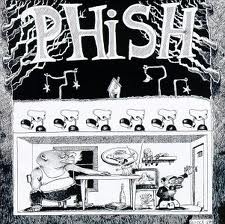
juntaI’ve been listening to a lot of live Phish as of late and thought it would be interesting to see if there was truth to the adage that Phish is great live but not so great in the studio.  So here is their first official album.  It was released as a double album, and when it was reissued on CD some bonus material was added.  Incidentally, I just found out that the album if pronounced “juhnta” and not “hoonta” because of the engineer they worked with.

The album starts with “Fee” which is a fun song (the lyrics are wonderfully weird) and they don’t play it all that much so it’s a treat to listen to.  I enjoy the way the verses sound compressed and distant but the choruses are nice and full.  There’s also some funny and interesting sound effects (some of which accentuate the action) throughout the song. This sound effects and noises processing has been with Phish from the beginning and they kept it up through many of their earlier, less mature albums. “You Enjoy Myself” is a live favorite so it’s fun to hear it in this version.  As with a lot of their earlier records, this song sounds a little stiff, especially if you’ve heard the wild live versions. It’s not bad at all, indeed, it has a perfectionist quality to it—the time changes are perfect, the solos are flawless.  Indeed, it’s quite an achievement (and in this more polished version it sounds more like Yes than their live versions ever did).  Interestingly when we finally get to the lyrical section (about 5 minutes in) it’s quite a bit slower than they play live.

“Esther” sounds much more theatrical here.  The music is gorgeous and there are lots of effects and backing vocals which bring a bit more menace to the song than the live version possesses. This also had a very prog rock sensibility to it.  “Golgi Apparatus” has a lot more in the way of backing vocals than the live version.  And “Foam” has some changes: the bass is especially loud and funky and yet the pace is so much slower than I’m used to.  The odd thing is the kind of stiff way that the lead vocals enunciate everything.  And the deep voice (Mike?) is quite amusing at the end of the song.  “Dinner and a Movie” is a fun and silly song and this version is especially enjoyable because of the backing voices and chatter and laughter which illustrate the dinner (and presumably the movie).

“Divided Sky” has a beautiful melody and it’s nice to hear it played so pretty and simply here.  But again the remarkable thing is how much slower the song is here.  “David Bowie” also sounds great (there’s all kinds of weird sounds effects in the background of the (very long) soloing section—I have no idea why or what they might be).  The solo sounds like it was maybe done in one take as there’s a couple spots where it’s not “right,” (whether flubs or intentional is hard to say) but it still sounds terrific.  In fact a number of tracks have some little flubs which makes it seem like they either didn’t mind or tried for a more live feel.

“Fluffhead” sounds solid and like the live versions.  What I never realized until I actually paid attention is that the bulk of the music (the extended jam session) is called “Fluff’s Travels.”  “Flulfhead is only 3 and a half minutes, while “Fluff’s Travels” is over 11 minutes (it opens with the beginning of the guitar solo–the catchy riff that starts the lengthy jam).  “Contact” is a delightfully silly song about tires and cars that I’ve always enjoyed and find myself singing often because the melody is so simple.

What’s funny is that the end of “Contact” kind of bleeds into “Union Federal” which is listed as a live song (and clocks in at over 25 minutes long).  This “Union Federal” is an improvisational jam (or an Oh Kee Pah Ceremony—where the guys would get together with instruments (and other things) and jam for a time.  This song is weird with many layers—and is rather typical of one of Phish’s weirder jazz –flavored improv sections (meaning that there is a lot of dissonance and noise).  It’s quite jarring especially after all of the melodies and prettiness of the album proper.  And I can see a lot of people not being happy about its inclusion.  “Sanity” on the other hand is a fun song.  In the intro, they keep claiming the song is by Jimmy Buffett. They are clearly very silly in this setting, especially at the end of the song.  The final track is a live version of “Icculus” the song which is pretty much all buildup.  In the intro they quote U2 “This is red rocks, this is the edge.”  But the “joke” of this version is that Trey keeps postponing the name of the person who wrote the name of the Helping Friendly Book–stalling in any way he can.  As the song gets louder and louder and more absurd, the guys are even more frenetic.  It takes over 3 and a half minutes to get to the proper lyrics of the song.   And then the song itself is about 15 seconds.  Absurd nonsense.  But very amusing.

So this is quite a solid debut album, and the amount of songs that they still play live shows how fond everyone is of it.

[READ: October 2, 2013]  “Wrong Answer”

I didn’t hate Algebra.  I rather like solving puzzles so I enjoyed solving for x.  Algebra II I recall being more daunting and less fun with lots of formulae to memorize.  And, unlike everything promised, I have never used any of it in my adult life (geometry and angles, sure, but not logarithms).  According to this article the new United States CORE curriculum (which I know my son is dealing with already in 3rd grade) says that high school graduates must have Algebra II.

The reasons for this intensification in the studying of math are many (starting around the time of Ronald Reagan) but the current push comes from Arne Duncane, the U.S. secretary of education.  He believes that “algebra is a key, maybe the key to success in college.  Students who have completed Algebra II in high school are twice as likely to earn degree as those who didn’t.”  Whether or not that is true, those of us who earned a degree in nonmathematical  subjects certainly were not aided by this class.  But Nicholson Baker explains that the reason this might be true is that for most colleges, Algebra II is a prerequisite.  Ergo: if you don’t take Algebra II you can’t get into college because colleges require Algebra II.  That, for those who may not have taken logic–a far more useful course than Algebra II in daily life–is called a tautological fallacy.  [Indeed, I maintain that all high school students should have to take a course in logic because they would then be able to see through all of the builshit that politicians spill and claim to be logic.  Like the current (as I type this) government shutdown in which Republicans are claiming they didn’t want to shut down the government when they in fact signed papers saying they were going to shut down the government).]

The real problem with Duncan’s postulate that everyone should take Algebra II (“airplane mechanics do complex measurements and work with proportions and ratios…X-ray technicians calculate time exposures to capture the cleanest possible image.  Most factory workers need to understand Algebra II or even some trigonometry to operate complex manufacturing electronic equipment”) is that even if that were true (I don’t have any idea of it is or not), most people do not do those kinds of jobs.  And even if they did know higher math, they would still be salesmen, graphic artists, librarians, preschool teachers, custodians and many many other jobs that in no way require math. (more…)

Read Full Post »

SOUNDTRACK: PHISH-Live Bait 04 (2011).

bait04This Live Bait free sampler is compiled of songs from some of their summer tours (all songs are from June-August).  And it’s a fun collection of mostly long jams.

“Scent of a Mule” dates from 1996 and has a very “old” quality, like the band doesn’t sound as full as normal (the vocals also have an unexpected country feel). There’s a bit of “Sunshine of Your Love” from the guitars while Page is doing an elaborate solo.  Indeed there’s a lot of piano on this track—much more than usual (and some of it is crazy).  There’s a Jewish music section done on both guitar and voice which abruptly ends when the song returns to “Scent”.

“You Enjoy Myself” is one of my favorite Phish songs.  This version clocks in at almost 25 minutes.  At around 21 minutes the song devolves into them making a bunch of silly rhythmic noises, which must be very fun to see.  The next track is “The Landlady” (from 1993), a wonderful instrumental that morphs into “Tweezer” which has a pretty wild and raucous jam component.  There’s also a repeated guitar motif (which I don’t recognize) that seems to be a cue for the band to do things (play loud and fast or really slow—including their impossibly slow rendition of The Simpsons theme song.  It’s a neat trip.

The next track is “Mike’s Song.”  It opens a 36 minute jam that devolves at around 18 minutes into real silliness with spacey effects and controlled laughter.  At about 20 minutes, it morphs into the simple song “Contact” and eventually into “Weekapaug Groove.” Which starts in an unusual way—instead of Mike only playing the bass, the band joins the song in progress.

“Split Open and Melt” has some loud bass—I hadn’t really noticed the bass so much before, and in this version in particular Mike seems like maybe he’s mixed a little louder and he’s playing some really funky stuff (and making quite a few errors, it must be said).  Next comes the silly “NO2” (from 1999), which duplicates the effects of the record pretty well, and the guitar solo at the end of very pretty.  “My Friend My Friend” is a pretty dark song but it starts with the very pretty guitar work until the minor keys take over.  It slowly morphs into “McGrupp and the Watchful Hosemasters,” a lyrically insane but musically great song.  Page gets a lot of solo time in this song, too.

The next song is “Twist” always a fun and energetic live track.  There’s a very slow jam in the middle of the song (which in total is 29 minutes) before it turns into a very echoey “Slave to the Traffic Light.”

The next song is a nearly 20 minute, joyous “Free”.  It morphs into a beautiful “What’s the Use” yet another or f Trey’s gorgeous rising melodies.  “Axilla” is a fast almost punky version as is the near barbershop quartet riot of ”My Sweet One” which is the fastest I’ve heard it done.  And “Run Like an Antelope” is as frenetic as I’ve heard it—the pace of this segment (from 1993!) is insane.

“David Bowie” begins but then pauses as Trey sings “Catapult” a short piece that I don’t think I’ve ever heard played before.  Then “David Bowie” resumes for the remaining 10 or so minutes and it is a fast and furious cut as well.  This great free set ends with a 15 minute “Divided Sky,” which sounds as good as ever.

Phish releases a lot of concerts, so it’s nice that they throw these free compilations to us once in a while.

[READ: October 15, 2012] “Puppy”

This story is included in George Saunders’ new collection Tenth of December.  But since I was able to find it at the New Yorker, I figured I’d read it now (this means that of all of the stories in the collection I have only not read two).

This story is dark.  Although it doesn’t seem so at first.

The story begins by looking at a married woman who has their two kids in the car with her.  She is trying to get them interested in the beautiful autumnal day but they have heard it all before.  And besides, her son is deeply engrossed in his video game Noble Baker “Not now, Mom, I’m Leavening my Loaves” (ha).  Which is better than the game he wanted, Bra Stuffer.  We go into the woman’s head and (at least in my case) pity her a little bit for trying so hard with kids who clearly aren’t interested.  Like when she read the instructions to her son’s video game so she could offer him tips while he played (and he swats her away, but at least it is “affectionately”).

She keeps her spirits up.  But every example seems more sad than nice.  When she thinks about her husband who says “Ho HO!” to anything that comes up.  Like all of the animals that they own, and how few of them are actually played with by the children.

The other day she spoke of their dog as a puppy and her daughter cried because she didn’t remember it.  So of course she had to get them a new puppy.  She saw an ad for a puppy and decided to go check it out. (more…)

Read Full Post »

dec2004SOUNDTRACK: AWAY-Cities (2013).

awayAway is Michel Langevin, the drummer for metal band Voivod.  But on his first solo album he eschews all conventional music.  Rather, he has created an exercise in found sound and released it on the small label Utech Records.

The album is described as

Strong field recordings capture more than just the sound of an area, they capture a mood and spirit of the place and people. On Cities, local color and nature recordings clash with riots and discord, capturing the full human experience across the world. Literal and metaphorical “found music” appears: the booming stereo of a passing car or distant church bells, as does the rhythmic engine hum of a bus or the chirping of birds. This tour is a fast paced one, rapidly weaving through the geographic locations building a diverse, yet consistently engaging experience. The audio journey captured here perfectly reinforces the fact that, regardless of one’s location, the presence of music is never far, nor should it be.

What we get is a collection that sounds like a tour through the streets of the respective cities (nothing more specific than Europe is given, sadly).  We hear street noise and buskers playing (interestingly just about every type of music I have heard in Boston subways as well).

I only wish more information was given about just what Away was up to.  Where he was and, more importantly, how he recorded these sounds. The recording quality is amazing—the panpipes and harmonicas sound crisp and clean with no other ambient noise.  Did he ask the performers if he could record?  How did he get them so pristine especially since I assume they are in the streets?  And for the Europe ones, was there any given order to the way they were edited?  Is it the progression of their Voivod tour, or is it just random?  The mixing and sequencing is quite good, especially in the shorter pieces which really take you on a journey.  Not knowing what’s happening is maddening and part of the fun as you try to picture (especially if you use headphones) exactly what you are hearing.

“Montreal 2010” opens with the sound of travel until we zoom in on panpipes (for a few seconds).  This switches to a lurching shanty (sung, I suspect in French—it’s a little hard to hear).  Then from the shadows comes the sound of someone playing Leonard Cohen’s “Hallelujah” on the harmonica.

“Europe 2012” opens with someone playing what I suspect is a hammered dulcimer (exactly the kind of thing that buskers play in subway stations), it shifts to a jazz trio (sax, bass, drums) wailing away with traffic noises in the background.  After some busses and an accordion solo, there are delicate chimes.  Finally a bagpipe melody leads us away from the delicate chimes until we hear announcements in what sound like Russian and then French.  The track ends with fans chanting “Voivod Voivod.”

Montreal 2012 returns Away to near his home city.  This time the scene is much nosier—it could be joyous, it could be angry—there are whistles and horns, and by the end it seems like a joyous parade.  The noise diminishes as an operatic voice pierces through briefly until the drums return.  More street noises, including police sirens, French chanting and a train passing by as we return to yet more street drumming.  If this track had more context for the title it would probably be more enjoyable. And yet as the parade (for surely that is what it is ) marches past you feel like you’re there.

“Mexico City 2012” opens with a truck honking and street noise until we hear what sounds like an indigenous band playing, then some more flute music and church bells pealing. Then there are announcements in Spanish (by both a man and woman presumably in the church) and church organ music.  Pan pipes and drums bring us back into the street and what sounds like a market scene which ends with some Mexican music playing.

“Europe 2011” opens with some beautiful guitar or perhaps an Indian stringed instrument playing and some traditional Indian singing.  There’s some more music playing and cheering and then some peace as birds take us out of this short track.

“Montreal 2011” opens with banjo music (!).  And then the more typically French sounding violin moves us along.  More pan pipes and traffic noise progress us through the city.  Then two very different examples of accordion music meld until the noise of the train wipes them out.   The track fades out with a band playing a  jaunty accordion inspired track.

“Chicago 2012” ends the disc with a symphony orchestra tuning up (I presume) for a few minutes.  It’s a shocking cacophony.  Until someone shushes the noises and the birds return, playing us out of this aural tour.

You can stream, download or buy the CD  here.  Buying the CD gets you some of Away’s cool art (although I wish there was more).

[READ: October 8, 2013] “War Wounds”

Since I’ve been enjoying Tom Bissell’s book reviews, I thought I’d see what else he had written in Harper’s.  He seems to have a storied career with the magazine as a traveling journalist.  And this article dates back to 2004.

It is a personal article about himself and his father.  What I found fascinating about this is that his father was a Vietnam veteran, and I don’t know too much in the way of writing that concerns being the child of a Vietnam veteran.  There are a lot of books and films about the Vietnam experience for the soldiers, but not so much about the families that they returned to (as far as I know).  So it was interesting to read Bissell’s account of growing up with his father–who was a hard man and who wasn’t afraid to fight with his children (especially when drunk).

The man that Tom grew up with had a temper and didn’t much approve of Tom’s chosen profession.  But unlike many people of his generation, Tom didn’t feel that he had a particularly estranged relationship with his father.  What on earth possessed him to invite his father on a trip to Vietnam–to visit the sites where he lost friends and was himself wounded, is the stuff of journalism. (more…)

Read Full Post »

harper septSOUNDTRACK: THE AVETT BROTHERS-“Open Ended Life” (2013).

AvettBrothers_CVR-560658fd89bf96b9dd1bf2b2be57013e64cb38cd-s1The folks at NPR love The Avett Brothers, and while I can see the appeal of their live show, their studio output just sounds like typical Americana to me.  Not bad by any means, but nothing all that special–honky tonk swing, occasional harmonica and expected harmonies.

The album was produced by Rick Rubin, which would have surprised me a few years ago but after his work with Johnny Cash it makes a lot of sense.

This song is a pretty rollicking good time (and the pretty ooohs are something of a surprise) especially by the end when everybody joins in–I’ll bet this is a hoot live.  The melody is certainly catchy.  I just want to like it more than I do.

[READ: October 1, 2013] “The Two Davises and the Rug”

Even though I recently complained about flash fiction, there is one author who does a very good job with it.  And that author is Lydia Davis.  She can generate an entire story out of a very simple concept . And while some of her flash fiction falls into that “it’s just a sketch, not a story” world, her longer short stories pack a lot in.

Like this one.  The entire premise of this story is that two people are interested in the same rug.  And they are both named Davis (bt are unrelated).

This Davis purchased the rug many years ago and has grown tired of it.  When her apartment complex has a sale for charity she puts in the rug and asks $10 for it.  But the sales people mark it up to $50 (it’s for charity after all).  No one buys the rug but another tenant across the way (also named Davis) is interested in it. But that Davis doesn’t buy the rug.  And when the sales is over this David takes the rug back home while that Davis wishes he had bought it.

The fun part of the story is that both Davises are indecisive.  So, this Davis wonders if she should sell the rug to that Davis and if so, for how much.  But if he really wanted it, maybe she should keep it, maybe it’s better than she realized.  And that Davis is unsure how well it will go in his house and he wonders if may be he could try it for a time first.  But this Davis is reluctant to give it up in case he really likes it or in case she really likes it.  And maybe she should give $50 to charity since she didn’t sell it.

And the story goes on like the, with insecurities running rampant. Fortunately it’s not a very long story (this is one instance where the short version pays off handsomely). And after we have gone through the various permutations, it may be hard for even us to know what those Davises should do.

Read Full Post »

april 2013SOUNDTRACK: RICHARD THOMPSON-Electric (2013).

electRichard Thompson is remarkably consistent in his albums.  Especially his most recent ones.  The songs are all solid—both musically and lyrically.

Despite the name Electric, this album is no more or less electric than his other records.  Indeed, while this name may imply a much faster, heavier album, there are a number of ballads (and acoustic guitars) as well.  But if you like Richard for his amazing solos, you won’t be disappointed.

“Stony Ground” and “Sally B” are dark rockers (both mention gutters) with great fast solos.  “Treadmill” is one of RT’s class/money songs which are always spot on, even if he’s singing about sheet metal rather than playing guitar (great riff on this one too).

“Salford Sunday” is a more gentle rocker and “My Enemy” has a wonderful circular-feeling delicate melody and a gorgeous solo.  Both songs have female harmonies from Siobhan Maher Kennedy.  Indeed, Siobhan sings backing vocals on “Where’s Home” (an acoustic guitar ballad complete with violin solo), “Straight And Narrow” (a rocking song with aggressive guitars) and “Saving The Good Stuff For You.” “Good Stuff” Is a beautiful album ender, a sweet and tender ballad which I enjoyed even more live.

Alison Kraus sings backing vocals on “The Snow Goose,” a slow, somber song–the kind of which RT does so well.  “Good Things Happen to Bad People” is so unfailingly catchy, practically an earworm, that if there were any justice, this song would have been huge.  It’s got a great melody, cool lyrics and a really rocking solo.  “Another Small Thing in Her Favour” is a mellow acoustic/country song.  The end of the album goes a little too mellow.  Even though I like the songs individually, as a record it kind of trails off, which is a shame since “Good Stuff” is such a beautiful song.

I enjoyed this album tremendously and hearing him play some of those songs live was a treat.

[READ: October 10, 2013] 3 book reviews

This month Bissell reviewed three novels.

grossmanyouThe first is YOU by Austin Grossman.  Bissell explains that this is a book about a middling video games company circa the 1990s (Grossman was born in 1969 so he knows the territory well).  Bissell really enjoys the philosophical attitude of the book, specifically the narrator’s thoughts on making and playing games, although he fears that some of the characters are rather two-dimensional (and can’t decide if this is a flaw or if it’s intentional since the book is about video games).

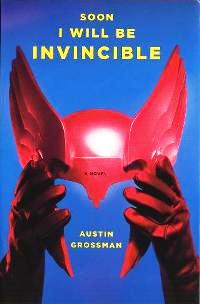
grossman soonBissell is largely very positive about the book although the excerpt he quotes about human duality and videogames was not terribly exciting to me.  However he casually raved about Grossman’s first book Soon I Will Be Invincible (which is a literary work about superheros) which I think I’d be more inclined to read. (more…)

Read Full Post »

febSOUNDTRACK: BEN FOLDS FIVE-The Sound of the Life of the Mind (2013).

bffThe first Ben Folds Five album in over a decade opens with a big noisy sound and then quickly shows the diversity of the band by pulling back and showing a mellow verse with Ben’s piano and occasional bass.  But then the chorus comes in and Robert Sledge’s bass is once again masterful.  While Ben is clearly the leader of the band, there is something about the BFF’s bass that is so notable.  And this album rocks in BFF’s unique way–rollicking piano, and noisy buzzy bass.

“Michael Praytor, Five Years Later” has some great harmonies (the kind that BFF do so well).  “Sky High” is the kind of social commentary ballad that Ben excels at. And the title track is a fast moving rocker that has more great harmonies.

“On Being Frank” is a Sinatra inspired song with strings.  While “Draw a Crowd” continues Ben’s humorous vulgarity in a very unexpected way: “if you’re feeling small, and you can’t draw a crowd…draw dicks on a wall.”  “Do It Anyway” the single, which inexplicably wasn’t huge, gets more and more fun with each listen–to scream along with “OKAY!” is very cathartic.

“Hold That Thought” is one of those mellow but speedy numbers that I love from Ben.  And when then bass plays that high solo bit near the end (oh that bass), the song kicks into new levels of excellence.  “Away When You were Down” is another string-filled mellow song.  The final track “Thank You for Breaking My Heart” reminds me of “Boxing”, a mellow piano ballad which is, obviously, heartbreaking.

This is a great return to form.  There’s some heavy rockers and some pretty ballads. It’s nice to hear the Five back together again.

[READ: October 5, 2013] 3 book reviews

This month Bissell reviewed three books.

The first book is a biography of Flavius Jospehus called A Jew Among Romans jar by Frederic Raphael (who also wrote the screen play for Eyes Wide Shut).  I had never heard of Flavius Jospehus but evidently without him we would have no historical accounts of time from around the beginning of the Common Era.  His writings are pretty much the only works that have survived.

And his story itself is interesting too. In 70 A.D. the Romans destroyed Jerusalem. This attack has had more impact on current life than can be explained.  Judaism lost the Second temple, Jewish Christianity soon disappeared beneath the waves of Gentile Christianity, even Islam was shaped by this because a Mosque now stands where the Second Temple was.  And nearly all modern forms of anti-Semitism can be traced back to this attack in some way.  Flavius Jospehus chronicled this time as a Jew in a reasonably impartial way (which led many to call him a traitor).  His books Jewish Antiquities and The Jewish War are the sources for almost all of our knowledge of that era, including about Pontius Pilate. (more…)

Read Full Post »

 harper juneSOUNDTRACK: FUZZ-“Sleigh Ride” (2013).

fuzzHow can some 3 minute songs seem like they take a long time and others feel like they are about a minute long.  “Sleigh Rode” is one of those songs that is over before you know it.  With a big old fuzzy guitar riff opening the song it sounds straight out of classic rock.  Then the verses come in with faster riffing (like a less heavy Black Sabbath) and a sleazy kind of vocal.  It reminds me of a more garage band/sloppy Queens of the Stone Age.

This is (yet another) band from Ty Segall. Robin Hilton from NPR says that Segall had put out some 6 solo albums and is in a half a dozen bands as well (and he’s only 26).  he normally sings and plays guitar, but he plays drums in this band.

While I don’t actually know anything else by him, I really enjoy this piece of fuzzy distorted sleaze pop. and may need to see what he is other releases are like.

[READ: September 20, 2013] “Living Deluxe”

Diane Williams wrote Vicky Swanky is a Beauty which I did not really like.  It was experimental and flash fiction which I am growing to like less and less.  This short piece (which is actually longer than anything in Vicky Swanky, I believe), is from a collection in progress.  I’m not sure if that means that this is finished or not (it’s hard to tell with her).

This story deals with a woman who has taken money from her mother (and sister and brother) because her mother “knew I needed to be a person with flair” (I liked that line).

The thing about the rest of the story is that the narrator acts like a five year old telling a story.  The details that are added are not necessarily relevant to the story.  So we get two paragraphs on a man sneezing, a few paragraphs on her cat, and a couple of paragraphs about Leonard da Vinci.  These details might be relevant to the story.  But interspersed with these details are things that impact the taking-money storyline—that her sister took something that was hers (the Da Vinci bit is about a present she gave to her sister). (more…)

Read Full Post »

harper juneSOUNDTRACK: VOIVOD-Kronik (1998).

kronikVoivod in the E-Force era released two proper albums.  But they also released their first live album and this hybrid collection. So at this point, there were almost more albums with this in retrospect least popular lineup of the band.

Kronik, with the least inspiring album cover of all (the fact that Away doesn’t seem to have anything to do with it even calls into question the “realness” of the release) has eleven songs on it  The first three tracks are remixes.  It’s fascinating to hear these really really heavy songs remixed in a techno way.  I know by this time there was a lot of really heavy techno bands, so this isn’t totally unusual, and Voivod has been experimenting with industrial beats on the last two albums as well.  It’s just fun to imagine these as dance remixes and to speculate who these remixes were made for.  “Forlorn” sounds a bit like Helmet here.  E-Force’s voice is so manipulated as to be almost unrecognizable.  The solo section is also manipulated in a weird way, making this song sound, if not very different from at least somewhat different. There also appears to be some throat singing thrown on to the end of the mix.  “Nanoman” gets the royal treatment—skittery beats, sounds dropping out and a major techno drum beat placed on top of it.  “Mercury” is given a very fast electronic drumbeat but not much else.  But in this version it sounds very classic industrial.

The next three songs are outtakes from the E-Force era.  “Vortex” has a pummeling guitar riff and some massively screamed vocals.  “Drift” opens slowly with some spacey guitars and distant rumbles of drums.  After 90 second the screaming noise kicks into high gear.  “Erosion” has a some steady heavy sections in between the bludgeoning.  They basically all sound like the could have come from Phobos.

The next song “Ion” appeared on the soundtrack to Heavy Metal 2000 the movie and was unreleased until this album.  It has some very cool moments in it and is a little less brutal than a lot of their music from this era.  I rather like it.

The final four songs are live.  “Project X” and “Cosmic Conspiracy” are tracks from the E-Force era, and they sound very close to the studio versions.  I actually prefer E-Force’s voice here, as it is more natural sounding.  “Nuclear War” comes from the very first album. E-Force’s screams are not too dissimilar to Snake’s, although I miss Snake’s pronunciations.  But the music sounds better than on the album.  And then there’s “Astonomy Domine.”  This is the first live recording of the band (and the only song form the pre-E-Force era that’s on a live record.  So it’s exciting to hear them playing this more complex song.  The recording quality is not great, sadly.  But the problem (once again) is E-Force’s voice.  The first verse sounds fine, but as the song moves along he starts screaming a lot more.  And this song just doesn’t lend itself to screaming.  It’s shame.

So this collection is for die-hards and for people who love the heavier period of Voivod (which is not a majority I would guess).

[READ: September 30, 2013] Room 237

This article looks at The Shining, the film by Stanley Kubrick.  It briefly mentions the book by Stephen King, but only briefly.  And actually this article doesn’t so much look at the film as it looks at a film about The Shining called Room 237.  And, actually, Room 237 is more about the people who have obsessed over The Shining for years and who have come up with very detailed theories about the movie.

Some of the theories that these fans have (and which appear in the movie) include: (more…)

Read Full Post »

« Newer Posts - Older Posts »