Feeds:
Posts
Comments

Archive for the ‘New Yorker’ Category

SOUNDTRACK: ULVER-Shadows of the Sun (2007).

I really wanted to like this album because of the cover–which is striking.  I know, I know, never judge…  My initial reaction to the disc was kind of poor.  I’ve followed Ulver’s progress through their many incarnations, and it’s not entirely surprising that they should make an entirely ambient record.  It just strikes me as an odd release–mellow and almost lullaby-ish but also a little creepy (the voice mostly).

But at the same time, musically it’s quite pretty.  And while it wasn’t a very good listen for a car trip to work, it was actually really perfect for listening to at work–where headphones allowed for hearing so many nuances.

There’s not much point in a song by song listing, as the songs are similar–washes of music with slightly distorted, deep vocals.   But there are some interesting musical choices that make each song unique, and consequently better than a lot of ambient in which all of the songs use the same musical palette.  “All the Love” employs piano and come cool electronic sounds near the end.

“Let the Children Go” is a much darker song (with drums!).  “Solitude” is the most melodic song of the bunch.  It reminds me of Black Sabbath’s “War Pigs” (which should tell you something about the overall tone of the album).  It has a noticeable vocal line (and really audible lyrics, which are quite melancholy and more emotional that I would have expected: “You just left when I begged you to stay.  I’ve not stopped crying since you went away.”

Another observation.  At times when he actually sings, the vocals sound a bit like XTC–“Shadows of the Sun” in particular.  And since that song has pianos it’s not inconceivable that this could sound like XTC (although not really).

With the right atmosphere, this record proves to be a very impressive listen.  Kristoffer Rygg’s vocals really suit the mood and, all in all, it does reflect the album cover rather more than I initially thought.

[READ: March 18, 2012] The Marriage Plot

I had put this book on hold a few months ago.  And I was ninety-something on the list, so I didn’t think too much about it.  I looked the other day and I was 10.  Yipes.  How was I going to read this 400 page book  in three weeks while also reading Gravity’s Rainbow??

Well, amazingly, The Marriage Plot worked as a nice foil to GR. It is a supremely easy read.  It is completely uncomplicated.  And, it actually has some unexpected parallels to GR–specifically, two of the characters travel to Europe, one on a pilgrimage the other on a honeymoon, and they travel to Paris, Geneva, Spain, Zürich, and even Nice.  There is literally no connection between these two books (although Mitchell does bring Pynchon’s V along with him), but it was fun to see new people go to the cities that Slothrop has been traveling to for very different reasons.

I powered through the book, reading large chunks and staying up way too late both because I liked the book and because I wanted to get it back on time (beware the library police!).  And there really is something about finishing a book quickly, it really keeps the story and characters fresh and makes the experience more enjoyable.

But on to the book.

This book centers around three people in a kind of lover’s triangle.  The woman at the center is Madeleine (and yes there are wonderful tie-ins to Madeline the children’s book series). The two men are Leonard and Mitchell.  All three of them are graduating from Brown in the mid 80s.

I identified with the book immediately because Madeleine is an English major (as was I).  She studies the Victorian era [and I had just read the piece by Franzen about Edith Wharton] and is on track to write her thesis on this era.  The title of the book comes from this section–novels written at that time were especially focused on marriage–if a woman did not marry, she was more or less doomed, and so the plots centered around her quest to find a suitable mate.  As Franzen noted in the above article, Wharton and some of her predecessors sounded the death knell for the “marriage plot” and Madeleine was going to do her thesis on that.

As the pieces of the triangle fall into place we learn (skeletal at first with much detail added later) that Madeleine and Mitchell were very good friends initially.  So good, in fact, that she invited him back to her parents house for a vacation.  He was head over heels in love with; however, out of fear (mostly) he never acted on the opportunities she gave him, and she thought that he wasn’t interested in anything more than friendship.  Basically, he blew it (although he doesn’t learn this until much later–I can relate to this all too well). As the story opens, she has just woken up, hungover, smelling of a party, with a mysterious stain on her dress.  She knows she did something with someone last night but she’s not sure what.  Not atypical college behavior.  But the kicker is that it is graduation morning and her parents are ringing the doorbell of her dorm right now. (more…)

Read Full Post »

SOUNDTRACK: CLOUD NOTHINGS-“Stay Useless” (2012).

This was the song of the day on NPR on March 14th.  While NPR describes it as like 90s indie rock, I find it to be much more like early 2000s indie rock (think The Strokes or Arctic Monkeys).  True, those bands were playing in the spirit of 90s rock, but they had a slightly different take on things–cleaner, perhaps.

So, while the guitars are buzzy and distorted, the vocals are up front and clear (even if the words aren’t entirely understandable–a neat trick that).  The song is under three minutes and has a catchy, powerful chorus.  I’ll bet it’s a lot of fun to hear live, although honestly I don’t think it’s anything all that special.

[READ: March 9, 2012] “Ever Since”

I’ve enjoyed many of Antrim’s stories in the past.  And, I rather enjoyed this one as well.

This was a fairly simple story of a man who has not let go of the woman who broke up with him a year earlier.  And how she haunts him and his current relationship still.

The opening of the story is really quite wonderful.  It didn’t really have an impact on me at first but when I reread it, I realized it’s a wonderful precis of the story:

Ever since his wife had left him–but she wasn’t his wife, was she? he’d only thought of her that way, had begun to think of her that way, since her abrupt departure, the year before, with Richard Bishop [I’m interrupting to say wow, has he packed a lot into a dependent clause.  And then he continues with the rest of the powerful descriptor]–Jonathan had taken up a new side of his personality, and become the sort of lurking man who, say at work or at a party, mainly hovers on the outskirts of other people’s conversations, leaning close but not too close, listening in while gazing out vaguely over their heads in order to seem distracted and inattentive waiting for the conversation to wind down, so that he can weigh in gloomily and summarize whatever has just been said.

Now, THAT, dear readers, is a SENTENCE!

To make him even more pathetic, when he summarizes an idea he often claims that his ex-wife felt a certain way about it…and then explaining that she wasn’t really his ex-wife.

The crazy thing is that Jonathan has a new love in his life: Sarah, the kind of woman who  appears by his side at a party (a work party for her) and says, “Hey Buster, lets’ go fuck in the bathroom.”  It’s unclear whether she was joking, which makes it even more fun. (more…)

Read Full Post »

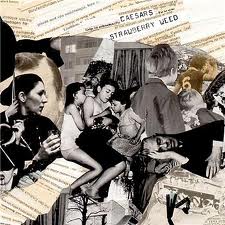
SOUNDTRACK: CAESARS-Strawberry Weed (2008).

This Caesars disc is the final of the donated library discs that I received.  And the guy who donated these has some great taste. I feel like I need to track him down and see what else he likes.  I was initially skeptical of this disc because it is so crazy poppy, but it has a few cool elements to it that make it more interesting than typical pop music.  I’ll claim that it’s because they’re from Sweden, where they skew things a little differently.

The melodies are wonderfully catchy, and yet “Fools Parade” starts with some crazy noises and wild drumming before switching over to pure pop sensibilities.   “Waking Up” features that sure-fire sign of a pop hit, the word “alriiiiiiiiiiiiiiiight” sung with many changes in pitch.  It’s not always easy to pull off but they do it perfectly.

“Boo Boo Goo Goo” is as crazily catchy as its title suggests it would be.   The lyrics aren’t as inane as the title suggests with the catchy ender: “you’re not gonna get that far climbing those monkey bars”.  “Crystal” has some great old-time Farfisa organs on it which make it sound simultaneously retro and (because of the guitars and such) very contemporary.

It’s actually hard to write about this disc effectively because there are so many great catchy pop songs on it–it would just be “this is poppy and fun” over and over again.

I think the poppiness of Caesars can be summed up by “Stuck with You” in which there’s a wonderful “ooh ooh ooh ooh” section, but it’s a little fuzzy and distorted, just slightly off from pristine.  Similarly, “No Tomorrow” has great fuzzy guitars and more oh oh ohs, this time ending in a super catchy “oh yeah!”  Or how about the “oooh wee oooh” that opens “In Orbit” which sounds spacey and otherworldly.

“Up All Night” introduces a minor key song to this intrinsically poppy album, and even the minor key song is upbeat.

This is a great album if you’re looking for something catchy and easy to sing to, but which isn’t completely made of bubblegum.

[READ: March 11, 2012] “Citizen Conn”

Michael Chabon does not shy away from comics.  I almost fear he’s endangering himself as being the guy who writes about comics (fortunately he has written very well about other topics too).  But for this short story he’s back in that familiar realm.

This story is about two men, Morton Feather and Artie Conn.  They were comic book artists back in the day, writing failing books for a failing company.  But they’re in the right place at the right time when an accidental mailing reveals that men in tights are making a comeback.

So Feather and Conn work together to creator some of the most powerful and long-lasting comic book superheroes.  They ride so high that they are offered to sell their creations to a very high bidder.  Feather refuses but Conn accepts.  And so begins the rift between them.  Later, since Feather lost the fire of his convictions after the sell-out, he is fired and Conn becomes solely responsible for these creations. (more…)

Read Full Post »

SOUNDTRACK: BIDINIBAND-The Land Is Wild (2009).

Dave Bidini was a driving force behind Rheostatics.  Although when I think of the band, I think of Martin Tielli’s wackiness and Tim Vesely’s hits, which kind of makes Bidini the sort of stable, middle of the road guy.  But I don’t think that’s right either as Bidini has both a wacky side and a hit-making side.  But this “solo” project focuses mainly on Bidini’s storytelling skills.  Most of the songs are little narratives, which is always enjoyable.

“Desert Island Poem” is actually a story of the dissolution of the Rheostatics–when they survived a plane crash in Drumhella and ate the drummer.   “Memorial Day” surprises because of the clarinet solo (which works wonderfully).  “We Like to Rock” and “Song Ain’t Any Good” are the other kind of song that Bidini writes–songs about playing music.  These kind of songs are always dopey and “We Like to Rock” is no exception–I think I ‘d like it more if it weren’t so tinny sounding.  “Song Ain’t Any Good” is kind of funny, especially if you get through the whole song, although I don’t know if multiple listens are rewarded.

On the other hand, “The Land is Wild” is a great song about Bidini’s other passion: hockey.  This is a lengthy (nearly 7 minute) story about Bryan Fogarty, a young hockey player who was a star at 21 but a forgotten addict by 31.  It’s a sad, cautionary tale about how the hockey establishment all but ignored him as he wasted away.   “How Zeke Roberts Died” is a very similar song,  it’s an 8 minute biography of Liberian singer Zeke Roberts.  This song has lead vocals by a variety of singers.

“Last Good Cigarette” is a delightful ditty about smoking with famous people (and it is super catchy–ha-cha!).  “Pornography” is a funny political song about George W. Bush that is also quite catchy.  And the wonderfully titled, “The Story of Canadiana and Canadiandy” is about living close to America.

Although the album is mostly folky and kind of mellow, “Terrorize Me Now” shows some of Bidini’s more wild guitar noises.  And the final song, “The Ballad of 1969” is a great song that is reminiscent of the kind of highs that the Rheos would hit.  There’s a bonus untitled song [later called “The List (Killing Us Now)”] which is a simple song of people who have aggrieved him.  It’s funny, especially in the live context it is given.

While not as great as a Rheostatics album, this release is like an extension of the band.  Bidini has a new album out which I haven’t heard yet, but I’ll certainly be checking it out.

[READ: March 5, 2012] “Haven”

Munro is back (talk about prolific!) and she has created a darkly claustrophobic house in which to place the young protagonist of this story.

The story is set in the seventies.  The protagonist is from Vancouver, but her parents are heading off to Africa for a year so they have sent her to live with her Uncle Jasper and Aunt Dawn.  Despite this mission to Africa, they are not going there for a missionary purpose, they are going there to teach (and haven’t come across many heathen).  They’re also Unitarian.  Uncle Jasper, on the other hand, insists on saying grace before meals and gets on the protagonist when she starts eating before the prayers.

It turns out that Uncle Jasper is the man of the house.  Aunt Dawn does not begin eating her meal until the discussion of grace is over (after receiving an invisible nod from Jasper).  More examples of her deference are given, but the quote that sums up Aunt Dawn (whether she said it or not) is “A Woman’s most important job is making a haven for her man.”  Although, given that, Jasper does show her some affection: a gift and some closeness towards the end of the story. (more…)

Read Full Post »

SOUNDTRACK: CALLA-Calla (1999).

I got this album when a patron donated it to the library.  I had never heard of this band, but the other CDs he donated were really cool so I grabbed this one, too.  This is an almost entirely instrumental album (vocals are whispered when present) that feels like a soundtrack to a futuristic Western.  “Tarantula” opens with some creepy, ghostly sounds and then what sounds like spurs walking across the landscape.  When the guitar comes in it sounds like an old Western.  In many ways this album reminds me of a great band called Scenic, although this one makes more use of electronics, which gives it a more eerie feeling.

“Custom Car Crash” has a very Western feel.  Over creepy scraping sounds, a clean guitar plays very simple guitar lines and chords.  When the keyboard lilts over the noise, it’s quite eerie.  This song has vocals; deep, almost whispered vocals, and I can’t really make them out,  There’s also a live bonus version at the end which really captures the studio version, but which I think is better.  “June” has a slow droney sound: more atmospheric than anything else–it seems maybe ten years ahead of its time).  The 8 minute “Only Drowning Men:” introduces more guitars and a lit of tension.   From the noise a delicate guitar pattern emerges for the last minute of the song.

“Elsewhere” is full of buzzy guitars; there’s a live version at the end of the disc as well.  “Truth About Robots” is my favorite track, a real melody over the noise.  Despite its length (just over 2:30), it tells a full story.

“Trinidad” comes a surprise because it opens with bass (you don’t hear much bass on this album).  But “Keyes” is so quiet as to be almost not there.  “Awake and Under” on the other hand has a great guitar and bass sequence with spoken lyrics (reminiscent of many indie bands of the 90s) but which is very effective here.  There’s a live version as a bonus track and it is a highlight.

This is more interesting music for creating atmosphere, but not something I’d listen to a lot.  I was surprised to find out how many albums they had out.

[READ: March 2, 2012] “A Prairie Girl”

I’ve enjoyed Thomas McGuane stories before, but I wasn’t sure if I’d like this one as it opens with a brothel.  Since I’m thinking about the implications of sex in Gravity’s Rainbow, the last thing I needed was a hooker-with-a-heart-of-gold story.  But this isn’t that.  And it has a brothel with a very funny name: The Butt Hut .  The Butt Hut closes down when the madam dies.  Most of the women moved away (either with local men (to the dismay of many) or on their own).  But one girl who stayed was Mary Elizabeth Foley.

Mary Elizabeth attended church weekly, but most of the people gave her a wide berth—literally an empty pew.  It was finally decided that someone should speak to her since she wasn’t going away.  And so Mrs Gladstone Chandler, wife of the town’s bank owner and all around respected individual, sat near her during the mass.  Afterward, she asked Mary Elizabeth: “Where are you from?”  Mary Elizabeth answered “What business is it of yours?”  And she soon had her pew back. (more…)

Read Full Post »

SOUNDTRACK: cuppa joe-“Better in Your Head” (2012).

After an eternity (okay, 18 years), Cuppa Joe is back with another release on Dromedary Records.  Things have changed over the years in cuppa joe’s world.  Their previous release, nurture was a delightful twee pop confection.  This track (you can see the video here) adds an unexpected depth to their catalog.

The first change comes from the minor chord guitar strums; the second comes from the bass, which is following its own cool riff–although it melds nicely with the verse, it’s unexpected from cuppa joe.  The pace of the song is much slower than the frantic songs on nurture.  Even the vocals, while noticably cuppa joe, seem less so–call it a more mature version of the vocals. Indeed, the whole sounds seems to have relinquished their more childlike qualities  and embraced a more mature outlook.

This could be a death knell for a band, but not in this case.  All of their songwriting sensibilities remain intact.  Indeed, they have added a wonderful new component: terrific harmonies in the chorus (which may have been there before, but which really stand out here).

It would almost seem like an entirely new band (18 years will do that to you).  But rather than a new band it’s like an old band coming out of a coocoon like a butterfly.  (That’s too treacly, sorry guys–maybe we’ll just stick with them being older and wiser.  Welcome back guys.

The new cuppa joe album Tunnel Trees is available here.

[READ: September 8, 2010] “The Science of Flight”

I read this story in September of 2010.  I liked it but I wasn’t that impressed by it.  Well, it turns out I either skipped or missed an important section of the story.  So I’m trying again.  here’s the start of my original post

Yiyun Li’s is one of the 20 Under 40 from the New Yorker.  This story (which I assume is not an excerpt) is about Zichen.  Zichen (whose name is unpronounceable to Westerners) emigrated from China to live in America with her then new husband.

As the story opens, we see Zichen at work at an animal-care center.  She is talking with her coworkers about her upcoming visit to England (this will be her first-ever vacation that is not to China).  The men are teasing her about the trip (why would she want to go to the ocean in the winter, she doesn’t know anyone there, etc).  The teasing is friendly, because they are friendly, although Zichen is very reserved around them.  Of course, of all the people she has known, she has opened up to them the most–which still isn’t very much.

That much is accurate.  However, the rest of my post about this story is completely (and rather ineptly, I must admit) incorrect.  Recently, Carol Schoen commented on my original post and informed me that I was a bonehead (although she said it much more politely than that).  I had completely missed the point of this story the first time around.  And indeed, re-reading it this time, I can’t help but wonder what happened last time.

Zichen is a bastard, literally.  She was born our of wedlock to a man who ran away.  In China, this was like compounding one sin atop another one.  Her grandmother agreed to raise her (after a failed adoption) more or less to spite Zichen’s mother, provided Zichen’s mother had nothing to so with her.  And so, Zichen’s grandmother worked in her shop extra long hours to care for a child who was a visible symbol of the family’s disgrace.  (I seem to have gotten the point about her grandmother raising her, but seem to have missed the important part about her parents not being in her life at all). (more…)

Read Full Post »

SOUNDTRACK: LOS CAMPESINOS!-Romance is Boring (2009).

Even though I had heard good things about Los Campesinos! before I got this album, this was the first one I bought.  I see that it gets less high marks than previous discs but I think it is fantastic.  It is frantic and catchy, it is intense and mellow, it is loud and soft and most of the time that’s in the same song.  And, as you’ll see below, lyrically I think it’s fantastic.

The disc begins slowly.  Then the vocals come in and you can tell that Gareth Campesinos!’ voice is somewhat abrasive, but well enunciated. When at the 2 minute mark the song more or less stops and turns into little twinkling bells you’re not prepared for the next bit–the guitars are noisy and the drums are loud and the lyrics are even stranger (sung in a slightly off-key style): “I’m leaving my body to science, not medical but physics.”  By the end, the song has mellowed almost completely and we have an almost a capella ending, “Would this interest you at all?”  But before you have a chance to answer that, the next song, “There are Listed Building” ratchets forth in both speakers with loud and quiet sections, group vocals and the lead singer’s more shouting style.

“Romance is Boring” has some super catchy shouted vocals as well as the first real exposure to the co-vocalist Aleksandra Campesinos!’ beautiful gentle female voice. “We’ve Got Your Back” is primarily sung by the female vocalist until the male voice come back with “and so fucking on and so fucking forth” and my favorite shouted chorus: “What would you do?  I do not know.”  “(PLAN A)” is a screaming punk blast of discord.  Until, of course, the much more palatable group sung chorus kicks in.

One of the best songs they do is “Straight in at 101” a wonderful song about breakups that is catchy and funny. It opens with, “I think we need more post-coital and less post rock.”  And then after some great alt rock, the song comes to an end with an a capella section that is quietly sung:

I phone my friends and family to gather round the television;
The talking heads count down the most heart-wrenching break ups of all time
Imagine the great sense of waste, the indignity, the embarrassment
When not a single one of that whole century was… mine

“I Warned You: Do Not Make an Enemy of Me”  has frenetic guitar and the wonderful line, “if this changed your life, did you have one before?”  And the wonderfully titled “A Heat Rash in the Shape of the Show-Me State” opens with this lyrical stanza:

She’d a bruise so black they watched it fade through the full spectrum of colours.
They kept it like a pet; a private joke they told no others.
And how the tissue repaired, and how it turned to yellow
And she found it disgusting, ’cause it didn’t match her clothing.
He said “that’s not yellow, it’s golden”.

Also lyrically interesting is “The Sea Is A Good Place To Think Of The Future,” because how can you make this couplet work in a rhythmic way.  But he does! “At fourteen her mother died in a routine operation from allergic reaction to a general anesthetic.”

There are fast songs and slow songs and pretty sections and harsh sections.  I think they meld it all together wonderfully.

[READ: February 6, 2012] “Los Gigantes”

I think I begin every T. Coraghessan Boyle story with some trepidation.  I liked Boyle because of The Road to Wellville, but I find that most of his other stories are very Southwestern, a region I really don’t know very well.  And yet for all my trepidation, I find I do enjoy his stories.

This one has a very simple premise.  All of the largest men in the area have been offered jobs by the President (I’m not sure where this is set but I assume, if it’s not entirely fictional, that it’s meant to be in Central America).  Although the men have some freedom during the day, at night they are locked into cages.  But their job is a simple one–eat, sleep and have sex with very large women.  That’s all.  It’s kind of boring, but  they are provided entertainments.  And it could certainly be worse (wait until you see what conditions the women love in!).

Discontentment begins to settle in as they realize that they are little more than stud animals (the President is breeding them for their size for a secret army in several generations).  And so one night two of los gigantes escape (it’s fairly easy, they are very strong men).  But they basically get as far as town where the pleasures of the  town’s bar keep them from returning home.  They are caught and punished, but the punishment is not that bad because the President really wants their offspring.

The men issue demands–a nicer living situation mostly–which are met, and they are contented once more. (more…)

Read Full Post »

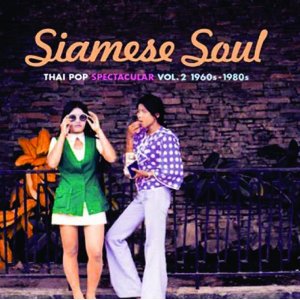
SOUNDTRACK: KWAN JAI & KWAN JIT SRIPRAJAN-“E-Saew Tam Punha Huajai” (1960s-1980s).

This song is the basis for My Morning jacket’s “Holdin’ on to Black Metal.”  It’s not the inspiration…it’s the exact song.  In fact, it could even be a cover, except with completely different lyrics.  Well, I say completely different lyrics without knowing what the original lyrics are, although it translates as “Advice Column for Love Troubles” which “Holdin’ on to Black Metal” certainly is not.

This original is a tad slower and, perhaps, a tad stiffer (which is funny that it’s on a collection called Siamese Soul).  The riff is pretty cool, and in this version they use (what I assume are) Thai flourishes the keyboards are just all over the place, bringing in a crazily noisy texture.  The vocals are all in Thai (I assume).  But what’s amazing is that the opening vocal melody is copied exactly by MMJ (and then MMJ take it in a very different direction).

After that opening riff, the similarities in vocals end, as the singer (I am so vague about this because I can’t find anything about this album anywhere) takes off on a more conventional non-Western singing style.  I prefer the MMJ version, but this is a fun little addition to Circuital.

Check it out and be surprised.

[READ: January 31, 2012] “Someone”

I normally don’t like titles like this one.  “Someone” seems to show a real dearth of imagination, and it doesn’t really inspire anyone to want to read the story.  Having said that, the title actually proves to be quite apt, albeit only after reading the whole thing.

I haven’t read any McDermott stories before, although I have heard of her, but I have no idea if this is the kind of story she normally writes.

This one is set in 1937.  Marie is 17 and has just been asked by Walter Hartnett what is wrong with her eye.  What’s wrong with her eye is that the sun makes it squint involuntarily.  Walter tells her not to do that, that it makes her whole face look funny.  This must be a charming pick up line circa 1937 because later that day Marie and Walter go on a date.

The story quickly flashes forward to the present–we see Marie examining her squint in the mirror. She also thinks back to when her daughters started dating and she warned them: (a rule that I agree with): “If he looks over your head while you’re talking, get rid of him.”  But the daughters didn’t want to hear another story about Walter Hartnett.  So we get to hear it instead.

On that first date, Walter invited Marie upstairs for a minute.  We all know what getting invited upstairs means, but did it mean that in 1937?  Well, Walter does live with his mom, so maybe not.  But his mom is not home, and there’s beer in the fridge.  And soon enough Marie is having her first kiss.  And Walter doesn’t take it slow.  He’s already moving on to second base–with kissing and biting and….  And then they hear the door open downstairs.  Marie is stunned.  (more…)

Read Full Post »

SOUNDTRACK: MITCHMATIC-“Why Don’t You Know” (2012).

This song reminds me in spirit of the old Fresh Prince songs–buoyant and fun, funny and a little silly.  And although it doesn’t sample I Dream of Jeannie, the mood is the same.

The track opens with a great sound of an old rotary phone.  When the music comes it, it’s completely loungey: strings and easy music propel this song to the heights of Cool.

The delivery style is gentle but fast and the lyrics are funny “I’m gonna tell you some reasons that you wanna date me.”

Mitchmatic is a Canadian rapper and his record is coming out soon on Old Ugly records.  Listen to the track at NPR and explore his stuff at his bandcamp site.

Darling I would like you so much more if you loved me back…

[READ: December 31, 2011 and January 24, 2012] “Wolves at the Door” and “Comment”

This is a blog post from Barry that deals with politics.  Although it was written in 2004 it is completely relevant to the current state of affairs in American politics.  I suppose it was ever thus, but it sure seems worse now.

He opens, “Stop me if I ‘m getting too cynical, but I think elections are won by the guy with the stupidest policies.”  He explains that it’s not because people are dumb; rather, it’s because when you are marketing to an entire country, “your best strategy is to scramble straight to the bottom of the barrel and start groping around in the muck there for the lowest common denominator.”  This is very true.

But I think the perfect summary for politics is (as Barry writes): “smart is complicated, but dumb is catchy.” (more…)

Read Full Post »

SOUNDTRACK: LE BUTCHERETTES-Sin Sin Sin (2011).

I learned about Le Butcherettes from their Tiny Desk Concert.  So I thought I’d check out their album.  I’ve listened to it a few times now and it’s really quite good.

While the Tiny Desk Concert showed a subtle side of Teri Gender Bender, this album rocks really hard.  All three songs from the Tiny Desk Concert rock much harder here, and are actually better in this full band context (especially “Henry Don’t Got Love”).

It has a punk feel and reminds me of a more commercial sounding Bikini Kill or other Kill Rock Stars punk.  “Dress Off” is all Teri’s voice shouting over drums: “You take my dress off. Yeah, you take my dress off.
Yeah, You take my pretty dress off.”

In the Tiny Desk concert, Teri Gender Bender channeled PJ Harvey completely.  On the album, she has a bunch of different vocal styles that all work well for the songs.  Although “New York” is totally PJ, “The Actress That Ate Rousseau” reminds me of punkier No Doubt and”Tainted in Sin” has a simple stark keyboard melody with Teri singing a more aggressive guttural style.

Unsurprisingly for someone named Teri Gender Bender, there are some political songs as well.  “Bang!” has the lyric, “George Bush and McCain taking over Mexico.  Next thing you’ll see is their army banning seranata

Although there’s a lot of short songs (7 are 2 and a half minutes or under), there’s a few long ones too.  “The Leibniz Language is over 5 minutes and “I’m Getting Sick of You” and “Empty Dimes” are both over 4.  There’s also an instrumental, “Rikos’ Smooth Talking Mothers” which is a simple song spurred on mostly by scratchy guitars.

The final song, “Mr. Tolstoi” is the anomaly on the album.  Teri “sings” with a fake Russian accent  over a very Soviet-style keyboard march.  The chorus:

I want Raskolnikov To be inside of me.  I want Sonya’s eyes.  I want Sonya’s eyes.

Weird.  But not outrageously crazy for this record.  It’s good noisy fun.

[READ: January 23, 2012] “Labyrinth”

It’s no secret that I love Roberto Bolaño.  And I’ve said before that one thing I love about him is the astonishing variety of subjects and styles that he comes up with.

So this short story is forthcoming from his newly translated collection of unpublished short stories called The Secret of Evil.  What I love and find so unique about this story is that the entire story is based upon a photograph.  The New Yorker includes the photograph (I wonder if the The Secret of Evil will include it also).  In the photograph, eight writers/thinkers sit around a table.  Thy are: J. Henric, J.-J. Goux, Ph. Sollers, J. Kristeva, M-Th Réveillé, P. Guyotat, C. Devade, and M. Devade.  The only person I know of this list is J. Kristeva, whose work on semiotics I have read.  [I just looked her up on Wikipedia and learned that she has also written novels, including: Murder in Byzantium, which deals with themes from orthodox Christianity and politics and has been described by Kristeva as “a kind of anti-Da Vinci Code.”  Gotta put that on my list].  But the others are (evidently) prominent in their fields as well (editor of Tel Quel, author of several novels and non-fiction, etc).

The beginning of the short story is an extensive detailing of the photograph.  Bolaño looks at each man and woman in the photo and describes them with exquisite accuracy.  Beyond that he imparts a bit of speculation about what they are wearing, where they are looking, their attractiveness and even, about the length (or lack) of necks. (more…)

Read Full Post »

« Newer Posts - Older Posts »