Feeds:
Posts
Comments

Archive for the ‘New Yorker’ Category

SOUNDTRACK: LIDO PIMIENTA-Tiny Desk (Home) Concert #94 (October 13, 2020).

This set is utterly fascinating.

I’d never heard of Colombian vocalist Lido Pimienta, although apparently she

had one of the musical highlights of a year marked by tragedy and uncertainty. The healing magic of her album Miss Colombia transfers beautifully to this visually stunning Tiny Desk (home) concert.

Pimienta is dressed nicely with ribbons in her hair. Her hair is fascinating and, in braids, reaches the floor!

The set design is set up to recall a quinceañera.

I actually thought that Pimienta was a teenager (she is in her thirties), because after the first song she says:

Welcome the show that celebrates … me.  I am fifteen years old and I am a musical prodigy.

She even acts fifteen when she says, “you can hire us for the very cheap price of one million dollars USD” and “Wikipedia, get my birth date correct, I am fifteen and just starting out.”

The quinceañera design is

a coming of age tradition that Pimienta could not share with her mother who had to flee Colombia. With her mom, Rosario Paz, present at the video shoot, Pimienta uses her energetic performances to close a dramatic circle with her mom as we celebrate with her.

The first song “Eso Que Tu Haces” is mostly voice and percussion.  There is just so much percussion here, it’s hard to believe only two guys play it all: Brandon Valdivia and Reimundo Sosa.

The vocalists are varied and add such a wall of beautiful voices to the song.

Backed up by a bevy of international musicians based in her new home of Toronto (I see you, members of the Cuban group Okan).

Magdelys Savigne and Elizabeth Rodriguez of Okan sing along as do The Road to Avonlea choir: Felicity Williams, Robin Dann, Isla Craig, and Ivy Farquhar-McDonnell.

The song gets bigger and more musical as it moves along with a tenor saxophone solo from Karen Ng that combines with the trumpet from Tara Kannangara.

“Nada” starts as Ng plays flute (Pimienta comments that this is her show not Ng’s so she should stop being so multitalented).  It’s a catchy dancey song and the end is a beautiful mix of the backing vocals and Pimineta’s solo soaring voice.

When her mom comes out on stage she jokes, are you glad that I’m finally a woman?

Introducing “Coming Thru” she says she always likes to work with women and feminine energy.  The world needs feminine energy so we can heal.

As the song starts, Elizabeth Rodriguez plays violin while Lido sings.  They are joined by the horns which flesh out the sound nicely.  Lido really does have a wonderful voice.

And as the variety of sounds indicates,

you can hear… how Pimienta’s quartet of songs challenge the concept of just what qualifies as “Latin music” in a way that both honors and expands tradition.

They are also joined by Prince Nifty, who plays keys and fleshes out the songs.  Although the start of the final song, “Resisto Y Ya” begins with just voice and percussion.

Lida explains that the song means, “I just resist.”  She says it is about Colombia and all of its drama and beauty.  The country is full of anger and also breathtaking landscapes.  The full band joins in by the end and the song just grows and grows as the set ends.

This is a terrific introduction to Pimienta’s music, whatever her age is.

[READ: November 20, 2020] “The Ability to Cry” 

This essay came out over a month after yesterday’s essay.  But they seemed so thematically similar that they work well together.

I’ve really enjoyed Yiyun Li’s stories over the years.  This piece of nonfiction was remarkably sad.

It begins with the death of a valued friend.  Or maybe not a friend so much as a caretaker.  The woman Julia, was supposed to dog and baby sit for Yiyun while she was out of town before her husband got home.  But she never answered the phone calls.  Julia had dogsat for thame on many occasions in the past and she always took pictures of the dog to show how well the dog (and garden) were doing.

Yiyun Li says that death has been prominent in her life in the last year and a half.  Her eldest son, her mother-in-law and her father have all died.

She did not cry when any of then died.  But when she saw Julia’s obituary, she broke down.   She felt like she was part of the delayed crying club. (more…)

Read Full Post »

SOUNDTRACK: THE FLAMING LIPS-Tiny Desk (Home) Concert #93 (October 9, 2020).

The Flaming Lips have recently performed a live concert in front of an audience (Yes!).  They did this by putting themselves and every audience member in one of Wayne Coyne’s giant bubbles.  What an amazing idea and a wonderful experience, I’m sure (especially after nine months of no live music).

Back in October, The Lips did their very first Tiny Desk Concert.  And, being the Lips, they decided to do their home concert entirely in their own bubbles.  (Although technically two people share two bubbles).

This Tiny Desk Concert features two songs from their newest album American Head.

The Flaming Lips have always embraced the surreal. Drugs are undoubtedly part of the culture, and on their new songs from American Head, drugs are at the core. These are songs for the lost, the overdosed dreamers, the damaged, the car crashed.

The open the set with “Will You Return/When You Come Down,” a simply wonderful song.

On the album’s opening track “Will You Return/When You Come Down” (which also begins this concert), Steven Drozd asks in falsetto, “Will you return? Will you come down?” while Wayne Coyne responds, “Thinking back to those lost souls / And their ghosts / Floating around your bed / Hear it said / Now all your friends are dead.”

I love everything about his song.  Gentle bells (from percussion Nicholas Ley) open the song along with Steven Drozd’s falsetto singing the refrain.  (Drozd is an amazing guitarist but only plays the keys in this set).  Wayne begins singing the verse.  It’s gentle and pretty, and then with a drum flourish from Matt Duckworth in comes Michael Ivins’ typically wonderful bass lines.

The song builds beautifully into a big major chord with Derek Brown’s acoustic guitar leading the way.

Whenever I’ve seen The Lips live, Jake Ingalls almost always sits on the floor.  In this set he’s sitting with Steven.  I’m never quite sure what he does, but I imagine he’s creating all kinds of interesting sounds.  Ingalls’ band Spaceface is pretty wonderful, but the way.

“God and the Policeman” features one of Ivins’ coolest basslines around.  It’s a stuttering rumble that seems to come from nowhere and adds a fantastic element to this song.  Ley adds in some tubular bells and Wayne plays the siren on his megaphone.  The main musical melody is a pretty piano circuit that soars with Wayne’s voice.

On the record, Kacey Musgraves sings the backing vocals but Steven takes them here. Wayne says that he has a good Kacey-esque voice.

Steven replies:

It sounds like you’re saying something nice but I can’t hear anything you’re saying.

The go back to 2013’s The Terror for “Be Free, A Way.”  Wayne says he wrote this when he was depressed.  He’s only been really depressed once or twice and this song came out of one of them.  I love the echoing vocals as Steven follows Wayne’s lead.  The vocal melody of two word sentences is just fantastic.

They end the set with “It’s Summertime” from 2002’s Yoshimi Battles the Pink Robots. Yoshimi is a fantastic album from start to finish, although this song is somewhat of a left-field choice–not one of the big hits from the album. Wayne gets a nice trumpet solo too.

This is a wonderful set to see.  And I really hope they bring their bubble shows to a theater near me.

[READ: November 20, 2020] “My Three Fathers”

I have not read any of Ann Patchett’s books, although I keep meaning to.  Her soon to be released novel is supposed to be fantastic.

This essay sounded kind of interesting even without knowing anything about her.  She talks about having had three fathers during her life.  She prefaces all of this by saying that marriage is irresistible to her family members: “we try and fail and try again.”  She and her sister have both been married twice, while her mother married three times (thus, three fathers).

Her first father was her biological father.  He and her mother divorced when she was little. Her second father was her mother’s second husband–he adopted her.  Her third father was her mother’s third husband.  Her mother married him when Ann was an adult.

She writes about this third wedding, the rare time when all three of Ann’s fathers were together and at which she got a picture of herself with the three of them.

Then she talks about all three men. (more…)

Read Full Post »

SOUNDTRACK: THE HU-The Gereg (2019).

The HU were something of a novelty when they released this album.  A band from Mongolia!  Playing weird instruments!  Throat singing!

But they really proved themselves.  They toured the U.S. (and were great live), they’ve even had some famous-ish singers do some remixes).  A year later, this album really holds up.  The songs are simple, mostly relying on rhythm, but the melodies of the choruses really grab you.

Most of the songs revel in the low end–deep vocals, throat singing, and lots of drums and bass.  The first song “The Gereg” (Гэрэг “Home”) sets the example.  There’s pumping drums and chanting–perfect for a live event.  They also have some soaring solos from their Mongolian instruments, the Ayanga Morin Khuur and the Baigali Tovshuur.  There’s also prominent use of the Tumur Khuur (the jaw harp).  But its the chorus melody that is so wonderfully catchy.

“Wolf Totem” (Чонон сүлд) is really catchy.  It starts with some call and response singing and then a simple but gripping riff–like a slow heavy metal song.  When the band starts chanting “Hu Hu Hu” you can imagine the fists raised along.

“The Great Chinggis Khan” (Их Чингис Хаан) is a slower song with an epic feel. The vocals are quieter in the beginning, but the song slow builds.  There’s a lot more instrumentation and different types of throat singing by thened.

“The Legend of Mother Swan” (Хун ээжийн домогnext) has a fantastic groove as the song moves almost relentlessly forward, growing in intensity as the melody slowly goes up the scale.  The vocal melody is really enticing.  It’s like the Mongolian “Kashmir.”

“Shoog Shoog” (Шөөг шөөг) opens with the Tsuur, a traditional flute, and chants of “Shoog Shoog.”  But when the bass comes in with a very cool riff, the song becomes something else entirely, a kind of metal song.  When you add in the chorus (which is catchy and intense) it sounds fantastic.  It’s easy to sing along to and is a great love song.

“The Same” (Агаар нэгэн буй “Whisper Whisper”) is a slower song, built around a dramatic melody and vocal line.  With lots of high soaring solos.  But once again, it’s the propulsive rhythm that is the real hook.

“Yuve Yuve Yu” (Юу вэ юу вэ юу? “What is What?”) is a wonderful propulsive song.  The vocal melody is fantastic (the way it ends with the title which is fun to say even if you didn’t know what it means) is a terrific hook and the chorus is also lots of fun.  There’s even a sort of “oooh” singalong but it sounds different from any one I’ve heard in a Western song.

“Shireg Shireg” (Ширэг ширэг) sounds very different from the others–lighter and more ubeat.  There’s some gorgeous tsuur throughout the song and the vocal melody feels inviting.  It shows another side to the band and is really a nice addition.  The returning flute melody is very catchy.

“Song of Women” (Бүсгйн дуун) is the final song.  It’s another epic, this time seven minutes long.  It builds slowly.  Musically this song is nice and full and has some really pretty vocal harmonies.

This album is really terrific, with not a bad song in the bunch.  I really hope they can come back to the States when they tour again.

[READ: November 18, 2020] “Too Skinny”

Marv Bertel was a successful man in an unhappy marriage.  He was also very heavy and had been for most of his life.

So he started losing weight (he makes it seem very easy, too).  And when he reached his goal weight, he divorced his wife and tried to start a new life.

He went to bars, he met women, he appreciated being admired.  But he also had resentments from when he was heavy and these same women wouldnt look at him.

So he never did anything with them.  He accepted the the flirtations.  He lied about himself (a different lie for each person) and he started to feel strange.  Guilty that he could lie so easily, but also strangely powerful.

So I never saw where this was going.  (more…)

Read Full Post »

SOUNDTRACK: BORIS-“warpath” (2015).

Back in 2015, Boris released three albums on the same day all under the “new noise literacy” banner: “urban dance” “warpath” and “asia” [according to their label numbers, this is the order they go in].

All three records are experiments in abrasive noise.  Despite the adorable child on the covers, these records will scare children.

This album has four songs, all of which are variations on drone.

“Midgard Schlange” is 11 minutes of heavy distorted chords played slowly, as they ring out and rumble.  Its a a sort of seven-note melody but stretched out impossibly long.  At around 5 and a half minutes the electronics start to fade in from far away.  The first time I listened to the song I thought an airplane was flying overhead as these sounds came in.  These sounds eventually resolve into chords that acts as a kind of counterpoint to the guitar drones. It’s relatively fast tempoed for a drone song, but it still long and stretched out.

“Behind the Owl” continues the drone, but in a different way. There aren’t pummeling guitar chords that ring out.  Rather, they are just quietly building distortion waves, pulsing in and out.  It’s rather understated, a low menace that seems to cycle slowly between two notes.

The wonderfully named “Dreamy Eyed Panjandrum”starts with a kind of staticky electronic pulsing with occasional glitchy percussion sounds.  It sounds like somebody doing light construction for about 8 minutes.

The guitars come back on “Voo-vah,” and ominous ten and a half minutes of dark rumbling.  This time, the guitars are low and ringing, with waves of pulsing bass and stretched out chords. Around 8 minutes some higher-pitched notes come in, almost sounding like ghosts in the night.  Closing credits to a nightmare.

The album is credited to: takeshi: guitar, bass / wata: guitar & echo / atsuo: electronics.

[READ: November 5, 2020] “Sitting with the Dead”

I really enjoyed the way this story revealed its details.

It begins with an old, sickly man asking to go out to his barn. It was winter and he wore only his pajamas and a winter coat.  A week later, the doctor assured his wife Emily that that’s not what killed him–it didn’t even hasten the inevitable.

At half past seven on the day he died, the Geraghty sisters knocked on her door.  They were two middle-aged women who sat with the dying.  They were known in the area although Emily didn’t know them personally.  They had heard that her husband was dying and they came to sit with him, but they were too late.

Emily laughed to herself at how much he would not have wanted these two there to sit wit him.  He was not religious and he would have said that their sitting with him had an ulterior motive. (more…)

Read Full Post »

SOUNDTRACK: BORIS-“urban dance” (2015).

Back in 2015, Boris released three albums on the same day all under the “new noise literacy” banner: “urban dance” “warpath” and “asia” [according to their label numbers, this is the order they go in].

All three records are experiments in abrasive noise.  Despite the adorable child on the covers, these records will scare children.

This album has five songs, two of which actually take a break from the relentless noise that’s present on “asia.”

“Un, deux, trois” (French for “One, Two, Three”) starts out with a series of distortion bursts, a beat of distortion coupled with a wall of noise that follows up.  It’s harsh and unwelcoming.  But at just over 4 minutes it’s one of the shorter noise compositions on these three discs.  Around three minutes it sounds like distorted electronic balloons being manipulated and then the air let out.  The noise drops of for the last seven seconds before the next song starts.

“Surrender” is pretty much the only thing resembling a proper song on these discs.  It’s got bass, drums, guitar and vocals.  It’s also got a melody.  The overall feeling is one of shoegaze and the melodies, both guitar and vocal are really pretty.  Although this being an album of noise, it couldn’t help but add a hugely noisy field of distortion to the middle of the song almost as an instrumental break.  There’s a second distortion interruption in the song that lasts long enough to make it seem like maybe there’s no more music.  But the song returns, keeping that melody until the end.

“Choreographer” is nearly nine minutes long.  It starts with a rumble and electronic feedbacking.  There’s some soaring sounds buried in the rumble–some lead guitar notes (feedbacking) that add a little structure to the noise; at times it sounds like a guitar trying to fight its way out of a pile of noise.

“Endless” is a little different than the other songs.  It has a bit more of a drone feel than a noise and distortion feel.  It’s still a wall of sound, but rather than a low rumble of noise, it’s more like high notes feeding of of each other.  After three minutes it feels like a distant dreamy melody is soaring in from afar.  A couple minutes later some drums come in, a militant beat putting some tempo to the rest of the sounds.  With about four minutes left, a series of four drum hits with a cymbal add a nice regular pattern to the song–making the drums an almost catchy element because of its consistency.  The end of the song has a bit more notable percussion until it drops out and the song fades on its own.

“Game of Death” is even longer at over 11 minutes.  It starts with sharp feedback and low pulsing space sounds full of distortion and noise.  But after a minute it turns into a full on raging distortion fest.  It feels like maybe two or more different sources of distortion rumbling in and playing atop the other ones.  About midway through, a higher-pitched distortion comes in and swirls around.  But for the most part it’s a relentless barrage of noise, with some interesting new (but still noisy) sounds in the last minute.

The album is credited to: takeshi: guitar, bass & vocals / wata: guitar & echo / atsuo: drums & electronics.

[READ: November 1, 2020] “Hungry Self”

I’ve noted that I rather enjoyed Rebecca Curtis’ more recent stories, so I was disappointed by how much I didn’t really like this one.

As I think about it there was nothing bad about it, it just felt a little flat and mean-spirited without much more.

The narrator is working at a Vietnamese restaurant.  She is a waitress.  She likes the boss’s son; he thinks she is disgusting.  One of the chefs likes her.  He has no teeth and sells cocaine in the basement.  She snorts with him but nothing else.

She noticed that a customer who sat down was her former therapist. The woman gave “the smile you give a waitress if you’re the kind of person who is nice to a waitress.”

Her ex-psychiatrist was overweight and this issue had caused them all trouble.  Initially, the waitress’ whole family was seeing the psychiatrist together and the waitress’ father commented about her weight.  He asked the waitress how much she thought the psychiatrist weighed and the waitress replied 260.  The psychiatrist insisted that they be seen individually from then on.

The next time, when the waitress was alone, the psychiatrist told the waitress about Harry’s Diet Pretzels which she now ate all the time.

The psychiatrist was very nice, but the waitress didn’t want that.

I wante a shirtty tip so I could have a reason for hating the fat ugly lesbian, a reason other than that she had once seen me cry.

The psychiatrist and her lover ordered lo mein (noodles in oil–food that the fat woman definitely did not need) and egg drop soup (the soup most likely to have a roach at the bottom).

When the psychiatrist left, the tip was good, “so as to say ‘We like you’ but not too good so as to say, ‘We feel bad for you obviously.'”

I wanted more to happen here.  Oddly enough I couldn’t tell where the story was set.  I initially thought Vietnam, but that doesn’t make sense.

Read Full Post »

SOUNDTRACK: BORIS-“asia” (2015).

Back in 2015, Boris released three albums on the same day all under the “new noise literacy” banner: “urban dance” “warpath” and “asia” [according to their label numbers, this is the order they go in, but I’m posting them out of sequence].

All three records are experiments in abrasive noise.  Despite the adorable child on the covers, these records will scare children.

This album has three songs.

“Terracotta Warrior” Runs for 20:38.  It opens with quiet, slow rumbling–almost inaudible for the first 30 seconds or so.  Then the pulsing sounds start bubbling up under a hissing, mechanical sound.  Around seven minutes the rumble stays pretty steady, but the higher noises–hissing, clanging, horror movie sounds, start to grow more intense.  At 8 minutes, some discernible guitar chords ring out (heavily distorted, but clearly guitars).  It turns into a lengthy drone with squeaky feedback noises throughout.  At 17 and a half minutes the feedback gets louder and louder until it abruptly cuts off and after moment of silence distance guitars start ringing out again.  There’s even the first sign of drums (a gentle hi-hat).

“Ant Hill” is half as long, but similar is tone.  It is primarily pulsing electronics and high pitched squealing electronic manipulation.  There’s also some digital glitching sounds. After 8 minutes the song fades to a pause only to resume a few seconds later with some more digital glitching and manipulation.  With 30 seconds to go, a drum beat comes in and the distortion takes on a more melodic sound including what sounds like someone sawing in the distance.

“Talkative Lord vs Silent Master” is also ten minutes long and it is the most unpleasant of the three songs.  It is full on static and noise with what sounds like a monstrous voice growling in the distance.  By the end of the song it sounds like being in the middle of a howling winter storm.  And as it closes up there is some serious digital glitching.  Not for the sensitive of hearing.

The album is credited to: takeshi: guitar & bass / wata: guitar & echo / atsuo: drums & electronics.

[READ: January 19, 2017] “The Very Rigid Search”

Jonathan Safran Foer has become something of a more serious writer over the last few years, so I’m alway happy to read one of his earlier funnier works (himm, that sounds familiar).

This story is written from the point of view of a Ukrainian tour guide named Alexander Perchov.  He is writing this tale in English, although his English is slightly off (as the title hints at).  He speaks very good English, but his word choices often eschew idioms for literal translation (and much hilarity ensues).

Alex’s family own a Ukrainian branch of an international travel agency and it is his job to pick up and translator for an American traveller.

Alex refers to the traveler as the “hero” of the story.  And the hero’s name is Jonathan Safran Foer.

Jonathan Safran Foer is not having shit between his brains  He is an ingenious Jew.

JSF was travelling from New York to Lutsk. (more…)

Read Full Post »

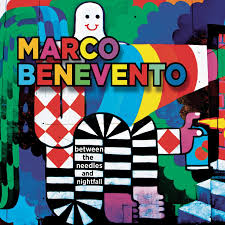
SOUNDTRACK: MARCO BENEVENTO-Between the Needles and Nightfall (2010).

This is the third album by Marco Benevento and his trio: Reed Mathis on bass and Andrew Barr on drums.

It’s hard to put this release into any genre because of how fluid Benevento is.  He has some poppy songs, some jazzy bits and some experimentation.

Most of the songs are pretty long (over 6 minutes) and none of the songs have words (well, one has a aspoken section).

“Greenpoint” flows around a very simple bass line as Marco plays a poppy piano throughout the song.  There’s also some synthy blasts that move the song beyond a simple piano motif.  Around the four minute mark, the song shifts gears, growing a little faster and little more intense as the drums crash through.

“Between the Needles” is a slower song with a pretty bass line and slow piano chords.  After a minute and a half it takes off a bit with bigger piano chords and a more dramatic tone.  But then it all slows down to just piano before building up again, this time with even more evocative lead bass.  “Two of You” is quieter, with a waverly keyboard line that lays under the lead piano  The main piano line acts like a lead vocal line and is really pretty and quite catchy as well.  It builds into a nice bouncy song by the end.

“Numbers” is a slow song with a lead bouncing bass and simple keyboard intro chords.  The song builds in layers until it is a loud, almost-crashing sound with some jazzy piano soloing on top.  “It came from You” is a super catchy piano melody with some complicated electronic drumming. It turns into a bouncy and fun romp by the end.

“Ila Frost” is one of the catchiest things on the album–a lively piano melody both in the repeated background and the main lead line.  It’s followed by the even catchier “RISD.”  In addition to the fun pulsing bass, the main echoing keyboard melody is simple but instantly catchy.

“You Know I’m No Good” is the shortest song on the disc.  It’s a slinky torch song that is actually written by Amy Winehouse. Knowing that, you can hear it in the delivery.  There’s a sort of crashing drum section in the middle.  This song also has the only vocals–worldless “da da daing” toward the end.

“Music Is still secret” is a lovely, slow jazzy ballad. While “Wolf Trap” is the opposite.  There’s some loud clangy drums and a big fuzzed up bass that matches perfectly with the really noisy piano melody.  Once the song starts going, there is some ferocious soloing from Marco as the rest of the band jams behind him.

The disc ends with “Snow Lake” an electronic kind of processed sounding track that mixes some interesting synths and some low ringing bass.  It ends with a wild cacophony of sounds–electric and otherwise–and then abruptly ends.

There’s not a lot of earworms on this disc.  But everything sounds great.  The musicianship is top notch and the songs are all pretty fun.

[READ: September 14, 2010] “Lucky Girls”

In this story, the narrator is an American woman living in India.

As the story opens she says she always imagined what it would be like meeting Arun’s mother for the first time.  She pictured a fancy restaurant with herself looking stunning.

But in reality, Mrs Chawla showed up at the apartment one day, unannounced.  The narrator had been living there for five years and had yet to meet the mother of the man who owned the place.

The narrator was in her painting clothes when Mrs Chawla showed up.  The narrator considered changing, but decided against it.  Mrs Chalwa was shorter than expected; she looked at the narrator as if she too were not what was expected. (more…)

Read Full Post »

SOUNDTRACK: GOBLIN COCK-Necronomidonkeykongimicon (2016).

Goblin Cock is the hilariously inappropriate name of a heavy metal side project from Rob Crow of the band Pinback.  The album sounds very literally like a heavy cousin to Pinback with a similar (just much heavier) songwriting style.

The band members are: Lord Phallus (Rob Crow)-guitar and vocals; Lick Myheart-guitar; Tinnitus Island-bass; Mylar Grinninstein-drums.  (Probably pseudonyms).

Necronomidonkeykongimicon was the band’s first album in almost ten years after two albums in the early 2000s.  And Joyful Noise records had this to say about it:

Goblin Cock is a band from beyond time, beyond space, beyond your naive concept of dimension in METAL. Since before your pathetic “god” had supposedly “created” you and your kind, Lord Phallus was hunkered in a cybertimeship/fun-dungeon skating the layers of what was considered “true metal” in all societies and in all generations. Eventually His Majesty realized that he really didn’t care and launched a full-scale war against bland metal with an emphasis on ACTUALLY HAVING A GOOD TIME!

The album has 13 songs in 36 minutes–this is not an epic recording or anything.  But despite their brevity, these aren’t blistering punk songs either.  Rather, the songs work primarily in some of the heaviest metal styles (Slayer comes to mind) but also add some really alt-metal sounds (like Tool) in the bridges and choruses.

The first song, “Something Haunted” starts with a classic doom sound.  A distorted, vibrating series of notes–old school metal, including a heavy chugging riff. When he starts singing he sound a bit like Ozzy, but more like an alt-rock Ozzy (with a better voice).  When the bridge comes in, it feels more like Tool than dark metal.  The chorus soars to unexpected alt rock highs and somehow segues tightly back to that opening heavy riffage.  The song is three and a half minutes and is one of the longest songs on the album.

The second song, “Montrossor” starts so quickly, I initially thought it was still part of the first song.  It opens with fast double bass drums and equally fast riffage.  The bridge is a super fast followed by a slower melody (complete with crashing cymbals) that ends abruptly after two and a half minutes.  It ends abruptly and shifts gears into “Stewpot’s Package” which has that same old school style heavy deep opening riffs.  But again, it’s followed by a shift to more Tool-like sound for the bridge.  The chorus shifts gears and sounds almost like an XTC chorus.

“Youth Pastoral” is an instrumental with a practically heavy jazz riff.  The middle grooves all over the place as it shifts gears and style but fits perfectly together.

“Flume” opens with a slow menacing riff and Crow’s clipped singing until the much heavier chorus.  But, really, the most amazing thing about this song is that at the 1 minute mark, he sings the word “hey” for a full twenty-six seconds. It’s astonishing how long he holds that note.  The rest of the song is sung much more quietly, which seems fitting.

“Bothered” is heavy grooving with some excellent back and forth on the guitar parts. A shouting chorus is followed by a kind of guitar solo (more like an instrumental break than a solo proper).  A slow, heavy Soundgarden-esque riff opens “Your Watch.”  The chorus stays in that style, which never sounds like a Soundgarden song (the vocals are very different), but would fit comfortably on their playlist.  It’s followed by “The Undeer” a fast heavy chugging song that’s over in 90 seconds but only after a kind of mocking “la la la” vocal in the middle.

“Struth” opens with a slow drum fill followed by a n old school Black Sabbath-y riff.  The quietest part of the record occurs near the end of this song with a cool-sounding guitar melody (and effects) as the song slows to a pretty end.  But “The Dorse” resumes the heaviness with some intense double bass drum and pummelling guitars. This is another instrumental, but much heavier with some relentless pounding guitar and bass and an almost victorious guitar melody on top.

“World is Moving” is a quiet song that almost doesn’t fit on this record.  It opens with a complex guitar melody and some off-kilter time signatures.  The vocals are quiet and hushed for most of the song until it starts building up by the end.

“Island, Island” returns to the heaviness with a an intense riff and loud crashing drums.  It’s li e classic metal song with lots of drums taking the fore. There’s a catchy melodic middle that is bookended by ferociously heavy chugging guitars.  The middle of the song is about as heavy as this album gets with the thumping guitars and drums all in double time.

“Buck” ends the disc with the longest song–almost four minutes.  It’s slow and grooving and has a feeling of an 80’s sci fi film as the end adds a swirling synth sound.

Despite the band’s name, which will certainly turn off some, this album isn’t silly or overly vulgar.  It’s just some great songwriting in a bunch of heavier styles.

[READ: October 20, 2020] “Life Without Children”

Here’s the third story about COVID that I’ve read.  I’m not going to continue keeping track, but I am marvelling at how many have been published already.

This one is from a different perspective than I’m used to.

In it, Alan, an Irish man in his sixties, is in England on business.  His wife back home in Dublin tells him about all of the quarantining going on in Ireland.

Social distancing is a phrase that everyone understands. It’s like gender fluidity and sustainable development.  They’re using the words as if they’d been translated from Irish, in the air since before the English invaded.

Where he is in Newcastle, it’s like nothing has happened.  He is very careful about what he touches.  He cleans everything.  He envisions the particles floating in the air between the drunk men in the Hawaii-Five-0 shirts.   (more…)

Read Full Post »

SOUNDTRACK: FRANCES CARROLL & HER COQUETTES featuring VIOLA SMITH-“Snake Charmer” (1939).

Drummer Viola Smith died a couple of days ago at the age of 107.  ONE HUNDRED AND SEVEN (a month shy of 108). That’s pretty fascinating in itself.  But even more fascinating is that she was an amazing drummer at a time when women didn’t play drums.  And not “amazing for a woman” or anything patronizing like that, check out the video of her playing “Snake Charmer.”

Check out her drum kit, check out the speed, check out the power.  Check out the arial toms and the way she hits them without it even seeming like she is. Wow, I wish I’d heard of her sooner.

Here’s some relevant quotes from an obituary in The Guardian

Smith took up drumming as a teenager in Wisconsin, when her father assembled the Schmitz Sisters Family Orchestra with his eight daughters. Her showcase was “The Snake Charmer,” a jazzy arabesque with explosive drum-fills.

Because she was the sixth daughter in the family, she said, her older sisters got the strings and brass.  “My dad said, ‘Now, we need a drummer!’ Thank God, I was it.”

In 1938, Smith formed another all-female orchestra, The Coquettes, with her bass playing sister Mildred. The band moved to New York in 1942, where Smith studied under the legendary snare-drum innovator Billy Gladstone.

In the same year, as men were being drafted to war and women taking their place in factories, Viola wrote a now-famous article for Down Beat magazine, arguing for the inclusion of women in the big bands of the day.

“Many of the star instrumentalists of the big name bands are being drafted,” she wrote, under the title Give Girl Musicians A Break! “Instead of replacing them with what may be mediocre talent, why not let some of the great girl musicians of the country take their places?

“We girls have as much stamina as men. There are many girl trumpet players, girl saxophonists and girl drummers who can stand the grind of long tours and exacting one-night stands. The girls of today are not the helpless creatures of an earlier generations.

Smith found it difficult to lead the orchestra from behind the drums, so she turned over those duties to Frances Carroll.  But at the height of her success, Smith performed with Ella Fitzgerald and Chick Webb, as well as at the second inauguration for the 33rd president, Harry Truman, in 1949.

I haven’t even mentioned how good The Coquettes are.  They swing big time and this song is really fun.  The only thing worse than hearing about a great musician after they have died is realizing that there are almost no recordings of her playing.

Here’s another page from The Future Heart with lots of videos and interviews with Viola.

[READ: October 26, 2020] “Nettle”

I really enjoyed the way this story opened.  It is about Willie, who, as the story opens, is a young boy.  Willie’s teacher told the class that she would be guarding them and that “not one of them would be lost, except the one who was destined to be lost.”

When the boy told his mother what Miss Rita said, his mother replied,

That happens to be from the Bible… When people take words from the Bible and repeat them to young children, or to anyone, for that matter, they’re nuts.  Don’t pay any attention to her.”

She says that maybe when he’s older he can leave that school and go to the one his daddy went to.

He would visit his daddy often in his room. His daddy was always playing the same piece to music.  He told his daddy about a book he was reading in class. His daddy replied that he had read that same book when he was younger: rewrite the whole thing. (more…)

Read Full Post »

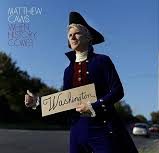
SOUNDTRACK: MATTHEW CAWS-“When History Comes” (2020).

Recently Rough Trade released an online album Talk – Action = Zero, Vol. 2.  It was a collection of songs with the intent of giving money to get out the vote organizations like Spread The Vote.  There were some 90 songs on it.  One of them was from Matthew Caws from Nada Surf.

On the most recent Nada Surf album, the song “So Much Love,” featured a lengthy spoken sort of rambling section.  Caws’ voice works quite well for that fast spoken section and when I saw them play it live, he was able to recite (or read, he had the lyric sheet in front of him) the whole thing while still playing which was pretty cool.

So this new song follows in that model.  The song is a simple riff that repeats.  And the lyrics are probably not spontaneous, but are pretty close.  There’s also a chorus.  It’s really catchy, just like all Nada Surf songs tend to be.

My contribution is a protest song; a get out the vote song. Will any Republicans hear this song outside of my liberal music bubble?  I don’t know.  I want them to.  Maybe there is a way.

What should a protest song say?

I protest the dismantling of the Postal Service which right now means the dismantling of democracy.

I protest the denial and protection of systemic racism.

I protest the dismantling of regulations that protect public land.

I protest the dismantling of the trust between a country and its media.

Am I naive enough to think that naively expressing these things can change anyone’s mind?  YES

I’m naive and a dreamer but also ambitious.  I believe in people.  I believe in change.

I’ll say this I vote Democrat but I don’t hate republicans.  I just hate this administration.

When history comes and sticks out its thumb / asking you for a ride / I hope that you see how fast it can be / it goes by in the blink of an eye.
We’re stuck in this boat / it’s barely afloat / we’re watching the water rise / History’s ill / it needs some good will / and we’re so tired of the lies

We’re all canaries in the coal mine.  We have to say what we see.  We’re all the band on the Titanic.  Don’t stop when the ship goes down.

Let’s be cheerleaders for postal workers.   Cheerleaders for voters for braving the long lines of the maskless.

We implore that you nurture your inner artist.  That you make something for yourself so that you have fulfillment.  So that you don’t seek satisfaction in the hot flame of mockery, the perversity of trolling, the thrill of baiting and phishing.

I believe that we’re all made out of love and good things.  We just get sick

When history comes and sticks out its thumb / asking you for a ride / I hope that you see how fast it can be / it goes by in the blink of an eye.
We’re stuck in this boat / it’s barely afloat / we’re watching the water rise / History’s ill / it needs some good will / and we’re so tired of the lies
Come out of your shell / the country’s unwell / we really need you to fight.

[instrumental break]

I’m an atheist and I had a friend in college who was Christian.  He belonged to a Christian group, I can’t remember which one but he wore a lapel pin with his name on it.  Anyway, really lovely guy.  We were both in film class and we’d get together once in a while to study.

Then one day we were saying goodby before winter break in front of the library.  The sky was dramatic, a whirlwind of leaves was nearby.  He gave me the hard sell. He said, “think about it… eternal life.”  It was moving.  I knew he wanted the best for me and in that spirit I’d like to say to you:

Imagine that the left don’t want to destroy America, because we don’t.  We just want it to be more fair. We want it to live up to its promise and that’s because we love it so much.  Don’t be afraid, we;re all right.  I’ll tell you what’s fake news… it’s that we’re bad people.   We’re not.   [It’s] that we want trump to fail.

I didn’t want him to fail. I wanted him to do great.  He didn’t.  But I wanted him to.

He makes me feel bad.  He makes other people feel bad too.  That doesn’t set a good example.  Sometimes it just comes down to that: don’t make people feel bad. And for every decision think about how it affects poor people the most.  Think about how it affects children.

You know…

Alright go register go vote.

So simply stated.  so true.  What a great song.  I hope people outside his bubble hear it.

[READ: October 21, 2020] “Suffocation Theory”

This story started out rather strange and I thought it was going to coalesce into something enjoyable.  But it never really did.

Out of the blue Amanda told the narrator they were moving.  He liked their apartment just fine and don’t want to move, but she told him the movers were already outside.

He watches a lot of news and everything is terrible.  Killings with guns, bombs and cars.  He is amazed that people have the irresistible idea “that killing a bunch of strangers would solve whatever problem they thought they couldn’t solve any other way.”

The new place is terrible.  It feels like a giant warehouse with rooms and lots of empty space. The bathroom doesn’t have a shower.  The neighborhood is terrible.  They also have a roommate.

The roommate is a jerk.  He jokingly points a gun at the narrator. (more…)

Read Full Post »

« Newer Posts - Older Posts »