SOUNDTRACK: THE CLAYPOOL LENNON DELIRIUM-“Cricket and the Genie” (2016).
Les Claypool and Sean Lennon (who has recently come back on my radar as being much more fun than I realized) have joined forces to create this unlikely (but perfectly suited) band. Lennon’s band Ghost of a Sabre Tooth Tiger opened for Primus and Dinosaur Jr this summer (and I am still bummed that I missed that tour).
What surprised me most about this collaboration is that it (well this song anyway, which is the only one I’ve heard) doesn’t sound like so many other collaborations with Claypool–meaning it’s not all Les. Les plays bass and provides some backing vocals and that’s about it. All the rest–the whole psychedelic craziness–is all Lennon.
The song has a totally retro psychedelic vibe (one that Lennon has been working with very well over the last few year) and Les’ bass is thumping and heavy without doing a lot of his Claypoolisms. Not to say that the bass is shabby–it’s not–it’s just not as Aggressively Claypool as it might be (for the better of the song).
Having said that, the opening notes are pretty distinctly Claypool, but once the music (fuzzy guitars and hummable vocals) come in, the bass sounds more like a big 70s Jon Entwistle bass than a funky Claypool bass.
The song has many many parts and changes. There’s a brief psychedelic interlude, there’s interesting organs sounds, there’s some heavy dissonant chords sprinkled throughout and there’s some great harmony vocal. There’s even a pretty lenghty sea-shanty feeling instrumental section (the song is 8 minutes long after all).
But lest you think there is no Claypool, he gets plenty of places to show off his stuff, too.
I really dig this song a lot and I can’t wait to hear the whole album.
[READ: January 8, 2015] “For Something to Do”
As part of my 2016 plan, I intend to catch up on all of the magazines that I blew off during the latter half of 2015. Basically, that means Harper’s, The Walrus and the New Yorker. And I’ll write about the stories that I ignored. Interestingly I was also planning on reading several large books in 2016. Wonder how that will play out.
So here begins a slew of Harper’s pieces
This is the kind of story that, were it a novel, I would probably give up after a chapter. But, because it was a short story, I read it all the way through, and I was glad I did.
The reason I’d have given up is because the story is dark and unpleasant, about men getting drunk and beating up other men to try to impress a woman. I don’t know a lot about Leonard’s writing, so i don’t know how his stories tend to resolve, but I was worried about just how dark this would go before any resolution was present. (more…)
I had not heard of Gyptian. He is a Jamaican singer. His singing style is kind of like rap, but with all of the Jamaican inflections and emphases that make it sound more flowing and smooth.
I enjoyed his sound quite a lot. It helps that he has an acoustic guitar player (Anthony “Tony Bone” DiFeo) keeping the melody and rhythm.
Evidently his first song “Hold You” was a huge hit, although I didn’t know it. “Beautiful Lady” has a bit more of a reggae feel, a bit slower with lyrics about, yes a beautiful lady.
The final song, “Nah Let Go” feels like a lullaby with his gentle delivery. I don’t listen to this style of music very much but when it’s done well, I can totally groove on it.
[READ: January 7, 2015] “Travel Day”
“Travel Day” is a photo essay about airports. Dyer was assigned to write a short essay for it. I like Dyer’s work and I found his essay a lot more compelling than the photographs.
Dyer begins by talking about how when he was 8 years old, his family was on vacation in London and took a special trip to Heathrow Airport because, back then, it was a destination. In the sixties and seventies the glamour of air travel was at its peak.
The earliest airports were designed to look conservative to reassure nervous flyers. But by the Sixties, airports gleamed with sleek confidence and modernity. But now airports are just hubs–non places. The allure of the future that guided the design of airports in the sixties and seventies also makes airports look really dated now. Especially since the “future” was based on designs from the Sixties anyway.
You can also see it in flight attendants outfits who had sort of futuristic look back in the Sixties (at least what the future was supposed to look like).
He talks about Garry Winorand who took photos of the social landscape in the Sixties and Seventies and has a book devoted to airports. He says the photos really documented the social life of Americans as much as it did airports.
In addition to the main photos of this essay, there are two small older photos included. The first is by Sklava Veder and it is a photo of Lieutenant Colonel Robert L Stirm being greeted by his family at Travis Air Force Base in 1973 after spending five years as a POW in Vietnam. It’s an amazingly powerful photo. The other is by Winorand which shows a subtle version of the same image– a fellow with a beaming face holding a sign that says “Welcome to California Jane.” It’s about a person coming to a new place and Winorand captured the eternal promise of flight and of the American West in a single moment.
These photos in the essay were taken all over the world and do show the human condition. But it is less glamorous and therefore to my eyes less interesting.
The one interesting idea however, is that people have stopped reaching for their cigarettes when the get off the plane and have started reaching for their phones.
But that doesn’t make for very interesting photography. And with a few exceptions these photos aren’t that compelling. Perhaps because airport themselves are no longer compelling places.
Lizz Wright is a gospel singer with a lovely voice. For some reason she only has two songs here (the editing makes it seem like she does at least one more).
I don’t know Wright at all, but the blurb gives context: Raised on church music in Georgia, Wright is well-versed in the freedom songs of Sweet Honey in the Rock, without whom none of the music here would exist; “I Remember, I Believe” is by that group’s leader, the great Bernice Johnson Reagon, whose daughter Toshi Reagon (Wright’s best friend) co-wrote “Hit the Ground.”
“Hit the Ground” is upbeat and lively. Whereas “I Remember, I Believe” is far more powerful, but much slower.
Sadly for me, I don’t really like gospel music, especially the slower songs like the second one here. So I didn’t love this Tiny Desk, but I can certainly appreciate how good a singer she is.
[READ: January 15, 2015] “Williamsburg Bridge”
I don’t know anything else by John Edgar Wideman, so I didn’t really know what to expect with this story.
I certainly did not expect a long (rather dull) story about a man on the Williamsburg Bridge contemplating suicide.
There were some beautiful passages and phrasings here, especially the reflections on Sonny Rollins, but man, this thing just seemed to go on and on. (more…)
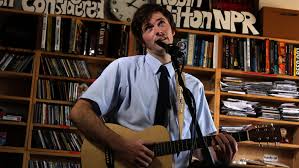
SOUNDTRACK: THE GHOST OF A SABER TOOTH TIGER-Tiny Desk Concert #92 (November 17, 2010).
The Ghost of a Saber Tooth Tiger is a band created by Sean Lennon and Charlotte Kemp Muhl. I really liked their most recent album so I was pretty interested to hear this much earlier Tiny Desk Concert.
I love this acoustic pairing. Lennon plays the acoustic guitar (and sings and sounds a bit like his father’s more delicate side. Meanwhile, Charlotte plays a ton of instruments and sings as well.
The show starts with them talking about tambourines and how they are unavoidably loud (so Sean’s is on the floor).
“Jardin du Luxembourg” has some great chord changes and Charlotte’s lovely accordion (with a kind of French flair). As with all of these songs, there’s interesting lyrics like, “people say your brain is like cream cheese it takes the shape of anything you please.” At the end of the song, Charlotte comments that she tried to play the accordion quietly but if she does it sounds like it has emphysema. Sean says that she just learned to play it ten days earlier.
For “Schroedinger’s Cat” she switches from accordion to melodica and xylophone. Charlotte sings harmony along with Sean. There are more interesting lyrics here too (trippy ones, of course). It references Socrates, Aristotle, Dorian Gray and many more cultural touchstones.
On “Dark Matter, White Noise,” Charlotte plays bass (and sings lead on alternating verses). The chorus is gorgeous again, with a sort of minor key tone.
“The World Was Made For Men” is the first song they ever wrote together. Again, they sing together and sound fantastic.
At the end of the show, he threatens to do a 2 hour tambourine solo.
GOASTT is really something. I am bummed that they opened for a band I wanted to see this summer but was unable to attend. I hope the two bands tour again together this year.
[READ: January 6, 2015] “Nice Insane”
This was the second short piece in this issue of Harper’s. I don’t know Seth Price. This is an excerpt from his novel Fuck Seth Price.
Generally, I dislike reading excerpts, although sometimes they make you want to read the full novel. That did not happen in this case, though.
This excerpt focuses on the “moment of inspiration that had rejuvenated his [presumably Seth’s] painting career, making him rich but ultimately leading him to reject contemporary art.” (more…)
SOUNDTRACK: THE HELIGOATS-Tiny Desk Concert #98 (December 15, 2010).
I thought that I would have written about all of 2010’s Tiny Desk shows last year, but it turns out that I missed two. This was one and tomorrow’s will be the second.
According to the blurb, Stephen Thompson says that this was the 100th Tiny Desk Concert. I have counted all the shows (twice) and using my counting method, I found this to be the 98th show. So either this was aired out of order or they never aired two shows. I have noticed that I’ve been off on all of their milestones, so something is up (and I’m pretty sure it’s not my counting).
Chris Otepka is the Heligoats. He has another band called Troubled Hubble, but Heligoats are his acoustic unplugged band.
In addition to singing unusual songs (he’s a songwriter for whom lyrics are very important (if not always comprehensible)), he tells some elaborate stories between songs. His stories seem spontaneous, although I expect that they are not (especially the cremation story)
“Goodness Gracious” is a slower song (although he somehow makes a really full sound with just his (small) acoustic guitar). There’s some great lyrics and twists of phrase in this song. And his voice is quite nice, too.
“I’m Pretty Sure I Can See Molecules” is a song he says he started writing when he was 8 years old. He says he liked pushing his fingers back into his eye sockets to see what kind of fractals appeared. He gives a lengthy explanation about this phenomena which he says is the cause of floaters. All of this is an introduction to this uptempo song. I really like the somewhat “off” chord he plays between chorus and verse.
Before “A Guide to the Outdoors,” he talks about cremation and the metal parts in his body. And about having his will explain about his robotic existence. The song seems to be a letter written to the person who has found his dead body? It’s surprisingly upbeat though.
The final song, “Fish Sticks,” is my favorite. It is about a man named Carl Beakman who gets a grant to protect a wetland for migratory birds (I suspect all of this is nonsense, but whatever). I like the way the song has super fast strumming and the bouncy chord progression in the verses.
The Heligoats require close listening, and the songs are worth it.
[READ: January 6, 2015] “A Little Bottle of Tears”
As part of last year’s push to read a lot of books, I blew off most of my magazines. So this year I’m going to get back to all the issues I missed and I’m going to try to keep up with my subscriptions going forward.
I’m starting with the Harper’s that I hadn’t read in 2015 and then I’m going to move on to the errant New Yorkers.
I’m starting with this story.
I haven’t really liked any of Diane Williams’ stories. I find them maddeningly elliptical. She has some excellent sentences and turns of phrase but as for an entire story, I’m always left wondering what I just read.
This is a short piece about how people could have better friendships if they weren’t so old. (more…)
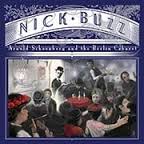
SOUNDTRACK: NICK BUZZ-Arnold Schoenberg and the Berlin Cabaret (2003).
In 1901, Arnold Schoenberg wrote eight Brettl-Lieder (Cabaret Songs). The songs were short and fun with naughty (cabaret influenced) lyrics. Some 100 years later, inspired by the Art of Time Ensemble who commissioned Nick Buzz to play pieces for their Schoenberg show.
So the guys from Nick Buzz got together and recorded four of the eight pieces. Then Martin Tielli released this disc as number 2 of his Subscription Series. Some of us were a little disappointed when this came out since it was only 15 minutes of music, but the art is wonderful and I have recently rediscovered this disc and have enjoyed it immensely.
Basically the Buzz guys have interpreted the songs in their own style, but they have remained faithful to the original melodies and lyrics (which were in German but are now in English).
“Gigerlette” explores electronic manipulations (presumably by Hugh Marsh) and offers lots of fun samples (what I assume is some earlier recordings of the song in German). It opens with sampled female singing and staccato piano as well as other unusual effects. Then Martin’s vocals come in and the effects clear out and the song becomes simple piano ballad for a brief moment. Then the noises come back in again, playing around with this amusing song. It’s a song of romance and love with the sweet punchline being that cupid is driving their coach and four. At over 5 minutes this is the longest song by far, even if the basic song is just over two minutes.
“Der genugsame Liebhaber” (The Modest Lover) opens with what sounds like a distorted harp (presumably the piano) and scratchy records (from Marsh). This song is about a man going to see his lover, but his over’s pussy loves his bald head so much that she continually climbs atop it. It is charmingly naughty. There’s some wonderful violin from Hugh Marsh on this song
“Galathea” is the most conventional of the three songs. A lovely piano ballad to Galatea.
“Arie aus dem Spiegel von Arcadien” (Aria from the Arcadian Mirror) is super fun. The music is weird and goofy with a very drunken feel. And the chorus is just wonderful “my heart begins to thump and dance just like a hammer’s blow it goes boom boom boom boom boom boom boom boom boom (getting faster and faster). I’ve listened to the original and it is very much the same, although Nick Buzz’s version is much better.
You can find some of these songs on line from a recording at Lula’s Lounge (Dec 9, 2010)
It’s cool to see how they recreate the album so faithfully in a live setting. It’s only a shame that the video isn’t a little closer so you could see just what they are doing.
Nick Buzz-December 9 2010 Lula’s Lounge
[READ: September 1, 2015] My Documents
I have enjoyed some of Zambra’s stories in other locations, so I was pretty excited that McSweeney’s released this collection (translated by Megan McDowell). The book is pretty much all short stories, although the first items feels a bit less fictional and more memoirish.
“My Documents”
This is a brief historical account of Alejandro as a child and as a writer. He talks about when he started working on computers and what happens when the computer dies with the information inside. He explains that this file is in his My Documents folder and he’s going to publish it “even though it’s not finished. Even though it’s impossible to finish it.”
“Camilo”
I read this story in the New Yorker. It concerns the relation of a man and his godfather, whom he has not seen since his father and godfather had a falling out years ago. See my link for a more complete synopsis. I enjoyed it just as much the second time.
“Long Distance”
The narrator worked as a phone operator in 1998. He liked the job–his boss was cool and would let him do anything he wanted so long as he answered the phones quickly. The job was in a travel insurance office and one day he received a call from a man named Juan Emilio. After speaking for a time about various things, the narrator realized it had been 40 minutes since they first started talking. They were expected to call clients back 14 days later as a follow-up and this time Juan Emilio talked with him foe a while and, upon learning that the narrator studied literature, asked if they could meet and discuss books. The narrator was already teaching classes at night, and these two situations overlapped somewhat. I loved the way all of this information is used as backdrop to a romance he has with a student known as Pamela. And the final line is great.
“True or False”
The titular phrase is uttered by a boy, Lucas, who declared, based on an inscrutable internal feeling, that things were True or False. An armchair might be true, while a lamp might be false. Hid father Daniel had a cat, Pedra, even though pets were forbidden in his building. Lucas loved the cat. Then the cat had kittens. There is a metaphor at work about the fatherless kittens and Daniel’s own behavior toward his son. I really enjoyed this story and the strangeness of the true or false brought a fascinating childlike quality to the story
“Memories of a Personal Computer”
The conceit of this story is great. A PC remembers what it was like to observe a relationship as it begins and then ebbs–and how the PC was moved around into different rooms as things changed in the relationship.
“National Institute”
At the school where the narrator went, they were called by number. He was 45. The main subject of his story was 34, although he doesn’t know the boy’s real name. 34 had failed the grade and was made to repeat it, but rather than being sullen about it, he was popular and fun. All of the students were worried about failing–the final test was very hard. But one day 34 approached 45 and told him he had nothing to worry about. The other students didn’t know what to make of it, but he slowly assessed everyone and told them whether they had anything to worry about. By the end of the story, when 45 is brought to the inspector of schools, he is told a lesson he will should never forget.
“I Smoked Very Well”
A look back on smoking and how quitting smoking made him a different (though not necessarily better) person.
“Thank You”
She is Argentine, he is Chilean and they are not together (even though they sleep together). They were in Mexico City when they were kidnapped together. The incident has unexpected moments. It’s a weird story (with some really unexpected moments) but a really good one.
“The Most Chilean Man in the World”
A Chilean couple has decided to separate once she was accepted to school in Belgium. After several months he is convinced that she wants him to visit, so he spends a ton of money and heads out to Belgium. Without telling her. And it goes very badly. But he can’t just leave Belgium, now can he? So he goes to a pub where he meets some new friends who call him the chilliest man in the world. The story hinges on a joke, but the story itself is not a punchline.
“Family Life”
I read this story in Harper’s. I thought it was fantastic–it was one of the stories that made me want to read more of his works. This is story of a man house sitting and the false life that he constructs around him. It was surprisingly moving.
“Artist’s Rendition”
I loved the way this story began. It tells us that Yasna has killed her father. But we slowly learn that Yasna is character in a detective story that an author is trying to write. We learn how the author constructs details about this character and the things that she has experienced which make her who she is. As this story unfolds we see how those first lines proved to be true after all.
This was a great collection fo short works and I really hope to see more from him translated into English.
SOUNDTRACK: AROUND THE WORLD IN 80 DAYS-Euphoria (2014).
I found out about Around the World in 80 Days when they started following me on Instagram. I’m not sure which photo it was that interested them, or if they just follow lots of people, but I was intrigued that they are a post-rock band from Yekaterinburg, Russia. They formed in 2009 and have a few releases out (EPs, mostly). You can hear all of them on their soundcloud page (and other places). This was their first full length album.
Their bio says
Around the World in 80 Days is a three-piece band formed in 2009. It’s impossible to compare their music with anything. The guys just play whatever they want and don’t care about genres, styles and cliches.
I appreciate the sentiment, but it’s not impossible to compare them. They have elements of Mogwai and Explosions in the Sky in their swirling post-rock instrumentals. But they definitely add elements that those bands don’t. There’s some heavy metal riffs in “Racing the Light” and some more poppy elements in “Inside Me.”
I typically try to listen to an album a few more times before I post about it, but I was so interested in this band that i wanted to get the word out right away. I’ll certainly be listening more intently to their output over the next few days.
[READ: May 24, 2015] “Mislaid”
I read an excerpt from this book in Harper’s a few months ago. And then I found the full book at work. Huzzah!
I had said that I didn’t know how long this novel could be because the excerpt seemed so complete. And in a sense I was right. Except that the book went so much further than the excerpt led me to imagine.
The excerpt was about Peggy Vaillancourt. She was born in 1948 in Virginia. A transformative event leads her to believe she must be a lesbian (something unspoken of at the time).
She winds up going to Stillwater College, a female-only school in the middle of nowhere Virginia. She loves poetry and wants to be a writer. She meets the poet-in-residence Lee Fleming. Fleming was a local boy with wealthy parents. His father believed himself to be as “queer as a three dollar bill.” It was his father who put him in a cottage on the family’s property across the lake from Stillwater College. Everyone in town also assumed he was gay, and there was much talk and consternation about it, although everyone assumed he was fine while he was by himself in that cottage.
The college asked Fleming to be a teacher (he canoed to work every day). Instead of a salary he asked them to create a literary magazine called Stillwater Review, which became a success. Many other famous New York poets came to Stillwater to be charmed by the idyllic Stillwater (and all the young girls). (more…)
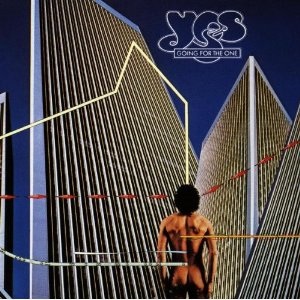
There’s many interesting things about this Yes album. It was the first album since they hit it big to not have a Roger Dean cover (it did use the logo of course). This cover is a photo done by Hipgnosis. It also features the return of Rick Wakeman (the first player to come back). Further, there aren’t really any epic songs. Sure, there’s a 6 and 7 and even a 15 minute song, but none of them feel epic. There’s even a song less than four minutes long!
It’s also interesting for having a naked man on the cover about a year before Rush would release Hemispheres with a naked man on the cover. Must have been a thing.
This album opens with a big rock n roll bluesy guitar and steel guitar solo and sounds nothing like any Yes song ever did. Then Anderson’s voice comes in and it sounds a lot more Yes. But again, something feels different about this album. The song is only 5 minutes, but it has many different parts all anchored by the wild careening steel guitar. The chorus “going for the one” is pretty catchy and is probably the most memorable moment in the song, although I understand it did pretty well as a single. The wavery solo at the end just shows how much the guitar permeates this song.
“Turn of the Century” is a 7 minute song. It is mellow and is mostly Howe’s classical guitar and waves of keyboards. The song slowly builds. It is quite pretty. It was originally supposed to be short but it grew during the recordings and includes a very lovely Wakeman piano solo and a beautiful Howe classical solo at the end.
“Parallels” was written by Chris Squire and was supposed to be on his solo album, but it didn’t fit. So instead Yes recorded it together. It opens with Rick Wakeman playing a church organ (there’s a fascinating story about how they recorded that). This of course makes the song feel bigger than it needs to. But Squire has a great sense of interesting vocal lines, and this song sounds like pure Yes.
“Wonderous Stories” is a sweet song that sounds like it could be the closing credits of a kids’ fantasy movie. “Awaken” is the fifteen minute song. It opens with a classic sounding piano section. The keyboard washes come in with Anderson’s vocals. And the around 1:30 the song kicks in with a cool Howe guitar riff and some big Squire bass. This middle section rings as classic Yes–lots of guitar and bass pyrotechnics and Anderson’s voice floating over the lot. The solo culminates in what feels like a great conclusion to this song–except that the song has only hit the 5 minute mark (and there’s ten more to go), but that doesn’t stop the song from building and building (with some great Wakeman moments). And then it reaches a hard stop for a pause as the song rebuilds with a lot of percussion and keyboards. This meandering instrumental section is cool and trippy and lasts for about four minutes. When the song resumes, it picks up more or less where it stopped with Anderson’s voice soaring over what sounds like ea choir of voices. Around 12 minutes in, Wakeman gets another pipe organ solo–it’s a brief flourish before the song kicks back in to build to the proper conclusion. Except that once again, the song fades away and there is a quieter coda, of keys and bells and Anderson’s voice. It feels like it should be bigger and grander somehow. And it may just be a poor production quality that makes this album seem flat.
Since almost every Yes album had different personnel, I’m going to keep a running tally here. Here we have the first time someone has returned to the band, with Wakeman deciding (for no doubt complicate reasons) to return.
Chris Squire-bass
Jon Anderson-vocals
Alan White (#2)-drums
Rick Wakeman (#2 replaced Patrick Moraz #3)-keyboards
Steve Howe (#2)-guitar
[READ: April 12, 2015] “French Town Rock”
This is another excerpt from a novel (A Brief History of Seven Killings). This excerpt is done in a Jamaican dialect, which I found challenging to read.
I enjoyed that there was a guy named Shotta Sheriff.
The story comes down to gambling and money. There’s a character known as the Singer. His brother fixed a horse race and made a ton of money. But then he absconded with the profits. (more…)
After Relayer, Yes decided to explore solo projects. And their label released this compilation. Oddly enough, it consists entirely of songs from Yes and Time and a Word (and is a great collection of those two middling albums). It also includes a B-side called “Dear Father” and, most unexpectedly, a 10 minute version of the Simon and Garfunkel song “America.” All the songs have the original lineup except “America” which features Howe and Wakeman and was recorded in 1972.
“Looking Around” and “Survival” from Yes and “Time and a Word,” “Sweet Dreams” “Astral Traveler” and “Then” from Time and a Word.
“Dear Father” is a sounds very much like a B-side from Time and a Word (meaning it has elements of Yes, but not enough to make the song especially interesting). The bass is thumping, but there’s also strings which add a less dramatic element than intended. The ending sounds very 1970s (almost like a TV special) especially in the way the strings swell, but it’s a cool sounding end to the disc.
The sound of “America” (which opens the disc) is pure early 70s’s Yes, with loud guitars and some good bass lines. They play around with the original quite a lot (and most of the time it is unrecognizable). I really enjoy that the guitar and bass throw in lines from the West Side Storys “America.” There’s moments where you know the S&G original (like the “I don’t know why” line and they play it totally wrong (but in very Yes fashion), but other parts like “counting the cars on the New Jersey turnpike” sounds different but also really good. This is the kind of cover I like, when a band completely make a song their own. I still prefer the original, but this is an interesting interpretation.
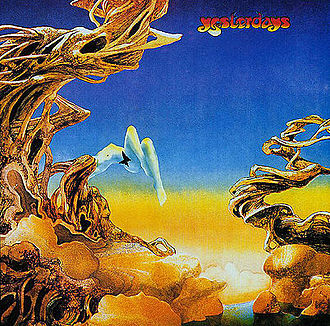
The cover of the album is the last one that Roger Dean would do for the band for a while. It’s pretty bizarre (even for a Dean cover) with a little boy peeing on the back.
[READ: March 27, 2015] “The Great Exception”
This story comes from The Strange Case of Rachel K. I assume it is a short story, as I can’t even imagine what it might have to do with Rachel K in general.
This piece opens with Part 1 in which there is a brief history of people’s beliefs in the flatness and/or roundness of the Earth. The Admiral goes to the queen to inform her that the Earth is actually shaped like a pear or violin and he requests gold for his expedition. But when he is in her presence, and a little drunk and a little bold, he informed her that the earth was really shaped like a woman’s breast. The orient was the protrusion. And the nipple–he locked eyes with the queen–was warm and tumultuous.
The Cardinal had given him excessive jewels to wear on his hand and they flash as he makes the shape of breasts in the air in front of the queen. She gave in to his request and he set sail with no instruments, using only his instincts. (more…)
The last time I checked, there hadn’t been a new Live Bait release for quite some time. I wasn’t even sure if there were going to be any more. And then, when I was browsing the Phish site I saw that this had come out a few months ago. It’s so hard to keep up.
This is yet another great selection of live songs. There’s eleven songs in over three hours with most of them clocking in around 20 minutes.
“What’s the Use” opens this set. It’s an amazing instrumental and one I haven’t heard them play very often. It comes from The Siket Disc and is really stellar in this live setting (from 1999). One of the great things about the Bait discs is they way the songs jump around from different years So, the “Stash” from 1994 with its wild raging solos butts up nicely to the 30 minute “Tweezer” from 1995. The band seems to have been really fun back then with the jam section of the song being really wild. Right after the “Uncle Ebeneezer” line, they go nuts banging on their instruments. The jam proceeds along until it comes to an almost staggered halt which morphs into The Breeder’s “Last Splash” (sort of). The jump to 2010’s “The Connection” is only jarring because I haven’t heard too many live shows with this new song on it. But it sounds great.
Disc Two (if you burn this to disc) starts with a great 24 minute version of “Down with Disease” from 2011, and then jumps back to 1998’s “Bathtub Gin” which is also kind of wild and zany. I gather that their shows may have mellowed some over the years. I like the way the jam section of this song returns to the melody of “Gin” since most of the time the jams just kind of fade out. 1992’s “My Sweet One” is a lot of fun. There’s a really long intro before the lyrics (almost 3 and a half minutes) during which they play the Simpsons theme and Fish shouts “oh fuck” but who knows why. There’s also thirty seconds of silence as they try to find the “pitch, pitch, pitch” before the final “name.” “The Mango Song” is 18 minutes long. The jam section starts around 5 minutes in and the first five minutes still sound like the Mango Song (because of the piano) then the last 8 are really trippy with lots of echoes.
Disc 3 opens with “Fee” which I always love to hear and assume they don’t play much anymore (based on nothing, really). There’s a 5 minute jam before the start of “The MOMA Dance” which you can kind of tell is “The Moma Dance” but not really. The song merges into “Runaway Jim.” And the final song is a great version of “Chalk Dust Torture” from 2012 (as the liner notes state: Fans of recent performances will also find the “Chalk Dust Torture” played during the iconic “Fuck Your Face” set at Denver’s Dick’s Sporting Goods Park.)
Glad to have the Bait back.
[READ: March 21, 2015] “In a Waxworks”
This piece was translated from the Romanian by Michael Henry Heim and comes from Blecher’s Adventures in Immediate Irreality. I don’t know what the full book is about and I found this excerpt to be more than a little puzzling. Perhaps most fascinating though is that Blecher was born in 1909 and died in 1938 from tuberculosis of the spine.
It is a series of thoughts about the infinite and how thinking about things in reality would impact his thoughts about the infinite shadow–of birds in flight, the shadow of our planet, or even the vertiginous mountain chasms of caves and grottoes.
As he was a youngish man, thoughts turn to sex, and there’s some connection to a wax model of the inner ear.
But primarily the story concerns the world as a stage–as if life was some kind of artificial performance. He felt that the only person who could possibly understand the world the way he did was the town idiot. (more…)
 SOUNDTRACK: THE CLAYPOOL LENNON DELIRIUM-“Cricket and the Genie” (2016).
 Les Claypool and Sean Lennon (who has recently come back on my radar as being much more fun than I realized) have joined forces to create this unlikely (but perfectly suited) band. Lennon’s band Ghost of a Sabre Tooth Tiger opened for Primus and Dinosaur Jr this summer (and I am still bummed that I missed that tour).











 I Just Read About That...