Feeds:
Posts
Comments

Archive for the ‘Language’ Category

6616 SOUNDTRACK: DANIEL JOHNSTON-Tiny Desk Concert #224 (June 11, 2012).

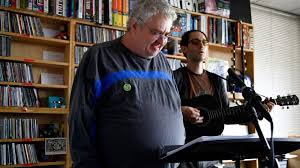
danDaniel Johnston makes me uncomfortable.  I find his music to be simple and his voice isn’t very good.  And yet he is beloved by so many other people.  The fact that he is schizophrenic makes me worried that there’s some kind of exploitation going on.  But who knows.  He has had rather a lot of (relative) success.

The blurb tells us

Johnston has been diagnosed with bipolar disorder and schizophrenia, and he’s been institutionalized, but these days he travels and performs. It’s amazing to see and hear a spark of candor in what he does, all while he’s shaking like a scared child. There’s an odd sort of curiosity to watching Johnston perform, but it’s easy to root for him: He’s endearing and sloppy and unmistakably talented.

He and his guitarist Friend McFriendstein (actually Shai Halperin who plays under the name Sweet Lights) play four songs.

“Mean Girls Give Pleasure” is a pretty funny fast romp.  “Sense of Humor” is a slower song.

Between songs, they show off Johnston’s book Space Ducks.  There’s an iPad app and video game which is “Much beter than checking out Starbucks on yelp.”

“American Dream” is a clever song that’s full of monsters as metaphors.  “True Love Will Find You In The End” is a pretty, uplifting song.

His songs are short and unadorned, and surprisingly catchy.  But I don’t think I’d ever listen to him intentionally.

[READ: January 12, 2017] “Uninhabited”

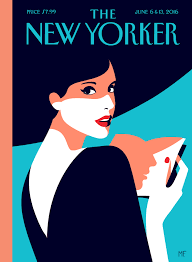
The June 6 & 13, 2016 issue of the New Yorker was the Fiction Issue.  It also contained five one page reflections about “Childhood Reading.” 

Young says that when he was in fifth grade he read Robinson Crusoe (not the abridged version) in one weekend.  But he wasn’t showing off.  He saw an image or cartoon of the book and picked it for a book report not realizing how massive the actual book was.  He delayed until Friday for a report due Monday and thus had to cram in an entire novel.  He did the same thing with Gulliver’s Travels, “Who knew Gulliver met more than just Lilliputians?”

But he says that these masterpieces didn’t seem that different from non-fictional travelogues like Thirty Seconds Over Tokyo, the gory account of the U.S. bombing of Japan.

Crusoe is apt because he says he felt shipwrecked when they moved from New York to Topeka, Kansas.  (more…)

Read Full Post »

6616 SOUNDTRACK: YANN TIERSEN-Tiny Desk Concert #219 (May 21, 2012).

yannYann Tiersen scored the soundtrack to Amélie.  But he also writes and sings lovely chamber-pop music.

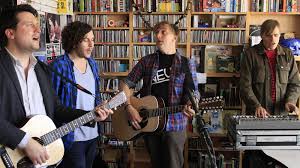
The first song “The Gutter”  opens with Tiersen playing a swirling violin melody accompanied by an acoustic guitar, a ukulele and keys.  Tiersen doesn’t sing, but the lead singer’s voice is yearning and delightfully accented as well.  (No names are given for the rest of the band).  I liked the way the song built in intensity even while his voice retained that quiet style of singing.

For the second song, “Monuments” everyone switches around.  Tiersen plays a lead 12 string acoustic guitar, the ukulele player is on keys and all four sing harmony lead.  You can tell that Tiersen is not American because of the way the word “Monuments” is sung “all monYOUments…” which adds an exotic flavor to the song.  The delicate keyboard sounds float nicely over the acoustic guitars.

They stay with this lineup for “Tribulations.”  The singer from the first song and the acoustic guitarist sing lead.  And everyone else joins on harmony.  “The Trial” opens with the four singing a beautiful “ooh” in harmony.  Then the other three sing a complex backing vocal while Tiersen sings lead.

There’s some really lovely melodies in this concert.

[READ: January 12, 2017] “Where is Luckily”

The June 6 & 13, 2016 issue of the New Yorker was the Fiction Issue.  It also contained five one page reflections about “Childhood Reading.” 

Having a child is like rereading your own childhood.

Galchen has a young daughter and that daughter has a some favorite stories.  One is a Moomin (which I love), another is a Piggy & Gerald.  Galchen says that if you read children’s book enough times, “they start to seem like Shakespeare.”

But she says that her daughter doesn’t read in a linear fashion.  “What happens next” doesn’t seem to cross her mind.  She reads them more like eternal landscapes: “In that sense, nothing is happening, and she reads for that nothing.” (more…)

Read Full Post »

6616 SOUNDTRACK: CHUCK BROWN-Tiny Desk Concert #217 (May 16, 2012).

chuckI’m puzzled by a few things with this Tiny Desk Concert.  The first is a note that This story originally ran on Sept. 28, 2010.  The second is the note that Chuck Brown, the Godfather of Go-Go music, died Wednesday. In 2010, he brought his full band to the NPR Music office — and put on a party like no one else.

That isn’t confusing in itself, but I have to wonder why it took them two years to air this concert, which is quite a fun rave up.  Are there other shows they didn’t air?

Okay, so I had no idea who Chuck Brown was.  And the blurb anticipated that

The name Chuck Brown might not mean a whole lot to people outside the Washington, D.C., area. … In D.C., Brown is widely known, even revered, as the Godfather of Go-Go, a title he’s held since the late ’70s. Though he started out as a jazz guitarist, Brown invented go-go, a style that incorporates funk, jazz, R&B, hip-hop and dancehall, and has mostly stuck with it ever since.

So, Go-Go, huh?  I never heard of that either.

No one in D.C. can really explain why go-go hasn’t traveled beyond the city’s environs — we love it here, it’s all over our commercial R&B and hip-hop radio stations and, at least when I was in high school, a go-go in a school’s gym was the most packed party of the weekend. Chuck Brown is a local hero. A few days after he played our offices, Brown and his whole band played at the Redskins’ stadium for the halftime show.  So to have Brown play a corner of our office — not a 90,000-capacity football stadium — was like a dream come true for a lot of NPR staffers. Sweat started pouring immediately, between the 11 musicians (that’s congas and a stripped-down kit; saxophone, trumpet and trombone; two backup singers and a rapper) and all the go-go-heads in our building.

Brown played four songs for about 25 minutes.

Go-go is mostly about the groove, though, and Chuck Brown just settles in and leans back. He showed up looking like a million bucks in a vest, Dior shades and his signature hat, and then he did what he does best — get the crowd on his side and hand its members something to dance to.

Go-go is based on a syncopated beat and the use of congas in addition to drums.  So “Senorita” is like a combination of reggae salsa and 50s singing (I can’t help but think he sounds like Frank Zappa when Zappa does his rather funny voice).  The song is slow but smoldering and fun to sing along to.  There’s a Santana guitar vibe too.

“Chuck Baby” is the hip hop element of his music.  His rapper is not very inspiring though.  She seems a little stiff.  And the song is a little flat when he’s doing the call and response–he sounds cool and seductive and they sound more bored than “naughty.”

Before the third song everyone starts chanting “wind me up chuck!” which he lets everyone know www.windmeupchuck.com is his website. “Wind Me Up!” / “Bustin’ Loose” starts with lots of call and response.  “Bustin’ Loose,” is a funky song with very James Brown accents and everyone singing the refrain: “Gimmethebridgenow, gimmethebridgenow.”  The song has been a hit in D.C. since 1979.  The backing vocalist on this song feels a bit looser (apparent as she sings “I feel like bustin’ loose).

The crowd was yelling out requests, too: “Chuck Baby” and “Run Joe,” a go-go cover of the Louis Jordan song.  “Run Joe” / “It Don’t Mean A Thing.”  “Run Joe” has a Jamaican flair “Policeman is on the premises.  What is he doin’ here?”  His guitar playing is really inspired throughout the set, but especially at the end of this song.   He does a lot of playing the same melody as he sings.  The song segues into a version of “It Don’t Mean a Thing” in which he slips in “It don’t mean a thing if it ain’t got that go-go swing.”

This set was really a party.  And Brown was just full of energy.

[READ: January 12, 2017] “Surrendering”

The June 6 & 13, 2016 issue of the New Yorker was the Fiction Issue.  It also contained five one page reflections about “Childhood Reading.” 

This reflection beings with Vuong explaining that his family moved to the U.S. from Vietnam when he was two.  He was an ESL student from a family of illiterate rice farmers who saw reading as snobby.

When he entered kindergarten, he found himself immersed in a new language.  He quickly became fluent in speech but not in the written word.  In fourth grade his class was given an assignment to write a poem in honor of National Poetry Month.  Normally his poor writing skills would mean that he was excused from such assignments.  He would spend time copying sentences out of books in the classroom.  But this time he decided to be ambitious and write a poem. (more…)

Read Full Post »

dfwreadSOUNDTRACK: CHRISTIAN SCOTT aTUNDE ADJUAH-Tiny Desk Concert #477 (October 9, 2015).

aacsChristian Scott aTunde Adjuah and his septet play what he calls stretch music: “the particular type of jazz fusion he’s up to: something more seamless than a simple collision of genre signifiers.”

They note that even his appearance stretches traditional jazz: “You may note that he showed up in a Joy Division sleeveless T-shirt and gold chain.” It’s sleek and clearly modern, awash in guitar riffs, but also bold and emotionally naked.

Christian Scott aTunde Adjuah (not sure how to abbreviate that) is a trumpeter and he can hit some loud powerful and long –held notes.   It’s funny that when he bends over the trumpet grows quieter—those ic really are direction-based.

For the first song “TWIN” he does some impressive soloing over a simple and cool beat—piano and delicate guitar riffs (there’s also an upright bass and drummer).   After his lengthy solo there’s a flute solo that also works perfectly (if less dramatically) with the background music.  (Christian plays tambourine during her solo).  He says that this song is about being a twin.  His brother, Kyle Scott is a film director and for whom Christians scores the music.  Christian also explains that he comes from an African-American and Native-American background and that this song has rhythms as a sort of history of his family that touches on Mali, Senegal Gambia and The Ivory Coast and makes its way to the Caribbean, Cuba and into New Orleans.

He’s pleased to play the Tiny Desk Concert for an audience that appreciates “Music that has nutritional value.”

For the second song, “West of the West” he brings on a young alto-saxophonist who plays with his drummer in a different band. The song opens with a rocking electric guitar solo and then the jazzy band kicks in behind it.  The instrumental features a couple of solos by the saxophonist, the pianist and the bassist.

“K.K.P.D.” is a dramatic song for which he gives a lengthy back story.  Many years ago in his home of New Orleans, he was stopped by New Orleans police late at night for no reason other than to harass and intimidate him.  he was coming back from a gig.  He resisted and was in a serious situation and was seriously threatened—the story is long and very affecting, especially given how articulate (I know, terrible word, but true) and calm he is about retelling this horrifying story.  His pride almost made him do something ill-advised, but instead he channeled that pent-up frustration into a piece of music whose long-form title is “Ku Klux Police Department.”

He adds that we see things on TV about inner cities or the ninth ward and we believe them to be true.  Like that the neighborhood is happy that the police are clearing out the youth there.  We begin to think that the narrative is true, although the people who live there can tell you otherwise.  Despite the title and the origin, the is song is designed to reach a consensus to move forward –not to build derision or hate.  He says that we have to start working on that now, because if it doesn’t start now then our children will continue to inherit this situation.

It opens with a noisy guitar wash and fast drums.  It’s quite noisy and chaotic although it resolves very nicely into an almost sweet piano-based song with slow horns.  The middle of the song ramps up with some intense soloing from Christian.  I love how that segues into a very different section with an electronic drum and delicate piano.  Chritsian’s next solo is much more optimistic.  The final section is just wonderfully catchy.

When he introduces the band, he points out just how young some of his newest members are: Drummer Corey Fonville (another new member) used a djembe as a bass drum, and also brought a MIDI pad so he could emulate the sound of a drum machine; Lawrence Fields, piano; Kris Funn, bass; Dominic Minix , guitar (21 years old); Braxton Cook, saxophone (24 years-old) and Elena Pinderhughes, flute: 20 years old!

I don’t listen to a ton of jazz, but I really liked this Tiny Desk Concert a lot.

[READ: July-October 2016] The David Foster Wallace Reader

I’ve had this book since Sarah bought it for me for Christmas in 2014.  I haven’t been in a huge hurry to read it because I have read almost everything in it already.  And some of that I have even read recently.  But this summer I decided to read some of my bigger books, so this was a good time as any.

One of the fascinating things about reading this book is the excerpting in the fiction section.  I have never really read excerpts from DFWs longer books before.  And once you decontextualize the parts, you can really appreciate them for themselves rather than as a means to the end of the story.  This is especially true of the excerpts from Broom of the System and Infinite Jest.  But also just reading some of these sections as a short story makes for an interesting experience.

It was also very interesting to read the non-fiction all together like that.  These pieces come from difference anthologies, but they have thematic similarities  So, placing them together like that allows for really comparing the stories.

And of course, the selling point for most DFW fans is the teaching materials in the center of the book–an opportunity to look into the man’s mind at work shaping younger minds.

I have written about virtually everything in this book already (title links refer back to previous posts), so mostly these are thoughts about the pieces themselves and not a part of a whole. (more…)

Read Full Post »

may16 SOUNDTRACK: SOFIA REI-Tiny Desk Concert #338 (February 22, 2014).

sofiaSofia Rei is an Argentinian singer.  For this Tiny Desk Concert she has two accompanists: drummer Franco Pinna incorporates a drum from the Argentine Pampas into a traditional drum set and guitarist/bassist JC Maillard plays a pretty guitar and a modified saz bass.

In profile Sofia looks a bit like Polly Jean Harvey but when she sings it’s very different.  Her voice is sultry and influenced by Argentinian jazz.

I love the way the first song, “La Gallera” starts with slow verses but the chorus are just wild and crazy and full of rhythms and some great chords.  And of course, that drum is an integral part of the solo that fills the middle so the song.

“La Llorona”  is a beautiful slow ballad with Rei’s voice floating above the percussion and gentle modified saz bass (more on that in a moment).  The song builds over five minutes with her voice getting louder and more impassioned.  And just as the song really builds and seems as if its going to rock out, it ends–leaving us wanting more.

“Todo Lo Perdido Reaparece” (“Everything That Has Been Lost Reappears”) brings her back home to Argentina.  The song starts quietly with Rei singing some syllables and noises before the song proper starts.  It is a slow ballad filled with percussion.  Midway through the song while Maillard is doing a wonderful guitar solo, Rei picks up a charango and plays lovely high notes.  The chord progression during this and the following section with vocals is fanatic–catchy but also unusual.

At the end of the show, Maillard talks about his modified saz bass.  He says it is based on the Turkish instrument but it was made for finger picking rather than plectrum.  His is the first ever made.  With eight strings, it has bass strings for thumb picking and high notes for the other fingers.  It also has a lot of “empty” spaces to make interesting percussion sounds. I love seeing new instruments and this little demonstration is very cool.

[READ: July 11, 2016] “Bad Character”

The May 16, 2016 issue of the New Yorker had a series called “Univent This” in which six authors imagine something that they could make go away. Since I knew many of them, I decided to write about them all.  I have to wonder how much these writers had to think about their answers, or if they’d imagined this all along.

Ted Chiang says he never learned anything in the Saturday morning Chinese school he was forced to attend as a child.  But that’s not why he wants to get rid of the Chinese character-driven alphabet system.

He says that he is a fan of literacy but that Chinese characters have been an obstacle to literacy for millennia. You have to learn three thousand characters and you can’t use pronunciation to help you–it’s all memorization.  Even highly educated Chinese speakers regularly forget how to write the characters that they use infrequently.

He also decries the technological obstacles that Chinese poses–computers and smart phones are impossible to use.  And even dumbed-down solutions like Pinyin just cause more work.

Interestingly, even though he wants to do away with the written characters the last couple of paragraphs of this essay talk about the virtues of this system.

Pronunciation changes over the centuries, so as language evolves, older works are harder to understand (take Beowulf).   This is why “Classical Chinese remains readable precisely because the characters are immune to the vagaries of sound.”

Chinese culture is notorious about tradition.  He says this is not because of the Chinese characters but there must be some influence.  He speculates that if the English language had not evolved since the days of Beowulf, that maybe English culture would be more Anglo-Saxon.

Conversely if China didn’t have the language it does, it too may have evolved over the years and might be less resistant to new ideas.  Perhaps the country would be better able to deal with modernity.

Regardless of whether that would be better or not, he’d love to live in a  world where he wouldn’t have to hear the misconceptions about Chinese characters “that they’re like little pictures, that they represent ideas directly, that the Chinese world for ‘crisis’ is ‘danger’ plus ‘opportunity.'”

That’s a bit anticlimactic of an ending, but the overall essay was interesting.

Read Full Post »

lizzie SOUNDTRACK: BLACK DUB-Tiny Desk Concert #89 (November 8, 2010).

black dubBlack Dub is the collaboration between Daniel Lanois and Trixie Whitley (daughter of Chris Whitley).

I think I might have been more excited about this if I hadn’t seen Daniel Lanois’ other performance on Tiny Desk, where he came across as kinda jerky.  I also had not heard of Whitley (who was 23 at the time).

Whitley has a huge voice (especially given how tiny she is).  It’s big and brash and bluesy in a Janis Joplin sorta way.  And she’s really passionate about what she’s singing–look at her face, for crying out loud).  But it’s actually too bluesy for my liking.  And it almost seems over the top given Lanois’ simple acoustic guitar strumming.

They play four songs, “Surely” which pushes five minutes; “Silverado” which has a nice duet between Whitley and Lanois to start (and then I feel like she adds too much during her section); “I Believe in You.”  For the final song, Whitley straps on an electric guitar and plays a rocking riff (I enjoyed the accidental feedback that Lanois created).  Her voice works a little better with the extra volume of the guitar.  Although the song builds and buildups and never really goes anywhere.

I just never got into this Concert.

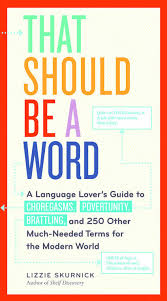
[READ: July 1, 2015] That Should Be a Word

I heard a big hyped review of this book, so I was really excited when Sarah brought it home.  But I wound up being a little disappointed by it.

I imagine that since these items come from her newspaper column, it might be more fun to read a few at a time rather than all at once.  Because while I enjoyed the premise, I got tired of the punny schtick after a few sections.  And that’s a shame.

The one major gripe I have is that nowhere in the book does it ever acknowledge the pioneering work of Rich Hall and Sniglets, the guy who really spawned the idea of creating words for every day things.  Skurnick does things differently of course, but I feel like at least a nod to the man would have been nice (especially since she is–admirably–so into the whole retro thing).

The premise behind this book (and the column is that Skurnick (and readers, I gather) create words for things that don’t exist.  But the real premise is that the newly created words are sort of punny based on two other words (which Sniglets didn’t do). (more…)

Read Full Post »

antgrassSOUNDTRACK: MARTIN TIELLI-Jane Bond, Waterloo, Ontario (September 29 2001).

jane bondThe second Martin Tielli solo show on Rheostaticslive comes two years after the first one.  It’s a new band and Martin’s debut solo album We Didn’t Even Suspect He Was the Poppy Salesman is due out soon (or just came out, it’s hard to be sure).   Although interestingly, he plays some songs that will wind up on his next solo album (which is years away). The show is at Jane Bond in Waterloo, and unlike the previous show, this one has massive audio problems. There are 4 songs that are nearly inaudible and the whole set is recorded very low.  Which is a bummer because the set is very good.

As seems to happen a lot to Martin, he is having all kinds of technical troubles and he gets shocked a number of times during the set (I don’ think I’ve ever heard of this happening to people before, but it seems to happen to him a lot.)  He also asks the crowd quite often if they can hear okay.

The show opens with the backing music of Talking Heads (which is quite loud).  And then Martin and company open the show with the slow Scott Walker song “Farmer in the City.”  Then they play a Nick Buzz song, “Love Steams” and Martin gets shocked so bad that he takes a break. He re-starts the song and it sounds really good.

Then inexplicably, Martin’s voice drops out and the bass gets really loud.  And the next four songs are really hard to enjoy. You can also hear the crowd really loud.  (Did Martin almost fall or something? there’s a big gasp from the audience at one point.  You can also hear someone loudly ask “You want a beer?”).

The audio slowly starts to improve from there.  By “She Said ‘We’re on Our Way Down'” it’s quiet but it’s very good otherwise.

Then Chris Gardiner comes out to help on “Waterstriders,” which is bit louder.  By the time “My Sweet Relief” comes in, the sound has gotten better (probably because it is a full rocking song) with a very country/twangy feel).  He tells a little story about the history of “That’s How They Do It in Warsaw” which is for Kasia (she recites the Polish on the album).  He tells a funny story about how she went to Warsaw and developed feelings for her cousin).

There’s a lot of funny banter in this set. Martin talks about a movie he was watching in a bar.  It was presumably on Show Case, and he described a woman being tied up and a man masturbating and then someone collects something in a syringe (presumably semen) and injects it into a vagina. What could it possibly have been?  It sounds like someone might have given him the answer, but we can’t hear it–so we’ll never know!  One of the band members shouts out that it was “Who’s the Boss.”

They play a great version of “Digital Beach” and “Shaved Head.”  “How Can you Sleep” has a great solo.

Also at the end of “Sgt Kraulis” (which is from the next album) they say it is last call (for everyone who is not on the stage).  There’s a funny comment where someone says, Watch how this law gets broken.   And they all order rye and cokes.  “Sgt Kraulis” has a funky opening (they play some of Abba’s “Mama Mia”).

The set ends with a nice version of “Take Me in Your Hand.”  And then a surprise (to me) of “Blue Hysteria.”  Then he plays the second part of “Wet Brain/Your War” (just the “Your War” part).

And he ends with a great version of “Record Body Count” and “a stolen song from borrowed tune,” the opener of the next album: “Beauty On.”

There’s so much great music here, it’s a bummer the quality isn’t better.

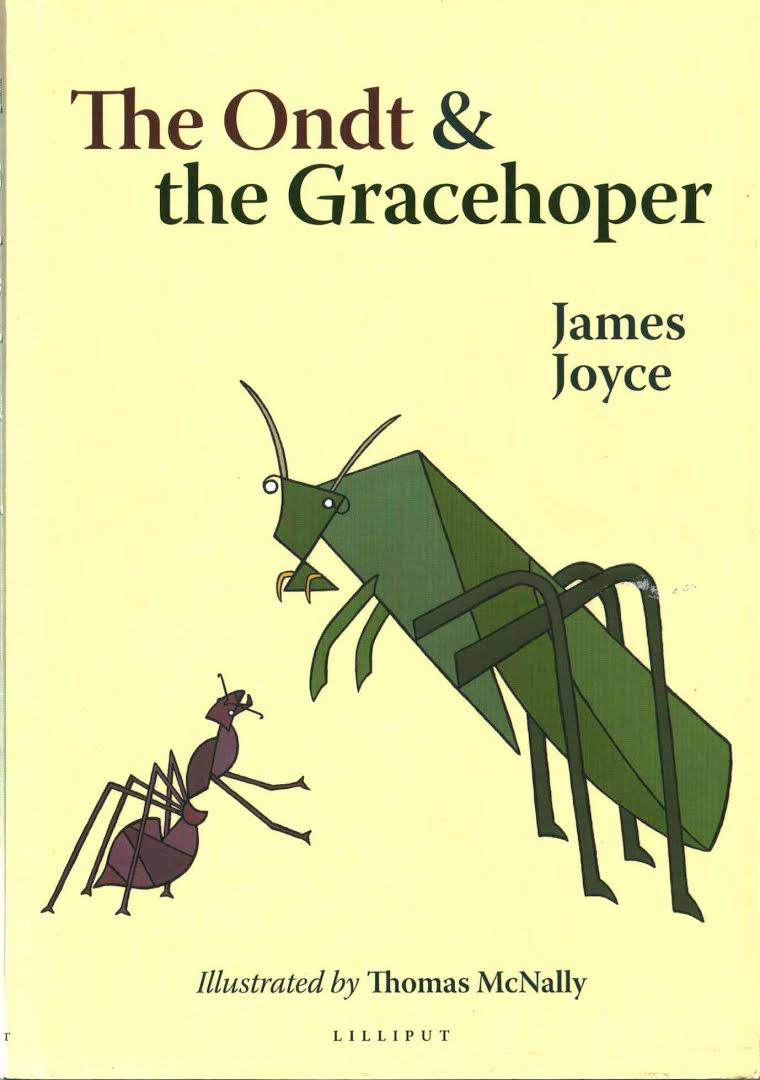
[READ: June 13, 2015] The Ondt & The Gracehoper

This fascinating book is an excerpt from Finnegans Wake (Book III Chapter I).  Thomas McNally has taken one of the fables in Joyce’s Wake and has illustrated it.  The book includes a few essays about the Wake and about expressionism and why McNally illustrated the book the way he did.

I have never read Finnegans Wake.  And I am fairly certain I never will.  I feel like this is a minor failing on my part, and yet it’s not pushing me to read this largely incomprehensible book.  So I was excited to see this weird little excerpt of the fabled difficult book (with pictures!)

In the introduction, McNally explains that despite everything we’ve heard about the Wake, it was, in fact, meant to be read and it is indeed, quite funny.  Joyce is playing around with language in incredible ways–throwing in multiple meanings in different languages in all kinds of words.  He says that for a first read, one should just read it–preferably aloud–and not worry about the various meanings that you are undoubtedly missing. (more…)

Read Full Post »

krausSOUNDTRACK: THE FLAMING LIPS-The Terror (2013).
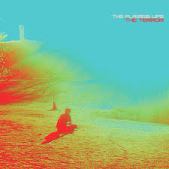
terror After the distortion heavy and heaviness of At War with the Mystics and Embryonic (to say nothing of their other experimental releases), I wasn’t sure what to expect from an album called The Terror.  Yet with a title like that the album is far more invested in psychological terror than in pummeling you with scary noises and music.  The album is more unsettling and spooky with existential dread.

Wayne Coyne has always been a pretty optimistic guy–weird, sure, dealing with feelings of dread, sure, but never so dark and insular.  But I learned that before recording this album and most likely as an impetus to record it,  Coyne separated from his partner of 25 years, Michelle, and Lips multi-instrumentalist Steven Drozd temporarily relapsed into addiction.

In an interview, Drozd says the album is like a crisis of life confidence.  He also says that the uniformity in sonic style was intentional: “Instead of writing songs and then figuring out sounds, we’d write the other way around: create sounds then make songs out of those sounds.”

So the vocals are quite low in the mix, and there is not a lot of “music” in the album.  Rather there are layers of sounds–swishing synths, spiraling noises, percussion effects that seems to almost cover up the vocals, giving it a very claustrophobic effect.  “Look… The Sun Rising” opens the disc.  It is primarily percussion with some noisy sounds and really sharp piercing guitars (that play noisy counterpoint to the soothing chorus of Oh Oh Ohs).  And yet after all of that noise and chaos, the very lovely “Be Free, A Way” surfaces as a quiet introspective song.  There are gentle keyboard notes (not unlike on Yoshimi) that propel this song along.  “Try to Explain” is a pretty song with some unusual sound effects swirling around it (The Lips can’t so straight up pretty, right?).  And yet lyrically, this song, along with the rest, is very dark indeed.

“You Lust” is a 13 minute (!) invocation about various forms of lust.  It opens with the couplet: “You’ve got a lot of nerve/A lot of nerve to fuck with me.”  The middle of the song is a kind of Pink Floydian keyboard workout.  It’s a  lengthy jam that’s kind of samey, but I’ll bet if you can really sit (with headphones) and close your eyes and focus it’s pretty intense.  After about ten minutes of that repetitive claustrophobia, some lightening occurs with sprinkled keyboard notes.

“The Terror” is primarily in Coyne’s falsetto, and it seems gentle until the mechanized noises come bursting forth.  “You Are Alone” is the shortest thing here, under 4 minutes of squeaking noises.  And again, a lovely melody despite the title.  I feel like this song summarizes the album pretty well.  In it, Coyne sings “I’m not alone” while a deeper voice replies, “you are alone.”  Whose voice will ultimately win?

  “Butterfly, How Long It Takes to Die” returns to that abrasive guitar of the earlier tracks, but the main body of this 7 minute song is just bass, keening keyboards and Coyne’s whispered voice.  There’s a recurring synth line that is magical and/or creepy depending on your frame of mind.  It, along with many of the other songs, have a kind of coda that links the songs.  This one is mostly just choral voices, but it twists the ends of the songs in a different direction. “Turning Violent” is a quiet track, in which Coyne sounds nearly defeated until the second half of the song grows louder and more animated with layers of vocals.  The disc ends with “Always There…In Our Hearts” which seems to offer some hope…maybe.  There’s signs of uplift in the melody, and when the drums kick in at the end, it seems to propel the song into a more intense frame of mind.

And lyrically, despite all of the darkness that is always there in our hearts, there is a light peeking out: “always therein our hearts a joy of life that overwhelms.”

Although most reviewers find this album unremittingly bleak, I find the music to be beautiful in an aching sort of way–a beautiful way to deal with pain (better than getting the same tattoo as Miley Cyrus, anyway).

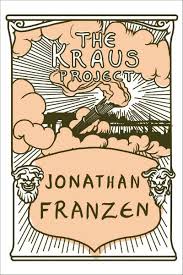
[READ: October 31, 2014] The Kraus Project

The title page of this book read: The Kraus Project: Essays by Karl Kraus translated and annotated by Jonathan Franzen with assistance and additional notes from Paul Reitter and Daniel Kehlmann.

So just what is this thing anyhow?  Well Karl Kraus was a German writer (1874-1936) whose main contributions to letters were some essays and a newsletter Die Fackel (The Torch).  The authors compare the newspaper (favorably) to a blog (while also complaining about what blogs have done to letters).  He started Die Fackel in 1899 and he continued to direct, publish, and write it until his death.  He used the paper to launch attacks on hypocrisy, psychoanalysis, corruption of the Habsburg empire, nationalism of the pan-German movement, laissez-faire economic policies, and numerous other subjects.  For the first ten or so years, Kraus was the editor, accepting contributions from around the German speaking word.  But in 1911, he became the sole contributor to the newsletter.

He also wrote many essays (he did not care much for fiction), including the two main ones that compression this book: “Heine and the Consequences” (1910) and “Nestroy and Posterity” (1912).  The book also includes two follow up essays: “Afterword to Heine and the Consequences” and “Between Two Strains of Life: Final Word to Heine and the Consequences” (1917) and a poem: “Let No One Ask…” (1934).

The essays themselves are quite brief.  Despite the first coming in at 135 pages, note that the left pages are all in German (so reduce 135 by half), nearly all of the English pages are filled with footnotes (reduce by half again) and some of the footnotes run for several pages.  So the essay could be said to be about 25-30 pages.

The same is true for all of the pages in the book.  The left sides are in German (except the footnotes) and most pages are split in half because of the footnotes.  Which means that Franzen and friends write far more than Kraus did.  Ultimately, this book is actually three things: It is a collection of Kraus’ essays with Franzen’s fine translation; it is an explication of Kraus’ attitude and about life in Germany during Kraus’ life and finally it is an insight into Franzen as a young man living in Germany and why Kraus was so appealing to him.

The first part: Kraus’ essays. (more…)

Read Full Post »
walrusmarchSOUNDTRACK: RHEOSTATICS-Linwood Movie Theatre, Port Dover, ON (December 4, 1999)

portThis is the final concert on of the 20th century on Rheostatics Live (and I’ll be taking a short break from the Rheos concerts after this one).  Even though the site doesn’t list the venue, in the previous show they say they are playing at the Linwood Movie Theater in Port Dover.  As with every other venue, I can’t find any information about this, so I’ll just accept it as true.

The last few shows were recorded from the soundboard, so this one is a little jarring to hear the audience so loudly.  But the sound is good and clean.

They say during the show that they are going to play songs from all 10 of their albums. And they do a pretty good job.  They miss playing something from Greatest Hits (which is kind of a surprise as everyone was shouting for “Wendell Clarke.”  Unsurprisingly they do not play anything off of Group of 7, and, in what I think of as a huge surprise—nothing off of Introducing Happiness—they almost always play something from that album anyway.

The set is comprised mostly of Harmeldia and Melville songs and it’s quite a good one.
“I Fab Thee” even invites audience participation.

This show also has one of the great dialogues between fans and band.  Someone asks if they have CDs available for sale.  Dave says, yes in the lobby.  She asks if they have them anywhere else and he replies “Is the lobby not convenient enough for you, ma’am?” to much laughter.

It’s a good show to end the millennium on. And I look forward to seeing what 2000 brings in their live shows.

[READ: March 6, 2014] “We Be Naked”

I have really enjoyed Gartner’s stories in the past but this one rubbed me the wrong way from the start.  I do not like stories where language is deliberated misused and not explained.  I am fine with dialect and I am fine with uneducated narrators, but when a narrator appears educated enough yet consistently gets something wrong and there is no explanation, that story has a massive strike against it.

So when the story starts

We be naked, not nude. Something to remember as the memory of us moves into the slipstream. Nude is in the eye of the beholder, naked a true enough fact.

I thought the “we be” part was an affectation of that first line.  The rest of the language is quite beautiful.  But no, the word “be” is used as the verb throughout the story.  In more and more irritating ways: “Or demands be modest.  We not be asking…”  Ugh. So what has caused the slip in the most basic verb use that English speakers have?  Especially when two sentences later we get this beautiful piece of prose:

And lay down your arms and pick up your instruments, music being the only true and beautiful man-made thing in this world.

Well, the story begins in April 2014 (which I liked) after the collapse of the Kyoto Protocol after the Pirate Party Bombings.  For almost two years since then they be chill.  Shudder. (more…)

Read Full Post »

embryoyoSOUNDTRACK: QUEENS OF THE STONE AGE with EDDIE VEDDER-“Little Sister” (live) (2013).

qotsavedderThis is a live song from Chile (from what I gather it’s a Lollapalooza show–is that even still around?).  I have no idea if Pearl Jam were in Chile at the time, but what a strange thing to bring Eddie Vedder out on stage and then have him only sing backup vocals and play the cowbell.

The song sounds very much like the record, although a little sloppier.  I’m a bit surprised at that as I think of Homme as running a tight ship (but the sloppiness comes from him, so he has no one to blame but himself).  You’d never know Vedder was even there.  It’s one of the strangest guest appearances since Paul McCartney munched carrots and celery for the Super Furry Animals song “Receptacle for the Respectable.”

[READ: April 3, 2013] Embryoyo

Embryoyo is the final book of poetry I’m going to read for a while.  This book came out a few years ago but McSweeney’s had a garage sale version that I found for cheap.  I’ve always been intrigued by the title (so silly and odd) that I decided to give it a ago.  The blurbs on the back (and I know, no one should read blurbs) are telling: “Dean Young’s work will delight only two kinds of people: those who generally read poetry and those who generally don’t”  And, “No one is unsure if they’ve read a poem by Dean Young.”

I probably concur with the first but I definitely do with the second.  Because Young’s poetry is quite unusual.  And Embryoyo proves to be a demonstrative title.  Not that it means anything specifically, but in the way Young creates portmanteau words, which Young uses liberally.  Like the title “Empheroptera.”

I’m going to give some examples of his poetry that I found really enjoyable: (more…)

Read Full Post »

« Newer Posts - Older Posts »