Feeds:
Posts
Comments

Archive for the ‘Irish Writer’ Category

hermotherSOUNDTRACK: FIONA APPLE-The Idler Wheel is Wiser than the Driver of the Screw and Whipping Cords will Serve You More than Ropes Will Ever Do [bonus DVD] (2012).
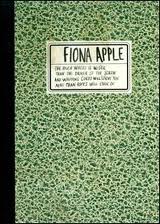
idlerThe deluxe package of The Idler Wheel comes with a bonus DVD.  It also comes with a ton of idle scratchings from Fiona–lyrics, artwork (which is weird but good), postcards and all manner of things.  I wasn’t particularly interested in that stuff, although I am pleasantly surprised by her drawing skills.  Mostly I wanted to check out the DVD.

So the DVD is actually a five song concert excerpt from SXSW filmed by NPR.  I have to assume that the show was more than these five songs (because there are breaks in the video and because there’s no way she would do just five songs).  Also, the NPR page for the show says she played a few different songs from Idler Wheel.  There’s audio for the show on the site (three of the five songs) which kind of makes the DVD extraneous, except that you get to watch her perform.

When Fiona was younger there was much talk of her videos being too sexualized.  And I suppose “Criminal” fit that bill.  As such, she has become something of a visual artist by virtue of her body.  I’d always thought that she was too skinny, but she seems even more so now.  And yet for all the waifiness of her (are you still a waif when you’re 35?), her voice is till strong and powerful and she can belt the hell out of a song (perhaps with a little too much forced vibrato at times).

She seems a little at a loss when she’s in that awkward frontwoman space (my guitarist is playing a rocking solo–what do I do?).  She dances somewhat (which NPR describes as confidently but I read as awkwardly, huh).

In this live setting the songs take on a new, looser feel.  As I mentioned, the guitarist  really lets loose (and he sounds great–there’s even one moment when Fiona walks over to the piano and leans on it to watch the guitarist jam).  The band sounds great together and yes Fiona sounds great too.

I actually saw Fiona live in Boston on the tour for her debut album.  Unfortunately, the place was mobbed with tweeny girls (was that her target market?) who screamed and shrieked through the whole set.  It was one of the worst shows I’d ever seen, through no fault of the performer, who I honestly don’t remember at all.  I’ll bet without the devoted screamers the show would have been as interesting as this one seems like it was.

Tracks on the DVD include “Fast As You Can,” “A Mistake,” “Anything We Want,” “Sleep To Dream” and “Every Single Night.”  On the NPR page you can hear “Fast As You Can,” “A Mistake,” and “Every Single Night” as well as “Extraordinary Machine” (on which she hits some amazing high notes!).  There’s no “Sleep to Dream” (which has a very different style than on the record–I almost didn’t recognize it) or “Anything We Want” which sounds great live, especially since she (presumably) plays the introductory percussion (which I assume is looped?) on some strange object.  This was the first time most of us had heard “Every Single Night” and I remember thinking it sounded good but so uncomplicated that I was worried that the album would be a little…flat.  Boy was I wrong.  And now hearing it again, I can hear just how subtle and complex the song is.

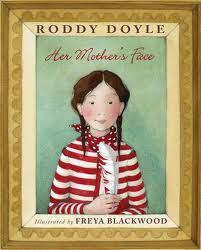
[READ: January 28, 2013] Her Mother’s Face

This was Roddy Doyle’s first picture book (you can see that once I found out that he had written children’s books I had to get them all from the library).  I read this after Greyhound of Girl, and assumed that it was a slimmed down version of Greyhound.  But now that I see that this came first I’m inclined to believe that this book was the inspiration for Greyhound.

Many of the basic details are the same as Greyhound–a girl whose mother died when she was three years old; a ghost visits her and gives her solace.  That may not seem like a lot of similarity but in terms of plot that’s really all both books have (it’s the details that really make both stories).

But they are very different books meant for different audiences.  Face is a picture book and the illustrations by Freya Blackwood are simply gorgeous.  Really they are quite mesmerizing in their beauty.  I read it to myself and decided that it’s not really meant for my kids.  Neither of them are really old enough to get it (and the death of the mom at age three might lead to more questions than I need to answer at the moment).

It’s wordy for a picture book and it doesn’t have much of Doyle’s humor in it.  This is serious book. (more…)

Read Full Post »

greyhoundSOUNDTRACK: BIG BANG BOOM-“Hippie Mom” (2012).

big bangThis song is a loving tribute to crunchy, loving hippie moms (“granola making yoga taking,”  “I love to watch her twirl and sing.  She loves me more than anything.”)  While the song definitely teases some of the clichés of a hippie mom, it is a sweet, happy song.

It’s got a kind of rockabilly sound that makes you want to tap your feet and sing along.  I’d not hear of Big Bang Boom before, but I need to hear more from them.

[READ: January 28, 2013] A Greyhound of a Girl

After reading Doyle’s story in McSweeney’s recently I checked out to see what he had been up to.  I had no idea he had written a series of children’s books.  And this one was the most recent (and the library had it!), so I had to see what Mr Doyle could do for kids.

Well, this is an extremely heartwarming and sad story about four generations of Irish women.  It’s delightfully simple with very few characters.  And for that, it packs a wallop.

Mary is a twelve-year-old girl living in Dublin.  She has two brothers, who don’t really enter the story but I mention them since their names are Killer and Dommo.  Mary’s best friend, Ava, has just moved away and she is devastated.  On the way home from school–the way she usually walks with Ava, an old woman–well, she’s actually young, like a young adult, but she is dressed old and talks like her granny–asks about her gran.  Her gran, Emer, is in the hospital.  She’s very old and is clearly not long for the world.

Mary tells her mother, Scarlett, about the old woman and how the old woman seemed to know her gran.  She’d said her name was Tansey.  Scarlett is taken aback.  She explains that Emer’s mother was named Tansey, and isn’t that a weird coincidence.  Then, we flashback and learn the history of this family.  Tansey died when Emer was but  three years old.  Tansey’s mother helped to raise Emer and her baby brother with their father.  Later, Emer gave birth to Scarlett, and 12 years ago Scarlett had Mary.  We learn about the farm that Emer grew up on and how she hated the greyhounds that her father raised for racing–they were too skinny and pointy. (more…)

Read Full Post »

SOUNDTRACK: !!!-Live at KEXP, May 3, 2007 (2007).

!!! play a funky dance party music.  It’s certainly not Top 40 dance, as it throws all kinds of elements into the mix.  I have one of their early EPS but I haven’t listened to much more from them.  This show is from 2007, so I don’t know how much their sound has changed these last five years, but this is a cool and interesting set.

“Myth Takes” has a great bass line while “Heart of Hearts” has a steady beat with 70’s retro keyboards and cool guitar sections.  The jam at the end of the song is great.  “Yadnus” has a slinky feel until the screamed chorus (and there’s one member with a great scream) makes the song rock hard.

The entire set feels like a rollicking party.  I’ll bet they are a lot of fun to see live.

This band is especially hard to search for (search engines don’t know what to do with “!!!”) so the link is here.

[READ: October 26, 2012] “Ox Mountain Death Song”

This was a very brief story set in Ireland.

It was constructed as two parallel narratives: one about a policeman Sergeant Brown, and one about a criminal, Canavan.  Canavan  comes from a long line of criminals–thieves, sexual abusers, violent thugs, and he is no exception   And as soon as the community learns that he has a deadly cancer, they prepare for the worst from him, because what has he got to lose?

Sergeant Brown has dealt with his family for years.  He’s old now–fat and tired and soon to retire, but he wants this guy before he does anything worse.

Brown speaks to an older woman who was recently beaten up by him.  She protects him for a while until she finally reveals his hiding place–in the Ox Mountains.   (more…)

Read Full Post »

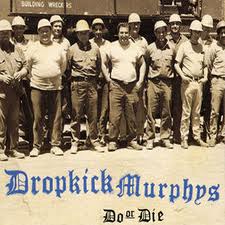
SOUNDTRACK: DROPKICK MURPHYS-“Finnegan’s Wake” (2005).

This song has been around forever and there are dozens of different versions of it.  For your more traditional versions, you want The Dubliners of Christy Moore (if you really want to hear the words).

But The Dropkick Murphys do it the way I like my traditional Irish songs–fast and loud and full of punk.

Although to be honest, The Dubliners’ version has a bit more swagger and fun (it’s hard to beat Ronnie Drew for a hard living singing voice).

Whichever version you choose, be sure to have your favorite ale or lager (or whiskey punch) on hand.

[READ: April 1, 2012] Finnegans Wake

I decided it was time.  How many times have I read the opening line of this book:

riverrun, past Eve and Adam’s, from swerve of shore to bend of bay, brings us by a commodius vicus of recirculation back to Howth Castle and Environs.

And as many times I have read the end of the book:

A way a lone a last a loved a long the

But now it was time to read the other 620-some pages of it.  So I set aside some time this weekend, and, in the spirit of Joyce’s stream of consciousness, I stayed awake until I finished it. And having digested the book, I now get to write all my thoughts about it.

(more…)

Read Full Post »

SOUNDTRACK: MATES OF STATE-“Palomino” (2011).

I don’t know Mates of State, although I have heard about them a lot.  This is their new song and it is immediately infectious.  It starts out with a falsettoed “Whoo oo oo ooo oo oo” that is immediate and catchy as heck. 

I just read about them on the NPR page and it makes me want to like them even more:

Kori Gardner and Jason Hammel speak a shared language in Mates of State, the effervescent pop band they share as a married couple with children. Alternately sung and chanted, often in unison, their words represent the sound of infectious joy — the irony-free expression of a love that’s as true as it is hard-won.

Sometimes a good pop song can really make you day.  Even if you’re more into noise rock or heavy metal a pop song that’s neither cloying nor stupid just warms your heart. And this one sure does that. 

Looks like it’s time to check out their past releases.

[READ: November 10, 2011] Artemis Fowl: The Atlantis Complex

For some reason, it took me a long time to start reading this book.  I just recently learned that there will be only one more book in the series.  For some reason even if I like a series, I’m happy to see it come to a conclusion even if, as in this case, I don’t feel that the series has run its course yet.  But the strangest thing about this book is that the cover is completely different from the rest of the series.  I find this bizarre for a couple of reasons.  If you have established a cover style for a series of books, why suddenly change it in the 7th book?  And even weirder, if there is only one more book in the series, why change it now?  When it came out, I didn’t even realize it was an Artemis Fowl book.  Very strange.

The only reason I can imagine is because in the book Artemis himself is a very different person (but really, that’s pushing it, designwise).  For in this book, Artemis has contracted the deadly Atlantis Complex.  Essentially, since he has been feeling guilty for his past transgressions and because he has ingested a lot of magic, his system is trying to cope.  And it manifests in the Atlantis Complex. 

The Atlantis Complex begins with a sense of paranoia and crazy compulsions (in Artemis’ case, he trusts no one, not even his family, and he suddenly gets obsessive about numbers–5 is good, 4 is death).  And for Artemis, who is usually a steady, logical thinker, not only is superstition very noticeable (all of his sentences have words in multiples of 5), it is quite dangerous. (more…)

Read Full Post »

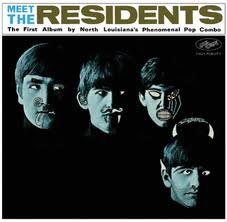
SOUNDTRACK: THE RESIDENTS-Meet the Residents plus Santa Dog EP (1973/1972).

Like a proto- Negativland meets Primus, The Residents took the world by storm in 1973.  Their debut album (pictured here) bore the unmistakable tagline: The First Album by North Louisiana’s Phenomenal Pop Combo.  And so it is.

Read more about the album in the Jon Savage essay below.

“Boots” is a sampled and remashed version of “These Boots Are Made for Walking.”  “Gylum Bardot” sounds like a Primus demo.  “Breath and Length” is noise and noise and effects and a soothing female vocal singing the title.   “Consuelo’s Departure” is a noisy soundtrack to nothing and “Smelly Tongues” sounds like a hammered dulcimer with a menacing bassline behind it until the vocals come in: “Smelly tongues looked just as they felt”.   And all 6 of these songs last less than ten minutes total.

“Rest Aria” changes tempo of things.  It’s five minutes long.  It starts as a simple piano track (slightly out of tune) but it slowly adds crazy horns and what sounds like children’s instruments.  The other longish song, “Spotted Pinto Beans” comes with a kind of faux chorus (female and then male) singing a kind of call and response which is overtaken by noise.

The one-minute “Skratz” comes between these two longer songs and is mostly  mumbling spoken vocal.  “Infant Tango” sounds like a normal song.  It opens with a funky wah wahed guitar.  Of course, the skronking horns and mumbled bass vocals tell you this is not going to be a hit.  It runs 6 minutes long with a strange little “guitar solo” in the middle.

“Seasoned Greetings” (with it’s weird holiday wishes at the end) segues into the 9 minute “N-Er-Gee (Crisis Blues”).  “N-Er-Gee” is a piano “melody” which is really someone banging the same notes very hard on the piano.  The voice on both tracks sounds like the aural equivalent of blackface until the sample (a very long sample that apparently voided placement on some releases) of “Nobody But You” morphs into a manipulated sampling of the word “boogaloo” and eventually becomes a dissonant chant of the title.

The appended Santa Dog is a bit more song-like.  Totally weird songs yes, but there’s actual melodies and lyrics.  Like on “Fire”: “Santa dog’s a Jesus fetus.”  “Aircraft Damage” is mostly a bunch of people reciting bizarre lyrics over each other.  The whole EP was about 12 minutes.  It’s weird but more palatable than the LP.

Despite how much this album foreshadowed loony alternative bands in the future, there is a clear predecessor in Trout Mask Replica.  Although Captain Beefheart followed a (relatively) more conventional song structure, you can hear elements of the Beefheart within.  This album is also notable for being made in the early 70s when the technology to do this easily was very far away.  You could whip this album up in a few minutes now, but back then with splice and paste, it would take ages.

It did not sell as well as the similarly titled Meet the Beatles.

[READ: June 16, 2011] Five Dials Number 11

Five Dials Number 10 was a special issue, but Number 11 goes back to the format we know.  It sort of has a theme about lists.   It contains half a dozen short essays and one long short story by Paul Murray (author of Skippy Dies).  This issue is also something of a surprise as it weighs in at a fairly small 16 pages (sometimes smaller is perfectly fine).  The issue also raised a couple of totally weird coincidences which I will point out as they come up.

CRAIG TAYLOR-A Letter from the Editor: On Wilton’s and Lists
Number 10 was designed to be ready for an evening at Wilton’s Music Hall on February 26th.  But the real theme of the issue is lists.  In part this is inspired by the Raymond Chandler entry, it’s also inspired because Taylor keeps lists around the office.  At the end of the letter he provides a list of all of the notes he’d left to himself in the office.  Some are about the issue (Paul Murray manuscript), other are seemingly more random (USA 5 Canada 3, men’s Olympic ice hockey result;  Canada 7-Russia 3, men’s Olympic ice hockey result; ‘Range Life’–Pavement).  And the one that is most coincidental to me–(The Umbrellas of Cherbourg–Jacques Demy).  This is coincidental because on the day that I read this, my friend Lar wrote a post about this very movie, which was completely unknown to me. (more…)

Read Full Post »

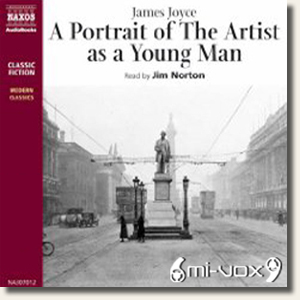
[LISTENED TO: November through December 2010] A Portrait of the Artist as a Young Man

I initially ended this post with: “Even though this audio was unabridged, it felt a bit like hearing an abridged version.  I suspect I shall have to actually read the novel again in 2011 to see what I missed.”  Well, I assumed that the audio was unabridged.  But now I see that there is another recording which is 7 discs as opposed to my copy’s 3 discs.  Gadzooks!  In tiny print on the back of the box, I see now that this is abridged.  NO WONDER I felt like so much was left out of the story.  It actually made me think that the story wasn’t all that coherent.  As such, you can kind of disregard this post until I listen to the unabridged version (which is available free for download here).

So, back to my initial review:

I was listening to this audio book while exercising.  The fact that it took me as long as it did to finish the audio book is more of a testament to my lack of exercising than the book itself.  Although I will say that unlike Dubliners, I found that listening to this book (and again, perhaps it was the distance between listenings) to be somewhat unsatisfying.  And of course, as with all of these Naxos CDs, the vocals are recorded so quietly (except when he starts screaming–the hellfire sermon is so loud it scared my family upstairs) that you really have to try to listen hard to hear the whispers.  The final chapter–Stephen’s diary–is read so quietly it was hard to hear over the exercise machine, even with the sound up all the way.

So this is the story of Stephen Daedalus before Ulysses, when he was, as the title states, a Young Man.  My favorite memory of reading this book was when I read the opening aloud to a sick friend who thought that I was messing with her:

Once upon a time and a very good time it was there was a moocow coming down along the road and this moocow that was down along the road met a nicens little boy named baby tuckoo….

Stephen is of course, baby tuckoo, so this novel is more than just the young man days.   But from this baby story, we quickly jump to Stephen at school and we see an episode that impacted his whole life: boys who were teasing him pushed him into a stagnant pool of water. (more…)

Read Full Post »

SOUNDTRACK: TYLER THE CREATOR-“Bastard” & “AssMilk” (2010).

This is the third and final rapper from Odd Future that I’m going to listen to. In his New Yorker article, Sasha Frere-Jones mentions Tyler’s song “Bastard” as being noteworthy for its content (an anti-father screed).  It’s a somber song played over a rather nice but dark piano motif.  The song is about his father and the rest of the darkness in his life:  “I cut my wrists and play piano because I’m so depressed”  Woah.  It gets typically dark and violent (the whole group seems to relish in tales of violence and abuse of women and gays, which isn’t cool).  It’s a moving song but at 6 minutes, frankly this song is too long.

I picked a second song because I thought that “Bastard” was only 32 seconds long (the first video on YouTube that came up is an edited version which actually packs more of a wollop than the 6 minute version) so I found this other song whose title I thought was funny.

The song is certainly sillier and opens with “I’m not an asshole I just don’t give a fuck a lot.”  Inexplicably, at the one minute mark the song interrupts itself mid sentence.  There’s some kind of altercation and Tyler starts hitting some guy and demanding an apology.  The guy keeps saying sorry and eventually says uncle, and the song resumes.   The rest of the song degrades into more violence with yet another break in the music in which Tyler doth protest too much that “Woah, I’m not gay.”  I think maybe that’s too much life in the underground for me, and even though I think that Sash Frere-Jones is one of the best music journalists out there (his article about Pavement was exactly how I feel about them), I have to say I was a little less than impressed with this batch of suggestions.

After five songs in total from these guys, I need some good clean happy music.  Perhaps Cee-Lo’s “Fuck You.”  At least it’s not THAT mean-spirited.  Thus endeth my tour of underground rap.  Happy Thanksgiving weekend.

[READ: November 19, 2010] “Christmas Pudding”

Although I said Allegra Goodman’s story was the funniest, I’m going to change that and give the honor to Colm.  For a one page article, he really crams a lot of story in (and the ending is great).

As it opens, we learn that his family had the best Christmas Pudding in Enniscorthy.  His mother knew the chef at the Roche’s castle in town and she was given the recipe for the very pudding that the Roche’s ate.  (The Roches restored the Castle that was built by the Earl of Portsmouth and had a dungeon!  They were synonymous with wealth and fanciness).

This recipe (which came from America (hushed approval)) used butter instead of (I can’t even look as I type this) suet.  (As a person who leaves suet out for woodpeckers, I am revolted at the thought of this).  So yes, their pudding was awesome.

So what’s funny about this?  Well, that comes in the second half. (more…)

Read Full Post »

[LISTENED TO: October 20, 2010] Dubliners Part II

This collection covers the last five stories from the book.  They are all longer stories, especially the fantastic novella “The Dead,” which runs well over an hour.  The titles included in Part II are:

A Painful Case
Ivy Day in the Committee Room
A Mother
Grace
The Dead

These last five stories look at (continuing the theme from my previous post) middle age and later life.  The protagonists are all older, and as with the first part, they all must deal with harsh realities and even death.

“A Painful Case” is the first story in the book where the title doesn’t directly apply to the protagonist (even  though, of course, it does).  Mr Duffy is a solitary man.  He goes out from time to time but is not really social.  At a concert he meets Mrs Sinico and they form a friendship.  Her husband approves of the friendship because he believes that Mr Duffy is really after their daughter.  The relationship grows stronger and stronger and Mrs Sinico feels closer to him than she does to her husband.  Then, Mrs Sinico make a gesture indicating she’d like a more intimate relationship.  Mr Duffy is immediately turned off by this and vows to himself to see her no more.  This leads to a quote that I assume is not original to Joyce, and yet it is still common today: “Love between man and man is impossible because there must not be sexual intercourse and friendship between man and woman is impossible because there must be sexual intercourse.”  The strange thing about this story is that it then jumps ahead four years.  We learn that Mrs Sinico took the dissolution of their friendship very hard indeed.  And naturally, Mr Duffy is made to rethink his life choices.  It’s yet another story of despair. (more…)

Read Full Post »

SOUNDTRACK: THE DUCKWORTH-LEWIS METHOD-The Duckworth Lewis Method (2009).

This is a CD released by the combined forces of Neil Hannon of The Divine Comedy and Thomas Walsh of Pugwash.  And if that weren’t enough of a sales pitch, the title of the band is a method of calculating cricket scores!  And even more…in concordance with that, this CD is largely about cricket.  Huzzah!  Buncha sellouts.

I don’t know a thing about cricket, but I know about great orchestral pop, and this disc has it in spades.  Some of the more obvious cricket songs are even understandable to non cricketers (the themes of “Jiggery Pokery” are familiar to anyone who has failed in a sport–and musically it sounds like a silent film soundtrack).

“The Age of Revolution” begins with an olde-fashioned soundtrack as well (jazz swing, including tap dancing) but quickly jumps into a dancey discoey verse (the two soundtracks blend surprisingly well in the chorus).  And the revolution?  Well, it has something to do with cricket.  Next, “Gentlemen and Players” is a wonderfully Divine Comedy-esque track complete with harpsichords.

“The Sweet Spot” is another discoey dancey track with some funky bass work (and innuendo whispered vocals).  And “Rain Stops Play” is a fun musical interlude.

“Mason on the Boundary” is the first track that seems distinctly Pugwash-y.  Hannon and Walsh have similar singing styles, and I find it hard to know who is who sometimes.  But this track is clearly Walsh’s and it’s very nice indeed.  Similarly, “Flatten the Hay” has that distinct Pugwash XTC/Beach Boys vibe and it’s quite good.

“The Nighwatchman” is also a very DC type song (it even sounds a bit like “The Frog Princess” but pulls away before being a repeat of that great single by introducing some very 70s sounding strings).  The rest of the disc follows in this same wonderfully orchestrated pop feel.  This a great record that, as far as obscure bands that get no statewide attention go, is top notch.

Oh, an it’s even more fun with headphones!

[READ: October 9, 2010] Skippy Dies

Wow, there’s a lot going on in this book.  It’s exhausting just trying to think of all the topics covered: boarding school life, failed romance (two big ones), life as a teacher, the appeal of pop singer Bethani, the Catholic priest sex scandal, drugs of all kinds, sneaking into a girls’ school, World War I, institutional cover ups, M-theory–which is pretty much the entire universe, and donuts.

But let’s start at the beginning.  Yes.  Skippy dies.  In the first couple of pages.  And what’s fascinating about this is that we don’t care.  I mean, in the scene where he dies, he’s not even the major character.  But then Skippy turns out to be more or less the glue of the book once the story proper begins.

Skippy resides at Seabrook school in Dublin (the best, most prestigious Christian academy in the country–sorry Gonzaga).   His roommate is Ruprecht (perhaps the strangest major character name I’ve read in a long time).  Ruprecht is a large boy who is incredibly smart (he will single-handedly raise the school’s average on the year’s final exams).  He is a computer geek who is obsessed with aliens and SETI.  And he hopes to be able to communicate with the other world by using techniques suggested in M-Theory.  The book does an admirable job explaining M-theory and string theory.  I’m not going to take up space here, but there’s a fine description at Wikipedia (or, if you don’t like Wikipedia, here’s an academic explanation that is written for the lay person).

Anyhow, Skippy and Ruprecht are two of a few dozen boys who reside full time at the school.  (Most of the other kids are day students).  And they have a cadre of half a dozen friends that they hang out with who make jokes at each other’s expense.  It’s a very realistically written entourage.  Mario is Italian and claims to have had sex with many many women (thanks to his lucky condom which he has had for three years).  Dennis is the ballbreaker.  He’s the abusive one (but by most standards, he’s not a bad guy).  And a few other hangers on.

This story of dorm life is a good one.  The boys are funny, their stories believable, even if they are all eccentric in their own way.  And then, one day, Skippy sees a girl playing frisbee at the girls’ school across the way (Ruprecht has a telescope which he uses for the stars, while eveyrone else uses it for the girls’ school).  And Skippy winds up becoming rather obsessed with the unknown “frisbee girl.”

This girls’ school plays a part in the story in another way too.  Carl and Barry are the Seabrook’s thugs.  When Barry hits upon the idea of selling ADD meds to the locals (as diet pills), it’s the girls’ school that he mostly preys on.  For yes, this story is also about drugs. (more…)

Read Full Post »

« Newer Posts - Older Posts »