Feeds:
Posts
Comments

Archive for the ‘Funny (strange)’ Category

castlewaitingSOUNDTRACK: TINDERSTICKS-The Something Rain [CST086] (2012).

tinders This was Tindertsicks third and final full length album for Constellation.  It has some noisy elements–especially the distorted guitar–that feel different from their other releases.  Although overall I find the album a bit too slow and drawn out.

The first song on this disc, “Chocolate” is quite unlike other songs by the band.  It is a 9 minute slow song with a spoken word story delivered by by keyboard player David Boulter.  The music sets a nice tone for this story of living in a squalid bedsit and heading into town.  As the song picks up momentum, the guitar lines and the rest of the band add more atmosphere.  In the story, he goes to the bar to play some pool and picks up a woman–a regular.  By six minutes, the whole band, including horns is playing and the song is louder and more noisy while the story continues.  For the final two and a half minutes the band drops out and the denouement reveals a secret.  It’s a cool story, well delivered.

“Show Me Everything” opens with some slow bass and a buzzy electric guitar as the backing voice sings “show me…”  And, after ten minutes on the disc, we finally hear Stuart Staples’ iconic voice sounding deep and whiskery as lawyers.  I love the songs with the female backing vocals like this one.  “This Fire of Autumn” is a faster song with a throbbing bass line and catchy chorus (with more backing vocalists).  The addition of the vibes makes this a great Tindersticks song.

“A Night so Still” slows things down almost to whisper with the gentle keyboard riff under Staples’ languid delivery.  “Slippin’ Shoes” is a bit more upbeat and the horns come in right at the front of the song.  I love the way the bridge seems almost sinister and slick before resolving into a bright chorus.  “Medicine” is another slow song with multiple layers of guitars and slow horns and strings.

“Frozen” opens with slow horns that sounds like feedback, almost.  When the fast bassline and almost discoey drums come in, it’s kind of surprise, but a nice pick me up from the previous slower songs.  Staples is singing quickly over himself–the echoes of his voices catching up to his new lines. And the scratchy guitars and jazzy horns make a nice moody soundtrack of him pleading “If I could just hold you, hold you.”

“Come Inside” is  7 minute song with a simple keyboard riff that floats over the slow beat.  There’s a long slow jazzy outro–too long frankly.  The final song is the 2 minute “Goodbye Joe.”  Its all tinkling bells and a shuffling bass, a pleasant instrumental to end the disc.

While Tindertsicks albums tend to be kind of slow, this one has a few too many extended slow parts and not enough of Staples’ magical crooning or the more dramatic sounds that the band does so well.  I’m not sure why their next album was not put out by Constellation, ether.

[READ: February 15, 2016] Castle Waiting 1

I have been aware of Castle Waiting for a long time.  I believe I have even picked up an individual book at the comic book shop (of course I never read it because I wanted to start from the beginning).

So this book collects Chapters 1-19 (plus an epilogue).

I was instantly hooked by Medley’s outstanding drawings–so believable and realistic while exaggerated enough to make them all unique characters.  Not to mention the fact that there are humans and human hybrid creatures (and no one bats an eye).  And then top it off with the incredibly creative first chapter.

The story opens with a king and queen having a baby.  Actually they couldn’t have a baby so they employed a local witch for assistance.  The nice witch gives them good advice but when the town’s evil witch hears of this betrayal she plans to curse the baby.  And thus on the girls’ fifteenth birthday, the evil witch says she will prick her finger on a needle and die.  This should sound vaguely familiar to fans of fairy tales   But Medley puts a twist on things immediately by removing all needles form the castle and hiring a creature named Rumpelstiltskin to do all of their work off site.  Rumpelstiltskin has been cut in half and stitched together so when the creature asks for the Queen’s child in payment, the King yells at him and says he knows what kind of trouble that leads to.

The good witch is able to deflect the curse somewhat to make her sleep for 100 years (that should also sound familiar) rather than dying.  So, when the girl’s fifteenth birthday arrives, the bad witch comes and brings a needle to set the plan in motion.  The princess falls asleep–the whole castle falls asleep and, in a neat twist, the bad witch is killed.

And then Medley has a ton of fun with the story.  When the prince comes to wake up the princess, they run off an get married.  And there’s a hilarious multiple paneled spread of the rest of the castle sanding there, mouths agape.  As the scene ends, we see three older women telling a man with a bird’s head that that all happened along long time ago.  And the castle has been a refuge ever since. (more…)

Read Full Post »

2016-12-05-21-06-09SOUNDTRACK: ARBOREA-Tiny Desk Concert #218 (May 17, 2012).

I’d published these posts without Soundtracks while I was reading the calendars.  But I decided to add Tiny Desk Concerts to them when I realized that I’d love to post about all of the remaining 100 or shows and this was a good way to knock out 25 of them.

arboreaArborea is a totally captivating band.

The band consists of Shanti and Buck Curran.  They play three songs and each one is really different, but all with in a spooky, mellow Appalachian feel.

“Song for Obol” features Buck playing an electric guitar with an e-bow and a slide—creating single-note sirens that roar and fade.  The sounds are magical.  But they’re not the most interesting part of this song.  Because Shanti is playing the Ban-Jammer–“a sweet little hybrid that’s part banjo, part mountain dulcimer.” Shanti also sings and her voice is high and delicate—sometimes almost a whisper.  The Ban-Jammer is such an interesting and compelling sound and those washes of electric guitar so enticing that I didn’t want this song to end—even if I never really paid attention to what she was singing about.

For the second song Bob Boilen himself goes behind his desk to play harmonium with them.  Shanti plays acoustic guitar and tells us that the harmonium is

Inspired by the tales in Maine about fishing boats that were lost to the ocean—this song is about a woman who loses her lover to the sea—the harmonium is the ocean and the wind.

The harmonium isn’t very loud, but it keeps constant background while Buck pays the electric guitar (with slide, but no e-bow) and Shanti picks out the acoustic guitar melody.

The final song “A Little Time” is played on an acoustic tenor guitar.  Both Shanti and Buck sing for this track.  At first I wasn’t crazy about his voice accompanying hers, but he really gets the same tone very nice;y.  And her oh-hoos are beautifully haunting.

I’d really like to hear more from these guys.  And it is pretty fun to actually see Bob behind his Tiny Desk.

[READ: December 6, 2016] “Dream Girl”

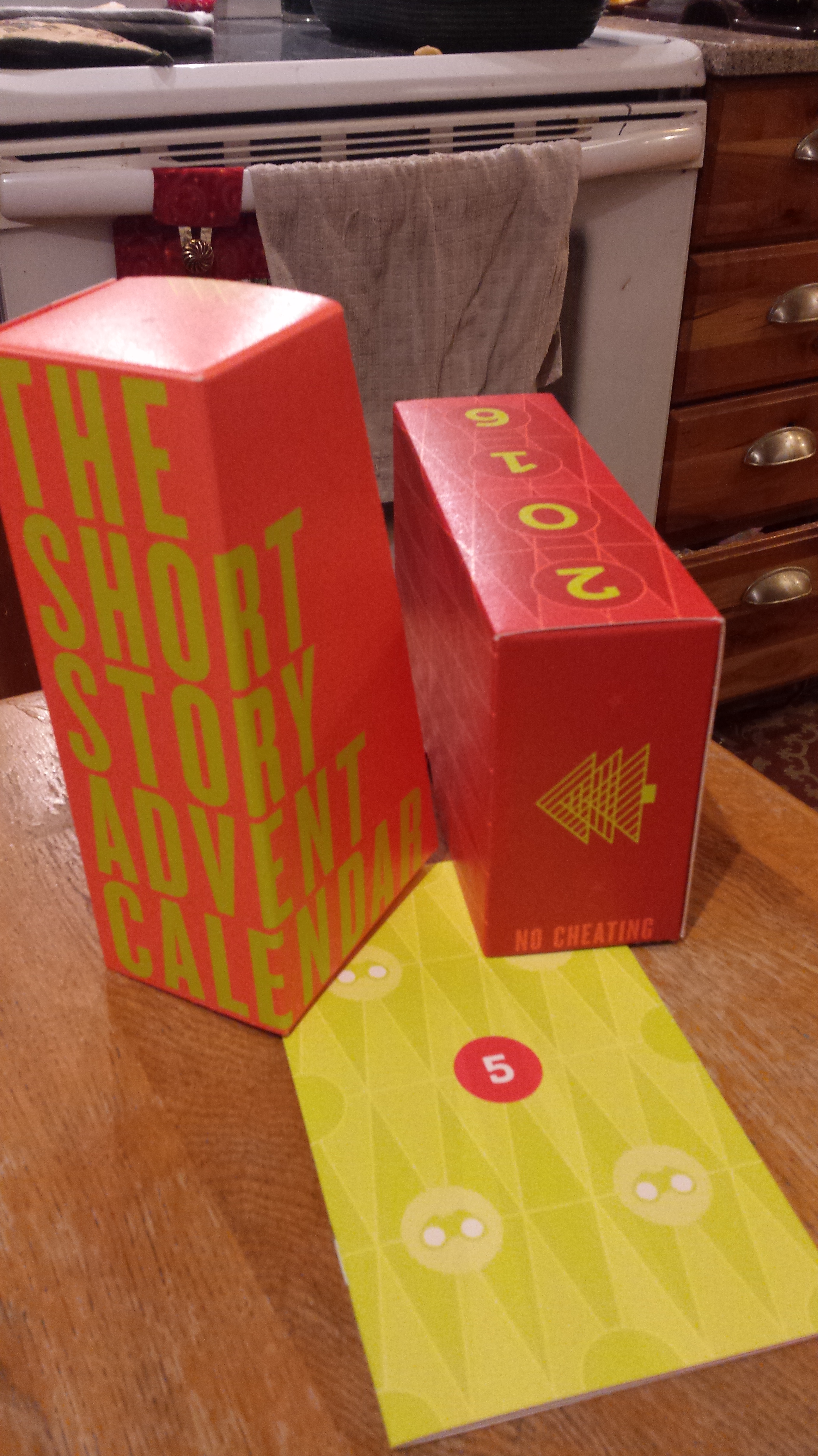
Near the end of November, I found out about The Short Story Advent Calendar.  Which is what exactly?  Well…

The Short Story Advent Calendar returns, not a moment too soon, to spice up your holidays with another collection of 24 stories that readers open one by one on the mornings leading up to Christmas.  This year’s stories once again come from some of your favourite writers across the continent—plus a couple of new crushes you haven’t met yet. Most of the stories have never appeared in a book before. Some have never been published, period.

I already had plans for what to post about in December, but since this arrived (a few days late for advent, but that was my fault for ordering so late) I’ve decided to post about every story on each day.

I wasn’t aware of Katie Coyle before reading this story.  Perhaps the only reason I might have known about her is because she is a YA author from New Jersey.

But I’d like to know more about her because this story was wonderful.  The point of view of the story was fantastic and the whole concept was weird and cool.

The narrator is never revealed, but I love this beginning:

This all started when Winston’s girlfriend Sheila dumped him at his high-school graduation party.  Or maybe it started when Sheila began to notice that Winston didn’t understand her.  Certainly it never would’ve happened had she not turned to Winston in their Modern Conflicts class nine months earlier and said, “It’s Winston, right?”

Such intrigue! (more…)

Read Full Post »

decomposSOUNDTRACK: COLIN STETSON & SARAH NEUFELD-Never Were the Way She Was [CST113] (2015).

colinThis is kind of a show offy disc because both Stetson and Neufeld proudly state:  “All songs performed live (no overdubs/loops).”  And so we get Neufeld ’s cycling violin and Stetson’s cycling saxophone playing seemingly endless series of trills and melodies.

Despite Neufeld’s excellence on the instrument, the violin does play a kind of support role to Stetson’s sax (mostly because the sax is louder and more obtrusive).  But while the disc does sound like a Stetson disc, the violin adds some really interesting textures.  The disc opens with “The sun roars into view” and the violin playing a fast two note melody as the sax seems to rise up from the initial static slowly overtaking the song.  About 2 minutes in, the violin plays some loud trills that remind you it’s there, but when the sax quiets a few seconds later, the repetitive violin picks up the melody.  About half way through the 7 minute song the violin soars.   Around five minutes the sax drops away to a single bass note repeated while the violin takes some fanciful runs.  A voice, (not sure whose, but I assume Sarah’s) then soars above the music.

“Won’t be a thing to become” begins with a slow bass melody (with audible sax clicks).  The violin plays a similar melody—slightly different to accentuate the notes.  It’s a shorter piece (only 3 and a half minutes) and these shorter pieces tend to explore quieter moments in an interesting way.  “In the vespers” starts with some fast violin notes once the sax kicks in, it adds a new sense of urgency to the melody.  It’s all very pretty.  The middle turns into rapid fire violin alternating with some noisy sax.  As the song winds down, the fast sax notes continue but a bit more quietly and they are accented by long slow bows of the violin.

“And still they move” is a slow piece.  It’s primarily violin with the occasional sax note adding low end.  It’s barely 3 minutes long.  “With the dark hug of time” stays slow but with some incredibly deep rumbling bass notes underneath the squeaky violin.  It’s a cool and menacing sound.  There is a quiet section near the end which resolves as a low rumble and Stetson’s unusual vocalizations through his sax.

“The rest of us” is a kind of bouncing,thumping song with some high tense violin strings running along it.   I love the part where Stetson “sings” the four note discerning riff and the violin plays along with it—it’s the highlight of the disc for me.  The 8 minute “Never were the way she was” opens with a low rumble and feedbacky sounds.  The melody comes in slowly with some incredibly low notes from the sax.  After about 6 minutes the sax drops out leaving just the bowed violin.  The last two minutes are a pretty, somewhat mournful violin section with the sax providing low bass notes.

Flight is only a minute and a half and it opens with a gentle static/rain and slow notes.

Given these two great musicians, I expected a bit more from this.  Either Neufeld really keeping up with Stetson (rather than accompanying him, which i what it feels like) or perhaps Stetson playing differently to accommodate someone else.  I suspect I have just been spoiled by their other works to expect something mind blowing.

[READ: February 15, 2016] Princess Decomposia and Count Spatula

I have really enjoyed Andi Watson’s work in the past.  I haven’t read much from him lately, but when I was really into graphic novels twenty years ago, he was an artist I would always gravitate towards.

This is his first book for First Second (he used to do a lot of his books for Oni Pres).  It’s a romance (like many of his stories) but with a twist.

The story is set in the underworld.  Princess Decomposia is the overworked daughter of King Wulfrun.  The kind is old and infirm and never gets out of bed.  Indeed, he won’t even eat, declaring that any food is too much for his poor stomach.  Of course, he reads Wellness Weekly to get new ideas for broths to eat–but he never likes them.

Since he never gets out of his bed that leaves the Princes to do all of his diplomatic work.

She meets with the lycanthrope delegation and almost has a disaster on her hands because her father has fired the chef.  But when they see uncooked meat the werewolves are quite pleased. (more…)

Read Full Post »

margoSOUNDTRACK: COLIN STETSON-New History Warfare Vol. 3: To See More Light [CST092] (2013).

stetson3 After the raucous wildness of Stetson’s Vol. 2, I wasn’t expecting the first song to be so gentle.  Justin Vernon sings (with many layers of processing) the rather pretty opening track.  When I first heard it I didn’t like it—I wanted Stetson to do Stetson and it seemed like the track was all voice (nad very different from Stetson).  But Stetson is there, and he plays his normal unceasing melodies behind the voices.  The track seems especially light since it is followed by the aggressive “Hunted” which prominently features Stetson’s “voice” (he has a microphone on his throat or something to pick up his grunts), making an almost growling noise as he plays.   It’s worth repeating that Stetson does circular breathing, is able to play nonstop and can somehow to play different things at the same time (no overdubs) as well as vocalize in interesting ways.  You can also hear him taking breaths while he platys—the breaths are part of the percussive nature of his playing. It’s pretty amazing.  About four minutes in, the tone changes a bit, becoming a little sharper which seems to make the growl even more pronounced.

“High Above A Grey Green Sea” is a quieter song with more vocalizing, but this one feels mournful and lonely as opposed to intense and scary.  “In Mirrors” opens with a deep breath as he plays a slow quiet 90 second song full of unexpected high notes.

“Brute” is appropriately named as it sounds like he is forcing the song out of his sax.  He places mics on his sax so you can hear the clacking of the keys.  And that is readily apparent on this song which is full of clacking and clicking and grunting all the way.  After about a minute, a discordant melody comes in and establishes a tone that plays or a few bars until Justin Vernon returns, but this time with growled words.  It’s a pretty intense and rather scary track—and nothing like Bon Iver at all.

“Among The Sef (Righteous II)” is a brighter song—higher notes played in a very fast style.  There are some vocalized melodies as well.  But the main song is a rolling series of high notes.  “Who The Waves Are Roaring For (Hunted II)” opens with an interesting vocalized melody—he is really using that technique a lot on this record.  It also featured Justin Vernon.  “To See More Light” opens with slow echoed notes as he begins to build a melody out of a four note string.  He starts adding more and more notes.  The melody grows faster and faster until about five minutes when it starts to really slow down—dramatically so.  Around 7 minutes in, the song slows to a crawl, almost drunkenly it seems.  And the song feels like it has ended.  But Stetson has more on his mind.  The notes are held longer and shift more slowly.   Then the song starts to build up again with a different 4-note pattern that adds some squeaky feedback notes and then a catchy melody.  All 15 minute of this song done nonstop, pretty impressive.

“What Are They Doing In Heaven Today?” begins with voices from Vernon (in a softer voice than we’ve come to expect) as he sings a verse before the sax comes in.  “Bed” features some loud key clacking a great rhythmic pattern and some quiet notes from both the sax and his voice.

The final song is “Part Of Me Apart From You.” It really emphasize his “singing” the melody in his throat while playing the repeating lines on the sax.   The song seems to emphasize the lower notes in this song even as he “sings” higher notes.

[READ:October 20, 2016] The Creepy Case Files of Margo Maloo

The title of this book implies that it is a series, and I rather hope it is.  I loved the premise of this book.  Most of the characters were interesting and the mystery behind Margo herself was really cool.

I didn’t love Weing’s drawing style, though.  It really never resonated with me at all, and at times I found it off-putting.  Which is a shame since the story is so fun.

Charles is moving to Echo City and he hates it.  His mom tries to convince him that big cities are fun.  Plus, his dad is fixing up a big old hotel and they get to live there for free (suspension of disbelief there).  There are already some people living there, too.

Charles’ dad is hip and cool (he is seen with Dead Kennedys and Black Flag logo tattoos).  All of the things that Charles finds creepy about the place, his dad calls “character.”   Like the giant chandelier that was in a closet.  Whatever his dad says, Charles’s comment is simply, “This place is definitely haunted.” (more…)

Read Full Post »

sardine6SOUNDTRACK0 Tonne Seize [CST bonus] (2016).

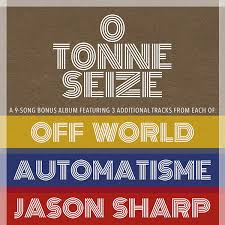
tonne0 Tonne Seize is a bonus compilation of three tracks each from Off World, Automatiste and Jason Sharp.  The collection is 41 minutes of music (not too shabby) and came with a pre-order of the three records (and is available on Soundcloud as well).

The first three songs are by Off World and the first two of those are remixes.  The original “Wonder Farm” is dominated by popping drum sounds.  There are some other sounds that go through the track but the base is mostly a kind of slow Asian melody.  The “Wonder Farm (Summer Crop)” mix removes those snaps and percussion entirely.  It focuses just on the music, which I have to say is far more enjoyable without the bangs.  “Primitive Streak” is a slow droning piece, while this compilation’s “Primitive Streak (Silver Mix)” doesn’t sound all that different.  It also removes the drums, and highlights the squeaky synth sounds and the overall drone tone.  It seems to emphasize and de-emphasize different instruments but otherwise sounds pretty similar. The final track  “Lost Meadow” is a pretty, delicate piano based piece with some twinkling of spacey synth notes.  It’s easily the prettiest piece.

The three Automatiste tracks do not quite follow the same naming convention as the actual disc, although the first track is called “Simultanéité 5.” It has slow beats and is basically two-note washes building on top of each other.  “Fragments continus” is a noisy piece with layered thudding drums (like heartbeats especially around the 1 minute mark) and drone noises that wash in and out.   About half way through what sounds like a melody appears amid the din, but it feels like it formed organically around the synths and drums which is pretty cool.   “Le Silence 3” opens with some jackhammer sounding drums and then almost easy listening synths.  The juxtaposition is interesting and by the end the song feels nicely dancey.

The final three songs are from Jason Sharp.  These three are quite different from his album because they really feature the saxophone to a larger degree.  “Plummeting Veins” opens with a heartbeat and some rumbling sax (that sounds like the opening of the Speed Racer TV show).   This track is under 2 minutes, the shortest he’s done by far, and the way the heartbeat speeds up as the sax plays some low rumbling notes is pretty cool. “Hear a Fading Cry” is a much longer number.  The heartbeat is quieter but the sax is much louder.  It sounds a lot like Colin Stetson in the low rumbling and noisy barking that the bass sax can produce.  It ends with some rather high-pitched squeaky sounds that I assume come from the sax, but which I can’t imagine coming from such a bass instrument.  It’s 7 minutes long although it takes almost 2 minutes to really get going.  And it swerves between loud and rumbling and then sort of menacing by the end,  “Ride On Into the Sweetening Dark” is perhaps the most conventional of Sharp’s songs.  It is a series of sax solo lines over a gentle tinkling backing drone.  Some of the solos lead to noisy wailing, but for the most part the line are pretty and jazzy.

It’s interesting how different these bonus tracks tend to be from the actual releases.  I enjoyed listening to these variants to see what else these artists are capable of.

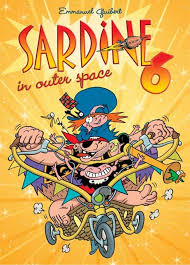
[READ: April 9, 2016] Sardine in Outer Space 6

Sardine is a children’s book published by First Second.  It was originally published in France (and in French) and was translated by Sasha Watson.  There are six Sardine books out.

The inner flap says “No Grownups Allowed (Unless they’re pirates or space adventurers).”  This is the final Sardine book.  And while I didn’t enjoy the first book much, by now I’m sorry to see the series end.

This book also has the fewest stories in it (only 9). (more…)

Read Full Post »

sardine5SOUNDTRACK: JASON SHARP-A Boat Upon Its Blood [CST119] (2016).

Layout 1Constellation records had been rather quiet this year in terms of new releases.  And then back in August they announced three new discs with this intriguing blurb:

Constellation’s three new fall releases by Off World, Automatisme and Jason Sharp are dropping on September 30th…  These new releases are wildly different yet satisfyingly leftfield albums that share an electric thread of sorts.  Electronic music strategies, technologies, histories and sensibilities come into play, in very diverse ways, with each of these debut records – making them stand out a little differently in the context of the Constellation catalogue perhaps, but also informing one another and making a lot of sense to our ears as an album trio (somewhat in the spirit of our Musique Fragile series).

This is the third of those three.

Jason Sharp has written this disc as “music written for amplified heart & breath,” and Sharp is credited with “playing” amplified heart, feedback, synthesizers and bass saxophone.  Other instruments listed are Pedal Steel Guitar, Violin and various percussive instruments.

From the Constellation site: “Using custom-built equipment to translate breath and heart rate into variegated sonic triggers, along with other modes of signal processing and in tandem with traditional instrumentation…[the album] deploys the human metronome of amplified pulse as a recurring undercurrent, with compositions that incorporate electro-acoustic and musique concrète strategies, drone, noise, electronics, methodical dissonance, tone poem, layered rhythmic and melodic figures, and improvisation.”

The disc opens with a trio of songs: “A Boat Upon Its Blood Pt.s 1, 2 & 3”  Part 1 begins with some quiet drones and pulses and what sounds (if you think about it) like water running through pipes or blood through veins.  It also like plectrum hitting strings or a musical rain stick.  The songs build in intensity until a pulse that sounds a lot like a heart beat (which it should) ends the track. This heart beat segues into Part 2 which is dominated by violins.  The violins seem to alternate between drones and dissonance with the pulses seeming to beat a bit faster in parts.  As this track ends, a martial beat takes over the drums, and that segues into Part 3 which has more drone sounds.   About midway through, new percussive sounds come in, changing the tone of the piece entirely.

Track 4 is “In the construction of the chest, there is a heart” is the most interesting of the bunch.  It has what I assume are several different heart beat sounds modified to create different percussion under various droning sounds. It really exemplifies the “heartbeat” aspect of the piece, which I thought would be more prominent in the disc overall.  The second half of the song is full of swishes and scratchy sounds which I certainly hope are the sounds of his blood pulsing through his veins.

“A blast at best” is a noise piece which sounds almost like the heart beats have been put through an autotune.  Midway through the song comes the bass sax playing some farting and pulsing sounds that add an interesting  melody to the sloshy noises.

Tracks 6 and 7 are another multi-part song “Still I sit
with you inside me Parts 1 and 2.”  Part 1 opens with a much more pleasant, albeit somber violin.  Slowly the heartbeats grow louder and more prominent.  The pulses increase and decrease although not necessarily with the intensity of the music.  The violins swirl and ebb, growing louder and more intense and then fading and seguing into the last track which opens with pretty guitars and accompanying violin.  About halfway through the song, the heartbeat resumes.  It come pulsing into the song louder and louder, dominating the whole thing.  And then with a few seconds left it builds a wall of feedback and noise that gives way to a cathartic echo.

This would be another string candidate for NPR’s Echoes.  Have you heard this, John Diliberto?

The disc notes that the piece was inspired by the Robert Creeley poem, “The Heart,” which I have included at the end of the post.

[READ: April 9, 2016] Sardine in Outer Space 5

Sardine is a children’s book published by First Second.  It was originally published in France (and in French) and was translated by Sasha Watson.  There are six Sardine books out.

The inner flap says “No Grownups Allowed (Unless they’re pirates or space adventurers).”  For the first time, Sardine was created without the help of Joann Sfar.  And I found this one to be my favorite one yet!

It seems like Sardine has really hits its stride with Book 5.  The author is having a ton of fun playing around with pop culture and with the idea that the characters know that there are books about them. It’s still a little weird that Supermuscleman is really the only bad guy and that he is always coincidentally where they show up, but that’s clearly not the point of the comic, right? (more…)

Read Full Post »

sardine4 SOUNDTRACK: AUTOMATISME-Momentform Accumulations [CST118] (2016).

Layout 1Constellation records had been rather quiet this year in terms of new releases.  And then back in August they announced three new discs with this intriguing blurb:

Constellation’s three new fall releases by Off World, Automatisme and Jason Sharp are dropping on September 30th…  These new releases are wildly different yet satisfyingly leftfield albums that share an electric thread of sorts.  Electronic music strategies, technologies, histories and sensibilities come into play, in very diverse ways, with each of these debut records – making them stand out a little differently in the context of the Constellation catalogue perhaps, but also informing one another and making a lot of sense to our ears as an album trio (somewhat in the spirit of our Musique Fragile series).

This is the second of those three.

From the Constellation site: “Automatisme is the electronic music project of Quebec-based producer William Jourdain, who has been self-releasing a brilliant series of albums and tracks under this moniker since 2013, exploring various intersections of drone, dub techno, electronica, ambient, electro-acoustic, and noise.”

This album is, indeed, very drone, dub techno, electronica, ambient, electro-acoustic, and noise.  There are six tracks: Transport 1, 2, and 3 and Simultanéité 3, 1, and 4.  The Transport tracks are all about 5 minutes and the Simultanéité tracks are all about 9 and they are interfiled on the record.

“Transport 1” seems to be all about the thumping drums. The synth lines are fairly simple and serve to propel the song along as almost an ambient dance track.  “Simultanéité 3” opens with some mechanical drone sounds and a beeping almost like a heart monitor.  The beeps change and then a new drum beat is added while fiddling synths tickle along the top of the song.  Things slow down and speed up and the track reminds me a lot of something you’d heard on NPRs awesome Echoes program.

“Transport 2” is more about drums. There are several different percussion themes going on–fat repeated drums, the main steady beat and then some low synth that runs through pretty much the whole thing.  “Simultanéité 1” is a drone song with a drum sound that is like a heart beat.  About a minute in the note changes and 30 second later the song takes on a different texture and pulse.  It remains largely ambient for most of the song.

“Transport 3” has more percussive sounds that make this track much faster than the others. The final track “Simultanéité 4” has what sounds like voices (although I assume they are not) echoing underneath the slow pulsing rhythms.

While the track listing alternates between drum heavy tracks and more mellow tracks, the whole disc has a very chill vibe.

[READ: December 5, 2014] Sardine in Outer Space 4

Sardine is a children’s book published by First Second.  It was originally published in France (and in French) and was translated by Sasha Watson.  There are six Sardine books out.

This time the inner flap says “No Grownups Allowed (Unless they’re pirates or space adventurers),” and this book had some of my favorite cartoons yet.

“Under the Bed” has the kids getting lost under Little Louie’s bed and finding all the monsters that hide there.  But Sardine’s adventures are so scary that the monsters don’t stand a chance trying to frighten him–they’re even a little afraid of Sardine, too.  Of course the kids have someone who they can go frighten. (more…)

Read Full Post »

sardine3SOUNDTRACK: OFF WORLD-1 [CST117] (2016).

Layout 1Constellation records had been rather quiet this year in terms of new releases.  And then back in August they announced three new discs with this intriguing blurb:

Constellation’s three new fall releases by Off World, Automatisme and Jason Sharp are dropping on September 30th…  These new releases are wildly different yet satisfyingly leftfield albums that share an electric thread of sorts.  Electronic music strategies, technologies, histories and sensibilities come into play, in very diverse ways, with each of these debut records – making them stand out a little differently in the context of the Constellation catalogue perhaps, but also informing one another and making a lot of sense to our ears as an album trio (somewhat in the spirit of our Musique Fragile series).

This is the first of those three.

Off World is a collaborative project featuring Sandro Perri. As the Constellation site reminds us:

Over the past couple of years, Perri has been letting us in on a fascinating treasure chest of strange and enchanting collaborative sound recordings – rich in deconstructed melody, interplay between acoustic and electronic instrumentation, and pointillist and aleatory composition techniques. … Off World 1 is alien electronics played humanly, with real-world accents throughout. 1 was conceived almost entirely during a 2-day session in London: a meeting orchestrated by producer Drew Brown between himself, Perri, Susumu Mukai and M J Silver after learning that Perri was a huge fan of both Mukai and Silver’s work. A bounty of raw material featuring mostly vintage synthesizers – EMS Synthi, Syntorchestra, Prophet 5 – was later abetted by violin, banjo, harpsichord, guitar and piano. The result is genuinely exploratory and peculiar sui generis instrumental electronic music that sounds like it could have issued from any time in the past 40-50 years. Off World resists easy categorization: not ambient “easy listening”, not strictly “improvised”, not “retro” – but eccentrically absorbing and soothingly mischievous as it charts its own sonic trails.

There are 7 songs on the disc and they are all variants on a kind of electronic/alien sound.  “Primitive Streak” has trippy synth lines and a slightly quavery “solo” over a simple drum beat.  “Old Brain” has a kind of staccato guitar part that plays through quickly.  It is later matched by “New Brain” which explores the same rhythms in a different way.

“No Host” is 80 seconds long  full of simple almost otherworldly synths (it reminds me of Close Encounters). “Extraction” has some loud ominous chords that surge and the recede.  “Choral Hatch” sounds both underwater and other worldly.

The final song, “Wonder Farm” sounds unlike the other songs because it is full of these snapping drum sounds–seemingly at odd intervals and not playing any rhythm (it sounds like fireworks going off).  The music also has hints of Japanese music but it seems overshadowed by the crashes.

Of the three I like this one best because of its varied sounds.

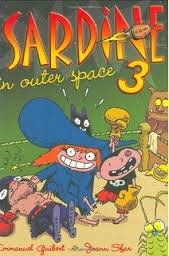
[READ: March 31, 2016] Sardine in Outer Space 3

Sardine is a children’s book published by First Second.  It was originally published in France (and in French) and was translated by Sasha Watson.  There are six Sardine books out.

This time the inner flap says “No Grownups Allowed (Unless they’re pirates or space adventurers),” and I found that I enjoyed book 3 quite a bit more than the first two books. Perhaps it is because I have read a few more First Second books by Sfar and have grown used to his style and humor.  Or perhaps the stories have just gotten better. (more…)

Read Full Post »

dfwreadSOUNDTRACK: CHRISTIAN SCOTT aTUNDE ADJUAH-Tiny Desk Concert #477 (October 9, 2015).

aacsChristian Scott aTunde Adjuah and his septet play what he calls stretch music: “the particular type of jazz fusion he’s up to: something more seamless than a simple collision of genre signifiers.”

They note that even his appearance stretches traditional jazz: “You may note that he showed up in a Joy Division sleeveless T-shirt and gold chain.” It’s sleek and clearly modern, awash in guitar riffs, but also bold and emotionally naked.

Christian Scott aTunde Adjuah (not sure how to abbreviate that) is a trumpeter and he can hit some loud powerful and long –held notes.   It’s funny that when he bends over the trumpet grows quieter—those ic really are direction-based.

For the first song “TWIN” he does some impressive soloing over a simple and cool beat—piano and delicate guitar riffs (there’s also an upright bass and drummer).   After his lengthy solo there’s a flute solo that also works perfectly (if less dramatically) with the background music.  (Christian plays tambourine during her solo).  He says that this song is about being a twin.  His brother, Kyle Scott is a film director and for whom Christians scores the music.  Christian also explains that he comes from an African-American and Native-American background and that this song has rhythms as a sort of history of his family that touches on Mali, Senegal Gambia and The Ivory Coast and makes its way to the Caribbean, Cuba and into New Orleans.

He’s pleased to play the Tiny Desk Concert for an audience that appreciates “Music that has nutritional value.”

For the second song, “West of the West” he brings on a young alto-saxophonist who plays with his drummer in a different band. The song opens with a rocking electric guitar solo and then the jazzy band kicks in behind it.  The instrumental features a couple of solos by the saxophonist, the pianist and the bassist.

“K.K.P.D.” is a dramatic song for which he gives a lengthy back story.  Many years ago in his home of New Orleans, he was stopped by New Orleans police late at night for no reason other than to harass and intimidate him.  he was coming back from a gig.  He resisted and was in a serious situation and was seriously threatened—the story is long and very affecting, especially given how articulate (I know, terrible word, but true) and calm he is about retelling this horrifying story.  His pride almost made him do something ill-advised, but instead he channeled that pent-up frustration into a piece of music whose long-form title is “Ku Klux Police Department.”

He adds that we see things on TV about inner cities or the ninth ward and we believe them to be true.  Like that the neighborhood is happy that the police are clearing out the youth there.  We begin to think that the narrative is true, although the people who live there can tell you otherwise.  Despite the title and the origin, the is song is designed to reach a consensus to move forward –not to build derision or hate.  He says that we have to start working on that now, because if it doesn’t start now then our children will continue to inherit this situation.

It opens with a noisy guitar wash and fast drums.  It’s quite noisy and chaotic although it resolves very nicely into an almost sweet piano-based song with slow horns.  The middle of the song ramps up with some intense soloing from Christian.  I love how that segues into a very different section with an electronic drum and delicate piano.  Chritsian’s next solo is much more optimistic.  The final section is just wonderfully catchy.

When he introduces the band, he points out just how young some of his newest members are: Drummer Corey Fonville (another new member) used a djembe as a bass drum, and also brought a MIDI pad so he could emulate the sound of a drum machine; Lawrence Fields, piano; Kris Funn, bass; Dominic Minix , guitar (21 years old); Braxton Cook, saxophone (24 years-old) and Elena Pinderhughes, flute: 20 years old!

I don’t listen to a ton of jazz, but I really liked this Tiny Desk Concert a lot.

[READ: July-October 2016] The David Foster Wallace Reader

I’ve had this book since Sarah bought it for me for Christmas in 2014.  I haven’t been in a huge hurry to read it because I have read almost everything in it already.  And some of that I have even read recently.  But this summer I decided to read some of my bigger books, so this was a good time as any.

One of the fascinating things about reading this book is the excerpting in the fiction section.  I have never really read excerpts from DFWs longer books before.  And once you decontextualize the parts, you can really appreciate them for themselves rather than as a means to the end of the story.  This is especially true of the excerpts from Broom of the System and Infinite Jest.  But also just reading some of these sections as a short story makes for an interesting experience.

It was also very interesting to read the non-fiction all together like that.  These pieces come from difference anthologies, but they have thematic similarities  So, placing them together like that allows for really comparing the stories.

And of course, the selling point for most DFW fans is the teaching materials in the center of the book–an opportunity to look into the man’s mind at work shaping younger minds.

I have written about virtually everything in this book already (title links refer back to previous posts), so mostly these are thoughts about the pieces themselves and not a part of a whole. (more…)

Read Full Post »

mustcahe SOUNDTRACK: SUN RA ARKESTRA-Tiny Desk Concert #402 (October 31, 2014).

sunraSun Ra was a big band innovator who claimed to be from Saturn.  He died 20 years ago, but he would have turned 100 in 2014. And the Arkestra that bears his name keeps his spaced out spirit alive.

The band plays jazz, but most often that jazz is noisy and abrasive and seems to make no sense at all.  Sometimes it seems like it would just hurt to listen to it.  But when they gel, the music is trippy and cool.

The first song, “Along Came Ra”/”Zoom” opens with the group singing “When the world was in darkness and darkness was ignorance, along came Ra.”  And after a few times through this the chaos begins (that would be “Zoom.”  All of the horn players just start wailing on whatever.  The violin plays something, the keyboard is all over the place.  It is noise and chaos and probably hurt people’s ears there.

And then it stops and a proper jazzy song “Queer Notion” begins.   It has a catchy piano melody.  When the horns come back in, they feel slightly off somehow, as if deliberately not quite playing what you’d expect–but very close.  There’s even an electronic keyboard solo (set to a nice spacey sound).  The band leader (Marshall Allen, who is 91 and has been with the Arkestra since the early 1950s) play a “melodica” that has some kind of spacey processor on it.  And yet for all the craziness there is some real fundamental jazz beneath it.

“Angels and Demons at Play” has a trippy underlying riff with horns over the top.  The biggest surprise comes after a few minutes when the violinist sings the title slowly and dramatically.  The song builds and repeats over and over and then ends with chaos and drama.

The set ends and there is much applause and the band wishes everyone a Happy Halloween–the band came dressed complete with costumes inspired by Egyptian symbolism and science fiction.  And just when it seems like it’s over (and this surprises Bob) they start another song.

“Interplanetary Music” is a big fun sing along  with lots of clapping and it seems like the kind of thing they might end every show with.  So even though some of the music is crazy, there’s good fun at the heart of it all.

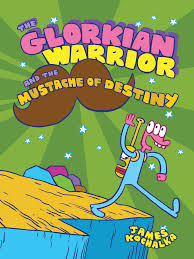
[READ: June 1, 2016] The Glorkian Warrior and the Mustache of Destiny

This Glorkian Warrior story was probably my least favorite of the three.  It felt really long, possibly because many of the jokes were repeated a lot.  I did get a kick out of how the mustache appears in the very first pages and then almost never makes a return appearance.

The best part of the story is that the Glorkian Warrior continues to be incredibly stupid.  When he says good morning to his coffee, super backpack says “good morning” and warrior thinks it is the coffee that talks back.  So he thinks, “I just invented talking coffee.”  He and the backpack argue for a few pages (my favorite parts are their fights because the backpack is smart and the Warrior…isn’t).

And then in cones a bunch of little kids (crazy Kochalkan characters, of course).  There’s Crazy Face, Doonky and Bronk (who only says Bronk).  The kids want to go on a mission with him but he says no. (more…)

Read Full Post »

« Newer Posts - Older Posts »