Feeds:
Posts
Comments

Archive for the ‘Funny (ha ha)’ Category

sept2015SOUNDTRACK: RIVER WHYLESS-Tiny Desk Concert #502 (January 19, 2016).

whylessRiver Whyless is an interesting band, at least during this Tiny Desk Concert.  They have several singers, different instruments and a whole bunch of interesting percussion on hand–including a typewriter!

The band has one EP out, from which the first song “Life Crisis” comes.  The female singer (none of the players’ names are given) says that this was their tiny desk submission.

On this song the male singer (actually everyone sings) plays typewriter and presents his typed document at the end of the show–although the audience never gets to see it–I imagine it’s gibberish, but it would be amazing if it wasn’t).  The female singer plays a violin solo in the middle of the song (which was unexpected since she doesn’t have it as the song opens).

Under the typewriter is a pump for a harmonium which has an accidental vibrato on it.  Shes says that one day it started doing that and they love it and hope it never fixes itself.

The other two songs are new–not on their EP from last year.  “Sailing Away” starts with violin and harmonium.  There’s also a guitarist who sings leads and a percussionist (who has all manner of gadgets and drums and mallets around him).  The harmonium player/typist also plays a melody on the toy piano.  All of these items may seem like novelties or goofs, but their songs are quite lovely and these little accents just add to the overall feel.

“Baby Brother” opens with a buzzy acoustic guitar and a whole landscape of percussion.  And this time the harmonium player switches to guitar while he sings lead (everyone sings lovely harmonies by the way).

I love everything about this band…except their songs.  All three songs are quite nice, and while I’m listening to them I certainly enjoy them, but they are really not that memorable.  There’s no hooks in them.  Despite the fact that all of their accouterments are not really gimmicks, those are the things I will remember most about River Whyless.

[READ: January 18, 2016] “Learning to Fly Part 4”

This is the final part of the 4 part essay.  A series like this is bound to be anticlimactic because presumably if his solo didn’t go well, he’d be dead.  And if he didn’t do the solo, there likely wouldn’t be a part 4 (unless he talked about chickening out instead).

But Ferris takes an interesting tact for this end section.

He opens the essay by explaining that he was commissioned by Popular Mechanics to write this essay.  This makes sense but is something  hadn’t thought about–they asked him to do it.

He says that he was full of anxiety the entire time–which we knew he would be.  He was terrified to fly–a wobbly commercial airplane takeoff would totally freak him out.  Plus, being a writer, he had an overactive imagination. (more…)

Read Full Post »

mermin2SOUNDTRACK: BOOKER T. JONES-Tiny Desk Concert #125 (May 2, 2011).

Booker T. Jones is the Booker T from Booker T. & the M.G.’s whose classic “Green Onions” is one of my favorite instrumentals ever (and probably why I enjoy the Hammond sound so much).

And he plays it here.  He says he wrote it when he was 17 years old (in 1962)–a senior in high school.  And he still enjoys playing it.

They did some furniture moving to get the desk-sized Hammond B3 organ and its sturdy wooden Leslie speaker cabinet to where Bob’s desk normally goes, and it is worth it.  Booker T. even gives a brief lesson about “crawling” on the organ and what drew him to it in the first place when he was ten years old.

After playing “Green Onions,” he switches sounds on the organ to play a wonderfully menacing version of “Born Under a Bad Sign” (a song he also wrote).  It’s so very different on the organ–and I much prefer this version to the familiar one.

The final song is called “Down in Memphis.”  It was a new song in 2011 but it is the song I like the least.  There’s nothing bad about it–it’s just kind of plain and simple.  It’s more of him singing (about Memphis, which doesn’t mean much to me) and less of his organ playing.  But that’s okay.  His voice is still amazing.

I’m all about that Hammond.

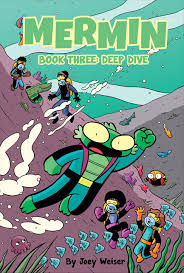
[READ: January 21, 2016] Mermin: Book Three

After waiting nearly three years between books one and two, I waited one day between books two and three.  I actually assumed that this series was a trilogy, but I have learned that there is a part four already out.

Book three opens up in the Kingdom of Mer.  Mermin is a little boy (uh, fish, uh, whatever) and he is having a really hard time learning to control the sea.  He should be able to use his thoughts to make the water move.  But he stomps out in frustration.

Then we jump back to the present where our gang (Pete, Toby and his sister Claire and Penny) along with Mermin and Benni are being driven in a ship to Mer.  And Mak is driving the ship (I don’t think I knew that my favorite walking whale had a name).

Their back home “plan” for heading to the sea involved having Randy tell everyone that they were away camping.  Of course, Randy is a bad kid and can’t be trusted, so it should come as no surprise to see that he stowed away on the ship (we never actually find out what happened back home). (more…)

Read Full Post »

  mermin 3SOUNDTRACK: THEY MIGHT BE GIANTS-Tiny Desk Concert #145 (July 28, 2011).

tmbgI have loved They Might Be Giants for decades.  But I have kind of fallen off the TMBAndwagon over the last few years.

I must have watched this Tiny Desk when it came out, but i didn’t really remember it at all.

John and John (and Marty Beller on drums) play 2 songs from their then new album Join Us (the last one I bought I think).

The first is “Can’t Keep Johnny Down” sung by Flansburgh who also plays keyboards.  It sounds very much like classic TMBG (that voice, of course).

“Cloisonné” is a slower song sung by Linnel while Flans plays a very long saxophone (seriously, it’s very long).  This also sounds very TMBG–Johns voice and the sax are right on).  I don’t know why I didn’t listen to this album more.

They wrap up the set with the brilliant 21 part “Fingertips” from Apollo 18.  And it sounds perfect–just like the record, only live and a little more fun.

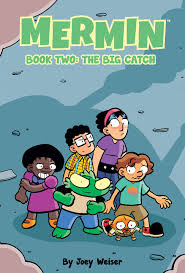
[READ: January 19, 2016] Mermin: Book Two

I enjoyed Mermin Book One quite a lot.  And of course, I couldn’t wait for Book Two.  And then I forgot about it.  I need some kind of reminder system, I guess.

Anyhow, this book picks up right where the previous one left off.

Mermin (not to be confused with Moomin) has completed his adventure and is trying to settle in with Pete and his friends–you know go to school and be normal even he is a green fish type creature.  And Benni (the round goldfish like creature) is still around to watch over Mermin (even if he is not appreciated).

And now suddenly Penny is trying to hang out with the boys.  Pete and his friends are reluctant for her to join them because she usually hangs out with other people and besides, they are trying to keep Mermin a secret.  They are not doing a good job of it though. (more…)

Read Full Post »

moomin3  SOUNDTRACK: PAUL JACOBS-Tiny Desk Concert #148 (August 12, 2011).

pauljacobsPaul Jacobs is an organist.  In fact he heads the Julliard School’s organ department.  For this Tiny Desk Concert they moved in Jacobs’ massive organ–complete with foot pedals.  I feel like he should have played for an hour for all the work that must have gone into moving this.

I had thought about describing the way the Tiny Desk Concert has changed as I went through the Concerts.  But I have gone out of sequence so often that it’s kind of moot.  Nevertheless, it’s fun to marvel at how in the first few shows, it was one camera, there was little editing and what you got is what you saw.

Well, for this, the 148th Concert, they have three cameras.  And that is perfect because one is on Jacobs’ face.  One is on Jacobs’ hands as he plays these amazing Back pieces.  But the best one is on Jacobs’ feet.  Jacobs play a melody with his hands and a separate melody with his feet.  Watch as he looks like he’s tap dancing all over these massive foot pedals. The mind boggles watching him.

He plays four Bach pieces:

  • J.S. Bach: “Gigue” Fugue
  • J.S. Bach: Arioso
  • Bach/Reger: Invention in F Major
  • J.S. Bach: Fugue in A Minor

The Arioso is recognizable to me as a familiar piece.  It’s low and beautiful with washes of foot pedals.  But even more familiar is the Invention in F minor which most piano students try to play.  This version was arranged by Max Reger who turned the left hand melody into a foot pedal melody–so Jacobs is all over the keyboard on this one.  It’s stunning.

The final piece is somewhat recognizable (well, to me its recognizable as Bach, since his stuff is so elaborate and cool).  This piece is really fun to watch his hands and feet at work.  Especially at the end when he plays an intense “foot solo” before returning to an incredibly fast finger coda.

It’s such a neat instrument and he’s an amazingly talented player.

I prefer to watch on the NPR site, but its easier to embed the YouTube version:

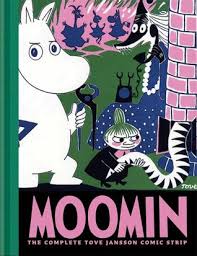
[READ: January 13, 2015] Moomin Volume 3

Moomin Book 3 is slightly different n that it has four stories instead of three.   The stories feel shorter too, although I don’t have the other books handy to compare.

This book contains the stories: “Moomin Falls in Love,” “Moominvalley Turns Jungle,” “Moomin and the Martians,” “Moomin and the Sea,” and “Club Life in Moominvalley.”  As with the others these stories originally ran in the Evening News, London 1953-1959. (more…)

Read Full Post »

popjlu SOUNDTRACK: BENNY SINGS-Tiny Desk Concert #501 (January 15, 2016).

bennyBenny Sings is a Dutch singer songwriter.  I had never heard of him, and no wonder, this was apparently his first performance in the United States.  And “this is also where he performed with background vocalist Jennah Bell for the first time.”

The blurb says that he layers R&B, jazz and pop over hip-hop foundations.  Although the first of two songs, “Love” is just him on the piano.  For the second song “Beach House,” he busts out the drum machine.  But it still comes across as an orchestra pop song (maybe like slower Elton John).

It’s all fine, but nothing special.

According to my records, this was the 500th Tiny Desk Concert.  And if you count all of the concerts on their Tiny Desk Page, it tallies up to 500 today.  But I know that they are planning something big for #500.  So I don’t quite know what to think.

[READ: January 14, 2016] “Learning to Fly Part 3”

Part three of this story (see, I said it wouldn’t be too long before I continued with it) is all about the landing.  Ferris explains that the landing has always been the hardest part for him.  He managed turns and banks and rises and everything else, but frankly, had his teacher not been there he would have died dozens of times with bad landings.

He says that as you slowly (or quickly) sink towards the ground, your instinct is to pull up away from it, which is exactly what you shouldn’t do.

This particular part of the essay doesn’t have a lot of flying details in it, because most of it is taken up with his fears about his poor landings.  Although the way Ferris tells of the time he easily should have died from not slowing down is pretty harrowing and exciting–how is his instructor so calm?

He sums up landing though you need patience when things are most hurried, composure when things are most fraught.  You need focus when your attention is most scattered.  You need a light touch on the controls when the urge to yank hard and pull them off the panel is at it strongest.

Then he describes all of the things that his instructor appears to be doing at once to land the plane:

He was descending, turning the yoke, applying back pressures, lowering the flaps, adjusting the trim, peddling the rudder, adding power, nosing down–all more or less simultaneously.

Ferris swears that he will quit.  He cannot land the damned plane.  His wife will be pleased that he has quit ans she is terrified of him crashing.  But he knows that he will likely not quit–because it’s a challenge and any tough challenge is one you want to quit hundreds of times but which you never do,

But for his final lesson, he was going to go up once more and then quit.  “And that was the day I had my first perfect landing.”

Great cliffhanger

The final part comes next.

Read Full Post »

milos moo2SOUNDTRACK: MILOŠ-Tiny Desk Concert #138 (June 30, 2011).

Miloš is Miloš Karadaglić, a 28-year-old from Montenegro.  He says he wants to bring classical guitar to a younger audience–to make it cool.

The first piece is a lovely ballad called “Romance” although the author is anonymous.  It is sweetly pretty and everything you might expect from a slow classical guitar piece.  It rings familiar to me, although it’s hard to know if I’ve heard it before or not.

The second piece is where his guitar really comes to life.  Asturias by Isaac Albeniz which Miloš describes as most flamenco and most familiar.  Interestingly, eh says that this was originally written for piano. The introductory riff should indeed be familiar and Miloš plays it passionately.

For the final piece he plays the first movement of a piece by Carlo Domeniconi: “Koyunbaba – moderato.”  This piece has a strange tuning: C sharp minor.  It’s a Turkish song with extraordinary techniques.  He says it reminds him of home–the song is about the sea and the waves by his home.  Whether it’s the tuning or the structure of the song, it is enchanting and exotic and really lovely.

[READ: January 13, 2015] Moomin Volume 2

I enjoyed Moomin volume 1 so much that I was excited to read vol 2.  And it did not disappoint.  This volume was full of the same whimsical, often bizarre stories that were sweet and funny (and a bit cruel, which makes them funny).  It also added some new characters.

This book contains the strips: Moomin’s Winter Follies, Moomin Mamma’s Maid, Moomin Builds a House and Moomin Begins a New Life.  Each one seems to tackle a big idea and pushes it to crazy conclusions.

These stories originally ran in the Evening News, London 1953-1959. (more…)

Read Full Post »

popmechSOUNDTRACK: NATALIE MERCHANT-Tiny Desk Concert #500 (January 12, 2016).

nat merch Natalie Merchant was supposed to appear on a Tiny Desk show in 2014, but she was ill on that day (she even tells the story of going to the hospital).  She had to cancel the entire tour.  Turns out we saw her on that tour a couple of days before she got sick!

When Sarah and I saw her we both remarked on how great her voice still sounded.  And it sounds great here too.  The same instantly recognizable voice from her albums with all of the power and inflection that she’s always had.

Although I still don’t understand where her speaking voice accent comes from (she’s from upstate New York after all).

“Motherland” (a 2001 song) she dedicates to the staff of NPR.  Her accompaniment is an acoustic guitar, upright bass and accordion and it works very well for this slow, rather sad song.

“Texas” is another pretty, slow song from her 2014 album which she was supposed to pay at the Tiny Desk show.  She says he most regretted missing the Tiny Desk show when she had to cancel her tour.  She had no idea the desk was not so tiny and that it could fit 1000 people standing around watching.

Then she plugs her new album, Paradise Is There: The New Tigerlily Recordings.  It is a reworking of her songs from Tigerlily (and there was a documentary that accompanied it (which they were filming when we saw her).  She plays “Cowboy Romance” from that album.  I don’t know the original (or I don’t recognize the song) but it sounds fine in this stripped down format.

Even though her songs are rather serious, she’s quite silly with the band and crew.  She emphasis “CONfiguRAtion of muSICians” before introducing “Cowboy Romance.”

Everyone assumes she will play only three songs (the standard), but she has a special treat planned.  She says that she heard a story on NPR about how office workplaces would benefit from singing together.  And they are all trapped with her.  So she says they are going to sing a Protestant hymn that she recently found in a songbook in the library.

She says that she and the guitarist are Catholic, the accordionist is Jewish (from Israel) and the bassist has no religion.  he says he’s from the West Coast (she jokes that he’s from a cult in Oregon).  Then when she asks the guitarist what key it’s in and he says, “What song? ” to which everyone laughs because she never mentioned the title.

It’s a lovely old song which she teaches to the whole room.  After the first verse, she says she approves of the group sing-along and says it should be a weekly thing.  I love the way they split the screen to show the whole staff singing along. It’s quite lovely and the staff’s accompaniment is really pretty.

This is a delightful show and a very intimate performance by Natalie Merchant.

[READ: January 12, 2016] “Learning to Fly Part 2”

I really enjoyed Part 1 of this essay, but as often happens to me with broken up pieces, I forgot about the next part until long after.  So here it is over six months since I read Part 1 finally getting around to Part 2 (but at least I have Parts 3 and 4 with me so I’ll be finishing them up soon). (more…)

Read Full Post »

SOUNDTRACK: BALLAKE SISSOKO AND VINCENT SEGAL-Tiny Desk Concert #104 (January 17, 2011).

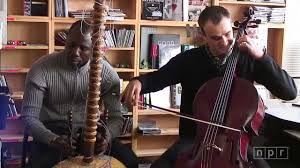
moomin 1sissokoBack in April 2010, another kora player with the same last name (Yacouba Sissoko) played a Tiny Desk Concert with Regina Carter.  Sissoko plays the kora and he is mesmerizing to watch (and to listen to).  Vincent Segal plays the cello and he does things with that instrument which I’ve never seen anybody do before.  It’s a great duo.

Together, the play some beautiful music.  On the first song, “Chamber Music,” Sissoko provides both the lovely backing music as well as some fast plucking.  And Segal keeps up and often outplays his partner.

For the second song, “Balazando,” Segal plays the cello like an upright bass and even plays a little bass solo (including some harmonics).  Then when Sissoko starts playing Segal, plays such high notes that it sounds almost like a flute and even has a Chinese feel to it.

Before the third song starts watch as Sissoko tunes the kora (by twist ting the ropes that hold the strings in place).  “Niandou” opens with Sissoko playing a fast melody (with an up close camera to really show his fingers).  Then Segal play a lovely riff of high notes on the cello.  The song ends with a very fast section–some quick bass playing on the cello followed by some very fast bowing before returning to the slow opening.

The fourth song features some cool harmonic bowing, the likes of which I’ve never seen on a cello before.  The end of the song sees Segal strumming the bowl like a guitar–he can do it all.

Together, they make some beautiful music.

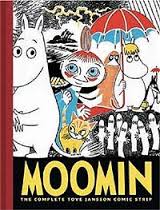
[READ: January 5, 2015] Moomin Volume 1

Inspired by reading the D&Q 25th anniversary book, I decided to check out the books that have been sitting in the children’s section of my library every time I go–Moomin!  They are oversized and lovely books and since I’ve paused on Peanuts I thought I’d read some Moomin–which I have never read before.

It was fascinating to read in the D&Q 25th Anniversary book that Moomin started because Jansson tried to draw the ugliest creature she could think of.  And it eventually morphed into the adorable round creature that we know as Moomin.

This book contains four stories.  I feel like the strips are printed like an every day four panel strip.  Each four panel strip is signed and numbered (but not dated) and most of them (but not all) read like they have a punchline at the end.  So I’m not entirely sure what to make of the publishing run.  Although the front pages state that it originally ran in the Evening News, London 1953-1959.

The four stories are Moomin and the Brigands, Moomin and Family Life, Mooim on the Rivera and Moomin’s Desert Island. (more…)

Read Full Post »

dq25SOUNDTRACK: ARCHER PREWITT-“O, KY” (2005).

wikldernessArcher Prewitt formed The Coctails (a kitschy lounge act) in the early 90s, several years before the lounge revival.  Then he joined The Sea and Cake and has been making amazing music with them.  And he has also released several solo albums.

He has also published some comics (Sof’ Boy) with Drawn & Quarterly.

This song comes from his album Wilderness.  The title of the song is clever, too.

It’s upbeat and folky with a little psychedlia and rock thrown in.  I like Prewitt’s voice quite a bit–it’s simple but really strong.  But the selling point on this song (and others from this album that I have listened to) is the composition and arrangement of these songs.

I like the way this one goes from simple guitar to orchestration (although presumably not a real orchestra) for the chorus.  And how post chorus there are flutes and other instruments to pick up the momentum which adds a vaguely psychedelic feel to it.

At four minutes (the song is five) it changes direction entirely and turns into a nearly new song with big guitars and drums. And it rather rocks.

And just to make Archer the all around dude that he is.  He also drew the cover art.  Jeez.  He’s probably super nice and friendly, too.

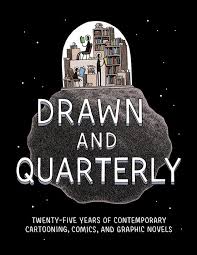
[READ: January 3, 2016] Drawn and Quarterly: Twenty Five Years 

I have liked a lot of D+Q books for a long time, although I never really considered a comprehensive look at their publishing house.  This book–about 775 pages long–is about as comprehensive as it gets.

This book contains a few previously published cartoons and excerpts as well as a whole slew of previously unpublished pieces.  There are essays and histories and reminiscences and love love love for the little Montreal graphic novel publisher.

I didn’t know much about the history of D+Q–that Chris Oliveros started the publisher in 1989 out of his house.  That he was the only employee for years.  And that he was essential in getting the term “graphic novel” used by everyone–including the library of congress!

He weathered distribution problems, he weathered the rise and fall of indie comics in the late 90s and he has come through with some of the most beautiful books published.  D+Q has also brought attention to foreign artists as well as out of print artists.

Really, if you have any respect for graphic novels (that aren’t superhero-based) you owe thanks to D+Q. (more…)

Read Full Post »

1969  SOUNDTRACK: ABIGAIL WASHBURN-Tiny Desk Concert #101 (January 3, 2011).

abigailAbigail Washburn had plans to study law at Beijing University in China.   Before she left, she bought a banjo—she wanted to take something to China that was American.  Then Washburn went on a road trip to study the banjo and to learn some tunes. She found her way to the Augusta Heritage Center in West Virginia, then to North Carolina and then Kentucky to the International Bluegrass Association. It was there that she sat down with a few women to play music, and right then and there was offered a record deal. She blew off China ans has made a career as a banjo player–typical story.

In the ten years since then, she has been to China (with her banjo) where she learned Chinese folk music.  She now mixes American bluegrass and folk with Chinese folk music.  For this Tiny Desk, she plays three songs with her band Rob Hecht on fiddle, Jared Engel on bass, Jamie Dick on drums and Kai Welch on keyboards and trumpet.  She uses two different banjos, a normal sized one and, om the final track, a great big-bottomed one.

The first song “City of Refuge” she says is done in hop high tuning (in case you were interested).  It’s fun seeing how fast her right hand is moving while her left hand is fairly still and her vocals are fairly slow.

“Taiyang Chulai” is a traditional Chinese song meaning “The Sun Has Come Out and We Are So Happy.”  She sings in Chinese (and plays no banjo).  Her Chinese sounds amazing (and it’s really funny to see her speaking/singing it).  She says that taught American folk music in China and learned that she needed to do arm gestures since all Chinese folk songs have accompanying arm movements.  She also wore armbands which her grandma made for her.

“Bring Me My Queen” is the final song.  I found it interesting that her songs are rather slower than the Chinese song, at least in tempo.  This song is even slow for a banjo song.  But it’s quite beautiful.  In addition to being a great banjo player, Washburn has a lovely voice, too.

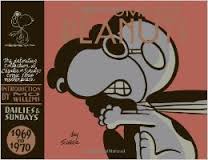
[READ: December 8, 2015] The Complete Peanuts 1969-1970

I was excited to get to this book to see which strip was published on my birthday (it’s sort of like seeing the headlines from the New York Times on your birthday).

Well, sadly, my strip was kind of boring–part of an annual be kind to animals or national dog week or something like that.  Nothing life-changing or earth-shattering.   Good grief.

I also decided that I’m taking a break from Peanuts for a time.  I have really enjoyed what I’ve read, but I need a breather.  I have read twenty some years of the strips over the last few months and, even if Schulz never rested, he didn’t condense twenty years into a few months either.  So sometime later in 2016 I’ll resume the books.

This book is notable for revealing Woodstock’s name!  I feel like that was the last big revelation that we’ll see for a while.  I am curious to see if the 70s added any new characters. (Well, there is Marcie.  I wonder when she comes along).

1969 starts out with Lucy saying that this is her year, “it’s all mine.”  Although a few days later she asks for a refund.  Lucy finally gets fed up with Schroeder and not only kicks his piano but throws it into the kite eating tree.  In March of 1970, Lucy says “I’m a new feminist.”

There’s a lot of Lucy/Snoopy rivalries.  In May 1969 we see the first an only reference so far to tether ball–Lucy is great at it (until Snoopy beats her).  There has been a somewhat recurring joke about Lucy beeping Snoopy on the nose (which he hates).  She does it in April and says it has been 384 days since she did it last (I wonder if anyone confirmed that).  In June, Charlie and his family go on vacation and Lucy is in charge of Snoopy (and she is particularly harsh).

Los of things happen to Snoopy this year.  As is per usual, Snoopy is skating in the winter time.  He is planning to win trophies (skating with Peppermint Patty–although she has to break the news that she is not interested).  He is also in preparation (in March 1969) to be the first beagle on the moon (wearing an astronaut helmet).  Surprisingly, there is no acknowledgement when the first man does land on the moon.

In April 1969, Snoopy goes on a two-week journey looking for his mom (but doesn’t find her).  In July of 1969 Snoopy takes up roller derby (for a very brief time).  In September of 1969 Snoopy finishes his first novel and submits it for publication. But he is rejected!  In Sept 1969 there are a lot of football jokes involving Snoopy and the little bird (the bird being too small to move a football of course).  March 1970 shows the return of the Easter beagle.

1969 sees a lot of talk of “Head Beagle.”  First Frieda reports Snoopy to the Head Beagle for not chasing rabbits.  Later Snoopy is appointed Head Beagle but can’t handle the workload.

In the summer of 1970, Snoopy goes to give a speech at the Daisy Hill puppy farm and a riot breaks out with tear gas!  And in September 1970 Snoopy wears a cooper bracelet to cure his arthritis.

In July 1970 Snoopy reveals a good truism “If you think about something at three o clock in the morning and then again at noon the next day you get different answers.”  Also in July is the first mention of “The Six Bunny-wunnies” fictional series of books.

For a few weeks in August of 1970 Snoopy pretends to be a grocery clerk (butter 28¢, bread 39¢, eggs 59¢, tea 79¢).

Lots of things seem to happen on the baseball field this year.

And in April 1969 Charlie Brown’s team wins two games in a row–neither team could make it so they both forfeit (Franklin is on one of those teams).  Later in June of 1969 Snoopy wins the Rookie of the year award for the baseball team.

In March of 1969 Linus make a sports drink which “replaces the body stores and prevents and diminution of vitally needed electrolytes and nutrients.”  (Gatorade was invented in 1965 and became popular with athletes in 1967).

Some great moments in this book:

In May of 1969 (on the baseball mound, of course) the team is talking about the costs of college “it can cost almost sixteen thousand dollars to go to college.”  The joke comes that Charlie is hoping for a baseball scholarship and every one busts out laughing.

In May of 1969 the school nurse is going to weigh them and Linus says he’s going to as about his hurting shoulder, “never pass up a chance to get a little free medical advice.”

In August, Linus’ gramma says she’ll donate $10 to his favorite charity, “ten dollars is a lot of money.”  (He ultimately decides not to accept).

In July of 1969 the little red-haired girl moves from Charlie’s street!  And Charlie never says anything to her.  Later in December 1969 Linus Charlie and Snoopy go skiing (on a school ski trip).   Charlie sees the little red-haired girl and falls off the ski lift.

Charlie makes a funny joke when he offers to shovel Lucy’s snow.  He asks for a quarter and she says “What if it snows tomorrow and covers up our walk again.  Do we get our quarter back?”  He replies, “No by then I will have spent it on riotous living.”

Peppermint Patty gets a lot of strips in these two years.  In Nov 1969 she talks about school: “I signed up for Folk Guitar, computer programming, stained glass art, shoemaking and a natural foods workshop.  I got spelling, history, arithmetic and two study periods.  I learned that what you sign up for and what you get are two different things.”  (I would TOTALLY sign up for those classes too).

She returns a lot in 1970–she’s a great character allowing Schulz to explore all different kinds of kids and ideas.  In the beginning of 1970 she is called to the principals’ office because she’s not allowed to wear sandals to school any more.  She cries and calls Charlie Brown for advice.  It takes Snoopy to kiss away her tear to snap her out of it.  The strip series ends with Franklin saying, “All I know is any rule that makes a little girl cry has to be a bad rule.”

Patty also says that she got an F on a test because she has a big nose–if a teacher doesn’t like your looks there’s nothing you can do.  Franklin looks at the paper and says “you turned in a blank test paper.”  She sighs, “there’s nothing you can do.”

In December 1970 Peppermint Patty invites Snoopy to a “turn about dance” (where the girls ask the boys).  They have a good time until a boy asks who her weird-looking friend is.  She punches him out and feels guilty about it until Snoopy says he had a great time and he’s the one who bit the chaperone.  Their friendship is great.

In Sept 1970 Patty has a crisis–thinking she’s not beautiful  (then Snoopy gives her a kiss).  The following week her dad gives her a dozen roses and says that the boys will be calling on her when she grows up and he wants to be the fist one in her life to give her a dozen roses.  It brought tears to my eyes.

In June of 1970, Peppermint Patty asks to borrow Charlie Brown’s glove for a kid on her team named “Thibault.”  Which leads to Charlie asking “Thibault?” at least twice.  Then Thibault (who has sideburns), refuses to give the glove back.  But Charlie Brown is happy by this because Thibault accuses him of “thinking you’re better than us.” And Charlie gleefully says “Me?  Better than someone else?”

1969 ends for Charlie when he buys a ticket to a sports awards dinner.  He gets a seat right next to Joe Shlabotnik…who never shows up.

This strip really sums up why Charlie Brown is so likable.  On October 26 in which Linus describes an amazing football game in which a team makes an amazing come from behind victory with seconds left in the game .  He describes the great plays and then Charlie’s response is “How did the other team feel?”

Sally is starting to become a more fully developed character–opinionated but often horribly wrong.  In May of 1970 she buys a fish tank saying “This is the age of aquariums.”  And she has no tolerance for school.  In Sept 1970 she asks why they have to learn all of these things in school.  Why does she have to learn the names of rivers?  “I’ve never even seen a river!  They could at least take me to see a river.”  Later she writes a theme for school, “If I had a pony:”  “If I had a pony I’d saddle up and ride so far from this school it would make your head swim.”  Then she crumples it up and says “That’ a good way to get a D-minus.”  In Nov she shows the class a document that is written by “an actual caveman.”  The punch line: “Show and Lie is my best subject.”

The best Great pumpkin joke comes in Oct 1970 when Lucy says “Santa Claus has elves to help him…what does the great pumpkin have, oranges?”

There are a couple of topical jokes.  In July 1970, when it rains during a game Lucy starts singing “Raindrops Keep Falling on My Head” (which was a hit in early 1970).  And in December 1970, the kids use a Ouija board which had been released as a game earlier that year.

And then on June 22, 1970 the little bird reveals his name to be Woodstock!  (strangely it was a year after the concert).  With a name he acts no differently.  In Nov 1970 Woodstock tries to fly south but gets lost.  So Snoopy walks with him.  After a week they get grabbed by a girl who say “Ma, I found a stray dog!”  Then Snoopy is tied up for a few days while Woodstock tries to rescue him.

The year ends with Sally doubting whether you really have to be good for Santa to bring you presents “the old rascal is bluffing…I know that [he] will bring me presents whether I am good or not.”  Then on Christmas Day, ”I was right!”

This was a great book, with some excellent strips and character developments.

Mo Willems, beloved children’s author, wrote the foreword.  Mo says he started his career by selling black market drawings of Snoopy and Charlie Brown in second grade.  He learned that even bullies liked Charlie Brown.  He says he could utterly relate to Charlie’s world, “For me, an immigrants kid, recently plopped into the middle of a small school in the insular world of uptown New Orleans, Charlie Brown was the only one who understood how confused and unhappy I felt.”

He says he aspired to Linus-ness: to be wise and kind and highly skilled at making gigantic structures of playing cards.  But he knew he was always a Charlie brown.  “Sometimes when I am in a deep funk and feel like my life if is an uphill battle…I try to stop and imagine someone reading the comic strip of my frustrated life and laughing.”

All of his characters are an homage to Schulz in some way.  And the greatest lesson her learned from Schulz, is “never let the characters know they are funny.”

He concludes by saying that Peanuts isn’t Art… it’s better.  He toured the Charles M. Schulz Museum and Research Center and held an original comic but he found it anti-climatic.  They were too precious to be enjoyed…they became Art.  The magic that you get from having them in a book or newspaper was missing.

Read Full Post »

« Newer Posts - Older Posts »