Feeds:
Posts
Comments

Archive for the ‘Funny (ha ha)’ Category

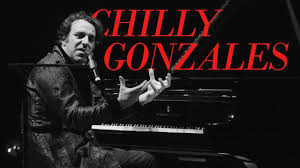
SOUNDTRACK: CHILLY GONZALES & KAISER QUARTETT-Live at Massey Hall (February 5, 2016).

Years earlier, Chilly Gonzales had signed a record deal in Toronto but it didn’t go well “because I wasn’t prepared for what the job of being a true musician was.  I didn’t really have a narrative.  I couldn’t draw people in and guide them.  I thought the music would be enough.”

He went to Europe–Berlin–taking the name Chilly Gonzales and creating this persona.  He wanted reassuring satisfying elements and surprising, uncomfortable elements.  He wanted to  take a page out of the rappers playbook–embodying superficiality and depth ant the same time ridiculousness and seriousness at the same time.

Toronto was like the place where lighting hit the lab and turned him into a supervillain.  The failure of the label is his origin story.

They play primarily instrumental compositions, but ones that are very different and unlike anything else I’ve heard.

“Green’s Leaves” is a staccato piece with great melodies from the Quartett and lovey piano sprinkled throughout.  It’s a short piece with a lot of beauty.

He tells the audience he thinks of the Kaiser Quartett (Adam Zolynski-violin; Jansen Folkers-violin; Ingmar Süberkrüb-viola; Martin Bentz cello) as the world’s most expensive sampler.  He tries to use them in ways that string quartets might not be used.

“Sample This” is a simple request to rappers or producers to feel free to sample this piece of music (and of course call my lawyer beforehand).   He says you don’t have to have a rapper to make rap music–it is an attitude.  He says, “see if you can rap along in your mind.  Imagine what a rapper might say over this.”

This song moves along prettily at a rapid pace.  As it reaches the middle it slows down to a gentle piano with pulsing low notes from the strings and just as it feels like it has hit the end, Joe Elory (I wish it was filmed better) gets up and thuds the drums for one loud beat as the song resumes and picks up the pace.

The fact that he ends the song with quiet piano melody and a rapper pose and says “bitch” is really quite funny.

He says that a sampler can contain the history of all recorded music.  The Quartet plays  a bar of “Eleanor Rigby” which he introduces as “Elizabeth Ridley by the Rolling Stones.” Then they play Joseph Haydn–the song we all know– but says he wants the gansta version–put it into a minor key.  Then they play the opening of Schoenberg’s “The Rites of Spring.”  When Schoenberg played it, it caused a riot.  The dissonance is something.  He jokes that that was the verse now here comes the catchy part (it’s the same).  Is this offensive to you?  Or is this offensive that I’m wasting so much time playing this terrible music “hashtag fuckscheonberg.”

He mashed all the above together to make “Advantage Points.”  The loud and quiet parts balance nicely and its really quite catchy.

“Supervillain” has lots of high notes on the piano before the strings kick in.  And then its a rap (!).  The lyrics are good but the flow is only okay.  It’s funny but not comic.  When it’s over he affirms: “So you like rap music when it is over a waltz beat.”

“Knight moves” is a fast piano piece that builds to some really fun rollicking piano and even adds (minimal) drums by the end.  As it moves along he starts playing very very fast and heavy, including more or less pounding on the low notes for a low rumble.

“Smothered Mate” has a kind of action movie vibe.  There’s also percussion for the whole piece.  Unfortunately, he speaks over it for the end:

In the pre-Drake era there were not a lot of reasons to think that Toronto was on the musical map.  But Charlie Parker and Neil Young  showed this hall had glamour you dint get in a lot Canadian venues.

[READ: June 19, 2018] “Edison Labs, 1891”

This story goes in a direction I never expected and the anachronism of the humor is terrific.

Thomas Edison is working in his lab when his assistant, Jed, confesses that he screwed up again–he used centiliters instead of milliliters.  Which leads to a beaker exploding.

Edison believes that this boy is an idiot–useful only as a subject for medical experimentation.

Except for one other possibility.

He asked Jed to stand there in one spot.

Then he pulled over his new contraption, an apparatus made of metal and glass. (more…)

Read Full Post »

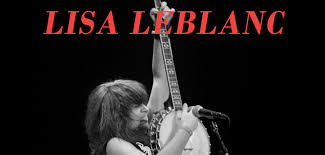
SOUNDTRACKLISA LEBLANC-Live at Massey Hall (June 6, 2015).

I thought I didn’t know who Lisa LeBlanc was, but it turns out that I knew her song “5,748 km” from a NPR episode.  How funny.

LeBlanc thanks Massey Hall for putting her on and for supporting new artists.  It’s so legendary, she can’t imagine what’s going to happen right now.

The show, in which LeBlanc opens for Spirit of the West, opens with this formal introduction.

Welcome to Massey Hall. To get the night going when you have a band like Spirit of the West who is dynamic and fun, who else can you bring to match that kind of excitement?  Please welcome to the stage Lisa LeBlanc.

She walks out on stage, grabs the banjo and plays a slow banjo melody.  After a beat or two she starts whistling a forlorn melody–a perfect Western-sounding instrumental (her whistling is very impressive).

Her whistling is great.

Then she gets a sly look and starts playing her banjo a little faster.    And then completely unexpectedly (to me anyway) her drummer (Maxime Gosselin) and baritone guitarist (Jean-Phillipe Hebert) start trashing like lunatics.  “Gold Diggin’ Hoedown” is a song that perfectly meets what her style is called: “trash rock” It is crazy and fun.

She says she grew up in New Brunswick playing music in the “kitchen party” scene.  She played with her uncles in the garage instead of going partying with the cool kids.  “I was kind of a loser.”

The next song is in the same style, but it is sung in French.  “Cerveau ramolli” which she translates as “My Brain is Mushy.”  This song is totally rocking with great thumping floor toms.

I can’t find the names of all of the songs (usually the video names them, but not this time).  There’s another song in French.

She switches banjos and then talks about “Katie Cruel,” a song that no one knows where it came from and it’s her favorite song of all time.  There’s a quiet part in the middle with just banjo and then nearly a capella before rocketing back to life.

She gets a new banjo and sings quietly over gentle picking:

Don’t try to figure out what’s going on his head / he ain’t trying hard to see whats going on in yours….  I love these lyrics:

He’ll give you the shirt off his back but he wont give you his heart.

She tells the audience she’s from New Brunswick.  Cheers from half the crowd.  Then she says she’s from a town of 51 people.  She was trying to date someone from Vancouver.  Canada is really big.  This is an introduction to “5.748 km” in which she plays guitar instead of banjo.  It’s a spoken/sung song.

She says “Let’s talk about cowboys” and then sings a song in French called (I believe) “J’pas un cowboy.”

For the final song she says the title “You look like trouble but I guess I do too” is quite self-explanatory.  After a few verses they take off.  That baritone guitar is so low and rumbling.  Things slow down in the middle where she plays a great banjo solo and then the sing thrashes to an end.

Over the credits she sings part of one more song this time with electric guitar.

LeBlanc is multi-talented and a lot of fun.  She’d be an excellent opener for anyone.

[READ: June 2, 2018] “Mum’s the Word”

This issue of the New Yorker had a section entitled “Parenting.”  Five authors tell a story about their own parents.  Since each author had a very different upbringing the comparison and contrasting of the stories is really interesting.

This is a funny (sort of) essay about being a parent and how “as a parent I spend a good amount of time talking about things that don’T interest me like My Little Pony, or pasta, or death.”

The death part is funny because her four-year old daughter is suddenly obsessed with it.  But in unusual ways: “When I die…I want to die in Egypt so that I can be a mummy.”  After half paying attention, Rivka nods assent then her daughter says “Mummies make other mummies.  With toilet paper.” (more…)

Read Full Post »

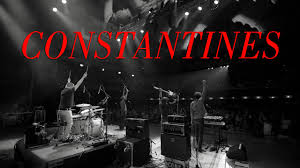
SOUNDTRACK: CONSTANTINES-Live at Massey Hall (May 27, 2015).

From the clips I’ve seen, Constantines are (were?) an incredible live band.  They have so much intensity.

In the opening, they are asked  Are you guys nervous?  They don’t seem to be although they concede that “Nervous is good, it keeps you on your toes.”

At some point we decided to run the band where we would play anywhere with a three-pronged outlet.  It led to playing a lot of amazing spaces…non-performance spaces like skate shops and basements and art galleries.  This feels like an incredible extension of that to play Massey Hall… a historic venue.

“Draw Us Lines” opens the show with thunderous drums and squalling feedback as the band gets the audience clapping along to a simple rhythm while Bry Webb sings in his deep raspy voice.  I love how much noise the keyboardist makes just pounding on keys–at times leaning on the machine with his whole arm.

“Our Age” has martial beats and an interesting low riff that runs through the verses–but the choruses burst forth really catchy.  “On to You” was a single I believe.  It has loud verses and a quiet, understated chorus.  I love how much they raise their guitars–the bassist even plays with the instrument raised over his head

“Young Offenders” rocks as hard as anything else they play, but it adds the surprising lyric: “young hearts be free tonight … time is on your side,” before launching into the heady section with the crowd shouting “Can I get a witness.”

“Nighttime/Anytime {It’s Alright)” has a great slinky guitar intro and sounds very familiar–as if it’s quoting another song, but I can’t figure out what.

More thumping drums (the drummer must be exhausted) and some distortion and feedback introduce “Young Lions” which starts as kind of catchy rocks song but features wonderful noise section in which everyone plays with feedback and the keyboardist actually sits on the keys before returning to that really catchy section.

The show ends with “National Hum,” a blistering loud track with discordant chords and intense vocals.  The drums just seem to go faster and faster as the song goes on.

They play this show like it’s the most important show they’ve ever played.  And the crowd responds accordingly.  It’s unclear to me if Constantines are broken up or not, but if they ever come around, they are a must-see show.

[READ: June 2, 2018] “What is Possible”

This issue of the New Yorker had a section entitled “Parenting.”  Five authors tell a story about their own parents.  Since each author had a very different upbringing the comparison and contrasting of the stories is really interesting.

I love the opening of this essay in which Mohsin says that his mom worked an entry-level job at what would now be considered a Silicon Valley tech business.  They made audiocassettes.

His father made peanut-butter and jelly sandwiches and picked Mohsin up from school on his bike.  His dad had a mustache and sideburns but no hair.  They went to the university where his father was studying.  Or they went home to watch cartoons on the small black and white TV.

Mohsin says he always saw colors on it “though I was told by friends that this wasn’t possible.”  I relate to this because I had a black and white TV in my room growing up and I was sure it was color until one day when I went to my parents TV and compared sided by side and saw just how colorful their TV was. (more…)

Read Full Post »

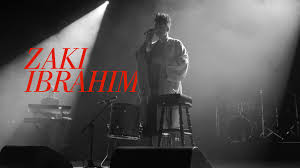
SOUNDTRACK: ZAKI IBRAHIM-Live at Massey Hall (March 27, 2015).

I had never heard of Zaki Ibrahim before this and from the pictures, I rather thought she would be kind of an opera singer.  She is pretty much everything but.

Born in British Columbia to a father from South Africa and a mother from the United Kingdom, Ibrahim spent her childhood as what she describes as a “citizen of the world”, living at different times in Canada.

This show starts out differently than the others–no interview just her getting her make up done and warming up with her backing singers.

Then she comes out to the theater and sings…in French!  I believe it is the song “Lost in You” (for some reason they don’t show the names of the songs for her).  It’s moody and quite lovely.  After some vocals scatting big drums propel the song half way through to really rock out.

She talks about feeling vulnerable on stage and how important that is for the energy exchange between fans and artist.

The next song is on piano with quiet drums, the singers repeat “I Just Need You Here.”

After this song, the band plays around with some sounds, manipulating it with gadgets and slides and whatnot and there are some vocals by Waleed Abdulhamid.  While that is going on, she comes out in  new outfit and as “Something in the Water” starts she is playing the theremin! and an electronic drum pad.  They seem to be singing “We Fly Home.”

It’s great that these Massey Hall shows have picked so many good artists to showcase.

[READ: June 2, 2018] “Anyone Can Milk a Rubber Glove”

This issue of the New Yorker had a section entitled “Parenting.”  Five authors tell a story about their own parents.  Since each author had a very different upbringing the comparison and contrasting of the stories is really interesting.

Jeanette Winterson describes milking a rubber glove: fill it with warm water, put your index finger and thumb two inches above the teat. The other three fingers squeeze the udder firmly but placidly–it’s like playing the recorder.

Why would anyone do this?  Well she did it for training how to milk a goat.  She was nine or ten when they got the goat.  The goat was named Gracie Fields (after a war-time music hall star).  The war had been over for twenty-five years but her parents still talked about it.

Her mother was deeply religious and read the Bible front to back and started over again.  S also liked singing and believed the goat milked better is you sang to her.  The songs had to be the right kind of downer hymns because goats don’t like to be too cheerful. Unlike sheep, goats are thinkers, but goats are going to Hell while sheep are going with Jesus.

Jeanette’s first time milking Gracie didn’t go very well.  Even with her mother singing “Have You Any Room for Jesus?”

Read Full Post »

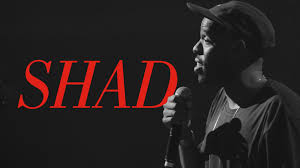
SOUNDTRACKSHAD-Live at Massey Hall (March 27, 2015).

Shad is a terrific Canadian rapper.  His beats rock, his lyrics are great and he has some really interesting samples.

As this episode starts, he talks about Massey Hall as having a value in tradition.  When people come here they are excited.  It’s fun for his fans to come to this place to see Shad like they’ve seen him before but its different–a bit more excitement.  It’s like being with your friends you usually hang out with but now you’re going to the semi-formal and it makes it more memorable

The show opens with a trumpet (Tom Moffett) and bass (Ian Koiter).  As Shad walks out on stage, the drummer (Matthew Johnston) plays the cymbals to loud fanfare and Shad hypes the crowd.  The violin (Andrew Forder) swells, the turntable scratches and the melody starts for “Compromise.”  There’s so many great lines in this song:

Your hearts warm, mine’s on fire and I’m antsy
I know it’s so cliche but I’m angry
That some can’t eat, meanwhile I’m letting a damn feast
Of pastas and canned meats, rot in my pantry
Like, Lord please, can we speak on this frankly?
Like, God why you letting this happen? Amen
He answered, “Son, I’m asking you the same thing
Cause you’re supposed to be my servants out there working
Like you’re my hands reaching out to those that’s hurting
You don’t have long on this Earth and
I hope you won’t compromise, I said I hope you won’t compromise”

It ends with some cool organ sounds and then a sample from “(I Never Promised You A) Rose Garden” (which Shad calls some “feel good music”).  “Rose Garden” has more great lyrics and the cycling sample of “(I Never Promised You A) Rose Garden.”

I love that so many rap songs (not just Shad’s) have pop culture references that make the songs incredibly dated.  But if you knew the song when it was relevant you don’t mind

“Stylin” has a great funky bass line and more terrific lyrics

Please, I’m ahead of my time, wait, [scratch] now I’m ahead of the times
Sped up ahead of the beat, speaking of time whenever I head to the meet
I’m always ahead of the heat, head of my class egg head with glasses
Leaving these heads with a classic, now let me just head to the back
With my head, I’m a nap for a bit

and then this ‘ with help from rapper Saukrates

See I got fans that say “Oh hey Shad, I hate rap but I like you, ”
Well I hate that, but I like you at least I like that you
Like me so I won’t spite you, it’s not your fault you’re a white dude
Likes white music I like too, just don’t be surprised by my IQ
Please, it’s like back in high school they said “highbrow”
I said, “hi who?” That Shakespeare, that’s a haiku
I like the high road so I was like dude that’s basic
That’s like crude but you’re old placed to my iTunes
Use your common sense, matter fact use Common Sense
For that matter use Ice Cube, don’t think that we nice too
Cus we don’t look like you, cus we don’t know how to tie ties
And our grandparents weren’t tycoons?

The next song (“Progress: Part 1”) starts like an improvised spoken word.  He says that he and his friends were listening to a song on the radio and he started riffing:

Bye-bye Miss American Pie
Drove a block to that shop with the liquor inside
Singing “Gin and Juice”, drinking whiskey and rye
Thinking “This’ll be the day that I…”

His says his full name is Shadrach Kabango and he wrote a song called “A Good Name” to celebrate it.  This was the first song I’d heard by him and I really liked it back then.  It sounds great live with the band behind him.

But my favorite song of the night is “We Myself and I” from the same album TSOL.  The guitar riff (Tom Ionescu) is simple but totally rocking and the drums are completely intense.  There’s some great turntabling “T Lo (Terence Lo) on the decks.”

The show ends with the less rocking “Remember to Remember,” a thoughtful song with synths from Max Zipursky.

This is a great show.  It’s amazing how much rappers come to life with a live band.

[READ: June 2, 2018] “Finding Yourself in Film”

This issue of the New Yorker had a section entitled “Parenting.”  Five authors tell a story about their own parents.  Since each author had a very different upbringing the comparisons and contrasts of the stories is really interesting.

In this story, Kushner says she relates her parents’ life (and her own) to the movie The Leather Boys.  It came out in 1964, her parents saw it in 1965, before she was born.

When she was a kid, her father rode a Vincent Black Shadow motorcycle like the Rockers in the movie.  Her dad was no Rocker, but he liked the bar featured in the film the Ace Cafe.  (where most people rode Triumpshs, BSAs and Nortons.

In the movie, two bikers meet at the Ace.  Pete is an eccentric lone wolf and Reg is in an unhappy teenage marriage to Dot.  Peter tells Reg to leave her.  Dot tries to keep him from leaving her by claiming she is pregnant. (more…)

Read Full Post »

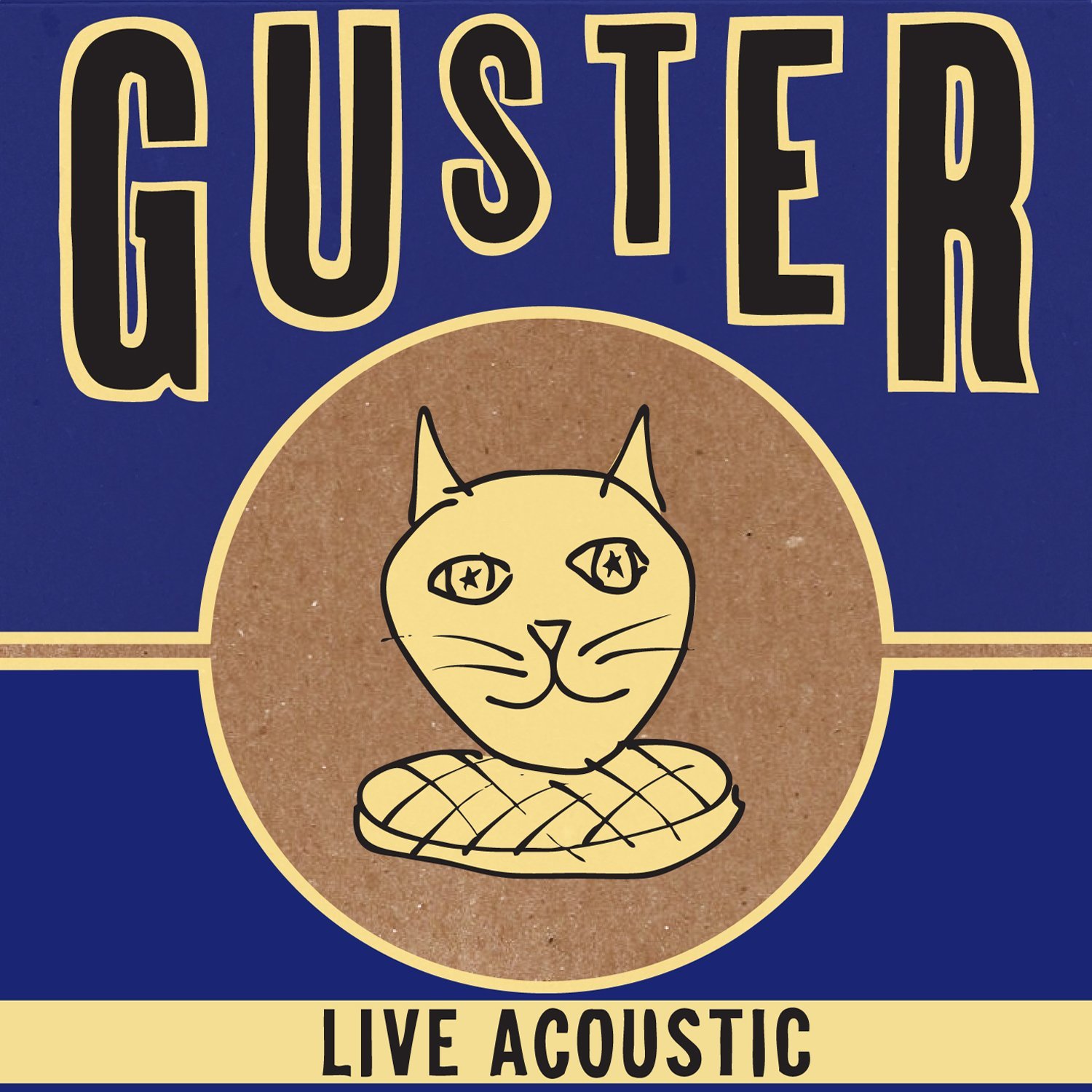
SOUNDTRACK: GUSTER-Live Acoustic (2013).

There was one more Live Guster release around the time of those three full album recordings.

This one is called Live Acoustic and it comes from a tour in 2012.  There’s no dates or locations assigned to the songs and indeed they are all done acoustically.

The most notable aspect of this disc is that none of the rockers are included.  This is good because it means they aren’t trying to strip those songs down.  But at the same time, it means that the disc never really takes off like a Guster show would.  It’s not all ballads, mind you–most of the songs from Easy Wonderful that are included are uptempo, and of course “Satellite” is a super fun single, but there’s nothing like “Fa Fa” or “Barrel of a Gun” or “Amsterdam.”  It speaks volumes to Guster’s songwriting skills that I didn’t even miss these favorites until I really looked at the track listing.

They include songs from all of their albums (except Parachute which was all acoustic) and a “deep B side” from the Satellite EP.

For the most part these songs sound great in an acoustic setting.  My only quibble is that some of the songs have really great orchestration which I miss (but that’s personal preference I suspect).  A bunch of the songs have strings which are a nice addition, especially on a song like “Either Way” and the amazing wild violin solo in “Satellite.”  This reminds me of when we saw them with Kishi Bashi and he played the violin on “Satellite”

The one really nice factor is that with everything stripped away, the guys’ voices sound really powerful.  And as I say, because the tone is somewhat mellow the song selection works to this and you don’t miss the bigger songs.  Plus any show that ends with “This Could All Be Yours” is a great one.

  • Backyard [KEEPIT]
  • Do You Love Me [EASYWON]
  • Long Way Down [KEEPIT]
  • That’s No Way to Get to Heaven [EASYWON]
  • What You Call Love [EASYWON]
  • Beginning of the End [GANGING]
  • Diane [KEEPIT]
  • Rocketship [GOLDFLY]
  • Empire State [GANGING]
  • Rise and Shine [SATELLITE EP]
  • Two Points for Honesty [LOSTANDGONE]
  • Either Way [LOSTANDGONE]
  • Satellite [GANGING]
  • Rainy Day [LOSTANDGONE]
  • Hang On [GANGING]
  • This Could All Be Yours [EASYWON]

[READ: January 19, 2017] “Maybe It Was the Distance”

I enjoyed this story so much, I could have read twice as much (and it was pretty long).

This is the story of a Jewish family: Irv and his 43-year-old son (Jacob) and 11-year-old grandson (Max).  It begins very amusingly with them heading to the Washington National Airport (they refuse to call it Reagan National).  Irv also hates NPR (which they were listening to) because of the flamboyantly precious out-of-no-closet sissiness and the fact that they had a balanced segment on new settlement construction in the West Bank.

The first half of the car ride devolves into an argument between the three of them about opinions and Jewishness.  Jacob is frustrated by his father and Max is both precocious and still a child–it’s all very funny.  Especially when they argue while the light is green.

They were heading to the airport to pick up their Israeli cousins.  They were picking up Tamir, who was Jacob’s age, and his son Barak.  Jacob and Tamir’s grandfathers were brothers in a Galician shtetl that was overlooked by the Nazis.

Issac (Irv and Jacob’s family) moved to America while Benny (Tamir’s family) moved to Israel.  They would visit every few years.  Isaac would show off his American lifestyle and then spend two weeks complaining about Benny after they’d left.  And then Isaac died (he had outlived cancer and Gentiles). Tamir surprised everyone by coming in for the funeral.

Jacob discussed Isaac with Tamir and said that basically he did exactly same thing every day (and the details are very funny, if not sad). (more…)

Read Full Post »

SOUNDTRACK: GUSTER-Parachute Live from Brooklyn Bowl (2013).

In 2014, Guster released three CDs of them playing their early CDs live in their entirety (excluding for some reason their second disc Goldfly).  So this is a recording of their first album ‘Parachute’ performed and recorded live in concert at Brooklyn Bowl on December 1, 2013.

This album sounds quite different from the other Guster albums.  I don’t really understand what the difference is.  It sounds like Guster, but not exactly.  Is it that they both sing in harmony through most of the songs?  Is it that Ryan sings “better?”  Are the songs just more folkie?

Whatever the case, even after several albums that don’t sound like this album and nearly twenty years, the band jumps right back into it (the harmonies on “Window” are perfect, for example).

They aren’t the same three-piece they were back in 1994 (they have drums now for instance), but it all works very well.  They also aren’t terribly funny between songs.  Usually Ryan is pretty silly in a show, but they seemed to take it more or less seriously.

After “Dissolve” Ryan says, “we’re playing in a bowling alley I just realized.  Cool.”  You can hear someone in the crowd shout “steeerike.”

I know the guys have made jokes about their song “Happy Frappy” a few times when I’ve seen them, so it’s no surprise that before the song, Ryan shouts, “Alright its ‘Happy Frappy’ time, stoners.”  Although I have no idea what the song is actually about.

When the disc is over Ryan shouts, “Parachute the album–19 and a half years old!”

I think it sounds even better than the original.

[READ: June 2, 2018] “Orange World”

I love when a title gives you an idea but it is totally not the idea of what  the story means–and the new idea is even better than what you had imagined.

“Orange World” conjured up many things to me, but not the devil, not a woman nursing the devil and not a woman nursing the devil every night because the evil saved her baby’s life.

When Rae was pregnant she was worried about a lot of things: ABNORMAL RESULT, HIGH RISK, CLINICAL OUTCOME UNKNOWN.  When the third test came back, she started begging for anything to save her baby from the unknown.

Between 4 and 5 A.M. one night something answered and it promised the baby would be okay.

So what does this have to do worth orange world?  Well, “Orange World is where most of us live.”  It is a nest of tangled electric cords and open drawers filled with steak knives.  It’s a used crib  It’s compromises that could hurt the safety of your baby.  You take a shower with your baby and suddenly….

“Green World” is a fantasy realm of soft corners and infinite attention. The Educator say that Green World is ideal but Orange World is the reality.  Next week’s class is “Red World” and Rae doesn’t want to think about it.

Rae takes the baby doll.  Its head falls off and she steps on the blanket.  Sneaker bacteria: Orange World; decapitation: Red World.  The educator encourages her to go to new moms group. (more…)

Read Full Post »

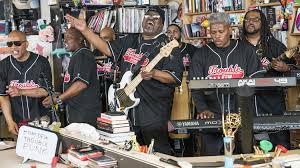
SOUNDTRACK: TROUBLE FUNK-Tiny Desk Concert #748 (May 30, 2018).

If Tiny Desk was set anywhere other than Washington D.C. I would never have heard of go-go.  It is a regional funk style that seems to have never left the area and of which the DC crowd is very proud.

Go-go — Washington D.C.’s regional twist on funk — reigned in the DMV during the 1980s, and one of the scene’s signature acts was Trouble Funk. More than 30 years later, the collective — led by Big Tony Fisher — still fills sold-out venues with heavyweight percussion and call-and-response lyrics. Trouble Funk concerts are bona fide jam sessions, so I was determined to squeeze their unrelenting rhythms behind the Tiny Desk. While the late Chuck Brown is often acknowledged as the godfather of go-go, Trouble Funk was a key part of the sound’s second wave.

And considering that the band is decked out in matching Trouble Funk baseball uniforms, it seems like they have no intention of going anywhere (clearly not all of the members are original).

How do you fit 12 members behind a Tiny Desk?  Put the horns: (Dean Harris (trumpet), Eric Silvan (saxophone), Paul Phifer (trombone)) on the right.  Put the drummer (Tony Edwards) on the left and the hugely important percussionists (Chris Allen and Larry Blake) back and center, anchoring everything.

Then you have the keyboardists (Allyson Johnson and James Avery) and the guitarist/vocalist David Gussom (only one guitar in the whole band of 12 people!).

Right up front you have the two singers Derrick Ward and Keith White and orchestrating the whole thing is Big Tony Fisher (bass/vocals).

They begin with the 1982 banger, “Pump Me Up”, which has a great watery funky bass sound (from the keys) and tremendous percussion.  All of the verses are rapped in a 35-year-old-style–rhythmic more than rapping (with lyrics about Calvin Klein and other jeans, Superman, Studio 54 and Fat Albert).  Four of them take a verse, but the show is all about Big Tony Fisher, who has got this great deep voice.

Incidentally, this song was

sampled in Public Enemy’s protest anthem “Fight the Power” and M/A/R/R/S’s dance classic “Pump Up The Volume.”

I need to hear the original to figure out what was sampled.

The drums breaks here are definitive go-go and it was hard to discern who was having more fun: the band or the audience.

As they shift to “Grip It,” you can hear the change of style but not intensity as the song shifts and “buoyant and staccato horn melodies propelled the song forward.”

It segues to “Let’s Get Small” through a funky bass line.  It features Trouble Funk’s classic call-and-response chants of “I like it!”

The music stops but the rhythm continues as they segue into “Drop the Bomb,” “another notable gem from their lengthy discography which keeps the energy level high.”

“Don’t Touch That Stereo” was the first song where I couldn’t hear much of a difference between it and the preceding song.  And I realized that they’d been playing nonstop for nearly 14 minutes–all in a similar funky style.  It’s a great fun party even if the individual songs are kind of beside the point.

They did take a short break as Tony introduced their first hit from 1979 “E Flat Boogie.”

I’m rather surprised that go-go never took off anywhere else, since, as the blurb says, the music “inspires a spirit of dance, rhythm and sheer joy.”

[READ: July 7, 2016] “Fable”

This was another story that I found strangely unsatisfying.

I feel like this story was almost perfect but that there were elements that prevented it from being so.

Since it is called “Fable,” it begins with “once upon a time.”  But we know that it is not a real fable exactly because the next part is “there was a man whose therapist thought it would be a good idea for the man to work though some stuff by telling a story about that stuff.”

His first attempt is short and dull: “one day the man woke up and realized that this was pretty much it for him.” (more…)

Read Full Post »

 SOUNDTRACK: RHEOSTATICS-The Horseshoe Tavern, Toronto (May 27, 2017).

Fourth of four shows at The Horseshoe Tavern dubbed Spring Nationals.  Some bust outs at this show – Take Me In Your Hand, Jesus Was Once A Teenager Too, Edmund Fitzgerald as well as Opera Star and Take The Money And Run – another awesome show.

Lineup is: Dave Bidini / Dave Clark / Hugh Marsh / Ford Pier / Martin Tielli / Tim Vesely

Jeff “J.C. ” Cohen the owner of The Horseshoe introduces the show.  He talks about the 70th Anniversary of The Horseshoe.

He mentions thee 1950s and 60s when artists like Willie Nelson would do a full week here. No cover from Mon-Wed to get to know the band and then a $3 cover and then a $4 cover.  They made this dump a legendary live venue.  Nothing beat 25 nights of Stompin’ Tom Connors.  That kind of thing doesn’t exist anymore except the Rheos.  He mentions how during their last Nationals they went to like 3:45 AM.

The opening acts were Southtown from Texas and Hydrothermal Vents (John Tielli’s Montreal-based band)

This nearly three-hour(!) shows starts off pretty mellow with Tim;s new song “Music Is The Message” which sounds more pretty than ever.  It’s followed by a whispered version of “Stolen Car” with gentle violin and backing vocals to start.  Although about 3 minutes in, an ever escalating feedback starts taking over the song and they have to stop mid-song (gasp!)  DB: “Live music!  These are not backing tapes, not yet.”  Martin picks up right where they left off perfectly.

Dave: “We’re mostly playing waltzes tonight.”

They mention the “bad” fan from last night. The Habs fan, he was very anti-fellatio.  Clark: “That’s the big guy from Shakespeare, right?”

Ford: “There are more things in heaven and earth than are dreamt of in your philosophy, Fellatio.”

“King Of The Past” sounds great.  I love Hugh’s violin at the climactic moment.  It’s followed by “Northern Wish” Dave notes: My wife wrote those land ho’s.”  He also mentions that Martin is “quite the cowboy.”  So Martin recites in a drawl, “Everybody’s talking about me, but I don’t hear a word they say.”

Someone shouts, “You guys gotta play ‘Saskatchewan.'”
DB: [quickly] “Nope.”
Audience guy: “Why not?”
DB: “Well maybe.  Seeing as you asked so …nicely and not at all brusquely.  We’ll see.  The set list is merely a sketch.”

DC: “This ain’t brain surgery.”
DB: “Or Brain Salad Surgery.”
Tim: “Or hot dog salad surgery” (an inside joke about the very first tour they went to the 7-11 in Thunder Bay in our under pants and it was seriously cold.  All we could afford was hot dogs so we loaded on as much salad as we could.  I don’t think they have police in Thunder Bay because we should have been arrested.

Then comes the first huge surprise, a bust-out of “The Ballad Of Wendel Clark Parts I & II.  It sounds great and during the ending section they do a few Stompin’ Tom songs: “Bridge Came Tumbling Down” and Algoma 69.”  Then they take it back to G sharp for a folkie verse of “P.R.O.D.” and then the Wendel ending.

Dave talks briefly about the Lake Ontario Waterkeeper our legacy as a generation.  It’s a beautiful body of water that nobody goes in.

There’s a very smooth sounding “Claire” with nice washes of synths.  It leads to a terrific version of “The Albatross” which gets better with each playing.  We learn that it was written after a Martin solo tour which is why it sounds so very Martin.

“Soul Glue” is a fun version with lot of violin.  Amusingly, Tim messes up the opening lyric, starting with the first syllable of the second verse.  Dave asks, “You need some help, Tim?”  But Tim is quickly back on track.  A ringing of feedback returns but is quickly squashed.  The pretty ending of the song leads an abrupt loud rocker, the introduction to “AC/DC On My Radio.”  It has some great drums at the end and Dave even asks, “Could you guys clap your hands?  I never ask people to clap their hands.”

“P.I.N.” sounds great and is followed by another bust out: “It’s Easy To Be With You” or “It’s easy to be with Hugh.”

Tim: This one’s called “smoke break slash washroom break.”  It’s a pretty acoustic version of “Bad Time to Be Poor” with Tim on guitar and High on violin.

Tim thanks the “multi-nighters” and then Martin introduces “my brother johnny” who helps out on “Jesus Was Once A Teenager Too.”  The songs tarts quietly with just piano and builds and builds.

They have some “high level talks” about what to play next.  They agree on “What’s Going On?” Then Martin suggests “Saskatchewan” “for those guys.”  Tim: “maybe that will shut them up.   Just to be clear it’s Part 1, right?”  Dave: “he’s left, he’s puking in the bathroom.”

There’s a very pretty ending that launches into Martin’s heavy riffing for “RDA (Rock Death America).”

Then the man who has been compiling all of these live shows, Darrin Cappe gets a dedication of “Christopher.”

A fun, rollicking “Dope Fiends and Boozehounds” segues into “Alomar” (sort of, Dave notes) and then back into “Dope Fiends.”

After an encore break, Dave plays “My First Rock Concert.”  Dave says “Maybe Tim Mech will join me.  maybe not.”  But then, “This song features Tim Vesely on the drums.  He’s got one fill but it’s a really good fill. [Tim plays].  That’s a new one! [Tm plays another]. That’s all I got.

As Dave sings about his first rock concert which his dad drove them to, Tim says, “Fred…. in a Delta 88.”

Dave asks: Ford what was your first concert?  Ford is using Tim’s mic, no sound.  Tim: “They didn’t turn my mic on tonight.”  Ford: “But you made so many awesome jokes.  You got to repeat them all.”  After some hemming and hawing he says: “D.O.A. or SNFU or Personality Crisis or Chocolate Bunnies From Hell… or Big Country.”  Dave: “You can only have one, Ford.”  Ford: “Nope.  Too convoluted to get into here, but I am the kind of person who has had many firsts in his life.  I’m a complicated man.”

When he sings the “swan dive,” Tim says “No you didn’t.”  Dave: “He was there.  No I didn’t.  But it works with the song.”
Ford: “See, truth is less important than meaning.”
Dave B: “Truth is less important than loyalty.”

Dave Clark: “Beach Boys, 1973, Surf’s Up, with my best friend Karen Lindhart.”
Tim: “Triumph at Exhibition Stadium.”

They play “Take Me in Your Hand.”  Dave: Tim, two drumming songs in a row how do you feel?”  Tim: “Elated and vindicated.”  There’s a great organ sound throughout the song, which they haven;t played in a long time. Although the acoustic guitar cuts out during the outro.”

Dave Clark has the audience do something with their hands and ultimately touch their ears and says he does it with little kids all the time in class.  I’d like to know what that is.

Martin notes: “Timothy Warren Vesely on the kit… on the traps.”
Ford”  “I want to tell you all how thrilled I am to be here with my dear friends, playing like the best music there is.”

Dave mentions some upcoming shows through the summer and then one that’s not in Toronto that their lawyer Woody Springsteen told them not to talk about.

Martin: This next song was written by a good friend of ours…”
DC: “G. Gordon Liddy.”
Martin: “G.  Gordon Lightfoot.”
Ford: “He could have killed every person in this room with any object on this stage.”
Tim: “We ask that there be no lights for this song….”
Dave B: “Total dark in the beginning, Marsen.”

It’s amazing that they do an 11 minute version of “The Wreck Of The Edmund Fitzgerald.”  It sounds really great and just builds in intensity until there is absolute silence at the end of the song.  Really amazing.
Martin asks, “When’s the last time we did that, Dave?”
Dave: “I don’t know, a long time ago.  But sometimes it’s good to take a break from a song.”
Tim: “Or from a band.”

Dave B: “Who is not from Toronto?  It means a lot.  Jesus, I don’t think I’d drive to see us.  …because I’d be replaced and that would be terrible.  It would be sad.”

There hasn’t been a ton of banter during this show, but as it gets near the end, they are talking more.  They dither about what to play

Audience: “play a good song.”
Dave B: “that’s a terrible chant.”
Audience: “play a bad song.”
Audience: “play my favorite song.”

They play “What’s Going On Around Here?” with Tim on accordion.  It sounds great and then as they get near the end, Hugh starts playing a crazy violin solo–weird effects making bizarre almost human sounds with Martin doing bizarre backward mumble vocals.  It’s pretty neat.

Dave, sounding exhausted: We have one more maybe one and a half more.

Tim: “I think we played the show stopper like five or six songs ago.”

Dave C: “Martin’s gonna surprise you, kids.”  He plays Neil Young’s “Opera Star” and then a sloppy version Steve Miller’s “Take The Money and Run” that doesn;t quite sound right but still sounds good, especially Hugh’s wild solo.

Dave B: “Now that’s a show stopper.”
Tim: “That’s because we know no other songs.”
Dave B: “Should we do one more to bring it back.”
Tim, “No, we know no more.  That was bottom of the barrel.”

Requests from the audience, but Ford Pier, he’s in the band, we have to honor his request.  We’ll soon be having an opening on keyboard after Ford Leaves, and if you’re in the band you request songs and we have to play them.
Ford: “I didn’t know how that worked.  ‘Chemical World.'”
Clark: “I’d love to play that.”
Dave: “I’d love to pay ‘Satellite Dancing.'”
Martin starts singing “Radio 80 Fantasy.”
Dave starts playing “Body Thang” then says, “I just wanted to see Tim make that face.”
Ford:  “What a bunch of yoyos.   All those nice things I was saying before, I take it back.”

They settle on “Self Serve Gas Station” which opens quietly with lots of violin from Hugh.  “What went wrong with Johnny?  And Dougie too.”  They play the end in a crazy ska fashion.

This was a great four show Nationals and I wish I could have been to at least two of them.

They played throughout the summer, but the only shows left on the site as of today are four more from December 2017.

[READ: April 20, 2018] Baseballisimo

Baseballissimo is about baseball.  In Italy!  That’s a pretty good title.

I have read all of Dave Bidini’s books so far but I put this one off because it’s about baseball in Italy, which I didn’t think I’d care about.  And I don’t really.  But I did enjoy this book.  I especially enjoyed reading this at a removal of some 15 years from when it was written.  There was no reason to have any vested interested in the current status of anybody in the book (except Dave).  I just assume that fifteen years later nobody in the book is still playing baseball and we’ll just leave it at that.

So in the spring of 2002 Dave took his wife Janet and his two little kids on a six month trip to Nettuno, Italy, a seaside town of thirty thousand about an hour south of Rome.  His plan was to follow around the local third-tier baseball team the Peones for their season.

Many on the team wondered why he would write about them.  They seemed puzzled by the very idea.  One of the players asked

“Photo?”
“Si”
“Photo nudo?”
“Maybe”
“Angalaaaaaaato” he said using a Nettunese expression for lovemaking

But mostly they wanted to know why he didn’t want to wrote about real baseball.  We play for fun, no?
Dave said, “I’m mot interested in real baseball.” (more…)

Read Full Post »

SOUNDTRACK:  DAN MANGAN + BLACKSMITH-Live at Massey Hall (February 28, 2015).

I know Dan Mangan from a Tiny Desk Concert.  I also had an opportunity to see him opening for Stars a month or so ago, but I couldn’t make the show.  I was bummed about that and am even more so after seeing how great Mangan is live with a full band.

He says his family flew in from Vancouver because Massey is like Canada’s Carnegie Hall.  Or should I say, Carnegie Hall is like America’s Massey Hall.

Then his bandmate says: Charlie Parker played here.  That’s ridiculous!
Neil Young played here.  That’s ridiculous!
We’re gonna play here.  That’s ridiculous!

Wilco played here; Arcade Fire; Joni Mitchell; Peabo Bryson (you know what I’m getting at–Peebs!); James Taylor; Dizzy Gillespie.

Massey Hall is from the days before there were mega rock concerts–when things sounded better.  The soul of that has been lost.  Music was made about the art and the music and not about being in the same room as someone famous.  There’s something about that soul of rock n roll has been lost.

“Mouthpiece” is a dark acoustic but fast, shuffling song.  It builds rather quickly to a noisy rock–which Mangan specialized at with some great drumming from Kenton Loewen.

“Vessel” opens with some screeching feedback and cool staccato piano riff.  Mangan’s deep voice works perfectly with this spare musical landscape.  The backing singer singing “it takes a village to raise a fool” works perfectly as the keys and trumpet build behind them.  I love how every few lines some other new piece of music is added, like the wailing guitar solo that runs through to the end.

“Rows of Houses” has a great building backing vocal section.  I love the quiet intensity of this song before it ratchets up to a loud stomper.  There’s s long noisy jam with trumpet (JP Carter) and keys (Tyson Naylor) blaring and a wild raucous bass (John Walsh) and a crazed guitar solo which ends with Gordon Grdina hammering the back of the guitar neck creating a wall of feedback and distribution

“New Skies” opens slow, but after a verse the band kicks in and it, too, rocks.

He says he needs everyone to sing the “oooohs” and he’s pleased with everyone’s response.  He sings some verses and then band starts singing the ooohs and he says “I forgot to tell you that’s where you come in.”

As the song moves along, there’s mostly a keyboard solo but then Grdina comes in with a pretty wild, sloppy but emotive solo.  Then Dan takes the mic and gets the crowd to sing along.  He exhorts: “When people stand they tend to breathe and sing little louder.

It works and it’s a great set ender.

He (and they) puts on a great show.

[READ: February 5, 2018] “The Burglary at Stormfield”

This excerpt is from a previously unpublished section of his autobiography.  When he died in 1910, he requested that his autobiography not be published for 100 years.

This excerpt is about his house outside of New York City.  He says he named it Innocence at Home but his daughter, Clara, called it Stormfield–“it is high and lonely and exposed to all the winds that blow.”  He concedes hers is a better name.

He got the money to build the house “out of a small manuscript which had lain in my pigeonholes forty-ones years, and which I sold to Harper’s Magazine.  The article was entitled Captain Stormfield’s Visit to Heaven.”

The focus of this essay though is burglaries.  He says that Stormfield has been broken into many times and he is surprised that the New York architect should have overlooked adding a burglar alarm to the building.  New York City is only an hour and a half away…”it contains millions of people, and most of them are burglars.” (more…)

Read Full Post »

« Newer Posts - Older Posts »