Feeds:
Posts
Comments

Archive for the ‘Friendship’ Category

SOUNDTRACK: RHEOSTATICS-Copps Coliseum, Hamilton, ON (December 11 1996).
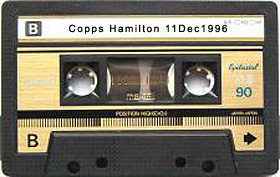
This is the final show on Rheostatics Live in which the band is opening for The Tragically Hip.

For this show, the intro music is also from The Wizard of Oz, but this time it’s Judy singing “Somewhere Over the Rainbow.”  It’s just one verse before fading out and then guitars fading in for Martin to play “A Mid Winter Night’s Dream.”

Turns out that this setlist is similar to the one from Buffalo with a lot of new songs.  Although there are a few older/more popular songs in places.

The new songs include “Fat” which sounds great of course.  I gather they are maybe sharing a microphone because at the end Dave says “See you in the next song, Martin.”  “Okay, Dave.”  This leads into a perfect version of “All the Same Eyes.”

Martin says “We are the Rheostatics.”  Dave says “We are the Rheostatics, not to be confused with The Howell Brothers (?).  They couldn’t make it but we got their jackets.  It’s nice of you to come out early.  We’re playing selections from our new record. Get it before it’s reduced to clear.”  (You can hear someone laugh on tape).

This is a segue into the single “Bad Time to Be Poor.”  It’s followed by another Tim song, “Claire” with the acoustic guitar opening in place.  There’s another lengthy guitar solo, although it’s not quiet as exciting as some of the other ones.  But Martin was saving up for a spirited version of “California Dreamline.”

They end their set with a rough rocking “Feed Yourself.”  During the spoken part, they slow things down to just a bass and washes of guitar.  It’s a pretty intense ending and a good preparation for The Tragically Hip.

[READ: June 25, 2017] The Story of Canada in 150 Objects

In celebration of Canada’s 150th year, Canadian Geographic and The Walrus created this special issue–a fun way to describe many elements of Canadian culture through “objects.”

The objects are grouped in vague categories.  Some have just a few words written about them while others get a few pages.  Some are humorous, some are more serious.  Most are happy or amusing, some not so much.  And all of it together paints a diverse and complex portrait of the country–as well as teaching this person from South of the border a number of things I did not know.

It’s with comic pride and humility that the first object is politeness (which is not an object at all, of course).  The amusing thing about this article about “politeness” is that while the author of it is very pleased to be so polite, he also can’t wait for his fellow Canucks to forget to be polite so he can rub it in with a extra smarmy “You’re Welcome.” (more…)

Read Full Post »

[LISTENED TO: January 2017] A Dragon’s Guide to the Care and Feeding of Humans

We listened to this book on our recent trip to Vermont. dragon

It was utterly unnerving to have the delightful Susan Denaker read this book because she was the author of the Penderwicks series which we love.  And her voice of Batty in that series is identical to the voice of the main girl, Winnie in this series.  But once we got past that (and it did take a while, we found this story to be fun and enjoyable.

But this story went in a direction I absolutely was not expecting–especially based on the title.

Each chapter has a heading like in an instruction manual for the care and feeding of Humans: If you value your happiness and sanity, take your time and choose your pet wisely.  To train your pet you will need three things patience, patience and above all patience.

And it seems to start out with that premise in mind.

For this book is narrated by a dragon, known as Miss Drake.   As the story opens, Miss Drake is in mourning because her pet, Fluffy, has died. Fluffy is the name she gave to Amelia, and older lady whom the dragon appeared to.  When Fluffy died Miss Drake planned on going to sleep for 20 or 30 years to get over it.  But just two days later, a little girl waltzed into her den–the girl had the key and everything! (more…)

Read Full Post »

SOUNDTRACK: ALSARAH & THE NUBATONES-Tiny Desk Concert #585 (December 9, 2016).

The Tiny Desk Concerts have introduced me to a ton of bands I’ve never heard of before.  They’ve also introduced me to styles of music I’ve never heard before.  Alsarah and the Nubatones play music inspired by her home country of Sudan.  But I believe she (they) include pop elements to make the music more accessible (and danceable).

And this Concert was great–I listened to it over and over.

The instrumentation is all fairly simple: Rami El Aasser plays all kinds of percussion.  I love the sound that he gets out of that hand drum.  Brandon Terzic plays an amazing oud and  Mawuena Kodjovi’s bass holds the whole thing together in an incredible way–something that I think this traditional music lacks.

But most important are the singers’ voices.  Alsarah sounds great by herself but when she and Nahid harmonize, it is enchanting.  Especially in the chorus of the first song, “Ya Watan” when their voices work together so perfectly

But what’s Alsarah’s deal?  The blurb is really helpful:

When singer Alsarah left her native Sudan, she was just a child who’d shown an interest in music. She’s said it served as her coping mechanism during a subsequent transition to life here in the U.S. That passion led her to a university degree in ethnomusicology.

It also drew her to musicians who were passionate about the intersection of culture, music and migration. Together, their one-of-a-kind expression has been called “East African retro pop.” But that tag only scratches the surface: In their hands, the music pulses, breathes and comes alive with a mix of tradition and contemporary influences.

I don’t know what the song names mean, but I love “Ya Watan.”  The song is really catchy, but when the bass did a big slide at the end of the middle slow section to announce the final part, I was hooked.

I have no idea why there’s a 3 in this titular word, but that makes me even more intrigued by “3roos Elneel.”  Before the song she says (in perfectly unaccented English), “I’m going to tell a story because I think I can do whatever I want.”

She says that the song is inspired by “girls music” performed at wedding ceremonies in Sudan.  But she tries to merge it with an old myth.  The Nile River would flood every season because the gods were angry and lonely.  So the Sudanese people would sacrifice the most beautiful maiden in the village.  But she wonders what happens after she goes in the river.  And what happens next season when there’s a new girl–that’s a lotta wives.  So, she likes to think there’s trade off.  You go in to the river and do 3 months as a Nile god bride and then you swim off.  Maybe the bottom of the Nile is full of ex-Nile-god-divorcees giving birth to mermaids.  Yes, she claims mermaids as a Nubian invention.

The song begins with a call and response. It sounds rather traditional.  But after a few lines, the song stops with a four-beat clap-along section.  And then everything shifts.  First the bass plays a cool riff then the oud joins in with some fast playing and then the percussion makes it utterly danceable.  There’s even a cool oud solo.

The first section of “Fulani” is the chorus repeating the word Fulani over and over (in call and response style), but it’s done in wonderfully melodious fashion, including a catchy stop start section with more clapping.

The song is really great and I love the way all the instruments are able to make the song fade out.

This music was totally captivating.

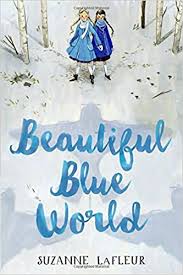
[READ:January 27,2017] Beautiful Blue World

Sarah brought this book home and read us a little bit of it and I decided I had to read it, too.

The part she told us about was about a girl taking a test to see if she would be useful for the army.  But it was no ordinary test, it was more like Bletchley Circle–puzzles and observations more than facts.  That sounded great.

What she didn’t tell us was the general set up of the story.

So, this story feels like a World War II story, with a country like England being attacked by a country like Germany.  But what makes this book special is that these are not the countries. The countries are called Sofarende (the attackees) and Tyssia (the attackers). But despite these countries having fantastical names, the story feels very real.

(more…)

Read Full Post »

SOUNDTRACK: DESSA-Tiny Desk Concert #325 (December 9, 2013).

I had never heard of Dessa before.  Evidently she is a rapper, singer, poet and songwriter and is part of the Twin Cities hip-hop collective Doomtree.  As versatile as she is, Dessa faced down a string of challenges in getting to the Tiny Desk. Near the tail-end of a tour — during which thousands of dollars’ worth of her band’s gear was stolen — her voice started to give out as she battled a bad cold. (Keep an eye out for her expression of relief at the completion of “The Man I Knew” in this set.) And, of course, Dessa and her band had to come up with ways to perform three songs from Parts of Speech in such a way that the drums and guitars wouldn’t drown out the unamplified voices of herself and singer Aby Wolf.

I wouldn’t have known she was sick at all, as her voice is pretty powerful.  She raps the first song, “Fighting Fish” (I love that it references Zeno’s Arrow)  I like the grooves of the music and the simple guitar licks.   But it sounds amazing when Wolf starts singing.  Wolf has a great voice.  For the second verse, Dessa speaks more than raps—if only they could both make better use of the mic.

For the second song, “The Man I Knew,” the two sing a duet quite lovely.  And I like the way they each seem to highlight the end of each others’ lines with a harmony note.  I can’t help but think that Aby steals the how a bit.  The guitar and bass have simple but delightful riffs.  And the middle part with the counterpoint is very cool

I like the guitar sounds of “The Lamb,” and Dessa’s voice is great on this one.

Her lyrics are somewhat aggressive but really spot on: “You’ve got a way with words / you got away with murder” and “They can sew your hands together but they can’t make you pray.”

I am curious to see what her full band sounds like because this stripped down version is really good.

[READ: August 28, 2016] “Vladivostock Station”

This story opened my eyes to something I was unaware of.  The narrator’s father was a Korean refugee from the second world war. After the war his father settled in Russia and had children with a local woman.  Evidently this was quite common, although I’d never heard this before.  So the narrator is half-Korean with a Russian name.  I’s never heard of such a thing.

But that’s not the point of the story at all.  Rather, it is the story about Misha and his old friend Kostya.  They have known each other for ages.  Kostya worked at Misha’s father’s hotel for many years, but the two lost touch.  In the meantime, Misha had become an employee of the railroad –he repaired the insides of older trains. (more…)

Read Full Post »

meanSOUNDTRACK: ENDANGERED BLOOD-Tiny Desk Concert #214 (May 7, 2012).

bloodThe Brooklyn jazz quartet Endangered Blood was formed so its members could play benefit concerts for their friend, saxophonist Andrew D’Angelo, who’d been diagnosed with a brain tumor. D’Angelo eventually made a full recovery, but the group — Trevor Dunn (bass), Jim Black (drums), Chris Speed (tenor saxophone) and Oscar Noriega (alto saxophone) — realized that this ensemble had potential to become a real working band. In 2011, the four released a self-titled debut album.

Endangered Blood’s music draws from the members’ diverse backgrounds and influences, combining post-bop, 20th-century chromaticism, traditional New Orleans funeral marches, avant-garde jazz and post-punk to create a sort of mad-scientist concoction. Its compositions are cerebral, but they’re also gritty and full of energy.

The band plays two songs and the description above really gives a feel for what they sound like–kind of all over the place

“Iris” is a slow song that has a real Tom Waits feel (although no vocals).  It has a slow nightclub jazz feel and I love watching the drummer do that kind of swaying lots of arms but quiet hitting drum sound.  There’s an interesting (although quiet) bowed upright bass solo in the middle of the piece.

“Uri Bird” opens with a lengthy bass and drum solo (the drummer seems to be having a ton of fun–including hitting his sticks off the walls and floor).  Then the two saxes come in playing the exact same riff.  This has a bit more bebop feel with the saxes trading off solos.  It ends with a fast wail and a solid beat.

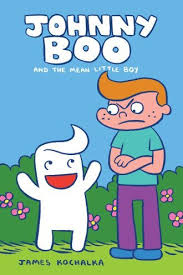
[READ: March 6, 2016] Johnny Boo and the Mean Little Boy

I love how the Johnny Boo universe is so small that characters keep returning.  Like in this one, the fourth book, Johnny Boo tells Squiggle that they can’t play today because his playing with his new friend Rocky the Rock.  This is the same rock that he threatened to make his best friend in the first book.

Johnny promises Squiggle that they will play together soon, as long as Squiggle can give him a “hooray.”  But Squiggle’s hooray is not very enthusiastic.

Squiggle says that he will go off and find other friends, too.  But it turns out to be not so easy.  And then a butterfly starts flying around him.  At first Squiggle is annoyed by it but then he thinks they can be friends. (more…)

Read Full Post »

wildrobot efterklangSOUNDTRACK: EFTERKLANG-Tiny Desk Concert #270 (April 8, 2013).

Efterklang is a Danish group whose recent album Piramida took its members to an abandoned mining town between the North Pole and Norway. There, they recorded sounds of empty oil tanks, old pianos and pretty much anything they could strike or record.

That blurb made me think this would be a noisy chaotic Concert.  And yet despite the found sounds, their music is really peaceful and lovely.

“Dreams Today” builds on a series of echoing keys and guitar notes.  After nearly two minutes the singer sings a series of high “ahhs and oohs” until the vocals officially kick in.  And then the whole band starts playing a series of fast looping notes while the percussionist plays some water bottles and mugs.  The songs builds and builds, with a steady bass keeping the melody strong and then just as it seems it should turn the corner into a new section, it abruptly ends, leaving you wanting much more.

Before the second song, “Danish Design” they explain that they “never went public” with this song. They played it once before in a huge power plant in Copenhagen.  It was a big room–very reverby (if you can say that).  The office is a very different place and they want to compare how it sounds.   They also sampled the worlds northernmost grand piano for this song.  They were in Piramida, a ghost town in the arctic.  The song begins with slow notes from the sampled piano while the keys play pinked notes. The singer sings in a baritone that is quite lovely.  When the loud drums kick in it’s quite a shock to the mellow music.  The song is only a bout 2 and a half minutes and, once again, it ends just as it seems like it might soar into something new.

“Alike” is from their previous album.  It opens with keys and percussion (all kinds of things like a fork on a mug).  They sing in harmony for much of the song.  It doesn’t use much in the way of guitar or bass (the bassist is keeping time with a pair of scissors and then a beer bottle on a step stool) until the end of the song when the guitar chords kick in fast (but not too loud).  It’s the longest song but the way it builds slowly it feels like it could go on for much longer.

This Tiny Desk really made me want to learn more about this interesting group and to hear more from them.

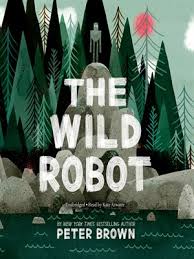
[READ: April 20, 2016] The Wild Robot

I love Peter Brown’s picture books.  I think Chowder is absolutely genius and The Secret Garden brings me to tears each time I read it.  So I was pretty excited to read this novel–his first.

It’s quite a fast read (with about 70 chapters all about 3 pages long) and lots of pictures.  The blurb on the book said that a robot woke up on a remote island. She has to learn to survive from the animals. And once she starts to feel comfortable, her past comes back to haunt her.

And that is a fair summary of the book.  The plot is very simple, but Brown adds a lot of details and a lot of characters to make the plot interesting. (more…)

Read Full Post »

pipSOUNDTRACK: DANIEL BACHMAN-Tiny Desk Concert #256 (December 9, 2012).

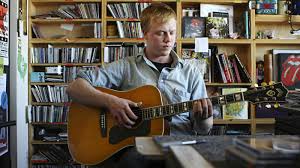
dan-bach Lars Gotrich, an NPR music dude, loves metal and weird music but also amazing Americana folk guitarists.  Daniel Bachman was an early-twentysomething when he recorded this Tiny Desk Concert.  And he is very impressive indeed.  Lars explains:

His approach to the American Primitive style of acoustic guitar — a sonically vivid fingerpicking technique developed by John Fahey and expanded by the likes of Robbie Basho and, later, Jack Rose and Glenn Jones — is conversational and uplifting, much like the man himself. After a rousing performance of “Honeysuckle Reel” from a forthcoming seven-inch single, however, Bachman turned beet-red in the NPR Music office and said, “I’m not going to lie. I’m pretty nervous.”

He only plays two songs, although each one is about 7 minutes long.  Lars says, “Strap on a pair of heavy boots and “Honeysuckle Reel” becomes an ecstatic dance tune or, at the very least, a foot-stomping good time.”  And he’s right.  It’s really amazing to watch him playing.  He uses a thumb pick and the low notes are constantly going–an incredibly fast rhythm, in contrast to the slower melody he’s playing on the higher strings while finger picking.  It’s a very pretty melody.

The second piece, “Seven Pines,” is slower and more reflective.  It comes from one of two albums he put out in 2012). The simple melody “dives in and out of low-string chord crashes and tumultuous swirls of dizzying fingerpicking.”

The sound he gets from his guitar is really fantastic and while I don’t tend to listen to guitar music like this, I really enjoyed this a lot and would like to hear more from him.

[READ: February 3, 2016] Ava and Pip

Since Tabby and I loved Ava and Tacoocat so much, we knew we had to read the prequel Ava and Pip as well.

This book is set up exactly as Tacocat is (I know that this book came first but since I read the other one first I’m comparing things backwards).

There are diary entries and it starts with Ava on her first day of school.  When she gets home she says that she is the only Ava in her class (which is frankly shocking as there are about 5 in my daughter’s grade).  Then we learn all about the Wren family and their love of palindromes.

Bob and Anna Wren had two daughters named Pip Hannah and Ava Elle.  And her diary entries wind up being chock full of spelled out palindromes (some obvious, others not). (more…)

Read Full Post »

tacocaoSOUNDTRACK: CANADIAN BRASS-Tiny Desk Concert #220 (May 26, 2012).

brass I hadn’t realized that Canadian Brass part of the institution of Canadian Brass.  They’re not only part of it, they are it.  Indeed Canadian Brass

led by its avuncular tuba master (and sole original member) Chuck Daellenbach, essentially put the idea of the brass quintet on the map.  Then there are the recordings — more than 100 of them, selling more than two million albums total.  Daellenbach and his fresh-faced players, each with red-striped sneakers and matching outfits, strolled into the NPR Music offices, took their places behind Bob Boilen’s desk and started blowing as if they’d played this peculiar gig a hundred times.

They began with a version of J.S. Bach’s intricately woven “Little Fugue in G minor,” an impressive staple that stretches back to the band’s first recording. In those days, precious little was available for brass quintet (two trumpets, horn, trombone and tuba), so the band relied on making arrangements of existing music. Since then, Canadian Brass has transcribed and commissioned more than 200 works, including “Tuba Tiger Rag,” Luther Henderson’s lighthearted tribute to Dixieland jazz. It’s a showpiece for Daellenbach, who twirls his tuba (while playing) and lands on a final note of such subterranean depth that you feel it more than hear it.

The players closed with another favorite, Rimsky-Korsakov’s dizzying “Flight of the Bumblebee,” in an arrangement by Canadian Brass trumpeter Brandon Ridenour. Although the music buzzes past in less than two minutes, players get plenty of opportunities to shine — as in the lightning-fast runs negotiated by trombonist Achilles Liarmakopoulos, the newest member of the group.

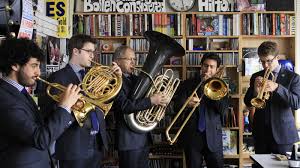
The band consists of   Christopher Coletti, trumpet; Brandon Ridenour, trumpet; Eric Reed, French horn; Achilles Liarmakopoulos, trombone and Chuck Daellenbach, tuba.

The band sounds amazing playing these familiar songs in a way that is–unexpected–but still right on.

J.S. Bach: “Little Fugue In G minor” is probably one of my favorite classical pieces.  I really enjoy Bach’s fugues a lot and this one is just perfect–and the arrangement here is great–everyone gets a chance to explore the phrasing.  It starts with the tuba and then the trombone and then the horn and finally the tuba.

Luther Henderson: “Tuba Tiger Rag”  Introducing this piece he says that in Bach everyone is equal, but he felt they needed a tuba song.  He says that while this song might be low art for other instruments it is high art for a tuba.  And yes he does spin it around while playing it. He uses that instrument to make roaring sounds and incredibly deep notes.  This is a medley, I think, because while the trombone and tuba play, the other three sing “hold that tiger / tuba tiger.”  How on earth does he reach that super low note?

Before the final song Bob says that his tuba doesn’t look brass.  And Chuck replies that there’s an old joke: “How old do you have to be to play the tuba and the answer is old enough to be able to carry it but young enough to still want to.”  He still wants to so he’s been  so he;s lightening the horn with carbon fiber.

For the final song Nikolai Rimsky-Korsakov: “Flight Of The Bumblebee” he tells us that the two trumpets play very fast–it must be easy for them. But the trombonist Achilles didn’t know what was coming when they had him play along.  Chuck says you’ll never see anyone play this song this fast on this instrument.

And it is amazing.  The song flies past–a blurry of fingers.  And I love that at the end, one of the trumpets sings the triumphant final high note.

You wouldn’t expect a band as old and legendary as Canadian Brass to be so funny and good-natured, but they sure are.  And that makes these familiar songs even more fun.

[READ: February 7, 2016] Ava and Tacocat

Sarah brought this book home, in part because Clark’s reading group called themselves tacocat which is a palindrome.  Turns out that Clark wasn’t interested in the book, so Tabby and I got to read it together, which was really fun.

The whole book is a language lovers’ dream, chock full of big spelling words and all kinds of palindromes littered throughout.

It was a few chapters into the book before we realized that this is actually the second book of a series (the first one is called Ava and Pip) and that this book references things that happened in book one without exactly explaining what happened.  That’s a little annoying for us, but it certainly made us want to read the first book.

The book is set up in diary form with Ava writing in it on most days.  I like that she loves palinromes so much (S-E-N-I-L-E-F-E-L-I-N-E-S) and every time she mentions one in the book, they spell it out like that. (more…)

Read Full Post »

lumberjanes-3 SOUNDTRACK: YOUTH LAGOON-Tiny Desk Concert #490 (November 23, 2015).

youthI thought I knew who Youth Lagoon was, but this Tiny Desk surprised me.  Lead singer/keyboardist Trevor Powers sings passionately.  But I was surprised that his voice is quite the falsetto (and at times sounds a bit like Pee Wee Herman).

At first I found this distracting, but after listening for a while I started to enjoy his voice, especially for what it did for the music.  They play three songs.  Two are new and one is older.

“Kerry” is a pretty song with a simple keyboard melody that is nicely duplicates on the guitar at times.  In fact, even though the keyboard is the main instrument, I love the various riffs and melodies that the guitar plays to accompany him.  There are some absolutely gorgeous musical passages in this song and Powers’ fragile voice is perfect for them.  In the middle, when the guitar plays a great solo section, it’s quite something.

“July,” is a wistful reflection on youth and regret from the band’s debut.  It’s a much more spare song with just voice and keys starting for the first minute or so.  About half way through, the rest of the band adds some real beauty to the melody as he sings more intensely.  I particularly like when the bass comes in at the end with a cool pattern of high notes.

“Rotten Human,” is a meditation on the passage of time and search for purpose in life.  I like this lyric: “I’d rather die than piss way my time.” It’s a slow song but once the drums come in the song builds.  I love the melody just before the next part which he sings with much more passion.  The “No I won’t” section sees his voice getting more ragged and angry-sounding–quite a change from the other parts of the songs.  Again there’s some great bass lines near the end of the song.

It took me a couple of listens to warm up to Youth Lagoon, but I really liked them by the end.

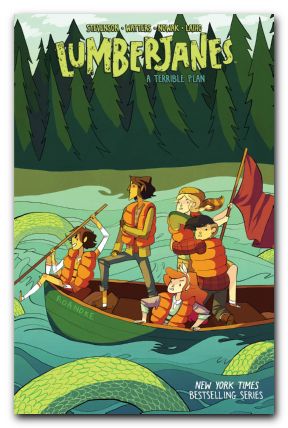
[READ: July 18, 2016] Lumberjanes 3

This is the third volume in the Lumberjanes series and I liked it a lot more than the second one.  This book collects issues 9-12.

The focus in the middle chapter on Mal and Molly was a nice change of pace.  And I thought it was very very funny that the girls tried to spend a chapter collecting “boring badges” for a change of pace.

There were lots of different illustrators in this book, because in the first chapter each the girls tells a story and each has her own illustrator. (more…)

Read Full Post »

rollerSOUNDTRACK: SARAH NEUFELD-Hero Brother [CST095] (2013).

heroroSarah Neufeld is best known as the violinist for Arcade Fire. I wanted to like this disc more than I did.  There’s a lot of really good music and ideas, but the whole album felt a little lacking in excitement.

This solo album was recorded in Berlin by pianist and producer Nils Frahm, with Neufeld’s performances captured in a number of locations with site-specific acoustics, including an abandoned geodesic dome, an underground parking garage, and the legendary Studio P4 orchestral recording hall at the broadcast complex of the former GDR.

On track with a * you can hear the echo of the surroundings (although I’m not sure which is which).

*”Tower” is a repeat of three notes quickly bowed with an echoed ghostly voice floating over the top of the melody. Its lasts but 2 minutes and then disappears.  “Hero Brother” has repeated low notes flanked by high notes until the main fast riff spirals out.  About a minute in, a stomping drum comes in and her playing sounds a bit more folksy. It’s an interesting twist on the more formal earlier style.  I love that it ends almost starkly in the middle, allowing those last notes to resonate.

*”Dirt” begins with high pitches notes that seem to echo and resonate forever.  And then she switches to a spritely somewhat upbeat melody of quick notes. The third part of the song luxuriates in slow bowing—long notes that linger.  “You are the Field”  begins slowly with some bending notes that descend and then ascend.  It’s interesting to hear her slide up and down the neck while some of the main notes remain the same.

*”Breathing Black Ground” has slow echoed note, but about mid way through a low note anchors the pieces as the high notes play a melancholy melody while Nils Frahm plays the harmonium.  “They Live On” is primarily plucked strings until her echoed voice sails over the top. This piece is more pretty than the others but is still rather stark.

“Wrong Thought” has a kind of sci-fi sound as it opens.  A kind of piercing high note is resolved into some lowers notes and then a cool melody.  The ending few notes are a pretty series that rise from the darkness of the main piece.  “Right Through” is a series of three notes played in different location on the fret. It is lonely sounding until some higher notes begin to appear as well.  And then Sarah’s ghostly voice emerges from the background with a kind of haunted phrasing.  It’s quite lovely and then things become quite raucous with some very fast fiddling.

“Forcelessness” opens with a series of three high pitches notes that are quite breathtaking. The notes descend slowly through the melody as a piano plays long held notes to accent the descent. It’s by far my favorite on the disc.  The disc ends with *”Below” which is slow and melancholy with her voice echoing in.

I guess I was expecting there to be more virtuoso pieces rather than a kind of moody ambient record.  Most of the melodies are pretty, but  there’s not a lot of diversity.

[READ: February 12, 2016] Rollergirl

Oh boy, did I love this story.  And not just because it’ about roller derby (although that is quite a lot of it).  I loved it because it had a protagonist who felt she didn’t have a personality or a “thing” and managed to not only get one, but to get an unsuaul one–and to make friends doing it

This story is a bout Astrid Vazquez (an unlikely name if ever there was).  Astrid’s mom always wants her and her best friend, Nicole, to do cultural things.  So they go to museums, to the opera, poetry readings, that sort of thing.  It’s not always fun.  But on this night she takes them to a warehouse where the see a roller derby match!

Astrid (who loves to wear black and is the tomboy of the two) is hooked immediately.  Nicole, who is more prissy and does ballet, is interested but a little freaked out.  And when they discover that there is a roller derby camp for the summer. Astrid assumes they will both sign up and become derby superstars like their new heroine Rainbow Bite (is there anything better than roller derby names?).

But Nicole quietly informs her that she is not doing that.  Not only doesn’t she want to but she actually wants to go to ballet camp this summer.  So there.

And that’s when the opening scene where Nicole is with the horrible, awful, super mean Rachel.  Rachel is the one who came up with the nickname Ass-turd (which maybe makes this not so much a children’s book, but it’s the only bad part). (more…)

Read Full Post »

« Newer Posts - Older Posts »