Feeds:
Posts
Comments

Archive for the ‘Foreign Books’ Category

literarySOUNDTRACK: CHELSEA LIGHT MOVING-“Burroughs” (2013).

chelsea-light-moving-albumChelsea Light Moving is Thurston Moore’s new band [no comments about the state of Sonic Youth/Kim Gordon will be included in this post].  I don’t know anything about the other members of the band; I’ve not heard of any of them.  “Burroughs” is one of four new songs streaming on the Matador Records site.

The song is spot on for the noisy/sloppy style of Sonic Youth.  Fans of Sonic Youth will certainly detect some differences–the counterpoint of Lee Ranaldo is definitely absent, indeed, the entire low end sounds very different from what SY would create given this song.  But man, if you’re jonesing for some chaotic noise, this song has it in spades.

Moore is capable of creating some traditionally beautiful songs (see his Trees album), but here it’s all about discord.  The song is over six minutes long and the last 3 or so are devoted to some noisy guitars in both chords and solos.

While SY has not shied away from long songs, this song doesn’t feel like an epic–it’s not multi part or “extended” exactly.  It’s a fairly straightforward rock song with an extended solo section.  It’s really great.  I’m looking forward to the whole album (and I love the cover, too),

[READ: March 23, 2012] The Literary Conference

This has been my favorite Aira book so far.  And that’s probably because it is wonderfully over the top, mixing fantasy, sci-fi, genetics and literature.  All in 90 pages.

The story is about César Aira, translator.  He has been invited to a literary conference in Venezuela.  While there, he solves the age-old problem of The Macuto Line.  The Macuto Line is, essentially a rope which is attached to a pirate treasure.  For generations, people have tried all kinds of  things to impact this line–but it has proven to be unsolvable and indestructible.   Aira happened to be staying near the Line in a hotel.  He claims that he is no genius, but it just happens that the elements of his life have given him the exact information he needs to solve the puzzle.  And with a simple touch of the rope, the treasure is his.

But that’s just part 1 and has nothing to do with the rest of the story, really.  For despite his newfound wealth, he will still be attending the literary conference.  Primarily because he knows that Carlos Fuentes will be there (Fuentes is a real person, a Mexican author who died in 2012).  For, you see, Aira is planning to clone Fuentes in his bid to take over the world.  (In addition to being a translator, Aira is a mad scientist). (more…)

Read Full Post »

woesSOUNDTRACK: ATERCIOPELADOS-Live at Bumbershoot, September 5, 2010 (2010).

atercioA rock en Español band who have returned after a brief hiatus, Aterciopelados have changed a bit since their early more punk days.  Their last album Rio came out in 2008, I knew them back in the mid nineties.  This brief set (7 songs) at Bumbershoot showcases their more mellow tracks (there’s pan pipes) on “El Estuche.”  The Colombian band has always been political, but it seems like they are much more explicit about it on this record.  As singer Andrea Echeverri introduces a number of song, she talks about how they are “important” and are meant to bring attention to the troubles of Colombia.

“Ataque de Risa” has a wonderfully catchy melody (and I believe she says her daughter is singing with them on it).  The song “Bandera” (which means “Flag”) is pointedly directed at Arizona’s anti-immigrant law.  She introduces it as saying that all peoples are together under a rainbow flag.   It’s a more angry sound for Echeverri’s voice, but she does a great job.  Her voice is really impressive.  “Rompe Cabezas” has a rollicking chorus that’s a lot of fun and “Bolero Falaz” ends the set with a very cool and catchy song.

Here’s a video of El Estcuhe

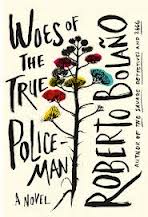
[READ: December 2, 2012] Woes of the True Policeman 

This is yet another unfinished novel from Roberto Bolaño.  Bolaño knew that he was dying and he created a lot of work in anticipation of his legacy.  The afterword of the novel says that they found all of the various parts of this novel in various locations among his work–hand written and computer drafted.  And they all mention this titles, so they are pretty certain about the order and that it is as finished as it could be.

Unlike some of his other posthumous releases, this one must be deemed pretty significant since it was published by Farrar, Straus and Giroux instead of New Directions (publisher of most of Roberto Bolaño’s other smaller works).

And really what it reads like is a kind of prelude to 2666.  For this is the same Amalfitano as in 2666.  But it is his story from before he moves to Sonora, Mexico–before all of the murders started.  Indeed, there are parts of 2666 which make Amalfitano’s past seem like it is unknown but this story fills in the gaps quite well.  One of the details in 2666 is that Amalfitano’s teaching contract had expired at the University of Barcelona, although this book gives the behind the scenes reason why it expired.

Bolaño has many many stories in which he explores the past of a character from a different story.  Typically, it is a novella in which a minor character from a bigger novel gets his or her own story told.  And that seems to be the case with this as well.

The story is set up in five sections (just like 2666).  Section I of this story (part of which was as excerpted in Harper’s recently) is called The Fall of the Berlin Wall and tells how Amalfitano, a professor, fell for a young poet named Padilla.  He wound up having an affair with him, which ended his career (I’m unclear whether it is because he is a student or because the affair was homosexual that the University wanted him out).  Amalfitano had never had homosexual desires before, and he was a proud husband and father, but he found that Padilla really affected him.

And so Amalfitano and Rosa, his daughter, moved to Sonora and the only school that would have him. (more…)

Read Full Post »

SOUNDTRACKTHE HAPPY RACERS–“Lovabye Dragon” (2012).

This song was the first track on the inaugural playlist of Out With the Kids back in March 2012. This is a sweet song about dragons and monsters and no more nightmares.  For a children’s song, this is quite intricate.  The opening riff is enticing, and the occasional falsetto was unexpected.

But the bridge is a delicate lead in to the chorus which is not as catchy as one might expect for a children’s song.  It’s a very sweet song.  And indeed, a lot of the elements are things that I would normally love in a song (it actually reminds me a bit of Airborne Toxic Event, but more poppy).  And yet I’m not all that compelled by it.  Although a few listens has really warmed me up to it.

[READ: September 30, 2012] Stories 1 2 3 4

Last year, McSweeney’s started a new imprint–McSweeney’s McMullens–which would publish children’s books.  As with everything McSweeney’s does, the books are beautiful!  Lovingly created with amazing illustrations.  And in each book, the cover unfolds into a giant poster (usually of the pictures contained inside).

And, like other McSweeny’s books, the stories are all a little odd.  I usually try to read the books once through before reading them to my kids to find out just how odd they turn out.  I didn’t read this one first because it was quite large, and boy, were we surprised by it.

Eugène Ionesco writing a children’s book?   One of the foremost playwrights in the Theater of the Absurd?  Indeed, that Ionesco. (more…)

Read Full Post »

SOUNDTRACK: MOGWAI-Music for a Forgotten Future (The Singing Mountain) (2011).

This track is a 23 minute instrumental that was used for an art installation by Douglas Gordon (who made the film Zidane, for which Mogwai provided the score) and Olaf Nicolai called “Monument for a Forgotten Future”.  The more I learn about  his installation, the more intrigued I am by it.  According to wikimedia, “Monument for a Forgotten Future” is a sculpture by Olaf Nicolai and Douglas Gordon on the so called “Wilde Insel” (wild island) in Gelsenkirchen-Horst, Germany. It is 1:1 replica of a rock formation in Joshua Tree National Park with a sound installation by Mogwai that can be heard from within the “rock.”  Someone has even posted a video of their trip to it.  In the video (which is literally of a rock), as the filmer approached you can hear the music only when he or she gets pretty close to the installation. It’s just barely audible.  Cool.

As for the music itself, it is very mellow an atmospheric, quite perfect for being on a Wild Island and sitting by/staring at a rock.  There are definitely hints of Mogwai’s sound in the music, although there are a lot more keyboards than guitars (which befits their more recent albums).  It’s very peaceful and quite beautiful.  At about 19 minutes it fades out and seems to being another string laden piece into the mix as well, but it more or less fades into static (which would be a lousy time to get to the installation!).

The music comes free with most editions of Hardcore Will Never Die But You Will.

[READ: August 2, 2012] “Without Blood”

After reading Baricco’s Emmaus, I wanted to see what else he had written.  I found this short story (which is also the name of one of his novels, although I’m not sure if this is an excerpt or the inspiration for the novel–Wikipedia says it is a “revised form” of the novel, whatever that means).

I was a little disconcerted by this story when it opened because it has a very violent introduction.  The farmhouse of Manuel Roca is the site of bloodshed.  Three men, Salinas, El Guerra, and Tito pull up in a Mercedes.  Manuel Roca is the man they are looking for.  He has two children a boy and a girl, Nina.  He tells Nina that she must hide when the men come.  Hide in the cellar and be absolutely still, no matter what happens.  And to not be afraid.  The son, slightly older, wants to help, he even has a gun, but Manuel tells him to hide in the woodshed.  And then the house was riddled with bullets.

Manuel survived that first round but when he looked up, Tito (who was described as a boy but was in fact 20) was standing there with a gun pointed at Manuel.  And he shouted to  Salinas “IT’S TITO.  I’VE GOT HIM.”  When the threesome get inside, they see that Tito has shot Roca in the arm because he had a gun.

When the two men come face to face we learn that this fight has to do with the war.  Roca says the war is over, although Salinas, says “Not yours, Not mine, Doctor.”  Salinas was known as the rat because he deciphered Roca’s men’s coded messages.   But despite the war, Salinas has only shot a gun twice.  The first one was at no one, the second was at his brother who was in the hospital when the war ended.  Salinas went to the hospital with the intent of killing Doctor Roca and his men, but they had fled, leaving all of the sick and dying unattended.  When Salinas’ brother asked him to kill him…please, he could only comply.

After this flashback, Roca’s son came into the room with a shotgun.  From here the scene gets really violent with both Roca and his son killed.  The men realize that Nina must be there as well, so they look all over for her.  It is the boy Tito who finds her in the cellar.  They stared at each other, but Tito let her live.  And the men left.  After they set the house on fire.

Three days later a man on horseback found Nina and took her away.

Wow. (more…)

Read Full Post »

SOUNDTRACK: PHISH-Live Bait Vol 3 (2010).

This selection of free Phish songs is notable because of a couple of items.

  1. All of the songs were recorded at the Worcester Centrum in Worcester, MA.  Although the first three songs were recorded in 1993, the fourth song was recorded in 1997 and the final track was recorded in 1991.
  2. The first three songs were recorded on New Year’s Eve–technically on New Year’s Day.  The first track actually counts down the seconds until midnight, when the band bursts into Auld Lang Syne
  3. Probably the biggest deal of all: the band plays a version of “Runaway Jim” that lasts 58 minutes and 48 seconds.  That’s right, nearly an hour on one song.  I think if I went to see them live and they did that I’d be pissed, but it sounds great on this recording.  “Runaway Jim” is not one of my favorite songs, but this extended jam is really good–they break into several different sections and it doesn’t feel like a long version of this song so much as a bunch of different jams thrown together.  At one point it almost seems like the band thought they began with “Weekapaug Groove,” but they push back against that.  I’m very curious to know what happened after that song was over, but the end of the disc takes on an early recording of “Llama, ” a song I like quite a lot.

This is yet another great addition to the free Live Phish pantheon of music–I mean, an hour version of one song, how cool!

[READ: August 1, 2012] “Volumes of Knowledge”

Encyclopedias date back thousands of years–Pliny the elder tried to write everything he knew in Historia Naturalis and a Chinese emperor created a similar book Emperor’s Mirror in 220 A.D.  But the art and craft of creating books that contain all the world’s knowledge flourished in the 1700s.  Increased wealth and education in the French bourgeois, a flood of information and a decline of interest in religion all led to the desire to learn more.  The printing press helped to disseminate the information.

It was Denis Diderot, a French enlightenment polymath who best explained the concept of the encyclopedia:

the purpose of an encyclopedia is to collect knowledge disseminated around the globe; to set forth its general system to the men with whom we live, and transmit it to those who will come after us, so that the work of preceding centuries will not become useless to the centuries to come; and so that our offspring, becoming better instructed, will at the same time become more virtuous and happy, and that we should not die without having rendered a service to the human race in the future years to come.

But Diderot recognized the limits of a one-author encyclopedia: “I do not believe it is given to a single man to known all that can be known.”   From 1751 to 1772 he and his assistants edited more than 70,000 articles from 140 authors to create his first Encyclopedie.  Of course having many authors had drawbacks–differences in style, length and quality.  But Diderot shied away from nothing and in many locations the book was banned.  Some of the ideas in the book shook the very foundation of accepted ideas.  And many of the authors hoped to change the world.  Diderot himself even hoped to usurp religion with his knowledge: “It is not enough for us to know more than Christians, we must show them we are better.” (more…)

Read Full Post »

SOUNDTRACK: UNDER BYEN-“Samme Stof Som Stof” from Viva Piñata! (2008).

Under Byen is a Danish band and has only one song on Viva Piñata.

I had originally written a review under the impression that it was different song (the CD and even iTunes confuses this song with “Kiss ME” by Uncut.  And you can see my initial impression below).  Now, knowing that this band is not singing in English changes a lot about my perception of what the sounds actually are.

This is one of the few remixes on the disc where I listened to the original first (to make sure I had the right song).  The original is an interesting mix of peculiar instruments and some cool soundscapes.  This remix chops it up into pieces and puts it back together.  It’s an interesting twist on the song but man, the original is so much better.

[Here’s my original thoughts, when I read a bit about the song when I thought it was by the band Uncut and I thought that it was not a remix.  And I saw that they were described as a poppy fuzzy band.

this song comes from one of their official releases.  “Kiss Me” is not a remix but it sure sounds like one.  It is kind of warped and the sounds feel manipulated in crazy ways. The vocals are mostly moans and noises. But it has a catchy beat and some interesting sounds. This is a weird song, and I’m not sure how it fits in with the rest of the album.  I do kind of like it, but I wouldn’t hunt them down for more.

Of course, now that I know it’s supposed to sound like that, I change my tune completely. And I will hunt down some other songs for comparison.

[READ: March 23, 2012] An Episode in the Life of a Landscape Painter

This is the third novel from Aira that New Directions has released (translated wonderfully by Chris Andrews). It’s the first one they published and the first one of his that I had heard of.  I actually heard of it long before I knew of Aira because the Preface is by Roberto Bolaño.  And if you do a search for Bolaño, this title always comes up.

And so now I finally got to read this mythical essay.  Sadly, it turns out to be an essay called, “The Incredible César Aira” which was recently published (2011) in Between Parentheses–bad timing for me.  It also has nothing to do with this novel specifically

But on to the novel itself.

This short book is about the German painter Johann Moritz Rugendas.  Little did I know that he was real.  He was a landscape painter (a profession which became obsolete with the invention of cameras) and he was very well-regarded.   Twice during his career he went to the Americas to paint the land.  On his second journey (from 1831-1847) he went to Mexico, Chile, Peru, Brazil and Argentina, which resulted in thousands of paintings.

The opening of the book is rather philosophical (and a little dry).  But after about ten pages, the book picks up with the titular episode.  Rugendas and a German painter named Robert Krause set off in 1837 from Chile.  They got on well.  Rugendas was far superior technically and Krause, although also quite talented, was always respectful.  Rugendas had sold prints and books and his Picturesque Voyage through Brazil was printed on wallpaper and China. (more…)

Read Full Post »

SOUNDTRACK: MY MORNING JACKET-Circuital (2011).

I have really gotten into My Morning Jacket with their last couple of albums.  I know that they are quite different from their earlier releases, so I’m not quite as surprised by the diversity that’s on them.  With each release, they keep exploring new territory, although it’s all held together nicely by Jim James’ (or Yim Yames’) amazing voice.

The first half of the disc is much more wild than the second half, with longer songs, and more unusual textures.  The second half slows things down and feels almost, but not quite, acoustic.

“Victory Dance” is a slinky song and a cool intro to the disc.  It’s quickly followed by “Circuital,” a 7 minute long epic with two distinct parts.  The first is a kind of quiet echoey introduction, but when the guitars roar in at around 2:30, it turns into a big anthemy song…very ctahcy

“The Day is Coming” opens like a 70s AM radio song, with lots of da da das.  It’s a mellow song, the kind of song the MMJ flesh out with wonderful vocals so it never gets dull.

“Wonderful” is a simply beautiful song.  A gentle ballad about feeling wonderful.  I just found out that this song was originally intended for The Muppet Movie.  It would have been perfect.  Of course, the band are on the soundtrack doing a cover, so I guess that’s kinda close.

“Outta My System” is another catchy little number, also reminiscent of 70s AM radio, although it’s all about doing bad things as a youth and getting them out of your system.  Musically it would also work very well for the Muppets, but I suspect lyrically it might be a bit outré for the movie (granted I haven’t actually seen it so I can’t say for sure).

All the recent MMJ albums have one crazy track and on this one it’s “Holdin’ on to Black Metal.”  So the title is pretty unexpected but it’s nowhere near as unexpected as the content of the song.  It is complete with a children’s chorus and what sounds like horns, although I suspect they are keyboards.  It’s full of blasts of sound and woah woah ohs.  It’s crazy.  I love it.  Much like I love the crazy song, “Highly Suspicious”  from the previous album.  And I just found out that this song is more or less a cover (although with different words of “E-Saew Tam Punha Huajai” by Kwan Jai & Kwan Jit Sriprajan from the album Siamese Soul: Thai Spectacular 1960s-80s Volume 2.  More on that tomorrow.

  After that bizarre track, the album really settles down into an easy groove.  “First Light is a pretty traditional, simple song.  It also has lots of horns.  “You Wanna Freak Out” is also unexpected for the title, as it’s a pretty straightforward rocker. “Slow Slow Tune” doesn not belie its title.  It has a kind of 70s Pink Floyd feel and continues the more mellow second half od the disc.  The disc ends with “Movin’ Away” a slow, piano ballad.

  Although the album has a very comfortable, familiar feel, MMJ have little tricks (great soaring guitars and, again, James’ voice) to make it rise above the ordinary.  It’s great disc that warrants multiple listens.

[READ: January 28, 2012] How I Became a Nun

I didn’t love Aira’s Ghosts because it was too ephemeral for me (as befitting a book called Ghosts, right?).  How I Became a Nun is the exact opposite: a terrifically visceral story that is straightforward and easy to follow, except for perhaps two things.

The first thing is something that’s mentioned on the back of the book (so I’m not threatening a spoiler here).  The main character is named César.  Whenever someone talks to him, they address him as César or boy or him.  And yet, the whole book is written from the point of view of young César, and César describes himself as a girl.  In the fourth paragraph, the narrator states, “I was a devoted daughter.”  And yet, shortly thereafter, another character says about the narrator, “Is it my fault if the boy didn’t like it?”

This goes on throughout the story–not a lot–but enough to keep it in your mind.

The second thing is the ending.  Which I don’t want to spoil.

So what is this wonderfully titled story about?  Well, six-year old César begins, “My story, the story of ‘how I became a nun’ began very early in my life.”  The opening chapter tells the story of César’s first experience with ice-cream.

It is a wonderful chapter, with César’s father promising the wondrous delights of ice cream and taking them both out for a cone.  César’s father enjoys his cone very much, but César, although instantly in love with the pink strawberry color is instantly disgusted by the taste. He even retches a little bit. (more…)

Read Full Post »

SOUNDTRACK: THE SWELL SEASON-Strict Joy (2009).

I bought this disc for Sarah after it came out.  I didn’t think that I would enjoy it that much because while I loved the movie Once, I wasn’t sure if I needed more from Glen and Marketa.  But then I found a whole slew of free concerts from NPR and I became hooked on the band.

The disc opens with “Low Rising” (what I think of as the “Van Morrison” song).  It gets better with each listen.  It’s a slow ballad which is followed by “Feeling the Pull,” a more up-tempo song that really highlights Marketa’s beautiful harmonies.  “In These Arms” is a gorgeous song.  The verses are downbeat and somber “if you stay…with that asshole…it will only lead to harm” but again the harmonies are gorgeous.  “The Rain” is a more rocking tune (within reason, of course).  It has an interesting middle section that quiets down, but it’s a solid folk rocking song.

“Fantasy Man” is Marketa’s first lead vocal song on the disc.  I like her voice but sometimes I find her lead songs to be a bit too wispy, too quiet.  I like this song, but it feels long (and at 5 minutes, it is).  “Paper Cup” is one of Glen’s quiet ballads.  It’s a pretty song.  “High Horses” is one that I didn’t know from the live sets, I guess it’s not too popular with the band, but I think it’s strong.  It runs a little long but that’s because it has a cool middle section that keeps building and building with more instruments and voices.  “The Verb” is another song that I didn’t know.  It has a cool intensity to it and while it doesn’t stand out as a hit, it’s certainly an enjoyable song.

“I Have Loved You Wrong” is another pretty Marketa song, but again it’s very slow and very long.  I don’t think I could buy her solo album because although her voice is lovely and her melodies are nice, they’re just so ephemeral I can’t really get into them.  “Love That Conquers” is an interesting song.  It sounds nothing like The Swell Season (must be the banjo).  It’s a nice addition to the album and should maybe have been placed a little earlier to break up the sound style a bit more.  “Back Broke” ends the disc very strongly.  Although I think the song works better live (with audience participation), the melody and tone of the song are somberly beautiful.

There are moments of this disc when it turns out to be what I feared the whole disc would be–bland folkiness. But overall this is an enjoyable album for a rainy day.  And Hansard really has an amazing voice.  However, I really like them better live.

[READ: December 26, 2011] Third Reich

I was pretty excited when I heard about this book, although I must admit I was a little concerned by the title.  Bolaño has a kind of weird Nazi fascination.  There is Nazi Literature in America and then a whole section of 2666 is given over to Nazi Germany.  He doesn’t like Nazis or anything but he writes about them a lot and it can be a little exhausting.  So it was with some relief that I learned that Third Reich is the name of a game that the main character plays.  It is a kind of historical reimagining kind of game (I guess like Risk but more specific and with more at stake).  It is set during the time of the Third Reich and the players represent various countries (or perhaps even powers).

I am giving up on explaining the game from here on because a) there’s a lot about the game in the book and b) I’m not sure if it wasn’t explained very thoroughly or if I just missed out on exactly what was happening.  During the book he talks about Hexes 65 through 68 and so on.  So I assume the map of the world is a hex grid.  But he never gives any context (or even a picture!–and this makes sense as it’s written as the diary of a well-regarded player who is not trying to teach us the game).  So while I understand the general tenets and play of the game (there’s a die (or dice) and tokens that reside on the board), the specifics are completely nebulous.  But that’s okay.  Because the game specifics don’t impact the book, but the game overall is at the heart of the book.  I think it’s neat that Bolaño invented a game (and several others games are named, but no details are given).  He is clearly very gifted at inventing people, games, things.

But as I said, the game is only a part of the book and in fact, the game details don’t enter into the book until about half way through. (more…)

Read Full Post »

SOUNDTRACK: TRENCHMOUTH-Inside the Future (1993).

This album came before the other Trenchmouth CD I reviewed.  And it’s safe to say that all of the ideas were still in place for this CD as well. 

What I love about Trenchmouth is that all 4 members seem to be playing different songs and yet they all work so well together.  True, it sounds chaotic and at times unpleasant (such is the nature of punk) and yet when you listen a few times you hear how it all works.

“Telescopic” opens with a crazy punk bass line, the guitars are just screams of noise and the drums are rhythmic yet chaotic (that’s Fred Armisen on drums and he is a wild man).  Then lay over the top the disaffected vocals (which are in a different ke)y and you get one hell of  a punk song.  The feedback squalls at the end let you know that they have no intention of being on the radio.

“Power to the Amplifier” condenses all of that noise into 2 minutes of fury. 

“The Dawning of a New Sound System” starts with some crazy guitar chords (showing you just how weird the guitars are) but this song has a pretty catchy chorus (with backing vocal shouts of “Hail Hail”).  “Yes, This is the Place” offers slightly less abrasive guitars and a very smooth middle section.

“Capsule” actually opens with a sound similar to Prodigy’s “Smack My Bitch Up” and it has a different vocalist (although I don’t know who).    The percussion on “Confectionery” is amazing, while “In the Event of a Struggle” is another 2 minute cycle of styles.  “The Future Vs. Centrifugal Force” sounds the most like that mid 80s SST style that I like so much–kind of a jam feel, but short and punky.

“Sea of Serenity” is listed as “Swing Version”, although I don’t know if there’s another version.  This one has intense guitars (don’t they all) and frantic drumming.   It also has a wonderful third part with a great off-kilter guitar riff.   The final proper song is “Hit Men Will Suffocate the City” and it is more of the same noisy wonderment.  It ends with a great bass line.

The final track is “Now I Have Tasted Life” and it is absolute filler.  A weird addition, it’s 7 minutes of slow melodica noodling and occasional reggae sounding guitars with random percussion  There’s also some feedback squalls.  It sounds like one of their real songs stretched out and slowed down.  It would be okay if it weren’t so long.  But it’s hard to blame anyone for experimentation when the rest of their experimentation is so good.

It’s obvious why Trenchmouth weren’t popular (although you can hear proto-Primus all over this record–I wonder if Les and Ler knew Trenchmouth at all?), but it’s a shame their music is so hard to find.

[READ: November 30, 2011] “The Musical Brain”

I have been meaning to read César Aira for a little while now.  He’s on my list of new authors to check out.  So I was pretty delighted to see this story (translated by Chris Andrews) in the New Yorker.

There are so many wonderful and unexpected aspects to this story that I was constantly kept on my toes.  This also made it somewhat challenging to write about.

The story appears to be autobiographical (we learn late in the story that the narrator is named César), about an incident that happened when he was 4 or 5.   It is set in the Argentinian city of Coronel Pringles and it talks a lot about his family and the town that he lived in.

I loved the strange little details he threw in about his family.  Like his mother’s “invincible suspicion of any food she hadn’t prepared herself” or the provenance and outrageousness of his father’s wallet.

 As the story opens, César remembers a night when the family went out to dinner.  And on that occasion, he recalls the high school headmistress Sarita Subercaseaux holding forth in the corner of the restaurant while people brought her boxes of books.  He concludes (in the present, but had no idea at the time) that they are donations for the new library that is to be built (and of which Subercaseaux will be the head librarian).

He remembers Subercaseaux very fondly both from the library and from school, and when he asks his mother about her, we get the first of many erasures of the past.  His mother informs him that Subercaseaux died long before he was born.  Which of course he knows is impossible.  But his mother’s memory is better than his! (more…)

Read Full Post »

SOUNDTRACK: OKX: A Tribute to Ok Computer (2010).

OK Computer is one of the best records of the 90s.  Every time I listen to it I hear something new and interesting.  So, why on earth would anyone want to cover the whole thing?  And how could you possibly do justice to this multi-layered masterpiece?

I can’t answer the first question, but the second question is more or less answered by this tribute which was orchestrated by Stereogum.

The answer is by stripping down the music to its bare essentials.  When I first listened to the songs I was really puzzled by how you could take a such a complex album and make Doveman’s version of “Airbag,” which is sort of drums and pianos.  Or gosh, where would you even begin to tackle “Paranoid Android?”  Well Slaraffenland create a bizarre symphonic version that excises many things–in fact half of the lyrics are missing–and yet keeps elements that touch on the original.  But it’s an interesting version of the song and shows  a bizarre sense of creativity.  And that is more or less what this tribute does–it makes new versions of these songs.

Mobius Band make a kind of Police-sounding version of “Subterranean Homesick Alien.”  Again, it radically changes the song, making it a fast and driving song (although I don’t care for the repeated “Uptights” and “Outsides” during the verses).

Vampire Weekend, one of the few bands that I actually knew in this collection (and whom I really like) do a very interesting, stripped down version of “Exit Music, for a Film.  The “film” they make is a haunted one, with eerie keyboards.  Again, it is clearly that song, but it sounds very different (and quite different from what Vampire Weekend usually sound like).

“Let Down” (by David Bazan’s Black Cloud) and “Karma Police” (by John Vanderslice) work on a similar principle: more vocals and less music.  The music is very stripped down, but the vocals harmonize interestingly.  Perhaps the only track that is more interesting than the original is “Fitter Happier” by Samson Delonga.  The original is a processed computer voice, but this version is a real person, intoning the directives in a fun, impassioned way.  There’s also good sound effects.

Cold War Kids take the riotous “Electioneering” and simplify it, with drums and vocals only to start.  It’s hard to listen to this song without the utter noise of the original.  “Climbing Up the Walls” is one of the more manic songs on this collection, with some interesting vocals from The Twilight Sad.

There are two versions of “No Surprises” in this collection.  Interestingly, they are both by women-fronted bands, and both treat the song as a very delicate ballad.  Both versions are rather successful.  Marissa Nadler’s version (the one included in sequence) is a little slower and more yearning, while Northern State’s version (which is listed as a B-Side) is a little fuller and I think better for it.  My Brightest Diamond cover “Lucky.”  They do an interesting orchestral version–very spooky.

Flash Hawk Parlor Ensemble (a side project of Chris Funk from The Decemberists) do a very weird electronic version of the song (with almost no lyrics).  It’s very processed and rather creepy (and the accompanying notes make it even more intriguing when you know what’s he doing).

The final B-side is “Polyethylene (Part 1 & 2),”  It’s a track from the Airbag single and it’s done by Chris Walla.  I don’t know this song very well (since it’s not on OK Computer), but it’s a weird one, that’s for sure.  This version is probably the most traditional sounding song of this collection: full guitars, normal sounding drums and only a slightly clipped singing voice (I don’t know what Walla normally sounds like).

So, In many ways this is a successful tribute album.  Nobody tries to duplicate the original and really no one tries to out-do it either.  These are all new versions taking aspects of the songs and running with them.  Obviously, I like the original better, but these are interesting covers.

[READ: November 5, 2011]  McSweeney’s #8

I had been reading all of the McSweeney’s issue starting from the beginning, but I had to take a breather.  I just resumed (and I have about ten left to go before I’ve read all of them).  This issue feels, retroactively like the final issue before McSweeney’s changed–one is tempted to say it has something to do with September 11th, but again, this is all retroactive speculation.  Of course, the introduction states that most of the work on this Issue was done between April and June of 2001, so  even though the publication date is 2002, it does stand as a pre 9/11 document.

But this issue is a wild creation–full of hoaxes and fakery and discussions of hoaxes and fakery but also with some seriousness thrown in–which makes for a fairly confusing issue and one that is rife with a kind of insider humor.

But there’s also a lot of non-fiction and interviews.  (The Believer’s first issue came out in March 2003, so it seems like maybe this was the last time they wanted to really inundate their books with anything other than fiction (Issue #9 has some non-fiction, but it’s by fiction writers).

This issue was also guest edited by Paul Maliszewski.  He offers a brief(ish) note to open the book, talking about his editing process and selection and about his black polydactyl cat.  Then he mentions finding a coupon in the phonebook for a painting class  which advertised “Learn to Paint Like the Old Masters” and he wonders which Old Masters people ask to be able to paint like–and there’s a fun little internal monologue about that.

The introduction then goes on to list the 100 stores that are the best places to find McSweeney’s.  There are many stores that I have heard of (I wonder what percentage still exist).  Sadly none were in New Jersey.

This issue also features lots of little cartoons from Marcel Dzama, of Canada. (more…)

Read Full Post »

« Newer Posts - Older Posts »