Feeds:
Posts
Comments

Archive for the ‘Film & TV’ Category

SOUNDTRACK: ANGST-“The Weather’s Fine” (1988).

I recently rediscovered the band Angst.  They were part of the second wave of SST bands (the ones who never went anywhere and were summarily dropped with no forwarding address).  I know of Angst from their song on The Blasting Concept Volume II (which I love).  I decided to investigate Angst a little further and my good friends at YouTube came through with a number of Angst tracks that I’d never heard.

Like this one.

Angst is a kind of jangly pop band.  This song in particular would not be out of place on the radio in 1992 or indeed now.  It has an early R.E.M. feel, but I think what makes it stand out somewhat is that the chorus feels kind of short–you kind of expect Peter Buck to sing a second part of the chorus, but that never materializes.

Angst is a band that could have been huge (SST was not much for marketing).  And as far as I can tell all of their discs are utterly out of print.  Pity.  This is some good stuff.

Tap your feet along!

[READ: March 22, 2011] The Meowmorphosis

I received this book as an Advance Reader’s Copy.  I absolutely loved Pride & Prejudice & Zombies.  I didn’t read Quirk Classics’ other mash-ups: Sense & Sensibility & Sea Monsters or Android Karenina (although I love the title of that one).  Nor did I read any of the other mash-ups that Quirk Press did not print.  It became rather passe after one great idea.

But this one seemed different somehow….  In part, Kafka.  But also, it’s not a classic novel plus horror.  It’s more horror plus…cats.  And the opening line is wonderful:

One morning, as Gregor Samsa was waking up from anxious dreams, he discovered that he had been changed into an adorable kitten.

Anyone who has read The Metamorphosis knows that it’s about 85 pages long.  So, how did Coleridge Cook (which is a pseudonym, FYI) get 200 pages out of it?  Well, it’s not simply The Metamorphosis.  It incorporates aspects of  The Trial and the short story “Little Woman” (and quite possible some other things as well).

And in that respect, it’s pretty neat.  He takes these three separate Kafka stories and interweaves them, all keeping with the same basic structure of The Metamorphosis with Gregor as a cat.

And so, as in the original, Gregor is abused by his family.  But unlike the original, he eventually escapes outside where he meets Josef K. and is put on trial.  He is eventually let go and returns home where he imagines the tearful return he will have with his sister.

But here’s the problem.  Unlike P&P&Z which made a whole new plot and added so much excitement to the original story, all that this mash-up does is to change him from a cockroach into a kitten.  So really, the story is exactly the same but instead of scenes with creepy, gross cockroach detail, we get scenes with cute and cuddly kitten details.  And as such, it’s hard to understand exactly why the family is so creeped out by him. (more…)

Read Full Post »

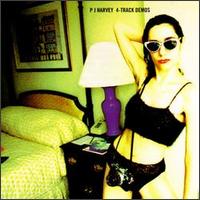
SOUNDTRACK: PJ HARVEY-4-Track Demos (1993).

After the intensity of the Steve Albini produced Rid of Me, Harvey releases this collection of demos.  The amazing thing is that these versions actually seem more intense than the Albini version. Or if not more intense, then certainly more raw.

The songs definitely have an unfinished feel about them, and yet they only vary from the final version in polish (and Albini’s stamp).

“Rid of Me” is just as quiet/loud, and has those high-pitched (and scary) backing vocals.  Speaking of scary vocals, her lead screams in “Legs” are far scarier here than on Rid of Me–like really creepy.  (Which sort of undermines that idea that this was released because Rid of Me was too intense for fans).   “Snake” actually features even creepier vocals–Harvey must have had a field day making these sounds!

I admit that I like the finished version of “50 Ft Queenie” better,”but there’s something about this version of “Yuri-G” that I like better.

The disc also has some tracks unreleased elsewhere.  “Reeling” is an organ-propelled song of female strength with the nice lyric: “Robert DeNiro sit on my face.”  “Hardly Wait” is a slow grinder that is fairly quiet for this time period.  “M-Bike” is a cool angry rocker about a guy and his motorcycle which is one of my favorite tracks on the disc.

It’s a great companion to Rid of Me.

[READ: end of February to early March]  original articles that comprise A Supposedly Fun Thing I’ll Never Do Again

As I mentioned last week, I decided to compare the articles in A Supposedly Fun Thing I’ll Never Do Again with the original publications to see what the differences were.  It quickly became obvious that there were a lot of additions to most of the articles, and it seems rather pointless (well, actually it seems exhausting and really outrageously time-consuming) to mention them all.  But what I did want to note was the things that are in the articles that have been removed from the book.   There’s not a lot but there are a few juicy tidbits (especially in the early articles) that are fun to note for anyone who read only the book and not the original articles.

My process for this was rather unthorough: I read the article and then right afterward I read the book.  If I noticed any changes, I made a note on the article version.  Many of them were surprisingly easy to note as DFW’s writing style (especially his idiosyncratic phrases) really stand out.  This is especially true in the Harper’s articles.  The academic ones were less notable, I believe, and I’m sure I missed a bunch.

I’m not sure in any way how these pieces were dealt with initially by the magazine or DFW.  I assume that DFW handed in the larger article (like we see in the book) and the magazine made suggested edits and DFW edited accordingly.  Then the book copies are probably the originals, bt which have also been updated in some way.

In most cases, it’s not really worth reading the original article, but I’m including links (thanks Howling Fantods), for the curious.

As for length, it’s hard to know exactly what the conversion from magazine article to book is.  The “Tornado Alley” tennis article is 8 pages (more like 4 pages when you take out the ads) and the book is 17.  Perhaps more accurately it seems like one Harper’s column = just under one book page.  I’ll try to figure out what the conversion is if I can.

One last note, whenever I say “article” I mean the original magazine version.  And obviously “book” means ASFTINDA. (more…)

Read Full Post »

SOUNDTRACK: PJ HARVEY-Rid of Me (1993).

For Rid of Me, PJ Harvey jumped to the big leagues (relatively) by enlisting maniac Steve Albini as a producer.  And he takes the rawness of Dry one step further into a sound that is both raw and sharp.  He really highlights the differences between the highs and lows, the louds and quiets.  And man, when this came out I loved it.

Like NIN’s “March of the Pigs,” the opening of “Rid Of Me” is so quiet that you have to crank up the song really loud.  And then it simply blasts out of the speakers after two quiet verses.

“Legs” turns Harvey’s moan into a voice of distress, really accentuating the hurt in her voice.  And Harvey hasn’t lightened up her attitudes since Dry, especially in the song “Dry” which has the wonderfully disparaging chorus: “You leave me dry.”

“Rub Til It Bleeds” is a simple song that opens with a few guitars and drums but in true Albini fashion it turns into a noisy rocker.  “Man Size Quartet” is a creepy string version of the later song “Man Size” (I’ll bet the two together would sound great).  And the wonderful “Me Jane” is a great mix of rocking guitars and crazy guitar skronk.   Albini really highlights the high-pitched (male) backing vocals, which add an element of creepiness that is very cool.

For me the highlight is “50 Foot Queenie”.  It just absolutely rocks the house from start to finish.  The song is amazing, from the powerful…well…everything including the amazing guitar solo.  “Snake” is a fast rocker (all of 90 seconds long) and “Ecstasy” is a song that feels wrung out, stretched to capacity, like they’ve got nothing left.

It’s not an easy record by any means, but it is very rewarding.  This is a CD that really calls for reamastering.  Because it is too quiet by half, and could really use–not a change in production–just an aural boost.

[READ: end of February and beginning of March] A Supposedly Fun Thing I’ll Never Do Again

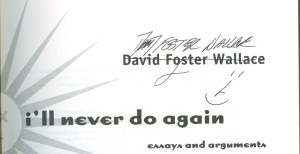
This is a collection of 7 essays that DFW wrote from 1990-1996.  Three were published in Harper’s, two in academic journals, one in Esquire and the last in Premiere.  I devoured this book when it came out (I had adored “Shipping Out” when it was published in Harper’s) and even saw DFW read in Boston (where he signed my copy!).

click to see larger

[Does anyone who was at the reading in Harvard Square…in the Brattle Theater I THINK…remember what excerpts he read?]

The epigram about these articles states: “The following essays have appeared previously (in somewhat different [and sometimes way shorter] forms:)”  It was the “way shorter” that intrigued me enough to check out the originals and compare them to the book versions.  Next week, I’ll be writing a post that compares the two versions, especially focusing on things that are in the articles but NOT in the book (WHA??).

But today I’m just taking about the book itself. (more…)

Read Full Post »

SOUNDTRACK: THE HEAD AND THE HEART-“Winter Song” (2010).

Sarah intended to get this disc for me for Christmas.  But evidently Sub Pop bought out the disc and put it out of print.  It’s now available as a download.  But a personal email from Sub Pop headquarters said they’d be releasing the disc in physical format sometime in April.  (Yay!)

This is a beautiful folk song which features wonderful harmonies.  It’s a simple guitar-picked song.  It opens with a male vocalist who sounds very familiar (I can’t quite place who he sounds like), but the end of the verse has a beautiful, brief blast of multi-part harmony.  The second verse is by a different vocalist (he sounds close to the first, I only noticed he was different after a few listens). The final verse is by a female vocalist which comes as a wonderful surprise as her voice brings a whole new shape to the sound.

The harmonies continue throughout the song and really flesh it out.  There’s not a lot to the song itself: a simple verse/chorus structure, but the execution and vocals are really lovely.

[READ: February 21, 2011] The Sword Thief

I can’t believe it has been five months since I read Book Two of this series.  It wasn’t for lack of enjoyment, sometimes other books get in the way!  But now that I’ve jumped back in, I’m in for a while (I’ve already started book 4).

One thing that I wanted to point out before talking about the book itself, was the way the various destinations are described in the book.  While I haven’t been to all (or really any) of the locations described, I have seen enough (in books and online) to know that the authors aren’t simply placing the kids in a generic location that pretends to be a city.  They really try to give each environment a full-bodied realism.  And I hope that young readers can really appreciate the sights and smells of the different countries.  It’s especially effective in Egypt (in book 4), but Tokyo really comes to life and Korea, although not fully explored, really shows the rural regions well.  Maybe this will encourage people to travel, but if not at least it’s instructive that not every place looks the same.

What I especially liked about this book is that the kids form a (brief) alliance (or two).  The first two books emphasized how all of the different family lines were in such competition with each other for the clues.  And, obviously that is the point of the books.  But it would be very tedious to simply have them run from place to place being chased by the different families.  So in this one, the kids form an alliance with Alistair Oh.  Better than that though is that Lerangis gives a detailed background of Alistair which makes him a more sympathetic, human character (even if we don’t fully trust him). (more…)

Read Full Post »

SOUNDTRACK: The 90’s Are Back, Or Whatever… NPR.  (2011).

This is a 90 minute podcast about the music of the 90s.  And, of course, it opens with “The Dream of the 90s” from Portlandia.

I don’t listen to too many full discussions on the All Songs Considered site, but since the 90s were definitely my favorite era of music, I thought it was worth a listen.  Incidentally, it’s funny that the 90s are so meaningful to me when, really I should be a child of the 80s.  But in reality, my 80s music was mostly heavy metal, because I hated all pop radio then.

This radio show (available for free download here) features four NPR music geeks talking about the music they loved during the 90s.  There are some obvious points (“Smells Like Teen Spirit,” “1979,” “Song 2,” “Loser”), but some unexpected songs as well: “Grace” (Jeff Buckley), “Long Snake Moan” (PJ Harvey).  And of course, probably the biggest surprise: Sebadoh’s “Soul and Fire as “song of the decade.”

The hosts have a lot of fun with bad songs (severe bashing on Collective Soul or hilariously cueing up “Can’t Touch This” to punk one of the speakers when they are talking about Missy Elliot–yup, it’s not all alt rock, Missy Elliott and Lauren Hill crop up along with Johnny Cash and Nusrat Fateh Ali Khan).

But let’s not forget my perennial favorite from Cornershop: “Brimful of Asha.”  And, yes, My Bloody Valentine.

These days, when I do listen to the radio, I find that the stations I prefer tend to play a lot of 90s songs, but it’s surprising to me how infrequently they play some of these really big artists (I hear a lot of Harvey Danger, but no My Bloody Valentine).  It’s funny that one of the songs they talk about, Len’s “Steal My Sunshine” I actually heard coming out of a radio at a pool while on vacation in Florida this past January (!?!).

It’s a fun segment and makes me think that although I do like a lot of new music, I’m a gonna hafta retire to Portland.

P.S. Stay till the end of the show for the hilarious impersonation of Trent Reznor.

[READ: February 17, 2011] 3 book reviews

Zadie Smith is an author whose output I fully intend to ingest one of these days.  So I figured why not read a few of her book reviews, too.

Smith reviews three new titles: Harlem is Nowhere: A Journey to the Mecca of Black America, by Sharifa Rhodes-Pitts; My Prizes by Thomas Bernhard; and While the Women are Sleeping by Javier Marías.

I’m intrigued by her review of Harlem is Nowhere.  She seemed to be rather critical of the author, especially of her mannerisms: like calling James Baldwin’s “habit of speaking to Harlem folk, having experiences, and deriving from these encounters “a metaphor about all of black existence”–“The Jimmy.”  (where others might have simply called it “writing”).  Or the fact that the author describes herself as a “single girl” as if that has anything to do with anything.

The second half of the review concedes that once you abandon wanting to known anything precise about historical Harlem, it’s a lovely book.  Smith revels in learning about James VanDerZee, Raven Chanticleer and Alexander Gumby (and her enthusiasm makes me want to investigate this book, if not their own works).

So, despite initial criticisms, she ends the review very positively and gives a thumbs up to the work. (more…)

Read Full Post »

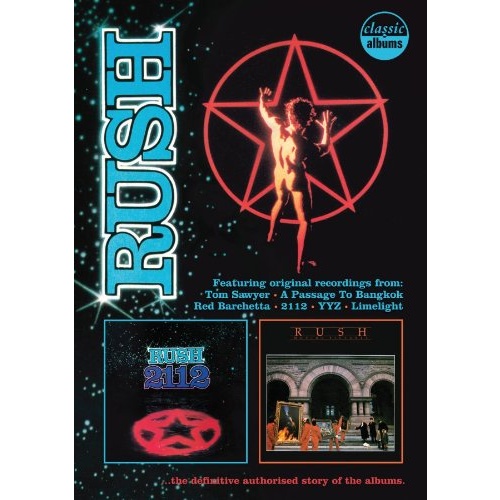
[WATCHED: January 3, 2011] Classic Albums: Rush–2112 • Moving Pictures

Sarah got me this disc for Christmas.  Thank you, Sarah!

This DVD is from the Classic Albums series.  The series is shown on VH1 in the states and BBC (and other places) elsewhere).  There’s been about 35 episodes of the series, with Rush being one of the few bands to have two albums for the show (which is an honor, but which also cuts down on the content for each album by half…boo!).

The show is an hour, and there’s almost an hour of bonus footage on the DVD  (which die-hard fans will enjoy more than the actual show).

The main show itself looks at the creation of these two classic albums.  There are interviews with the band members as well as many people associated with the band (and a couple completely random musicians).  We get their manager Ray Daniels and the producer for these albums Terry Brown (his segments are my favorite because he gets behind the mixing console and plays around with the songs).  We also get Cliff Burnstein (the guy with the crazy hair) who was instrumental in getting Rush publicity. (more…)

Read Full Post »

SOUNDTRACK : BLACK MOUNTAIN-Wilderness Heart (2010).

As the Tea Party showed, it’s never too late to pay tribute to Led Zeppelin.  Of course in 2010, it seems really uncool.  So, why not go whole hog?  The opener, “The Hair Song” sounds uncannily like Led Zeppelin, from chord structure to guitar sound.  And then just wait until after a verse or two and you get the guitar solo which comes straight from a Led Zep song.  And, amusingly enough, the duet vocals of Stephen McBean and Amber Webber combine to sound an awful lot like Robert Plant.

It may not be fair to compare them to their forebears, but they seem so intent upon referencing them.  “Old Fangs” sounds a ton like Buffalo Springfield’s “Mr. Soul” (at least they’re fellow Canadians).  But the wonderfully 70’s-style sound of the keyboards raise the track above any mere copycat.

“Radiant Hearts” is a gorgeous acoustic ballad where you can really appreciate the split vocals of McBean and Webber (and which should make you go back to the first two songs to really listen to how great they sound together.  This is that rare ballad that doesn’t feel like a kind of sell out track.

“Rollercoaster” returns to the 70’s-lovin’ with a monster riff (and a solo) that Tony Iommi would be proud of.  But rather than simply bludgeoning us, the riff stops in its tracks and then slowly builds itself back up.  “Let Spirits Ride” moves out of the 70s and sounds a bit like a Dio riff circa 1983.  But there’s some cool psychedelic vocal processing on the bridge (and a massive organ solo) to really mess with your retro time frame.

“Buried by the Blues” is followed by “The Way to Gone.”  They’re both folkie songs (although “Gone” features a re harder edge).  After the heaviness of the first half of the album , these tracks seem like a bit of surprise but they match the album’s retro feel very nicely.  “The Space of Your Mind” reminds me in many ways of Moxy Fruvous’ “The Drinking Song” (you won’t see that reference too much to this album).  Until the chorus comes in, when it turns into something else entirely.

But it’s not all mellow for the end. The title track has some heavy riffage (and great vocals by Webber–she reminds me of some of the guest vocalists on The Decemberists’ The Hazards of Love, although she really sounds like any number of great 70s rock vocalists).  I love the way the track ends.  The disc ends with “Sadie” another folk song (which makes the album half delicate folk tracks and half heavy rockers). It’s a fine song, but the album is kind of ballad heavy by the end, and the teasing drums and guitars just never bring forth the climax I was looking for.

Despite the obvious homages to classic rock bands, (if you can get past that, the album actually sounds fresh (or maybe preserved is a better word) and strangely original.  Like the preposterous cover, the album is preposterous–over the top and crazy.  Yet unlike the cover, the pieces all work together to form a compelling picture.  Obviously it helps if you like classic rock, but there’s nothing wrong with good classic rock, now is there.

[READ: February 14, 2011] Literary Lapses

Despite the cover picture above, I actually downloaded this book from Google Books (and the cover of that one was boring).

So, obviously, reading the biography of Stephen Leacock made me want to read some of his humorous fiction.  True, I also wanted to read Mordecai Richler, but his books are much longer and I wanted this done by the end of February!

So, according to Margaret MacMillan, it is this book, specifically the first story, “My Financial Career,” that solidified Leacock’s reputation as a humorist.  And I can totally understand what she means (without having read the other books, of course).  “My Financial Career” is indicative of the others stories: not laugh-out-loud funny, but clever, kind of silly and very smile-inducing.  The gist is that the narrator is very nervous about going into a bank with his large amount of cash ($56!).  He asks to speak to the manager who thinks he’s Very Important and then proceeds to embarrass himself further. And further. It’s quite amusing.

“A Christmas Letter” is one of my favorite in the book.  It’s a very snarky look at a friend’s Christmas Party, with a great punchline.  And stories like “How to Make a Million Dollars” or “How to be a Doctor” are wonderfully amusing tales in which the narrator mocks the wealthy and “professionals.”

There are 42 stories in this book, so there’s bound to be a few clunkers.  Some were mildly amusing, some were mere trifles, and some are crazily out of date for a 2011 audience.  This book turned 100 years old last year.  (Neat). (more…)

Read Full Post »


SOUNDTRACK
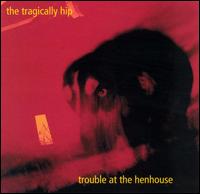
: THE TRAGICALLY HIP-Trouble at the Henhouse (1996).

After the major high of Day for Night, The Hip followed it up with Trouble in the Henhouse.

It opens with “Giftshop” which sounds like it could have come straight from Day for Night.  “Springtime in Vienna” is a marvel.  The opening is quiet with Downie’s almost whispered voice telling a compelling story until it blasts out with a wonderful chorus.  “Ahead by a Century” opens with a catchy acoustic intro.  Again, the harmony vocals add wonders to the verses.

But overall the album feels like the Hip exhausted their angst and anger on Day for Night and have chosen to go with a more mellow sound here.  It almost seems like Day for Lite.  Songs like the final track, “Put It Off” dabble with intensity, but have more atmospherics than powerful guitar and verses.  It’s like the come down after a big party.

The most peculiar song on the disc is “Butts Wigglin” which was used on the Kids in the Hall Brain Candy soundtrack.  It doesn’t really fit on this disc, but it’s such a great song that I understand them not leaving it off.  It’s very silly and musically groovy with  almost no guitars and all keyboards.  It’s a goof, but nice to see the lighter side of the band.

I find Trouble to be really enjoyable in itself, but it kind of pales in comparison to the previous two.  Nevertheless, these three albums are a wonderful trio of discs released by a great Canadian band.

They celebrated this era of the band with a live album the following year.

[READ: January 26, 2011] “An African Sermon”

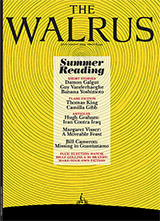
Of all the stories in this Summer Reading Issue of The Walrus, this one was the most powerful.  (It wasn’t my favorite because it was rather distrubing) but it had a strong impact on me.

The bulk of the stoiry is set on a train in Africa.  Two white men introduce themselves to each other; the older one confides that he hopes no Blacks come into thier car.  Of course a Black does come into thier car and the younger man, who is a preacher, tries to embarass the racist man but immediately shaking the black man’s hand.

The black man is hostile to the young man’s advances, more or less shutting him out entirely.  Indeed, when the young man follows him to the dining car to talk (he is genuinely sympathetic to people, but he’s also very curious about the man and wants to pry a bit) the black man (whose name is Leonard Sagatwa) listens briefly and then, claiming a headche, returns to the cabin  room and goes to sleep.

During the night, the train stops because of a malfunction and it will be some time before it is fixed.  The priest goes out to the landing to find something to occupy himself when Leonard comes down.  He says to the priest that he wants to tell his story.  He wants to tell it once, to a complete stranger so that he can unburden himself and then be done with it.  The priest is tickled to hear the story.

But the story is one of Rwandan genocide:  Hutu vs Tutsi, brothers who turn  against each other; Leonard’s brother turning on him and his family.  Killing family members slowly, cruelly, calling them cockroaches.  It is harrowing and the priest is taken aback by the brutality.

But at the end of the story, the priest is resilient and insists that Leonard can forgive his brother.  Never, says Leonard.

The priest is able to use this story for his very first sermon in Africa.  He pretties up the story somewhat and makes it moral, and it works.  The new congregation accepts him and he feels welcomed to Africa.

When, several months later, the priest sees Leonard again, everything has been turned upside down.  And I’ll just leave it at that.

It is a great story.  Wonderfully powerful.

Read Full Post »

SOUNDTRACK: THE TRAGICALLY HIP-Fully Completely (1993).

Even thought Road Apples was good, Fully Completely is amazing.  The band has traded in some rawness for textural complexity and yet they haven’t lost the rocking groove of their earlier sound.

This album has some of my favorite Hip songs: “Courage” (the Sarah Polley cover in The Sweet Hereafter is also beautiful in a very different way). “At the Hundredth Meridian” (a title which should tell you that the lyrics of the song aren’t going to be typical rock fodder), and “Fifty Mission Cap.”   “Fifty Mission Cap” is about the fascinating story of Toronto Maple Leaf Bill Barilko, another atypical lyrical concept and an amazing song from start to finish (although, honestly the opening chords make it sound like it’s going to be a lame 80′ metal anthem…maturation as a band made this song brilliant instead).

The duel guitar opening of “Pigeon Camera” is also gorgeous, as are the wonderful vocal harmonies on the bridge.  And the rawness isn’t all gone either.  “Locked in the Trunk of a Car” rocks as hard as anything on Road Apples.  There’s also a mellow folk song in “Wheat Kings.”  It slows the disc down a bit after the intensity of the amazing “Fully Completely,” and “Fifty Mission Cap,” but the last two songs are a string ending to an already great disc.

Even though I think that Fully is an amazing record, I think that mostly it’s preparation for the even more amazing Day for Night which came out two years later.

[READ: January 26, 2011] “Platanus”

Anyone playing along might have noticed that February is Canada month here.  All of the authors this month have been from the Great White North.  This story breaks with that, but I feel that it still counts because it came in a Canadian magazine.  But Banana Yoshimoto is Japanese (no, really!).  With a name like “Banana” (which is a pseudonym), it’s hard to forget this author.  I even bought Kitchen (her first translated book) when it came out (although I haven’t read it yet).

This story is translated from the Japanese by Michael Emmerich.  It is set in Mexico, specifically in the village of Mendoza.  The narrator (aged 35) and her husband (aged 60) enjoy escaping Tokyo and spending time in this sleepy village.

The story provides some interesting familial background of the two characters (both of their families disapprove of the marriage) and the kinds of things that they get up to in Mendoza.  And really that’s all there is to the story. (more…)

Read Full Post »

SOUNDTRACK: THE TRAGICALLY HIP-Up To Here (1989).

Up to Here is a pretty big leap from their first EP.  There’s more guitar soloing (not grandiose solos, just little guitar noodling in the songs “Blow at High Dough,” which was used wonderfully for the show Made in Canada (also known as The Industry).

Downie’s voice is more in keeping with what we’d come to know later, and lyrically the songs are esoteric and interesting.

“Blow at High Dough” opens the disc with a very cool guitar intro (“They shot a movie once, in my hometown”) “I Believe in You (Or I’ll Be Leaving You Tonight)” a not terribly good song has some proto-Downieisms: spoken passages, stories in a breakdown of the song, but the subject matter is not that exciting.  Of course, it’s hard to sound good when you’re followed by “New Orleans is Sinking” another fantastic song that still sounds great today (especially in their live versions).

“38 Years Old” is a surprisingly moving song with some slides guitars…a nod to their country/folk roots that they tend to bury under raw rock guitars.

But even some of the less memorable, less exciting songs have great aspects to them.  Songs like “She Didn’t Know” are pretty standard rock songs.  Better than average, but not exceptional.  But the band puts little things into them that bring them up from the mundane: the guitar licks, the backing vocals (slightly R.E.M.-ish).

Even “Boots to Hears” which sounds a bit too much like John Mellencamp in the intro really wins you over by the end (the lyrics are great).  For what really is a debut album, it’s solid and shows great songwriting skills and promise.

They still haven’t quite gotten the hang of cover art yet, though.

[READ: January 26, 2011] “You Go First”

This was the first of four flash fictions in this issue.  Flash fiction doesn’t really have a definition per se (except that it is very short).  There are some masters of flash fiction who can write very compelling stories with astonishing brevity.  These stories are all short (one magazine page a piece), but they feel kind of bloated compared to the writers like Lydia Davis.

Gibb’s story actually feels a lot longer than it is.  It opens with us meeting the narrator’s next door neighbors, Carl the cremator, his obese wife Brenda and their son Jason.  The narrator doesn’t really like Jason, but he’s the only person who will hang out her because he wasn’t around for her birthday party last year.  At that party, her hippie parents encouraged everyone to play a game called Getting to Know Our Bodies. (more…)

Read Full Post »

« Newer Posts - Older Posts »